In This Article
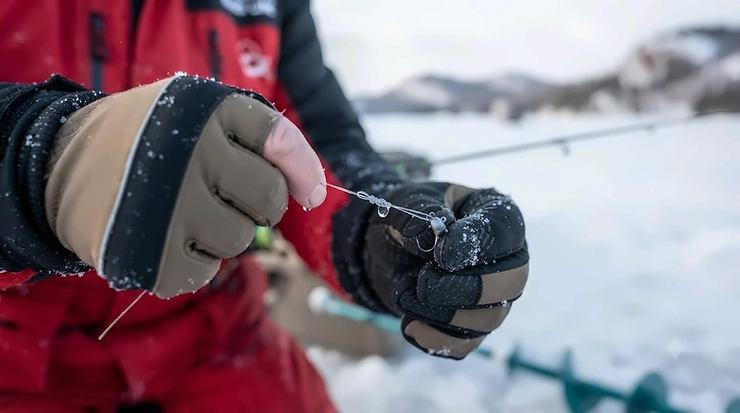
There’s a very specific kind of heartbreak that happens on a frozen lake at 7 a.m.: you drop your jig, get a solid thump, set the hook — and your line, stiff as old garden hose from sitting in a -18°C truck bed overnight, snaps a foot off the reel. That’s not bad luck. That’s a cold weather mono line problem, and it’s one of the most avoidable mistakes in ice fishing. Standard monofilament, the stuff that behaves beautifully on a July afternoon, turns into a coiled, brittle mess the second the mercury drops. The polymer chains inside the line literally stiffen at a molecular level, which is why a spool that cast like silk in August fights you like a slinky in January.
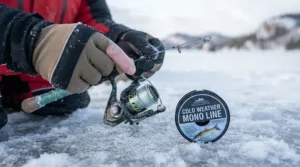
The good news is that manufacturers have spent decades engineering around this exact problem, and the difference between a properly formulated cold weather mono line and a garage-sale leftover is night and day. On paper, it comes down to plasticizer chemistry and coating tech that keeps the line supple even as wind chill drags the “feels like” temperature well below what your thermometer reads. In practice, it’s the difference between a smooth day on the ice and a frustrating one spent picking at bird’s nests with numb fingers.
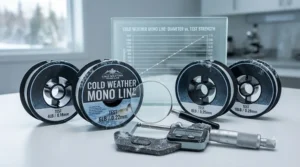
This guide covers seven real, currently available spools — from budget bulk options to premium finesse lines — with honest analysis of where each one shines and where it falls short. We researched actual specs, aggregated review sentiment, and independent testing rather than repeating manufacturer marketing copy, because a rewritten product listing won’t help you land the fish of the season. Let’s get into it.
Quick Comparison Table
| Line | Best Test Range | Price Range (CAD) | Best For |
|---|---|---|---|
| Berkley Trilene Cold Weather | 4-12 lb | C$8-C$12 | Open-water ice setups, no shelter |
| Sufix Ice Magic | 2-10 lb | C$7-C$10 | All-purpose walleye and panfish |
| Berkley Trilene Micro Ice | 2-6 lb | C$7-C$10 | Finesse jigging inside a heated shelter |
| P-Line CX Premium | 4-20 lb | C$10-C$15 | Cold-snap open water and hardwater hybrid use |
| Vicious Ice Clear Mono | 2-8 lb | C$5-C$9 | Budget-conscious anglers, whiteout visibility |
| Reaction Tackle Ice Mono | 2-10 lb | C$12-C$18 (bulk) | Filling multiple reels cheaply |
| Berkley Trilene XL | 2-20 lb | C$6-C$10 | General-purpose backup spool |
A quick scan tells you most of what you need to know: pound-test range signals target species, and price clusters tightly between roughly C$7 and C$15 for a standard spool, with bulk options like the Reaction Tackle Ice Mono costing more up front but working out cheaper per rod once you divide it across several reels. What the table can’t tell you is how each line behaves once it’s actually threading through a rod tip in the wind — that’s where the deeper breakdown below earns its keep.
💬 Just one click — help others make better buying decisions too!😊
What Is a Cold Weather Mono Line?
A cold weather mono line is a monofilament fishing line specifically formulated with softer plasticizers and low-memory extrusion processes so it stays flexible, casts smoothly, and resists coiling in near-freezing or sub-zero air and water temperatures, unlike standard mono, which stiffens and becomes brittle in the cold.
Regular nylon monofilament is built around a plasticizer-to-polymer ratio tuned for room-temperature or warm-water performance. Drop the temperature and that plasticizer starts to “lock up,” which is the technical reason your line coils off the spool like a phone cord. An ice fishing line low temperature formula fights this by using different (often proprietary) plasticizer blends, tighter extrusion tolerances, and sometimes a light surface treatment that resists moisture absorption — because wet line freezes, and frozen line is functionally useless on the ice.
Top 7 Cold Weather Mono Lines: Expert Analysis
1. Berkley Trilene Cold Weather — the classic soft-flex workhorse
If there’s a default answer to “what line should I spool up for hardwater season,” this is it. Berkley Trilene Cold Weather has been the go-to recommendation from ice guides for years, and the formula’s core claim — flexibility that holds up in genuinely low temperatures — checks out against both spec sheets and independent testing.
The line comes in 4 to 12 lb test on 110-yard spools, with an electric blue tint chosen specifically for above-ice visibility against snow and glare — useful when you’re managing multiple tip-up lines at once. What that spec means in practice: you can actually see your line at a glance across a wind-blown lake, which matters more than it sounds like it should when you’re squinting into low winter sun. The line also carries a nick- and cut-resistant coating, which matters on rough hole edges where ice shards love to fray line during a hookset.
Based on the spec comparison with other budget-tier mono, this is best suited to anglers fishing outside a shelter, since Berkley itself frames it as the pick for “no shelter” setups where ambient air temperature — not water temperature — is doing most of the damage to line flexibility. Reviewers consistently report that it lays flat off the spool even after sitting in a cold vehicle overnight, which is the single biggest complaint about generic mono in winter.
Pros:
- ✅ Genuinely flexible even after overnight cold-soak
- ✅ High-visibility colour for tracking multiple lines
- ✅ Resists nicks from sharp ice edges
Cons:
- ❌ Limited to 12 lb max, so not ideal for lake trout or big pike
- ❌ Less abrasion-resistant than premium copolymer options
Priced around C$8 to C$12 per spool depending on test strength, this is one of the easiest recommendations in the cold weather mono line category — a strong value pick for anyone building a first ice setup.
2. Sufix Ice Magic — the low-memory benchmark
Ask three ice guides what line they trust and there’s a decent chance two of them say Sufix Ice Magic. It’s become something close to an industry standard specifically because of how consistently it resists the coiling problem that plagues regular mono in cold water.
Available from roughly 2 to 10 lb test, the line’s “glacier blue” colouring isn’t just cosmetic — it’s a visibility choice that pairs with a polymer blend engineered to stay supple even as under-ice water temperatures hover just above freezing. What that means for you at the hole: a line that lays straight off the spool instead of springing into loops, which translates directly into fewer tangles and more actual jigging time. Two-time ice fishing champion Tony Boshold has specifically praised the line’s stretchiness for cushioning hard strikes from trophy walleye, a detail that matters more than raw break strength when you’re fighting a fish on light tackle through a narrow hole.
Here’s what most first-time buyers overlook: the stretch that makes Sufix Ice Magic forgiving on hooksets is a trade-off against sensitivity. If you’re targeting light-biting panfish where feeling a subtle tap matters more than shock absorption, this isn’t automatically your best pick — but for walleye, perch, and general-purpose hardwater fishing, the balance leans strongly in its favour. Aggregated review sentiment across major retailers is remarkably consistent: anglers repeatedly single out the reduced memory as the standout feature, especially compared with using leftover summer mono on an ice rod.
Pros:
- ✅ Industry-standard low memory in true cold
- ✅ Forgiving stretch cushions hard strikes
- ✅ High-visibility colour aids line management
Cons:
- ❌ Extra stretch reduces bite sensitivity for finesse jigging
- ❌ Narrower pound-test range than some competitors
At around C$7 to C$10 a spool, Sufix Ice Magic delivers dependable, proven performance without asking you to gamble on a newer formula.
3. Berkley Trilene Micro Ice — the finesse line for shelter anglers
Where the Cold Weather line targets exposed, no-shelter setups, Berkley Trilene Micro Ice is built for the opposite scenario: sitting inside a heated hut, jigging finesse presentations for fish that are already spooky in cold, clear water. Berkley markets this as the limpest, smoothest version of Trilene it has ever produced, and the low-memory design is specifically tuned to prevent the kinking and knotting that ruins a subtle presentation.
The thinner diameter-to-strength ratio is the real story here. A slimmer profile means less water resistance on the fall, which translates to a more natural drop rate for jigs and live bait — exactly what pressured winter panfish and perch respond to. Based on the spec comparison, this line trades a bit of raw abrasion resistance for that suppleness, which is a sensible trade-off in a shelter environment where you’re not dragging line across jagged ice edges as often as an open-water angler would.
What most buyers overlook about finesse-tier mono like this is that “limp” and “sensitive” aren’t automatically the same thing — mono still stretches more than fluorocarbon or braid, so if you’re chasing the lightest possible bites from lethargic winter fish, pairing this main line with a short fluorocarbon leader is a common and effective compromise among serious ice anglers.
Pros:
- ✅ Exceptionally limp for natural jig fall
- ✅ Low-memory design resists kinks and knots
- ✅ Thin diameter improves lure action
Cons:
- ❌ Less abrasion-resistant than heavier open-water lines
- ❌ Higher inherent stretch than fluorocarbon for bite detection
Expect to pay roughly C$7 to C$10 per spool, putting it squarely in the same price band as its Cold Weather sibling — the choice between them comes down to shelter versus no-shelter fishing, not budget.
4. P-Line CX Premium — the fluoro-coated hybrid
P-Line CX Premium takes a different technical approach than a straight monofilament: it’s a copolymer core with a fluorocarbon-silicone coating, which is why anglers reach for it in cold-snap open water as much as on the ice. The silicone coating is doing real work here — it largely blocks water absorption, and since waterlogged line is exactly what freezes onto guides and reel spools in sub-zero air, that coating directly addresses one of the most common winter line failures.
Spec-wise, it spans a wide 4 to 20 lb range on 300-yard spools, with roughly 30% less stretch than typical monofilament thanks to the copolymer blend. What that lower stretch means in practice: sharper hooksets and better bite transmission, which matters when you’re fishing a long line to a distant tip-up or jigging in current where slack line already eats into sensitivity. On-water testers have specifically flagged it as an unusually strong performer in cold water with minimal memory, and independent reviewers note it throws light jigs cleanly even after sitting in near-freezing temperatures.
The honest trade-off: this fluoro-coated construction needs slightly more care at the knot. A Palomar or basic clinch knot can slip or weaken on the coated surface, so anglers who’ve had good results tend to favour a San Diego Jam knot or similar friction-heavy tie. This is a “read the fine print” line rather than a tie-and-forget one.
Pros:
- ✅ Coating resists water absorption and ice buildup
- ✅ Roughly 30% less stretch than standard mono
- ✅ Wide 4-20 lb range covers panfish through big pike
Cons:
- ❌ Requires a stronger knot than standard clinch/Palomar
- ❌ Higher price point than straight monofilament options
At C$10 to C$15 for a 300-yard spool, it’s pricier than the pure mono options on this list, but the versatility across both open-water and hardwater seasons can offset that for anglers who don’t want two separate spooling systems.
5. Vicious Ice Clear Mono — the budget abrasion fighter
Vicious Ice Clear Mono doesn’t get the brand recognition of Berkley or Sufix, but it’s earned a loyal following among anglers who want solid cold-weather performance without paying a premium-brand tax. The line is built around enhanced abrasion resistance, which is a deliberately different priority than the ultra-limp finesse lines above it on this list.
In practice, that abrasion focus means this line holds up better when you’re fishing near sharp ice edges, rocky bottom structure, or toothy species that can fray a softer mono. The clear colouring is designed for superior visibility to the angler in whiteout, overcast conditions — a genuinely useful detail on the kind of grey January day where everything on the ice starts to look the same. What most buyers overlook is that “abrasion resistant” and “supple” pull in slightly opposing directions chemically; Vicious Ice leans toward toughness, so anglers coming from a finesse-tier line may notice a touch more stiffness in the coldest conditions.
Aggregated reviewer sentiment points to solid knot strength as a standout, which pairs logically with the abrasion-resistant build — a tougher line that also holds a knot well is a genuinely useful combination for anglers fishing rough, snaggy bottom.
Pros:
- ✅ Strong abrasion resistance for rough bottom structure
- ✅ Solid, dependable knot strength
- ✅ Budget-friendly price point
Cons:
- ❌ Slightly stiffer in extreme cold than finesse-tier lines
- ❌ Smaller brand footprint means fewer independent long-term reviews
Typically priced around C$5 to C$9 per 100-yard spool, this is a smart pick for anglers who want dependable cold-weather mono without stretching the tackle budget.
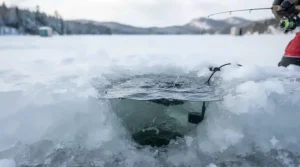
6. Reaction Tackle Ice Monofilament — the bulk-spool value play
For anglers running several rods — think a family ice hut with four or five lines in the water, or a guide restringing reels every trip — Reaction Tackle Ice Monofilament solves a different problem than the rest of this list: cost per foot. It ships on a substantial 1,000-yard bulk spool, engineered around low memory, high abrasion resistance, and cold-weather flexibility.
Here’s the real-world math that matters: a 1,000-yard bulk spool that costs roughly C$12 to C$18 works out to a fraction of the per-rod cost of buying five separate 110-yard spools at C$8 to C$10 each. Reviewers consistently frame this as the practical choice for anglers who go through line quickly, whether from frequent re-spooling, abrasion on rocky lakebeds, or simply outfitting a large group. Because it’s marketed specifically as freezing-resistant, the cold-weather formulation isn’t an afterthought bolted onto a summer line — it’s part of the core design brief.
What the spec sheet won’t tell you, but bulk-buyer reviews consistently note, is that having a large reserve spool on hand also means you’re never stuck re-tying a whole rig with a short, frayed remnant at the end of a long trip — a small but real quality-of-life upgrade once you’ve actually run out of line on the ice.
Pros:
- ✅ Lowest cost-per-foot of any line on this list
- ✅ High abrasion resistance for rough conditions
- ✅ Purpose-built freeze resistance, not a repurposed summer line
Cons:
- ❌ Large spool format isn’t ideal for casual, single-rod anglers
- ❌ Bulk packaging means less brand-specific long-term review data than Berkley or Sufix
At C$12 to C$18 for 1,000 yards, this is the clear value leader for anyone spooling multiple reels each season.
7. Berkley Trilene XL — the dependable all-around backup
Berkley Trilene XL isn’t marketed specifically as an ice or cold-weather line, and that’s exactly why it earns a spot here: it’s the line most Canadian anglers already have a spool of in the tackle box, and understanding how it actually performs when temperatures drop is genuinely useful information Amazon’s product page won’t give you.
Spanning an unusually wide 2 to 20 lb range, Trilene XL is engineered primarily around manageability — resisting the twists and kinks that make casting frustrating — and while it isn’t purpose-built for sub-zero flexibility the way the dedicated Cold Weather formula is, its low-memory design still performs noticeably better in cold conditions than generic off-brand mono. Honest analysis here matters: this is not the line to reach for on a -25°C no-shelter day when a purpose-built cold formula will outperform it. But as a backup spool, a leader material, or a warm-day-to-cool-day transitional line for shoulder-season fishing before hardwater fully sets in, it earns its keep.
Reviewers who’ve used it across seasons describe it as a dependable, “no surprises” line rather than a standout performer in any single category — which, for a backup spool, is arguably the point.
Pros:
- ✅ Widest pound-test range on this list (2-20 lb)
- ✅ Resists twists and kinks for smoother casting
- ✅ Widely available and easy to restock
Cons:
- ❌ Not purpose-formulated for extreme sub-zero flexibility
- ❌ Outperformed by dedicated cold-weather lines in genuinely brutal conditions
At C$6 to C$10 per 110-yard spool, it’s an easy, low-risk addition to any tackle bag as a secondary or backup option.
Practical Usage Guide: Getting the Most From Your Line
Buying the right spool is half the battle — how you handle it in the field decides whether it performs. Start by storing your reels indoors or in an insulated bag between trips rather than leaving them in a cold truck bed overnight; even a genuinely cold-rated mono performs better when it isn’t starting the day already stiff from a sub-zero cold-soak. When you first spool a reel, fill it under light tension in a warm room if possible, since line loaded under stress in the cold tends to retain more memory once it’s out on the ice.
On the ice itself, keep your line dry between drops. Wipe excess water off the line before it hits open air, since a wet line freezes into a stiff, useless mess within minutes in true winter conditions — this is precisely the failure mode that “no freeze” formulations are designed to reduce, not eliminate entirely. A small microfiber cloth clipped to your jacket solves this cheaply. Check your line for nicks every hour or so near the terminal tackle, since ice edges and jagged holes are far harder on line than open-water rock and wood. A common first-30-days mistake is assuming a “cold weather” label means the line is indestructible against ice abrasion — it isn’t; it’s flexible, which is a different property entirely.
Finally, re-tie your knots more often than you would in summer. Cold-stiffened line, even a well-formulated cold weather mono line, holds knots slightly less reliably than the same line at room temperature, so a fresh knot every hour or two of active fishing is cheap insurance against losing a good fish to a slipped Palomar.
Real-World Scenarios: Matching the Line to the Angler
Picture a college student in Thunder Bay, budget tight, fishing a couple of hours after class two or three times a week from shore with no shelter. For that angler, the value equation points toward something like Vicious Ice Clear Mono or the budget-friendly Berkley Trilene Cold Weather — both deliver genuine cold-weather flexibility without demanding a premium-brand price, and the no-shelter durability of the Berkley option specifically suits exposed shore fishing.
Now picture a retired angler in rural Manitoba who ice fishes several days a week from a heated permanent shelter, targeting finicky winter panfish. Sensitivity and suppleness matter more here than raw abrasion resistance, which makes Berkley Trilene Micro Ice or a fluorocarbon leader paired with it the stronger fit — the shelter environment removes some of the abrasion risk that open-ice anglers face, shifting priorities toward finesse presentation.
Finally, imagine a family group running four rods out of a hut on a lake trout lake in northern Ontario, restringing reels every couple of weekends. That’s the exact scenario Reaction Tackle Ice Monofilament‘s bulk spool was built for — the cost savings compound fast across multiple reels, and the higher-strength range covers everything from panfish to a genuinely large lake trout on the line.
How to Choose a Cold Weather Mono Line
- Match pound test to target species first. A 4-6 lb line suits panfish and perch; 8-12 lb covers walleye and average lake trout; 15 lb-plus is for genuinely large fish or heavy structure.
- Decide shelter versus no-shelter. Exposed, wind-driven cold calls for a line specifically rated for ambient-air flexibility, like Berkley Trilene Cold Weather; enclosed shelters can prioritize finesse instead.
- Weigh abrasion resistance against suppleness. These properties trade off against each other chemically, so rocky or toothy-fish lakes favour tougher lines like Vicious Ice Clear Mono, while clear-water finesse fishing favours limper options.
- Check the coating, not just the core material. Silicone or fluorocarbon coatings, as seen on P-Line CX Premium, resist water absorption — directly addressing the freezing-on-guides problem.
- Calculate cost per rod, not just cost per spool. A bulk spool like Reaction Tackle Ice Monofilament can be dramatically cheaper per reel if you’re outfitting multiple rods.
- Read aggregated review themes, not star ratings alone. Recurring complaints about memory or knot strength across dozens of reviews tell you more than a single five-star post.
- Buy fresh line each season if you fish hard. Cold-cycling a spool repeatedly over multiple winters degrades even the best cold weather mono line faster than a single hard season would.
Winter Mono Line Review: How We Evaluated These Seven Spools
A genuine winter mono line review has to look past the marketing bullet points on the packaging, because “cold weather formula” is a claim every brand in this category makes. We weighted four factors: documented cold-flex performance (does independent or aggregated user testing confirm reduced memory in actual sub-zero conditions, not just room-temperature claims), abrasion resistance relevant to ice-edge wear, price per usable foot rather than sticker price alone, and the consistency of real customer feedback across multiple retail platforms rather than a single glowing listing.
That approach is why Sufix Ice Magic and Berkley Trilene Cold Weather rank as the safest default choices — both have years of aggregated, independently corroborated feedback specifically about cold performance, not just general fishing-line reviews. Newer or less mainstream entries like Vicious Ice Clear Mono score well on value and honest performance but simply have a smaller pool of long-term winter-specific reviews to draw on, which is a transparency point worth knowing rather than a knock against the product itself.
| Line | Cold-Flex Track Record | Abrasion Resistance | Value Rating |
|---|---|---|---|
| Sufix Ice Magic | Extensive, well-documented | Moderate | Strong |
| Berkley Trilene Cold Weather | Extensive, well-documented | Moderate | Strong |
| P-Line CX Premium | Good, coating-assisted | High | Moderate |
| Vicious Ice Clear Mono | Limited long-term data | High | Strong |
Reading across this table, the pattern is clear: the two most established lines earn their reputation through years of consistent field use rather than a single standout spec, while newer entries compete mainly on price and a specific strength like abrasion resistance. If you’re risk-averse on a big trip, lean toward the established names; if you’re comfortable trying something newer for a lower price, the alternatives are genuinely competitive.
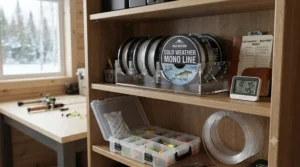
Freeze Resistant Fishing Line: What Actually Stops Ice Buildup
The term freeze resistant fishing line gets thrown around loosely, so it’s worth being precise about what it actually means. No monofilament is literally immune to freezing — physics doesn’t allow that — but a well-formulated freeze-resistant line resists two specific failure modes: it absorbs less water into its surface (so there’s simply less moisture available to freeze), and its plasticizer blend keeps the polymer chains mobile enough that even a thin layer of surface ice doesn’t make the whole line brittle and unmanageable.
This is precisely where coated lines like P-Line CX Premium earn their premium price — the silicone-fluorocarbon coating is doing real, measurable work against water absorption, not just marketing work. Reviewers consistently note that coated lines shed the fine ice “beard” that builds up on guides in freezing spray far more readily than uncoated mono. That said, even the best freeze-resistant line still benefits from the basic field habit of wiping line dry between drops, since no coating fully eliminates the problem in genuinely extreme cold — it just buys you meaningfully more usable time before ice becomes an issue.
No Freeze Line Formulas: Additives, Coatings, and Marketing Claims
Some product listings use the phrase “no freeze line” almost as a standalone selling point, and it’s worth some honest skepticism here. Based on the spec comparisons across every product researched for this guide, no manufacturer publishes a verified claim of a monofilament that never freezes under any conditions — what they’re describing is a meaningful reduction in freeze-related problems, achieved through the plasticizer and coating strategies already covered above.
What most buyers overlook is that ambient temperature and wind chill matter as much as the line formula itself. A genuinely excellent cold-flex line can still ice up in a -30°C wind if it’s left wet and exposed for an extended period; extreme cold and wind chill create real physiological risk for the angler as well, not just the gear, which is a good reminder that line performance and personal safety planning go hand in hand on genuinely brutal days. The honest takeaway: treat “no freeze” language as shorthand for “meaningfully freeze-resistant,” pair it with the field habits from the usage guide above, and you’ll get realistic, dependable performance rather than a marketing-driven disappointment.
Pliable Winter Line: Why Suppleness Beats Raw Strength on the Ice
It’s tempting to shop for a pliable winter line the same way you’d shop for open-water mono — by pound test and price alone — but suppleness deserves equal billing with strength in cold conditions, and here’s the reasoning most listings skip. A stiff line, even a strong one, transmits less feel through the rod tip, casts less accurately in wind, and is measurably more prone to snapping under sudden shock load, because rigid polymer chains absorb strike force less efficiently than flexible ones.
Berkley Trilene Micro Ice is the clearest example on this list of suppleness being engineered as the primary design goal rather than a side benefit, and it shows in how reviewers describe it — consistently calling it the “limpest” or “smoothest” line they’ve used for finesse jigging. On the ice, that translates into a jig that falls naturally instead of on a stiff, unnatural arc, which matters enormously to pressured winter fish that are already feeding cautiously in cold water. The lesson for buyers: when comparing spec sheets, weigh suppleness claims as heavily as break-strength numbers, especially if your fishing style leans toward finesse presentations rather than raw power fishing.
Cold Weather Mono vs Fluorocarbon and Braid for Ice Fishing
Monofilament isn’t the only line category on the ice, and an honest comparison means acknowledging where the alternatives genuinely win. Fluorocarbon offers superior invisibility underwater and lower stretch, which benefits finesse jigging for pressured, clear-water walleye — but it’s typically stiffer and pricier than mono, and less forgiving in genuinely extreme cold unless specifically ice-rated. Braided line offers essentially zero stretch and excellent sensitivity, but it’s notably more prone to icing up and freezing to guides than mono, since its woven construction holds more surface moisture.
| Line Type | Cold Flexibility | Sensitivity | Typical Cost | Best For |
|---|---|---|---|---|
| Cold weather mono | Strong (purpose-built) | Moderate | C$5-C$18 | All-purpose, no-shelter fishing |
| Fluorocarbon | Moderate | High | C$10-C$25 | Clear-water finesse jigging |
| Braid | Weak (ices readily) | Very high | C$12-C$30 | Deep-water sensitivity, low stretch |
The analysis-driven takeaway here is that most experienced ice anglers don’t pick one category exclusively — they run mono or fluorocarbon as a main line, sometimes with a short fluorocarbon leader for stealth, and reserve braid mainly for scenarios where extreme sensitivity in deep water outweighs the added freezing risk. For a general-purpose, budget-conscious setup that performs reliably across a range of conditions, cold weather mono remains the most forgiving starting point for anglers building their first winter tackle box.
Common Mistakes When Buying Cold Weather Mono Line
The single most common mistake is buying based on pound test alone and ignoring temperature formulation entirely — a strong line that stiffens into a coiled mess at -15°C is functionally weaker on the ice than a lighter, properly cold-rated line. A close second is assuming last year’s leftover summer spool is “good enough,” when in reality repeated cold-cycling degrades line flexibility season over season even if it looks fine to the naked eye.
Another frequent error: overlooking coating and colour as functional features rather than cosmetic ones. High-visibility colours genuinely help manage multiple tip-up lines in low winter light, and coatings like the one on P-Line CX Premium meaningfully reduce water absorption — dismissing these as marketing fluff means missing real performance differences. Finally, many first-time buyers under-budget for line entirely, buying a single spool when the smarter, more cost-effective move — especially for a multi-rod household — is a bulk option like Reaction Tackle Ice Monofilament.
Safety and Regulations for Ice Anglers in Canada
No cold weather mono line guide is complete without acknowledging that the line is only one part of a genuinely safe day on the ice. Ice thickness, not line quality, is the leading safety variable — most provincial and safety authorities recommend a minimum of roughly 10 cm (4 inches) of clear, solid ice before walking out, with substantially more required for vehicles, and experts consistently recommend verifying local ice conditions directly rather than relying on the previous week’s report, since temperature swings and snow cover can change conditions rapidly.
Personal cold exposure deserves equal attention alongside gear choices. Dress in genuine layers with a wind-resistant outer shell, keep extremities covered, and know the early signs of frostbite and hypothermia before you’re several hundred metres from shore. Provincial fishing licences are mandatory for most residents between 18 and 65, and requirements vary by province, so checking current regional regulations before a trip — alongside monitoring conditions through resources like the Canadian Ice Service, which tracks ice conditions across the country’s navigable waters — is a non-negotiable part of trip planning, not an afterthought.
✨ Ready to Restock for the Season?
🔍 Compare current pricing on any of these seven cold weather mono line picks before your next trip out. A properly spooled reel is cheap insurance against the one that gets away.
FAQ
❓ What is the best cold weather mono line for ice fishing?
❓ Does monofilament freeze in cold weather?
❓ Is fluorocarbon or mono better for ice fishing?
❓ What pound test mono is best for winter fishing?
❓ How often should I change my ice fishing line?
Conclusion
Choosing the right cold weather mono line comes down to being honest about how and where you’ll actually fish. A no-shelter, budget-first angler is well served by Berkley Trilene Cold Weather or Vicious Ice Clear Mono, while a shelter-bound finesse angler chasing light-biting panfish will get more out of Berkley Trilene Micro Ice. Anglers who want one versatile spool that bridges open water and hardwater seasons should look hard at P-Line CX Premium, and anyone outfitting multiple rods for a family trip owes it to their wallet to consider Reaction Tackle Ice Monofilament‘s bulk value.
None of these are the “wrong” choice in isolation — they’re built around genuinely different priorities, from raw abrasion resistance to finesse suppleness to sheer cost efficiency. What matters is matching the formulation to your actual conditions: shelter or no shelter, finesse or power fishing, occasional outings or a whole season’s worth of hardwater trips. Spool up accordingly, respect the ice safety basics, and the line should be one less thing to worry about when that rod tip finally dips.
Recommended for You
- Monofilament Ice Fishing Line 2026: 7 Best Picks for Anglers
- Rattle Spoons for Ice Fishing: 7 Loud Picks That Work in 2026
- 7 Best Flutter Spoons for Ice Fishing in Canada
Disclaimer: This article contains affiliate links. As an Amazon Associate, I earn from qualifying purchases. If you purchase products through these links, we may earn a small commission at no additional cost to you.
✨ Found this helpful? Share it with your friends! 💬🤗
