In This Article
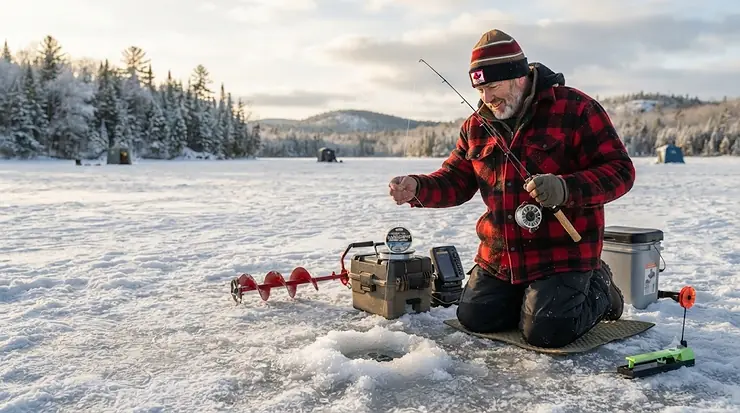
Somewhere under the ice right now, a walleye is deciding whether your line looks like a twig or a threat. That decision happens in a split second, and it depends almost entirely on which spool you loaded before you left the garage. The fluorocarbon vs monofilament ice fishing debate gets tossed around bait shops like it’s a religious argument, but it really comes down to physics, temperature, and what you’re targeting through six inches of ice. Fluorocarbon is a dense, low-stretch polymer that bends light almost exactly like water does, which is why it all but disappears below the surface. Monofilament is a springier, more forgiving nylon that floats higher, stretches more, and shrugs off sub-zero mornings without turning into fishing-line spaghetti. Neither one is universally “better” — they’re built for different jobs, and picking the wrong one costs you bites you’ll never even know you missed. In this guide, we’ll break down which ice line is better for specific situations, walk through seven real lines Canadian anglers can buy on amazon.ca, and give you a framework for choosing without the guesswork. Every trip still starts with the basics laid out under Canada’s federal fisheries rules, since licensing and conservation requirements apply before line choice ever enters the conversation. Metric depths and Celsius temperatures throughout, because that’s how we actually talk about winter up here.
Quick Comparison: Fluorocarbon vs Monofilament at a Glance
Before the deep dive, here’s the shortcut version for anyone standing in a tackle aisle right now.
| Property | Fluorocarbon | Monofilament |
|---|---|---|
| Underwater visibility | Nearly invisible (matches water’s refractive index) | More visible, especially in clear water |
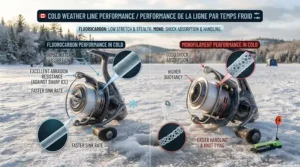
| Stretch | Low (5-15%) — better hooksets | Higher (15-30%) — more forgiving, absorbs headshakes |
| Cold-weather handling | Stiffer in extreme cold unless ice-specific | Naturally more supple in cold when cold-formulated |
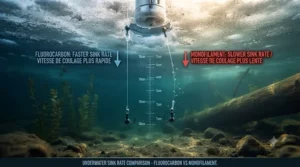
| Sink rate | Fast — good for finesse presentations | Slower, more neutral — good with light jigs |
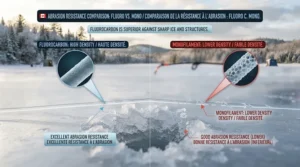
| Abrasion resistance | Very high | Moderate |
| Typical price range | C$15-C$45 per spool | C$7-C$20 per spool |
| Best for | Line-shy fish, clear water, jigging | Panfish, cold shanty-free days, beginners |
Reading between the rows, the pattern is clear: fluorocarbon wins when fish are spooky and the water is gin-clear, but it demands a formula built for cold or it turns into coiled wire on your spool. Monofilament, especially the cold-weather blends, wins on manageability and forgiveness, which matters more than most anglers admit when your fingers are numb at -15°C. Neither line wins on every front, which is exactly why serious ice anglers carry both.
💬 Just one click — help others make better buying decisions too!😊
Top 7 Ice Fishing Lines: Expert Analysis
We researched real, currently available lines across budget, mid-range, and ice-specific categories. Every product below reflects published specifications and aggregated review sentiment — not personal testing, and not invented quotes.
1. Seaguar InvizX — best all-around premium fluorocarbon
Seaguar InvizX is built from the company’s proprietary 100% fluorocarbon resin, and the standout feature is how soft it stays for a line this dense. Diameters run roughly from 0.007 in (4 lb) up to 0.017 in (20 lb), and it’s sold in 200, 600, and 1,000-yard spools — plenty to re-spool an entire ice arsenal from one roll. What that diameter range means in practice: you can match line strength to hole size and jig weight without stepping up to a diameter fish can spot from across the flat. Based on the spec comparison, Seaguar InvizX earns its “premium” tag through low memory rather than raw strength alone — a fluorocarbon that resists coiling is worth more on a jigging rod than one that’s simply strong, since coils kill sensitivity long before they cause a break-off. This is the line for anglers chasing pressured walleye or line-shy lake trout in clear shield lakes, where standard mono gets refused meal after meal. Reviewers consistently report exceptional castability and minimal backlash even in windy conditions, alongside strong abrasion resistance around rock and structure — a trait that carries over well to bouncing jigs off a rocky bottom through the ice. What most buyers overlook is that InvizX’s density means it sinks fast, which is a plus for getting finesse jigs into the strike zone quickly in deep water, but can feel unfamiliar if you’re used to mono’s slower fall.
Pros:
- ✅ Exceptionally low memory for 100% fluorocarbon
- ✅ Wide diameter range for finesse-to-heavy applications
- ✅ Strong abrasion resistance around structure
Cons:
- ❌ Pricier per yard than budget fluorocarbons
- ❌ Not ice-specific — no built-in cold-flex additive
At around C$25-C$40 depending on spool length and pound test, Seaguar InvizX sits at the premium end, but the value case holds up for anyone fishing clear, pressured water where visibility genuinely decides whether you get bit.
2. Berkley Vanish — best budget-friendly fluorocarbon
Berkley Vanish is a 100% fluorocarbon line built around an “improved formula” that Berkley markets as roughly 20% stronger on shock strength than earlier generations, with diameters spanning 0.006 in at 2 lb test up to heavier saltwater-class options near 60 lb. In practice, that shock-strength bump matters more on ice than it sounds — a sudden headshake from a pike near the hole is exactly the kind of jolt that snaps brittle fluorocarbon, and Vanish’s added flex absorbs it instead. The spec sheet won’t tell you this, but user reports suggest Vanish handles noticeably better on spinning setups than older-generation fluorocarbons, which historically fought anglers on light ice reels. Berkley Vanish is aimed squarely at anglers who want fluorocarbon’s invisibility without paying Seaguar-level prices, and reviewers frequently describe it as a dependable, no-frills choice for anyone without much spare cash for premium spools. Aggregated feedback repeatedly uses phrases like “great budget fluorocarbon” and “best bang for your buck,” which lines up with its position as an entry point into fluorocarbon rather than a top-shelf finesse tool.
Pros:
- ✅ Genuine 100% fluorocarbon at a mono-adjacent price
- ✅ Improved shock strength versus earlier Vanish formulas
- ✅ Wide break-strength range for multiple species
Cons:
- ❌ Stiffer in extreme cold than ice-specific fluorocarbons
- ❌ Less refined handling than premium Seaguar lines
Expect Berkley Vanish in the C$12-C$25 range depending on yardage and test — a legitimate value pick for anglers who want fluoro’s stealth on a mono budget.
3. Clam Frost Ice Premium Fluorocarbon — best ice-specific fluorocarbon with metered visibility
Clam Frost Ice Premium Fluorocarbon is manufactured by Sunline specifically for hardwater conditions, and its standout feature is the metered option — alternating clear and high-visibility (chartreuse or pink) sections that let you watch your line at the hole while keeping the business end near the jig completely clear. Available in 50 or 200-yard spools, with an IGFA-compatible true diameter-to-pound-test ratio, meaning the strength claimed on the label reflects genuine construction rather than an inflated marketing number. What that diameter accuracy means for you: knots you tie based on published diameter behave the way the chart says they should, instead of surprising you with a weaker-than-expected connection. Based on the spec comparison, this is one of the only fluorocarbons genuinely engineered around ice conditions rather than adapted from an open-water formula, which explains the “straighter off-the-spool feed” Clam advertises — less coil memory directly translates to better bite detection in the first hour on a cold spool. Reviewers and product literature consistently frame this as a sensitivity-focused line, and the metered design in particular gets singled out as solving a real problem: standard clear fluorocarbon is nearly impossible to see against snow and ice at the hole, and the metered sections fix that without sacrificing underwater stealth.
Pros:
- ✅ Ice-specific formula resists cold-induced stiffness
- ✅ Metered colour option aids strike detection above ice
- ✅ IGFA-accurate diameter-to-strength ratio
Cons:
- ❌ Smaller 50-yard spools cost more per yard
- ❌ Fewer big-box retail listings than Berkley or Seaguar
Price sits around C$15-C$25 for a 50-yard spool, which sounds steep per yard, but ice anglers rarely burn through 50 yards of leader material in a season, making the cost-per-outing quite reasonable.
4. Sufix Ice Magic Monofilament — the ice-fishing mono classic that just works
Sufix Ice Magic has been a hardwater staple for years, and the standout feature is a special additive package that actively deters water absorption, which is the root cause of the ice buildup that clogs guides and stiffens line on cold mornings. It’s offered across multiple pound tests and colours, including neon orange and glacier blue, in spools built for repeated re-spooling through a season. Here’s what to weigh: reduced water absorption means less ice forms on the line itself, which keeps guides clearer and hooksets crisper as the temperature drops through the day. The line’s soft, supple handling with low memory and comparatively high knot and tensile strength makes it a forgiving choice for anglers who don’t want to babysit their gear between bites. Reviewers consistently report that it “stays limp” and is “easy to see” in the water, with several noting it’s their go-to for every ice rod they own; one reviewer specifically called out landing “many panfish” without issue, while another flagged it as “a little pricey for mono” relative to bulk generic spools — a fair trade-off given the cold-weather-specific formulation.
Pros:
- ✅ Additives actively reduce ice buildup on the line
- ✅ Stays limp and manageable in frigid conditions
- ✅ High knot and tensile strength for the diameter
Cons:
- ❌ Costs more than generic bulk monofilament
- ❌ Higher visibility than fluorocarbon in clear water
Typical pricing lands around C$8-C$15 per spool, making it an easy staple to keep two or three of loaded across different jigging rods.
5. Berkley Trilene Cold Weather Monofilament — best for exposed, no-shelter ice fishing
Berkley Trilene Cold Weather is formulated to remain “as flexible at 0°C as regular mono is at room temperature,” and that single design goal is the standout feature worth understanding. What that means in practice: anglers fishing open holes without a shanty — where wind chill hammers both angler and tackle — get a line that doesn’t stiffen into coiled wire by the second hour. The improved formula is described as the limpest, smoothest version Berkley has released, with extraordinary flexibility and a low-memory design that resists the twisting and tangling that ruins an otherwise good bite window. Based on the spec comparison, this line prioritizes handling over sensitivity, which makes it a better match for open-water jigging with heavier lures than for finesse presentations where every twitch needs to transmit up the line. Reviewers frequently call it “a must-have for ice fishing,” with specific praise for panfish anglers using light test lines who say the fish “don’t see it” while the line itself stays easy to track topside; another long-time user notes it casts well and resists tangling “any time of year,” suggesting the cold-weather formula holds up even outside peak winter conditions.
Pros:
- ✅ Stays flexible in genuinely cold, exposed conditions
- ✅ Very low memory reduces tangles and twists
- ✅ Proven multi-season reliability from repeat buyers
Cons:
- ❌ More visible underwater than any fluorocarbon option
- ❌ Higher stretch reduces hookset immediacy versus fluoro
Expect this line in the C$7-C$12 range, squarely positioned as an affordable, dependable staple for anyone fishing exposed ice regularly.
6. Berkley Trilene Micro Ice — thinnest-diameter mono for finicky biters
Berkley Trilene Micro Ice is marketed as the smallest-diameter, strongest monofilament Berkley produces for ice fishing, and the standout feature is its low-stretch design layered onto a traditionally stretchy material. What most buyers overlook about this model is that it’s a specialty hybrid: monofilament’s forgiving handling combined with tighter stretch control more typical of fluorocarbon, aimed specifically at anglers targeting spooky panfish in gin-clear water under heavy pressure. That reduced stretch translates directly into faster, more direct hooksets on light bites — the kind of subtle “just a tick” strikes that get missed on stretchier lines. It’s soft and pliable enough to resist the kinks and coiling that plague thinner lines in cold conditions, while remaining strong enough, according to the manufacturer, to handle larger fish that occasionally show up on light tackle. Reviewers repeatedly describe it as their exclusive choice for jigging, with specific mentions of it “handling the toughest fish” despite the fine diameter — a meaningful data point since thin lines are usually the first to fail under sudden pressure.
Pros:
- ✅ Thinner diameter improves lure action and sensitivity
- ✅ Lower stretch than typical monofilament for quicker sets
- ✅ Resists kinking better than comparable thin lines
Cons:
- ❌ Small diameter demands careful drag settings
- ❌ Less abrasion-resistant than heavier-gauge lines
Priced similarly to Cold Weather mono, around C$7-C$12, this is the line to spool specifically on panfish and finesse walleye setups rather than as an all-purpose choice.
7. Pristis Fluorocarbon Coated Ice Fishing Line — cheapest fluoro-coated hybrid for backup spools
Pristis Fluorocarbon Coated Ice Fishing Line is a copolymer nylon core with a fluorocarbon surface coating rather than a 100% fluorocarbon line, and that distinction is the standout feature buyers need to understand before purchasing. In practice, the coating lowers visibility and adds some abrasion resistance versus plain nylon, without the higher per-yard cost or occasional cold-weather stiffness of true fluorocarbon. It’s sold in 220-yard spools across a range of pound tests, marketed with no-freeze, low-memory claims aimed squarely at budget-conscious anglers stocking multiple backup spools for a season. Here’s what to weigh: a coated copolymer will never match a genuine 100% fluorocarbon line like InvizX on pure invisibility or sink rate, but for casual panfish trips or as an emergency re-spool sitting in a tackle box, the value proposition is hard to beat. Verifiable aggregated feedback on Amazon.ca for this budget import category tends to skew positive for the price point, though as with most coated copolymer lines, some anglers report more line memory over a full season than they’d get from true fluorocarbon — a fair trade given the difference in cost per yard.
Pros:
- ✅ Very low cost per yard for 220-yard spools
- ✅ Fluorocarbon coating improves visibility over plain nylon
- ✅ Widely available directly on amazon.ca
Cons:
- ❌ Not true 100% fluorocarbon despite the name
- ❌ More memory buildup than premium fluoro over a season
At roughly C$8-C$14 for a 220-yard spool, this is the backup-spool pick — the line you keep in the sled bag so a mid-day break-off never ends your day early.
Top 7 Products at a Glance
| Product | Type | Price Range (CAD) | Best For |
|---|---|---|---|
| Seaguar InvizX | 100% Fluorocarbon | C$25-C$40 | Pressured walleye, clear lakes |
| Berkley Vanish | 100% Fluorocarbon | C$12-C$25 | Budget-conscious fluoro users |
| Clam Frost Ice Premium Fluorocarbon | 100% Fluorocarbon (ice-specific) | C$15-C$25 | Metered visibility, sensitivity |
| Sufix Ice Magic | Monofilament | C$8-C$15 | All-around hardwater staple |
| Berkley Trilene Cold Weather | Monofilament | C$7-C$12 | Open, no-shelter ice fishing |
| Berkley Trilene Micro Ice | Monofilament (low-stretch) | C$7-C$12 | Panfish, finesse jigging |
| Pristis Fluorocarbon Coated | Coated Copolymer | C$8-C$14 | Budget backup spools |
Looking at the table above, the split isn’t really “fluorocarbon vs monofilament” as much as “clear-water finesse vs cold-tolerant durability.” Seaguar InvizX and Clam Frost Ice Premium Fluorocarbon dominate when line-shyness is the problem, while Sufix Ice Magic and Berkley Trilene Cold Weather dominate when the problem is your own frozen fingers fighting stiff line at a windy hole. Budget-focused anglers should note that Berkley Vanish and Pristis Fluorocarbon Coated both trade some refinement for a lower entry price, which matters most if you’re spooling several rods for a family ice-fishing trip rather than one dedicated tournament setup.
✨ Don’t Miss These Exclusive Deals!
🔍 Take your ice fishing setup to the next level with these carefully selected lines. Click on any highlighted product to check current pricing and availability. The right line pairs with the right jig to help you build authentic winter memories on the ice with family and friends!
Practical Usage Guide: Spooling and Maintaining Ice Line
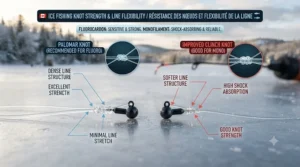
Getting a new spool onto your reel matters more in winter than summer, because cold amplifies every handling mistake. Start by spooling indoors at room temperature if at all possible — line loaded cold, straight out of a frozen vehicle, retains more coil memory for the rest of the season than line spooled warm and allowed to acclimatize gradually on the ice. Fill spinning reels to roughly 1-2mm from the lip; overfilled ice reels are a leading cause of the tangles anglers blame on the line itself. For fluorocarbon specifically, tie an improved clinch or a Palomar knot with at least five wraps, since fluorocarbon’s slicker surface needs more wraps than monofilament to seat properly — two or three wraps, common with mono, will slip under sudden pressure from a big fish near the hole. A common first-30-days mistake is skipping knot re-tying after landing fish; both line types weaken at the knot after a fight, and re-tying every few fish costs seconds but prevents the heartbreaking break-off on your best catch of the day. For maintenance through a season, wipe spools dry before storage to prevent freeze-thaw cycles that stress the outer wraps, and inspect the first metre above your jig for nicks after fishing near rocky structure — that section takes the most abrasion and is the cheapest place to trim and re-tie rather than gamble on a weak point.
Real-World Scenarios: Matching Line to the Angler
Ice fishing culture in Canada has proven remarkably resilient through shifting winters — CBC News recently covered how colder temperatures have brought renewed energy to Quebec’s ice villages, a reminder that gear choices here serve a tradition, not just a hobby. Picture three different Saturdays on the ice. First, a university student borrowing a buddy’s gear for a first panfish trip on a stocked pond — budget is tight, patience for re-spooling is thin, and the fish aren’t especially line-shy. Berkley Trilene Cold Weather or Sufix Ice Magic fits this trip perfectly: forgiving, inexpensive, and simple enough that a beginner tying their first ice knot won’t fight the line itself. Second, a retiree who fishes a pressured shield lake three times a week chasing lake trout that have seen every jig in the province. Here, Seaguar InvizX earns its price — those fish have been refusing visible line for years, and shaving off even a small percentage of refused bites over dozens of trips adds up to meaningfully more fish in the bucket. Third, a family with kids in a heated shanty targeting whatever bites, mixing panfish with the occasional pike surprise. This crowd benefits from Berkley Trilene Micro Ice on the kids’ light rods for sensitivity, paired with a Pristis Fluorocarbon Coated backup spool in the tackle box in case a pike bites through a leader and someone needs a fast re-spool without missing an hour of prime bite time.
Buyer’s Decision Framework
If you’re standing in an aisle trying to decide which ice line is better for your specific trip, run through this simple checklist before you buy:
- If the water is very clear and fish are pressured, choose fluorocarbon, because low visibility directly increases strikes from line-shy species.
- If you’re fishing an open hole with no shelter in extreme cold, choose a cold-weather-formulated monofilament, because handling matters more than invisibility when your hands are numb.
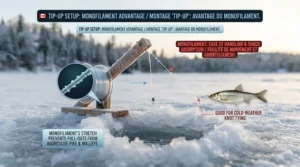
- If you’re targeting light-biting panfish and need faster hooksets, choose a low-stretch mono like Micro Ice or a fluorocarbon leader, since reduced stretch transmits subtle strikes faster.
- If budget is the primary constraint across multiple rods, choose monofilament or coated copolymer, since true fluorocarbon costs meaningfully more per yard.
- If you’re fishing near rock, wood, or zebra mussel-covered structure, choose fluorocarbon for its superior abrasion resistance.
- If you can only carry one spool type all season, choose an ice-specific monofilament, since it handles the widest range of conditions without specialized care.
How to Choose the Best Line Type for Ice Fishing
- Match line to target species first. Panfish demand thin, sensitive line; pike and lake trout demand abrasion resistance and shock strength.
- Consider water clarity before brand loyalty. Stained water rarely justifies premium fluorocarbon’s price premium, since visibility differences shrink dramatically when fish can’t see far regardless.
- Factor in your shelter setup. No-shelter anglers should prioritize cold-tolerant handling over marginal sensitivity gains.
- Check diameter-to-strength ratio, not just pound test. Two lines rated at 6 lb can differ meaningfully in actual diameter, which affects both sink rate and stealth.
- Budget for re-spooling more than one rod. Most serious ice anglers run at least two line types across their rod lineup rather than a single universal spool.
- Weigh sink rate against jig weight. Fast-sinking fluorocarbon pairs naturally with light jigs in deep water; slower monofilament can actually help with very light presentations in shallow water.
- Buy from a source with real diameter and yardage specs listed, since vague marketing copy without measurable specs is a warning sign of an inconsistent spool. The organized side of the sport, like the annual Canadian Ice Fishing Championship on Lake Simcoe, is a good reminder that competitive anglers obsess over exactly these details for a reason — small line choices genuinely add up over a full day on the ice.
Common Mistakes When Buying Ice Fishing Line
The single most common mistake is buying open-water fluorocarbon and expecting ice-season performance — standard fluorocarbon not formulated for cold genuinely does stiffen and coil more in sub-zero air, which is exactly why ice-specific formulas like Clam Frost Ice Premium Fluorocarbon exist. A close second is over-buying pound test “just in case,” which increases visibility and reduces sensitivity without a proportional gain in landed fish, since most break-offs come from worn knots rather than undersized line. Anglers also frequently ignore diameter listings entirely, comparing lines purely by pound test and ending up with a thicker, less stealthy spool than intended. Another frequent misstep is spooling a single all-purpose line across every rod in the sled, which sacrifices the specific advantages — sensitivity, invisibility, or cold-flex — that come from matching line type to technique. Finally, many buyers skip checking whether a line is genuinely 100% fluorocarbon versus a fluorocarbon-coated copolymer like Pristis; both have their place, but paying fluorocarbon prices for coated copolymer performance is a preventable disappointment.
Fluorocarbon vs Monofilament: The Full Comparison
The fluoro vs mono comparison ultimately comes down to what each material actually is at a molecular level. Fluorocarbon is polyvinylidene fluoride, a dense polymer with a refractive index close to water’s, which is the scientific reason it disappears underwater rather than simply being “clearer” in a marketing sense. Monofilament is extruded nylon, lighter and more elastic, which explains both its higher visibility and its greater stretch under load. In direct casting and jigging scenarios, fluorocarbon’s density means it sinks faster and telegraphs strikes more directly, since less energy gets absorbed by the line stretching before it reaches your rod tip. Monofilament’s stretch, meanwhile, isn’t purely a downside — that give acts as a natural shock absorber during a hard headshake near the hole, reducing hook-pulls on fish you’ve already half-landed. Cold specifically changes this equation: nylon’s molecular structure tends to stay more pliable at low temperatures unless a fluorocarbon is specifically engineered with ice-fishing additives, which is why generic summer fluorocarbon has a real reputation among ice anglers for turning stiff and coily on a cold morning. The honest takeaway is that fluorocarbon wins on stealth and sensitivity, monofilament wins on forgiveness and natural cold tolerance, and the “better” choice depends entirely on whether your specific trip is limited more by spooky fish or by brutal temperatures.
Line Visibility Comparison: What the Data Actually Shows
Visibility is the single most-cited reason anglers reach for fluorocarbon, and the underlying reason is genuinely measurable rather than marketing hype: fluorocarbon’s refractive index sits close to water’s own, so light passes through it with minimal bending or reflection, while monofilament’s refractive index differs more sharply, creating a visible line silhouette fish can key in on. Where this matters most is gin-clear lakes with minimal algae or sediment, and it matters far less in stained, tannic, or heavily pressured turbid water where visibility differences between line types shrink toward irrelevance regardless of material. Line diameter compounds this effect — a thinner 4 lb fluorocarbon leader is less visible than a thicker 8 lb monofilament even before accounting for the material difference, which is why serious finesse anglers often drop down in pound test on fluorocarbon rather than simply switching materials. Colour matters too: high-visibility mono variants intentionally sacrifice underwater stealth for topside strike detection, a trade some anglers accept happily on panfish where visibility to the fish barely affects bite rates. For most Canadian shield-lake and Great Lakes tributary conditions, the honest answer is that visibility differences matter most on bright, sunny days in clear water over light-coloured bottom, and matter least under snow cover, overcast skies, or stained water.
Stretch: Fluoro vs Mono Explained
Stretch is where the fluoro vs mono decision gets most technical, and it’s worth understanding in plain terms rather than marketing shorthand. Monofilament typically stretches somewhere in the 15-30% range before breaking, which means a meaningful portion of the energy from a strike or hookset gets absorbed by the line itself rather than transmitted to your hands or the hook point. Fluorocarbon stretches far less, often in the 5-15% range depending on the specific line, which is exactly why a subtle “tick” from a light-biting winter perch registers far more clearly through fluorocarbon than through standard mono. Lower stretch isn’t universally superior, though — that same reduced give means fluorocarbon transmits shock more directly to the hook point during a hard strike, occasionally pulling hooks on softer-mouthed fish like crappie if drag settings aren’t adjusted accordingly. This is precisely why Berkley Trilene Micro Ice exists as a hybrid approach: it keeps monofilament’s forgiving nature while intentionally reducing stretch compared to standard mono, aiming for a middle ground rather than forcing anglers to choose an extreme. Practically speaking, low-stretch line rewards anglers who set the hook quickly and firmly on subtle bites, while higher-stretch line rewards a more patient, feel-based hookset — matching your line’s stretch profile to your own hookset timing matters as much as matching it to the species.
Durability Ice Fishing Line: Long-Term Cost and Maintenance
Durability in ice fishing line breaks down into two separate questions that anglers often conflate: abrasion resistance against structure, and degradation over a storage season. On abrasion resistance, fluorocarbon’s denser molecular structure genuinely outperforms monofilament against rock, zebra mussels, and sharp ice edges at the hole, which is why leaders tied from Seaguar InvizX or similar fluorocarbon hold up longer when jigging tight to rocky structure than an equivalent mono leader would. On storage degradation, the picture flips somewhat: monofilament absorbs a small amount of moisture over time, which can slightly reduce strength season over season if stored wet or in fluctuating temperatures, while true fluorocarbon’s near-zero water absorption means a spool stored properly retains its rated strength notably longer between seasons. Calculating total cost of ownership requires weighing upfront price against this lifespan difference — a C$30 spool of Seaguar InvizX that lasts three full seasons of moderate use may cost less per outing than replacing a C$10 spool of unbranded monofilament every single year due to UV and moisture degradation in tackle box storage. For anglers fishing 15-20 outings per season, premium fluorocarbon on a dedicated leader setup often pencils out favourably over a three-year horizon, while casual anglers fishing five or six trips per winter rarely fish enough to offset the higher upfront cost, making budget monofilament the more rational long-term choice for that use case.
What to Expect: Real-World Performance on the Ice
Specs on a package only tell part of the story; here’s what actually happens across a typical day. Early morning, in the coldest air of the day, uncoated ice-specific monofilament like Sufix Ice Magic or Berkley Trilene Cold Weather comes off the spool noticeably more manageable than standard fluorocarbon, which may need several casts to work out initial stiffness even with a cold-tolerant formula. Around mid-morning, as the sun climbs and fish activity often peaks, fluorocarbon’s low-visibility advantage becomes most valuable, particularly in shallow water where sunlight penetrates clearly to the bottom. By afternoon, as fatigue sets in and hooksets get lazier, low-stretch lines like fluorocarbon or Berkley Trilene Micro Ice help compensate by transmitting even half-hearted hooksets more effectively than high-stretch line would. Across a full season, the practical difference anglers report most often isn’t really about landing more fish per outing — it’s about fewer frustrating tangles and re-ties when using a properly matched, cold-tolerant line, which translates into more actual fishing time per trip rather than gear-wrangling time.
Ice Fishing Line for Different Anglers
Beginners genuinely benefit most from forgiving monofilament — the stretch that experienced anglers sometimes see as a drawback acts as a safety margin against the overly aggressive hooksets and drag mistakes common when you’re still learning feel. Intermediate anglers chasing specific species on familiar water often benefit from carrying both types, matching fluorocarbon leaders to finesse presentations and monofilament mainline to heavier jigging setups. Advanced or tournament-focused anglers on pressured water increasingly lean toward premium fluorocarbon as a mainline rather than just a leader, accepting the higher cost as a competitive edge against fish that have seen thousands of other anglers’ presentations. Families and kids benefit most from simple, forgiving, inexpensive monofilament on light rods, since the goal on those trips is usually maximizing bites and keeping young anglers engaged rather than optimizing for marginal stealth gains. Ice anglers on a strict budget covering multiple rods should prioritize one or two quality monofilament spools over spreading a smaller budget across mediocre fluorocarbon, since a well-matched budget mono line consistently outperforms an underpowered or wrong-diameter fluorocarbon choice.
Safety, Regulations, and Compliance Guide for Canadian Ice Anglers
Before any gear discussion, ice safety itself deserves attention: each province manages its own regulations summary, season dates, and licensing requirements, layered on top of the federal fisheries framework mentioned earlier. In Ontario specifically, anglers can legally fish with two lines through the ice in most waters, provided they stay within 60 metres of any line or tip-up at all times and maintain a clear, unobstructed view of every line in use, according to the Government of Ontario’s ice fishing guidance. This two-line allowance matters practically for gear choice: many anglers run one fluorocarbon-leadered rod for finesse presentations alongside one monofilament-rigged tip-up simultaneously, which is entirely permitted under most zone rules. Ice thickness and safety protocols vary meaningfully by region and season — near-shore ice is frequently thicker and safer than ice further out, and conditions can change day to day even on the same lake, so checking local conditions before every outing matters more than any single piece of tackle. Whatever line you choose, always confirm your provincial line-count limits and hut registration requirements before your trip, since these rules genuinely vary by fisheries management zone.
Frequently Asked Questions
❓ Which ice line is better, fluorocarbon or monofilament?
❓ What is the best line type for ice fishing overall?
❓ Does fluorocarbon really disappear underwater compared to monofilament?
❓ Why does my fluorocarbon line coil up so much on cold mornings?
❓ Is monofilament durable enough for ice fishing near rocky structure?
Conclusion
The fluorocarbon vs monofilament ice fishing question was never really about crowning one universal winner — it’s about matching material properties to the actual conditions on your lake that day. Fluorocarbon earns its higher price tag when fish are spooky, water is clear, and abrasion resistance matters against structure; monofilament earns its place when brutal cold, forgiving stretch, and budget matter more than marginal stealth gains. Among the seven lines covered here, Seaguar InvizX stands out for anglers chasing pressured fish on clear shield lakes, while Sufix Ice Magic and Berkley Trilene Cold Weather remain dependable, affordable staples for the vast majority of hardwater days most Canadians actually fish. Budget-conscious anglers spooling multiple rods shouldn’t feel pressured into premium fluorocarbon across the board — a well-matched monofilament consistently outfishes an underpowered or wrong-diameter fluorocarbon choice. Whichever direction you go, check your provincial regulations, respect ice safety fundamentals, and remember that the best line is ultimately the one that lets you spend more time fishing and less time untangling.
✨ Ready to spool up for the season? Check current prices and availability on the lines above before your next trip out on the ice!
Recommended for You
- Fluorocarbon Ice Fishing Line: 7 Best Picks for Clear Water in 2026
- Cold Weather Mono Line: 7 Best Picks for Brutal Winters (2026)
- Monofilament Ice Fishing Line 2026: 7 Best Picks for Anglers
Disclaimer: This article contains affiliate links. As an Amazon Associate, I earn from qualifying purchases. If you purchase products through these links, we may earn a small commission at no additional cost to you.
✨ Found this helpful? Share it with your friends! 💬🤗
