In This Article
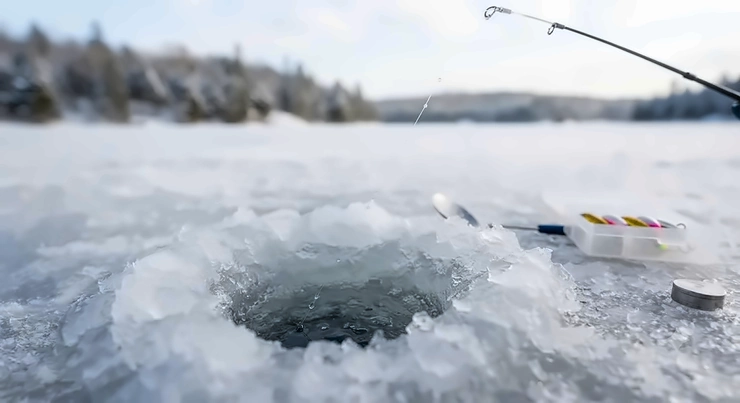
Somewhere around your third fishless flag of the morning, you start blaming everything but yourself — the moon phase, the barometer, your buddy’s “lucky” jig. But out on gin-clear Canadian lakes, the culprit is often dangling right below your rod tip: your line. fluorocarbon ice fishing line exists precisely because winter water gets scary transparent once the snow cover thins and the sun gets low, and a fish with nothing better to do than stare at your line all day will eventually notice it if it’s the wrong stuff. Fluorocarbon is a dense, PVDF-based polymer with a refractive index close to that of water, which is a science-y way of saying it disappears once it’s wet, in a way ordinary monofilament simply can’t. It also sinks faster and stretches less, both of which matter enormously when you’re trying to feel a lake trout mouth a spoon forty feet down through a hole barely wider than a coffee can.
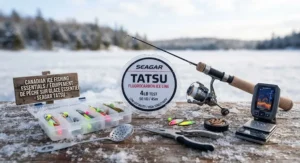
This guide breaks down real, purchasable fluorocarbon lines built for or well-suited to hardwater fishing across the price spectrum, explains what the specs actually mean once you’re standing on a frozen lake in your snowsuit, and walks through the situations where fluorocarbon earns its keep versus when it doesn’t. Ice fishing remains a deeply rooted part of Canadian winter culture, and picking the right line is a small decision that pays off across an entire season on the water. We’ll dig into invisible ice fishing line properties, when a fluorocarbon leader ice fishing setup beats a straight mainline, and how to keep the stuff from turning into a slinky in sub-zero temperatures. By the end, you’ll know exactly which spool belongs on your reel this season — and why.
Quick Comparison Table: Fluorocarbon Ice Fishing Lines at a Glance
| Product | Diameter Profile | Best For | Price Range (CAD) |
|---|---|---|---|
| Berkley Trilene 100% Fluorocarbon Ice | Thin, ice-specific | Budget panfish/walleye setups | Under C$15 |
| Seaguar IceX Fluorocarbon Ice Line | Micro-diameter | Premium finicky-fish presentations | C$25-C$35 range |
| Seaguar InvizX Fluorocarbon | Standard, soft | Multi-season mainline value | C$15-C$25 range |
| Sunline FC Premium Ice Fluorocarbon Line | Thin, cold-tuned | Deep-water lake trout/walleye | C$20-C$30 range |
| KastKing Kovert 100% Fluorocarbon | Standard | Budget-conscious multi-species | Under C$15 |
| P-Line Floroclear Fluorocarbon-Coated | Copolymer core | Beginners wanting easier handling | Under C$15 |
| Pristis Fluorocarbon Coated Ice Fishing Line | Copolymer core | High-volume budget spooling | Under C$15 |
A quick scan of that table tells you most of what you need before you even hit the tackle shop: pure 100% fluorocarbon options like Seaguar IceX and Berkley Trilene 100% Fluorocarbon Ice trade a bit more cost for maximum invisibility and sensitivity, while fluorocarbon-coated copolymer lines like P-Line Floroclear and Pristis Fluorocarbon Coated Ice Fishing Line soften the price and the handling curve at the expense of some true fluoro performance. Diameter matters more in winter than summer, too, since thinner line means less drag through the water column and a jig that falls naturally instead of on a taut leash. If you’re chasing suspicious, pressured walleye on a lake that gets fished hard every weekend, lean toward the top two rows; if you’re introducing a kid to panfish through a five-inch hole, the bottom two rows will serve you just fine without punishing your wallet.
💬 Just one click — help others make better buying decisions too!😊
Top 7 Fluorocarbon Ice Fishing Lines: Expert Analysis
1. Berkley Trilene 100% Fluorocarbon Ice — best budget pick built specifically for hardwater
Berkley took its long-running Trilene fluorocarbon formula and reworked it specifically for cold water, shaving the diameter down and boosting suppleness so it doesn’t turn into fishing-line rebar the moment the mercury drops. The line is rated by break strength (2 lb up through heavier tests) on 75-yard spools, which is a smart length for ice — you don’t need 300 yards of anything when your “cast” is a foot deep. Because it’s 100% fluorocarbon rather than a coated blend, it carries that near-identical refractive index to water that makes it genuinely difficult for fish to pick out, and the low-stretch formulation translates into better hooksets on those subtle, tap-tap bites that panfish are famous for delivering. Based on the spec sheet, this is squarely a finesse tool: it’s built for anglers targeting bluegill, crappie, and perch rather than muscling pike through slush. Reviewers consistently report that it handles noticeably better than older fluorocarbon ice formulas, with less of the coiling and kinking that plagued early-generation fluoro on spinning reels in cold shacks; a recurring complaint is that very light tests (2-4 lb) can feel almost too soft for anglers used to stiffer mono, requiring a slight adjustment period.
Pros:
- ✅ Purpose-built diameter and suppleness for cold-weather handling
- ✅ True 100% fluorocarbon for maximum underwater invisibility
- ✅ Widely available at Canadian tackle retailers and Amazon.ca
Cons:
- ❌ Light tests can feel too soft for anglers used to stiffer mono
- ❌ 75-yard spools mean more frequent respooling for heavy users
Priced under C$15 at the time of research, this is one of the easiest entry points into true fluorocarbon on the ice — a strong value pick if you’re testing whether fluoro is worth the switch before committing to pricier premium spools.
2. Seaguar IceX Fluorocarbon Ice Line — best premium option for finicky, heavily pressured fish
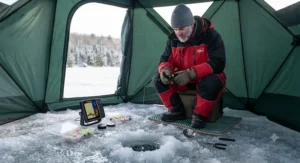
Seaguar built IceX from the ground up as an ice-specific fluorocarbon rather than repackaging an open-water formula, and it shows in the micro-diameter construction that keeps the line thin enough to fall naturally through the water column even on light jigging setups. The company’s proprietary resin blend delivers exceptionally low memory, which in practice means the coils that usually plague cold fluorocarbon straighten out almost immediately when you free-spool it — a genuinely useful trait when you’re swapping reels between a heated shack and open-air flags. On paper, the combination of abrasion resistance against sharp ice-hole edges and high knot/tensile strength in extreme cold makes this a line built to survive an entire season of dragging across auger-cut ice without weakening. This is the spool for the angler chasing lake trout, late-ice walleye, or bluegill in ultra-clear Canadian Shield lakes where fish have seen every jig in the tackle box and shy away from anything with visible presence. Reviewers and ice guides consistently point to its sensitivity as the standout trait — feeling a subtle “tick” through 20+ feet of 34°F water is where this line separates itself from cheaper alternatives, though several note the price premium is real and best justified for technical, high-pressure fisheries rather than a casual afternoon with the kids.
Pros:
- ✅ Ice-specific engineering, not a repurposed open-water formula
- ✅ Exceptional low memory even after cold storage
- ✅ High sensitivity for detecting light winter bites
Cons:
- ❌ Premium pricing compared to general-purpose fluorocarbon
- ❌ Overkill for casual panfish trips where budget line performs fine
At around C$25-C$35 depending on spool length, IceX sits at the top of this list — but for anglers fishing pressured lakes where every missed bite matters, the value case is straightforward.
3. Seaguar InvizX Fluorocarbon — best all-around value for anglers who fish year-round
InvizX isn’t marketed specifically as an ice line, but it’s become a favourite among multi-species anglers who want one spool that performs both through the ice and off the dock come May. Made from Seaguar’s proprietary resin process, it’s engineered for low memory and enough suppleness to cast smoothly, which — counterintuitively — also makes it far easier to manage on an ice reel than stiffer general-purpose fluorocarbons. What most buyers overlook about this line is its density: as 100% fluorocarbon, it sinks faster than monofilament, keeping a bait in the strike zone instead of drifting up as slack develops in the hole. It’s rated across a wide range of breaking strengths and is genuinely UV- and chemical-resistant, meaning a half-used spool tossed in a tackle box over summer won’t degrade before next winter. This is the line for the angler who doesn’t want a dedicated ice-only spool and a separate open-water spool — one 200 or 600-yard fill covers a season of walleye, bass, and panfish in essentially any water clarity. Aggregated reviewer sentiment is strongly positive on knot strength and abrasion resistance around rock and timber, with a recurring theme that InvizX outperforms it’s price point; some anglers note it isn’t quite as supple in sub-zero shack temperatures as ice-specific formulas like IceX, requiring a warm-up period before it handles smoothly.
Pros:
- ✅ Doubles as a mainline for open-water and hardwater seasons
- ✅ Fast-sinking, low-memory 100% fluorocarbon construction
- ✅ Strong reviewer consensus on knot and abrasion durability
Cons:
- ❌ Not engineered specifically for extreme cold handling
- ❌ Slightly stiffer than dedicated ice formulas until warmed up
In the C$15-C$25 range for a usable spool, InvizX earns its spot as the best-value crossover pick on this list.
4. Sunline FC Premium Ice Fluorocarbon Line — best for deep-water lake trout and walleye presentations
Sunline built its reputation on triple-resin-processed fluorocarbon for bass fishing before adapting that technology into a dedicated ice product, and the FC Premium Ice line inherits the parent formula’s low memory and high abrasion resistance. The thin diameter-to-strength ratio is the headline feature here: a thinner line cuts through the water column faster, which matters enormously when you’re dropping a spoon 25-40 feet for suspended lake trout or working a jigging rap along a deep walleye break. Because Sunline’s resin processing is specifically engineered to resist brittleness in freezing conditions — a trait the company also touts on its open-water FC Sniper formula, which anglers report holds up better than competitors in sub-zero temperatures — this line stays manageable even when your rod tip is coated in frost. Based on the spec comparison with other ice-specific fluorocarbons on this list, FC Premium Ice lands in the sweet spot between IceX’s ultra-premium pricing and Trilene’s budget positioning, making it a strong pick for anglers who fish deep, technical water regularly but don’t need the absolute top-tier product. What the spec sheet won’t tell you, but reviewers note, is that the line’s stiffness in very light tests (under 4 lb) can make micro-jig presentations slightly less natural than the softest fluorocarbons on this list.
Pros:
- ✅ Excellent diameter-to-strength ratio for deep, fast presentations
- ✅ Cold-resistant resin processing resists brittleness
- ✅ Strong mid-tier price-to-performance balance
Cons:
- ❌ Light tests are noticeably stiffer than Seaguar or Berkley options
- ❌ Less widely stocked at smaller Canadian bait shops than Berkley or Seaguar
Expect to pay in the C$20-C$30 range, positioning FC Premium Ice as a genuine mid-tier alternative for anglers targeting deeper structure.
5. KastKing Kovert 100% Fluorocarbon — best budget alternative for multi-species anglers
KastKing has built a reputation on delivering fishing gear that punches above its price point, and Kovert fluorocarbon follows that pattern by offering a true 100% fluorocarbon construction at a price closer to coated hybrid lines than premium Japanese fluorocarbon. The line is marketed around extreme clarity and low visibility, which — because it is genuine fluorocarbon rather than a coating — holds up reasonably well against that claim; the refractive properties of the base material do most of the invisibility work regardless of brand. Shock resistance and knot strength are highlighted as core features, both practically important on ice where a sudden lunge from a pike or a big walleye can snap a line that handled a hundred smaller fish just fine. On paper, this reads as a solid choice for anglers who want to try true fluorocarbon across several species — perch, walleye, small pike — without committing premium-line money to a spool that might get nicked on the first sharp-toothed fish of the day. Reviewers consistently frame this as strong value for money, though a recurring theme in aggregated feedback is that memory and stiffness in cold conditions are noticeably higher than Seaguar or Sunline’s ice-specific formulas, meaning it benefits from a warm-up period before spooling in an unheated shack.
Pros:
- ✅ True 100% fluorocarbon at a budget-friendly price
- ✅ Solid shock and knot strength for mixed-species days
- ✅ Widely stocked online, including on Amazon.ca
Cons:
- ❌ Higher memory in extreme cold than ice-specific formulas
- ❌ Less proven track record than legacy brands like Berkley or Seaguar
At under C$15 for a standard spool, Kovert is a smart pick for anglers who want to experiment with fluorocarbon before graduating to a premium ice-specific line.
6. P-Line Floroclear Fluorocarbon-Coated — best entry-level line for anglers new to fluorocarbon
It’s worth being upfront about this one: Floroclear is a copolymer core with a fluorocarbon coating, not 100% fluorocarbon straight through, so it won’t match the pure-fluoro options above on outright invisibility or sensitivity. What it does deliver is genuinely easier handling — the copolymer core keeps memory low and castability high, and the special silicone treatment P-Line applies further reduces friction through guides and ice-rod eyes. For a beginner ice angler who’s struggled with kinking, coiling fluorocarbon in the past, this is a forgiving way to get some of fluorocarbon’s stealth benefit without fighting the line all morning. The 30% thinner diameter compared to many standard lines is a real practical advantage on ice, since thinner line means less resistance as a jig falls and less visible presence in the hole itself. Based on aggregated reviewer sentiment, this line earns consistent praise for knot strength that holds even under sudden pressure and for casting smoothly straight off the spool — useful traits that translate well to ice fishing even though the line is marketed primarily for open water. The clear trade-off, and one that a BC-based fishing review notes explicitly, is that it isn’t fully translucent underwater the way true fluorocarbon is, so it may not be the top choice for the most line-shy species in ultra-clear conditions.
Pros:
- ✅ Much easier handling than true fluorocarbon for beginners
- ✅ Reduced memory and friction from silicone treatment
- ✅ Noticeably thinner diameter for a smoother jig fall
Cons:
- ❌ Not fully invisible underwater like 100% fluorocarbon
- ❌ Less abrasion-resistant than pure fluorocarbon in rough conditions
Available for under C$15 at most retailers, Floroclear is a sensible stepping stone for anglers easing into fluorocarbon without a steep learning curve.
7. Pristis Fluorocarbon Coated Ice Fishing Line — best value for high-volume spooling across multiple rods
Pristis takes a similar approach to P-Line — a copolymer core wrapped in a fluorocarbon coating — but positions itself specifically as an ice product, with 220-yard spools long enough to fill several ice rods from a single purchase. The marketed selling points are low memory and abrasion resistance built specifically to resist freezing, addressing the classic hardwater complaint of line turning stiff and coily the moment it comes out of an unheated truck bed. Because it’s a nylon-based copolymer with a fluorocarbon coating rather than pure PVDF, it’s more affordable per yard than any 100% fluorocarbon option on this list, which matters if you’re the type of angler running four or five rods through a single day of hole-hopping. On paper, this makes it a practical choice for a group ice trip or a family outing where multiple rods need spooling without blowing the budget on premium fluorocarbon for each one. Verified customer feedback on this specific product is thinner than for established brands like Seaguar or Berkley, so it’s worth stating plainly: this is a newer, lesser-known entrant, and buyers should treat any performance claims with the same healthy skepticism they’d apply to any less-established brand, verifying fit for their specific technique with a modest first purchase before committing to bulk spools.
Pros:
- ✅ Long 220-yard spools ideal for multi-rod setups
- ✅ Budget-friendly per-yard cost versus true fluorocarbon
- ✅ Marketed cold-resistance specifically for ice conditions
Cons:
- ❌ Copolymer core means less true invisibility than 100% fluoro
- ❌ Limited independently verified review history compared to legacy brands
Priced under C$15 per spool, Pristis works best as a practical, high-volume option rather than a technical, pressured-lake solution.
Practical Usage Guide: Spooling, Storing, and Fishing Fluorocarbon in the Cold
Fluorocarbon behaves differently once temperatures drop, and a few habits make the difference between a smooth day and constant line frustration. First, never spool a reel with cold fluorocarbon straight from a vehicle trunk — bring the spool inside for 20-30 minutes before filling your reel, since line at room temperature lays down with far less memory than line pulled directly from -15°C storage. Second, apply light tension while spooling; fluorocarbon’s stiffness means over-tight spooling locks in coils that no amount of stretching will fully remove once you’re on the ice. Third, inspect your last three to five feet of line after every dozen fish or so — fluorocarbon’s abrasion resistance is good, but repeated contact with sharp ice-hole edges wears it down invisibly, and a nicked line is where big fish get lost. A common mistake in the first thirty days of using a new spool is tying knots the same way you would with monofilament; fluorocarbon requires slower, well-lubricated knot cinching (wet the line before pulling tight) because its lower elasticity makes it prone to friction damage during a rushed knot. Finally, store partially used spools somewhere that doesn’t swing between freezing and thawing repeatedly, since that cycle accelerates the line’s gradual stiffening more than steady cold storage does.
Real-World Scenarios: Which Fluorocarbon Line Fits Your Trip
Consider three different Canadian ice anglers on the same weekend. A university student on a tight budget, fishing a local conservation-area pond for perch with a buddy’s spare rod, doesn’t need — or want to pay for — premium ice-specific fluorocarbon; KastKing Kovert or Pristis Fluorocarbon Coated Ice Fishing Line covers the basics affordably while still delivering more stealth than plain monofilament. A weekend family outing with two kids and a rented ice hut calls for something forgiving and easy to re-tie repeatedly, since young anglers snag bottom often and lose patience with stiff, tangle-prone line — P-Line Floroclear or Berkley Trilene 100% Fluorocarbon Ice in a lighter test strikes the right balance of stealth and manageability. Meanwhile, a serious weekend angler chasing suspended lake trout on a heavily pressured Canadian Shield lake, dropping spoons 30+ feet and needing to feel every subtle tick through thick ice, is the exact profile Seaguar IceX was built for — the premium price buys sensitivity and low memory that genuinely change how many bites you convert into hooksets in that specific, demanding scenario.
✨ Don’t Miss These Exclusive Deals!
🔍 Take your ice fishing setup to the next level with the fluorocarbon lines featured above. Click on any highlighted product to check current pricing and availability on Amazon.ca. The right spool this season could mean the difference between an empty bucket and a proud photo to show your fishing crew!
How to Choose Fluorocarbon Ice Fishing Line
Choosing the right spool comes down to answering a handful of specific questions before you buy, rather than grabbing whatever’s on the shelf.
- Identify your target species’ wariness. Panfish in gin-clear water and pressured walleye demand maximum invisibility; stocked or less-pressured pike care far less about line diameter.
- Match diameter to depth. Deeper presentations benefit from thinner, denser fluorocarbon that sinks fast and cuts through the water column without excess drag.
- Weigh true fluorocarbon against coated hybrids. 100% fluorocarbon wins on invisibility and sensitivity; coated copolymer wins on ease of handling and price.
- Check the cold-weather formulation specifically. General-purpose fluorocarbon can stiffen badly in shack or open-air cold; ice-specific lines are engineered to resist this.
- Consider spool length against your fishing volume. A single-rod weekend angler needs far less line than someone hole-hopping with multiple rigs all day.
- Set a realistic budget band. Premium ice-specific fluorocarbon delivers real performance gains, but budget lines still outperform plain monofilament on stealth.
- Read aggregated reviewer sentiment, not just marketing copy. Consistent complaints about memory or stiffness across many reviews are a more reliable signal than a single glowing testimonial.
Fluorocarbon vs Monofilament vs Braid for Ice Fishing
Monofilament remains popular on the ice for good reason — it’s cheap, has natural buoyancy that can help suspend light jigs, and handles cold better than older fluorocarbon formulas used to. But it’s more visible underwater and stretches more, both of which cost you bites in clear water and hooksets on subtle strikes. Braid, meanwhile, offers essentially zero stretch and extreme sensitivity, making it a favourite for aggressive species like lake trout, but its high visibility and poor knot compatibility with tiny ice jigs push most anglers toward using it only as a backing paired with a fluorocarbon leader. Fluorocarbon splits the difference in a specific, valuable way: it sinks like braid, stays far less visible than either alternative, and offers enough sensitivity to feel structure and subtle bites without braid’s total lack of forgiveness on a hookset. For clear, pressured Canadian lakes — think much of cottage country in Ontario and Quebec once mid-winter clarity sets in — fluorocarbon’s invisibility advantage tends to outweigh monofilament’s cost savings, especially for walleye and panfish that have already seen dozens of anglers’ presentations by February.
Invisible Ice Fishing Line: Why Clear Water Ice Line and Low Visibility Fluoro Win Line-Shy Fish
The core physics behind invisible ice fishing line comes down to refractive index — how much light bends as it passes from air into water, and then from water into the line itself. Fluorocarbon’s refractive index sits remarkably close to that of water, roughly 1.42 compared to water’s 1.33, which is a far tighter match than monofilament’s typical 1.53. In practice, this means a clear water ice line made from 100% fluorocarbon essentially blends into its surroundings rather than reflecting or refracting light in a way a fish’s eye picks up as an obviously foreign object. Low visibility fluoro matters most in specific, predictable conditions: clear, shallow water under thin snow cover, heavily pressured lakes where fish have learned to associate visible line with danger, and finicky species like walleye and lake trout that rely heavily on sight-feeding even in low winter light. It matters considerably less in stained water, under thick snow cover blocking light penetration, or when targeting aggressive, opportunistic feeders like small pike that strike reactively rather than inspecting a bait first. Reviewers across the products in this guide consistently note that the invisibility advantage becomes most apparent specifically during slow bite periods — the exact moments when every other variable is already working against you.
Fluorocarbon Leader Ice Fishing: When You Need One vs a Straight Mainline
A fluorocarbon leader ice fishing setup — a short section of fluorocarbon tied to a braid or mono mainline rather than spooling the reel entirely in fluoro — makes sense in a specific set of situations rather than as a universal upgrade. If you’re already running braid for its sensitivity and zero-stretch hookset advantage on a jigging rod for lake trout or aggressive walleye, adding a two-to-four-foot fluorocarbon leader gives you the stealth benefit near the bait without sacrificing braid’s core strengths further up the line. It also saves money on longer trips, since you’re only replacing a short, cheap section of fluorocarbon rather than an entire spool when abrasion or a lost fish damages the terminal end. On the other hand, a straight fluorocarbon mainline makes more sense for finesse presentations on light spinning setups — panfish jigging, for example — where the added knot from a leader connection can actually catch on rod guides or interfere with a delicate presentation. Based on the spec comparison across ice-specific and general-purpose fluorocarbons in this guide, a good rule of thumb is: leader for aggressive, structure-oriented species fished with braid; straight mainline for finesse, light-bite species fished with spinning gear.
Sensitive Fluorocarbon Line: Feeling the Bite Through Six Inches of Ice
Sensitivity on the ice isn’t just about the line material — it’s about how little the line stretches and how directly vibration travels from a fish’s mouth to your rod tip and hand. A sensitive fluorocarbon line achieves this through both lower elasticity than monofilament and a denser molecular structure that transmits vibration more efficiently along its length. This matters enormously in winter because cold-water fish, especially panfish and lethargic mid-winter walleye, often bite with far less aggression than they do in warmer months — sometimes doing little more than mouthing a jig and holding still. A line with too much stretch simply absorbs that subtle movement before it ever reaches your rod tip, and by the time you notice something’s different, the fish has already spit the bait. This is precisely why products like Seaguar IceX and Sunline FC Premium Ice Fluorocarbon Line emphasize low-stretch, high-sensitivity formulations as headline features rather than afterthoughts; the spec sheet difference between a stretchy budget line and a purpose-built sensitive one can be the difference between a five-fish day and a fifteen-fish day when the bite is tough.
Sinking Ice Line: Why Density Matters Under the Ice
A sinking ice line keeps your presentation exactly where you want it instead of drifting upward as slack develops between your rod tip and the hole — a problem monofilament’s natural buoyancy makes noticeably worse. Fluorocarbon’s higher density compared to both monofilament and braid means it actively sinks rather than floating or remaining neutral, which keeps a lightweight jig or spoon tracking straight down through the water column instead of swinging unpredictably. This becomes especially important in deeper presentations — lake trout suspended 30-40 feet down, or winter walleye holding tight to a break line — where any upward drift in your line translates directly into an unnatural, less enticing bait angle. It’s also a practical advantage in windy, open-air ice fishing, where surface disturbance around the hole can push a floating line sideways and drag your bait off target; a fast-sinking fluorocarbon resists that lateral pull far better. Products like Sunline FC Premium Ice Fluorocarbon Line, engineered with a particularly thin diameter-to-strength ratio, lean into this density advantage specifically for anglers working deep structure where every foot of unwanted line drift costs strikes.
Common Mistakes When Buying Fluorocarbon Ice Fishing Line
The single most common mistake is assuming all fluorocarbon-labelled products perform identically — as covered above, coated copolymer lines like Floroclear and Pristis deliver real value but shouldn’t be expected to match true 100% fluorocarbon on invisibility or sensitivity. A second frequent error is buying line strictly by breaking strength without considering diameter; two lines rated at the same pound test can have meaningfully different diameters depending on the manufacturer’s resin formulation, and thinner is almost always better for ice presentations. Third, many anglers underestimate how differently fluorocarbon behaves in cold temperatures compared to how it performed on their spinning reel all summer, leading to frustration with a product that’s actually performing as designed — just not as expected. A fourth mistake is over-buying spool length for the number of rods actually in rotation, tying up budget in yardage that will sit unused for years and potentially degrade before it’s ever fished. Finally, skipping aggregated reviews entirely and buying on brand reputation alone can mean missing genuinely useful, product-specific feedback about how a given formulation handles in real winter conditions rather than a lab test.
Long-Term Cost & Maintenance: Total Cost of Fishing Fluorocarbon All Winter
Fluorocarbon costs more per yard than monofilament, but the total-cost picture over a season looks different once you factor in respooling frequency and lost-fish costs. Because fluorocarbon resists UV degradation and abrasion better than monofilament, a quality spool can reasonably last an entire season of moderate use without needing full replacement, whereas monofilament often needs refreshing partway through a winter due to memory buildup and surface wear. Premium options like Seaguar IceX cost more upfront, but if the added sensitivity and invisibility mean converting even one or two additional quality fish per outing on a pressured lake, many anglers find that trade-off pays for itself in a single good trip. Budget-friendly coated lines like Pristis Fluorocarbon Coated Ice Fishing Line make more sense for anglers running several rods where per-rod cost matters more than squeezing out the last percentage of sensitivity — the total cost of ownership across four or five budget spools can still land below a single premium fluorocarbon fill. Maintenance-wise, rinsing reels and line lightly after slush-heavy days, keeping spools out of direct dashboard sunlight during transport, and re-tying terminal knots every few outings extends any of these products’ useful life regardless of price point.
Safety and Regulations: Fishing Smart and Legal on Canadian Ice
No line, however sensitive or invisible, matters if the ice underneath you isn’t safe. The Canadian Red Cross ice safety guidance recommends checking thickness at multiple points before heading out, avoiding ice that has recently thawed and refrozen, and always wearing an appropriate flotation device — advice worth following regardless of how many winters you’ve fished. On the regulatory side, provinces set specific rules for how many lines an angler can legally run through the ice at once and how far you’re required to stay from an unattended line; Ontario, for instance, permits two lines for ice fishing in most zones but requires anglers to stay within 60 metres of any line in use with a clear, unobstructed view of it at all times. It’s also worth noting that ice seasons across parts of Canada have been trending shorter and less predictable in recent years, with several regions reporting delayed starts and earlier thaws tied to warmer winters — a trend that makes checking local ice reports and conservation authority updates more important than ever before committing to a trip. Beyond thickness and line limits, most provinces require a valid recreational fishing licence for residents aged 18-65, so confirming your licence status before drilling that first hole saves an awkward conversation with a conservation officer later.
FAQ
❓ What's the difference between fluorocarbon and fluorocarbon-coated ice fishing line?
❓ Does fluorocarbon line freeze or become brittle in cold weather?
❓ What pound test fluorocarbon is best for ice fishing panfish?
❓ Can I use fluorocarbon as a mainline instead of just a leader on the ice?
❓ How often should I replace fluorocarbon ice fishing line?
Conclusion
Picking the right fluorocarbon ice fishing line isn’t about finding the single “best” spool — it’s about matching a specific product’s diameter, density, and cold-weather formulation to your target species, water clarity, and how much you’re willing to spend for incremental sensitivity gains. Budget options like Berkley Trilene 100% Fluorocarbon Ice and KastKing Kovert deliver genuine fluorocarbon performance without the premium price tag, while Seaguar IceX and Sunline FC Premium Ice Fluorocarbon Line justify their higher cost on pressured, technical water where every subtle bite counts. Coated hybrids like P-Line Floroclear and Pristis Fluorocarbon Coated Ice Fishing Line remain smart choices for beginners or high-volume, multi-rod setups, and Seaguar InvizX stands out as the rare crossover spool that performs well both through the ice and off the dock come spring. Whichever you choose, remember that even the most invisible, most sensitive line in the world can’t compensate for unsafe ice or an unchecked local regulation — check conditions, confirm your licence, and let the line do the rest of the work once you’re safely set up over a promising hole.
Recommended for You
- Cold Weather Mono Line: 7 Best Picks for Brutal Winters (2026)
- Monofilament Ice Fishing Line 2026: 7 Best Picks for Anglers
- Rattle Spoons for Ice Fishing: 7 Loud Picks That Work in 2026
Disclaimer: This article contains affiliate links. As an Amazon Associate, I earn from qualifying purchases. If you purchase products through these links, we may earn a small commission at no additional cost to you.
✨ Found this helpful? Share it with your friends! 💬🤗
