
In This Article
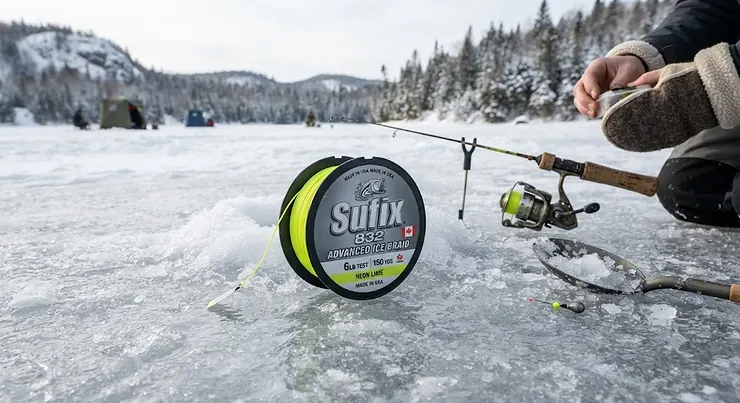
There’s a specific kind of heartbreak that happens on the ice around January. You’re eight feet down, jigging a tungsten fly for suspended crappie, and something taps — barely, like a moth landing on a screen door. By the time the message travels up a stretchy line and registers in your wrist, the fish has already spit the hook and gone back to minding its own business. This is the moment braided ice fishing line earns its keep. Unlike monofilament, which absorbs a chunk of that signal as stretch, braided ice fishing line transmits it almost instantly, which is exactly why so many hardwater anglers across Ontario, Manitoba, and the Prairies have quietly switched their walleye and lake trout rods over to braid in the last few seasons. This guide breaks down seven real, currently available options — from budget-friendly spools to premium deep-water performers — with honest analysis of what the specs actually mean once you’re standing over a hole at -15°C. We’ll also cover how a top braid ice line differs from mono and fluoro, where a no stretch ice line helps (and where it doesn’t), and how to match diameter and colour to your target species.
Quick Comparison Table: Top Braided Ice Fishing Line Picks at a Glance
| Product | Construction | Best For | Price Range (CAD) |
|---|---|---|---|
| Sufix Advanced 832 Ice Braid | 7 HMPE + 1 GORE fibre, 32 weaves/in | All-around durability on jagged ice | C$16–C$26 |
| PowerPro Ice-Tec | PTFE-coated Spectra fibre | Budget freeze resistance | C$11–C$18 |
| Berkley FireLine Fused Micro Ice | Thermally fused Dyneema | Panfish sensitivity, finesse jigs | C$13–C$21 |
| KastKing KastPro 13X Finesse | 13-strand UHMWPE, 36 weaves/in | Thin diameter, colour visibility, value | C$16–C$24 |
| Sunline Xplasma Asegai | 8-strand, plasma-coated PE | Deep-water lake trout, cold-weather flex | C$26–C$38 |
This table only scratches the surface, since the full seven-product breakdown below digs into fibre count, coating chemistry, and how each line actually behaves once ice starts forming in the guides. Broadly, the Sufix Advanced 832 Ice Braid and Sunline Xplasma Asegai lean toward anglers targeting toothy or deep-holding fish where abrasion and sink rate matter most, while the Berkley FireLine Fused Micro Ice and KastKing KastPro 13X Finesse are built for finesse presentations where bite detection and thin diameter carry the day. Budget-conscious anglers spooling up several rods for a shack trip will likely start with PowerPro Ice-Tec, since it delivers genuine freeze resistance without the premium price tag of the plasma-coated options.
💬 Just one click — help others make better buying decisions too!😊
Top 7 Braided Ice Fishing Line Picks: Expert Analysis
Picking a top braid ice line isn’t just about pound test — diameter, coating, and fibre count all change how a line behaves at sub-zero temperatures. Here’s an honest, spec-grounded breakdown of seven real options, covering budget through premium.
1. Sufix Advanced 832 Ice Braid — most durable small-diameter braid on jagged ice
The standout here is R8 Precision Braiding, which packs seven HMPE fibres and one GORE Performance Fibre into 32 weaves per inch for a round, consistent line that resists nicking on sharp ice edges. In practice, that fibre blend means the line holds its rated strength even after repeated contact with a chiselled or auger-cut hole, which is where cheaper braids tend to fray first. The hydrophobic coating is the other headline feature — it repels water at the molecular level rather than just sitting on top of the fibres, so ice beads form more slowly and clear off more easily when you strip line through your fingers. Based on the spec comparison with other ice braids on this list, the 832’s combination of GORE fibre and tight weave count puts it near the top for anglers targeting lake trout, pike, or big walleye where a single nick against ice or a tooth could mean a lost fish. Reviewers consistently note that the Ghost colourway disappears well underwater while staying visible above the hole, and several forum threads specifically credit the 832 with holding up against pike encounters that shredded lesser lines. A recurring theme in user feedback is that outdoor, sub-freezing use still causes some ice buildup — no braid is entirely immune — but anglers describe it as easier to clear than most competitors thanks to the coating.
Pros:
- ✅ GORE fibre blend resists fray against sharp ice
- ✅ Hydrophobic coating slows ice buildup on the spool
- ✅ Available across a wide 4–30 lb test range
Cons:
- ❌ Still forms some ice beads in extended outdoor cold
- ❌ Premium fibre blend costs more than basic braids
Expect to pay in the C$16–C$26 range for a 50-yard spool depending on test strength, and given the abrasion resistance, this is a strong value pick for anyone fishing structure or toothy species regularly.
2. PowerPro Ice-Tec — best budget pick for freeze-resistant handling
The standout feature is the PTFE coating layered over PowerPro’s Enhanced Body Technology, which is designed specifically to reduce water retention so the line stays flexible instead of turning into a stiff coil the moment temperatures drop. Built from Spectra fibre in a rounder, smoother profile than older-generation braids, Ice-Tec is rated across roughly 5 to 15 lb test on 50-yard spools, sized appropriately for hand-crank or spring-bobber ice rods rather than open-water casting reels. What most buyers overlook about this line is that the slimmer, smoother finish isn’t just about handling — it also reduces guide friction on cold days when metal guides themselves can ice up, so the two problems compound less than they would with a rougher-finished braid. This is squarely a budget-conscious buyer’s line: it doesn’t carry the exotic fibre blends of the premium options on this list, but it consistently shows up as a recommended starter braid in Canadian ice-fishing forum threads precisely because it performs a clear step above basic monofilament without the premium price tag of plasma-coated lines. Aggregated user feedback frequently highlights that it remains “manageable” in cold conditions compared to non-coated braids, though a minority of anglers report it still requires occasional stripping to clear ice on very cold, windy days outside a shanty.
Pros:
- ✅ PTFE coating meaningfully reduces water retention
- ✅ Smooth, rounder profile eases guide friction
- ✅ Among the most affordable coated ice braids available
Cons:
- ❌ Fewer pound-test options than premium competitors
- ❌ Can still ice up in prolonged outdoor exposure
Priced typically in the C$11–C$18 range per 50-yard spool, Ice-Tec is the line to grab if you’re spooling three or four tip-up rods and don’t want to spend premium-braid money on each one.
3. Berkley FireLine Fused Micro Ice — most sensitive line for finesse bite detection
Berkley’s standout move with this line was skipping traditional braiding altogether: thermally fused Dyneema fibres are bonded into a single strand rather than woven, producing an ultra-thin, ultra-round profile with almost none of the surface texture that catches ice. That fused construction is what makes this line so exceptionally sensitive to light strikes — the smoother the fibre surface, the less signal gets absorbed on the way up from a jig to your rod tip. Diameters run remarkably fine, from roughly 0.12 mm at 4 lb test up to 0.17 mm at 8 lb, which is thinner than most true braids at the same strength rating and lets micro jigs fall more naturally in front of cautious panfish. Here’s what to weigh: this is a sensitive braided line built for finesse, not a heavy-cover workhorse, so anglers chasing 30-inch lake trout on structure will likely want more abrasion resistance than a fused micro line offers. A side-by-side cold-weather comparison test between this line and a traditional woven braid found ice buildup rates were roughly comparable between the two, but testers noted the fused surface felt noticeably smoother when clearing beads by hand — a small but real quality-of-life difference over a full day on the ice. Aggregated reviewer sentiment consistently praises the “instant feel” for subtle cold-water bites, which lines up with the physics of a fused, low-stretch construction.
Pros:
- ✅ Thermally fused construction maximizes bite sensitivity
- ✅ Ultra-thin diameter improves micro-jig presentation
- ✅ Smooth surface clears ice beads easily by hand
Cons:
- ❌ Less abrasion-resistant than true multi-strand braids
- ❌ Lower pound-test ceiling limits use on bigger predators
Spools run around C$13–C$21 depending on colour and test, and the value case is strongest for panfish and finesse walleye anglers rather than those chasing toothy trophies.
4. KastKing KastPro 13X Finesse — best value thin diameter braid with colour options
The standout advantage is the 13-strand construction itself — most ice braids on the market use 4 or 8 carriers, so packing 13 ultra-high-molecular-weight polyethylene strands, crossed 36 times per inch, produces a noticeably smoother, rounder line without ballooning the diameter. KastKing rates this line as roughly 75% smaller in diameter than a comparable-strength monofilament, which in practical terms means less water resistance on the drop and a faster, more natural bait fall through the water column. On paper this means anglers can step up in break strength for pike or lake trout encounters without the line ballooning in diameter and spooking line-shy fish in clear water — a genuine advantage over older 4-strand designs. It’s available in Chartreuse, White, and a stealthy Moss Green, giving anglers a real choice between a colorful ice braid for above-ice visibility and a low-vis option for pressured water, all on the same 150-yard spool format. What the spec sheet won’t tell you, but reviewer commentary makes clear, is that the line’s suppleness is a double-edged sword: multiple users report needing extra wraps on their knots (six to eight instead of four) and a drop of glue for insurance, since the smoothness that makes it cast and fall so well also makes standard knots slip more easily than on stiffer braids.
Pros:
- ✅ 13-strand weave is thinner than typical 8-strand braids
- ✅ Available in genuinely useful colour options
- ✅ Strong knot and abrasion performance for the price
Cons:
- ❌ Slick surface demands extra wraps for secure knots
- ❌ Marketed broadly, so ice-specific coating info is limited
Expect roughly C$16–C$24 for a 150-yard spool, which is a lot of line per dollar if you’re spooling multiple rods for a season of hole-hopping.
5. Sufix Performance Metered Tip-Up Ice Braid — best colorful ice braid for depth tracking
The standout feature is baked right into the name: this line is metered in 5-foot segments, alternating between two high-contrast colours so you can read exact depth at a glance without counting handfuls of line or marking it yourself. Built from high-tenacity polyester (HTP) rather than a pure HMPE blend, it trades a little raw strength-to-diameter efficiency for genuinely excellent abrasion resistance and a Hydro Fusion Process that Sufix says improves sink rate and reduces memory in cold water. In practice, that metering is what most buyers overlook as a “nice to have” until they actually fish tip-ups through the ice — being able to set every hole to the identical depth in seconds, rather than guessing, meaningfully speeds up a multi-hole spread for panfish or pike. As a colorful ice braid, it also does double duty as a bite indicator on slack presentations, since a sudden colour shift at the hole is often visible before the tip-up flag even trips. Reviewers on ice-fishing forums specifically call this line out as one of the better performers for outdoor tip-up use in freezing temperatures, with several noting it forms noticeably less ice buildup at the waterline than comparable braids, though it’s worth noting this is not marketed as a finesse or jigging line — it’s purpose-built for tip-ups and set lines rather than active rod-in-hand fishing.
Pros:
- ✅ Five-foot colour metering makes depth-setting instant
- ✅ HTP construction resists abrasion well
- ✅ Performs comparatively well against ice buildup outdoors
Cons:
- ❌ Not designed for finesse jigging presentations
- ❌ Fewer sensitivity-focused reviews than jigging-specific braids
Spools typically run C$18–C$28 for 150 yards, which is reasonable given how much time a metered line can save when you’re managing several tip-ups at once.
6. Sunline Xplasma Asegai — best plasma-coated braid for deep water lake trout
The standout feature is right there in the name: a plasma coating treatment that bonds to the fibres at a level standard wax or resin coatings can’t match, which is what keeps water from soaking into the braid in the first place rather than just repelling it on the surface. Constructed as a tight, round, 8-strand weave, Asegai is technically marketed as an all-season braid rather than an ice-specific product, but its cold-weather behaviour has made it a quiet favourite among Canadian hardwater anglers who fish outside a shanty. Based on the spec comparison with dedicated ice braids on this list, the plasma treatment appears to be Asegai’s genuine differentiator — where a hydrophobic coating slows water absorption, a plasma-treated fibre resists it at a more fundamental level, which explains why several ice-fishing sources single it out for staying supple in temperatures that stiffen ordinary braid. This makes it a strong deep water ice line for lake trout and deep-basin walleye, where the near-zero stretch of an 8-strand braid telegraphs a subtle takedown from 20 or 30 metres down far better than fluorocarbon or mono ever could. What buyers should weigh honestly: because it isn’t sold as an ice-specific SKU, spool sizing and colour options are narrower than purpose-built ice braids, and it carries a premium price that’s hard to justify for casual panfish trips.
Pros:
- ✅ Plasma coating meaningfully reduces water absorption
- ✅ Tight 8-strand weave excels at deep-water sensitivity
- ✅ Stays supple in colder conditions than many braids
Cons:
- ❌ Premium pricing versus dedicated ice-specific lines
- ❌ Narrower ice-specific spool and colour selection
Expect a price range around C$26–C$38, which puts it toward the top of this list — a reasonable ask for anglers specifically chasing deep-holding lake trout or big winter walleye.
7. Seaguar Smackdown 8-Strand Braid — thinnest diameter braid for stealth and line capacity
The standout advantage is diameter, full stop: Seaguar’s 8 ultra-thin, micro-weave strands are engineered so that 20 lb test measures out at roughly the same diameter as 6 lb monofilament, independently verified in third-party diameter testing at about 0.017 inches. That thin diameter braid construction means anglers can spool noticeably more line onto a small ice reel without sacrificing strength, or step up in pound test for pike-infested water without the line ballooning to a diameter that spooks fish or catches more wind in the guides. The round, tightly woven profile is also what gives it a quieter, smoother drop through the water column — useful when targeting pressured panfish that key in on unnatural jig behaviour. Reviewers consistently frame the appeal around this diameter advantage specifically, with independent testers measuring it thinner than comparable-strength four-strand braids from other major brands despite Smackdown’s higher strand count, which is a genuinely unusual engineering trade-off. On the honest side of the ledger, Smackdown isn’t marketed as an ice-specific product, so anglers fishing exposed tip-ups in extreme cold should expect standard braid icing behaviour rather than any special coating advantage — it earns its spot here on diameter and sensitivity rather than freeze resistance.
Pros:
- ✅ Exceptionally thin diameter for its strength rating
- ✅ Round profile improves lure presentation and quietness
- ✅ Excellent knot and abrasion strength for an 8-strand braid
Cons:
- ❌ No dedicated ice-fishing coating or freeze treatment
- ❌ Colour options (Flash Green, Stealth Gray) are limited
Pricing generally falls in the C$20–C$35 range depending on spool length and test strength, making it a strong pick for anglers who prioritize line capacity and stealth over ice-specific coatings.
Practical Usage Guide: Spooling, First Trips, and Avoiding Freeze-Up
Getting a braided ice fishing line onto a small ice reel properly matters more than most anglers assume, since braid has zero stretch to forgive a sloppy spooling job. Start with a short length of monofilament backing wound onto the spool first — braid can slip on a smooth aluminum arbour without it — then attach your braid with a uni-to-uni or Albright knot and fill to about 1.5 mm from the spool lip, leaving room for ice buildup without overflow. In your first few outings, expect a learning curve around knot tying: braid’s slick surface means standard clinch knots that work fine on mono can slip, so most experienced anglers switch to a Palomar knot with 6–8 wraps and wet the line thoroughly before cinching down, which reduces friction heat that can weaken the fibres. A common first-30-days mistake is fishing braid straight to the jig in clear water — because braid’s visibility underwater is higher than fluorocarbon or mono, adding a 60–90 cm fluorocarbon leader via a small barrel swivel or a double uni-knot connection meaningfully improves bite rates on pressured lakes. For freeze management, keep a small cloth or chamois in your bibs to strip ice off the line every few drops rather than letting beads accumulate, and consider a dab of ChapStick or purpose-made line conditioner on the first few metres near the hole, a trick several forum anglers report meaningfully slows ice formation at the waterline.
Real-World Scenarios: Which Angler Needs Which Line
Picture three different weekends on the ice, because the “best” braided ice fishing line genuinely depends on who’s holding the rod. First, a college student in Winnipeg with one rod, a budget under C$20 for line, and weekend trips chasing whatever bites through a community access point — this angler is best served by something like PowerPro Ice-Tec, since it delivers real freeze resistance without demanding a premium spend on a single all-purpose spool. Second, a retiree in cottage country who fishes lake trout in 25+ metres of water several days a week all winter, where sensitivity to a subtle takedown from that depth is the entire game — this is where Sunline Xplasma Asegai or the Sufix Advanced 832 Ice Braid earn their higher price tag, since deep-water bite detection and abrasion resistance against structure genuinely pay off over dozens of outings. Third, a parent introducing two kids to panfish jigging on a frozen local pond a few times a season, where thin diameter for natural bait fall and forgiving handling matter more than raw strength — the Berkley FireLine Fused Micro Ice or KastKing KastPro 13X Finesse fit that use case well, since both stay supple and manageable for less experienced hands while still outperforming plain monofilament on bite detection.
Problem → Solution: Fixing the Most Common Braided Ice Line Headaches
Ice buildup at the rod tip and guides is the most universal complaint, and the fix is layered: choose a hydrophobic or plasma-coated braid where budget allows, strip beads off by hand every few drops rather than letting them accumulate, and apply a thin line conditioner near the first guide before you start fishing. Line visibility spooking fish in clear water is a second common issue, solved by tying on a fluorocarbon leader rather than switching lines entirely, since braid’s higher visibility mostly matters in the last metre or two nearest the bait. Knot failure — often blamed on the line itself — is frequently a technique problem: braid needs more wraps than mono (typically 6–8 for a Palomar knot) and must be wetted before cinching, or the friction heat generated on a dry knot can silently weaken the fibres at the exact point you need strength most. Finally, line twist from repeated jigging, which shows up as a line that won’t lay flat on the spool, is usually solved by letting the jig hang freely below the rod tip for thirty seconds between drops to unwind accumulated twist before it compounds.
How to Choose Braided Ice Fishing Line
Choosing the right braided ice fishing line comes down to matching a handful of specs to your actual target species and conditions, rather than chasing the highest strand count on the shelf.
- Match pound test to species, not habit. Panfish rarely need more than 2–4 lb test, while lake trout and pike benefit from 10–20 lb, since braid’s thin diameter means you rarely need to size up as much as you would with mono.
- Check for a freeze-resistant coating. Hydrophobic or plasma-treated lines meaningfully reduce ice buildup versus uncoated braid, which matters most for anglers fishing outside a shanty.
- Consider strand count for smoothness. Higher strand counts (8 to 13) generally cast and drop more quietly than 4-strand budget braids, at a modest cost premium.
- Pick colour based on your setup. A colorful ice braid helps with above-ice visibility and depth tracking on tip-ups, while low-vis colours suit finesse jigging in clear water.
- Add a fluorocarbon leader for line-shy fish. Since braid is more visible underwater than mono or fluoro, a short leader closes that gap without sacrificing braid’s sensitivity.
- Prioritize diameter for depth and drop speed. A thin diameter braid cuts through water faster, which matters when you’re trying to get a jig down 10+ metres quickly in cold, dense winter water.
- Budget per spool, not per season. A quality 50–150 yard ice braid spool typically lasts multiple seasons if stored dry, so the higher upfront cost of a premium line often evens out.
✨ Ready to spool up?
Compare the picks above and check today’s availability before you head out!
No Stretch, More Feel: Why Zero-Stretch Sensitivity Changes Your Hookset
Monofilament stretches under load — often 15 to 25% before breaking — which is genuinely useful in some finesse situations but a real liability when you’re trying to detect a subtle winter bite from deep water. A no stretch ice line transmits that same tap almost instantly up the rod blank, because there’s no elastic fibre absorbing the energy along the way. Reviewers consistently note the difference is most obvious in water deeper than about 6 metres, where the cumulative stretch in mono over that distance is enough to genuinely mute a light strike before it registers. The trade-off worth weighing honestly: that same lack of give means braid can also telegraph a hookset harder than intended, occasionally pulling hooks from soft-mouthed panfish, which is why several of the finesse-oriented lines on this list — like the Berkley FireLine Fused Micro Ice — are popular specifically because their thinner diameter and lighter test partially offset that harshness. A sensitive braided line paired with a light-action rod tip is generally the combination experienced anglers recommend, since the rod absorbs some of the shock that the line itself no longer will.
Thin Diameter Braid vs Standard Diameter: What the Difference Really Means
A thin diameter braid isn’t just a marketing bullet point — it changes how a bait behaves in the water column. At equal pound test, a thinner braid like the Seaguar Smackdown 8-Strand Braid or KastKing KastPro 13X Finesse offers noticeably less water resistance on the drop, which means jigs fall faster and more naturally, a genuinely important factor when targeting suspended fish that react to fall rate. Thinner diameter also means more line capacity on the same small ice reel, letting anglers step up in strength for pike or lake trout without needing a larger, heavier reel to hold enough yardage. The trade-off is durability: packing the same rated strength into a smaller footprint generally means less raw material available to resist abrasion against sharp ice or rocks, which is why the thickest-diameter option on this list, the Sufix Advanced 832 Ice Braid, is specifically engineered with extra abrasion-focused fibre rather than prioritizing diameter above all else. The practical takeaway: choose a thinner line when finesse and fall rate matter most, and lean toward a slightly thicker, more abrasion-resistant braid when you’re fishing structure or toothy species regularly.
Colorful Ice Braid: Visibility, Metering, and Depth Control
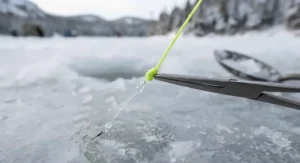
A colorful ice braid solves a specific problem that low-vis lines create: above-ice visibility. Watching the last metre or two of line at the hole for the subtle twitch of a light bite is a legitimate finesse technique, and it’s nearly impossible with a smoke or stealth-grey line against dark ice. Products like the Sufix Performance Metered Tip-Up Ice Braid take this further with alternating five-foot colour segments, letting anglers set every hole in a multi-line spread to an identical depth in seconds rather than guessing or manually marking line. The KastKing KastPro 13X Finesse offers a middle ground, with genuinely bright Chartreuse and White options alongside a stealthier Moss Green on the same spool format, so anglers can match colour to conditions rather than being locked into one visibility profile. What most buyers overlook is that colour doesn’t meaningfully change underwater visibility to fish at typical ice-fishing depths and light levels — the concern about spooking fish comes from line diameter and leader choice, not surface colour, so there’s little practical downside to choosing a bright line for above-ice tracking.
Braided Ice Line for Deep Water Lake Trout and Walleye
A deep water ice line earns its keep specifically in the 15–35 metre range where lake trout and suspended winter walleye often hold, since that’s where mono’s stretch and fluoro’s lower sensitivity both work against an angler most. Braid’s near-zero stretch means a bite at 25 metres down still arrives at the rod tip as a crisp, unmistakable signal rather than a vague mush of tension. The Sunline Xplasma Asegai and Sufix Advanced 832 Ice Braid stand out here specifically because their coatings help the line sink cleanly and resist the abrasion that comes from repeated contact with structure where deep fish often hold. Reviewers consistently note that pairing a deep-water braid with a longer fluorocarbon leader — often 1.5 to 2 metres for gin-clear lake trout water — closes the visibility gap that braid otherwise creates at depth, since light penetration and fish wariness both increase the deeper and clearer the water gets. For anglers primarily targeting panfish in the top 3–6 metres of the water column, this depth advantage matters far less, and a lighter, thinner line like the Berkley FireLine Fused Micro Ice is generally the better fit.
Braided Line vs Monofilament and Fluorocarbon for Ice Fishing
Braid, mono, and fluorocarbon each solve a different problem, and understanding the trade-offs beats defaulting to whichever line came pre-spooled on a reel. Braid’s defining advantage is near-zero stretch and thin diameter, which together deliver the best bite detection of the three, particularly in deep or cold water where mono’s stretch and stiffness both work against sensitivity. Monofilament’s advantage is the inverse: its stretch cushions a hookset and forgives a slightly aggressive hand, which explains why it remains genuinely popular for finesse panfish presentations where a softer connection reduces pulled hooks. Fluorocarbon splits the difference on stretch but wins clearly on underwater visibility, since its refractive index is closer to water than either mono or braid, making it the standard leader material paired with a braided main line in clear-water situations. Cold-weather handling also separates the three: uncoated braid and mono both stiffen and can ice up in sub-zero air, while quality fluorocarbon and coated braids like PowerPro Ice-Tec or Sufix Advanced 832 Ice Braid are specifically engineered to stay supple longer. The practical consensus among experienced ice anglers is a hybrid setup — braid as the main line for sensitivity and thin diameter, with a short fluorocarbon leader for stealth — rather than choosing one line type exclusively for an entire season.
Common Mistakes When Buying Braided Ice Fishing Line
The single most common mistake is buying the highest pound test available “just in case,” which unnecessarily increases diameter and reduces the sensitivity and fall-rate advantages that make braid worth using on the ice in the first place. A second frequent error is ignoring coating entirely and buying a warm-weather braid at a discount, only to discover it ices up badly on the first cold, windy outing outside a shanty — dedicated ice-specific coatings genuinely matter for anyone fishing exposed conditions regularly. Third, many first-time braid buyers skip the fluorocarbon leader step, assuming the main line alone will perform identically to what they’re used to with straight mono, then wonder why bites slow down in gin-clear water. Fourth, underestimating spool capacity needs is common among anglers upgrading from mono to a thinner braid — because braid packs more length into the same diameter, buyers sometimes purchase a shorter spool than they actually need for their reel, leaving them short mid-season. Finally, storing braid in a hot vehicle trunk or humid basement between seasons can degrade fibre coatings faster than manufacturers intend; a cool, dry storage spot meaningfully extends usable line life across multiple winters.
Long-Term Cost & Maintenance: Getting the Most Seasons From Your Spool
Braided ice fishing line costs more upfront than monofilament, but the total cost of ownership often favours braid over two or three seasons, since a quality coated braid resists UV degradation and generally holds strength longer than mono stored the same way. Cost-per-use drops meaningfully once you account for spool length: a 150-yard braid spool at roughly C$20–C$30 can respool multiple ice rods across a season, working out to a modest per-rod cost compared to buying fresh mono every few outings. Maintenance is minimal but matters: rinsing reels and exposed line with fresh water after a day on salted parking-lot ice, drying spools fully before storage, and avoiding prolonged direct sunlight all extend fibre life. Most quality ice braids remain fully usable for two to four seasons of moderate use before strength noticeably degrades, though heavy abrasion against structure or repeated freeze-thaw cycling on exposed tip-up lines will shorten that window. Anglers running several rods should also budget for periodic leader replacement even when the main braid itself is holding up fine, since the fluorocarbon leader typically wears faster from direct contact with jigs, hooks, and structure.
Safety, Regulations & Compliance on Canadian Ice
Line choice matters far less than ice safety fundamentals, and Canadian sources are consistent on the basics: the Canadian Coast Guard recommends a minimum ice thickness of 10 cm for activities like ice fishing and walking, with meaningfully more thickness required for snowmobiles, ATVs, or vehicles. Always check thickness in multiple spots rather than trusting a single reading, since depth, currents, and nearby moving water can all create dangerously thin patches on an otherwise solid-looking lake. On the regulatory side, most Canadian provinces require a valid fishing licence for ice anglers between specific ages, and Ontario specifically permits two lines per angler when ice fishing in many zones, compared to the standard single-line rule for open-water fishing — always confirm the current rule for your specific Fisheries Management Zone before setting extra tip-ups. Braided line itself is unregulated in terms of material, but note that UHMWPE and Dyneema-style fibres, the base material behind most modern braids, are a form of ultra-high-molecular-weight polyethylene engineered for an exceptional strength-to-weight ratio — useful context for understanding why these lines outperform nylon mono at a fraction of the diameter.
FAQ
❓ Is braided line good for ice fishing?
❓ What pound test braid is best for ice fishing panfish?
❓ Does braided ice fishing line freeze in cold weather?
❓ Do I need a leader with braided ice fishing line?
❓ How long does braided ice fishing line last?
Conclusion
Choosing a braided ice fishing line ultimately comes down to matching diameter, coating, and strand construction to the fish you’re actually chasing and the conditions you’re fishing in — there isn’t a single “best” spool that outperforms the rest in every situation. Budget-conscious anglers spooling multiple rods will get real value from PowerPro Ice-Tec, while those chasing deep lake trout will find the sensitivity of Sunline Xplasma Asegai or the abrasion resistance of the Sufix Advanced 832 Ice Braid genuinely worth the extra cost. Panfish and finesse anglers are well served by the thin diameter and bite detection of Berkley FireLine Fused Micro Ice or KastKing KastPro 13X Finesse, and anyone running a multi-hole tip-up spread should take a serious look at the metered convenience of the Sufix Performance Metered Tip-Up Ice Braid. Whichever spool you choose, remember that line is only one piece of a safe, successful day on the ice — thickness checks, a valid licence, and a sensible leader setup all matter just as much as what’s wound onto your reel.
✨ Don’t Miss These Exclusive Deals!
🔍 Take your ice fishing setup to the next level with these carefully selected braided lines. Click on any highlighted product to check current pricing and availability before your next trip out on the hardwater!
Recommended for You
- Fluorocarbon vs Monofilament Ice Fishing: 7 Picks for 2026
- Fluorocarbon Ice Fishing Line: 7 Best Picks for Clear Water in 2026
- Cold Weather Mono Line: 7 Best Picks for Brutal Winters (2026)
Disclaimer: This article contains affiliate links. As an Amazon Associate, I earn from qualifying purchases. If you purchase products through these links, we may earn a small commission at no additional cost to you.
✨ Found this helpful? Share it with your friends! 💬🤗
