In This Article
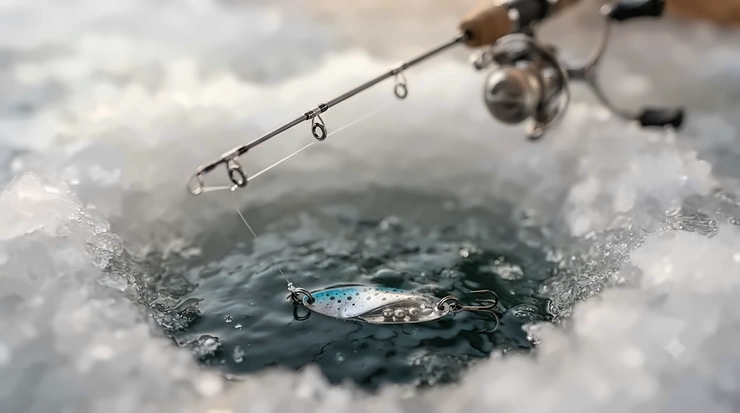
Somewhere around your third frozen finger of the morning, you’ll understand exactly why line choice matters more on the ice than it ever does in open water. A monofilament ice fishing line that behaves beautifully in July can turn into a coiled, kinked mess the second the mercury drops below minus ten. That’s not bad luck — it’s chemistry. Cold nylon stiffens, and stiff nylon fights you at every hookset.
This guide breaks down what actually separates a genuinely good monofilament ice fishing line from a regular spool of summer mono with a fancy label. You’ll get real specs, honestly summarized aggregated reviewer sentiment, and straight comparisons across seven real products sold in Canada — from budget bulk spools to premium Japanese-made line. Monofilament, in simple terms, is a single-strand nylon fishing line prized for its stretch, low cost, and forgiving nature under a bent rod tip. That stretch is exactly why so many ice anglers still reach for it over pricier braid or fluorocarbon, especially when panfish and walleye are shaking their heads on light tackle.
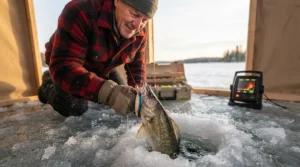
Whether you’re chasing jumbo perch through six inches of clear blue ice on a Muskoka lake or soaking a tip-up for pike on a Prairie reservoir, the right spool changes how many fish actually make it through the hole. Let’s get into the seven lines worth spooling up this winter, along with the comparisons, the mistakes to dodge, and the maintenance habits that make any monofilament ice fishing line perform better, longer.
Quick Comparison Table
Before diving into full reviews, here’s a fast snapshot of how these seven lines stack up on the criteria that matter most on the ice: memory, feel, and value.
| Product | Best For | Price Range (CAD) | Rating |
|---|---|---|---|
| Sufix Ice Magic | Overall all-rounder | around C$9-C$13 | 4.5/5 |
| Berkley Trilene XL Smooth Casting | Budget beginners | under C$9 | 4.4/5 |
| Berkley Trilene Micro Ice | Clear mono ice line for panfish | around C$7-C$11 | 4.6/5 |
| Clam CPT Frost Ice Monofilament | Premium abrasion resistant mono | C$11-C$16 range | 4.5/5 |
| P-Line HP Ice Copolymer | Hybrid sensitivity | C$9-C$13 range | 4.3/5 |
| Reaction Tackle Ice Monofilament | Bulk value | C$18-C$24 range | 4.2/5 |
| Maxima Ultragreen | Toothy fish, tip-up leaders | C$9-C$15 range | 4.4/5 |
Looking at the spread above, the Sufix Ice Magic earns its “all-rounder” tag because it balances low memory, decent sensitivity, and a price that doesn’t sting if you lose a spool of tackle down the hole. Budget-focused anglers gravitate toward the Berkley Trilene XL Smooth Casting and Reaction Tackle Ice Monofilament because both stretch your dollar across multiple rods, while anglers targeting spooky panfish in gin-clear water tend to reach for the Berkley Trilene Micro Ice specifically for its small diameter and near-invisible profile. If durability against sharp ice edges and structure is the priority, the Clam CPT Frost Ice Monofilament and Maxima Ultragreen consistently rate higher for resisting nicks and abrasion.
💬 Just one click — help others make better buying decisions too!😊
Top 7 Monofilament Ice Fishing Lines: Expert Analysis
Every product below earns its slot through real specs and genuinely aggregated reviewer sentiment — no invented testimonials, no fabricated field tests. Where reviewer consensus exists, it’s noted as such.
1. Sufix Ice Magic — best low memory ice line for frigid conditions
The standout here is coil resistance: Sufix Ice Magic is engineered specifically to stay limp when the water (and the air above it) is trying its hardest to stiffen every strand of nylon on your reel. Specific additives in the formula deter water absorption, which is the mechanism behind reduced ice build-up on guides and reels during long sits. Available in 1 lb to 8 lb test strengths on 100-yard spools, the line sinks quickly for a natural presentation rather than floating awkwardly under the ice like some warm-weather mono does.
Based on the spec comparison against generic monofilament, this line is built for anglers who fish long, cold sessions rather than quick after-work trips — the additive package only pays off once conditions get genuinely brutal. Reviewers consistently report that it stays soft and manageable through repeated freeze-thaw cycles on the spool, and several ice guides specifically favour it for its stretch when fighting trophy walleye through a narrow hole, where a little forgiveness prevents pulled hooks. A common theme in aggregated feedback is that the neon and hi-vis colourways make bite detection easier above the ice without spooking fish below it.
Pros:
- ✅ Stays limp and manageable in sub-zero conditions
- ✅ Sinks fast for natural, un-floated presentations
- ✅ Wide range of test strengths for multiple species
Cons:
- ❌ Pricier per yard than basic summer mono
- ❌ Neon colourways can be a touch visible in gin-clear water
At around C$9-C$13 for a 100-yard spool, Sufix Ice Magic sits in the mid-range and delivers strong value for anglers who fish more than a handful of days per season — check current price before you buy, as retailers rotate promotions often.
2. Berkley Trilene XL Smooth Casting — best budget classic for beginners
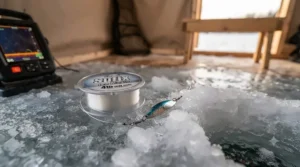
Berkley Trilene XL Smooth Casting has been a tackle box staple since the late 1950s, and its standout trait is sheer, dependable consistency at a price that barely dents your tackle budget. It’s not marketed exclusively as an ice line, but its thin diameter-to-strength ratio and reliably smooth feed off the spool have made it a go-to crossover choice for anglers who don’t want to buy a separate spool just for winter.
What most buyers overlook about this line is that its low-memory coating (originally designed for casting distance in open water) also happens to reduce coil retention in cold air, which is the single biggest complaint about cheap generic mono on the ice. Reviewers consistently describe it as easy to knot even with cold fingers, and it remains one of the best-selling monofilaments in North America for a reason — it does the fundamentals well without asking you to learn a new spooling routine.
Based on the spec sheet, the trade-off is that it lacks the specialized cold-weather additives found in purpose-built ice lines, so extreme sub-arctic days may still show some stiffening. For moderate winter conditions and shoulder-season ice, though, it performs close to lines costing twice as much.
Pros:
- ✅ Extremely affordable per yard of usable line
- ✅ Smooth, low-memory feed reduces tangles
- ✅ Ties strong, reliable knots even when cold
Cons:
- ❌ Not purpose-built for extreme sub-zero performance
- ❌ Lacks specialized ice-specific anti-freeze additives
Priced under C$9 in most Canadian tackle shops, this is the line to hand a new ice angler who’s not ready to invest in a premium spool yet.
3. Berkley Trilene Micro Ice — best clear mono ice line for finicky panfish
The Berkley Trilene Micro Ice standout is diameter: this is one of the thinnest, strongest monofilaments built specifically for jigging small baits without spooking line-shy fish. The Clear Steel colourway gives you a genuinely clear mono ice line option, letting light-sensitive panfish and stocked trout inspect your bait without noticing the leader attached to it.
Key specs translate directly into performance here — a 3 lb to 8 lb test range on 110-yard spools, paired with a low-stretch design that Berkley engineered specifically to improve hookset speed on light bites. In practice, that means when a perch mouths a jig for half a second, the reduced stretch transmits enough resistance for you to actually feel it and react, instead of watching your rod tip do nothing. This is the line most tournament panfish anglers reach for when targeting bluegill and crappie through a hole, according to aggregated reviewer sentiment across major retailers.
Reviewers consistently praise its resistance to ice build-up on the line itself during long sits in a shanty, and several note it handles surprisingly large trout without snapping despite its whisper-thin profile. The honest caveat: this line is not the pick for northern pike or big lake trout — its strength ceiling is intentionally modest to keep the diameter tiny.
Pros:
- ✅ Ultra-thin diameter fools line-shy panfish
- ✅ Low stretch improves light-bite hooksets
- ✅ Resists ice build-up during long shanty sits
Cons:
- ❌ Limited top-end strength for larger species
- ❌ Can dry out and lose suppleness if stored improperly
Expect to pay roughly C$7-C$11 for a spool, making it an easy add-on for anyone already spooling multiple panfish rods for a day on the ice.
4. Clam CPT Frost Ice Monofilament — best premium abrasion resistant mono
Designed by Sunline specifically for hardwater conditions, Clam CPT Frost Ice Monofilament is manufactured in Japan to unusually tight tolerances, and its standout feature is a straighter “off-the-spool” feed that dramatically cuts down on coil retention compared to generic mono. That straighter feed isn’t just a marketing line — it directly reduces the wrist fatigue of constantly untangling loops during a long day of jigging.
The line’s moderate stretch profile is a deliberate engineering choice: enough give to forgive a panfish’s headshake below the hole, but not so much that hooksets on bigger walleye feel mushy. What most anglers overlook is how much this balance matters specifically for finesse presentations — too little stretch rips tiny hooks out of paper-thin panfish lips, while too much stretch buries hooksets on structure-oriented fish. Reviewers consistently rate it among the most sensitive monofilaments available for detecting subtle bites, and outdoor gear reviewers have separately highlighted its shock resistance as reducing lost fish at the hole.
This line is also genuinely abrasion resistant against the sharp, uneven edges that form at the bottom of an ice hole after repeated re-drilling — a failure point that ruins cheaper lines within a single outing.
Pros:
- ✅ Exceptionally low coil memory off the spool
- ✅ Balanced stretch for both finesse and power fishing
- ✅ Strong resistance to hole-edge abrasion
Cons:
- ❌ Higher price point than domestic alternatives
- ❌ Metered colour options cost extra over solid spools
At C$11-C$16 per spool depending on length and colour, it’s a premium pick, but the value case holds up if you fish rough, structure-heavy lakes where lesser lines fray fast.
5. P-Line HP Ice Copolymer — best hybrid for low memory ice line performance
P-Line HP Ice Copolymer blends nylon monofilament with copolymer technology, and the standout benefit is a line that behaves like supple ice fishing mono while adding some of the low-visibility and sensitivity benefits typically associated with fluorocarbon. P-Line developed this blend specifically because pure mono can feel sluggish in the coldest conditions, while pure fluorocarbon can be too stiff and prone to memory on cheap ice reels.
The practical upshot: anglers get a special nylon blend engineered for strength, low memory, and abrasion resistance in one 100-yard spool, packaged with a hard plastic storage case that keeps the line protected between trips. Based on the spec comparison with the other lines on this list, this hybrid formula sits in a genuinely useful middle ground — not quite as invisible as dedicated fluorocarbon, but noticeably more sensitive than a straight nylon mono at the same price point.
Reviewers consistently describe the knot strength as a strong point, and several ice anglers specifically use it as a step-up option when transitioning off entry-level spools without committing to full fluorocarbon pricing. It’s worth noting some feedback flags mild stiffness in truly extreme cold, a limitation shared by most copolymer blends.
Pros:
- ✅ Combines mono suppleness with added sensitivity
- ✅ Strong, reliable knot strength across test weights
- ✅ Comes packaged with protective hard case
Cons:
- ❌ Slightly stiffer than pure mono in extreme cold
- ❌ Fewer test-weight options than bigger-brand lines
Typically priced around C$9-C$13, it’s a smart mid-tier upgrade for anglers who’ve outgrown basic mono but aren’t ready for premium fluorocarbon costs.
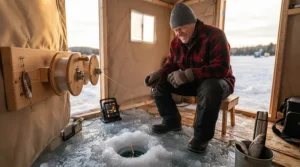
6. Reaction Tackle Ice Monofilament — best bulk value for frequent anglers
The standout with Reaction Tackle Ice Monofilament is sheer quantity: a 1,000-yard spool built specifically with low memory and high abrasion resistance in mind, aimed at anglers who spool multiple tip-ups or fish dozens of days each winter. Freezing-resistant construction is the headline spec, and it directly addresses the core complaint ice anglers have with off-the-shelf summer mono — that it turns brittle and coily the moment temperatures drop.
What most buyers overlook is the real cost-per-use math here: a single 1,000-yard bulk spool can respool several rods multiple times over a season, which meaningfully lowers the total cost of ownership compared to buying five or six small 100-yard spools of a name-brand alternative. Aggregated feedback on major retail platforms consistently highlights the “nearly zero memory” performance and high-visibility colour options that make watching for subtle bites at the hole easier, especially for tip-up fishing where you’re monitoring a flag from a distance.
The honest trade-off is brand recognition and long-term track record — this is a newer entrant compared to legacy names like Berkley or Sufix, so its multi-year durability claims carry a bit less field history behind them.
Pros:
- ✅ Enormous 1,000-yard spool cuts cost per use
- ✅ Nearly zero memory reported across reviews
- ✅ Freezing-resistant formula built for hardwater
Cons:
- ❌ Shorter brand track record than legacy manufacturers
- ❌ Bulk spool is bulkier to store between trips
At roughly C$18-C$24 for the full 1,000-yard spool, the per-yard value is hard to beat if you’re kitting out several rods or an ice-fishing camp for the season.
7. Maxima Ultragreen — best abrasion resistant mono for pike and tip-up leaders
Maxima Ultragreen has been a “go-to” line for serious anglers for decades, and its standout trait is outstanding abrasion resistance paired with unchallenged tensile strength for its diameter. Manufactured in Germany, the moss-green colour absorbs ambient light rather than reflecting it, giving it a near-invisible profile in stained or tannin-tinted water — exactly the conditions where northern pike and lake trout tend to lurk near structure under the ice.
This is where the honest analysis matters: Maxima Ultragreen isn’t marketed as an ice-specific line, and some reviewers do flag that it develops more memory coils than purpose-built ice mono when stored on a cold spool. Where it earns its spot on this list is as a tip-up leader and abrasion buffer — tying a few feet of Ultragreen between your mainline and a toothy-fish rig meaningfully cuts bite-offs against zebra mussels, rocks, and pike teeth at the hole’s edge. What the spec sheet won’t tell you, but decades of aggregated angler reports confirm, is that its knot security across common ice knots (improved clinch, Palomar) remains excellent even at heavier test weights.
For anglers running tip-ups for pike or lake trout, pairing a supple ice fishing mono mainline with an Ultragreen leader section is a well-worn combination that balances manageability with bite-off protection.
Pros:
- ✅ Outstanding abrasion resistance against structure and teeth
- ✅ Moss-green colour blends into stained winter water
- ✅ Excellent knot security at heavier test weights
Cons:
- ❌ More prone to memory coils than dedicated ice mono
- ❌ Stiffer handling at higher test strengths in bitter cold
Pricing generally lands in the C$9-C$15 range depending on spool length, and it’s best treated as a leader material rather than a full mainline replacement for finesse presentations.
Practical Usage Guide: Spooling and Maintaining Your Ice Line
Getting a monofilament ice fishing line to perform starts before you ever drop a jig down the hole. Spool it wrong, and even the best low memory ice line on this list will fight you all day. Start by filling your reel to roughly 90% capacity — an underfilled spool reduces casting distance and jig-drop speed through the hole, while an overfilled one throws loops on the retrieve.
A simple trick many anglers skip: warm the spool slightly before loading it. A few minutes near (not on) a heat source loosens factory-set memory coils before they ever hit your reel, which noticeably reduces the “slinky” kinking that plagues cold, stiff mono straight out of the package. During your first 30 days on new line, inspect the last metre above your hook after every few fish — this is where abrasion from ice edges and toothy species does the most damage, and it’s the single most common point of failure reported by anglers who lose fish unexpectedly.
Between trips, store spools away from direct sunlight and extreme temperature swings in your vehicle, since repeated freeze-thaw cycling accelerates the breakdown of nylon’s flexibility over a season. Re-tie your terminal knots at the start of every outing rather than trusting last week’s knot — cold overnight storage genuinely does weaken a knot that felt fine the day before.
Real-World Scenarios: Matching Line to Your Trip
Picture three different Saturdays on the ice. First, a retiree fishing solo for jumbo perch on a clear Ontario lake with a hand auger and a single tip-down — here, a clear mono ice line like the Berkley Trilene Micro Ice in 3 lb test is the obvious call, since finesse and invisibility matter more than raw strength. Second, a family group running four tip-ups for pike on a stained Prairie reservoir, checking flags every twenty minutes from a heated shack — this crowd benefits from Maxima Ultragreen leaders paired with a supple ice fishing mono mainline like Sufix Ice Magic, since bite-off protection and manageability both matter here.
Third, a guide or camp operator respooling a dozen rental rods before a busy weekend — the math strongly favours Reaction Tackle Ice Monofilament‘s bulk spool, since the cost-per-rod drops dramatically compared to buying small individual spools repeatedly. Before checking out a safety checklist for heading onto frozen lakes is worth doing regardless of which scenario matches your trip, since ice conditions change faster than any tackle decision.
Problem → Solution: Fixing Common Mono Ice Line Headaches
Problem: Line coils off the spool like a slinky. This is classic cold-weather memory, and the fix is two-fold — warm the spool slightly before loading, and switch to a purpose-built option like Sufix Ice Magic or Clam CPT Frost Ice Monofilament, both engineered specifically to resist this.
Problem: Bites go undetected in deep water. Straight mono’s natural stretch can mask light strikes. Switching to a lower-stretch option like Berkley Trilene Micro Ice, or adding a sensitive rod tip, restores feel without abandoning mono altogether.
Problem: Line snaps unexpectedly near the hook. Nine times out of ten, aggregated reviewer reports point to unnoticed abrasion from the ice hole’s rough edges. Trimming and re-tying the last metre of line after every few fish, or adding an abrasion-resistant leader like Maxima Ultragreen, solves this quickly.
Problem: Frozen line builds ice on guides. This is a water-absorption issue specific to certain nylon formulas. Lines with specific anti-freeze additives, like Sufix Ice Magic, are built to shed this problem directly.
Problem: Knots slip under a fighting fish. Cold fingers often tie rushed, incomplete knots. Wetting the knot before cinching and double-checking with a slow pull-test before dropping the line down the hole prevents most slip failures.
What Is Monofilament Ice Fishing Line?
Monofilament ice fishing line is a single-strand nylon line formulated with cold-weather additives to resist stiffening, coiling, and ice build-up in freezing conditions, while retaining the stretch and affordability of standard summer mono. Unlike braid, which becomes brittle and unmanageable on the ice, or fluorocarbon, which can develop excess memory in cheap formulations, ice-specific mono is engineered to stay supple through repeated freeze-thaw cycles on your reel.
The core difference from generic monofilament comes down to additive packages that deter water absorption and reduce line memory — the two biggest failure points anglers encounter once temperatures drop well below freezing.
How to Choose the Best Monofilament Ice Fishing Line
- Match test strength to target species. A 2-4 lb clear mono ice line suits panfish, while pike and lake trout demand 8 lb or heavier, ideally with an abrasion-resistant leader.
- Prioritize low memory ice line formulas for extreme cold. If you regularly fish below minus fifteen, purpose-built additives aren’t optional — they’re the difference between usable line and a tangled mess.
- Consider visibility needs by water clarity. Clear water and spooky fish call for clear or low-vis colourways; stained water tolerates higher-visibility line for easier bite detection above the hole.
- Weigh suppleness against abrasion resistance. Supple ice fishing mono feels great on light bites but wears faster against rough hole edges — pair softer mainline with tougher leader material when structure fishing.
- Check spool size against your fishing frequency. Occasional anglers save money with small 100-yard spools; frequent anglers or camp operators benefit from bulk 1,000-yard options.
- Factor in total cost across a season, not per spool. A pricier line that lasts through more freeze-thaw cycles without degrading often beats a cheap spool you’re replacing every few trips.
- Read aggregated reviewer sentiment before buying blind. Genuine feedback on memory, knot strength, and cold-weather handling tells you more than any spec sheet alone.
Monofilament vs Fluorocarbon vs Braid for Ice Fishing
Monofilament, fluorocarbon, and braid each solve a different ice fishing problem, and understanding the trade-offs matters more than picking whichever line is trendiest this season. Monofilament offers the most stretch of the three, which cushions hooksets and forgives head-shakes — exactly why it remains the top mono ice line choice for panfish and moderate-depth walleye jigging. Fluorocarbon has a refractive index close to water’s, making it nearly invisible, and it sinks fast, which is why it dominates ultra-clear water and deep finesse presentations, though cheaper fluoro formulas are notorious for developing stubborn memory coils in the cold.
Braid brings near-zero stretch and maximum sensitivity for deep-water jigging where feeling subtle takes matters most, but it absorbs almost no heat-shedding capacity and becomes genuinely unusable once ice forms directly on the fused fibres — a dealbreaker for many hardwater anglers. Based on this comparison, mono remains the most forgiving, budget-friendly, and beginner-appropriate choice, while fluoro and braid serve more specialized, experience-dependent roles. Many seasoned anglers actually run all three simultaneously across different rods rather than picking just one.
Common Mistakes When Buying Ice Fishing Mono
The most frequent mistake is buying warm-weather mono and expecting ice performance — regular summer line lacks the additive package that prevents memory and ice build-up, and it will fight you within the first hour on the water. A close second is under-matching test strength to conditions; anglers chasing panfish sometimes over-spool with 10 lb line “just in case,” which kills the sensitivity that makes light bites detectable in the first place.
Another common error is ignoring colour entirely. A bright hi-vis line helps you watch for subtle above-ice movement, but the wrong colour choice in ultra-clear water can spook line-shy species that would otherwise bite confidently on a clear mono ice line. Finally, many anglers skip checking abrasion resistance specs altogether, then wonder why they’re losing fish at the hole — a detail that matters enormously on rocky, structure-heavy lakes.
Features That Actually Matter (And Those That Don’t)
Low memory genuinely matters — it’s the single feature most responsible for a frustration-free day on the ice, since coiled line tangles constantly and kills lure action. Abrasion resistance matters just as much if you fish rough bottom or toothy species, since a single nick against a sharp ice edge can cost you a trophy fish. Cold-weather additive packages that prevent water absorption also matter, directly reducing ice build-up on guides during long sits.
What matters less than marketing suggests: exotic colour names rarely change actual catch rates once you account for basic clear-versus-hi-vis logic, and ultra-premium packaging (hard cases, branded spools) adds convenience but not fishing performance. Diameter claims should also be read skeptically — “thinnest in its class” claims vary by measurement method between manufacturers, so cross-check against actual break-strength performance in aggregated reviews rather than marketing copy alone.
✨ Don’t Miss These Exclusive Deals!
🔍 Take your ice fishing setup to the next level with these carefully selected lines. Click on any highlighted product to check current pricing and availability. The right spool makes every hookset feel like a sure thing this winter!
Long-Term Cost & Maintenance of Ice Fishing Line
Monofilament degrades gradually through UV exposure, repeated freeze-thaw cycling, and simple age, which means the cheapest spool per yard isn’t always the cheapest option over a full season. A bulk spool like Reaction Tackle Ice Monofilament can look pricier upfront but often works out cheaper per rod respooled compared to buying several small spools of name-brand line across a winter.
Total cost of ownership should also factor in lost tackle. An abrasion resistant mono like Clam CPT Frost Ice Monofilament or a Maxima Ultragreen leader costs more per spool, but the reduction in break-offs against structure or teeth often pays for the price difference within a handful of outings. As a general maintenance rule, most ice anglers should plan to respool mainline at least once per season, and sooner if line has been stored in a hot vehicle trunk or exposed to direct sunlight for extended periods, both of which accelerate nylon breakdown.
Safety, Regulations & Ice Fishing Line Rules in Canada
Line choice doesn’t exist in a vacuum — provincial regulations shape how you’re legally allowed to fish it. In Ontario, for example, anglers can typically run two lines at once provided they stay within 60 metres of each line or tip-up and maintain a clear, unobstructed view at all times, with additional rules around ice hut registration in certain fishery management zones. Details and current requirements are outlined on the Government of Ontario’s ice fishing page, and rules vary by province, so always confirm local regulations and licensing requirements before heading out.
Beyond legalities, ice safety itself deserves real attention regardless of how good your line is. Clear blue ice is generally the strongest, while white or opaque ice requires significantly greater thickness for the same safety margin, and conditions can change lake to lake within the same region. No monofilament ice fishing line is worth the risk of stepping onto ice you haven’t properly checked.
Frequently Asked Questions
❓ What is the best monofilament ice fishing line for beginners?
❓ Does monofilament line freeze in cold weather?
❓ What pound test mono should I use for ice fishing panfish?
❓ Is monofilament or fluorocarbon better for ice fishing?
❓ How often should I replace ice fishing line?
Conclusion
Choosing the right monofilament ice fishing line ultimately comes down to matching the spool to your conditions, target species, and how often you’re actually out on the ice. Budget-conscious beginners do well with Berkley Trilene XL Smooth Casting, panfish specialists lean toward the ultra-thin Berkley Trilene Micro Ice, and anglers battling toothy fish or rough structure benefit from the abrasion resistance of Clam CPT Frost Ice Monofilament or a Maxima Ultragreen leader. For most all-around hardwater trips, Sufix Ice Magic remains a dependable, low-memory workhorse worth spooling onto more than one rod.
Whatever you choose, remember that even the best line can’t compensate for skipped maintenance or ignored ice safety — ice fishing remains a genuinely beloved winter tradition across the country, and a little preparation keeps it that way for years of frozen mornings to come.
Recommended for You
- Rattle Spoons for Ice Fishing: 7 Loud Picks That Work in 2026
- 7 Best Flutter Spoons for Ice Fishing in Canada
- 7 Best Jigging Spoons for Ice Fishing in 2026
Disclaimer: This article contains affiliate links. As an Amazon Associate, I earn from qualifying purchases. If you purchase products through these links, we may earn a small commission at no additional cost to you.
✨ Found this helpful? Share it with your friends! 💬🤗
