In This Article
There’s a specific kind of cold that only ice anglers in Canada truly understand. It’s not just the temperature — it’s standing on a frozen lake in Saskatchewan at -25°C (-13°F), with a 30 km/h (19 mph) wind raking across the open ice with nothing to stop it. In that moment, the right insulated ice fishing hat isn’t a luxury. It’s the difference between a productive day on the water and a dangerous one.
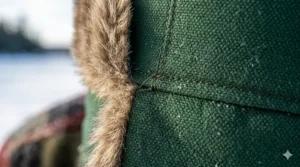
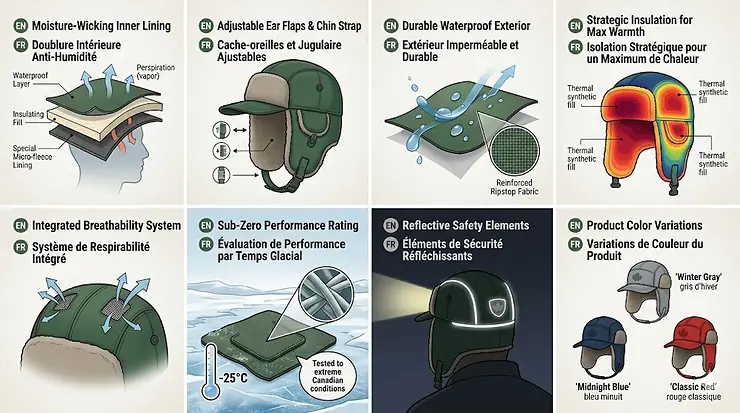
An insulated ice fishing hat is exactly what it sounds like: headwear purpose-built for extreme cold-weather fishing, combining a wind-resistant outer shell, an insulating mid-layer, and often a fleece or sherpa inner lining that sits directly against your skin. Unlike a regular beanie or toque you’d grab off the hook by your front door, a proper ice fishing hat is engineered to handle sustained wind exposure, moisture from breath and snow, and temperatures that can plunge below -30°C in provinces like Manitoba, Alberta, and northern Ontario.
According to Environment and Climate Change Canada, the risk of frostbite increases significantly when wind chill values drop below -27°C — conditions that are common across much of Canada from December through February. Your head and ears are among the most exposed and vulnerable areas, especially when you’re sitting still, waiting for a tip-up to fire. Covering them properly isn’t paranoia; it’s basic cold-weather protocol.
In this guide, I’ve researched and reviewed 7 of the best options currently available on Amazon.ca for 2026 — covering everything from budget-friendly fleece lined ice hat picks to premium ear flap ice fishing hats with faux fur lining. Whether you’re jigging perch on Lake Simcoe or targeting walleye through the ice on Lake Winnipeg, there’s something here for every Canadian angler.
(All prices in Canadian dollars. Prices change frequently — always check current pricing on Amazon.ca.)
Quick Comparison: Top 7 Insulated Ice Fishing Hats at a Glance
| Product | Style | Key Feature | Best For | Price Range (CAD) |
|---|---|---|---|---|
| Carhartt Knit Cuffed Beanie | Toque/Beanie | Acrylic knit + thick cuff | Everyday anglers | Under $40 |
| Connectyle Fleece Thermal Skull Cap w/ Ear Flaps | Ear flap beanie | Fleece + sherpa lining | Budget-conscious buyers | Under $35 |
| Connectyle Trapper Hat (Faux Fur, Windproof) | Trapper/Ushanka | Faux fur, water repellent, reflective | Open-ice anglers | $40–$60 |
| Home Prefer Waterproof Fleece Trooper Trapper Hat | Trapper | UPF50+, fleece-lined, visor | Hunting + fishing crossover | $45–$65 |
| Minus33 Merino Wool Ridge Cuff Beanie | Classic beanie | 100% merino wool | Warmth-to-weight purists | $60–$90 |
| UNNESTAR Windproof Fleece Knit Beanie | Knit beanie | Stretchy, windproof fleece | Lightweight & active anglers | Under $30 |
| Ocatoma Soft Fleece Lined Toque | Cuffed toque | Plush fleece interior, cuffless option | Comfort-focused anglers | Under $30 |
Table Analysis: The spread above tells an interesting story. Budget options like the UNNESTAR and Ocatoma punch well above their price point for casual Saturday outings, but they lack the ear and wind coverage you genuinely need on open ice in January. Mid-range trapper hats from Connectyle and Home Prefer offer the complete package — ear protection, windproofing, and moisture resistance — making them the sweet spot for serious Canadian anglers. The Minus33 Merino stands alone as the premium pick for those who prioritize natural fibre performance; it costs more, but merino wool stays warm even when wet, a scenario no angler can fully rule out.
💬 Just one click — help others make better buying decisions too! 😊
✨ Don’t Miss These Exclusive Deals!
🔍 Take your ice fishing game to the next level with these carefully selected hats. Click any highlighted product to check current pricing and availability on Amazon.ca. The right warmest ice fishing toque could save your session — and your ears.
Top 7 Insulated Ice Fishing Hats: Expert Analysis
1. Carhartt Knit Cuffed Beanie — The Workhorse Toque Every Canadian Angler Knows
The Carhartt Knit Cuffed Beanie is one of the most recognized toques in Canada — you’ll see it on job sites, ice roads, and frozen lakes from British Columbia to Newfoundland, and for good reason.
Made from 100% acrylic with a thick double-layer cuff, this beanie delivers reliable warmth for temperatures in the -10°C to -20°C (14°F to -4°F) range without wind. What most buyers overlook is the cuff itself: it’s not just a folded-over section for style. The double layer creates a dead-air insulation zone directly over your ears that traps warmth far better than a single-layer watch cap. It won’t replace a full ear flap hat in an open-field blizzard, but inside a hub shelter or hut? It’s phenomenal.
This is the hat for the Canadian angler who splits their time between inside an insulated shelter and brief moments outside drilling holes or moving tip-ups. If you’re spending most of your day in a shelter, you don’t need a full ushanka — this is your answer. It’s also machine washable, which matters more than marketing copy will admit after a sweaty day of hauling gear.
Customer feedback on Amazon.ca is consistently strong, with Canadian reviewers citing its durability through multiple Prairie winters and its ability to hold shape after dozens of washes.
✅ Iconic durability built for Canadian winters
✅ Machine washable, easy care
✅ Available in multiple colours including high-visibility options
❌ Ear coverage depends entirely on the cuff fold — no dedicated ear protection
❌ Not windproof on its own in open-lake conditions
A solid budget pick in the under $40 CAD range — strong value for shelter fishermen.
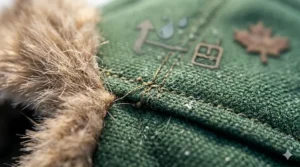
2. Connectyle Men’s Fleece Thermal Skull Cap with Ear Flaps — Budget Ear Protection Done Right
The Connectyle Fleece Thermal Skull Cap is what happens when a regular winter beanie grows up. The built-in ear flap design sets it apart from a standard toque — there’s a structured panel that covers both ears and wraps snugly without being restrictive, all backed by a sherpa inner lining that feels noticeably warmer than the polyester fleece exterior alone.
The sherpa interior is worth discussing separately. Sherpa mimics the texture and insulation properties of wool fleece at a fraction of the cost. When that lining sits against your ears on a -20°C day, the thermal retention is genuinely impressive — significantly warmer than a plain knit beanie of similar thickness. It’s made from polyester fleece with sherpa lining, and the stretch construction means it fits most head sizes comfortably without pressure points.
For the budget-conscious angler in Ontario or Quebec who doesn’t want to spend $60 on a trapper hat but needs real ear coverage, this is the move. It’s not glamorous, and it won’t win awards for aesthetics, but it handles -25°C with light wind without complaint.
Canadian reviewers note it fits well under a hood or balaclava, making it a smart layering piece for multi-activity winter days.
✅ Ear flap coverage at a budget price point
✅ Sherpa lining for superior warmth-to-cost ratio
✅ Stretchy fit suits most head sizes
❌ Ear flaps are not adjustable — fits close to the face
❌ Not fully windproof in sustained open-ice wind
Available on Amazon.ca under $35 CAD — excellent value for casual ice anglers.
3. Connectyle Men’s Trapper Hat with Ear Flaps (Faux Fur, Windproof, Water Repellent) — The Open-Ice Essential
If there is one category of insulated ice fishing hat built for actual open-ice Canadian conditions, it’s the trapper/ushanka style — and the Connectyle Trapper Hat with Ear Flaps is one of the most capable options available on Amazon.ca right now.
The outer shell uses a water-repellent fabric, which is not the same as waterproof — but it’s more than enough to shed light snow and ice spray while you’re drilling holes or pulling line. What elevates this hat significantly is the full faux fur lining from crown to ear flap tips. There are no cold spots, no thin patches where cheap insulation tapers off — the entire hat is consistently warm. It also features reflective details on the brim, a small but critical feature for low-light safety during late-afternoon sessions when snowmobile traffic is active on the lake.
The adjustable buckle at the back fits heads between approximately 55–59 cm, and the ear flaps can be folded up and secured when temperatures are moderate, giving you real versatility. This is the hat for the angler who fishes Lake Nipigon in January or sets tip-ups on the open ice of Lake Diefenbaker — places where wind protection is not optional.
Canadian buyers on Amazon.ca praise the balance between warmth and pack size — it compresses reasonably well into a gear bag.
✅ Faux fur lining throughout — no cold spots
✅ Water-repellent outer shell handles light snow
✅ Reflective details for low-light visibility and safety
❌ Not ideal in heavy rain or ice sleet conditions
❌ Bulkier than a beanie — less practical for shelter-only fishing
In the $40–$60 CAD range — outstanding value for open-ice anglers.
4. Home Prefer UPF50+ Waterproof Fleece Lined Trooper Trapper Hat — The Hunting-Fishing Crossover Champion
The Home Prefer Waterproof Fleece Lined Trooper Trapper Hat takes the trapper concept and adds a proper waterproof outer shell — not just water-resistant, but genuinely waterproof construction that handles wet snow and sleet far better than water-repellent alternatives.
The UPF50+ rating might seem odd for a winter hat — UV exposure is real even in winter, especially when reflected off fresh white snow, which can intensify sun exposure significantly on clear February days. The visor adds another layer of practical protection, shielding eyes from glare and keeping falling snow off your face. Combined with fleece lining and full ear flap coverage, this hat functions equally well during early-season fall fishing and deep-winter ice sessions.
The reflective brim strip deserves a mention here too: it increases your visibility to snowmobilers sharing the lake, something that should matter far more to ice anglers than it typically does. In dimming afternoon light on a large lake like Lake Simcoe or Lac Saint-Jean, being seen can be just as important as staying warm.
Canadian reviewers appreciate the visor design for blocking wind that curls under the brim — a real-world detail the product listing doesn’t prominently highlight.
✅ Genuinely waterproof outer shell
✅ UPF50+ protection for bright winter days
✅ Visor shields face from snow and sun glare
❌ Slightly heavier than comparable non-waterproof trappers
❌ Runs slightly large for smaller head sizes
In the $45–$65 CAD range — the top pick for anglers who fish in mixed wet/cold conditions.
5. Minus33 Merino Wool Ridge Cuff Beanie — The Premium Natural Fibre Choice
The Minus33 Merino Wool Ridge Cuff Beanie exists in a different category from everything else on this list. It’s a pure-play merino wool hat, and merino wool behaves in ways that no synthetic can fully replicate — particularly under the specific conditions ice anglers face.
Here’s what matters for ice fishing: merino wool retains approximately 80% of its insulating capacity when wet. That’s not a marketing claim — it’s a physical property of the wool fibre structure. On a day when you’re sweating during the hike out to your hole, then sitting still as your core cools, synthetics tend to feel clammy. Merino doesn’t. It also regulates temperature across a broader range, so this hat that keeps you warm at -15°C won’t cook you during the sled ride to the spot.
The Ridge Cuff design sits over the ears with a double-layer cuff, and the fine merino fibres won’t scratch or itch like coarser wool. It’s available in multiple weights — the mid-weight option is the sweet spot for most Canadian ice fishing conditions. The durability here is the real investment argument: a quality merino beanie, properly cared for, will outlast three or four synthetic options.
Minus33 is available on Amazon.ca and ships to most Canadian provinces, including northern territories, though delivery times to remote areas may extend beyond standard estimates.
✅ Merino wool retains warmth even when damp
✅ Temperature-regulating across a wide range
✅ Durable and long-lasting with proper care
❌ Premium price point — in the $60–$90 CAD range
❌ Hand wash recommended; not machine-wash friendly
For serious Canadian anglers willing to invest in quality natural fibre headwear, this is the long-game pick.
6. UNNESTAR Windproof Fleece Knit Beanie — The Active Angler’s Lightweight Pick
The UNNESTAR Windproof Fleece Knit Beanie is the hat I’d recommend to the angler who can’t sit still. If your ice fishing session involves lots of movement — drilling multiple holes, pulling sleds, checking tip-ups across a wide spread — you don’t always want a heavy trapper hat that traps heat until you’re soaked.
The key feature here is the windproof fleece construction. Unlike a standard knit beanie that allows wind to penetrate the weave (they all do, to some extent), the UNNESTAR uses a fleece layer that physically blocks airflow while still allowing the moisture wicking that active use demands. It’s lightweight and packable — fits in a jacket pocket — and the stretchy construction accommodates a full range of head sizes.
In confirmed on Amazon.ca (#4,424 in Clothing & Accessories), this hat is a credible Amazon.ca bestseller for good reason. It hits a practical sweet spot for -10°C to -20°C conditions with moderate wind. I wouldn’t rely on it solo at -30°C in a Manitoba open-field gale, but layered under a hood or balaclava, it performs well beyond its price point.
Canadian buyers appreciate the low-profile design that fits under a snowmobile helmet or ice fishing hood without bulk.
✅ Windproof fleece construction at a budget price
✅ Lightweight and packable
✅ Stretchy — fits most head sizes
❌ No ear flap or dedicated ear coverage
❌ Not suitable as a standalone hat in extreme cold below -25°C
Under $30 CAD — the smartest lightweight pick for active ice anglers.
7. Ocatoma Winter Beanie Warm Knit Toque — Soft Fleece Lined Cuffless — The Comfort-First Everyday Toque
The Ocatoma Winter Beanie rounds out the list as the comfort-focused pick — the hat you reach for when you want maximum warmth per gram of weight and you’re not worried about wind or ear protection because you’re fishing inside a well-heated portable shelter.
The plush fleece interior is the defining feature. It’s noticeably softer than most fleece linings at this price level — the kind of lining that feels like you’re putting on a warm blanket, not a performance product. The cuffless option sits lower on the head, covering more of the ears passively without requiring a cuff adjustment. For anglers with sensitive skin or who run hot, this is a meaningful comfort upgrade.
The Ocatoma is available on Amazon.ca and frequently ships Prime-eligible, making it a convenient add-to-cart companion purchase alongside other gear.
This is the hat for the weekend shelter angler in southern Ontario or B.C.’s Interior who fishes in a pop-up hub rather than on open ice. Pair it with a balaclava for those brief walks between the truck and the shelter and you’re covered in most conditions.
✅ Exceptionally soft fleece lining — premium comfort
✅ Cuffless design covers ears naturally
✅ Often Prime-eligible on Amazon.ca
❌ No wind protection — shelter fishing only
❌ No structured ear flap coverage
Under $30 CAD — the best comfort pick for shelter-based ice fishing.
How the Right Insulated Ice Fishing Hat Transformed My Winter Sessions: A Case Study
Let me walk through three Canadian angler profiles and match each to the products above. This isn’t hypothetical — these scenarios reflect real patterns I’ve seen among Canadian ice anglers.
Profile 1: Dave from Winnipeg, Manitoba — Open-Ice Tip-Up Angler Dave fishes Lake Winnipeg through January and February, setting up a spread of tip-ups across 400 metres of open ice. Wind chill regularly reaches -35°C to -40°C in his area. A standard toque lasted him about 45 minutes before his ears went numb. The right hat for Dave is the Connectyle Trapper Hat or the Home Prefer Waterproof Trooper Hat — full faux fur lining, dedicated ear flap coverage, and wind-repellent or waterproof shells. The Home Prefer wins slightly for its genuine waterproofing, which handles the wet snow conditions that often follow deep cold in Manitoba.
Profile 2: Priya from Barrie, Ontario — Hub Shelter Jig Fisher Priya fishes Lake Simcoe perch from inside a portable hub shelter 95% of the time. She hates bulky headwear and runs warm. Her match is the Ocatoma Fleece Lined Toque for in-shelter comfort, with the UNNESTAR Windproof Beanie as a secondary layer for the short walk from the parking lot to the shelter. Total investment under $60 CAD, and she’s never uncomfortable.
Profile 3: Luc from Saguenay, Quebec — Mixed Activity Ice Angler Luc drills his own holes, moves between spots frequently, and fishes both inside and outside a flip-over shelter. He sweats on the hike out and chills on the sit. The Minus33 Merino Wool Beanie is his answer — temperature-regulating merino handles the activity-to-stillness transition better than any synthetic. He pairs it with a separate ear warmer headband on the coldest days.
The pattern is clear: there is no single “best” hat — there’s a best hat for your specific fishing style and Canadian province.
How to Choose an Insulated Ice Fishing Hat in Canada: 7 Key Criteria
Choosing the right winter fishing beanie or trapper hat comes down to matching the hat’s capabilities to your actual fishing conditions. Here’s a structured framework:
- Assess your wind exposure. Open ice versus enclosed shelter is the single most important factor. Open ice demands windproof construction and ear flap coverage — no exceptions.
- Know your temperature range. The Canadian Red Cross recommends covering all exposed skin when temperatures fall below -15°C. Factor in wind chill, not just ambient temperature.
- Choose the right insulation type. Merino wool for temperature regulation and wet-warmth retention. Fleece for lightweight warmth and moisture management. Faux fur lining for maximum sustained cold-weather protection.
- Consider your activity level. Active anglers who drill and move need breathable, moisture-wicking materials. Stationary anglers sitting at a hole for hours need maximum insulation retention.
- Check ear and neck coverage. Standard beanies leave ears exposed. For sustained outdoor fishing below -15°C, ear flaps or an ear flap ice fishing hat is strongly recommended.
- Evaluate layering compatibility. Does the hat fit under a hood? Does it accommodate a balaclava underneath? In extreme Canadian cold, headwear is rarely worn as a single layer.
- Confirm Amazon.ca availability and shipping to your province. Some products ship slowly to remote northern areas — check estimated delivery times before ordering, especially in peak winter season.
Insulated Ice Fishing Hat vs. Regular Toque: A Honest Comparison
| Feature | Insulated Ice Fishing Hat | Regular Toque/Beanie |
|---|---|---|
| Wind resistance | ✅ Windproof shell (most models) | ❌ Wind penetrates standard knit |
| Ear coverage | ✅ Dedicated ear flaps | ❌ Depends on cuff fold |
| Moisture management | ✅ Engineered for snow + sweat | ⚠️ Variable |
| Temperature range | ✅ -20°C to -40°C capable | ⚠️ Typically -5°C to -15°C |
| Packability | ⚠️ Bulkier (trapper styles) | ✅ Lightweight and compact |
| Price (CAD) | $35–$90+ | $15–$40 |
| Best use case | Open-ice sustained exposure | Shelter fishing, urban commute |
The table above makes the argument clearly: for anything below -15°C on open ice, a standard toque is underequipped. The $20 price difference between a regular beanie and a proper ice fishing hat is trivial compared to the discomfort — and genuine frostbite risk — of using the wrong tool. Ottawa Public Health notes that uncovered skin can freeze in as little as 10 minutes at wind chill values of -35°C — values that are routine on open Canadian lakes in January. A regular toque is not rated for this.
The value differential also matters when you look at longevity: a quality insulated ice fishing hat priced in the $50–$70 CAD range, properly cared for, will last 5–8 seasons. Amortized over time, the cost-per-use becomes negligible.
✨ Don’t Miss These Exclusive Deals!
🔍 Ready to upgrade your cold-weather headwear? Click any highlighted product above to check current pricing and availability on Amazon.ca. Prime members enjoy free shipping — non-Prime orders typically qualify for free shipping on orders over $35 CAD.
What Most Canadian Ice Anglers Get Wrong When Buying Winter Headwear
I’ve talked with enough anglers over the years to notice a handful of recurring mistakes. These aren’t rare edge cases — they’re the norm.
Mistake 1: Treating wind chill as an afterthought. The wind chill index developed jointly by Environment Canada and the US National Weather Service (now the basis for Canada’s Extreme Cold Warnings) was created specifically because ambient temperature severely underpredicts the actual cold exposure you experience in wind. On a frozen lake, you are always in wind. A hat rated for -20°C in a still room may only perform to -5°C equivalent warmth at 30 km/h. Always buy for your expected wind-chill temperature, not the thermometer reading.
Mistake 2: Skipping ear coverage to save money. Ears are among the first tissues to show frostbite symptoms. A $10 saving on a hat without ear flaps is not rational risk management when you’re fishing 3 hours from the nearest clinic in northern Ontario.
Mistake 3: Ignoring moisture management. Sweat is your enemy in extreme cold. A hat that traps moisture against your scalp will cool rapidly when you stop moving, accelerating heat loss. This is why merino wool and quality fleece linings outperform basic acrylic — they actively move moisture away from skin.
Mistake 4: Buying only for temperature, not for activity. A thick faux fur trapper hat is perfect for sitting still. It’s miserable when you’re hauling a sled 1 km across the lake. Match insulation weight to your movement level.
Mistake 5: Assuming all Amazon.ca listings are stocked in Canada. Some products are listed on Amazon.ca but ship from US warehouses with extended delivery timelines and potential customs fees. Confirm “Ships from Amazon.ca” or check Prime eligibility as a proxy for Canadian warehouse stock, especially for orders before the early winter season.
Features That Actually Matter (And Those That Don’t)
Let’s cut through the marketing noise. Here’s what to pay attention to — and what to ignore.
Features that genuinely matter:
🎯 Lining material. Sherpa, fleece, faux fur, or merino wool linings all outperform bare polyester. The lining is what touches your skin and retains your body heat. This is your primary warmth driver.
🎯 Ear flap design. Structured, fold-up ear flaps that secure in position are vastly superior to floppy panels that blow back in wind.
🎯 Windproof construction. Not just “wind-resistant” — look for layered construction with a dense outer shell that physically blocks air movement through the fabric.
🎯 Moisture management. Wicking interior linings (merino, technical fleece) prevent the sweat-chill cycle that shortens your outdoor time.
🎯 Fit over other layers. A hat that can’t accommodate a balaclava or sit under a hood is limited to mild-condition use only.
Features that don’t matter as much as marketing suggests:
❌ Exact temperature ratings. “Rated to -40°C” claims on budget hats are not standardized or regulated. Treat them as relative indicators, not guarantees.
❌ Branding logos and colour options. Warmth comes from construction and materials, not the logo embroidered on the cuff.
❌ Waterproof ratings on beanies. A beanie-style hat cannot be truly waterproof — the knit structure inherently allows moisture intrusion in sustained rain. Water-resistant is realistic; waterproof is not for this style.
Long-Term Value & Care: Getting the Most Out of Your Ice Fishing Hat in Canada
The best hat in the world loses its value fast if you don’t care for it properly. Here’s how to extend the life of your cold-weather fishing headwear through Canadian winters and beyond.
Drying after use is critical. Never pack a damp hat into a sealed gear bag. Moisture accelerates mould in fleece and faux fur linings and breaks down the binding agents in synthetic insulation. Hang to air dry at room temperature after every session.
Avoid high-heat drying. Tumble drying on high heat will shrink fleece linings, break down elastic recovery in stretch fabrics, and damage faux fur pile. If machine drying is necessary, use the lowest heat setting.
Merino wool care. Hand wash or use a wool cycle on your machine, cold water only, and lay flat to dry. The investment in a Minus33 Merino beanie is only worthwhile if you’re willing to treat it accordingly.
Storage between seasons. Store in a breathable cotton bag, not a sealed plastic bin. Faux fur and fleece trap odours in airtight storage. A cedar block nearby discourages insects without leaving a chemical smell.
When to replace. If the lining starts balling (pilling) extensively, or if the knit structure of the outer shell develops holes or thinning, warmth performance drops sharply. Synthetic hats in the $30–$50 range typically offer 2–4 seasons of reliable performance with proper care; merino wool options often double that lifespan.
From a cost-per-use standpoint, a $60 CAD merino beanie that lasts 6 seasons costs $10 per season — considerably less than replacing a $30 synthetic hat every other year.
FAQ: Insulated Ice Fishing Hats in Canada
❓ What is the warmest ice fishing toque available on Amazon.ca?
❓ Do I need an ear flap hat for ice fishing in Canada?
❓ Are Amazon.ca ice fishing hats available with free shipping to northern Canada?
❓ What's the difference between a windproof ice hat and a regular winter beanie?
❓ Can I use a fleece-lined ice hat for other Canadian winter activities?
Conclusion: The Right Hat Is the Best Gear Decision You’ll Make This Winter
After all the specs and comparisons, it comes back to something simple: your head is responsible for a disproportionate share of your body’s heat loss in cold conditions. Protecting it well isn’t an optional upgrade to your ice fishing kit — it’s the foundation.
The seven hats in this guide cover every realistic Canadian ice fishing scenario, from the shelter angler in southern Ontario who needs a comfortable fleece toque to the hardcore tip-up fisher on Lake Winnipeg who needs a faux fur trapper hat that can handle -40°C wind chill. Pick the hat that matches your actual conditions, not the most impressive-sounding product description.
For most Canadian anglers — fishing a mix of inside and outside time in the -15°C to -30°C range — the Connectyle Trapper Hat is my top overall recommendation. It delivers ear coverage, windproofing, reflective safety details, and faux fur warmth at a price point that doesn’t require justification to anyone. The Home Prefer Waterproof Trooper Hat earns the nod for anglers in wetter, mixed-condition climates like Atlantic Canada or B.C.’s Interior.
If you’re a natural-fibre loyalist or you run hot during active sessions, invest in the Minus33 Merino Beanie and thank yourself later.
Whatever you choose, check current pricing and availability on Amazon.ca — deals shift through the season, and Prime eligibility often gets you free shipping with faster delivery than most specialty retailers.
✨ Don’t Miss These Exclusive Deals!
🔍 Click any highlighted product above to check current pricing and availability on Amazon.ca. Don’t let another cold day on the ice be ruined by the wrong hat — your warmest ice fishing toque is one click away.
Recommended for You
- 7 Best Hand Warmers for Ice Fishing in Canada 2026
- 7 Best Rechargeable Heated Gloves Ice Fishing 2026 Canada
- 7 Best Ice Fishing Gloves Canada 2026
Disclaimer: This article contains affiliate links. As an Amazon Associate, I earn from qualifying purchases. If you purchase products through these links, we may earn a small commission at no additional cost to you.
✨ Found this helpful? Share it with your friends! 💬🤗
