
In This Article
If you’ve ever stood on a frozen lake in Manitoba at -25°C (or hauled gear across a windswept Ontario bay at dawn), you already know: there is no such thing as “too warm.” And yet, most Canadians still reach for a bulky scarf or a cheap polyester tube scarf that traps sweat, smells after two uses, and does absolutely nothing once the wind picks up. That’s where a quality merino wool neck gaiter changes everything.
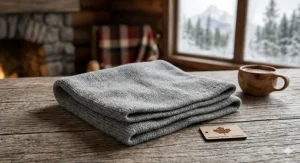
A merino wool neck gaiter is a seamless tubular piece of headwear made from superfine merino wool fibres, typically measuring 15–21 microns in diameter — thin enough to sit comfortably against bare skin without any itch. Unlike synthetic alternatives, merino wool is a natural thermoregulator: its crimped fibre structure traps warm air pockets against your skin in the cold, yet allows moisture vapour to escape before it becomes sweat. Translation? You stay warm when you’re standing still at your ice hole, and you don’t overheat when you’re drilling, hauling gear, or hiking out. It can absorb up to 30% of its weight in moisture without feeling wet — a detail that matters enormously when you’re out on the hardwater for six hours.
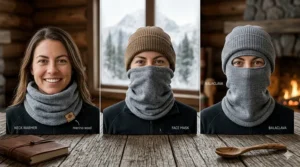
Canadians have unique demands for their cold-weather gear. Between brutal Prairie winters, the wet coastal cold of British Columbia, and the wind-driven chill of the Great Lakes region, a neck gaiter has to perform across wildly different conditions. Add in ice fishing, cross-country skiing, snowshoeing, winter commuting, and late-season hikes, and you need something genuinely versatile. The best merino wool neck gaiter doubles as a face mask, headband, beanie liner, and windproof balaclava all in one — without taking up more room in your pack than a rolled-up sock.
In this guide, I’ve researched and analysed seven of the best merino wool neck gaiters available on Amazon.ca in 2026 — covering budget, mid-range, and premium options. I’ll also walk you through what to look for as a Canadian buyer, how to use one properly on the ice, and which option suits your specific scenario. All prices are in CAD (Canadian dollars).
Quick Comparison: Best Merino Wool Neck Gaiters in Canada 2026
| Product | Weight Class | Key Material | Best For | Price Range (CAD) |
|---|---|---|---|---|
| Merino.tech Ski Neck Gaiter (165g) | Lightweight | 100% 18.5-micron merino | Daily wear, light winter | $25–$40 |
| Icebreaker Merino Flexi Chute | Midweight | 100% merino, 200g/m² | Skiing, versatile 3-season | $40–$60 |
| Icebreaker Merino Apex Chute | Midweight+ | 100% merino, double layer | Ice fishing, cold commutes | $45–$65 |
| Smartwool Thermal Merino Long Gaiter | Heavyweight | 100% merino interlock | Extreme cold, ice fishing | $45–$65 |
| Minus33 Midweight Wool Neck Gaiter | Midweight | 100% 18.5-micron merino | Hunting, hiking, ice fishing | $35–$55 |
| DANISH ENDURANCE Merino Snood | Lightweight | 100% merino wool | Cycling, trail running | $25–$40 |
| Buff Merino Lightweight Neckwear | Lightweight | 100% ethically sourced merino | Multi-sport, travel | $30–$50 |
Table Analysis: Looking at the comparison above, the Merino.tech and DANISH ENDURANCE options deliver excellent entry-level value for casual winter use, but if ice fishing or hardwater conditions are your priority, the extra investment in Smartwool’s Thermal Merino Long Gaiter or the Icebreaker Apex Chute is absolutely justified — that extended length and double-layer construction is what separates “warm enough for a walk” from “warm enough for six hours on Lake Simcoe in January.” Budget buyers should note that lightweight gaiters sacrifice warmth retention at the colder end of the Canadian temperature spectrum, particularly when temperatures dip below -20°C.
💬 Just one click — help others make better buying decisions too! 😊
✨ Don’t Miss These Exclusive Deals!
🔍 Take your ice fishing and winter outdoor game to the next level with these carefully selected neck gaiters. Click on any highlighted item to check current pricing and availability on Amazon.ca. These picks will keep you warm, dry, and comfortable all Canadian winter long!
Top 7 Merino Wool Neck Gaiters in Canada: Expert Analysis
1. Merino.tech Merino Wool Ski Neck Gaiter (165g)
Designed in Canada and built from 100% superfine 18.5-micron merino wool, the Merino.tech gaiter is one of the best-known entries in this category on Amazon.ca — and with over 2,900 customer reviews and a 4.3-star rating, the popularity is well earned.
The 165g/m² weight sits in the lightweight category, which means this isn’t your go-to for an all-day ice fishing session in Saskatchewan when it’s -30°C. But what it does brilliantly is everyday versatility. The 18.5-micron fibre is genuinely soft — there’s no scratch-against-the-chin irritation you’d get from cheaper wool blends. It’s also UPF 25-rated for the lightweight version, climbing to UPF 50+ on heavier variants, which matters if you’re out on reflective ice or spring skiing.
What most Canadian buyers overlook: this gaiter is machine-washable (lay flat to dry), which is a meaningful practical advantage over some competitors that demand hand-washing. It comes in an unusually wide range of colours and patterns, making it popular as a gift item — a point well reflected in Canadian reviewer feedback, which highlights the fit and softness as standout qualities.
✅ Canadian-designed brand with authentic outdoor credentials
✅ Excellent fibre softness — great for sensitive skin
✅ Wide colour selection; ideal for gifting
❌ 165g weight isn’t sufficient for extreme cold or stationary ice fishing
❌ Some users note the tubular stretches with heavy use over time
Price range: around $25–$40 CAD. For the price and the Canadian connection, this is an outstanding starter gaiter for urban commuters and three-season use.

2. Icebreaker Merino Flexi Chute
The Icebreaker Merino Flexi Chute is the merino neck gaiter benchmark that every other option gets judged against — and it earns that reputation honestly. Made from 100% pure merino wool at 200g/m², this New Zealand-brand classic is available on Amazon.ca and ships across Canada, including to most remote addresses.
The 200g/m² weight hits the sweet spot between breathability and warmth — it’s heavier than a summer-weight buff but light enough to wear during active pursuits without overheating. What the spec sheet doesn’t tell you: this gaiter has a natural elasticity that holds its shape across hundreds of wears. If you’ve ever owned a cheap tube scarf that went baggy after a season, you’ll appreciate how the Flexi Chute keeps its fit. The seamless construction also eliminates the pressure points and chafing marks that can appear on all-day wearers.
In my experience, this is the top pick for backcountry skiing, snowshoeing, and shoulder-season hiking across Canadian terrain. It performs especially well in the wet-cold conditions typical of BC’s Coast Mountains or Atlantic Canada winters, where moisture management matters as much as raw warmth.
✅ Industry-benchmark construction quality
✅ Seamless — no pressure points or chafing
✅ Excellent moisture regulation for active pursuits
❌ Premium price point; can run $40–$60 CAD
❌ Lighter weight — not ideal alone for extreme static cold
Price range: $40–$60 CAD. Worth every dollar for active Canadians who want quality that lasts multiple seasons.
3. Icebreaker Merino Apex Chute
Think of the Icebreaker Merino Apex Chute as the Flexi Chute’s more serious sibling — it uses the same premium 100% merino wool construction but adds a critical double-layer design that makes a real difference when you’re sitting still. And “sitting still” is exactly what you’re doing when you’re ice fishing.
The double layer traps a thicker air pocket against your neck and lower face, boosting insulation significantly compared to single-layer options. This isn’t just marketing — when you’re in a portable ice shelter on Lake Winnipeg at -20°C, with the auger blowing cold air across your face every time someone drills a new hole, that extra layer of thermal buffering is the difference between comfort and counting down the minutes to get back to the truck. The Apex Chute can also function as a beanie, headband, or full face mask depending on how you position it — six configurations in a garment that weighs under 85 grams.
Canadian buyers who’ve reviewed this product highlight its performance in northern Ontario and Quebec hardwater conditions. Prime-eligible on Amazon.ca, so most urban Canadians can receive it within a day or two.
✅ Double-layer construction — genuinely warmer than single-layer competitors
✅ Six wearing configurations in one garment
✅ Merino’s natural odour resistance makes it multi-day ice-trip capable
❌ Slightly heavier feel than the Flexi Chute
❌ Colours somewhat limited compared to other options
Price range: $45–$65 CAD. The Apex Chute is my top recommendation for Canadian ice fishers as a standalone neck gaiter.
4. Smartwool Thermal Merino Long Neck Gaiter
Smartwool has Canadian distribution and maintains a dedicated Canadian website (smartwool.com/en-ca), and their Thermal Merino Long Neck Gaiter is the brand’s answer to serious cold-weather demands. The “Long” designation is the key detail: this gaiter features an extended length that covers more of the chest and upper back, eliminating the gap between your jacket’s collar and your neck that most standard gaiters leave exposed.
Built from 100% merino wool with a double-layer interlock knit construction and flatlock seams, the Smartwool Thermal gaiter sits at the heavier end of the merino spectrum. The interlock knit — two interlocked loops of yarn — creates a denser, more wind-resistant surface than a simple jersey knit. On the Prairies, where the wind is your real enemy rather than the temperature itself, this matters. It also means the gaiter is naturally shrink-resistant, which is a practical advantage for Canadians who tend to throw gear in the wash after every muddy spring day.
A small but clever detail: Smartwool has engineered breathing zones into some of their gaiter designs to prevent fogging on glasses and goggles — invaluable for ice anglers who wear prescription lenses in the cold.
✅ Extended length eliminates the dreaded collar gap
✅ Shrink-resistant interlock knit stands up to machine washing
✅ Wind-resistant construction for Prairie and coastal winter use
❌ Heavier weight — less ideal for high-output activities
❌ Price sits on the higher end for the category
Price range: $45–$65 CAD. The best choice for stationary cold-weather activities, winter commuting, and anyone tired of feeling the cold sneak in at the collar.
5. Minus33 Midweight Wool Neck Gaiter
Minus33 has been in the merino wool game since 2004, with roots in a 100-year-old American woollen mill tradition — and their Midweight Wool Neck Gaiter is available through Amazon.ca, shipping to Canadian addresses. At 100% 18.5-micron merino wool, 235g/m², and a weight of just 63 grams (2.25 oz), this sits comfortably in the midweight sweet spot.
What distinguishes the Minus33 from similarly spec’d competitors is the flatlock seam construction, which reduces bulk under a balaclava or helmet liner. It also carries a UPF 50+ rating, making it dual-purpose for any Canadian ice angler who extends their season into April when UV reflection off snow and ice is surprisingly intense. The interlock knit also adds a degree of wind-resistance that you don’t always get from lighter jersey-knit gaiters.
For hunters, this is probably the best pick on this list. Merino wool’s natural odour-neutralising properties — a result of the fibre’s lanolin content and protein structure — mean you’re not alerting deer or moose to your presence the way you would with a synthetic layer that’s been through a dozen cold-morning hunts.
✅ UPF 50+ — great for late-season ice fishing and spring alpine use
✅ Flatlock seams reduce bulk under headwear
✅ Outstanding odour resistance — ideal for hunting applications
❌ Ships from the US on Amazon.ca; verify Prime eligibility before ordering
❌ Slightly heavier than lightweight options for everyday use
Price range: $35–$55 CAD. Excellent value in the midweight category; a strong all-rounder for hunting, hiking, and fishing alike.
6. DANISH ENDURANCE 100% Merino Wool Snood
The DANISH ENDURANCE Merino Wool Snood is a lightweight, multifunctional neck gaiter that’s particularly popular among Canadian cyclists, trail runners, and commuters on Amazon.ca — and for good reason. Danish Endurance has built a reputation for making performance-focused merino products at accessible price points, and this snood delivers on both fronts.
At the lightweight end of the spectrum, this isn’t a winter ice fishing gaiter — but it excels as a year-round commuter layer and a three-season outdoor accessory. The 100% merino construction handles the shoulder seasons beautifully: those October mornings in Toronto or the wet, cold Novembers in Vancouver when the temperature swings 10°C between your morning ride and your afternoon commute. The natural temperature regulation means you’re not overheating on the Plateau-Mont-Royal bike path in September, but you’re still protected when the wind picks up.
Canadian reviewers particularly highlight the softness and comfort for all-day wear — this is the gaiter you can keep on indoors without feeling overheated, which is something you absolutely cannot say about a fleece neck warmer.
✅ Excellent value in the lightweight category
✅ Ideal for cycling, commuting, and shoulder-season use
✅ Comfortable enough for all-day indoor/outdoor transitions
❌ Not warm enough as a standalone layer for deep Canadian winter
❌ Limited availability in some colour variants on Amazon.ca
Price range: $25–$40 CAD. A strong choice for urban Canadians who want merino quality at an approachable price.
7. Buff Merino Lightweight Wool Neckwear
Buff literally invented the category — the company coined the term “buff” for tubular neckwear back in 1991, and their Merino Lightweight Wool Neckwear remains one of the most technically refined options available. Made from 100% ethically sourced merino wool at 125g/m², with a UPF 50+ rating and Buff’s signature seamless tubular construction, this is the premium travel and multi-sport choice.
At 125g/m², this is firmly a lightweight gaiter — not designed for -30°C Prairie winters on its own. What it does exceptionally well is moisture management under active conditions. The 125g fabric is thin enough that you can pull it up over your nose and mouth without it restricting breathing during high-exertion activities like backcountry touring or running. The no-seam construction means there are literally zero irritation points against your skin — even after 10 hours of wear.
In Canada, Buff tends to command a premium price, often landing in the $30–$50+ CAD range — slightly higher than comparable lightweight options. But the brand’s commitment to sustainable sourcing and quality manufacturing means these gaiters genuinely last. After two years of near-daily use in variable Canadian conditions, the high-quality construction holds its shape far better than cheaper alternatives.
✅ Seamless tubular construction — zero irritation points
✅ Industry-best quality and brand history; sustainably sourced merino
✅ UPF 50+ for multi-season versatility
❌ Premium price; among the most expensive lightweight options on Amazon.ca
❌ Lightweight rating — requires layering in extreme cold
Price range: $30–$50+ CAD. Worth the investment for quality-focused Canadian buyers who want a gaiter that performs year-round and lasts for years.
How to Use Your Merino Wool Neck Gaiter on the Ice: A Canadian Angler’s Guide
Ice fishing in Canada is not a casual weekend hobby — it’s a cultural institution that stretches from the ice roads of the Northwest Territories to the hardwater derbies of Lake Erie. And the one piece of gear that most anglers underestimate is right here: the neck gaiter. Here’s how to get the most out of yours.
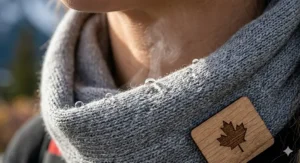
Layer it correctly. Your merino wool neck gaiter belongs against the skin or directly over a thin merino base layer — never over a fleece. If you trap a rough-textured mid-layer between your skin and the gaiter, you lose the direct moisture-wicking contact that makes merino work. The gaiter’s job is to wick vapour away from your skin before it becomes liquid sweat, which means skin contact is non-negotiable.
Deploy it in stages. Start with the gaiter sitting loosely around your neck. As the temperature drops or wind picks up — and on a Canadian lake, it will — pull it up progressively. First to cover the chin. Then to protect the nose. In extreme conditions, pull it fully up into balaclava position. This staged approach lets you stay comfortable without overheating during the hike out to your spot, then dial up the warmth as you settle in.
The wind-chill reality. According to Canada’s ice fishing safety guidance, wind chill can make temperatures feel 15–20°C colder than the thermometer shows. At -25°C with wind, frostbite on exposed skin is possible within 10–30 minutes. Your neck, chin, and lower face are all highly vascular — exposed skin in this region loses heat rapidly. A properly deployed merino gaiter is your front-line defence.
Cold-weather maintenance tips:
- After every ice trip, shake out moisture and hang flat to dry before storing
- Spot-wash with cold water and wool-specific detergent; avoid regular fabric softeners (they coat the fibre and destroy moisture-wicking performance)
- Store loosely — don’t compress tightly in a stuff sack for long periods
- Avoid direct heat (radiators, dryers) — air-dry only
One common mistake: Canadians often remove their gaiter the moment they step into an ice shelter. Don’t. Interior temperatures in a portable shelter can still be significantly below freezing, and the breath-moisture from multiple people creates a humid cold that’s almost harder on the skin than dry outdoor air. Keep it on until you’re genuinely comfortable.
Real Canadian User Scenarios: Which Gaiter Suits You?
The product list above is only useful if you can match the right gaiter to your actual situation. Here are three Canadian user profiles with specific recommendations.
Profile 1 — The Weekend Ice Angler (Northern Ontario) Alex from Sudbury heads out to Lake Nipissing four to five times each winter, typically spending five to seven hours in a portable shelter with a group. Temperatures regularly hit -25°C with significant wind chill on the drive out. Alex’s priority is stationary warmth — not breathability during high-output activity. Best match: Icebreaker Apex Chute or Smartwool Thermal Merino Long Neck Gaiter. The double-layer construction and extended length handle stationary cold-weather demands better than any single-layer lightweight option, and both are available at the $45–$65 CAD range — reasonable for an item that gets used every winter weekend.
Profile 2 — The Urban Winter Commuter (Vancouver or Toronto) Priya from North York bikes to work three days a week from October to March, transitions to TTC on the worst days, and needs a gaiter that handles -10°C rides, sweaty subway air, and the occasional cold office. The key requirement: odour management and temperature regulation across dramatic indoor-outdoor swings. Best match: DANISH ENDURANCE Merino Snood or Buff Merino Lightweight. Both are lightweight enough to wear indoors without overheating, both manage moisture beautifully during active commutes, and both fall in the $25–$50 CAD range that makes sense for everyday gear.
Profile 3 — The Backcountry Skier (BC Coastal Mountains or Quebec) Marc from Gatineau does two to three backcountry ski touring days per month from December to April. He needs a gaiter that handles -15°C in the treeline, high-output climbing sweat, and the full face-protection demands of alpine exposure on ridgelines. Best match: Icebreaker Flexi Chute or Minus33 Midweight. Both offer the UPF 50+ rating needed for spring corn-snow days, the moisture management demanded by prolonged ski touring, and the lightweight profile that prevents overheating on steep ascents.
How to Choose a Merino Wool Neck Gaiter in Canada: 6 Expert Criteria
1. Weight (g/m²) — Match It to Your Activity
This is the most important spec, and it’s the one most buyers ignore. Lightweight gaiters (100–165g/m²) are breathable and comfortable for active use but won’t keep you warm when you’re stationary in deep cold. Midweight (200–240g/m²) hits the all-round sweet spot for most Canadian winter outdoor activities. Heavyweight or double-layer options (250g/m² and above, or double-layered designs) are the right choice for stationary cold-weather use like ice fishing, snowmobiling, or winter camping.
2. Micron Count — Softness vs. Durability Trade-off
Merino fibres are measured in microns. Finer fibres (15–18.5 microns) are softer against the skin but slightly less durable. Coarser fibres (19–22 microns) last longer but may cause some skin sensitivity in people who are reactive to wool. For a neck gaiter — which sits against your face and neck — prioritise fibres at 18.5 microns or finer.
3. Construction — Seams Matter More Than You Think
Seamless tubular construction (like Buff’s design) eliminates all potential irritation points and is worth the premium for all-day wear. Flatlock seams (Minus33, some Smartwool models) are the next best option — they lie flat rather than folding over, which reduces pressure under helmets or balaclavas.
4. Length — Don’t Underestimate This
Standard-length gaiters cover the neck comfortably. Extended-length models (like Smartwool’s Thermal Long variant) cover more of the chest and back of the neck — eliminating the cold gap that standard-length gaiters miss. For ice fishing and winter commuting in Canada, longer is almost always better.
5. Amazon.ca Availability and Shipping
Some merino wool brands available on Amazon.com ship to Canada with significant delays, additional customs fees, or limited selection. Prioritise options that are Amazon.ca-listed and Prime-eligible for reliable delivery — especially important if you’re buying for an upcoming winter trip. Note that free shipping on Amazon.ca typically applies to orders over $35 for non-Prime members; Prime members get free shipping regardless.
6. Care Instructions — Real-World Practicality
Merino wool requires gentler care than synthetics. Machine-washable gaiters (cold water, gentle cycle, lay flat to dry) are significantly more practical for regular outdoor use than hand-wash-only options. Check the care label before purchasing — some brands are more forgiving than others.
Merino Wool vs. Fleece Neck Warmer: The Real Comparison
This is a question I get constantly from Canadian buyers, so let’s settle it with specifics rather than generalities.
| Factor | Merino Wool Neck Gaiter | Fleece Neck Warmer |
|---|---|---|
| Odour resistance | Excellent — naturally antimicrobial | Poor — absorbs and retains odours |
| Wet insulation | Retains warmth when wet | Loses most insulating capacity when wet |
| Temperature range | Wide — warm in cold, cool in mild | Narrow — warm only |
| Weight | Light to midweight options | Generally heavier |
| Windproofness | Moderate — better with tighter knit | Moderate — depends on pile |
| Packability | Excellent | Good |
| Price (CAD) | $25–$65+ | $15–$45 |
| Durability | 5–10 years with care | 2–4 years with regular use |
Table Analysis: The data above tells a clear story: merino wool wins on almost every performance metric, particularly odour resistance and wet-weather warmth — the two factors that matter most for Canadian outdoor use. The fleece neck warmer holds a price advantage at the entry level, but when you factor in the significantly longer lifespan of a quality merino gaiter, the cost-per-use calculation often favours merino over a multi-year horizon. The one area where fleece genuinely competes is in raw bulk warmth at a low price point — for casual backyard use or a child’s school day, a $20 fleece neck warmer is perfectly adequate.
Common Mistakes Canadians Make When Buying a Neck Gaiter
Buying a Lightweight Gaiter for Ice Fishing
This is the single most common mistake. A 150–165g/m² lightweight merino gaiter is excellent for hiking, cycling, and shoulder-season use — but it won’t cut it as your primary face protection during a January ice fishing session on Lake Manitoba. If you’re going to be stationary in cold conditions for hours, you need midweight at minimum, and a double-layer construction is strongly recommended.
Ignoring the Length
Standard-length gaiters cover the neck and can be pulled up over the face — but they leave a gap at the chest and upper back of the neck that is a significant source of heat loss. For Canadian winters, I’d argue extended-length models are worth the price premium for anyone who spends significant time outdoors.
Confusing “Wool Blend” with “100% Merino”
A “merino blend” gaiter — typically 50% merino and 50% polyester or acrylic — will perform noticeably worse on moisture management and odour resistance than a 100% merino option. The wool component provides the technical performance; diluting it with synthetic fibres reduces effectiveness. Always check the material composition before purchasing.
Washing Incorrectly
This one destroys more good merino gaiters than anything else. Never use regular liquid detergent on merino — the enzymes in standard detergents break down the wool protein structure over time. Use a wool-specific wash (Woolite, Eucalan) in cold water. And never put merino in a tumble dryer — the combination of heat and mechanical agitation will felt the fibres irreversibly, shrinking your $50 gaiter to the size of a sock.
Buying Based on Price Alone
This is especially relevant in the Canadian market, where Amazon.ca listings include a wide range of quality levels at similar price points. A $20 “merino blend” gaiter from an unverified brand will rarely outperform a $35–$45 option from an established merino wool specialist. The quality of the wool — its micron count, fibre length, and processing — varies enormously at the lower price points.
Merino Wool Neck Gaiter Performance in Canadian Conditions: What to Expect
Winter (December–February): The Core Test
This is where merino proves its worth or fails. In temperatures from -15°C to -35°C — common across Prairie provinces, northern Ontario, Quebec, and Atlantic Canada — a midweight to heavyweight merino gaiter provides meaningful thermal protection for the lower face, neck, and upper chest. The key advantage over synthetic alternatives in deep cold: merino retains approximately 80% of its insulating capacity even when wet, compared to synthetics which lose most of theirs. When your breath condenses against a synthetic buff, the moisture soaks back in and makes you colder. With merino, the fibre absorbs that moisture vapour and generates a small amount of heat — a genuine warm-when-wet advantage.
Spring (March–April): The Shoulder Season Advantage
Late-season ice fishing, spring skiing, and shoulder-season hiking are where merino’s temperature-regulation properties shine brightest. On an April morning in Muskoka when the temperature swings from -5°C at dawn to +8°C by noon, a synthetic layer will leave you sweating and overheated on the warming side of that range. Merino’s natural thermostat adapts to the change, staying comfortable across a much wider temperature range.
Summer: Genuinely Useful in Lightweight Form
Lightweight merino gaiters (125–165g/m²) with UPF 50+ ratings are legitimate summer sun-protection accessories for fishing, hiking, and cycling. The UPF rating matters on reflective surfaces like lakes and glaciers, where sun exposure is significantly higher than typical outdoor conditions. REI’s materials guide notes that merino’s hygroscopic properties — its ability to absorb moisture vapour — make it actively cooling in warm weather, which is counterintuitive for a wool product but genuinely effective.

FAQ
❓ What is the best merino wool neck gaiter for ice fishing in Canada?
❓ Is a merino wool neck gaiter warm enough for Canadian winters?
❓ Can I machine wash my merino wool neck gaiter?
❓ Are merino wool neck gaiters available on Amazon.ca with free shipping?
❓ What's the difference between a merino wool neck gaiter and a buff ice fishing tube?
Conclusion: The Right Merino Wool Neck Gaiter Makes Your Canadian Winter
Here’s the honest truth about gear: most Canadians are underprotected at the neck. We invest in good boots, quality gloves, and a decent parka — and then we grab whatever scarf is near the door on the way out. A quality merino wool neck gaiter fixes that gap for $25–$65 CAD, and it fixes it permanently.
The best option for most Canadian ice anglers is the Icebreaker Apex Chute — the double-layer construction handles stationary cold like nothing else at this price range. For active outdoor Canadians who need a year-round all-rounder, the Icebreaker Flexi Chute is the benchmark. Budget-conscious buyers and urban commuters will find the Merino.tech Ski Neck Gaiter delivers exceptional quality for the price, with the added bonus of being designed in Canada.
What merino wool brings to the table — its natural temperature regulation, moisture management, odour resistance, and genuine comfort against bare skin — simply can’t be replicated by synthetic alternatives at any price. And in a country where winter isn’t a minor inconvenience but a six-month reality, that makes all the difference.
✨ Don’t Miss These Exclusive Deals!
🔍 Ready to upgrade your winter kit? Click any highlighted product name in this article to check current pricing and availability on Amazon.ca. Stock varies by season — don’t wait until the first freeze to find out your size is sold out!
Recommended for You
- Warmest Balaclava for Ice Fishing: 7 Best Picks for Canada (2026)
- Best Insulated Ice Fishing Hat 2026: 7 Warmest Picks for Canadian Winters
- 7 Best Hand Warmers for Ice Fishing in Canada 2026
Disclaimer: This article contains affiliate links. As an Amazon Associate, I earn from qualifying purchases. If you purchase products through these links, we may earn a small commission at no additional cost to you.
✨ Found this helpful? Share it with your friends! 💬🤗
