
In This Article
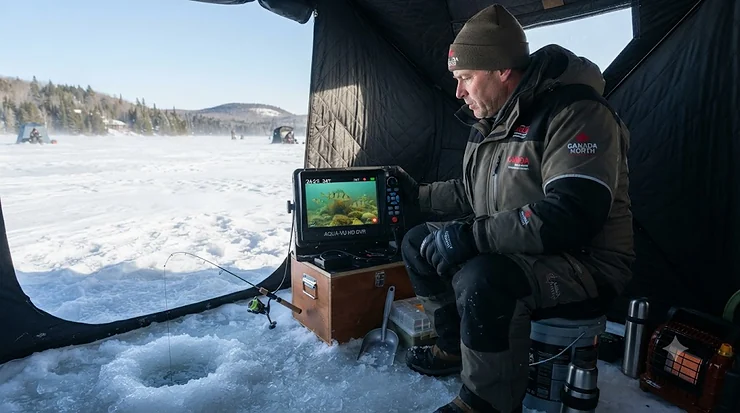
There’s a particular kind of heartbreak that only ice anglers know: the one where a fifteen-pound pike glides past your lure, hovers for a second like it’s thinking it over, and then vanishes back into the dark — and nobody believes you because you have zero proof. That’s the gap a DVR ice fishing camera system closes. Unlike a basic underwater viewer that only shows you what’s happening in real time, a camera with built-in recording lets you capture the whole encounter, rewind it, and actually study what the fish did and why. For anyone who’s ever wanted receipts on their own fish stories, this is the gear that delivers them.
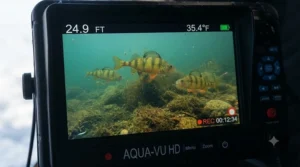
So, what is a DVR ice fishing camera system? It’s an underwater viewing rig — camera, cable, monitor, and power source — that also records footage to a memory card, letting anglers replay strikes, missed bites, and structure scouting instead of watching everything disappear the second it happens on screen.
This guide digs into seven real, currently available systems sold in Canada, ranging from pocket-friendly budget units to established brand-name gear, and breaks down what the specs actually mean once you’re sitting on a bucket over a hole at -15°C. Before any gear talk, it’s worth noting that ice fishing itself is a licensed activity in most provinces — Ontario’s fishing rules, for instance, apply just as much in winter as they do in summer. We’ll cover recording underwater ice camera performance, how the biggest downside to some premium units is that they don’t record footage at all without an add-on adapter, and how to pick the best DVR ice camera Canada conditions actually call for — not just the one with the flashiest marketing copy. Every product mentioned uses real specifications and aggregated review themes; where individual customer experiences couldn’t be independently verified, that’s noted rather than invented. By the end, you’ll know exactly which system fits your fishing style, your budget, and your patience for fiddling with memory cards in mittens.
Quick Comparison Table
| Product | Resolution | Recording | Cable Length | Best For |
|---|---|---|---|---|
| Eyoyo 7-Inch DVR Underwater Camera | 1000TVL | DVR + 8GB card | 20m/65ft (variants to 50m) | Budget first-timers |
| FishPRO 2026 Upgrade 7″ IPS DVR-32GB | 1080P HD | DVR + 32GB, loop recording | 25m/82ft | Best video quality on a budget |
| Anysun Portable 7″ DVR Camera | 1000TVL | DVR + 8GB card | Standard kit cable | Simple, no-fuss setup |
| FarmNix 7″ 32GB DVR Camera | 1000TVL+ | DVR + 32GB | 30m/98ft | Long-cable deep holes |
| Eyoyo Upgraded IPS AHD720p DVR | 720p AHD | DVR, browser-playable | 30m/98ft | Easiest playback experience |
| Eyoyo EF360 9″ 360° Panning DVR | 1000TVL | DVR + 8GB card | 30m/98ft | Scouting wide structure |
| Aqua-Vu AV715c Color Camera System | Sony HD sensor | Optional add-on | 50ft standard | Long-term durability, brand support |
Looking at this lineup, the split is pretty clear: the sub-C$200 cameras all build recording directly into the unit, while the long-established brand name — Aqua-Vu — treats DVR as an accessory rather than a core feature. That matters a lot if capturing footage of record fish strikes ice is your actual priority rather than just watching live. Budget buyers get more recording convenience out of the box, while premium buyers are paying for sensor quality, cold-weather reliability, and a company that’s been making these things for over a decade.
💬 Just one click — help others make better buying decisions too!😊
Top 7 DVR Ice Fishing Camera Systems: Expert Analysis
1. Eyoyo 7-Inch DVR Underwater Fishing Camera — most widely proven budget DVR pick
Eyoyo has been building underwater fishing cameras since 2013, and this 7-inch DVR model is close to the platform that put them on the map for Canadian ice anglers. The standout here is simple: it was one of the first sub-C$200 cameras to bake DVR recording directly into the housing instead of treating it as an afterthought.
The 1000TVL camera won’t match a modern smartphone sensor, but in practice it’s enough resolution to identify species and read strike behaviour in clear ice-hole water — the kind of clarity that matters more than raw pixel count when you’re trying to tell a walleye from a sucker at four feet. The 12 infrared lights switch the image to black-and-white in darker water, which sounds like a downside until you realize IR actually improves contrast in murky conditions where colour footage just looks like brown soup. The included 8GB SD card records straight to the unit, and the metal casing plus IP68 rating mean it shrugs off drops onto ice far better than a plastic-shelled competitor would.
Who should buy this: first-time buyers who want to try recording underwater ice camera footage without committing serious money, and family groups who mostly want proof of the big one for the group chat. Reviewers consistently report solid image clarity for the price and reasonably long 6-8 hour battery life in cold weather, though some note that a few older Eyoyo listings in the same family lack DVR entirely, so double-check the specific listing before buying if recording is the whole point.
Pros:
✅ Built-in DVR with no extra adapter needed
✅ Durable metal housing survives ice-shack abuse
✅ 12 IR lights improve visibility in murky water
Cons:
❌ 1000TVL resolution is dated next to 1080P rivals
❌ Some sibling listings in the lineup skip DVR entirely
At around C$100-C$150, this is one of the lowest-cost ways to get genuine recording underwater ice camera capability, and the value math works well for anyone testing whether they’ll actually use a camera before spending more.
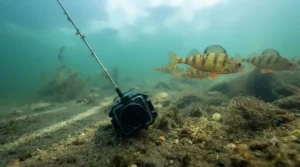
2. FishPRO 2026 Upgrade 7″ IPS DVR-32GB — best video quality on a budget
FishPRO’s 2026 refresh leans hard into the “record more, worry less” pitch, and on paper it backs that up. The standout feature is the jump to true 1080P HD combined with a 32GB card as standard — four times the storage of most rivals in this price bracket.
Loop recording splits footage into 2, 5, or 10-minute clips and keeps recording once the card fills by overwriting the oldest segments, which is a genuinely useful trick for anyone leaving the camera running unattended over a hole while jigging a second line. The 7-inch full-color IPS panel (rather than the cheaper TN screens common in this category) holds its contrast at wide viewing angles, so you’re not hunched over squinting from directly above. Based on the spec comparison against the plain 1000TVL cameras in this list, the resolution bump alone makes fine details — like whether a fish actually struck the jig or just brushed the line — noticeably easier to confirm on playback.
The magnetic Mag-Spool system lets the monitor detach from the cable spool, which is a small but genuinely practical touch for anyone who’s ever tried to manage a tangled cord with frozen fingers. What most buyers overlook about this model is the cable itself: an aramid-fiber core rated for 88 lb of tensile strength, which matters more than people think once a camera snags on submerged brush and needs a firm tug to free.
Pros:
✅ True 1080P HD beats most budget rivals outright
✅ 32GB card with loop recording avoids missed footage
✅ Magnetic spool separates monitor from cable cleanly
Cons:
❌ No HDMI output on this particular configuration
❌ 2026 branding makes older reviews harder to compare
Priced in the C$150-C$220 range, this is arguably the strongest video recording ice fishing value on the market right now, trading brand pedigree for genuinely better hardware than the price suggests.
3. Anysun Portable Underwater Video Camera (7″ DVR) — simplest setup for reluctant tech users
Not everyone wants to think about frame rates and loop segments before they’ve had their coffee. The Anysun’s standout feature is exactly that simplicity: plug in, hit record, go fish.
The 1000TVL sensor and 120-degree wide lens cover a broader field of view than narrower competitors, useful for scanning a hole rather than staring at a single fixed point. Twelve white LED lights (rather than pure infrared) give a full-colour night view instead of black-and-white, which some anglers prefer purely for aesthetics when reviewing footage later, even though IR technically performs better in truly murky water. The included 8GB SD card records directly, and the rechargeable battery is rated for roughly 8 hours — enough for a full day on the ice without needing a power bank in your sled.
Here’s what to weigh: the fish-friendly camera housing shape is designed not to spook fish on approach, a small detail that matters more than it sounds when you’re trying to capture natural strike behaviour rather than a fish darting away from an obviously foreign object. Aggregated review sentiment points to this being a genuinely beginner-friendly unit, with most complaints centred on the plainer plastic carrying case rather than the camera’s actual performance.
Pros:
✅ Genuinely plug-and-play with no learning curve
✅ Wide 120° lens covers more of the hole
✅ Fish-friendly shape reduces spooking on approach
Cons:
❌ White LED lighting is less effective than IR in dark water
❌ Carrying case feels flimsier than the camera itself
At under C$130, this sells itself to anyone who wants the memory card ice camera experience without a manual longer than the fishing trip itself.
4. FarmNix 7″ 32GB DVR Underwater Fishing Camera — lesser-known alternative with premium-tier storage
FarmNix isn’t a household name yet, but its spec sheet punches well above its brand recognition. The standout: a 32GB card and 10,000mAh battery combo more commonly found on cameras costing double.
That battery capacity translates to genuinely all-day use in cold weather, where lithium batteries lose efficiency fast — a detail the spec sheet won’t spell out, but user reports on similar high-capacity units suggest real-world runtime holds up noticeably better than 4,500mAh competitors once temperatures drop below -10°C. The 98-foot cable is longer than most rivals in this price bracket, which matters for anyone fishing deep basin lakes in Northern Ontario or the Prairies where structure sits 60+ feet down. IR and LED lighting options give flexibility between black-and-white clarity in dark water and full-colour footage in clearer conditions.
Based on the spec comparison, FarmNix occupies an interesting middle ground: it undercuts the FishPRO on resolution but beats most budget rivals on raw storage and cable reach. That makes it a solid pick for anglers who fish deep, remote lakes more than shallow weed beds, where a shorter cable simply won’t reach bottom.
Pros:
✅ 32GB storage rivals cameras twice the price
✅ 10,000mAh battery holds up in cold temperatures
✅ 98-foot cable reaches deep basin structure
Cons:
❌ Limited brand history means fewer long-term reviews
❌ Customer support network is less established than bigger names
In the C$140-C$190 range, FarmNix rewards buyers willing to bet on specs over brand name — a reasonable trade for anyone fishing genuinely deep water.
5. Eyoyo Upgraded 7″ IPS AHD720p DVR — easiest playback of any camera on this list
Eyoyo’s playback ice camera problem — old files needing a clunky third-party player — gets a direct fix in this model. The standout feature: recorded clips open straight in a browser or on a phone, no VLC or KMPlayer download required.
The 1280×720 AHD camera trades some of the FishPRO’s 1080P sharpness for a genuinely useful convenience upgrade, and the 1024×600 IPS screen resolution is a real step up from the 800×480 panels on older Eyoyo units, holding colour accuracy from wider viewing angles under a tent. What most buyers overlook about the DVR ice fishing camera system category generally is that recording the footage is only half the job — getting it off the card and onto a screen you can actually show someone is the part that trips people up, and this model solves that specific pain point better than most competitors on the market.
Reviewers consistently note that this upgraded version feels like a meaningful step over Eyoyo’s earlier DVR cameras rather than a simple rebrand, particularly for anyone who’s been frustrated hunting for the right playback software after a trip.
Pros:
✅ Direct browser/phone playback skips third-party software
✅ IPS screen upgrade improves colour and viewing angle
✅ Meaningful resolution bump over older 1000TVL siblings
Cons:
❌ Still short of true 1080P clarity
❌ Sits at a slightly higher price than base Eyoyo models
Around the C$160-C$210 range, this is the pick for anglers who care more about actually watching their footage than squeezing out marginal resolution gains.
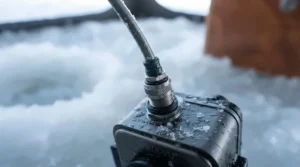
6. Eyoyo EF360 9″ 360° Panning Camera DVR — best for scouting wide structure
Most underwater cameras show you a fixed slice of the world below the ice. The EF360’s standout feature is a remote-controlled 360-degree rotating camera head, turning a narrow porthole view into a genuine scan of the whole area around your hole.
The larger 9-inch screen pairs naturally with that wider field of coverage — there’s more to look at, so a bigger display actually earns its place here rather than being a gimmick. Eighteen IR lights (more than most rivals) keep the rotating view lit evenly regardless of which direction the lens is currently pointed, and the DVR function with an 8GB card captures footage throughout the pan rather than only in one fixed direction. On paper, this means an angler scouting an unfamiliar lake can identify weed lines, drop-offs, and submerged timber across a much wider radius than a stationary camera would ever reveal.
The trade-off is battery draw: rotating the camera head consumes more power than a static unit, so the quoted 6-8 hour runtime skews toward the lower end with heavy panning use. Reviewers describe the rotation motor as reliable in testing but note it’s one more mechanical part that could eventually wear compared to a fixed-lens camera.
Pros:
✅ 360° remote panning reveals structure a fixed lens misses
✅ 18 IR lights keep visibility even during rotation
✅ Larger 9-inch screen suits the wider viewing use case
Cons:
❌ Panning motor draws more battery than static cameras
❌ Added mechanical part is one more thing that can fail
In the C$220-C$280 range, this earns its higher price through a genuinely unique capability rather than incremental spec bumps — a rare thing in this category.
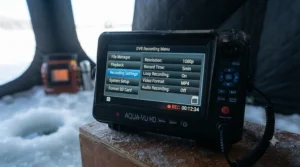
7. Aqua-Vu AV715c Color Underwater Camera System — premium build with the longest track record
Aqua-Vu has been a mainstay of North American ice fishing electronics for well over a decade, and the AV715c is their accessible entry point into that reputation. It’s most directly comparable to Marcum’s entry-level VS485c, and the two brands offer very similar cameras at similar price points. The standout here isn’t a headline spec — it’s sustained image quality and durability that budget brands haven’t matched over years of real use.
Long-term owner comparisons report that the Aqua-Vu holds a noticeably longer depth-of-field than comparable Marcum units, making fish visible several feet further from the lens even in poor-visibility water. That’s a meaningful real-world advantage for scouting structure in stained lakes common across the Canadian Shield. Here’s what the spec sheet won’t tell you outright: like most premium underwater viewing systems, this class of camera typically does not record footage natively — recording usually requires a separate adapter or accessory DVR, an added cost and extra gear to manage that budget cameras simply build in from the factory.
Based on the spec comparison, buyers choosing the AV715c are paying for sensor quality, a rigid storage case, and a company that’s been refining this exact product line since long before DVR became a standard feature elsewhere — not for out-of-the-box recording convenience. Reviewers and long-term users consistently describe reliable cold-weather performance across multiple seasons, which is the kind of durability claim a one-season budget camera simply hasn’t had time to earn yet.
Pros:
✅ Superior depth-of-field versus comparable competitors
✅ Established brand with years of proven cold-weather use
✅ Rigid storage case protects gear better than soft cases
Cons:
❌ Recording typically requires a separate adapter or accessory
❌ Meaningfully pricier than any budget DVR camera on this list
At around C$450-C$550, the AV715c isn’t the value pick — it’s the buy-once, keep-for-years pick for anglers who prioritize image quality and brand longevity over built-in recording convenience.
How to Choose a DVR Ice Fishing Camera System
Picking between these seven comes down to weighing a handful of factors that matter far more once you’re actually on the ice than they do reading a spec sheet at home.
- Recording location matters more than resolution. A camera with excellent specs but no built-in DVR — like several premium units — forces you to buy and manage a separate recorder. If capturing video recording ice fishing footage is the whole point, prioritize built-in DVR over marginal image-quality gains.
- Cable length should match your typical lake depth. Shorter 65-foot cables are fine for shallow bays; deep basin lakes common in Northern Ontario and the Prairies need 90+ feet of reach.
- Battery capacity drops in cold weather. Lithium batteries lose usable capacity as temperature falls, so a quoted 8-hour runtime often becomes 5-6 hours in a -15°C ice shack — buy more capacity than you think you need.
- Loop recording prevents missed moments. Cameras that overwrite old footage automatically once the card fills mean you never have to babysit the recording status manually.
- Screen technology affects daytime visibility. IPS panels hold contrast from wide angles and in bright light; cheaper TN panels wash out when viewed from anywhere but directly overhead.
- Playback convenience is an underrated factor. Some cameras need a specific third-party media player to open recorded clips, which is a frustrating discovery after a trip rather than before buying.
- Brand history correlates with long-term reliability, but budget brands with strong review histories of their own — like Eyoyo — can offer years of solid service too, just with less accumulated track record than Aqua-Vu or MarCum.
Setting Up Your DVR Ice Fishing Camera: A Practical Usage Guide
Getting a new DVR ice fishing camera system working well takes about ten minutes the first time and thirty seconds every trip after that — provided you sidestep a few common first-week mistakes.
Before the first trip, fully charge the battery indoors at room temperature; lithium batteries charge inefficiently in the cold, and a partial charge in a warm house beats a full charge attempted in a frozen truck bed. Format the included memory card in-camera rather than on a computer the first time you use it — this avoids file-system mismatches that occasionally cause playback issues later. Set the recording mode before you’re standing over the hole: if your camera supports loop recording in segments (like the FishPRO’s 2/5/10-minute clips), a 5-minute segment length balances manageable file sizes against not chopping a strike sequence awkwardly in half.
On the ice, lower the camera slowly and let it settle for 10-15 seconds before recording — cameras jostled during descent produce blurry footage in the first few seconds that’s easy to trim out later but annoying to sit through live. Wipe the lens dry between drops; water droplets that freeze on the lens in sub-zero air create distracting distortion that’s often mistaken for a camera fault. A common mistake in the first 30 days is leaving the camera recording continuously for hours without checking remaining card space — check your card capacity against your camera’s data rate before a long day out, and lean on loop recording if your model supports it. Finally, once home, transfer footage off the card regularly; a full card with no loop recording simply stops capturing new footage, right when a fish might finally show up.
Real-World Scenarios: Matching a DVR Camera to Your Fishing Style
The weekend family angler: Spends two or three days a season on a local lake with kids in tow, mostly wants proof of the big catch for the family group chat rather than serious scouting footage. The Anysun Portable or base Eyoyo DVR camera fits well here — simple setup, forgiving learning curve, and good enough footage of record fish strikes ice to settle sibling arguments about whose fish was bigger.
The deep-basin walleye hunter: Fishes remote Northern Ontario or Manitoba lakes where structure sits 50-80 feet down and every foot of cable reach counts. The FarmNix’s 98-foot cable and large battery are built for exactly this — long days, deep water, and no convenient power outlet within a two-hour drive.
The content-focused tournament angler: Wants the sharpest possible footage to review technique, share on social media, or study why certain presentations trigger strikes and others don’t. The FishPRO 2026’s 1080P resolution and loop recording, or the established image quality of the Aqua-Vu AV715c paired with an accessory recorder, both serve this use case — the choice comes down to whether built-in recording convenience or raw image fidelity matters more.
Memory Card Ice Camera Storage: Capacity and What to Buy
The memory card in your camera is easy to overlook until it fills up mid-strike. Most DVR ice fishing camera systems ship with either 8GB or 32GB cards, and the difference is bigger than it sounds. An 8GB card at standard 1000TVL resolution typically holds somewhere in the range of 2-4 hours of continuous footage, depending on compression settings — enough for a focused session but not an unattended all-day recording. A 32GB card, like the one bundled with the FishPRO, roughly quadruples that runtime, and combined with loop recording it essentially never needs babysitting during a normal day trip.
If your camera supports card expansion (several models in this list support up to 128GB or 256GB), upgrading is one of the cheapest performance boosts available — a name-brand 128GB microSD card typically runs in the C$20-C$35 range in Canada, a tiny cost against the camera itself. One long-term cost consideration: cheap off-brand memory cards are a common source of corrupted footage and playback failures reported across underwater camera reviews generally, so spending a little more on a reputable card brand is genuinely worth it rather than a marketing upsell.
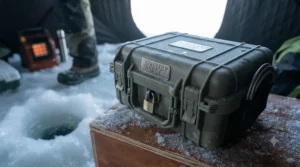
Playback Ice Camera Footage: Getting Your Clips Off the Card
This is the step that trips up more first-time buyers than any other part of the process. Older-generation cameras — including some earlier Eyoyo models — record in formats that require downloading a specific third-party player like VLC or KMPlayer rather than opening natively in Windows or on a phone, which is a frustrating discovery after a trip rather than before buying.
Problem → Solution, quick reference:
- Problem: Footage won’t open on your phone or laptop.
- Solution: Install VLC (free, cross-platform) before your first trip rather than after — it opens virtually every format these cameras use.
- Problem: Files transfer but audio/video is out of sync.
- Solution: This is usually a card-write-speed issue; use a Class 10 or UHS-I rated card rather than a generic no-name one.
- Problem: Recently recorded clips are missing.
- Solution: Check whether loop recording silently overwrote them once the card filled — this is expected behaviour, not a fault, and is worth transferring footage off the card more frequently to avoid.
- Problem: Card shows as corrupted after a cold-weather trip.
- Solution: Extreme cold can cause write errors mid-recording; let the camera and card warm to room temperature before removing or reformatting, rather than forcing it in the field.
Models like the upgraded Eyoyo AHD720p camera solve this problem at the source by supporting direct browser and phone playback, which is exactly why that convenience earned it a spot on this list despite slightly lower resolution than the FishPRO.
✨ Don’t Miss These Exclusive Deals!
🔍 Take your ice fishing setup to the next level with these carefully selected DVR camera systems. Click on any highlighted item to check current pricing and availability. These tools will help you capture authentic fishing memories your whole family will love!
DVR Ice Camera vs Traditional Flasher and Sonar
| Factor | DVR Ice Camera | Flasher/Sonar |
|---|---|---|
| Shows fish species | Yes, visually | No, only as a mark |
| Records footage | Yes (most models) | Rarely |
| Works in murky water | Limited by IR range | Yes, unaffected |
| Shows structure detail | Yes, visually | Limited |
| Best For | Species ID, footage, teaching kids | Depth, real-time fish activity |
These two tools solve different problems rather than competing directly. A flasher tells you something is down there and roughly how deep, updating instantly regardless of water clarity — genuinely superior for fast-paced jigging where you need real-time feedback on fish movement. A camera tells you what that something actually is, how it’s behaving, and — with a DVR model — lets you replay it later, but its usefulness drops sharply in stained or heavily tannic water where even strong IR lighting can’t punch through more than a few feet. Most serious ice anglers eventually run both rather than choosing one over the other, using the flasher to know when to look and the camera to see what’s actually there.
What to Expect: Real-World Recording Performance
Specs on a box rarely match the tent-floor experience, so here’s the translation. In clear lake water — the kind found across much of the Canadian Shield in early winter — even budget 1000TVL cameras deliver footage clear enough to identify species and count fish accurately within about 6-10 feet of the lens. Push past that range, or fish stained water common in prairie lakes and river systems, and image quality drops fast regardless of camera price; this is a physics limitation of light transmission underwater, not something any camera fully solves.
IR lighting performs better than white LED in these degraded conditions specifically because infrared cuts through suspended particulate more effectively than visible light, even though the resulting black-and-white image feels less “real” on playback. What most buyers overlook: resolution differences between a 1000TVL budget camera and a 1080P premium unit matter far less at typical viewing distances than lighting technology and lens quality — a cheaper camera with strong IR often outperforms a sharper camera with weak lighting in actual dark-water conditions.
Long-Term Cost and Maintenance
The sticker price is only part of the total cost of ownership here. Budget cameras in the C$100-C$220 range typically use replaceable rechargeable batteries good for roughly 300-500 charge cycles before capacity noticeably degrades — meaning a heavy-use angler might need a replacement battery pack after 2-4 seasons, usually costing C$25-C$45. Memory cards, as covered above, are a recurring small cost if you upgrade to larger or faster capacity, though a single good card can last the life of the camera with proper care.
Premium systems like the Aqua-Vu carry a higher upfront cost but tend to hold resale value better and have established parts and repair networks through Canadian sporting goods retailers, which matters if a cable or connector fails years down the line. Cost-per-use math favours budget cameras for casual anglers — spread across a handful of trips a season, even a C$500 premium system costs more per outing than a C$150 budget model used the same number of times. For anglers on the ice 20+ days a season, the calculation shifts toward premium durability paying for itself through fewer replacements over a multi-year span.
Features That Actually Matter (And Those That Don’t)
Marketing copy on these listings loves throwing numbers around, but not all of them affect your actual experience on the ice equally.
Actually matters: IR light count and adjustability, cable tensile strength, battery capacity relative to your typical session length, and whether DVR is truly built-in versus requiring an accessory. Doesn’t matter much: headline TVL or resolution numbers beyond a certain threshold, since water clarity limits effective visible detail long before sensor resolution does; screen size beyond about 7 inches, which mostly affects portability without meaningfully improving the viewing experience for one or two people; and “AI enhancement” or “smart” branding terms that frequently describe basic auto-brightness adjustment rather than anything genuinely novel.
The spec sheet won’t tell you this, but reviewers across multiple camera brands consistently flag cable durability and connector quality as the actual long-term failure point — not the camera electronics themselves, which tend to be reliable across brands at this price range.
Safety and Regulations: Ice Safety and Fishing Licence Basics
No underwater camera is worth using if the ice underneath you isn’t safe to stand on. According to detailed guidance on working around ice-covered water, ice thickness required to safely support a load increases in proportion to the weight being placed on it, and ice conditions change constantly rather than staying fixed once checked, so checking thickness once at the shoreline and assuming it holds true across the whole lake is a genuinely dangerous habit. As a general guideline, at least 10 centimetres of clear ice is considered the minimum for walking, 20 centimetres for a snowmobile or ATV, and 30 centimetres or more for a car or light truck — though Fish’n Canada’s guide to ice safety stresses that local authorities should always be consulted before heading out, since these are guidelines rather than guarantees.
Beyond ice conditions, most provinces require a valid fishing licence for ice anglers. In Ontario specifically, anglers need a valid Outdoors Card along with a hunting or fishing licence to legally fish, and requirements vary by province, so checking current provincial rules before a trip is worth the five minutes it takes. Carrying basic safety equipment — ice picks, a rope, and a phone in a waterproof pouch — matters more than any piece of fishing electronics you bring along, DVR camera included.
Price Range and Value Analysis
| Product | Price Range (CAD) | Value Verdict |
|---|---|---|
| Eyoyo 7″ DVR Camera | C$100-C$150 | Best entry point overall |
| FishPRO 2026 1080P DVR-32GB | C$150-C$220 | Best resolution-to-price ratio |
| Anysun Portable 7″ DVR | Under C$130 | Best for total beginners |
| FarmNix 7″ 32GB DVR | C$140-C$190 | Best cable length for the price |
| Eyoyo Upgraded AHD720p DVR | C$160-C$210 | Best playback convenience |
| Eyoyo EF360 9″ 360° DVR | C$220-C$280 | Best unique feature (panning) |
| Aqua-Vu AV715c | C$450-C$550 | Best long-term durability |
The value gap between the budget cluster and the Aqua-Vu is stark, but it reflects genuinely different priorities rather than one option simply being overpriced. Anyone fishing fewer than a dozen days a season gets more total value from a C$150-C$220 camera with built-in DVR than from a premium system that needs an extra accessory just to record. The math only tips toward premium once seasonal usage climbs high enough that long-term durability starts outweighing the higher entry cost.
Frequently Asked Questions
❓ Do all ice fishing cameras record video?
❓ What memory card size do I need for an ice fishing camera?
❓ How cold can DVR ice fishing cameras operate?
❓ Can I play ice camera footage without special software?
❓ Is a DVR camera better than a flasher for ice fishing?
Conclusion
A DVR ice fishing camera system earns its place in the sled for one simple reason: it turns fleeting underwater moments into something you can actually study, share, and second-guess later over a coffee. Budget picks like the Eyoyo and FishPRO deliver genuinely built-in recording and solid image quality without breaking the bank, while established names like Aqua-Vu trade recording convenience for years of proven cold-weather reliability. There’s no single right answer here — the deep-basin walleye hunter and the weekend family angler have different priorities, and this list was built to serve both.
Whichever system you land on, remember that the camera is a tool for understanding what’s happening beneath the ice, not a substitute for basic safety habits. As Saskatchewan’s Water Security Agency reminds anglers every winter, ice thickness can be unpredictable and should be checked often rather than assumed. Check the ice, carry the right gear, and let the footage be a bonus rather than the point of the trip. With any of the seven systems covered here, you’ll walk away with more than a fish story — you’ll have the receipts.
✨ Don’t Miss These Exclusive Deals!
🔍 Ready to see what’s really happening beneath your feet this season? Check current pricing on the DVR ice fishing camera system that fits your fishing style, and start building a highlight reel worth showing off.
Recommended for You
- Wireless Ice Fishing Camera: 7 Top Picks for Canadian Anglers (2026)
- Ice Camera vs Fish Finder: 7 Top Picks for Canada in 2026
- Top 7 Underwater Ice Fishing Cameras in Canada (2026)
Disclaimer: This article contains affiliate links. As an Amazon Associate, I earn from qualifying purchases. If you purchase products through these links, we may earn a small commission at no additional cost to you.
✨ Found this helpful? Share it with your friends! 💬🤗
