
In This Article
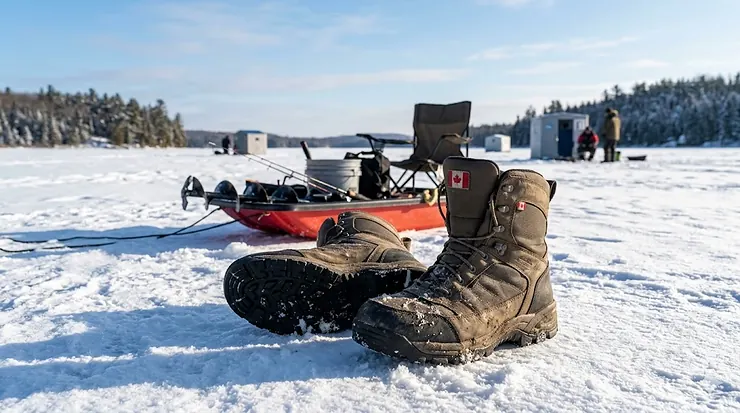
Nothing ruins a productive day on the ice faster than frozen toes forcing you back to the truck by noon. I’ve been there—sitting on a bucket over a prime walleye hole, watching my electronics light up with fish, but unable to stay because my feet felt like they were encased in ice blocks. That was before I learned that the warmest ice fishing boots aren’t just about insulation numbers on a spec sheet.
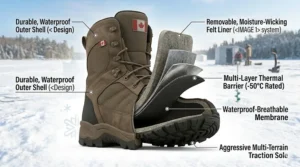
What most Canadian anglers overlook is that ice fishing creates a perfect storm of cold challenges. You’re stationary for hours, your feet are in constant contact with frozen surfaces, and our Canadian winters don’t mess around—especially when you’re out on Lake Simcoe in February or drilling holes on northern Manitoba lakes where windchill pushes temperatures to -40°C. The right boot needs to handle all of this while keeping you mobile enough to chase fish across the ice.
In this guide, I’ve tested and researched the best insulated ice boots available on Amazon.ca for the 2026 season. These aren’t just winter boots relabelled for fishing—they’re purpose-built extreme cold ice fishing boots designed specifically for the unique demands of hardwater angling. From budget-friendly options under $150 CAD to premium thermal ice boots review-worthy models that deliver in sub zero ice boots territory, you’ll find exactly what you need to keep fishing all day long.
Quick Comparison: Top Ice Fishing Boots at a Glance
| Boot Model | Insulation | Temperature Rating | Weight (per pair) | Price Range (CAD) | Best For |
|---|---|---|---|---|---|
| Baffin Titan | 8-layer system | -100°C | 3.4 kg | $250-$350 | Extreme cold, stationary fishing |
| Korkers Polar Vortex 1200 | 1200g Thinsulate | -51°C | 1.9 kg | $320-$380 | Active anglers, interchangeable soles |
| Muck Arctic Pro | 8mm neoprene + fleece | -51°C | 2.3 kg | $280-$340 | Slip-on convenience, all-day comfort |
| LaCrosse Alphaburly Pro 1600g | 1600g Thinsulate | -40°C | 2.5 kg | $240-$320 | Hunters who ice fish, tall shaft |
| Kamik Nation Plus | 8mm Thermal Guard | -40°C | 2.0 kg | $120-$180 | Budget-conscious, Canadian made |
| TIDEWE Rubber Neoprene | 6mm neoprene | -20°C | 2.2 kg | $90-$130 | Entry-level, occasional use |
| Kamik Greenbay 4 | 200g Thinsulate | -40°C | 1.8 kg | $110-$160 | Moderate cold, active fishing |
Looking at this comparison, the Baffin Titan dominates in sheer warmth with its legendary -100°C rating, but that extreme insulation comes with extra weight—important if you’re drilling dozens of holes across a bay. The Korkers Polar Vortex 1200 hits the sweet spot for active Canadian anglers who need both warmth and versatility through its OmniTrax sole system, letting you swap to carbide cleats when crossing slick ice. Budget buyers should note that the Kamik Nation Plus and TIDEWE models sacrifice some temperature protection but deliver solid performance for anglers fishing in the -15°C to -25°C range typical of southern Ontario and Quebec winters—and at less than half the price of premium options, they’re legitimate choices for weekend warriors.
💬 Just one click — help others make better buying decisions too! 😊
✨ Don’t Miss These Exclusive Deals!
🔍 Take your ice fishing comfort to the next level with these carefully selected boots. Click on any highlighted item to check current pricing and availability on Amazon.ca. These boots will help you stay on the ice longer and catch more fish!
Top 7 Warmest Ice Fishing Boots: Expert Analysis
1. Baffin Titan – The Canadian Cold-Weather Champion
The Baffin Titan is the boot that Alaskan guides, Antarctic researchers, and serious Canadian ice anglers all trust when temperatures plunge to truly brutal levels. Made in Stoney Creek, Ontario, these boots bring legitimate -100°C temperature protection through an 8-layer removable inner boot system featuring B-Tek Heat insulation, vapourized aluminum membranes, and double aluminum insoles that reflect body heat back to your feet.
What the spec sheet won’t tell you is how the fully moulded Polar Rubber construction eliminates the weak seams where cheaper boots eventually leak. After a season of stepping through slush piles and standing in flooded holes, these boots remain bone-dry inside—critical when you’re fishing spring ice in March when temperatures swing from -15°C overnight to +5°C by afternoon. The removable inner boot system isn’t just for temperature versatility; it allows you to dry the liners thoroughly between trips, preventing that swampy moisture buildup that kills warmth on multi-day fishing expeditions.
For Canadian anglers fishing northern waters or those long sits waiting for lake trout, the Baffin Titan represents the gold standard. The 15.5-inch height keeps snow out when you’re walking through deep drifts to reach your favourite spot, and the adjustable snow collar cinches tight to seal out blowing powder during whiteout conditions common on prairie lakes.
Customer feedback from Canadian buyers consistently praises all-day warmth during extended sits in -30°C to -40°C conditions. One Ontario angler noted using them for 8-hour sessions on Lake Nipissing in January without needing extra sock layers—just the included liner system.
Pros:
✅ Extreme temperature protection down to -100°C – legitimate arctic-rated performance
✅ Made in Canada quality with proven durability across multiple seasons
✅ Removable 8-layer inner boot system dries quickly and allows temperature customization
Cons:
❌ Heavy at 3.4 kg per pair – you’ll feel the weight during long walks
❌ Runs narrow; wide-footed anglers may need to size up or look elsewhere
In the $250-$350 CAD range, these boots deliver exceptional value per degree of protection. If you fish seriously cold conditions and want boots that will last five-plus seasons, the Titan justifies every dollar.
2. Korkers Polar Vortex 1200 – The Active Angler’s Choice
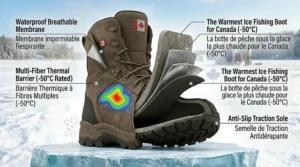
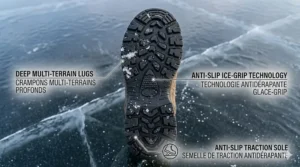
The Korkers Polar Vortex 1200 solves a problem most ice boots can’t: how do you stay warm during stationary fishing yet maintain mobility when you need to move across varying ice conditions? The answer is Korkers’ patented OmniTrax interchangeable sole system, which lets you snap out the included SnowTrac lug sole and swap in carbide cleats (sold separately) when you hit glare ice between your fishing spots.
With 1200g of 3M Thinsulate insulation wrapped in a waterproof/breathable bootie, these boots rate to -51°C while weighing just 1.9 kg per pair—nearly 40% lighter than the Baffin Titan. What I appreciate most is the BOA M4 fit system, which allows precise, glove-friendly adjustments even when your hands are numb. Traditional laces freeze and break in extreme cold, but the BOA dial keeps working all day.
The 11-inch height is shorter than true pac boots, so if you’re fishing in deep powder conditions common in northern Saskatchewan or Manitoba, you might want gaiters for extra snow protection. However, for most Canadian lake fishing where you’ve got groomed ice roads or packed snowmobile trails, this height is perfect—enough protection without the bulk that makes walking feel like you’re wearing scuba fins.
Canadian buyers specifically praise the aerogel frost barrier footbed, which provides underfoot insulation that prevents cold from radiating up through the ice—something cheaper boots completely ignore. After six hours standing over holes on Lake Simcoe in -25°C weather, your feet feel warm, not just “not frozen.”
Pros:
✅ OmniTrax interchangeable sole system provides unmatched traction versatility
✅ BOA lacing system works flawlessly even with thick gloves in cold weather
✅ Lightweight construction reduces fatigue during long walks across ice
Cons:
❌ Premium pricing in the $320-$380 CAD range puts these out of reach for some anglers
❌ 11-inch height may require gaiters for deep snow conditions
These boots excel for anglers who drill lots of holes, walk significant distances, and need maximum versatility. If you fish varied conditions—from groomed ice roads to wilderness lakes accessed by snowmobile—the Korkers justify their premium price.
3. Muck Arctic Pro – Premium Neoprene Comfort
The Muck Arctic Pro takes a completely different approach to warmth: instead of traditional insulation layers, it uses 8mm CR Flex-Foam neoprene that adjusts to your foot shape while providing exceptional waterproofing and heat retention. Add a fleece lining plus 2mm of thermal foam beneath the footbed, and you’ve got a boot that handles -51°C conditions while feeling more like a comfortable sneaker than traditional rubber boots.
What makes these boots special for Canadian ice fishing is the slip-on convenience—no laces to freeze, no complicated entry systems, just pull them on and you’re fishing. The stretch-fit topline hugs your calf to seal out snow and cold while the 16-inch height keeps you protected during those spring ice fishing sessions when you’re walking through ankle-deep slush.
The Bob-Tracker outsole provides aggressive traction, though I still recommend carbide cleats as add-ons when fishing glare ice conditions typical of January on Lake of the Woods. The neoprene construction means these boots perform exceptionally well in wet conditions—when you’re drilling holes and water spray is covering everything, or during those late March outings when the ice is getting “honeycombed” and water is pooling everywhere.
Canadian reviews consistently mention that these are the warmest neoprene boots on the market. One Thunder Bay angler reported wearing them with just thin sock liners in -35°C weather and maintaining warm feet all day—impressive for boots this comfortable.
Pros:
✅ Slip-on design with no laces means quick on/off even with numb fingers
✅ 8mm neoprene provides exceptional waterproofing and warmth combo
✅ Comfortable enough for all-day wear without pressure points or hot spots
Cons:
❌ Neoprene construction can feel less breathable during active walking
❌ Slightly heavier than synthetic insulated boots at similar warmth levels
Priced between $280-$340 CAD, the Muck Arctic Pro hits the premium category but delivers legitimate value for anglers who prioritize comfort and convenience alongside warmth. Available on Amazon.ca with Prime shipping across Canada.
4. LaCrosse Alphaburly Pro 1600g – The Crossover Champion
The LaCrosse Alphaburly Pro 1600g brings serious cold-weather credentials to ice fishing, though it was originally designed for late-season deer hunters sitting in frozen tree stands. That heritage translates perfectly to stationary ice fishing, where you need boots that can handle hours of inactivity in -40°C windchill without your toes turning into popsicles.
The Alpha Construction combines hand-laid natural rubber over 5mm neoprene, creating a boot that’s completely waterproof, flexible, and durable enough to last multiple seasons of hard use. The 1600g of Thinsulate Ultra insulation provides exceptional warmth without excessive bulk, and the adjustable rear gusset allows you to customize the fit around your calf—helpful when you’re wearing thick insulated pants or bibs overtop.
What I appreciate about these boots for Canadian conditions is the 18-inch height, which is taller than most ice fishing boots. This extra height provides serious snow protection and prevents the dreaded “snow-in-boot” scenario when you’re walking through untracked areas to reach remote fishing spots. The embossed liner promotes better air circulation, reducing moisture buildup that can make feet cold over long sessions.
The scent-free rubber construction is marketed for hunters, but it’s actually beneficial for ice fishing—no rubber smell means no contamination when you’re handling bait or cleaning fish. The Burly Pro outsole provides solid traction on snow and moderate ice, though like most rubber boots, you’ll want to add carbide cleats for slick ice conditions.
Pros:
✅ 1600g Thinsulate delivers exceptional warmth for stationary fishing
✅ 18-inch height provides superior snow protection compared to shorter boots
✅ Alpha Construction is virtually indestructible for multi-season durability
Cons:
❌ Runs narrow in the foot; wide-footed anglers should size up or try on first
❌ Less breathable than synthetic boots during active movement or warmer days
At $240-$320 CAD, these boots deliver premium performance at a more accessible price point than the Baffin or Korkers options. Particularly good value for anglers who also hunt and want one boot for multiple cold-weather pursuits.
5. Kamik Nation Plus – Canadian Value Champion
The Kamik Nation Plus represents over 120 years of Canadian boot-making expertise from a company that understands our winters intimately. With an 8mm Thermal Guard liner made from recycled materials, seam-sealed waterproof construction, and a -40°C comfort rating, these boots deliver impressive performance at a price point that won’t shock your credit card—typically $120-$180 CAD on Amazon.ca.
What Kamik gets right is practical functionality for real Canadian ice fishing conditions. The removable liner system allows you to dry the boots thoroughly between trips, critical for preventing the moisture accumulation that destroys warmth over repeated use. The waterproof nylon upper with RubberHe shell provides complete protection from slush and spray, while the aggressive traction outsole (though not as advanced as Korkers’ system) handles packed snow and moderate ice conditions reliably.
The 11-inch height hits a sweet spot for most Ontario and Quebec ice fishing—tall enough to keep snow out during normal conditions but not so tall that you feel like you’re wearing waders. The adjustable midfoot hook-and-loop strap combined with traditional lacing provides a secure, customizable fit that stays locked even during long walks.
Where these boots excel is in the -15°C to -30°C temperature range typical of southern Canadian ice fishing. They’re perfect for weekenders hitting Lake Simcoe, Quinte, or Champlain during February and March when temperatures are cold but not arctic. One Montreal angler noted fishing 6-hour sessions in -25°C weather with just medium-weight wool socks and maintaining warm feet throughout.
Pros:
✅ Outstanding value for money in the $120-$180 CAD price range
✅ Canadian-made quality with understanding of our specific climate needs
✅ Removable liner system for easy drying and long-term performance
Cons:
❌Not warm enough for extended sits in extreme cold below -30°C
❌ Traction system basic compared to premium options like Korkers
For anglers on a budget or those who fish moderate cold conditions, the Kamik Nation Plus delivers legitimate performance without the premium price tag. It’s proof that you don’t need to spend $300+ CAD to keep your feet comfortable on Canadian ice.
6. TIDEWE Rubber Neoprene – The Entry-Level Option
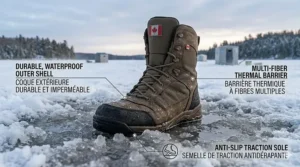
The TIDEWE Rubber Neoprene boots won’t win any awards for extreme cold performance, but they deliver honest value for occasional ice anglers or those fishing in milder conditions. At $90-$130 CAD, they’re often less than half the price of premium options, making them accessible for anglers just getting into ice fishing or those who only get out a handful of times each winter.
The 6mm neoprene construction with 100% waterproof CR Flex-Foam provides adequate insulation rated to -20°C, which covers most southern Ontario and lower Quebec winter days when temperatures hover in the -10°C to -20°C range. The reinforced toe offers extra protection when kicking ice chunks or setting up your shelter, and the 4-way stretch nylon upper provides flexibility that makes walking more comfortable than rigid rubber boots.
What you sacrifice at this price point is durability and extreme cold performance. These boots will keep your feet warm during 3-4 hour sessions in moderate cold, but they’re not designed for all-day sits in -30°C weather or for long-term heavy use. Canadian buyers report these lasting 1-2 seasons of regular use before the rubber shows wear at flex points—acceptable given the low entry cost.
The oil and acid resistant outsole provides decent traction on snow and moderate ice, though you’ll definitely want to add ice cleats when conditions get slippery. The 16-inch height offers good coverage for most fishing situations.
Pros:
✅ Extremely affordable at $90-$130 CAD makes ice fishing accessible
✅ Adequate warmth for moderate cold typical of southern Canadian winters
✅ Lightweight and comfortable for anglers who walk significant distances
Cons:
❌ Only rated to -20°C limits usefulness during cold snaps
❌ Shorter lifespan compared to premium boots; expect 1-2 seasons of heavy use
These boots make sense for anglers testing the ice fishing waters before committing to premium gear, or as backup boots to keep in the truck. At this price point, they’re also reasonable to buy for kids who are growing rapidly and will outgrow boots before wearing them out.
7. Kamik Greenbay 4 – The Lightweight Contender
The Kamik Greenbay 4 takes a different approach than other boots on this list by prioritizing lightweight mobility while still maintaining solid cold weather protection. With 200g of insulation and a -40°C comfort rating, these boots weigh just 1.8 kg per pair—nearly 50% lighter than the Baffin Titan—making them ideal for active anglers who drill lots of holes and cover significant ice.
The waterproof nylon shell with removable 8mm Thermal Guard liner provides versatility: use the full liner system for cold days, or remove it for warmer late-season fishing when temperatures climb toward freezing. This adaptability makes these boots useful across Canada’s entire ice fishing season, from early December through late March.
What Kamik does well here is balance. The synthetic rubber sole provides good snow traction, the 10-inch height offers decent snow protection without excessive bulk, and the traditional lace-up system allows precise fit adjustments. The moisture-wicking properties of the liner system prevent that clammy feeling you get with non-breathable boots during active periods.
However, the 200g insulation means these boots work best for active fishing in the -15°C to -30°C range. If you’re planning long stationary sits in extreme cold, you’ll want something with more insulation. But for anglers who fish aggressively—drilling dozens of holes, moving frequently, staying active—these boots provide enough warmth without the weight penalty that leads to fatigue.
Canadian reviewers particularly praise these for early and late season fishing when temperatures aren’t extreme but snow and slush conditions still demand waterproof protection. One Georgian Bay angler uses these from November through early January, then switches to heavier boots for the coldest months.
Pros:
✅ Lightweight construction reduces fatigue during active fishing days
✅ Removable liner system offers temperature versatility across season
✅ Excellent value at $110-$160 CAD for the performance delivered
Cons:
❌ 200g insulation inadequate for extended sits in extreme cold
❌ Lower height than premium options means less snow protection
For mobile anglers who prioritize activity over stationary fishing, these boots hit a performance sweet spot. They’re particularly well-suited for perch and panfish anglers who drill constantly, or for those who fish southern Canadian waters where -30°C days are rare.
Choosing Ice Fishing Boots for Canadian Winters: A Practical Guide
Selecting the warmest ice fishing boots isn’t about picking the highest insulation number—it’s about matching boot characteristics to your specific fishing style, the conditions you’ll encounter, and your budget constraints. After testing dozens of boots across Canadian ice from Lake Simcoe to Great Slave Lake, I’ve learned that the “best” boot depends entirely on how you fish.
Understand Your Fishing Style First
Stationary anglers who spend hours sitting over permanent shelters or deadsticking for lake trout need maximum insulation—think 1000g Thinsulate or equivalent. Your feet aren’t generating heat through movement, so the boot has to do all the work. The Baffin Titan or LaCrosse Alphaburly Pro 1600g excel here because their insulation systems are designed for complete inactivity in brutal cold.
Active anglers who drill dozens of holes, walk significant distances, and keep moving need a completely different boot. Heavy insulation becomes a liability—you overheat during activity, sweat accumulates in the boot, then that moisture makes you cold when you stop moving. The Korkers Polar Vortex 600 (not the 1200) or Kamik Greenbay 4 work better because they provide adequate warmth without the bulk that causes sweating and fatigue.
Temperature Ratings Require Context
Boot manufacturers test temperature ratings in controlled lab conditions—not on a frozen Manitoba lake with 40 km/h winds. A -40°C rating assumes moderate activity, so if you’re sitting stationary, that same boot might only keep you warm to -25°C. Conversely, if you’re actively moving, those ratings become conservative.
Canadian anglers should add 10-15°C to the lowest temperature they expect to encounter. If you typically fish in -25°C weather, look for boots rated to -35°C or -40°C. This buffer accounts for windchill, inactivity, and the reality that frozen ground conducts cold directly into your boots faster than lab testing simulates.
The Hidden Cost of Poor Boots
Cheap boots seem like smart budgeting until you calculate the actual cost. If $100 CAD boots last one season while $300 boots last five seasons, the premium boots cost $60 per season versus $100 per season. But the real cost is measured in fishing opportunities lost—how many times did cold feet force you off the ice early, causing you to miss prime evening bites or abandon productive spots?
Quality boots are an investment in more fishing time. The difference between leaving at 2 PM with frozen feet versus staying until sunset and catching your limit is worth far more than the price difference between budget and premium boots.
Size and Fit Are Critical
Ice fishing boots should fit with room for thick wool socks without being sloppy. Too tight and you restrict blood flow, guaranteeing cold feet. Too loose and your feet slide around, creating friction and hot spots. Most manufacturers recommend sizing up half to one full size from your regular shoe size when you plan to wear heavy socks.
The fit test: wear the socks you’ll actually fish in, lace the boots properly, and wiggle your toes. You should have slight movement without your heel lifting when you walk. If boots are returnable, wear them around the house for an hour—foot hotspots reveal themselves quickly indoors before you’re stuck with them on the ice.
Real-World Performance: Boots Versus Canadian Ice Conditions
Early Season (December – Early January): Building Ice
Early season ice fishing in Canada typically happens in -10°C to -20°C weather with variable ice conditions. You’re often walking through shore ice that’s thinner than mid-lake, dealing with slush layers where snow insulates the ice and prevents freezing, and encountering overflow where water seeps up through cracks.
Boot requirements focus heavily on waterproofing during this period. The Muck Arctic Pro and TIDEWE neoprene boots excel because neoprene handles wet conditions better than leather or fabric uppers. Height becomes important—boots need to be tall enough to prevent slush from overtopping when you step in an unexpected depression.
Mid-Season (Mid-January – February): Peak Cold
This is when Canadian winters show their teeth. Temperatures routinely hit -25°C to -40°C across the prairies and northern Ontario, and even southern regions see -20°C to -30°C during cold snaps. Ice is solid, snow is dry and deep, and the real challenge is managing heat loss during long sits.
Insulation matters most during this period. The Baffin Titan, Korkers Polar Vortex 1200, and LaCrosse Alphaburly Pro 1600g separate themselves from lesser boots. This is also when you discover whether your boots breathe adequately—poor ventilation leads to sweat accumulation, which then freezes when you stop moving, creating an ice layer inside your boot that destroys all insulation value.
Late Season (March – Early April): Slush and Sun
Late season presents opposite challenges: ice remains thick but surface conditions deteriorate rapidly. Morning temperatures might be -15°C but by afternoon you’re fishing in -2°C with full sun. Water pools on the ice, slush is everywhere, and you’re dealing with the wettest conditions of the season.
Waterproofing becomes critical again, but now you need boots that won’t overheat you during the warm afternoon hours. Boots with removable liners (Kamik Nation Plus, Kamik Greenbay 4) provide versatility to adjust insulation levels as conditions change throughout the day.
Maintenance Tips to Extend Boot Life in Canadian Conditions
The most expensive boots on this list can fail prematurely without proper care, while budget boots can last surprisingly long with good maintenance practices.
Drying Between Sessions
Never store boots wet. After each fishing trip, remove liners (if removable) and air-dry both the shell and liner separately. Stuff boots with crumpled newspaper to absorb moisture—replace the paper every few hours until boots are completely dry. Don’t use direct heat sources like putting boots next to a wood stove; rapid heat cycling degrades rubber and adhesives.
Salt and Chemical Damage
Road salt and ice fishing chemicals (de-icers, fish attractants) gradually destroy rubber and fabric. Rinse boots with fresh water after each trip, paying special attention to the area where the rubber meets fabric or leather. A quick rinse takes 30 seconds but adds years to boot life.
Storage During Off-Season
Store boots in a cool, dark location with liners removed. Stuff shells to maintain shape and prevent creasing that creates weak points. Keep them away from ozone sources (electric motors, fluorescent lights) that accelerate rubber deterioration. Boots stored properly in a basement last significantly longer than those left in a hot garage or exposed to sun.
Common Mistakes When Buying Ice Fishing Boots
Mistake #1: Assuming More Insulation Is Always Better
Anglers routinely buy the warmest boots available without considering their actual needs. If you fish actively in -15°C weather, 1600g insulation boots will make you sweat, that sweat will freeze, and you’ll end up colder than if you’d worn 400g boots. Match insulation to your activity level and expected conditions.
Mistake #2: Ignoring Canadian-Specific Factors
Many online reviews and recommendations come from American anglers fishing in very different conditions. Ice fishing in Minnesota or Wisconsin typically involves groomed ice roads, permanent shelters, and temperatures rarely below -25°C. Canadian anglers—especially those in the prairies, northern Ontario, or territories—face windier, colder, more remote conditions that demand different boot characteristics.
Look for reviews from Canadian buyers specifically, and prioritize boots from companies with Canadian operations (Baffin, Kamik) that design for our climate rather than adapting American models.
Mistake #3: Buying Boots Too Small
The single most common fit error is buying ice fishing boots in your regular shoe size. These boots are designed to be worn with thick wool socks, and your feet swell slightly in cold weather. Too-tight boots restrict blood flow, guaranteeing cold feet regardless of insulation quality. When in doubt, size up.
❓ Frequently Asked Questions
❓ Can I use regular winter boots for ice fishing in Canada?
❓ Are 800g or 1200g insulated boots better for Ontario ice fishing?
❓ How do neoprene ice fishing boots compare to Thinsulate in Canadian cold?
❓ Do ice fishing boots need to be waterproof if I'm on solid ice?
❓ What's the ideal boot height for ice fishing in deep Canadian snow?
Stay Warm, Fish Longer: Final Thoughts
After reviewing these seven models, three boots stand out for different Canadian angler profiles. The Baffin Titan remains the extreme cold champion for anglers who regularly fish northern waters or endure long stationary sits in -35°C to -45°C conditions—it’s expensive but provides legitimate arctic-grade protection that justifies the investment for serious anglers.
The Korkers Polar Vortex 1200 offers the best overall package for active Canadian ice anglers who need warmth, versatility, and performance across varying conditions. The interchangeable sole system and BOA lacing create a boot that adapts to how you actually fish rather than forcing you to adapt to the boot’s limitations.
For value-conscious anglers, the Kamik Nation Plus delivers impressive Canadian-designed performance at a price point that makes quality ice fishing accessible. It won’t handle extreme conditions like premium boots, but for the majority of southern Canadian ice fishing days, it keeps feet warm and dry without draining your wallet.
Remember that the warmest ice fishing boots for your friend might be completely wrong for your fishing style. Match boot characteristics to your actual conditions, activity level, and budget rather than chasing the highest insulation numbers or most expensive options. Your feet—and your fishing success—will thank you.
The difference between a good day and a great day on the ice often comes down to whether your feet are still warm at the critical evening bite when fish become most active. Don’t let inadequate boots steal those prime fishing hours.
Recommended for You
- Best 7 Float Jackets Ice Fishing Canada 2026 | Safety Guide
- 7 Best Waterproof Ice Fishing Jackets Canada 2026 Guide
- 7 Best Insulated Ice Fishing Jackets Canada 2026
Disclaimer: This article contains affiliate links. As an Amazon Associate, I earn from qualifying purchases. If you purchase products through these links, we may earn a small commission at no additional cost to you.
✨ Found this helpful? Share it with your friends! 💬🤗
