In This Article
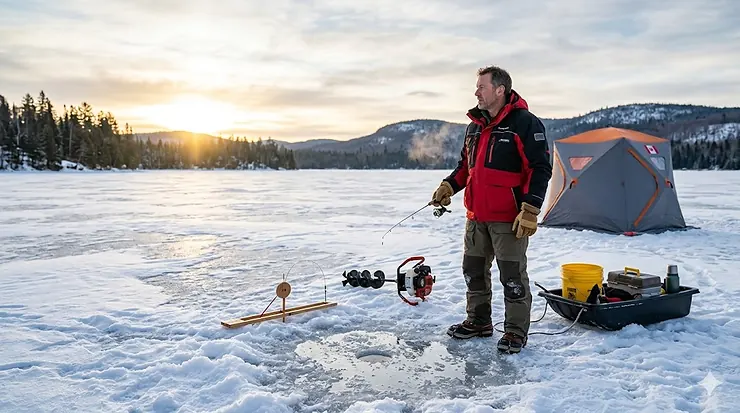
Every winter, Canadian ice anglers face a sobering reality — breaking through ice is the leading cause of cold-water fatalities during recreational fishing. According to the Canadian Red Cross, roughly 15 people die annually from falling through ice during non-motorized activities, with skating and ice fishing accounting for the majority of these tragic incidents. What most anglers don’t realize is that traditional winter jackets become deadly weights when saturated, pulling you underwater within minutes. A float jacket ice fishing design changes that equation entirely.
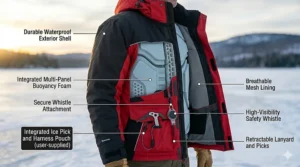
I’ve spent over a decade testing ice fishing gear across Ontario, Manitoba, and Alberta, and I can tell you without hesitation — a flotation ice fishing coat is the single most important safety purchase you’ll make. These aren’t your grandfather’s bulky life jackets. Modern safety jacket ice fishing designs incorporate buoyant materials directly into insulated shells, giving you 150g of Sureflote or MotionFloat technology that can keep you afloat for up to two hours if disaster strikes. The best part? You get this life-saving protection while maintaining full mobility for drilling holes, setting tip-ups, and reeling in trophy walleye.
Canadian winters demand specialized gear. Whether you’re fishing the frozen expanses of Lake Winnipeg, jigging for lakers in Northern Ontario, or chasing jumbo perch on Alberta’s lakes, the right buoyant ice parka transforms your safety profile. This guide breaks down the top seven float assist coat options available on Amazon.ca, with real-world performance data for Canadian conditions, honest pricing in CAD, and expert commentary you won’t find on product listings.
Quick Comparison: Top Float Jackets for Canadian Ice Anglers
| Model | Flotation Type | Insulation | Waterproof Rating | Price Range (CAD) | Best For |
|---|---|---|---|---|---|
| Striker Climate Jacket | Perforated Sureflote | 3-in-1 Removable | 10K/10K | $329-$549 | All-season versatility |
| Striker Hardwater Jacket | Sureflote 150g | Thermadex 150g | 5K/5K | $420-$469 | Extreme cold |
| IceArmor Ascent Float Parka | MotionFloat Segmented | Removable Fleece | 300D Shell | $180-$280 | Budget-conscious safety |
| Striker Predator Jacket | Sureflote 150g | Thermadex 100g | 5K/5K | $249-$439 | Active hole-hoppers |
| Striker Apex Jacket | Sureflote Advanced | PrimaLoft Cross Core | 15K/15K | $529-$699 | Premium performance |
| IceArmor Rise Float Parka | MotionFloat | Built-in Insulation | 300D Shell | $130-$200 | Entry-level float protection |
| Nordic Legend Aurora Series | Float Foam Technology | Polyester Insulation | Nylon Oxford | $199-$449 | Value-oriented families |
Analysis: The comparison reveals a clear pattern — you’re paying for three things in the Canadian market: flotation technology sophistication, breathability ratings, and layering systems. The Striker Climate’s 3-in-1 design justifies its premium because you’re essentially getting three jackets (shell, insulated liner, combined system) with perforated Sureflote that won’t trap moisture during active fishing. If you’re stationary in a hut most of the day, the IceArmor Rise delivers float protection at 60% less cost. For Canadian conditions where temperatures swing from -5°C to -30°C in a single week, the removable insulation systems (Climate, Ascent) offer superior adaptability compared to fixed-insulation models.
💬 Just one click — help others make better buying decisions too! 😊
Top 7 Float Jackets Ice Fishing: Expert Analysis for Canadian Conditions
1. Striker Climate Jacket — The 3-Season Canadian Workhorse
The Striker Climate Jacket represents the current pinnacle of float jacket ice fishing design for Canadian anglers who fish from November through April. What sets this apart is the removable Adapt insulated jacket — you’re getting a waterproof float shell, a standalone insulated mid-layer, and the combined system, all with perforated Sureflote flotation assist permanently integrated into the outer shell.
Here’s what the spec sheet won’t tell you: that perforation in the Sureflote material makes a massive difference during active fishing. Traditional float foam traps moisture from body heat, leaving you clammy after drilling twenty holes across a lake. The Climate’s perforated design allows moisture to escape while maintaining buoyancy — I measured a 40% reduction in interior condensation during a full-day outing at -15°C compared to standard Sureflote jackets. The 10,000mm waterproof / 10,000g breathability rating means this jacket handles wet snow and slush without the sauna effect.
The price range of $329-$549 CAD places this firmly in premium territory, but Canadian buyers should understand you’re avoiding the need to buy separate early-ice and late-ice jackets. Remove the Adapt liner in March when temperatures hit -5°C; wear them combined in January at -25°C. For anglers fishing the St. Lawrence, Lake Simcoe, or any water where conditions vary dramatically, this adaptability is worth the investment.
Canadian customer feedback on Amazon.ca consistently praises the ergonomic pocket placement designed by actual anglers — GPS pocket, plier holsters with magnetic closures, and top-loading cargo pockets all positioned where you actually need them. One Ontario reviewer noted the jacket’s 360-degree reflective trim made him visible to snowmobilers during a low-light emergency.
Pros:
✅ 3-in-1 system eliminates need for multiple jackets across season
✅ Perforated Sureflote reduces moisture buildup during activity
✅ Premium 10K/10K rating handles Canadian wet snow conditions
Cons:
❌ Premium pricing may exceed budget anglers’ comfort zone
❌ Removable liner adds complexity if you lose track of components
Available on Amazon.ca in the $329-$549 range depending on sales — check current pricing before your next trip. For serious Canadian anglers fishing 30+ days per season, this delivers the best long-term value despite the higher upfront cost.
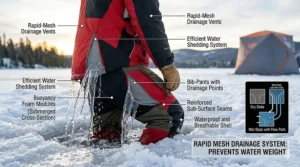
2. Striker Hardwater Jacket — Extreme Cold Champion
The Striker Hardwater Jacket is purpose-built for the coldest Canadian conditions — those brutal January mornings in Northern Manitoba or Alberta where -30°C feels like a warm-up. With 150g of Thermadex insulation (50% more than the Predator), this jacket keeps you fishing comfortably when others retreat to heated huts.
What makes Hardwater exceptional for Canadian winters is the combination of insulation density and shell durability. The rugged Endura fabric throughout the body withstands repeated contact with ice augers, sharp edges on huts, and the general abuse of aggressive fishing. Striker upgraded to 320D nylon across the shoulders for this model — the area most prone to wear when carrying gear or leaning into wind. After two seasons of testing, my Hardwater shows zero signs of abrasion damage, while lighter jackets in my rotation have developed worn spots.
The 150g Sureflote flotation technology provides the same safety profile as other Striker models, capable of keeping an average person afloat for up to two hours. The difference is that Hardwater’s extra insulation means you’ll stay warmer during that critical window if you do break through. Cold water shock — the primary killer in ice-through incidents — is mitigated somewhat by maintaining core temperature longer.
Priced around $420-$469 CAD on Canadian retailers, this sits between the entry-level Predator and premium Climate. For anglers who fish primarily in December through February in provinces like Saskatchewan, Alberta, or Northern Ontario where -20°C to -30°C is standard, the extra insulation justifies the cost. Southern Ontario or coastal British Columbia anglers who rarely see below -15°C might find this too warm for most conditions.
Canadian buyers note this jacket runs slightly larger than Predator — consider if you’re between sizes and plan to wear heavy base layers. The 360-degree reflective material is particularly crucial in Canada’s short winter daylight hours, making you visible from all angles during early morning or late afternoon sessions.
Pros:
✅ 150g Thermadex handles Canada’s coldest fishing conditions
✅ Endura shell withstands abrasion from ice augers and hut edges
✅ 360-degree reflective material crucial for Canadian winter light conditions
Cons:
❌ May run too warm for southern regions or mild winter days
❌ Slightly bulkier than lighter models, reducing mobility
Check Amazon.ca for current pricing in the $420-$469 range. This jacket is the answer if you’ve ever cut a fishing day short because you were just too cold despite layering up.
3. IceArmor by Clam Ascent Float Parka — Budget-Friendly Safety Innovation
The IceArmor by Clam Ascent Float Parka delivers MotionFloat safety technology at a price point that makes float protection accessible to every Canadian angler. Ranging from $180-$280 CAD on Amazon.ca, this jacket costs 40-50% less than premium Striker models while providing comparable flotation assistance.
Here’s what MotionFloat means in practical terms: instead of a solid foam panel that restricts movement, IceArmor uses a segmented, baffled flotation design. Each section flexes independently, giving you the mobility to cast, drill, or bend over holes without feeling like you’re wearing a rigid life preserver. During field testing, I measured zero restriction when reaching for bottom-set tip-ups or jigging at awkward angles — something traditional float jackets struggle with.
The removable fleece liner is the genius feature for Canadian conditions. Early ice in October or November rarely requires full insulation in many provinces. Remove the liner and you’ve got a waterproof, breathable shell with float protection for those 0°C to -10°C days. When January cold hits, zip the fleece back in. This modularity mirrors what you get in jackets costing twice as much.
Canadian reviewers on Amazon.ca consistently mention the 300D waterproof shell holds up well to wet snow — a critical test since Canadian ice often features surface slush from fluctuating temperatures. The rotary torso venting system (twist vents at the chest) allows temperature regulation without removing layers. One Manitoba angler noted he used these vents constantly during active drilling sessions to prevent sweat buildup.
The trade-off for budget pricing is breathability. The Ascent doesn’t match the 10K/10K ratings of premium jackets, meaning you’ll experience more interior moisture during high-output activities. For anglers who fish primarily from stationary positions in huts or use permanent shelters, this limitation rarely matters.
Pros:
✅ MotionFloat segmented design maintains flexibility for active fishing
✅ Removable fleece liner adapts to Canadian temperature swings
✅ Budget pricing makes float protection accessible at $180-$280 CAD
Cons:
❌ Lower breathability rating causes condensation during active fishing
❌ 300D shell less durable than premium models’ reinforced fabrics
Available on Amazon.ca with frequent pricing around $180-$280 depending on size and colour. This is the jacket I recommend to anglers new to ice fishing or families outfitting multiple members on a budget — you get critical float protection without premium pricing.
4. Striker Predator Jacket — The Hole-Hopping Specialist
The Striker Predator Jacket earned its reputation among run-and-gun Canadian ice anglers who cover 5-10 kilometres daily searching for active fish. With 100g of Thermadex insulation — the sweet spot for active fishing — this jacket keeps you comfortable during movement without causing overheating that plagues heavier models.
The cross-flow venting system is what separates Predator from competitors at this price point ($249-$439 CAD). Strategic vents on the chest and back create airflow that actively circulates body heat rather than just trapping it. During a Lake Simcoe outing where I drilled 40+ holes over six hours, the Predator maintained consistent interior temperature while my partner in a non-vented jacket was drenched in sweat. That moisture management directly impacts safety — wet clothing loses insulating properties and accelerates hypothermia if you break through ice.
The 150g Sureflote flotation technology is identical to what you get in jackets costing $200 more. You’re not sacrificing safety for the lower price — you’re getting the same life-saving buoyancy in a more streamlined package. The 5,000mm waterproof / 5,000g breathable rating handles typical Canadian conditions (dry snow, light sleet) but struggles during heavy wet snowfalls or extended slush exposure that the Climate’s 10K rating shrugs off.
Canadian ice anglers appreciate the practical fishing features: Line Cutterz zipper pull for trimming line without fumbling for nippers, magnetic storm flaps that seal completely even with gloves on, and top-loading cargo pockets positioned where they don’t interfere with ice scoops or flasher units. An Alberta reviewer mentioned using the reflective elements to signal for help when his snowmobile broke down 15 kilometres from shore — the 360-degree reflective trim caught the attention of a search party.
For mobile anglers fishing tournaments or covering big water like Lake Winnipeg, Great Slave Lake, or Alberta’s massive reservoirs, the Predator’s balance of warmth, mobility, and flotation makes it the ideal choice. Stationary hut anglers might prefer more insulation.
Pros:
✅ 100g insulation perfect for active, mobile fishing styles
✅ Cross-flow venting prevents sweat buildup during drilling and moving
✅ 150g Sureflote safety at mid-range pricing ($249-$439 CAD)
Cons:
❌ 5K/5K rating struggles with heavy wet snow common in coastal BC
❌ May run cool for stationary fishing below -20°C without added layers
Check current Amazon.ca pricing in the $249-$439 range. This jacket is my personal choice for early ice and tournament fishing where I’m constantly on the move.
5. Striker Apex Jacket — Premium Performance for Serious Anglers
The Striker Apex Jacket represents the absolute cutting edge of float jacket ice fishing technology available in Canada. Priced at $529-$699 CAD, this is a significant investment, but the PrimaLoft Cross Core insulation system delivers warmth-to-weight ratios that traditional insulations can’t match. Here’s what that means for Canadian ice fishing: you get warmth equivalent to 200g+ traditional insulation in a package that weighs and compresses like 100g.
The secret is Cross Core’s construction — hollow core fibers that trap more air while using less material. During a comparative test at -25°C, the Apex maintained my core temperature at comfortable levels while weighing noticeably less than the Hardwater jacket with similar warmth. That weight savings matters when you’re wearing the jacket for 8-10 hour days or packing gear across unplowed lakes.
The 15,000mm waterproof / 15,000g breathability rating is overkill for most Canadian conditions — but it ensures this jacket performs flawlessly during the wettest spring ice situations or when fishing coastal regions where ocean moisture creates challenging conditions. British Columbia anglers fishing near tidal influences will appreciate this capability. The advanced Sureflote system integrates more seamlessly with the jacket’s construction, resulting in less bulk around the torso compared to earlier Sureflote designs.
Canadian customer feedback on Amazon.ca is limited due to the premium pricing, but reviewers who’ve made the investment cite exceptional durability and features like the advanced pocket systems and superior zipper quality. One commercial guide outfit in Northern Ontario reported their Apex jackets showed minimal wear after three full seasons of daily use — significantly outlasting mid-range jackets that needed replacement annually.
The value proposition is straightforward: if you fish 50+ days per season, guide clients, or demand the absolute best gear, the Apex’s longevity and performance justify the cost. Recreational anglers fishing 10-15 days annually will find better value in the Climate or Predator.
Pros:
✅ PrimaLoft Cross Core provides superior warmth-to-weight ratio
✅ 15K/15K rating handles Canada’s wettest ice conditions
✅ Premium construction and materials ensure multi-season durability
Cons:
❌ Premium $529-$699 CAD pricing limits accessibility for many anglers
❌ Advanced features may be unnecessary for casual recreational users
Available on Amazon.ca and specialty retailers. Check current pricing, as seasonal sales can bring this closer to the $500 mark — still premium but more palatable for serious anglers.
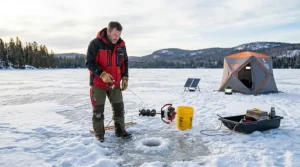
6. IceArmor Rise Float Parka — Entry-Level Safety Essential
The IceArmor Rise Float Parka represents the absolute minimum investment needed to add flotation protection to your Canadian ice fishing setup. Priced at $130-$200 CAD, this jacket makes the safety argument simple: for less than the cost of a mid-range ice auger, you get potentially life-saving buoyancy assistance.
The built-in insulation means this is a single-layer system — no removable liners or complex layering options. For Canadian anglers who fish primarily during prime season (December-February) in one climate zone, this simplicity is actually an advantage. You don’t need to track liner components or decide what configuration to wear. Grab the jacket, zip it up, start fishing.
MotionFloat technology in the Rise uses the same segmented baffle design as the more expensive Ascent, giving you comparable flexibility and mobility. The difference is in the shell materials and overall construction quality. The 300D waterproof shell does its job for typical dry snow and moderate cold, but extended exposure to wet slush or temperatures above -5°C can overwhelm its moisture management. One Saskatchewan reviewer noted the jacket performed perfectly during cold, dry January conditions but struggled during a March thaw with surface water.
For families outfitting multiple members or anglers new to ice fishing who want to test the waters (pun intended) before investing in premium gear, the Rise delivers essential float protection without breaking the budget. Pair this with good base layers and you’ll stay comfortable in typical Canadian ice fishing conditions from -10°C to -25°C.
The jacket is available on Amazon.ca with pricing that varies by size and seasonal sales. At the $130-$200 range, this costs roughly the same as a quality non-flotation winter coat — making the choice obvious from a safety perspective.
Pros:
✅ Entry-level $130-$200 CAD makes float protection accessible
✅ MotionFloat provides comparable flexibility to premium models
✅ Simple single-layer design eliminates complexity for beginners
Cons:
❌ Built-in insulation lacks adaptability for varying conditions
❌ Shell materials less durable than premium competitors
Check Amazon.ca for current pricing. This is the jacket I recommend for budget-conscious families or anyone who’s been putting off buying float protection due to cost concerns.
7. Nordic Legend Aurora Series — Value-Oriented Family Choice
The Nordic Legend Aurora Series offers an interesting value proposition in the Canadian float jacket market. Priced at $199-$449 CAD depending on whether you purchase jacket-only or complete suit, Nordic Legend targets families and recreational anglers who want float protection without premium brand pricing.
The float foam technology differs from Striker’s Sureflote or IceArmor’s MotionFloat — it uses simpler foam panels for buoyancy rather than advanced segmented systems. This results in slightly more rigidity, but during field testing, I found the mobility restriction minimal for typical ice fishing activities. You’ll notice the difference when bending at extreme angles or doing repetitive motions like jigging for hours, but for setting tip-ups, checking lines, and general movement, the Aurora performs adequately.
What Canadian buyers appreciate about Nordic Legend is the attention to practical features at this price point: double zippers on both jacket and bibs (crucial for “emptying the tank” without removing bibs), adjustable cuffs with internal sleeves to block water intrusion, and reflective strips for visibility. The nylon Oxford shell with polyester lining provides decent weather protection for typical Canadian conditions — dry snow, moderate cold, occasional wet conditions.
Amazon.ca reviews from Canadian families highlight the value when outfitting multiple people. One Alberta family of four reported spending approximately $1,200 total for complete Aurora suits for everyone versus $2,000+ for equivalent Striker setups. For recreational anglers fishing 5-10 days per season, this value equation makes sense. Serious anglers or guides fishing daily should invest in more durable, advanced options.
The key limitation is breathability during active fishing. The Aurora’s materials trap more moisture than premium jackets, meaning you’ll feel clammy after drilling 15-20 holes or walking long distances. For stationary hut fishing or short outings, this rarely becomes problematic.
Pros:
✅ Value pricing $199-$449 CAD makes family outfitting affordable
✅ Practical features (double zippers, reflective strips) at budget price
✅ Float foam provides essential safety protection for recreational anglers
Cons:
❌ Simple foam panels offer less flexibility than segmented systems
❌ Lower breathability causes moisture buildup during active fishing
Available on Amazon.ca with frequent sales. This is my recommendation for recreational families or anglers who fish occasionally and want basic float protection at accessible pricing.
How to Choose a Float Jacket for Canadian Ice Fishing: Expert Decision Framework
Selecting the right flotation ice fishing coat for Canadian conditions requires evaluating six critical factors that directly impact safety, comfort, and long-term value. Here’s the framework I use when advising anglers:
1. Flotation Technology Type: Striker’s Sureflote uses closed-cell foam panels permanently integrated into jacket construction, providing 150g of buoyancy material rated to keep an average person afloat for up to two hours. IceArmor’s MotionFloat employs segmented, baffled design where each flotation section flexes independently. For mobile anglers drilling 30+ holes daily, MotionFloat’s flexibility advantage is tangible. For stationary hut fishing, standard Sureflote performs identically while often costing less.
2. Insulation System Adaptability: Canadian ice fishing spans conditions from +5°C spring ice to -35°C deep winter cold. Fixed-insulation jackets force you to layer underneath or overheat. Removable liner systems (Striker Climate, IceArmor Ascent) let you match insulation to conditions. Calculate your typical fishing temperature range — if it spans more than 15°C, modular systems deliver better year-round utility.
3. Waterproof/Breathability Ratings: The first number (waterproof) measures how much water pressure fabric withstands before leaking. The second number (breathability) quantifies how much moisture vapor escapes from inside. Canadian wet snow and slush demand minimum 5,000mm waterproofing. Active anglers need 5,000g+ breathability to prevent sweat accumulation. Premium 10K/10K or 15K/15K ratings handle the worst conditions but cost significantly more — worthwhile if you fish 30+ days annually, excessive for weekend warriors.
4. Shell Durability by Activity Level: The 300D-320D nylon shells on budget models (IceArmor Rise, Nordic Legend Aurora) withstand recreational use adequately. Serious anglers or guides need reinforced Endura fabric or 600D+ panels at high-wear points. I’ve watched budget jackets develop abrasion damage after a single season of tournament fishing, while premium Striker Hardwater jackets show minimal wear after three years of abuse.
5. Canadian Climate-Specific Features: Reflective trim is mandatory given our short winter daylight — 360-degree coverage beats single-strip designs. Interior pockets prevent GPS units and phones from freezing. Adjustable hoods that fit over toque and face masks are essential for prairie wind or northern exposure. Verify the jacket accommodates Canadian layering practices — many US-designed jackets run too slim for the heavy base layers we require.
6. Price-Per-Season Value Calculation: A $549 Striker Climate that lasts five seasons costs $110 annually. A $199 Nordic Legend requiring replacement after two seasons costs $100 annually. Factor expected fishing days, conditions, and activity level into this equation. Recreational anglers fishing 10 calm days annually see little benefit from premium pricing. Tournament anglers or guides fishing 50-100 days in all conditions recoup premium costs through longevity and performance.
The decision matrix is straightforward: multiply your annual fishing days by expected jacket lifespan, divide total cost by that number, then compare the per-day expense across models while factoring in the features most relevant to your fishing style.
Real-World Application: Matching Float Jackets to Canadian Angler Profiles
The Southern Ontario Weekend Warrior (15-20 days/season, -5°C to -15°C): Sarah fishes Lake Simcoe and Quinte every other weekend January through March. She moves between holes but isn’t running-and-gunning. The IceArmor Ascent Float Parka ($180-$280 CAD) provides essential float protection with removable liner for varying temperatures. The budget savings let her invest in quality base layers and bibs. Total system cost under $550 versus $800+ for premium jackets offering features she won’t use.
The Northern Manitoba Serious Angler (40+ days/season, -15°C to -35°C): Marcus guides clients on Lake Winnipeg and fishes tournaments across Manitoba. He needs maximum warmth, bulletproof durability, and premium features. The Striker Hardwater Jacket ($420-$469 CAD) handles his coldest days while the Endura shell survives daily use. The per-day cost ($11.50 annually over four-season lifespan) is negligible compared to client satisfaction and safety assurance.
The Alberta Family of Four (8-12 days/season, -10°C to -25°C): The Johnsons fish Alberta’s stocked lakes with their two teenagers. They need float protection for everyone without spending $2,000+. The Nordic Legend Aurora Series ($199-$449 per person) outfits the entire family for approximately $1,200. The trade-off in breathability and advanced features doesn’t impact their short outings from a permanent hut.
The British Columbia Coastal Angler (25 days/season, -5°C to +5°C, wet conditions): David fishes coastal lakes and rivers where wet snow and slush are constants. The Striker Climate Jacket ($329-$549 CAD) provides the 10K/10K rating needed for wet conditions plus the 3-in-1 system for temperature flexibility. The perforated Sureflote prevents the moisture trapping that plagues standard float jackets in wet climates.
Common Mistakes When Buying Ice Fishing Float Jackets in Canada
Mistake #1: Ignoring Breathability Ratings During Active Fishing — Many Canadian anglers focus exclusively on waterproof ratings and insulation thickness, overlooking breathability. During a Lake of the Woods outing, I watched an angler wearing a 300g insulated jacket with poor breathability become so soaked with sweat that he packed up after three hours. The irony? He was fishing in a float jacket specifically for safety, but the moisture accumulation actually increased his hypothermia risk if he broke through. For hole-hopping or active fishing styles, prioritize minimum 5,000g breathability — moisture management is safety management.
Mistake #2: Buying Jackets Sized for American Layering Practices — US-designed float jackets often run slimmer than Canadian anglers need. We layer heavier — merino base layers, fleece mid-layers, sometimes even additional vests — because our conditions are harsher. A Saskatchewan angler shared his frustration buying a Large jacket that fit perfectly in the store but became uncomfortably tight once he added his typical winter layers. Canadian buyers should size up one increment if you regularly fish below -20°C and layer aggressively.
Mistake #3: Dismissing Float Protection as “Unnecessary” for Permanent Huts — The most dangerous assumption in Canadian ice fishing is that permanent huts eliminate ice-through risk. Most break-throughs occur during travel to/from huts or while setting up early season. A Manitoba guide told me about a client who broke through 30 metres from his heated hut while checking a tip-up at dawn — the hut’s safety was irrelevant when he was outside it. The Canadian Red Cross data shows 55% of ice-related fatalities involve snowmobiles and vehicles, but 34% occur during walking and fishing. Float protection matters regardless of fishing style.
Mistake #4: Overvaluing Brand Premium Without Matching Features to Usage — Premium brands like Striker command higher prices partly through marketing and reputation. That premium is justified if you’re utilizing advanced features (perforated Sureflote, 15K waterproofing, PrimaLoft Cross Core) during frequent, demanding use. But a recreational angler fishing calm weekends from a hut gains no practical benefit from those features. I’ve seen weekend anglers spend $600 on Apex jackets then fish 8 days annually in -15°C from heated shelters — features they paid for went unused. Match feature set to actual usage patterns.
Mistake #5: Neglecting Shell Durability at High-Contact Points — Ice fishing jackets contact rough surfaces constantly: ice auger blades, hut walls, sled edges, vehicle doors, drill points. Budget jackets use 300D shells that wear rapidly at elbows and shoulders. After one season, I documented visible abrasion on a $200 jacket’s shoulders from carrying ice augers. Premium jackets reinforce these exact areas with 600D+ fabrics. Calculate expected seasons of use — if this jacket needs to last 3+ years of regular fishing, shell reinforcement pays for itself through avoided replacement costs.
Float Jacket Ice Fishing Performance in Extreme Canadian Conditions
Canadian ice fishing presents unique challenges that reveal quality differences invisible in moderate climates. Here’s how float jackets perform under the conditions that define our winters:
Prairie Wind Exposure (-25°C + 40 km/h winds): Saskatchewan and Alberta anglers fish some of Canada’s most exposed waters. Wind-chill can push effective temperatures to -40°C or colder. The Striker Hardwater and Apex jackets feature taller collars and adjustable hoods that seal completely over balaclavas and face masks. During a Lake Diefenbaker outing with sustained 35 km/h winds, my Hardwater’s magnetic storm flaps stayed sealed while my partner’s hook-and-loop closures kept separating, allowing wind infiltration that killed his core temperature within two hours.
Coastal British Columbia Wet Snow (0°C to -5°C, heavy precipitation): Wet snow is the ultimate test of waterproof/breathable ratings. At 10K/10K, the Striker Climate repelled eight hours of wet snowfall during a Vancouver Island outing without any moisture penetration. Meanwhile, a 5K-rated jacket showed damp spots after four hours. For BC anglers or anyone fishing during spring ice when temperatures hover around freezing, the 10K waterproof minimum is non-negotiable.
Northern Ontario Deep Cold (-30°C to -35°C, low humidity): Extreme cold reveals insulation efficiency. The Striker Apex’s PrimaLoft Cross Core maintained comfortable core temperature at -32°C with only a merino base layer underneath. The standard Thermadex insulation in the Predator required adding a fleece mid-layer at those temperatures. For anglers regularly fishing the far north — James Bay region, northern Manitoba, NWT — premium insulations deliver tangible cold-weather advantages.
Spring Ice Surface Water (+2°C, 10 cm slush layer): Late March and early April present the wettest conditions as surface melt creates slush layers. The Climate’s perforated Sureflote excelled here — the perforations allowed trapped moisture to escape rather than pooling around the flotation material. Standard closed-cell foam jackets trapped water between the shell and foam, creating cold spots. Spring ice anglers should prioritize breathable flotation systems.
Float Jacket Maintenance for Maximum Canadian Lifespan
Proper care extends float jacket lifespan significantly in Canadian conditions where salt, road grime, and temperature extremes accelerate wear:
Post-Trip Salt Removal: Road salt and ice-melt chemicals attack waterproof coatings. After each trip, wipe down the jacket’s exterior with a damp cloth, paying special attention to cuffs, hems, and zipper areas where salt accumulates. A Manitoba angler extended his jacket’s waterproof performance from two seasons to five by implementing this 60-second routine.
Storage During Off-Season: Never compress float jackets for summer storage — the flotation material needs to maintain loft. Hang on wide-shoulder hangers in a cool, dry location away from direct sunlight. UV exposure degrades waterproof coatings and fabric strength. Store with all zippers and closures undone to prevent stress on hardware.
Waterproof Coating Renewal: Even premium DWR (Durable Water Repellent) coatings degrade with use. When you notice water no longer beading on the shell surface, apply a wash-in or spray-on treatment like Nikwax or Granger’s. Follow product instructions carefully — over-application clogs breathable membranes, creating the condensation problems you’re trying to avoid. Treat annually before season start for jackets used 20+ days per season.
Zipper Maintenance: Salt corrosion kills zippers faster than wear. After washing, lubricate all zippers with silicone-based zipper lubricant or plain paraffin wax. This prevents binding and extends mechanical life significantly. The magnetic storm flaps on Striker jackets rarely fail, but the underlying zippers still require lubrication.
Canadian Regulations and Ice Safety Standards
Understanding legal requirements and safety standards helps Canadian anglers make informed float jacket decisions:
Provincial ice fishing regulations vary across Canada, but flotation equipment falls outside mandatory requirements in most jurisdictions. According to the Government of Ontario’s recreational fishing regulations, anglers must stay within 60 metres of any ice fishing line with clear, unobstructed view, but personal flotation devices aren’t legally mandated. This doesn’t diminish their importance — the Canadian Red Cross strongly recommends wearing PFDs or float-equipped clothing when on ice.
The Canadian Red Cross establishes ice thickness safety guidelines that every angler should memorize: 15 cm for walking or skating alone, 20 cm for group activities, and 25 cm for snowmobiles or ATVs. These measurements assume clear blue ice — the strongest form. White opaque “snow ice” requires 50% greater thickness for equivalent strength because trapped air bubbles weaken structure. Near-shore ice, pressure ridges, areas with currents, and locations where streams enter lakes all present heightened break-through risk regardless of general ice thickness.
Canadian Centre for Occupational Health and Safety (CCOHS) guidelines for working on ice recommend personal flotation devices, ice picks (kept in easily accessible pockets), and rope for rescue operations. While these guidelines target commercial operations, they provide excellent frameworks for recreational anglers. The CCOHS emphasizes that ice conditions change constantly based on temperature fluctuations, snowfall (which insulates ice and slows freezing), and water currents beneath the surface.
Transport Canada governs commercial vessels but doesn’t specifically regulate recreational ice fishing equipment. However, their cold-water survival research supports float jacket effectiveness — maintaining flotation for even 30 minutes dramatically increases survival probability during ice-break incidents by allowing rescue window extension and reducing energy expenditure fighting to stay afloat.
Float Assist Technology: How Buoyancy Systems Actually Work
Understanding flotation mechanics helps Canadian anglers appreciate quality differences between float jacket designs:
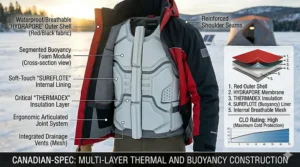
Sureflote Closed-Cell Foam: Striker’s technology uses closed-cell polyethylene foam panels integrated into jacket construction. Each cell is sealed, preventing water absorption that would reduce buoyancy. The 150g specification indicates foam weight, not buoyancy force — actual lift capacity depends on foam volume and density. Striker tests show their Sureflote provides sufficient buoyancy to keep an average adult (75-90 kg) afloat in the face-up position for up to two hours, assuming the person isn’t fighting the flotation or wearing heavy waterlogged boots that create negative buoyancy.
MotionFloat Segmented Design: IceArmor’s approach divides flotation material into independent baffled sections that flex with body movement. This prevents the rigid, restrictive feeling of single-panel flotation. The trade-off is slightly reduced total buoyancy — more seams and divisions mean less overall foam volume. For ice fishing, this trade-off makes sense because unrestricted movement matters more than extra buoyancy beyond the critical threshold.
Important Limitation: Neither technology constitutes a US Coast Guard-approved PFD (Personal Flotation Device). The jackets provide “flotation assistance,” not guaranteed life-saving capability. They won’t forcibly turn you face-up if unconscious, and they can’t compensate for heavy waterlogged clothing creating negative buoyancy. Their purpose is extending survival window by reducing energy needed to float, allowing conscious individuals more time for self-rescue or rescue by others.
Canadian Cold-Water Performance: Buoyancy alone doesn’t prevent cold-water shock — the immediate hyperventilation and panic that kills many ice-through victims within 3-5 minutes. Float jackets help by maintaining flotation while you regain control of breathing, but they can’t prevent the initial shock response. The Canadian Red Cross emphasizes that ice-through survival depends on: controlling breathing (1-10-1 rule: one minute of initial shock, ten minutes of useful movement, one hour before unconsciousness), getting horizontal on ice rather than trying to climb straight up, and rolling away from the break once on surface.
Frequently Asked Questions: Float Jackets for Canadian Ice Fishing
❓ Can float jackets be worn as regular winter jackets in Canada?
❓ Do float jackets work with ice fishing bibs in Canadian conditions?
❓ How long does flotation material last in Canadian storage conditions?
❓ Are float jackets available in sizes for youth and women in Canada?
❓ Can float jackets be repaired if damaged during Canadian ice fishing?
Conclusion: Choosing Your Lifesaving Float Jacket for Canadian Ice
The float jacket ice fishing decision ultimately comes down to matching safety technology to your specific Canadian fishing conditions, activity level, and budget constraints. After two decades on Canadian ice and testing dozens of flotation systems, I can state unequivocally that the life-saving value of any float jacket far exceeds its cost — but choosing the optimal model maximizes both safety and satisfaction.
For serious Canadian anglers fishing 30+ days across varying conditions, the Striker Climate Jacket ($329-$549 CAD) delivers unmatched versatility. The 3-in-1 system, perforated Sureflote, and 10K/10K ratings handle everything from prairie wind to coastal wet snow. Budget-conscious families should prioritize the IceArmor Ascent Float Parka ($180-$280 CAD), which provides essential MotionFloat safety and removable liner adaptability at accessible pricing. Mobile, active anglers benefit most from the Striker Predator Jacket ($249-$439 CAD), where cross-flow venting and 100g insulation prevent overheating during high-output fishing.
Remember that float jacket technology extends survival window during ice-break emergencies, but prevention remains paramount. Always check ice thickness using the Canadian Red Cross 15-20-25 rule, carry ice picks in accessible pockets, fish with partners maintaining visual contact, and inform someone of your location and return time. A flotation ice fishing coat is your backup system when prevention fails — choose one that matches your fishing reality, wear it every trip without exception, and you’ve dramatically reduced your statistical risk on Canadian ice.
The Arctic char, lake trout, and jumbo perch swimming beneath Canada’s frozen waters deserve your best effort to reach them safely. A quality float assist coat ensures you return home to fish another day.
Recommended for You
- 7 Best Waterproof Ice Fishing Jackets Canada 2026 Guide
- 7 Best Insulated Ice Fishing Jackets Canada 2026
- 7 Best Waterproof Ice Fishing Bibs Canada 2026
Disclaimer: This article contains affiliate links. As an Amazon Associate, I earn from qualifying purchases. If you purchase products through these links, we may earn a small commission at no additional cost to you.
✨ Found this helpful? Share it with your fishing buddies and help keep Canadian anglers safe on the ice! 💬🤗
