
In This Article
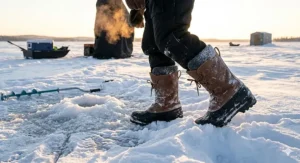
Standing motionless on a frozen lake at -25°C for six hours isn’t everyone’s idea of fun—but for Canadian ice anglers, it’s pure bliss. The difference between calling it quits after 30 minutes and staying out until the walleye stop biting? Your boots. Pac boots for ice fishing aren’t just footwear; they’re the thermal barrier between you and frostbite, the foundation of every successful Canadian ice fishing trip.
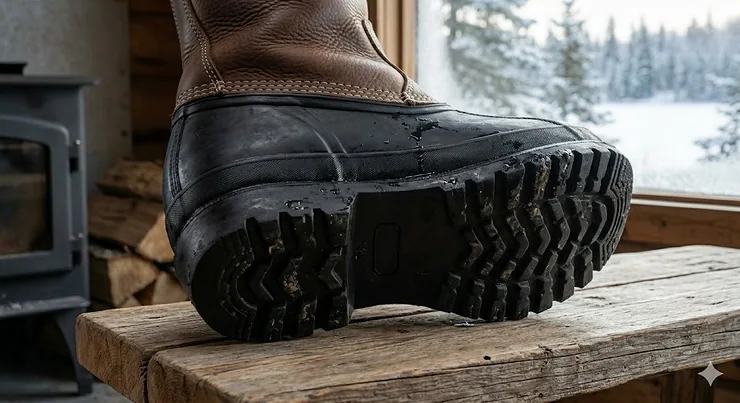
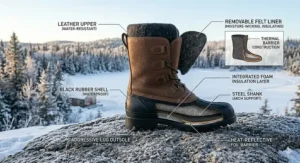
What most buyers overlook about pac boots for ice fishing is the engineering behind that classic rubber-bottom, leather-or-nylon-upper design. The waterproof rubber shell isn’t there to look rugged—it’s creating a completely sealed barrier against slush puddles that form on spring ice. The removable liner pac boots offer isn’t a convenience feature; it’s your overnight drying system when you’re fishing a three-day derby in northern Ontario. And that felt liner pac boots traditionally include? It’s trapping dead air space around your foot—the same principle that keeps your insulated coffee mug working.
Here’s what anglers fishing Lake Simcoe to Great Slave Lake have learned the hard way: rubber bottom pac boots need to balance immobility warmth (you’re standing still, remember) with enough flexibility to walk across pressure ridges without your ankles screaming. The classic pac boot style—that distinctive silhouette you see in every Canadian ice hut—has survived 100+ years because it solves a problem modern innovations still struggle with: keeping sedentary feet warm when ambient temperatures would freeze exposed skin in minutes.
This guide cuts through marketing hype to show you exactly which insulated pac boots Canada anglers actually trust, what waterproof pac boots review data reveals about durability in our specific conditions (road salt, spring thaw, repeated freeze-thaw cycles), and how to match boot specs to your ice fishing reality—whether you’re a weekend warrior hitting Lake of the Woods or a tournament angler pulling 12-hour shifts on Lake Winnipeg.
Quick Comparison: Top Pac Boots for Canadian Ice Fishing
| Boot Model | Temperature Rating | Liner Type | Weight (per boot) | Best For | Price Range (CAD) |
|---|---|---|---|---|---|
| Baffin Titan | -100°C | Removable multi-layer | 1.7 kg | Extreme cold stationary fishing | $180-$230 |
| Sorel Caribou | -40°C | 9mm felt removable | 1.0 kg | Mobile ice fishing, short sessions | $150-$200 |
| Kamik Icebreaker | -40°C | Removable felt | 1.3 kg | Budget-conscious Canadian buyers | $110-$160 |
| Muck Arctic Pro | -50°C | 8mm neoprene (non-removable) | 1.4 kg | Wet conditions, slip-on convenience | $220-$280 |
| LaCrosse Ice King | -40°C | Removable foam/felt | 1.2 kg | Active ice fishing, mobility needed | $190-$240 |
| Baffin Impact | -40°C | Removable B-Tek system | 1.5 kg | Mixed activity (fishing + snowmobiling) | $160-$210 |
| Kamik Greenbay 4 | -40°C | Removable liner | 1.1 kg | Canadian value pick, all-around use | $120-$170 |
Looking at the comparison above, the Baffin Titan dominates for stationary extreme-cold fishing where you’re parked on a bucket for hours—that -100°C rating isn’t marketing fluff when February hits the Prairies. But if you’re an active angler who drills 20 holes across the lake, the LaCrosse Ice King balances warmth with 200 grams less weight per boot—a difference your ankles notice by hole fifteen. Budget buyers should note that Kamik models sacrifice some build quality for lower prices, but their Canadian manufacturing means warranty service is straightforward, unlike imported brands where you’re shipping boots to the US for repairs.
💬 Just one click — help others make better buying decisions too! 😊
Top 7 Pac Boots for Ice Fishing: Expert Analysis from Canadian Conditions
1. Baffin Titan — The Extreme Cold Champion
The Baffin Titan isn’t just another winter boot—it’s the choice of Antarctic research station workers, and that tells you everything about its capabilities on Canadian ice. Rated to an almost absurd -100°C, this fully moulded Polar Rubber boot with its removable Comfort-Fit multi-layer inner boot system represents Canadian engineering at its finest (yes, Baffin manufactures in Canada). The 7-layer inner boot features Thermaplush wicking, B-Tek foam, hollow-fiber insulation, a vapourised aluminium membrane for heat reflection, and a waffle-comb footbed designed to trap warm air.
What most ice anglers discover after their first outing in Titans: your feet don’t just stay warm—they stay comfortable for 8+ hour sessions because that footbed design actually works. The plain toe design gives you maximum room to wiggle toes (critical for circulation when you’re stationary), while the fully moulded construction means zero seams where water can penetrate during spring ice fishing when standing water is unavoidable. At 1.7 kg per boot, they’re hefty, but that weight comes from materials that create genuine thermal protection rather than bulk for bulk’s sake.
Canadian reviewers consistently praise the Titans for one specific scenario: late-season ice fishing in March when temperatures swing from -15°C overnight to above freezing by afternoon. The removable liner means you can adjust insulation mid-day—pull the liner out when temperatures climb and you prevent the foot-sweat-then-freeze cycle that ruins cheaper boots. The acid and oil-resistant Oarprene compound outsole grips wet ice better than standard rubber, a feature you appreciate when walking from your truck to the ice hut carrying a 60-pound auger.
✅ Pros:
- Genuinely rated for extreme Canadian cold (-100°C isn’t marketing hype)
- Removable liner allows overnight drying and insulation adjustment
- Made in Canada with accessible warranty service
❌ Cons:
- Heavy at 1.7 kg per boot—noticeable after walking 500+ metres on ice
- Premium price reflects quality ($180-$230 CAD range)
Price & Value: Around $200-$220 CAD on Amazon.ca, which positions these as a serious investment—but anglers who fish regularly report 7-10 year lifespans with proper care. That’s roughly $25 per season for boots that genuinely prevent frostbite.
2. Sorel Caribou — The Classic Pac Boot That Built Sorel’s Reputation
The Sorel Caribou is what your grandfather wore ice fishing on Lake Nipigon in 1975, and it’s what modern anglers still trust for good reason—the design works. This seam-sealed waterproof leather upper paired with a handcrafted vulcanised rubber shell creates the archetypal pac boot silhouette, while the removable 9mm recycled felt inner boot provides -40°C protection that’s been field-proven across three generations of Canadian winters. The Aero-Trac non-loading outsole sheds packed snow instead of building platform soles that turn walking into skating.
Here’s what the spec sheet won’t tell you but every Caribou owner discovers: these boots run large because they’re designed for thick wool socks layered over liner socks. Size down half to one full size from your running shoe, especially if you have narrow feet. That roomy fit isn’t a flaw—it’s intentional design that creates dead air space around your foot, which is exactly how passive insulation works. The 8.5-inch shaft height hits the sweet spot for ice fishing: tall enough to keep snow out when you’re drilling holes in deep drifts, but not so tall that they’re awkward getting in and out of your ice shelter.
What divides Caribou fans from critics is durability. Pre-2020 models earned legendary status for 15+ year lifespans. Post-2020 production has seen quality control issues—specifically, the rubber shell can crack at flex points after just two seasons. Canadian reviewers note this particularly happens in Prairie conditions where temperature swings from -30°C to +5°C stress materials. That said, when you get a good pair, the combination of warmth, waterproofing, and heritage design is hard to beat for mobile ice fishing where you’re drilling multiple holes across a lake.
✅ Pros:
- Classic design that’s comfortable for 4-6 hour sessions without foot fatigue
- Removable felt liner dries quickly overnight—critical for multi-day fishing trips
- Moderate weight (1.0 kg per boot) allows reasonable mobility
❌ Cons:
- Recent quality control issues with rubber cracking at flex points
- Sizing runs large—requires careful size selection or you’re swimming in them
Price & Value: Typically $150-$190 CAD on Amazon.ca. The value proposition depends entirely on whether you get a well-made pair or a lemon—the variance in modern production is frustrating for a heritage brand.
3. Kamik Icebreaker — Canadian-Made Value Without Compromise
The Kamik Icebreaker represents something increasingly rare: legitimate Canadian manufacturing (70% of Kamik production still happens in Québec) at a price point that doesn’t require a line of credit. This seam-sealed waterproof boot with removable 8mm felt liner delivers -40°C protection for $110-$160 CAD—roughly half the price of premium imports. The moisture-wicking lining and 400g Thinsulate insulation create warmth without the bulk you see in some budget competitors, while the Ground-Ctrl rubber outsole provides reliable traction on both wet ice and dry snow.
What Canadian buyers consistently report about Kamik: exceptional customer service that’s actually based in Canada. When your liner wears out after three seasons, Kamik often provides replacement liners at no charge. Compare that to importing replacement parts from American brands where shipping costs more than the component. The Icebreaker’s 10-inch shaft height offers solid coverage without the stiffness of taller boots—a design decision that favours active ice anglers who drill 15-20 holes per outing rather than stationary hut sitters.
The trade-off for this price-to-performance ratio? Build quality is good, not great. The stitching where leather meets rubber won’t win awards for precision, and the felt liner compresses faster than premium alternatives, reducing its effectiveness after 40-50 days on the ice. But here’s the reality: most recreational ice anglers fish 15-20 days per season. At that usage rate, Kamik Icebreakers deliver 3-4 solid seasons before you’re shopping for replacements—and at this price, that’s reasonable value.
✅ Pros:
- Genuine Canadian manufacturing supports domestic jobs and reduces shipping-related carbon footprint
- Exceptional customer service with easy warranty claims in Canada
- Price point ($110-$160 CAD) makes quality ice fishing accessible to more anglers
❌ Cons:
- Felt liner compresses faster than premium competitors—warmth decreases noticeably after season 2-3
- Build quality details (stitching precision, material finishing) trail premium brands
Price & Value: Around $130-$150 CAD on Amazon.ca makes these the sweet spot for anglers who fish regularly but aren’t putting in 50+ days per season. Strong buy for anyone getting into ice fishing without wanting to drop $200+ on their first serious boot.
4. Muck Arctic Pro — The Neoprene Alternative That Redefines Pac Boots
The Muck Arctic Pro breaks the traditional pac boot mould by using 8mm CR Flex-Foam neoprene construction instead of rubber-and-leather—a decision that fundamentally changes the boot’s behaviour in Canadian ice fishing conditions. This tall boot (17-inch shaft) with fleece lining and 2mm thermal foam under the footbed delivers -50°C comfort range, but the real innovation is how neoprene flexes with your foot rather than forcing your foot to fight rigid rubber shells. That flexibility matters when you’re walking uneven ice surfaces or climbing over pressure ridges to reach productive fishing spots.
Here’s the neoprene advantage most reviewers miss: this material doesn’t crack in extreme cold. Traditional rubber pac boots develop stress fractures when repeatedly flexing at -30°C; neoprene maintains elasticity down to -60°C. For anglers fishing northern Ontario, Manitoba, or Saskatchewan where January temperatures routinely hit -35°C to -40°C, that material performance prevents the mid-season boot failures that leave you ordering emergency replacements. The Bob-Tracker outsole with aggressive lugs provides exceptional grip on wet ice—the scenario every ice angler faces during spring walleye season when surface water is unavoidable.
The compromise? No removable liner. That 8mm neoprene with fleece is permanently bonded, which means drying these boots after a wet day requires stuffing with newspaper and 24+ hours near (not on) a heat source. If you’re fishing multi-day tournaments or extended ice camping trips, this drying limitation becomes problematic. But for weekend anglers returning home each night, the slip-on convenience and reliable warmth make these a top choice. Canadian ice fishermen particularly appreciate that Muck boots fit wide feet comfortably—if you’ve struggled with narrow European boot lasts, these are your answer.
✅ Pros:
- Neoprene construction eliminates cold-weather cracking that plagues traditional rubber boots
- Slip-on design with stretch topline makes on/off easy even with frozen fingers
- Excellent fit for wider Canadian feet (EEE width accommodated)
❌ Cons:
- Non-removable liner creates drying challenges for multi-day trips
- 17-inch height, while protective, can be awkward in tight ice shelters
Price & Value: Typically $220-$270 CAD on Amazon.ca. The premium reflects both material costs and genuine performance—these are investment boots for serious anglers who prioritize warmth and durability over budget constraints.
5. LaCrosse Ice King — Mobility Meets Warmth for Active Anglers
The LaCrosse Ice King was purpose-built for ice fishing in places where annual snowfall exceeds 200 inches and temperatures routinely drop below -20°C—essentially, most of Canada. This 10-inch boot combines a waterproof full-grain leather upper with hand-laid vulcanised rubber bottom and features 400g Thinsulate Ultra insulation plus a removable liner with foam and felt layers. At 1.2 kg per boot, the Ice King strikes the balance active anglers need: warm enough for stationary fishing, light enough to walk a kilometre across lake ice without ankle fatigue.
What separates the Ice King from competitors is thoughtful ergonomic design. The 6mm polyurethane footbed provides genuine arch support—a feature you don’t realise you need until you’ve spent eight hours standing on unforgiving ice. The 8mm felt midsole adds insulation specifically under your foot where you’re standing on frozen surface, while the 3/4″ removable poly foam liner creates the adjustability ice anglers need when temperatures swing 20 degrees between morning and afternoon. The TracLite outsole isn’t the most aggressive tread pattern available, but it’s designed specifically for the ice-snow-slush combination Canadian anglers face during shoulder seasons.
Canadian ice fishing forum reviews consistently mention one specific strength: these boots break in quickly without the month-long suffering period some stiff pac boots require. You can fish comfortably on day one rather than waiting until day ten for the boots to mold to your feet. The trade-off is that pre-broken-in feel comes from slightly softer leather that shows wear faster than tank-tough alternatives. After three heavy-use seasons, expect the leather to need conditioning and the rubber to show scuffing—but the core insulation and waterproofing remain intact for 5-7 seasons with proper maintenance.
✅ Pros:
- Excellent weight-to-warmth ratio (1.2 kg per boot with -40°C rating)
- Superior arch support prevents foot fatigue during long sessions
- Minimal break-in period means comfort from first outing
❌ Cons:
- Leather upper requires regular conditioning in Canadian winter conditions
- TracLite outsole provides adequate but not exceptional traction on wet ice
Price & Value: Around $190-$230 CAD—positioning these in the premium segment but with features that justify the cost for active anglers who drill multiple holes and cover significant distance on ice.
6. Baffin Impact — The Multi-Activity Boot for Canadian Ice Sports
The Baffin Impact shares DNA with its Titan sibling but targets anglers who need versatility—the person who ice fishes Saturday, snowmobiles Sunday, and shovels the driveway Monday morning. This mid-calf boot features Baffin’s removable Tri-Fit multi-layer inner boot system (Polywick moisture transfer, high-density insulation, vapourised aluminum membrane) with a fully moulded Arctic Rubber upper that’s lighter and more flexible than the Titan’s Polar Rubber. Rated to -40°C, it handles Canadian ice fishing from December through March without requiring extreme cold specialisation.
Here’s where the Impact finds its niche: snowshoe compatibility. That narrower profile compared to the Titan means these fit standard snowshoe bindings without wrestling—essential if you’re accessing remote ice fishing spots where walking on snow isn’t optional. The self-cleaning outsole with diamond-pattern lugs sheds wet snow automatically, preventing the dangerous platform build-up that turns other boots into ice skates. For anglers who fish Lake Superior tributaries or backcountry lakes in northwestern Ontario where you’re hiking through two feet of snow to reach fishing holes, this mobility advantage matters.
What you surrender for versatility is raw extreme-cold performance. At -40°C, the Impact keeps your feet warm but not toasty-comfortable for the 8+ hour sessions the Titan handles easily. Think of it this way: the Impact is built for active ice fishing where you’re moving between holes, checking tip-ups, or ice fishing while snowshoeing between locations. The Titan is built for sitting motionless in a permanent shelter. Canadian tournament anglers note that the Impact’s lighter weight (1.5 kg vs. 1.7 kg) becomes significant when you’re walking 3-4 kilometres across Manitoba lakes during multi-day derbies.
✅ Pros:
- Versatility for multiple Canadian winter activities beyond just ice fishing
- Snowshoe-compatible narrower profile without sacrificing warmth
- Lighter weight than Titan while maintaining -40°C protection
❌ Cons:
- Not suitable for extreme stationary cold below -40°C
- Narrower fit may cramp wide feet or require sizing up
Price & Value: Typically $160-$210 CAD on Amazon.ca. The value proposition is strongest for multi-sport winter enthusiasts who need one boot for various activities rather than specialised boots for each pursuit.
7. Kamik Greenbay 4 — The Proven All-Around Canadian Value Boot
The Kamik Greenbay 4 might not have the marketing budget of American brands, but it’s earned quiet respect among Canadian anglers who prioritise function over fashion. This waterproof leather and nylon boot features a removable liner, 400g Thinsulate insulation, and -40°C rating—a spec sheet that matches boots costing $50-80 more. The Greenbay’s strength lies in its middle-of-the-road approach: tall enough (10 inches) to keep snow out, warm enough for typical Canadian ice fishing temperatures, light enough (1.1 kg per boot) for reasonable mobility.
What makes the Greenbay 4 particularly appealing for Canadian buyers is accessibility. These boots show up reliably at Canadian Tire, Mark’s, and local sporting goods stores across the country—availability that matters when you need warranty service or replacement parts. That distribution network also means seasonal sales that can drop prices to $100-$120 CAD, making quality ice fishing boots affordable for families getting kids into the sport. The rust-proof D-ring lacing system holds tight without the frozen-lace frustrations some traditional pac boots suffer in extreme cold.
The Greenbay 4 doesn’t excel at any one thing—it’s good at everything. The liner provides adequate warmth, the rubber bottom is sufficiently waterproof, the leather shows reasonable durability. That “good enough” philosophy either appeals to you or doesn’t. For recreational anglers fishing local lakes 12-15 times per winter, these deliver everything needed without excess. For hardcore ice anglers putting in 40+ days, the compromises (liner compresses after season 2, leather develops cracking around lacing eyelets) become more noticeable. Think of these as the reliable Honda Civic of ice fishing boots—not flashy, but they start every morning and get you where you need to go.
✅ Pros:
- Widespread availability across Canada simplifies warranty service and replacement
- Strong value at sale prices ($100-$120 CAD is exceptional)
- Solid all-around performance for recreational use
❌ Cons:
- “Good at everything, great at nothing” design philosophy
- Materials show wear faster than premium alternatives
Price & Value: Regular price around $140-$160 CAD, but watch for sales at Canadian Tire and Mark’s where $100-$120 is common. At sale pricing, these become the no-brainer choice for new ice anglers.
How to Choose Pac Boots for Ice Fishing: A Canadian Angler’s Framework
Selecting pac boots for ice fishing isn’t about picking the coldest temperature rating or thickest insulation—it’s about matching boot characteristics to your specific fishing style, geography, and budget reality. Most buyers get this wrong by shopping on price alone or being seduced by extreme specs they’ll never actually use.
Temperature Rating Reality Check
Boot manufacturers rate pac boots for ice fishing using controlled lab conditions that don’t reflect real-world Canadian ice fishing. When a boot claims -40°C, that’s assuming moderate activity level, two sock layers, no wind, and dry conditions. In reality, sitting motionless on windswept Lake Winnipeg in January with wind chills driving effective temperatures to -50°C requires boots rated at least 10-15 degrees colder than ambient temperature. Here’s the practical translation: if you fish southern Ontario where -25°C is a brutal day, -40°C boots suffice. If you’re fishing northern Saskatchewan or Nunavut where -40°C is routine, you need -60°C to -100°C rated boots like the Baffin Titan.
Removable Liner: Non-Negotiable for Canadian Conditions
Here’s what separates recreational ice anglers from seasoned pros: liner management. Boots with removable liner pac boots allow overnight drying, which prevents the moisture-accumulation-then-freeze cycle that ruins warmth. When you’re fishing multi-day tournaments or extended ice camping trips, pulling liners out each night and drying them near (never directly on) a heat source means starting each morning with genuinely warm, dry boots rather than clammy cold shells. Non-removable liners (like the Muck Arctic Pro uses) work fine for day trips when you’re returning home to dry them overnight, but they’re problematic for extended outings.
Mobility Versus Maximum Warmth Trade-Off
The fundamental pac boot decision: do you prioritise stationary warmth or walking comfort? Extreme-cold boots like the Baffin Titan with their multi-layer insulation and heavy construction keep feet toasty during 8-hour stationary sessions but weigh 1.7 kg per boot—a burden when walking 500+ metres across lake ice carrying gear. Lighter pac boots in the 1.0-1.2 kg range (Sorel Caribou, LaCrosse Ice King) allow comfortable mobility but sacrifice some extreme-cold protection. Most Canadian ice anglers need different boots for different scenarios: heavy artillery for late-winter hut fishing, lighter boots for early-season mobility fishing.
Waterproofing Beyond Marketing Claims
Every pac boot claims waterproofing, but performance varies dramatically. Fully moulded rubber boots (Baffin Titan, Muck Arctic Pro) are genuinely waterproof because there are no seams where water can penetrate—you can stand in 10cm of slush all day without dampness. Boots with sewn-on rubber bottoms and leather/nylon uppers (Sorel Caribou, Kamik Icebreaker) rely on seam sealing that eventually fails—typically after 2-3 seasons of heavy use. For spring ice fishing when standing water is unavoidable, prioritise moulded construction. For mid-winter fishing on dry ice, sewn construction suffices.
Canadian-Specific Considerations Often Overlooked
Road salt used on Canadian highways destroys leather faster than cold ever will. If you’re walking through parking lots and then onto ice, that salt transfers to your boots and starts breaking down leather immediately. Boots requiring regular conditioning (anything with significant leather content) need post-outing rinses and monthly leather treatment to survive Canadian winter transportation reality. Fully rubber/synthetic boots (Muck Arctic Pro, Baffin Titan) eliminate this maintenance but sacrifice the breathability leather provides.
Provincial temperature variations matter more than buyers realise. British Columbia coastal ice anglers deal with wet, heavy snow and temperatures hovering around freezing—prioritise waterproofing over extreme insulation. Prairie anglers face bone-dry cold and vicious wind—prioritise insulation rating and wind-resistant shells. Ontario anglers experience both extremes in a single season—versatility becomes the priority. Match your boot selection to your specific regional conditions rather than generic “Canadian winter” assumptions.
Common Mistakes When Buying Pac Boots for Ice Fishing
Oversizing for “Extra Sock Space”
The old advice about buying pac boots a full size larger to accommodate thick socks is outdated and counterproductive. Modern insulation technologies create warmth through minimal dead air space—not maximum sock stacking. When boots are too large, your foot slides around inside, creating friction hot spots that lead to blisters and forcing your feet to work harder to stabilise, which generates sweat. That sweat then freezes, making you colder despite all your thick socks. The correct approach: buy pac boots that fit with one medium-weight merino wool sock plus a thin liner sock. The boot should feel snug but not tight when standing with weight on your feet.
Ignoring Break-In Requirements for Cold-Weather Use
Unlike summer hiking boots that you can break in gradually, pac boots for ice fishing need pre-season conditioning to prevent misery. That stiff leather or rubber-leather junction doesn’t soften naturally in subzero temperatures—it becomes even stiffer. Canadian ice anglers learned this the hard way: wearing new boots on opening day results in ankle chafing and heel blisters that sideline you for the season. The solution: wear new boots for 2-3 hour sessions indoors or during moderate weather before committing to an all-day ice fishing trip. The break-in reveals pressure points when you can still address them rather than discovering them 5km from shore.
Choosing Based Solely on Price Without Considering Cost-Per-Use
A $110 budget boot that lasts two seasons costs $55 per year. A $220 premium boot that lasts six seasons costs $37 per year. Most Canadian recreational ice anglers fish 15-20 days per season—that’s $2.75 per use for the budget option, $1.85 per use for premium boots. The math shifts further when you factor in the waterproof pac boots review data showing budget options failing at seams during their second season, requiring mid-season emergency purchases at whatever price you can find. Smart buyers calculate total cost of ownership rather than sticker shock.
Neglecting Width Considerations in Canadian Boot Sizing
North American feet tend toward wider profiles than the European lasts many boot manufacturers use. This particularly affects Canadian buyers shopping imported brands where “standard width” means narrow by our standards. The symptom: boots feel perfect in the store, then after two hours on ice your pinky toes go numb. That’s not coldness—that’s restricted circulation from width compression. If you’ve ever sized up in running shoes to get width, you need boots explicitly labelled wide (EE or EEE) or brands known for generous width (Muck, Kamik) rather than sized-up narrow boots.
Misunderstanding “Felt Liner” Specifications
Not all felt liner pac boots perform equally. Traditional compressed felt creates warmth through thickness but compresses permanently over time, losing insulation value. Modern foam-backed felt combines synthetic hollow-fiber insulation with felt facing, maintaining loft season after season. When comparing boots, “8mm felt liner” could mean pure felt (loses warmth after 30-40 uses) or foam-felt hybrid (maintains warmth for years). This specification detail explains why identical temperature ratings perform differently in actual Canadian ice fishing conditions.
Assuming All Pac Boots Handle Spring Ice Conditions
Late-season ice fishing in March and early April creates the most challenging boot conditions: wet surface slush, repeated freeze-thaw cycles, daytime temperatures above freezing dropping to nighttime cold. Boots designed primarily for dry winter cold (most models) struggle here. Seams fail from ice expansion, leather develops cold-temperature cracks from temperature cycling, and insulation loses effectiveness when repeatedly soaked. Serious Canadian ice anglers who fish into spring need boots specifically designed for wet-cold conditions (fully moulded construction, synthetic uppers, easily dried liners) rather than assuming their mid-winter boots will suffice.
Real-World Performance: How Pac Boots Behave in Canadian Ice Fishing Conditions
The First Two Hours: Break-In and Initial Warmth
Here’s what actually happens when you first put on pac boots at -25°C: your feet feel cold. That’s not boot failure—it’s physics. Your body heat needs time to warm the dead air space inside those boots, typically 15-30 minutes of moderate activity (walking to your fishing spot, drilling holes). Once that thermal barrier establishes, properly-rated boots maintain warmth for 4-6 hours of stationary fishing. The mistake most newcomers make is adding extra socks when their feet feel cold initially, which compresses insulation and makes things worse. The solution: accept that initial cold period, trust the boots to warm up, and keep one spare dry sock pair for mid-day freshness if needed.
Hour Three to Six: The Stationary Challenge
This is where insulated pac boots Canada specifications get tested. Between hours three and six of sitting motionless (the reality of successful ice fishing), your body’s core temperature drops slightly and blood flow to extremities reduces—your natural response to cold. This compounds the insulation challenge. Boots that felt adequately warm during the first two active hours can feel marginal by hour five. Premium boots with multiple insulation layers and heat-reflective membranes maintain comfort through this period. Budget boots with single-layer insulation show their limitations here—your toes get cold not because the boots failed, but because they were never designed for this duration of complete inactivity.
Wet vs. Dry Cold: The Canadian Reality Nobody Discusses
The waterproof pac boots review data reveals something manufacturers won’t tell you: waterproofing and cold performance exist in tension. Fully waterproof boots trap moisture inside (from foot sweat), which eventually reduces insulation effectiveness. Boots with breathable membranes (Gore-Tex) allow moisture escape but aren’t genuinely waterproof when standing in slush. The optimal solution varies by conditions: dry Prairie cold (-35°C but minimal moisture) favours breathable boots; wet coastal cold (0°C with slush puddles) demands fully waterproof even at the cost of breathability. Most Canadian anglers need both types for different scenarios rather than one “perfect” compromise boot.
Spring Ice Durability Test: Where Average Boots Fail
Late March and early April ice fishing destroys more boots than the entire preceding winter. The combination of daytime temperatures above freezing (putting stress on rubber-leather seams), nighttime freezing (causing expansion), standing water on ice surface (saturating leather), and road salt contamination (corroding materials) creates a perfect storm of deterioration. This is when sewn seams on rubber bottom pac boots separate, leather develops stress cracks, and liners that seemed fine all winter suddenly compress into useless felt pancakes. Boots that survive three spring seasons in Canadian conditions have earned genuine durability credentials.
The Mobility-Warmth Sweet Spot Most Anglers Never Find
After analysing Canadian ice fishing forum reports, a pattern emerges: most anglers fish in boots either too heavy (prioritising maximum warmth) or too light (prioritising mobility). The optimal middle ground—boots around 1.2-1.3 kg per boot with -40°C rating—handles 90% of Canadian ice fishing scenarios. You can walk 500 metres comfortably, drill 15 holes without ankle fatigue, and still handle 6-hour stationary sessions in typical winter cold. But finding this sweet spot requires trying boots on with the socks you’ll actually fish in and walking around the store for 10 minutes—not just standing in front of a mirror checking appearance.
Maintenance and Care: Making Pac Boots Last in Canadian Winters
Post-Fishing Drying Protocol That Actually Works
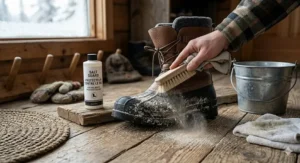
The biggest maintenance mistake Canadian ice anglers make: leaving boots by a heat source to dry. Direct heat from furnaces, wood stoves, or vehicle heaters destroys rubber, bakes leather into brittle material, and shrinks felt liners. The correct approach: remove liners immediately after fishing (even from boots claiming non-removable liners can usually be extracted with effort), stuff both boots and liners with crumpled newspaper, and place in a cool, dry location with good air circulation. Change newspaper after 2-3 hours. Full drying takes 18-24 hours—anything faster means you’re using too much heat. For multi-day fishing trips, bring spare newspaper specifically for this purpose; it weighs almost nothing but prevents the damp-boot misery that ruins the second day.
Leather Conditioning for Canadian Road Salt Exposure
Canadian highways use approximately 5 million tonnes of road salt annually, and every parking lot walk transfers salt to your boots. That salt draws moisture from leather, causing it to dry, crack, and eventually fail. Monthly conditioning during ice fishing season with genuine mink oil or leather protectant products specifically designed for winter use (not all-season products) creates a barrier that repels salt. The application timing matters: condition when leather is slightly damp (not soaked, not bone dry) so the product penetrates rather than sitting on the surface. Focus on flex points (where leather bends at the ankle) and seam areas where leather meets rubber—these high-stress zones fail first without proper maintenance.
Liner Replacement: When to Refresh vs. Replace Entirely
Felt liner pac boots lose insulation effectiveness gradually, not catastrophically. Most anglers don’t notice the 10-15% warmth reduction over two seasons because they adapt by adding thicker socks or limiting fishing time on coldest days. The diagnostic test: if you’re adding sock layers to maintain warmth you had two years ago with thinner socks, your liner has compressed beyond effectiveness. Many premium boots (Baffin, LaCrosse) offer replacement liners for $30-50 CAD—far cheaper than new boots. Generic replacement liners from outdoor retailers also work but verify dimensions carefully. The upgrade opportunity: replacing standard felt with premium foam-backed felt liners improves warmth even in older boots, extending their useful life by multiple seasons.
Off-Season Storage That Prevents Common Failures
How you store pac boots from April through November determines whether they’re ready in December. The Canadian temperature and humidity swings during off-season storage create mould, mildew, and material degradation that ruins perfectly good boots. The protocol: clean thoroughly with mild soap and water (removing all organic material), condition leather, stuff with newspaper to maintain shape, and store in a cool, dry location with ventilation. Basements with dehumidifiers work well; hot attics or damp crawlspaces are boot killers. Bonus step: stuff boots with cedar shoe trees or cedar chips—the natural oils repel moisture and prevent odour while maintaining boot shape.
Repair vs. Replace: The Cost-Benefit Analysis for Canadian Anglers
Traditional pac boot construction allows specific repairs that extend life significantly: new laces ($5), replacement liners ($30-50), resoling where rubber is worn but leather remains intact ($40-70 through specialty repair shops). The calculation: if the boot’s leather upper is crack-free and the rubber bottom hasn’t separated from the upper, repairs costing up to 40% of new boot price make economic sense. Beyond that threshold, replacement is smarter because new boots include updated insulation technology and improved waterproofing that offset the higher cost. Canadian cobbler shops in most cities offer winter boot repair—Google “shoe repair winter boots” plus your city name to find local options.
Pac Boots for Ice Fishing: Buyer’s Decision Framework
If You’re a Weekend Warrior Fishing 12-18 Days per Season
Priority: Value and versatility over specialisation. You need reliable warmth and waterproofing without paying for extreme-cold features you’ll never use. Top choice: Kamik Greenbay 4 or Kamik Icebreaker provides -40°C protection at $120-$160 CAD, handling typical Canadian ice fishing temperatures comfortably. Look for sale pricing at Canadian Tire during October-November when last season’s stock gets cleared—$100-$120 prices make these exceptional value. Maintenance reality: at this usage level, boots last 3-4 seasons before replacement, putting your total cost under $40 per season for properly warm feet on ice.
If You’re a Dedicated Angler Fishing 30+ Days per Season
Priority: Durability and advanced features justify premium pricing. You need boots that handle varied conditions (early season, mid-winter cold, late-season slush) and maintain performance through heavy use. Top choice: LaCrosse Ice King or Baffin Impact balances mobility with warmth while offering build quality that survives 5+ seasons of serious use. The removable liner becomes essential at this usage level because you’ll need overnight drying capability during multi-day trips. Investment reality: $190-$240 CAD divides across 5+ seasons and 150+ fishing days, calculating to roughly $1.30 per day on ice—trivial compared to other ice fishing gear costs.
If You Fish Extreme Northern Conditions (NWT, Nunavut, Northern MB/SK)
Priority: Maximum cold protection without compromise. You need genuine -60°C to -100°C capability for conditions that regularly see -40°C ambient temperatures with wind chills driving effective temperatures even lower. Top choice: Baffin Titan is the only option that genuinely handles these conditions for extended stationary fishing. The weight penalty (1.7 kg per boot) becomes irrelevant when the alternative is frostbite. Reality check: most extreme-cold boots feel hot and excessive in southern Canadian conditions—resist the temptation to use these for regular fishing and save them specifically for extreme-cold scenarios where their capabilities are actually necessary.
If Budget Is Your Primary Constraint
Priority: Maximum protection per dollar spent without compromising safety (frostbite isn’t worth saving $50). Strategy: Shop October-November sales at Canadian retailers (Canadian Tire, Mark’s, Sport Chek) when last season’s inventory gets cleared. Kamik Greenbay 4 regularly drops to $100-$120 CAD during this period—providing genuine -40°C protection at budget prices. Alternative approach: buy used premium boots (Baffin, Sorel, LaCrosse) through Facebook Marketplace or Kijiji in late winter when sellers upgrade—properly maintained 2-3 year old boots often sell for 40-50% of new price and still have 3-4 seasons of life remaining.
If You’re Getting Kids Into Ice Fishing
Priority: Affordable, forgiving fit as kids grow, and abuse-resistant. Kids outgrow boots in 1-2 seasons maximum, making premium purchases poor value. Top choice: Kamik Icebreaker youth sizes or Sorel Caribou youth versions provide genuine warmth at $80-$120 CAD price points. The slightly-too-large sizing strategy actually works for kids: buy boots one size larger than needed, use thick socks to fill space, and kids grow into proper fit mid-season. Durability note: kids are harder on gear than adults—prioritise waterproofing and easy-to-replace laces over premium materials that won’t survive a season of dragging boots through gravel parking lots.
Frequently Asked Questions About Pac Boots for Ice Fishing
❓ Can I use the same pac boots for ice fishing and snowmobiling in Canada?
❓ How do I prevent my pac boot liners from freezing overnight during ice camping trips in Canada?
❓ What's the real difference between felt liner pac boots and foam liner pac boots for Canadian ice fishing?
❓ Do waterproof pac boots still breathe enough to prevent foot sweat in Canadian winter conditions?
❓ Are Canadian-made pac boots actually better for ice fishing in Canada than imported brands?
Conclusion: Choosing Pac Boots That Actually Keep Your Feet Warm on Canadian Ice
The gap between marketing claims and real-world performance in pac boots for ice fishing is frustratingly wide, but here’s the honest truth: no single boot handles every Canadian ice fishing scenario perfectly. The weekend angler fishing Lake Simcoe in -20°C needs fundamentally different boots than the tournament competitor fishing Lake Winnipeg at -40°C wind chills. What separates successful ice fishing boot purchases from disappointing ones is matching your specific requirements—fishing duration, temperature ranges, mobility needs, and budget constraints—to boots engineered for those exact conditions.
If this guide had to distil down to three critical takeaways: First, prioritise insulated pac boots Canada with removable liners rather than permanently-attached insulation—the drying flexibility and liner-replacement option extends boot life dramatically. Second, don’t oversell yourself on extreme temperature ratings you’ll never actually need; a -40°C boot worn 20 times per winter in -15°C conditions is both wasteful and uncomfortably warm. Third, understand that waterproof pac boots review data consistently shows moulded construction outperforming sewn construction for reliability, but sewn boots offer better breathability—choose based on whether you prioritise absolute waterproofing or moisture management.
The sweet spot for most Canadian ice anglers? Boots in the $150-$220 CAD range from proven manufacturers (Baffin, Kamik, LaCrosse) with -40°C ratings, removable liners, and weight around 1.2-1.3 kg per boot. These handle 90% of Canadian ice fishing scenarios comfortably while allowing budget room for other essential gear. Premium boots above $250 CAD make sense only if you’re fishing extreme conditions regularly or putting in 40+ days per season where superior durability justifies the cost.
The classic pac boot style that Canadian anglers have trusted for 100+ years—rubber bottom, insulated upper, removable liner—survives because it solves the fundamental challenge: keeping stationary feet warm in conditions that would cause frostbite in minutes. Modern materials have improved performance, but the basic design principles remain sound. Choose boots that match your needs rather than chasing maximum specifications, maintain them properly through Canadian winter’s abuse, and your feet will stay warm through every ice fishing season from first ice to spring thaw.
Recommended for You
- 7 Best Ice Fishing Boots Rated to -100F Canada 2026
- 7 Best Baffin Ice Fishing Boots Canada 2026 (Tested to -60°C)
- 7 Warmest Ice Fishing Boots Canada: Expert Reviews 2026
Disclaimer: This article contains affiliate links. As an Amazon Associate, I earn from qualifying purchases. If you purchase products through these links, we may earn a small commission at no additional cost to you.
✨ Found this helpful? Share it with your friends! 💬🤗
