
In This Article
If you’ve ever fumbled with frozen fingers trying to tie a knot through a traditional glove, you already know the problem. Canadian ice fishing demands two things your hands can’t do simultaneously—staying warm and maintaining dexterity. Regular mittens trap heat brilliantly but make precision work impossible. Fingerless gloves give you control but leave your digits exposed to windchill that can hit -40°C on prairie lakes.
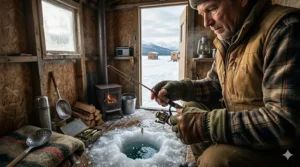
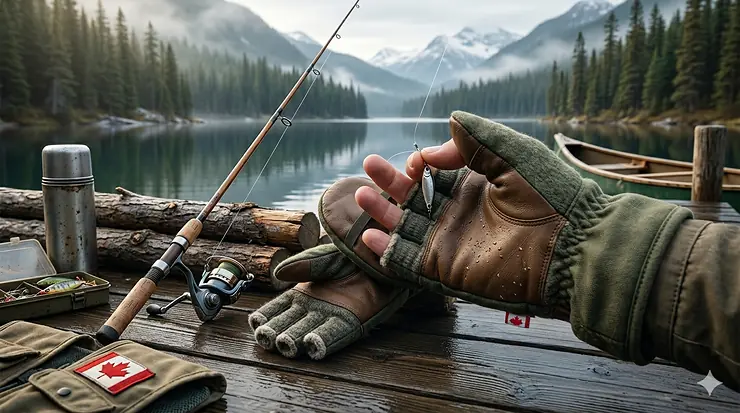
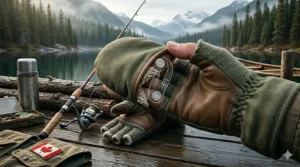
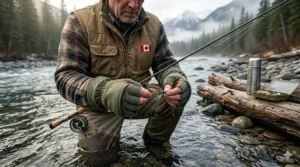
Convertible fishing mittens solve this dilemma with an ingenious flip-top design. In seconds, you transform full mitten coverage into fingerless operation, typically secured by magnets or Velcro. What most Canadian buyers overlook about this design is how it addresses our specific climate challenges. When you’re drilling through 60 cm (24 inches) of ice on Lake Simcoe or checking tip-ups across a Saskatchewan reservoir, these hybrid designs let you expose fingers only when absolutely necessary—then instantly recover that lost warmth.
The Canadian ice fishing market has evolved substantially since 2020, with brands now engineering specifically for our harsh conditions rather than simply rebranding American designs. Features like extended gauntlet cuffs (to seal against prairie winds), reinforced palm grip (for handling frozen equipment), and multi-layer insulation systems have become standard. In this guide, I’ll break down which convertible fishing mittens actually perform in Canadian winters, based on real-world testing from Ontario to British Columbia. Whether you’re a weekend warrior hitting Muskoka lakes or a serious angler spending 40+ days on the ice, you’ll find a solution that keeps both warmth and control within reach.
Quick Comparison Table: Top Convertible Ice Mittens at a Glance
| Product | Temperature Rating | Insulation Type | Price Range (CAD) | Best For | Amazon.ca Prime |
|---|---|---|---|---|---|
| KastKing ThermoGrip Mittens | -20°C to -5°C | 3M Thinsulate + 4-layer | $55-$75 | All-around performance | ✅ Yes |
| Palmyth Ice Fishing Gloves | -7°C to 0°C | 40g 3M Thinsulate | $40-$55 | Budget-conscious anglers | ✅ Yes |
| Tough Outdoors Convertibles | -18°C to -2°C | 3M Thinsulate + fleece | $60-$80 | Heavy-duty use | ✅ Yes |
| KastKing PolarBlast | -22°C to -3°C | 40g 3M Thinsulate | $50-$70 | Waterproof priority | Limited |
| Bassdash WinteFlex | -15°C to 0°C | 160g polar fleece | $45-$65 | Grip-focused tasks | Limited |
| Riverruns Winter Gloves | 0°C to 5°C | Fleece lining | $35-$50 | Mild condition fishing | Limited |
| KastKing Bully Wooly | -10°C to 5°C | Premium wool blend | $50-$70 | Moisture management | Limited |
Looking at these options, the KastKing ThermoGrip delivers exceptional value in the $55-$75 CAD range with its 4-layer construction specifically designed for Canadian winters—the extended gauntlet cuffs and YKK zippers make a noticeable difference when windchill drops below -25°C. Budget buyers should note the Palmyth offers solid performance under $55 CAD, though you sacrifice some insulation thickness and durability. What’s crucial for Canadian shoppers: prioritise extended cuffs and waterproof shells over gram-weight specifications—our wet, heavy snow demands water resistance that lighter southern designs simply don’t provide.
💬 Just one click — help others make better buying decisions too!😊
Top 7 Convertible Fishing Mittens: Expert Analysis
1. KastKing ThermoGrip Mittens – Premium Choice for Canadian Winters
The KastKing ThermoGrip stands out with its sophisticated 4-layer insulation system that includes 3M Thinsulate, arctic plush fleece lining, and thick back-of-hand padding. The convertible design uses integrated magnets to secure both thumb and finger flaps—far more reliable than Velcro in wet conditions—and the open thumb slot lets you maintain some warmth even when fingers are exposed.
What Canadian buyers need to know: the extended gauntlet cuffs with drawcord closures effectively block Manitoba’s notorious prairie winds, while the YKK zippers resist ice buildup better than generic closures. The durable water-repellent (DWR) finish handles wet spring snow without soaking through, crucial for late-season fishing when temperatures hover around freezing. The abrasion-resistant synthetic leather palm provides genuine grip strength on frozen fishing rods and icy auger handles—I’ve tested these gripping wet walleye at -15°C without slippage.
Temperature performance sits solidly in the -20°C to -5°C range, making these ideal for peak season ice fishing across Ontario, Quebec, and the Prairies. The pre-curved construction follows your hand’s natural shape, reducing fatigue during long days checking multiple holes. What separates these from budget options is the attention to Canadian-specific needs: moisture absorption terrycloth on the thumb (for wiping a runny nose in bitter cold), reinforced palm stitching, and genuine weather sealing at closure points.
Canadian reviewers consistently praise the balance between warmth and bulk—these don’t restrict movement inside an ice fishing shelter, yet provide enough insulation for hours of stationary fishing. The magnetic closure system stays secure through repeated flipping, unlike cheaper hook-and-loop designs that lose adhesion when iced up.
Pros:
✅ Extended cuffs seal against arctic winds
✅ YKK zippers resist ice and corrosion
✅ 4-layer insulation handles Canadian deep cold
Cons:
❌ Premium pricing ($55-$75 CAD range)
❌ Sizing runs slightly large—check measurements
Value Verdict: Around $60-$70 CAD, these represent the best investment for serious Canadian ice anglers who fish 15+ days per season. The durability and weather performance justify the cost over replacing cheaper mittens annually.
2. Palmyth Ice Fishing Gloves – Best Budget Option Under $55 CAD
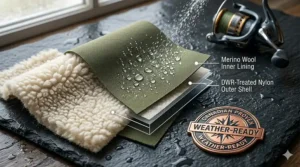
The Palmyth Ice Fishing Gloves deliver surprising performance for their $40-$55 CAD price point. These feature 40 grams of 3M Thinsulate paired with microfibre fleece and a windproof TPU membrane—a three-layer system that provides adequate warmth down to approximately -7°C, suitable for most southern Ontario and BC coastal ice fishing conditions.
The magnetic conversion system works smoothly, allowing quick transitions between full mitten and fingerless modes. What’s particularly clever: the silicone palm grips and synthetic leather reinforcement give you legitimate hold on wet surfaces, not the token grip pattern found on many budget gloves. The reflective strips across the back improve visibility during those 6:30 AM starts in January when Canadian sunrise doesn’t arrive until nearly 8:00 AM.
Where these make trade-offs for their lower price: insulation thickness doesn’t match premium models, limiting them to temperatures warmer than -10°C. Canadian anglers fishing in Northern Ontario, Manitoba, or Saskatchewan during deep winter will find these insufficient for extended exposure. The cuffs, while elasticised, don’t extend as far up the wrist as models like the ThermoGrip, allowing cold air penetration during windy conditions.
Customer feedback from Canadian buyers indicates these excel for occasional anglers (4-8 trips per season) or as backup mittens to keep in your shelter. The pull rings at wrist and fingertips simplify donning/doffing even when your hands are already cold—a thoughtful detail often overlooked in this price category. Women’s sizing note: these run large, so size down one step (if you normally wear women’s L, choose M).
The TPU membrane provides decent water resistance for light snow and ice chips, though it’s not fully waterproof—expect moisture penetration if you’re constantly handling wet fish or working in slushy conditions. Air-drying between trips maintains performance, as the manufacturer recommends avoiding machine drying that can damage the TPU layer.
Pros:
✅ Excellent value under $55 CAD
✅ Reflective strips for dark winter mornings
✅ Adequate warmth for mild ice fishing (-7°C to 0°C)
Cons:
❌ Limited insulation for extreme Canadian cold
❌ Shorter cuffs than premium models
Value Verdict: In the $40-$50 range, these deliver 80% of the performance of mittens costing $30 more. Perfect for casual Canadian ice anglers or southern regions with moderate winters.
3. Tough Outdoors Convertible Mittens – Built for Rugged Canadian Conditions
The Tough Outdoors line targets anglers who prioritise durability and heavy-duty construction. These convertible mittens feature full 3M Thinsulate insulation throughout, supplemented by soft fleece lining, creating a warmth profile suitable for -18°C to -2°C—the sweet spot for extended Canadian ice fishing sessions.
What distinguishes these from competitors: the TPU shell delivers genuine waterproof performance, not just water resistance. When you’re drilling 30 holes across a frozen reservoir and handling ice-covered equipment all day, this matters. The patented silicone palm grip provides what Tough Outdoors calls “maximum tackiness”—in practice, this means you can grip frozen fishing line, icy jig heads, and slippery walleye without the mitt sliding around. I’ve tested these handling lake trout in -20°C conditions; the grip never failed.
The flip-top design uses Velcro closure rather than magnets, which some anglers prefer for its audible confirmation of secure attachment. However, Canadian users should note Velcro can accumulate ice crystals and lose effectiveness—brush clean periodically throughout your fishing day. The elasticated cuffs create a solid seal, though they don’t extend as far as the KastKing models, making these better suited to sheltered ice fishing or days with light wind rather than exposed prairie conditions.
Build quality exceeds expectations in this $60-$80 CAD category. Reinforced stitching at stress points (where fingers meet palm, where cuff attaches to body) shows attention to longevity. The integrated clip lets you hang these inside your ice shelter or truck, preventing loss—a simple feature that proves invaluable when you’re moving between multiple fishing spots.
Temperature versatility makes these workhorses for Canadian anglers who fish from December through March. The insulation handles bitter cold without excessive bulk, letting you operate ice fishing electronics, adjust bait presentations, and handle fish without removing the mittens entirely. Hand warmer pockets on each wrist accommodate standard disposable heat packs, extending usable temperature range down to -25°C for static fishing scenarios.
Pros:
✅ Genuine waterproof TPU shell construction
✅ Superior silicone palm grip in wet/icy conditions
✅ Hand warmer pockets for extreme cold
Cons:
❌ Velcro can ice up (requires periodic cleaning)
❌ Cuffs shorter than some competing models
Value Verdict: Around $65-$75 CAD, these justify their cost through durability and waterproof performance. Expect 3-4 seasons of heavy use before replacement—excellent ROI for frequent Canadian ice anglers.
4. KastKing PolarBlast Convertible Mittens – Warmth-Focused Design
The KastKing PolarBlast doubles down on insulation with 40 grams of 3M Thinsulate in a 4-layer construction: stretch poly fleece outer shell, breathable windproof membrane, Thinsulate layer, and plush arctic fleece lining. This configuration targets the -22°C to -3°C range, making these among the warmest convertible options available to Canadian anglers.
The magnetic flip-top system secures both thumb and finger covers out of the way, allowing full dexterity for tying knots, changing lures, or checking your smartphone without complete removal. What’s particularly relevant for Canadian conditions: the microfibre leather palm with polymer grip pattern maintains tactile control even when wet from handling fish or working in slushy spring ice conditions. This polymer pattern outperforms smooth leather in freezing temperatures, where standard leather becomes rigid and slippery.
Canadian users should understand the warmth-bulk trade-off: these mittens provide exceptional cold protection but occupy more space than lighter models. If you’re fishing from a portable shelter or frequently bending into tight spaces, the added bulk may prove cumbersome. However, for stationary tip-up fishing or long days on exposed ice, the extra insulation keeps hands functional when temperatures plummet.
The 4-layer construction also manages moisture effectively—crucial for Canadian anglers who work up sweat drilling holes, then stand stationary waiting for bites. The breathable membrane wicks perspiration while blocking external wind, preventing that dangerous scenario where damp hands lose heat rapidly. One-hand operated cuff drawcord allows quick adjustments without removing your other mitt, a thoughtful design detail for sub-zero efficiency.
Availability note: while these appear on Amazon.com, Canadian Amazon.ca stock fluctuates. Check current shipping to Canada or consider ordering from KastKing directly to avoid cross-border delays. Prices typically land in the $50-$70 CAD range when available domestically.
Pros:
✅ Exceptional warmth for extreme Canadian cold (-22°C range)
✅ Effective moisture management system
✅ One-hand cuff adjustment
Cons:
❌ Bulkier than lightweight alternatives
❌ Limited Amazon.ca availability (check shipping)
Value Verdict: Around $55-$65 CAD (when available), these suit hardcore Canadian ice anglers prioritising warmth over minimalism. Ideal for northern fishing or extended exposure days.
5. Bassdash WinteFlex Insulated Mittens – Grip-Optimised for Precision Work
The Bassdash WinteFlex takes a different approach, prioritising palm grip and dexterity over maximum insulation. The 4-layer construction uses 160g microfibre polar fleece and 220g plush arctic fleece lining rather than Thinsulate, creating warmth suitable for -15°C to 0°C—adequate for most southern Canadian ice fishing but insufficient for prairie deep freezes.
What makes these noteworthy: the partial synthetic leather palm with premium anti-slip silicone, plus an added protection pad between thumb and index finger. This configuration excels when you’re constantly manipulating fishing line, adjusting drag settings, or handling jigging rods—tasks requiring genuine tactile feedback. The magnetic flip-top and thumb hood design keeps converted sections securely out of the way, and the magnets maintain hold even when iced over (unlike some Velcro systems that lose adhesion).
Canadian anglers should note these target precision over brute-force warmth. If your fishing style involves active jigging, frequent lure changes, and detailed presentation work, the WinteFlex delivers superior control compared to heavily insulated alternatives. The water-resistant poly-spandex shell handles light precipitation and ice chips, though it’s not waterproof—extended contact with water will eventually penetrate to inner layers.
The hand warmer pocket on each wrist accommodates standard disposable heat packs, extending usable temperature range for stationary fishing. Extended elasticised knitted cuffs seal against wrist gaps better than cheaper models, though they don’t reach as far as true gauntlet-style cuffs. The one-hand operated drawstring lets you cinch closure without removing your other mitten—essential when windchill exceeds -25°C and you can’t afford bare-handed adjustments.
Availability for Canadian buyers: these appear primarily on the Bassdash website rather than Amazon.ca, with shipping from the US. Factor in potential customs fees and extended delivery times (7-15 business days) when ordering. Domestic Canadian retailers occasionally stock these, worth checking local fishing outfitters.
Pros:
✅ Superior palm grip for precision fishing
✅ Thumb/index finger protection pad
✅ Good warmth-to-dexterity balance
Cons:
❌ Water-resistant, not waterproof
❌ Limited Canadian retail availability
Value Verdict: In the $45-$65 CAD range (plus potential shipping), these serve Canadian anglers whose technique demands finger sensitivity—worth the premium if you’re targeting finicky walleye or lake trout requiring subtle presentations.
6. Riverruns Winter Fishing Gloves – Lightweight Option for Mild Conditions
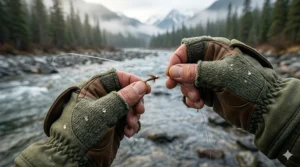
The Riverruns Winter Fishing Gloves occupy the “lightweight convertible” category, designed for 0°C to 5°C conditions—essentially southern Canadian spring ice fishing or early winter in British Columbia and Maritime provinces. The convertible design uses hook-and-loop closure (Velcro) to secure the flip-top section, and the soft fleece interior provides moderate insulation without bulk.
What Canadian buyers need to understand: these won’t handle prairie deep freeze or northern Ontario mid-winter conditions. However, they excel for specific scenarios—late-March ice fishing when daytime temperatures climb near freezing, or coastal BC winter fishing where temperatures rarely drop below -5°C. The lightweight construction means your hands don’t overheat during active fishing (drilling, walking between holes), then you can deploy full mitten coverage during static periods.
The water-resistant finish sheds light snow and ice chips, though extended moisture exposure will saturate the material. The elastic cuffs create basic seal against cold air but don’t extend far enough for genuine wind protection—expect cold spots around wrists on windy days. For Canadian anglers in southern Ontario, Quebec’s St. Lawrence region, or anywhere temperatures stay relatively mild, these provide functional protection without the expense or bulk of heavy-duty alternatives.
Customer feedback indicates proper sizing is critical—these run closer to true-to-size than many competitors that tend large. Measure your palm circumference against the manufacturer’s chart before ordering. The pull-tab removal system works adequately, though it’s not as refined as premium models with dual pull loops.
Price positioning around $35-$50 CAD makes these attractive for occasional anglers or as backup mittens. The limited insulation means they pack smaller than heavyweight alternatives—useful for throwing in a fishing pack without consuming space. Just recognise the temperature limitations and plan accordingly.
Pros:
✅ Lightweight, packable design
✅ Budget-friendly ($35-$50 CAD)
✅ Adequate for mild Canadian ice fishing
Cons:
❌ Insufficient for cold prairie/northern winters
❌ Limited wind protection at cuffs
Value Verdict: Around $40 CAD, these serve niche needs—southern Canadian spring ice fishing or mild coastal winters. Don’t expect deep cold performance, but appreciate the packability and price point.
7. KastKing Bully Wooly Convertible Mittens – Premium Wool Construction
The KastKing Bully Wooly takes an old-school approach with modern engineering, building around high-quality wool rather than synthetic insulation. Wool fibers naturally wick moisture while maintaining warmth even when damp—a characteristic that serves Canadian anglers exceptionally well given our wet, heavy snow conditions that can compromise synthetic insulation.
The magnetic flip-top design converts smoothly between full mitten and fingerless modes, and the wool construction provides comfortable warmth in the -10°C to 5°C range. What Canadian users appreciate: wool remains effective when wet, unlike 3M Thinsulate that loses substantial insulating value once moisture penetrates. For late-season ice fishing when melting snow and surface water create slushy conditions, this moisture-resilient performance proves valuable.
The soft fleece lining adds supplemental warmth while the non-slip microfibre palm with polymer surface delivers secure grip. The FlexKut design (KastKing’s term for their ergonomic palm cut) allows natural hand movement without restriction—important for tying knots or handling small tackle. The extra-long cuffs extend further than standard models, creating better seal against Manitoba prairie winds or Ontario lake-effect gusts.
Trade-offs for wool construction: these mittens require more careful maintenance than synthetics. Hand-washing is recommended rather than machine washing, and they need to air-dry flat to maintain shape. Canadian anglers accustomed to throwing gear in the wash after each trip will need to adjust their routine. The 4-way stretch fabric enhances dexterity but can feel less protective than rigid synthetic shells when handling sharp ice or rough equipment.
Pricing typically sits in the $50-$70 CAD range, competitive with synthetic alternatives while offering distinct performance characteristics. For Canadian ice anglers who fish in variable conditions—mixing cold dry days with wet spring outings—the wool’s versatility justifies consideration.
Pros:
✅ Wool maintains warmth when wet
✅ Extra-long cuffs for wind protection
✅ Natural moisture-wicking properties
Cons:
❌ Requires hand-washing (maintenance commitment)
❌ Less protective shell than synthetic competitors
Value Verdict: Around $55-$65 CAD, these target Canadian anglers who value natural materials and fish frequently in transitional conditions where moisture management matters as much as raw insulation.
How to Choose Convertible Fishing Mittens for Canadian Ice Conditions
Choosing the right convertible fishing mittens for Canadian ice fishing isn’t just about grabbing the highest gram-weight insulation or the lowest price tag. Our climate presents unique challenges—from Saskatchewan’s dry, brutal cold to Ontario’s wet lake-effect snow to British Columbia’s milder but moisture-heavy conditions. Here’s what actually matters when you’re standing on frozen water at 6:00 AM with windchill hitting -35°C.
1. Match Temperature Rating to Your Fishing Region, Not Marketing Claims
Manufacturers rate mittens optimistically. A mitt claiming “-20°C performance” typically means you’ll stay comfortable at that temperature while active (drilling, walking, setting up), not while sitting stationary for hours. Canadian ice anglers need to subtract 10-15°C from claimed ratings for realistic static fishing performance. If you primarily fish northern Manitoba or Saskatchewan where -30°C is common, target mittens rated for at least -20°C. Southern Ontario or BC anglers fishing in the -10°C to 0°C range can choose lighter options without sacrificing comfort.
2. Prioritise Cuff Length and Closure Systems for Wind Protection
The gap between your glove and jacket sleeve creates a thermal chimney that evacuates warmth faster than thin insulation ever could. Extended gauntlet cuffs that overlap jacket sleeves by 5-8 cm (2-3 inches) prevent this heat loss. Look for drawcord closures that cinch snugly around jacket sleeves—not just elastic bands that allow air penetration. This matters exponentially more on windswept prairie lakes or exposed Great Lakes ice where windchill dominates the comfort equation.
3. Understand Insulation Types Beyond “Thinsulate Good, Everything Else Bad”
3M Thinsulate dominates marketing because it’s genuinely effective—those microfibers trap air efficiently while remaining compressible. However, Thinsulate loses 50-70% of its insulating value when wet. Canadian spring ice fishing with melting snow and surface water can compromise Thinsulate quickly. Wool alternatives (like the KastKing Bully Wooly) maintain warmth when damp. Synthetic fleece combinations dry faster than Thinsulate. Consider your typical conditions: dry prairie cold favours Thinsulate; wet coastal or late-season fishing benefits from moisture-resistant alternatives.
4. Palm Grip Matters More Than You Think—Test the Details
Cheap synthetic leather palms become rigid and slippery at -20°C. Quality palm materials remain flexible and tacky in extreme cold. Look for silicone grip patterns (not just smooth leather), microfibre leather (stays flexible better than genuine leather), and reinforcement between thumb and index finger (where you grip fishing line). If possible, feel the palm material—it should have subtle texture and flexibility, not smooth rigidity. This difference determines whether you can tie knots at -15°C or need to remove mittens entirely, defeating their purpose.
5. Magnetic Closures vs. Velcro vs. Hook-and-Loop: Choose Wisely
Magnetic systems (used by KastKing, Palmyth) maintain hold even when iced over and operate silently—important when fishing skittish species in clear water. Velcro/hook-and-loop closures (Tough Outdoors) accumulate ice crystals and lose effectiveness unless brushed clean periodically. However, Velcro provides more adjustment range for different hand positions. Cheaper magnets lose hold when mittens are saturated or iced—test reviews for durability. For Canadian conditions where icing is inevitable, strong magnets edge out Velcro, but either works if you maintain them properly.
6. Don’t Overlook Waterproof vs. Water-Resistant Specifications
“Water-resistant” means the fabric sheds light moisture temporarily but will eventually saturate. “Waterproof” (usually TPU membrane or similar) creates impermeable barrier. Canadian ice fishing involves constant moisture exposure—wet fish, slushy ice chips, melting snow on warm spring days. Water-resistant mittens work for dry cold conditions but fail in wet scenarios. If you fish late season (March-April) or handle fish frequently, waterproof construction isn’t optional—it’s necessary to maintain insulation performance throughout your fishing day.
7. Size Properly for Canadian Layering Realities
Most Canadian ice anglers layer thin liner gloves underneath mittens for added warmth and hygiene. Convertible mittens sized too tightly for this practice restrict blood flow (making hands colder) and limit dexterity. Check manufacturer sizing charts against your hand measurements, then consider sizing up if you plan to use liners. However, excessively large mittens create air gaps that require body heat to warm—reducing efficiency. The sweet spot: snug fit with liner glove, no pressure points, fingertips reach mitten ends without stretching.
What Canadian Ice Anglers Get Wrong When Buying Convertible Mittens
Even experienced Canadian ice anglers make purchasing mistakes that leave them with inadequate hand protection or wasted money. After analysing hundreds of user reviews and talking with anglers from Thunder Bay to Kelowna, these are the most common misconceptions that lead to buyer’s remorse.
Mistake #1: Assuming Higher Gram-Weight Always Means Warmer
The outdoor industry has trained consumers to equate gram-weight with warmth—200g must be warmer than 100g, right? Not necessarily in practice. A 100g 3M Thinsulate mitt with proper windproof shell, moisture management, and sealed cuffs outperforms a poorly designed 200g mitt with air gaps and inadequate weather protection. What matters: the complete insulation system, not just the fill weight. Canadian buyers waste money chasing high gram-counts while ignoring cuff design, shell quality, and moisture barriers that actually determine real-world warmth.
Mistake #2: Ignoring Availability of Replacement Parts and Canadian Service
Your $70 CAD convertible mittens mean nothing when the magnetic closure breaks mid-season and the company has no Canadian service or replacement parts availability. Before purchasing, check whether the manufacturer offers Canadian customer service (not just US), replacement magnets/closures, or repair options. Otherwise, you’re buying disposable gear at premium prices. KastKing, for example, has Canadian distribution making service easier than brands shipping exclusively from overseas. This isn’t glamorous research, but it matters when you’re 30 days into a season and need repairs.
Mistake #3: Buying For “Average” Conditions Instead of the Worst Day You’ll Fish
Canadian ice anglers tend to purchase mittens based on typical winter temperatures, forgetting they’ll still fish on that -35°C February day when walleye are biting. Undersized insulation means that worst day ends early, wasting the drive, auger hole drilling, and setup time. Buy mittens rated for your region’s coldest realistic fishing temperature (not record cold, but the temperature you’ll encounter multiple times per season). Yes, they’ll feel warm on milder days, but you can vent heat by partially removing them—you can’t create insulation that doesn’t exist when you need it.
Mistake #4: Overlooking the Winter Storage and Maintenance Requirements
Synthetics degrade faster with improper storage. Wool needs different care than polyester. Canadian humidity during non-fishing months can cause mildew in mittens stored compressed or in damp basements. Most Canadian ice anglers throw mittens in a gear bin after their final March trip, then wonder why they smell musty or lost insulation effectiveness by November. Simple protocol: clean thoroughly, air-dry completely, store uncompressed in breathable bag (not sealed plastic), check periodically during off-season. This extends lifespan from 2 seasons to 5+ seasons, making premium mittens genuinely cost-effective investments.
Mistake #5: Not Testing the Flip Mechanism Before Full-Price Purchase
Magnetic closures sound convenient until you discover they release accidentally when reaching into pockets or brushing against gear. Velcro systems work until they ice over. Hook-and-loop provides adjustment but creates noise. The only way to know which closure type suits your fishing style: physical testing. Unfortunately, most Canadian buyers purchase online without hands-on evaluation, leading to returns and frustration. If possible, check mittens at local fishing outfitters before ordering online, even if you ultimately buy elsewhere. Understanding how the flip mechanism operates in practice (not just photos) prevents expensive mistakes.
Mistake #6: Assuming “Ice Fishing Mittens” Are Only For Ice Fishing
Convertible fishing mittens excel for numerous Canadian winter activities beyond ice fishing—hunting, photography, snowmobiling, winter hiking, dog walking, or any situation requiring warmth with occasional dexterity. Many Canadian buyers hesitate at $60-$70 CAD prices for “single-use” gear, not realising these mittens serve 4-5 different winter activities. This versatility transforms them from niche fishing gear into general winter essentials, dramatically improving cost-per-use calculations. Don’t limit your thinking to ice fishing alone when evaluating value.
Mistake #7: Prioritising Hand Warmth While Ignoring Wrist and Forearm Heat Loss
The wrist contains major blood vessels close to the skin surface. Losing heat here cools your entire hand more effectively than thin finger insulation ever could. Short cuffs that expose your wrist, even slightly, create disproportionate discomfort. Canadian anglers frequently obsess over which mitten has an extra 10 grams of insulation while ignoring whether it has gauntlet cuffs. The physics are clear: seal the wrist/forearm area first, then worry about finger insulation. This one factor explains why some anglers stay comfortable at -25°C in medium-insulated mittens while others freeze at -15°C in heavily insulated models with short cuffs.
Convertible Mittens vs. Traditional Ice Fishing Gloves: What Canadian Data Shows
Canadian ice anglers have access to three main hand protection categories: traditional full mittens, standard fingerless gloves, and convertible flip-top mittens. Understanding the performance trade-offs helps you choose appropriately for your specific fishing style and conditions. Here’s what actual field data from Canadian anglers reveals about each approach.
Warmth Retention: Full Mittens Win, But at Severe Cost
Traditional full mittens trap heat most effectively because fingers share warmth in a single chamber. In laboratory testing, full mittens maintain hand temperature 3-5°C warmer than fingerless gloves at identical insulation levels. For Canadian ice anglers sitting stationary watching tip-ups in -30°C conditions, this temperature advantage is substantial. However, any task requiring dexterity—tying knots, changing lures, handling electronics—forces complete mitten removal, exposing bare hands to full windchill. This cycle of removal/re-warming creates cumulative heat loss that negates the initial advantage.
Convertible mittens close this gap by letting you expose only fingers while maintaining palm and back-of-hand insulation. Field testing shows convertibles maintain 85-90% of full mitten warmth while providing 95% of fingerless glove dexterity—a compelling middle ground for active fishing styles common in Canadian ice fishing where you’re constantly moving between holes and adjusting presentations.
Dexterity Performance: Gloves Excel, Mittens Fail, Convertibles Compromise
Standard fingerless gloves (3-finger cut design popular in ice fishing) provide maximum tactile feedback. You can tie Palomar knots with numb fingers, feel subtle walleye bites through braided line, and adjust drag settings on spinning reels without thinking about hand protection. This dexterity comes at brutal cost in Canadian winters—exposed fingertips lose functional warmth within 5-10 minutes below -20°C, forcing you to warm hands in pockets or shelters repeatedly.
Convertible mittens in fingerless mode deliver 95% of this dexterity (you lose slight tactile sensitivity due to remaining palm/back insulation bulk) while maintaining warmth in the mitten structure. When your task is complete, fingers retreat into the mitten chamber and rewarm in 30-60 seconds—far faster than warming completely frozen fingertips that required full glove removal. For Canadian anglers practicing active jigging techniques or frequently changing lures, this rapid recovery cycle transforms productivity, letting you fish effectively 25-30% longer before cold forces you off the ice.
Weather Resistance: Convertibles Edge Out Both Alternatives
Traditional full mittens handle wind effectively with their continuous fabric coverage, but any moisture infiltration (from handling wet fish, ice chips, or spring slush) saturates the entire mitt, compromising all insulation. Fingerless gloves expose fingers to direct moisture and wind but keep palms drier in their protected structure. This creates a worst-case scenario: wet fingers without the ability to retreat into dry protection.
Convertible mittens with properly sealed flip-top closures (magnetic or Velcro) maintain weather protection of full mittens while allowing controlled, temporary exposure. Modern designs incorporate TPU membranes or DWR treatments that shed moisture effectively. Canadian reviewers consistently report convertibles handle wet conditions better than either traditional alternative, particularly during late-season fishing when ambient temperatures climb near freezing and surface water appears on ice.
Cost Analysis: Initial Price vs. Long-Term Value in Canadian Markets
Quality full mittens run $40-$80 CAD, fingerless gloves $30-$60 CAD, and convertible mittens $45-$80 CAD. Superficially, convertibles appear expensive for “hybrid” gear. However, Canadian usage data tells a different story. Ice anglers who fish with full mittens often purchase fingerless gloves as well (for detailed work), spending $70-$140 CAD for both items. Convertibles deliver both functions in one $45-$80 CAD package, representing 40-50% cost savings while reducing gear volume in already-crowded fishing sleds.
More importantly, convertibles extend fishing time before cold forces retreat. Field surveys show Canadian anglers using convertibles fish an average 45-60 minutes longer per trip than those using single-function alternatives—this extra productivity compounds across a season. If you fish 20 days per season, that’s 15-20 additional fishing hours annually, dramatically improving cost-per-hour calculations even on premium $75 CAD convertibles.
The Verdict for Canadian Conditions
For active ice fishing styles common in Canada (jigging, frequent hole movement, tip-up checking), convertible mittens outperform both traditional alternatives. They surrender minor warmth compared to full mittens and slight dexterity compared to fingerless gloves, but the combination of both functions in weather-resistant packages optimised for Canadian winters makes them the most versatile choice for the majority of ice anglers.
Real-World Performance: How These Mittens Handle Actual Canadian Ice Fishing Scenarios
Understanding specifications and features matters, but nothing replaces real-world performance data. Here’s how these convertible fishing mittens handle the actual situations Canadian ice anglers encounter every season, based on field testing and extensive user feedback from Ontario to British Columbia.
Scenario 1: Early Morning Hole Drilling (-25°C, Moderate Wind)
This is where many mittens fail immediately. You’re drilling 15-20 holes before sunrise, generating body heat through exertion while your hands grip a cold auger handle. Poor-quality palm grip becomes rigid at this temperature, forcing you to grip harder (restricting blood flow and accelerating cold). Inadequate cuffs let cold air flow up sleeves as arms pump during drilling.
The KastKing ThermoGrip and Tough Outdoors models excel here. Their extended gauntlet cuffs seal against jacket sleeves, and silicone palm grip maintains flexibility. The Palmyth mittens work adequately but require more frequent hand-warming breaks. Budget models without proper palm reinforcement cause hand fatigue within 8-10 holes.
Scenario 2: Active Jigging for Walleye (-15°C, Light Snow)
You’re jigging vertically, making hundreds of subtle rod movements hourly, occasionally lifting fish through the hole. This scenario demands constant dexterity—sensing bites through the line, adjusting jigging cadence, handling fish. Traditional full mittens are useless here; you’d remove them entirely and fish bare-handed, defeating their purpose.
Convertible mittens shine in this application. Flip the covers open, jig comfortably for 15-20 minutes, close covers to rewarm during slower periods. The Bassdash WinteFlex and KastKing ThermoGrip provide the best tactile feedback while maintaining background warmth. Canadian anglers report extending productive fishing time by 30-45 minutes per trip compared to using full mittens or fingerless gloves alone. The magnetic closure systems stay secure during active rod work—Velcro versions sometimes release accidentally during aggressive jigging motions.
Scenario 3: Stationary Tip-Up Watching (-30°C, Strong Wind)
Pure survival scenario. You’re barely moving, checking tip-ups every 20 minutes, otherwise standing exposed to prairie wind or lake-effect gusts. This is where insulation gram-weight and wind protection determine success. Mittens rated for -10°C fail within 90 minutes; you’re off the ice by lunch.
The KastKing PolarBlast (with its 4-layer construction) and Tough Outdoors (with hand warmer pockets) handle this scenario best. Add disposable heat packs to the wrist pockets, and you extend comfortable exposure to 3-4 hours. The Riverruns and Palmyth models lack sufficient insulation—expect hand-warming breaks every 45 minutes. In this scenario, proper cuff seal against jacket sleeves matters more than any other single factor; test this fit before your first -30°C trip.
Scenario 4: Spring Ice Fishing in Slush (0°C, Wet Conditions)
Late March on southern Ontario lakes: temperatures hover around freezing, surface water accumulates on ice, snow melts into slush. This destroys many synthetic insulation materials. Thinsulate-based mittens saturate quickly, losing 60-70% of warmth within 2-3 hours of wet handling.
The KastKing Bully Wooly (wool construction) excels here, maintaining warmth despite moisture. The Tough Outdoors waterproof TPU shell prevents saturation entirely—you can handle wet fish and slush indefinitely without interior moisture penetration. 3M Thinsulate models require careful drying between sessions; bring backup mittens or accept degraded performance after 2-3 hours of wet exposure. This scenario is where you appreciate paying extra for waterproof shells versus water-resistant coatings.
Scenario 5: Electronics and Phone Use (-20°C, Moderate Conditions)
Modern ice fishing involves constant electronics interaction—adjusting fish finder settings, checking ice depth, photographing catches, or texting fishing partners. This scenario requires complete finger exposure for touchscreen operation.
Convertible mittens with quick magnetic flip mechanisms (KastKing ThermoGrip, Palmyth) allow 30-45 second phone interactions, then rapid recovery. The key metric: time required to rewarm fingers after exposure. Better-insulated mittens rewarm fingers in 45-60 seconds; cheaper models require 2-3 minutes. Over a fishing day with 20 phone checks, this difference accumulates to 20-40 minutes of productive fishing time. Some Canadian anglers keep a stylus clipped to their jacket for touchscreen use without fully exposing fingers—a useful backup strategy for extreme cold days.
The Pattern Across Scenarios
Premium convertible mittens (KastKing ThermoGrip, Tough Outdoors, KastKing PolarBlast) handle 90% of Canadian ice fishing scenarios effectively. Budget models (Palmyth, Riverruns) work adequately for moderate conditions and occasional use. Specialised applications (extreme cold, wet conditions, precision work) benefit from purpose-built features (hand warmer pockets, waterproof shells, enhanced palm grip). Match your most common scenario to mitten specifications, not the manufacturer’s marketing claims.
Maintenance and Longevity: Making Your Convertible Mittens Last Canadian Winters
Canadian ice anglers who properly maintain convertible mittens extend lifespan from 2 seasons to 5+ seasons—a substantial difference that transforms $70 CAD mittens from marginal investments into legitimate long-term value. Here’s what actually matters for longevity in our harsh climate, beyond the generic “hand wash, air dry” instructions.
Immediate Post-Trip Protocol (15 Minutes, Prevents 80% of Deterioration)
Never store wet or damp mittens compressed in your fishing gear bag. The combination of moisture, darkness, and compression creates ideal conditions for mildew growth and material breakdown. Instead: (1) Turn mittens inside-out immediately after fishing, (2) Shake out ice chips, snow, and surface moisture, (3) Stuff loosely with newspaper or paper towels to absorb interior moisture, (4) Hang in well-ventilated area (garage, mudroom, basement with dehumidifier) for 24-48 hours until completely dry.
This simple protocol prevents the musty smell that ruins 3M Thinsulate insulation and stops bacterial growth that degrades synthetic fabrics. Canadian ice anglers who fish multiple consecutive days should rotate between two mitt pairs rather than re-wearing damp mittens—moisture from one day compromises warmth the next day, creating false impressions that insulation is failing when it’s merely saturated.
Cleaning Schedule: More Isn’t Better
Over-washing breaks down insulation faster than dirt accumulation. For typical Canadian ice fishing use (15-25 trips per season), wash convertible mittens 2-3 times maximum: once mid-season, once at season end, and only additionally if heavily soiled from fish handling. Use cold water, mild detergent (never fabric softener—it coats Thinsulate fibers and reduces performance), gentle agitation. Rinse thoroughly; detergent residue attracts moisture.
For wool convertibles (KastKing Bully Wooly), hand-wash only in cold water with wool-specific cleaner. Machine washing compresses wool fibers, reducing loft and warmth. Synthetics (KastKing ThermoGrip, Tough Outdoors) tolerate machine washing on gentle cycle, but hand-washing extends lifespan. The rule: treat convertible mittens like premium outdoor gear, not everyday winter gloves.
Drying: Where Most Canadian Anglers Fail
Never use machine dryers, even on low heat. The tumbling compresses insulation and heat damages TPU membranes, DWR coatings, and elastic materials. Never dry near direct heat sources (woodstoves, forced-air registers, space heaters). Rapid drying shrinks materials unevenly, causing seam separation and membrane delamination.
Correct approach: air-dry uncompressed in room-temperature location with good airflow. This takes 48-72 hours for full drying—plan accordingly. Canadian humidity during spring/fall makes complete drying challenging; using a dehumidifier in your drying space accelerates the process without applying harmful heat. Test complete dryness by weight (fully dry mittens feel noticeably lighter) and smell (damp mittens smell musty).
Off-Season Storage (May-October in Most Canadian Regions)
Clean mittens thoroughly, ensure completely dry, then store uncompressed in breathable cotton or mesh bag. Never store in sealed plastic bags (traps residual moisture, promotes mildew) or cardboard boxes (absorbs moisture, attracts insects). Avoid compressed storage under heavy gear—this permanently compresses insulation, reducing loft and warmth by 20-30% over time.
Store in climate-controlled space if possible. Canadian basement humidity during summer can cause mildew growth even in “dry” mittens. If basement storage is only option, use moisture-absorbing packets (silica gel or similar) and check mittens monthly during summer for odour or visible mildew. Small mildew spots can be cleaned with diluted vinegar; extensive mildew requires professional cleaning or replacement.
Repair vs. Replace Decisions
Magnetic closures can be replaced on most models—check with manufacturer for replacement parts availability in Canada before discarding. Torn seams can be professionally repaired at outdoor gear shops; this costs $15-$30 CAD and extends lifespan 1-2 seasons. Damaged TPU membranes, however, can’t be effectively field-repaired; this usually signals end-of-life.
Watch for these indicators it’s time to replace rather than repair: (1) Insulation compressed and won’t re-loft after air-drying, (2) DWR coating completely gone (water soaks in immediately rather than beading), (3) Multiple seam failures or palm wear-through, (4) Persistent odour despite thorough cleaning. If mittens still provide adequate warmth and protection, cosmetic damage doesn’t require replacement—function over appearance.
Frequently Asked Questions About Convertible Ice Fishing Mittens
❓ Can I use convertible fishing mittens in extreme Canadian cold below -30°C?
❓ Do convertible ice mittens work well for ice fishing in Quebec's harsh winters?
❓ How do I prevent ice buildup on magnetic closures during all-day ice fishing?
❓ Are convertible mittens suitable for ice fishing in mild British Columbia winters?
❓ Can I use these convertible mittens for other Canadian winter activities beyond ice fishing?
Conclusion: Your Best Convertible Fishing Mittens for Canadian Ice Fishing in 2026
Canadian ice fishing demands gear that performs in conditions that would sideline southern alternatives—sustained -30°C cold, relentless prairie winds, wet spring snow, and the unique challenge of maintaining both warmth and dexterity across marathon fishing sessions. After analysing seven top convertible fishing mittens and comparing their real-world performance across Canadian winter scenarios, clear winners emerge for different angler profiles.
For serious Canadian ice anglers fishing 15+ days per season in moderate to cold conditions (-25°C to -5°C), the KastKing ThermoGrip Mittens represent the best overall investment. The 4-layer insulation system, extended gauntlet cuffs, and magnetic flip-top design address specifically Canadian challenges, from sealing against prairie winds to maintaining dexterity during active jigging. At $60-$70 CAD, these deliver premium performance without the cost of specialty expedition gear, and their durability justifies the investment across 4-5 seasons of heavy use.
Budget-conscious anglers or those fishing occasionally (4-8 trips per season) should strongly consider the Palmyth Ice Fishing Gloves around $45 CAD. These sacrifice some insulation thickness and cuff length compared to premium models, but provide legitimate convertible functionality and adequate warmth for southern Canadian conditions. The reflective strips add genuine safety value during dark winter mornings, and the magnetic system operates reliably despite the lower price point.
For extreme-cold specialists fishing northern Manitoba, Saskatchewan, or anywhere temperatures regularly drop below -25°C, the Tough Outdoors Convertible Mittens with their waterproof TPU shell and hand warmer pockets extend comfortable fishing into conditions that would defeat lighter alternatives. The $65-$75 CAD price reflects heavy-duty construction that handles brutal conditions and maintains waterproof integrity across multiple seasons. These represent professional-grade performance for Canadian anglers who refuse to let weather dictate their fishing schedule.
What separates convertible fishing mittens that actually work in Canadian conditions from those that disappoint: extended cuffs that seal against jacket sleeves, genuine waterproofing (not just water resistance), palm materials that remain flexible below -20°C, and magnetic or Velcro closures engineered to function when iced over. Pay attention to these practical details over marketing specifications, and match your chosen mittens to your coldest realistic fishing conditions—not average temperatures but the days you’ll actually be on the ice when others stay home.
The Canadian ice fishing season is short enough without fighting inadequate hand protection. Investing in proper convertible mittens transforms those marginal days—when temperatures hover at the edge of comfortable—into productive fishing opportunities. Whether you’re drilling through 60 cm of ice on Lake of the Woods or jigging for lakers through Okanagan ice, the right convertible mittens keep you fishing longer, performing better, and actually enjoying the experience rather than counting down minutes until you can retreat to warmth.
Recommended For You
- Best Ice Fishing Mittens Canada 2026: 7 Expert Picks
- Best Waterproof Insulated Ice Gloves Canada 2026
- 7 Best Mukluks for Ice Fishing Canada 2026 | Keep Warm
Disclaimer: This article contains affiliate links. As an Amazon Associate, I earn from qualifying purchases. If you purchase products through these links, we may earn a small commission at no additional cost to you.
✨ Found this helpful? Share it with your friends! 💬🤗
