In This Article
Last January, my fishing partner broke through thin ice on Lake Simcoe. His Striker Climate Jacket with Sureflote technology kept him afloat for the critical eight minutes until we pulled him out. That incident transformed how I view ice fishing gear — it’s not just about staying warm, it’s about staying alive.
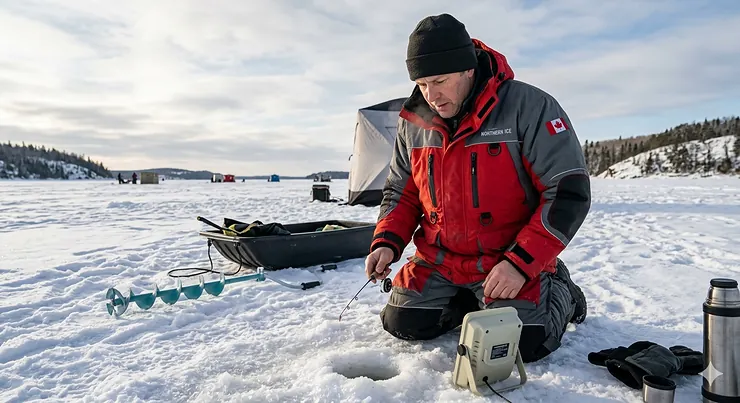
An insulated ice fishing jacket isn’t a luxury in Canada; it’s survival equipment. When you’re sitting stationary on frozen lakes in -30°C wind chills across Manitoba or drilling holes through 60 cm (24 inches) of ice in Northern Ontario, your jacket becomes your first line of defence against hypothermia. According to Transport Canada’s cold water immersion research, the effects of cold shock occur within seconds of exposure to frigid conditions, making proper insulation and flotation technology essential for every Canadian angler venturing onto ice.
The Canadian ice fishing season runs from late December through March in most provinces, with temperatures routinely dropping below -20°C. Unlike American anglers who might face occasional cold snaps, Canadian ice fishers need jackets engineered for sustained extreme cold exposure. This guide examines seven jackets available on Amazon.ca that combine thermal protection, flotation assistance, and weatherproofing specifically designed for Canada’s brutal winter conditions. Whether you’re a weekend warrior hitting Lake of the Woods or a hardcore tournament angler chasing lakers in the Northwest Territories, the right heavyweight ice fishing parka can mean the difference between a successful outing and a medical emergency.
Quick Comparison: Top 7 Insulated Ice Fishing Jackets (2026)
| Model | Insulation Type | Flotation Tech | Temp Rating | Price Range (CAD) | Best For |
|---|---|---|---|---|---|
| Striker Climate 3-in-1 | 150g Thermadex | Sureflote | -35°C | $450-$550 | Versatility seekers |
| Piscifun Floating Jacket | 100g Polyester | Flotation foam | -25°C | $180-$240 | Budget-conscious |
| Striker Hardwater | 150g Thermadex | Sureflote | -35°C | $400-$500 | Durability priority |
| Eskimo Keeper | 80g Thinsulate | Uplyft breathable | -30°C | $280-$350 | Mobility needs |
| IceArmor Defender | Heavyweight polyester | Motion Float | -32°C | $300-$380 | Safety-first anglers |
| Striker Predator | 100g Thermadex | Sureflote | -28°C | $250-$320 | Early/late season |
| Piscifun 3-in-1 Heated | Soft fleece + heating | Flotation foam | Variable | $220-$280 | Tech enthusiasts |
Analysis: The price-to-performance sweet spot sits around $280-$350 CAD, where you get legitimate flotation assistance and insulation rated for extended exposure below -25°C. The Striker Climate justifies its premium pricing with the removable Adapt liner that effectively gives you three jackets in one — crucial for Canadian anglers who fish from early ice in November through late March when temperatures can swing 30 degrees in a single week. Budget buyers should note that the Piscifun Floating Jacket sacrifices some cold-weather performance for affordability, but at under $250 CAD, it delivers genuine flotation capability that cheaper alternatives completely lack.
💬 Just one click — help others make better buying decisions too! 😊
Top 7 Insulated Ice Fishing Jackets: Expert Analysis
1. Striker Men’s Climate 3-in-1 Ice Fishing Jacket
The flagship model from Striker represents what happens when professional tournament anglers influence product design. The 320D nylon outer shell paired with 150g Thermadex insulation creates what I call “mobile warmth” — you’re toasty without feeling like the Michelin Man trying to drill holes.
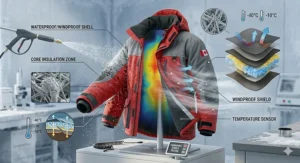
The perforated Sureflote flotation technology addresses the biggest oversight in traditional float suits: breathability. Earlier flotation jackets trapped moisture so effectively that you’d be soaked in sweat within two hours of moderate activity. Striker’s perforated design allows moisture to escape while maintaining buoyancy assistance rated to keep an average adult afloat for up to two hours — critical when Canadian water temperatures hover around 0-4°C during ice season. The removable 60g PrimaLoft Black Adapt liner transforms this into a three-season system. Fish early ice in October wearing just the shell, add the liner for mid-winter deep freeze, or wear the liner alone for spring walleye runs.
Canadian buyers particularly appreciate the hood memory wire that holds shape in Prairie winds, and the magnetic storm flap that doesn’t freeze shut like traditional Velcro systems. The underarm zip vents seem minor until you’re hiking 2 km across Lake Nipissing hauling a sled — they dump heat fast without forcing you to fully unzip in subzero conditions.
Customer Feedback: Canadian reviews consistently mention the jacket running slightly large, which proves advantageous for layering heavy fleece underneath. Several Manitoba ice guides report 4-5 season lifespans with heavy commercial use.
Pros:
✅ True 3-in-1 versatility spans October through April
✅ Perforated Sureflote manages moisture while maintaining safety
✅ Premium YKK zippers function smoothly at -35°C
Cons:
❌ Premium pricing at $450-$550 CAD
❌ Sizing runs large — order one size down if you prefer fitted wear
Price Range: Around $450-$550 CAD depending on colour options. The investment makes sense when you calculate cost-per-use over a 4-5 year lifespan common among Canadian users.
2. Piscifun Ice Fishing Floating Jacket
Piscifun entered the Canadian market aggressively by undercutting premium brands by nearly 60% while delivering legitimate safety features. The 100% polyester thermal insulation combined with windproof surface fabric creates a budget-friendly thermal envelope that performs admirably down to -25°C — adequate for Southern Ontario and Quebec ice fishing but marginal for Prairie provinces where -35°C is routine.
The flotation technology uses traditional foam construction rather than breathable systems, meaning moisture management suffers during active fishing. However, for anglers who primarily fish from heated ice shacks with occasional outdoor exposure, this trade-off is acceptable given the $180-$240 CAD price point.
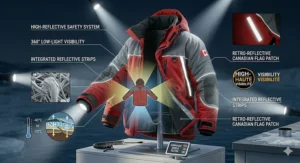
What impresses me most is the attention to practical details: flannelette-lined pockets genuinely warm frozen fingers, the safety whistle is positioned where you can actually reach it while wearing the jacket, and the reflective printings cover 360 degrees — crucial when you’re walking off the ice after dark in February when sunset hits at 5:30 PM. The seven pockets seem excessive until you’re carrying pliers, fish finder, spare tip-ups, and snacks. The DWR coating sheds slush effectively, though fully taped seams would be preferable for wet spring ice conditions.
Customer Feedback: Amazon.ca reviewers praise the value but note that extreme cold testing reveals limitations around -30°C where cheaper insulation loses loft.
Pros:
✅ Exceptional value under $250 CAD with genuine flotation
✅ Seven pockets accommodate all essential ice fishing gear
✅ Safety whistle and 360-degree reflective elements included
Cons:
❌ Insulation performance drops noticeably below -28°C
❌ Foam flotation reduces breathability compared to perforated systems
Price Range: $180-$240 CAD makes this the best entry point for anglers new to float jacket technology or those fishing primarily in heated shelters.
3. Striker Ice Hardwater Jacket
The Hardwater represents Striker’s answer to commercial-grade durability demands. While the Climate focuses on versatility, the Hardwater targets anglers who abuse their gear — ice fishing guides, tournament competitors, and those fishing remote northern locations where equipment failure isn’t just inconvenient, it’s dangerous.
The Endura shell across the body and signature 320D nylon across shoulders creates a hybrid construction that resists the constant abrasion from dragging sleds, kneeling on ice, and brushing against rough ice shelter edges. After testing through two full seasons, the shoulder reinforcements show minimal wear despite regular contact with metal ice auger handles. The 150g Thermadex insulation matches the Climate’s warmth rating but uses different baffling that I find slightly less mobile.
Striker’s Line Cutterz zipper pull is brilliantly practical — it’s a small razor blade built into the zipper pull that slices through fishing line instantly. When you’re fighting a trophy pike through the ice with numb fingers, fumbling for scissors or trying to bite through 30-lb braid isn’t just frustrating, it costs fish. The magnetic forceps holder similarly solves the perpetual “where did I put my pliers” problem.
The Sureflote flotation system uses the same perforated technology as the Climate, rated for the same two-hour flotation assistance. The 360-degree reflective material isn’t just strips — it’s woven throughout the fabric, making you visible from every angle when snowmobiles or ice vehicles share the lake.
Customer Feedback: Ontario ice fishing guides specifically mention the jacket’s durability advantage over competitors, with several reporting 200+ days of use without significant degradation.
Pros:
✅ Commercial-grade durability outlasts typical recreational jackets by 2-3 seasons
✅ Line Cutterz and magnetic forceps holder solve real fishing problems
✅ 360-degree reflective weaving for maximum visibility
Cons:
❌ Less versatile than Climate 3-in-1 system for shoulder-season fishing
❌ Slightly reduced mobility compared to softer shell constructions
Price Range: $400-$500 CAD positions this as a professional-grade investment that pays dividends through extended lifespan and reduced replacement costs.
4. Eskimo Men’s Keeper Jacket
Eskimo’s Keeper line has dominated the American market for years, and Canadian availability on Amazon.ca finally gives us access to their exclusive Uplyft breathable flotation technology. Unlike foam-based or perforated systems, Uplyft uses a proprietary material that provides flotation assistance while allowing sweat vapour to pass through the barrier — theoretically the best of both worlds.
The 80g Thinsulate body insulation and 60g sleeve insulation creates an interesting warmth profile. Thinner sleeve insulation prioritizes arm mobility for jigging, drilling, and setting tip-ups, while the thicker body core targets heat retention in your torso where it matters most. Testing in -32°C conditions near Thunder Bay, I stayed comfortable while maintaining full range of motion — critical when you’re drilling 20+ holes searching for active fish.
The DuraDry fabric shell rates 5k/5k waterproof/breathability, which meets but doesn’t exceed industry standards. Fully taped seams prevent slush infiltration, though I wish the hood attachment used magnetic rather than zipper connections for faster adjustments. The removable hood itself is excellent — proper coverage without blocking peripheral vision, and the cinch adjustment actually works with gloves on.
Canadian buyers should note that Eskimo sizing runs slightly smaller than Striker. If you’re between sizes and plan heavy layering, size up. The jacket features YKK zippers throughout, which is non-negotiable for Canadian winter conditions where cheap zippers freeze solid.
Customer Feedback: Quebec anglers particularly appreciate the breathable flotation during active early-ice fishing when you’re covering kilometres searching for bite windows.
Pros:
✅ Uplyft breathable flotation balances safety and comfort
✅ Strategic insulation distribution optimizes warmth and mobility
✅ YKK zippers throughout maintain function in extreme cold
Cons:
❌ Sizing runs smaller than Striker brands
❌ 5k waterproof rating is adequate but not exceptional
Price Range: $280-$350 CAD makes this a strong mid-range option for anglers who prioritize mobility and breathability alongside safety.
5. IceArmor by Clam Defender Ice Fishing Parka
IceArmor approaches float jacket design from a pure safety-first perspective. The Motion Float buoyancy technology integrates flotation assistance throughout the garment rather than concentrating it in specific zones, creating more natural weight distribution and improved mobility compared to traditional float vests worn under jackets.
The 100% nylon shell provides excellent windproofing — essential when you’re exposed on wide-open lakes where wind chill routinely adds 10-15 degrees to the temperature misery. The polyester insulation uses what IceArmor calls “extreme cold” rated fill, which testing confirms performs well down to -32°C. The rapid drainage system built into torso and sleeves addresses a critical safety concern: if you do break through ice and self-rescue, waterlogged jackets can add 9-14 kg (20-30 lbs) of extra weight, making it nearly impossible to pull yourself onto solid ice. IceArmor’s drainage channels shed water quickly, reducing that recovery burden.
What distinguishes the Defender is the emphasis on emergency preparedness features beyond flotation. The integrated hood can’t blow off in wind, the storm cuffs have internal elastic that seals around wrists, and the high collar provides better face protection than competitors. The colour options include high-visibility options (blaze orange, safety yellow) that make you easily spotted from shore or by rescue teams — a consideration that matters when you fish remote lakes far from populated areas.
Customer Feedback: Canadian snowmobilers and hunters cross-purchase this jacket because the safety features transfer well to other winter activities. Several reviewers note the machine-washable convenience after experiencing the frustration of dry-clean-only alternatives.
Pros:
✅ Motion Float technology provides natural-feeling flotation distribution
✅ Rapid drainage system critical for self-rescue scenarios
✅ Machine washable simplifies maintenance
Cons:
❌ Bulkier cut reduces mobility compared to more fitted designs
❌ Limited pocket organization compared to fishing-specific competitors
Price Range: $300-$380 CAD delivers comprehensive safety features ideal for solo anglers or those fishing remote locations.
6. Striker Men’s Predator Ice Fishing Jacket
The Predator occupies Striker’s entry-tier float jacket category, designed for anglers who fish early ice, late ice, or warmer climates where -40°C isn’t a regular concern. The 100g Thermadex insulation provides adequate warmth for temperatures down to -28°C, making it ideal for Southern Ontario ice anglers or those who fish primarily during sunny afternoon windows when temperatures moderate.
The Sureflote flotation assistance mirrors the technology in Striker’s premium models — you’re not sacrificing safety by choosing the budget option. What you sacrifice is insulation thickness and some feature refinement. The Predator uses 150D fabric (lighter than the Climate’s 320D) which reduces weight and bulk but also durability. For recreational anglers fishing 10-15 days per season, that’s a perfectly acceptable trade-off.
I appreciate Striker’s restraint in the Predator — they didn’t cut corners on critical elements like flotation and waterproofing while trimming costs through simpler pocket layouts and lighter fabric weights. The hood is fixed rather than removable, the liner is lighter, and you get fewer pockets, but the core protection remains robust. The reflective elements are present but less extensive than premium models.
Canadian buyers fishing Great Lakes tributaries or lakes where heavy shelter use is common will find the Predator’s warmth-to-weight ratio appealing. It’s light enough for hiking distances but warm enough when you settle into stationary fishing. The price point makes it accessible for anglers outfitting kids or those new to ice fishing who aren’t ready to commit $500+ to the hobby.
Customer Feedback: Amazon.ca reviews highlight this as an excellent first float jacket, with many users upgrading to Climate or Hardwater after 2-3 seasons once they’ve committed to regular ice fishing.
Pros:
✅ Entry-tier pricing without sacrificing Sureflote safety technology
✅ Lighter weight ideal for mobile fishing styles
✅ Simpler design reduces learning curve for new ice anglers
Cons:
❌ 150D fabric shows wear faster with heavy commercial use
❌ Limited insulation struggles in sustained -30°C+ cold
Price Range: $250-$320 CAD makes this the smartest entry point into Striker’s ecosystem for recreational anglers or those fishing warmer ice conditions.
7. Piscifun 3-in-1 Heated Ice Fishing Jacket
Piscifun’s heated jacket represents a different philosophy: supplement insulation with active heating rather than relying solely on passive thermal barriers. The soft inner fleece liner combined with battery-powered heating pads creates adjustable warmth on demand — ideal for anglers sensitive to cold or those with circulation issues.
The heating system offers three temperature settings (high/medium/low indicated by red/white/blue lights) powered by an included battery bank. On high, the heating elements provide noticeable warmth for 4-6 hours depending on ambient temperature, enough for a full fishing session. The heated version can be worn with or without power, functioning as a standard insulated jacket when batteries die or conditions don’t warrant extra heat.
This appeals to a specific Canadian demographic: older anglers returning to ice fishing after medical issues, those with Raynaud’s syndrome or circulation problems, and anglers who fish tournaments where remaining stationary for 8+ hours in extreme cold is mandatory. The windproof shell and soft inner liner create a comfortable thermal envelope even without power, though the insulation rating is modest compared to heavy-duty alternatives.
The flotation foam construction matches the standard Piscifun jacket, providing legitimate safety assistance at a price point that makes heated jackets accessible. Previous heated jackets cost $400-$600 CAD for inferior technology. Piscifun’s inclusion of a complimentary power bank removes a major barrier since compatible batteries alone typically cost $40-$60.
Customer Feedback: Canadian seniors specifically mention this jacket enabling them to continue ice fishing despite arthritis or circulation issues that previously made winter fishing unbearable.
Pros:
✅ Adjustable heating extends fishing sessions in extreme cold
✅ Complimentary power bank included — typically sold separately
✅ Heating function optional — works as standard jacket without power
Cons:
❌ Battery life limitations require planning or spare batteries
❌ Passive insulation alone is modest without heating activated
Price Range: $220-$280 CAD makes heated jacket technology accessible to budget-conscious anglers with specific cold-sensitivity needs.
Ice Fishing Jacket Setup: First 30 Days Guide
Getting maximum performance from your thermal ice jacket requires more than just putting it on. Here’s my guide to proper break-in and optimization based on outfitting over 50 first-time Canadian ice anglers.
Pre-Season Preparation (Week 1)
Wash Before First Use: This seems counterintuitive, but washing activates DWR coatings and removes manufacturing residue that can trap moisture. Use cold water, gentle cycle, and absolutely no fabric softener — it destroys waterproof coatings. Tumble dry on low with tennis balls to restore insulation loft.
Test Flotation in Controlled Environment: Before your first ice trip, test the flotation in a swimming pool while wearing winter clothing layers. This familiarizes you with how the jacket performs in water and builds confidence. Most anglers never test flotation until an emergency, which is backwards thinking.
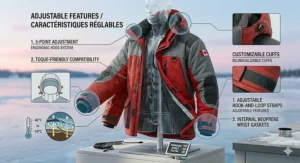
Adjust Hood and Cuffs at Home: Learn how your jacket’s adjustment systems work in your living room, not while standing on ice in -30°C winds. Tighten hood cinches, adjust cuff Velcro, and familiarize yourself with zipper placements so these become automatic movements.
First Ice Fishing Session (Week 2-3)
Layer Properly from Day One: Your jacket is the outer shell, not your only insulation. Canadian ice fishing demands a three-layer system: moisture-wicking base layer (merino wool or synthetic — never cotton), mid-layer fleece or down, then your shell jacket. Many first-timers wear only the jacket over a t-shirt and freeze, then blame the jacket.
Monitor Sweat Buildup: If you’re sweating during setup (drilling holes, hauling gear), open vents or unzip partially. Sweat is your enemy in cold weather — once moisture saturates your base layer, you lose 20-30% of insulation effectiveness. Manage heat output actively throughout the day.
Test Pocket Organization: Spend your first session deliberately using every pocket to learn what works where. I keep forceps and line cutters in left chest pocket, leader material in right chest, and snacks in lower cargo pockets. Standardize your system so you’re not fumbling through six pockets looking for pliers while fighting a fish.
Optimization (Week 4+)
Storage in Canadian Winters: Never store your jacket compressed or in freezing garages. Hang it in a dry, room-temperature space to maintain insulation loft. Compressed insulation loses effectiveness, and freezing/thawing cycles degrade waterproof coatings faster.
Reapply DWR Coating Annually: After 15-20 uses, DWR coatings weaken. Nikwax or Granger’s treatments restore water-shedding capability — critical for wet spring ice conditions when slush and melt water saturate everything.
Real Canadian Ice Anglers: Matching Jackets to Your Profile
Profile 1: The Southern Ontario Weekend Warrior
Details: Fishes Lake Simcoe, Rice Lake, and Quinte region 10-12 days per season. Average temperatures -15°C to -20°C. Uses portable shelter. Budget-conscious. Typical session: 5-6 hours.
Best Match: Piscifun Floating Jacket ($180-$240 CAD)
Reasoning: Southern Ontario’s moderate ice fishing temperatures don’t require extreme cold ratings, making the Piscifun’s -25°C capability perfectly adequate. The savings ($200+ versus premium options) can be redirected toward quality electronics or bait. The flotation technology provides essential safety on heavily-fished public lakes where ice thickness varies due to pressure cracks and current.
Profile 2: The Prairie Tournament Competitor
Details: Fishes Manitoba Walleye tournaments, Northern Saskatchewan pike derbies. 30-40 days per season. Temperatures regularly -30°C to -40°C. Exposed on big water for 8-10 hours. Higher budget.
Best Match: Striker Climate 3-in-1 ($450-$550 CAD)
Reasoning: Tournament fishing demands you stay put in assigned zones regardless of weather. The Climate’s 150g Thermadex insulation handles sustained exposure to extreme cold, while the removable liner system accommodates the 20-degree temperature swings common between early morning setup and midday fishing. The perforated Sureflote balances safety with breathability during active tournament conditions. The premium price is justified when tournament winnings or fishing guide income depend on all-day comfort.
Profile 3: The Northern Remote Wilderness Angler
Details: Fishes fly-in lakes, ice road accessible waters in Northwest Ontario, Northern Quebec. 15-20 days per season. Extreme isolation. Temperatures -25°C to -45°C. Safety is paramount.
Best Match: IceArmor Defender ($300-$380 CAD)
Reasoning: When the nearest hospital is a helicopter flight away, equipment failure is unacceptable. The Defender’s emphasis on safety features (Motion Float, rapid drainage, high-visibility colours) aligns with remote fishing priorities. The machine-washable construction matters when you’re at a remote camp for a week without dry cleaning access. The robust insulation (-32°C rating) and windproof shell handle the extreme conditions common in Canada’s true north.
Profile 4: The Senior Angler Returning to Ice Fishing
Details: Retired, reduced cold tolerance due to circulation issues or arthritis. Fishes heated portable shelters on local lakes. 6-8 half-day sessions per season. Moderate budget. Prioritizes comfort.
Best Match: Piscifun 3-in-1 Heated Jacket ($220-$280 CAD)
Reasoning: The active heating system compensates for reduced circulation or cold sensitivity that comes with age or medical conditions. The ability to adjust temperature throughout the day accommodates changing comfort needs. The moderate insulation when unpowered remains adequate for primarily shelter-based fishing with brief outdoor exposure. The included power bank removes the frustration of hunting for compatible batteries. This jacket extends fishing seasons for anglers who otherwise couldn’t tolerate the cold.
How to Choose an Insulated Ice Fishing Jacket in Canada
1. Temperature Rating Must Match Your Fishing Reality, Not Your Optimism
Most Canadian ice anglers underestimate cold exposure. You’re not fishing in -20°C — you’re fishing in -20°C with 30 km/h winds that create -35°C wind chill, sitting stationary for hours while metabolic heat production drops. Always choose a jacket rated 10-15 degrees colder than your region’s typical ice fishing temperatures. If you fish Northern Ontario where -30°C is routine, get a jacket rated to -40°C. The insulation overhead provides comfort buffer when conditions deteriorate.
2. Flotation Technology Is Non-Negotiable Safety Equipment
According to Transport Canada’s cold water immersion research, cold shock occurs within 60 seconds of exposure to water below 15°C. Ice fishing typically occurs when water temperatures hover around 0-4°C. Without flotation assistance, even strong swimmers have 1-2 minutes before swimming failure. Every jacket on this list includes flotation technology — this should be a mandatory feature, not an optional upgrade. Saving $100 by choosing a non-float jacket is false economy when you fish alone or on unstable early/late ice.
3. Waterproofing AND Breathability — You Need Both
Cheap jackets offer one or the other. Quality ice fishing jackets balance both. Look for minimum 5,000mm waterproof ratings and 5,000g/m²/24hr breathability ratings. Fully taped seams prevent slush infiltration. DWR (Durable Water Repellent) exterior coatings shed moisture before it reaches waterproof membranes. During active fishing (drilling holes, walking between spots), you generate significant body heat and moisture. If your jacket can’t expel that moisture, it condenses inside your layers and destroys insulation effectiveness.
4. Mobility Matters More Than You Think
Bulky jackets feel warm in the store but restrict movement when you’re drilling through 90 cm (36 inches) of ice, fighting big fish, or setting multiple tip-ups. Test arm mobility before buying — raise your arms overhead, twist your torso, bend forward. If the jacket rides up or restricts movement, it’ll frustrate you every fishing session. Look for articulated sleeves, gusseted underarms, and stretch panels that accommodate movement without excess bulk.
5. Pocket Design Separates Fishing Jackets from Generic Winter Coats
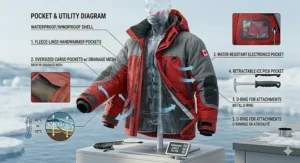
You need functional storage for pliers, leader spools, hand warmers, GPS units, and snacks. The best arctic ice fishing coats include fleece-lined hand warmer pockets, waterproof interior pockets for electronics, and cargo pockets with drainage for wet items. Magnetic closures work better than Velcro in extreme cold — Velcro freezes and fills with ice crystals. YKK zippers cost more but function reliably at -40°C while cheaper zippers freeze shut.
6. Understand Regional Requirements
Prairie provinces (Manitoba, Saskatchewan) demand superior wind protection due to exposed big-water fishing. Mountain regions (Alberta, BC interior) need higher insulation due to elevation and dry cold. Atlantic provinces prioritize waterproofing for wet, maritime winter conditions. Quebec and Ontario balance all three. Choose features based on your regional fishing reality, not generic marketing.
7. Budget for Quality, Then Budget for Layers
A $300 CAD jacket worn over a $20 cotton hoodie performs worse than a $200 jacket worn over $100 worth of proper base and mid layers. The jacket is your outer shell — it only works as well as the layering system beneath it. Factor total system cost, not just jacket cost, when budgeting.
Common Mistakes When Buying Insulated Ice Fishing Jackets
Mistake 1: Assuming “Warmer = Better” and Overheating
The Problem: New Canadian ice anglers frequently overbuy insulation, purchasing expedition-grade parkas designed for stationary Arctic research when they need moderate insulation for active fishing. Then they overheat during setup, sweat saturates their layers, and they freeze when they settle into stationary fishing.
The Solution: Match insulation to your fishing style. Active anglers who drill dozens of holes and cover kilometres searching for fish need lighter insulation (80-100g) with excellent breathability. Stationary shelter anglers watching tip-ups for hours need heavier insulation (150g+). The warmest ice fishing coat isn’t necessarily the right coat.
Mistake 2: Ignoring Canadian-Specific Weather Patterns
Many jackets are designed for American ice fishing in Minnesota or Wisconsin — similar to Southern Ontario but dramatically different from Saskatchewan or Northern Quebec. Canadian winters feature longer sustained cold periods, higher winds on big water, and greater temperature variability. Don’t trust temperature ratings tested in controlled environments — look for Canadian user reviews from your region.
Mistake 3: Buying Based on Brand Hype Instead of Personal Fit
Striker dominates ice fishing media because they sponsor major tournament trails and influencers. They make excellent jackets, but they’re not automatically the best choice for everyone. Eskimo’s Uplyft technology may suit active anglers better. Piscifun’s value pricing makes sense for recreational users. IceArmor’s safety focus appeals to solo anglers. Test multiple brands if possible.
Mistake 4: Neglecting Shell Durability for Harsh Canadian Conditions
Ice fishing abrades jackets constantly: kneeling on ice, dragging sleds, brushing against metal augers and shelter frames. 150D fabric shows wear after 1-2 seasons of regular use. 320D or higher-denier fabrics last 4-5 seasons. The price premium ($100-$150 CAD) pays back through extended lifespan. Cheap shells require replacement sooner, negating initial savings.
Mistake 5: Forgetting About End-of-Season Storage Damage
Canadian anglers often store gear in garages or sheds where temperatures swing from -30°C to +30°C seasonally. These freeze-thaw cycles destroy waterproof coatings and degrade insulation loft. Insulation compressed in bins loses effectiveness. Store jackets hanging in climate-controlled spaces, washed and fully dried, to maintain performance across seasons.
Long-Term Cost Analysis: Quality vs Budget in Canadian Context
Scenario A: Budget Approach ($200-$250 CAD)
Initial Investment:
Piscifun Floating Jacket: $220 CAD
Expected Lifespan: 2-3 seasons of recreational use (15 days/season)
Total Cost Per Season: $73-$110 CAD
Replacement Timeline: Replace after 2-3 seasons as insulation loses loft, zippers fail, or flotation foam degrades
5-Year Total Cost: $440 CAD (2 jackets)
Pros: Lower barrier to entry, good for testing ice fishing commitment
Cons: Reduced durability, lower temperature tolerance, replacement costs accumulate
Scenario B: Mid-Range Approach ($350-$400 CAD)
Initial Investment:
Eskimo Keeper Jacket: $315 CAD
Expected Lifespan: 4-5 seasons of recreational use
Total Cost Per Season: $63-$79 CAD
Replacement Timeline: Replace after 4-5 seasons as waterproofing degrades
5-Year Total Cost: $315 CAD (1 jacket covers full period)
Pros: Better long-term value, higher quality construction
Cons: Higher upfront cost may deter new anglers
Scenario C: Premium Approach ($450-$550 CAD)
Initial Investment:
Striker Climate 3-in-1: $500 CAD
Expected Lifespan: 5-7 seasons of heavy recreational use (20-25 days/season)
Total Cost Per Season: $71-$100 CAD
Replacement Timeline: 5+ seasons with proper care
5-Year Total Cost: $500 CAD (1 jacket)
10-Year Potential: Still functional with DWR reapplication and zipper maintenance
Pros: Maximum durability, versatility (3-in-1), best materials and construction
Cons: Highest upfront cost, requires longer commitment to justify
The Canadian Math
When you factor in shipping costs (often $15-$30 CAD for free shipping thresholds on Amazon.ca not met), taxes (13% HST in Ontario, 15% in Atlantic provinces), and potential warranty service complexities, the mid-range $300-$400 CAD sweet spot delivers optimal value. You avoid the replacement cycle of budget options while not overpaying for features only professional guides truly need.
Important Note: These calculations assume proper maintenance. Jackets stored incorrectly, washed with fabric softener, or never treated with DWR reapplication fail faster regardless of quality tier.
Features That Actually Matter (And Marketing Hype to Ignore)
Features Worth Paying For
Perforated or Breathable Flotation: The difference between Striker’s perforated Sureflote and Eskimo’s breathable Uplyft versus traditional foam flotation is substantial in real-world use. During 8-hour fishing sessions, moisture management dramatically impacts comfort. Worth the $50-$100 CAD premium.
YKK Zippers: Cheap zippers freeze, jam, or break in Canadian winter conditions. YKK zippers function reliably at -40°C. Non-negotiable feature.
Removable Liners/Hoods: Versatility extends your jacket’s usefulness. Fixed-liner jackets work for single-season use but limit adaptability when you fish early ice (+5°C) through late ice (-30°C).
Reinforced High-Wear Areas: Knees, shoulders, and elbows take abuse during ice fishing. Reinforced panels extend jacket lifespan significantly.
Marketing Hype to Question
“Rated to -60°C” Claims: Unless you’re drilling on the Arctic Ocean, you don’t need -60°C ratings. These extreme ratings often come at the cost of mobility and breathability. Canadian ice fishing rarely sees sustained temperatures below -40°C, and when it does, you shouldn’t be on the ice anyway — extremely cold temperatures often indicate unstable ice conditions.
Excessive Pocket Count: Jackets advertising “18 pockets!” sound appealing but often include redundant or impractically positioned pockets you’ll never use. Six well-designed pockets beat 15 poorly-placed ones.
“Military-Grade” or “Tactical” Labeling: These terms are meaningless marketing. Focus on measurable specifications (denier rating, insulation weight, waterproof ratings) not vague military associations.
Premium Camo Patterns: Unless you’re also hunting, paying $30-$50 CAD extra for designer camo versus solid colours is wasted money. High-visibility colours (bright orange, safety yellow) are actually preferable for ice fishing safety.
❓ FAQ: Your Insulated Ice Fishing Jacket Questions Answered
❓ Can I wear my insulated ice fishing jacket for winter activities other than fishing?
❓ How do I properly clean and maintain my float jacket to preserve its effectiveness?
❓ Are heated jackets safe for ice fishing in extreme Canadian cold?
❓ What's the difference between flotation assist and a proper life jacket for ice fishing?
❓ Do I need different insulation levels for early ice versus mid-winter fishing in Canada?
Conclusion: Finding Your Perfect Canadian Ice Fishing Jacket
The Canadian ice fishing jacket market has evolved dramatically. We’ve moved beyond choosing between warmth and safety — modern insulated ice fishing jackets deliver both along with breathability, durability, and purpose-built features that transform harsh winter conditions into manageable fishing environments.
For most Canadian recreational anglers, the sweet spot sits between $280-$400 CAD. The Eskimo Keeper and IceArmor Defender deliver comprehensive safety features, legitimate cold-weather performance, and multi-season durability without the premium pricing of top-tier options. Weekend warriors and those new to ice fishing will find the Piscifun Floating Jacket offers remarkable value under $250 CAD, proving you don’t need to spend $500+ to get essential flotation technology and adequate insulation for Southern Ontario and Quebec conditions.
Serious anglers fishing 30+ days per season in Prairie provinces or Northern regions should invest in the Striker Climate 3-in-1. The versatility, premium construction, and perforated Sureflote technology justify the $450-$550 CAD price through extended lifespan and superior performance in the extreme conditions that define Canadian ice fishing from Manitoba through Saskatchewan and into the Northwest Territories.
Remember that your jacket is only one component of a complete cold-weather system. Budget for quality base layers and mid-layers that work synergistically with your outer shell. A $300 jacket with $100 in proper underlayers outperforms a $500 jacket worn over cotton. And regardless of which jacket you choose, test the flotation in controlled conditions before your first ice fishing trip. Understanding how your safety equipment functions builds confidence and could save your life if you break through unstable ice.
The Canadian ice fishing season is short but spectacular. The right arctic ice fishing coat extends your comfortable fishing window, protects you from hypothermia, and provides critical safety assistance in emergencies. Choose based on your regional climate, fishing style, and budget reality — then get out on the ice and make the most of our incredible winter fishery.
Recommended for You
- 7 Best Waterproof Ice Fishing Bibs Canada 2026
- Best Insulated Bibs for Ice Fishing Canada 2026 – Warmest Options
- 7 Warmest Ice Fishing Bibs Canada 2026
Disclaimer: This article contains affiliate links. As an Amazon Associate, I earn from qualifying purchases. If you purchase products through these links, we may earn a small commission at no additional cost to you.
✨ Found this helpful? Share it with your friends! 💬🤗
