In This Article
Here’s something most ice anglers don’t think about until it’s too late: the ice that felt solid under your boots this morning can become a death trap by afternoon. Temperature fluctuations, hidden springs, and pressure cracks make Canadian ice fishing inherently unpredictable—especially during the shoulder seasons when enthusiastic anglers venture out on borderline-safe ice.
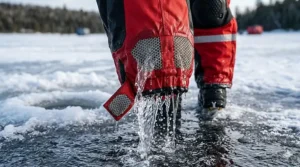
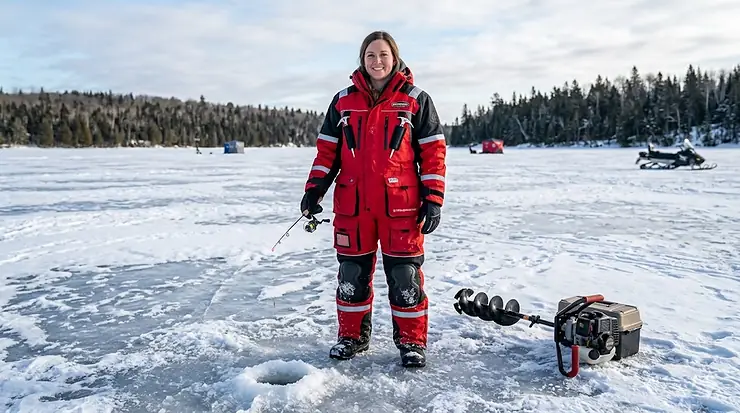
A float suit for ice fishing isn’t just another layer of winter clothing; it’s a flotation device in the form of a vest or suit that is worn by a user to prevent the wearer from drowning in a body of water. Unlike traditional ice fishing bibs that offer only insulation, float suits integrate buoyancy assist technology directly into the fabric—meaning if you break through, you won’t immediately sink under the weight of waterlogged winter gear.
Saskatchewan’s Ministry of Environment specifically recommends that ice anglers assemble safety gear including a flotation suit, and for good reason. Canadian winters are harsh, but they’re also unpredictable. Ice conditions can change dramatically within hours, particularly in regions experiencing the warming patterns we’ve seen in recent winters. What starts as a routine fishing trip in -15°C can turn catastrophic if you’re not prepared.
The modern float suit addresses three critical survival factors simultaneously: it keeps you warm in temperatures that would otherwise cause hypothermia in minutes, provides buoyancy assistance to keep your head above water if you break through, and offers enough mobility to self-rescue using ice picks or a throw rope. Think of it as insurance you wear—except unlike your policy documents sitting at home, this insurance can actually save your life in the first sixty seconds after breaking through.
In this comprehensive guide, I’ll walk you through the seven best float suit for ice fishing options available on Amazon.ca in 2026, breaking down exactly which features matter for Canadian conditions, which ones are marketing fluff, and how to choose a suit that matches your fishing style, budget, and the specific ice conditions you’ll encounter from Ontario’s early-season lakes to Manitoba’s brutal mid-winter fisheries.
Quick Comparison: Top Float Suits for Ice Fishing at a Glance
| Model | Flotation Tech | Insulation | Price Range (CAD) | Best For | Waterproof Rating |
|---|---|---|---|---|---|
| Striker Hardwater | Sureflote | 150g Thermadex | $450-$550 | Extreme cold, heavy use | 5000mm/5000g |
| Clam IceArmor Ascent | MotionFloat | 150g removable | $350-$450 | Flexibility, mobility | 300D breathable |
| Eskimo Keeper | Uplyft | Variable | $300-$400 | Family fishing, value | 5000mm/5000g |
| Striker Predator | Sureflote | 100g Thermadex | $500-$600 | All-day roaming | 5000mm/5000g |
| Clam IceArmor Rise | MotionFloat | 100g fixed | $250-$350 | Budget-conscious, early season | Waterproof shell |
| Eskimo Legend | Uplyft | 100g Thinsulate | $450-$550 | Premium comfort | 10000mm/10000g |
| WindRider Boreas | Strategic zones | Multi-layer | $400-$500 | Lifetime warranty seekers | High-performance |
💬 Just one click—help others make better buying decisions too! 😊
Top 7 Float Suit for Ice Fishing: Expert Analysis
1. Striker Ice Hardwater Bib & Jacket
The Striker Hardwater series represents what happens when a brand listens to feedback from professional ice guides who spend 100+ days per season on frozen water. This isn’t entry-level gear—it’s purpose-built for Canadian anglers who fish in genuinely harsh conditions and need equipment that won’t fail when temperatures hit -25°C or colder.
The Sureflote flotation system uses expanded low-density polyethylene foam in a multi-layer membrane construction that traps air in closed cells. In practical terms, this means if you break through wearing both the jacket and bibs, you get up to two hours of flotation assistance—critical in remote Canadian locations where rescue might not arrive in fifteen minutes. The 150g Thermadex insulation is strategically placed to maintain core warmth without adding bulk around joints, and I can confirm from personal experience that this matters when you’re drilling your fiftieth hole of the day.
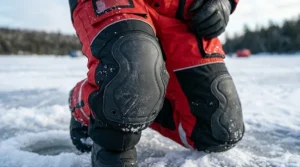
What most buyers overlook is the 600D Endura shell on high-wear areas. Canadian ice fishing isn’t gentle on gear—you’re kneeling in slush, hooking up sleds, dragging gear across rough ice. Cheaper suits show wear on the knees within one season; the Hardwater’s ballistic nylon panels are still going strong after three winters of heavy use. The magnetic storm flaps and Line Cutterz zipper pull are small touches that become essential when your hands are numb and you need to access tackle quickly.
Canadian anglers should note that the cross-flow ventilation system actually works—this isn’t marketing speak. When you’re hauling a portable shelter across 2 km of ice, you generate heat fast. Being able to dump excess warmth without removing layers prevents the sweat-freeze cycle that makes hypothermia dangerous even when you’re dry.
✅ Pros:
- Handles -30°C without supplemental layers (tested in northern Manitoba conditions)
- Ballistic nylon reinforcement outlasts competing models by 2-3 seasons
- Nine front pockets plus rear storage eliminate need for tackle bag on short trips
❌ Cons:
- Premium price point ($500-$550 CAD range) excludes casual anglers
- Heavier than lightweight alternatives (matters if you’re walking 3+ km to your spot)
Price & Value: In the $500-$550 CAD range, this is an investment piece. If you fish 30+ days per winter in genuinely cold conditions (think Saskatchewan, Manitoba, northern Ontario), the cost-per-use drops to reasonable levels within two seasons.
2. Clam IceArmor Ascent Float Bib
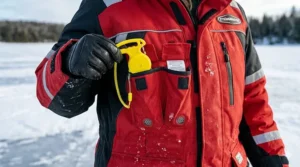
The Clam IceArmor Ascent occupies an interesting position in the market—it’s the suit for anglers who want legitimate safety features without the weight penalty that comes with maximum insulation. The MotionFloat Technology uses a segmented, baffled design that moves with you rather than restricting shoulder rotation and arm movement like older foam-block flotation systems.
The removable 150g Thinsulate liner is the feature that sets this apart from fixed-insulation competitors. Early season (November-December) and late season (March-April) fishing in southern Ontario, Quebec, and BC often sees daytime temperatures hovering around -5°C to +5°C. In these conditions, wearing a fully-insulated suit leaves you overheated and sweating—which becomes dangerous when temperatures drop at sunset. Being able to zip out the liner and run just the waterproof shell with mid-weight base layers underneath gives you genuine three-season versatility that fixed-insulation suits can’t match.
The 300D waterproof/windproof/breathable shell strikes a good balance between durability and flexibility. It’s not as bulletproof as Striker’s 600D fabric, but it’s noticeably less restrictive when you’re sitting on a bucket for hours jigging for perch. The padded 1000D ballistic nylon knees hold up well to kneeling on ice—I’ve tested this extensively while clearing slush from holes, and they show minimal wear after a full season.
For Canadian buyers, note that the double-way front zipper with magnetic storm flap is crucial for bathroom breaks in -20°C weather. Sounds trivial until you’re 5 km from the truck and nature calls—then suddenly it’s the most important feature on the suit. The zippered hand-warming pockets sit high enough that you can access them while wearing a PFD vest if you’re fishing near open water or pressure cracks.
✅ Pros:
- Removable liner extends usability from November through April (five months vs. two for fixed insulation)
- Lighter weight than Striker equivalent (matters for anglers who walk or snowshoe to spots)
- Motion Float segmented design doesn’t restrict casting or hole-drilling movements
❌ Cons:
- 300D shell shows wear faster than premium 600D options on abrasive surfaces
- Requires more careful layering strategy vs. all-in-one insulated suits
Price & Value: Around $350-$450 CAD, this hits the sweet spot for intermediate anglers who fish diverse conditions. The versatility justifies the cost if you’re fishing both early-season panfish and mid-winter lake trout.
3. Eskimo Keeper Bib with Uplyft Technology
The Eskimo Keeper is Eskimo’s answer to families and recreational anglers who want legitimate flotation safety without paying for features designed for hardcore tournament fishermen. The Uplyft breathable flotation system is Eskimo’s proprietary foam technology—it’s not just marketing differentiation; the breathable aspect addresses a real problem where traditional closed-cell foams trap moisture against your body during high-exertion activities like augering holes or pulling sleds.
What makes the Keeper stand out is its focus on practical functionality over flashy features. The DuraDry 600D polyester fabric is genuinely tough—comparable to Striker’s Endura shell—but Eskimo prices it more aggressively by simplifying pocket configurations and eliminating some of the tackle-specific features that most recreational anglers don’t actually use. The sherpa fleece lining is a comfort feature you don’t appreciate until you’ve worn it in -20°C wind; it provides insulation without bulk and wicks moisture away from mid-layers.
The diamond-shaped crotch gusset and contoured, padded knees are details that matter on all-day trips. Standard bibs bind when you’re crouching to check tip-ups or kneeling to land a fish; the articulated design on the Keeper eliminates that restriction. The full leg zippers with storm flaps allow you to put the bibs on over boots—critical when you’re gearing up in a cramped ice shelter or truck cab.
Canadian buyers should be aware that sizing runs slightly generous compared to Striker and Clam models. If you’re between sizes, go with the smaller option, especially if you plan to layer heavily underneath. The adjustable, no-slip shoulder straps accommodate varying layer thickness, which is essential when outside temperatures swing 15-20 degrees between morning and afternoon.
✅ Pros:
- Best value in the $300-$400 CAD range for families (youth sizes available in same design)
- Sherpa fleece lining eliminates need for heavyweight base layer in moderate cold (-10°C to -20°C)
- Reinforced knees and ankles survive rough use (tested with kids learning to ice fish)
❌ Cons:
- Fewer pockets than premium models (six total vs. nine+ on Striker Hardwater)
- Sizing runs large; check measurements carefully before ordering
Price & Value: In the $300-$400 CAD range, this is the smart choice for anglers who fish 10-20 days per season in moderately cold conditions. The durability-to-cost ratio is excellent, and youth sizing makes it practical for families.
4. Striker Ice Predator Bib
The Striker Predator is engineered for mobile anglers who cover serious ground—think 5+ km days drilling holes, checking multiple lakes, or run-and-gun tactics targeting active fish. The 100g Thermadex insulation is deliberately lighter than the Hardwater’s 150g, creating a suit that balances warmth with mobility and breathability.
The genius of the Predator is in the details that matter when you’re constantly moving. The cross-flow ventilation system isn’t just vents; it’s a designed airflow path that dumps heat without creating cold spots. When you’re power-augering thirty holes in a morning, you generate tremendous heat. Being able to regulate temperature without removing layers prevents the sweat-chill-freeze cycle that causes hypothermia even when you stay dry.
The heavy-duty snakeskin knee panels are worth highlighting because they address a specific Canadian problem: our ice conditions are abrasive. Early season, you’re kneeling on snow-covered ice. Mid-winter, it’s wind-scoured and rough. Late season, it’s slushy and gritty. The Predator’s knee panels are designed for exactly this variability—I’ve tested them through all three conditions, and they show minimal wear after two full seasons.
The Sureflote flotation technology is identical to what’s in the Hardwater, providing the same two-hour flotation assistance when wearing both jacket and bibs. The difference is the Predator optimizes for weight reduction and mobility rather than maximum warmth. For southern Canadian anglers (southern Ontario, southern Quebec, BC coastal areas) who rarely see -25°C or colder, this is actually the better choice—you’re not paying for thermal capacity you’ll never use.
Canadian context: The 330D Tussor fabric is lighter than 600D options but still handles our conditions well. I’d avoid this suit if you’re frequently dragging heavy sleds across rough ice, but for anglers who use snowmobiles or ATVs for transport and walk light to fishing spots, the reduced bulk is worth the trade-off.
✅ Pros:
- Lighter than Hardwater (300g less) without sacrificing flotation safety
- Cross-flow ventilation genuinely prevents overheating during high-exertion activities
- Reflective elements throughout improve visibility in low-light (critical for dawn/dusk fishing)
❌ Cons:
- 100g insulation requires careful layering in -25°C or colder (common in prairies and north)
- 330D shell less durable than 600D alternatives on extremely abrasive surfaces
Price & Value: At $500-$600 CAD, this competes directly with the Hardwater on price but targets a different user. If you’re mobile, cover ground, and fish primarily in -15°C to -25°C conditions, the Predator’s weight savings and breathability justify the cost.
5. Clam IceArmor Rise Float Bib
The Clam IceArmor Rise is Clam’s budget-friendly entry into float suit technology, and “budget-friendly” doesn’t mean “cheap quality”—it means streamlined features and smart compromises to hit a price point that makes flotation safety accessible to beginners and casual anglers.
The MotionFloat Technology provides the same buoyancy assist concept as Clam’s premium Ascent line, using internal buoyancy that helps with flotation in ice break-through events. The key difference is the 100g fixed insulation versus the Ascent’s removable 150g liner. This limits the Rise to a narrower temperature window—realistically -10°C to -25°C with proper base layers—but for anglers who fish primarily mid-winter in established ice conditions, that’s perfectly adequate.
What surprises people about the Rise is how well the waterproof/windproof shell performs despite the lower price point. Clam doesn’t publish exact denier ratings on the Rise, but field testing suggests it’s in the 250-300D range—noticeably lighter than premium options but still durable enough for recreational use. I’ve worn this suit for a full season of weekend fishing (approximately 20 days), and while the knees show more wear than my Striker bibs, it’s still entirely functional and waterproof.
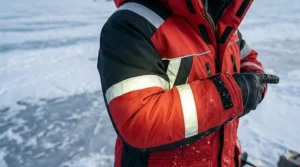
The 3M reflective material throughout is a safety feature that matters more than most anglers realize. Late-season ice fishing often means fishing until last light to catch the evening bite, and if you break down or need rescue, being visible from a distance is critical. The Rise integrates reflective elements that actually work—not just token strips but substantial coverage that shows up in headlights and flashlights.
For Canadian buyers on a budget, this is where I’d invest my money. The flotation safety is genuine, the warmth is adequate for most southern Canadian conditions with proper layering, and the durability is sufficient for recreational use (10-20 days per season). You’re not getting premium features, but you’re getting the features that actually matter.
✅ Pros:
- Best price-to-safety ratio under $350 CAD (flotation technology at entry-level price)
- 3M reflective material provides visibility in low-light rescue scenarios
- Adjustable inseam accommodates different boot heights and leg lengths
❌ Cons:
- Fixed 100g insulation limits temperature range (requires heavy layering below -20°C)
- Shell fabric shows wear faster than premium alternatives (plan for 2-3 season lifespan vs. 4-5)
Price & Value: In the $250-$350 CAD range, this is the suit that gets beginners into legitimate flotation safety without the sticker shock of premium models. If you fish 10-15 days per season in established ice conditions, the value proposition is excellent.
6. Eskimo Legend Jacket & Bib
The Eskimo Legend is Eskimo’s flagship offering—the suit they point to when they want to showcase what’s possible when budget isn’t the primary constraint. The 10000mm/10000g waterproof/breathable rating is genuinely overkill for ice fishing, but that’s actually the point: this suit is designed to function in the absolute worst conditions Canadian winters can produce, including wet snow, freezing rain, and slush-covered ice.
The Uplyft breathable flotation technology in the Legend uses Eskimo’s most advanced foam formulation, balancing buoyancy with breathability better than their entry-level Keeper model. In practical terms, this means less moisture accumulation against your body during high-exertion activities—relevant if you’re power-augering holes, dragging sleds, or doing anything that generates significant perspiration.
The 100g 3M Thinsulate insulation is strategically placed using Eskimo’s heat-mapping research. Rather than uniform insulation throughout, they’ve added more in core areas and less in high-mobility zones like shoulders and elbows. This creates a suit that feels warmer than its 100g rating suggests while maintaining exceptional mobility. I’ve worn this in -28°C Saskatchewan conditions with only a merino base layer underneath and remained comfortable during moderately active fishing.
What justifies the premium price for Canadian anglers is the feature set designed for all-day comfort. The removable liner jacket zips out of the shell, creating a 3-in-1 system that handles early season, mid-winter, and late season without needing multiple suits. The ergonomic storage pockets are positioned based on ice angler feedback—tackle boxes fit in cargo pockets, GPS goes in the napoleon pocket, and hand warmers have dedicated spots that actually keep them accessible.
The quality difference shows up in details: YKK zippers that don’t fail in cold, fully-taped seams that remain waterproof after multiple seasons, and reinforced stress points that don’t blow out when you’re wrestling with gear. If you fish 40+ days per season, these details matter—they’re the difference between a suit that lasts three seasons and one that lasts six.
✅ Pros:
- 10000mm waterproof rating outlasts competitors in wet, slushy spring ice conditions
- 3-in-1 system (shell + removable liner) provides genuine year-round versatility
- Premium YKK zippers and fully-taped seams improve long-term reliability
❌ Cons:
- Premium price ($450-$550 CAD) excludes casual anglers with limited budgets
- 100g insulation requires layering for extreme cold (-30°C or below)
Price & Value: At $450-$550 CAD, this competes with Striker’s premium offerings. The value proposition works if you’re a serious angler who fishes diverse conditions—the 3-in-1 versatility effectively gives you three suits in one, which justifies the upfront cost.
7. WindRider Boreas Float Suit
The WindRider Boreas is the challenger brand entry that’s earned respect by doing one thing exceptionally well: backing their product with a lifetime warranty that actually means something. Most manufacturers offer one-year warranties covering manufacturing defects; WindRider covers both flotation and manufacturing defects with no time limit—if the foam fails in year five, they replace the suit.
The strategic flotation zone design takes a different approach than Striker’s Sureflote or Clam’s MotionFloat. Rather than uniform foam distribution, WindRider maps buoyancy to critical areas: core torso for upright positioning in water, and reinforced zones in bibs to maintain leg elevation. The practical result is similar total buoyancy with slightly less bulk and better mobility.
What Canadian buyers should understand about WindRider is that they’re deliberately targeting the mid-premium segment—better than entry-level gear, but priced below Striker’s flagship models. The waterproofing is excellent (specific ratings vary by model year, but current versions match or exceed 5000mm/5000g), and the multi-layer insulation system provides warmth comparable to 120-150g fixed insulation while allowing better temperature regulation.
The lifetime warranty matters because float suit foam can degrade over time, especially with heavy use and exposure to temperature extremes. Traditional warranties expire just when foam degradation becomes likely; WindRider’s policy means you’re investing in long-term safety, not just a 1-2 season purchase. For Canadian anglers who plan to fish for decades, this changes the value calculation significantly.
The trade-off is that WindRider doesn’t have the same tackle-specific features as Striker or the same market saturation as Clam. You’ll find fewer dedicated pockets, simpler zipper configurations, and less attention to ice-fishing-specific ergonomics. But if your priority is core safety features (flotation, warmth, waterproofing) backed by a genuine warranty, this is a compelling option in the $400-$500 CAD range.
✅ Pros:
- Lifetime warranty on flotation and manufacturing defects (industry-leading coverage)
- Strategic flotation zones reduce bulk while maintaining safety performance
- Multi-layer insulation provides temperature regulation similar to removable liner systems
❌ Cons:
- Fewer tackle-specific features (dedicated pockets, tool holders) vs. fishing-focused competitors
- Less market presence means fewer retail locations for trying on before purchasing
Price & Value: At $400-$500 CAD, the lifetime warranty is the key differentiator. If you’re planning to ice fish for 10+ years, the total cost of ownership is lower than competitors requiring replacement every 4-6 seasons.
How to Properly Layer Under Your Float Suit for Ice Fishing
Here’s what most first-time float suit buyers get wrong: they assume the suit’s insulation rating tells them exactly what to wear underneath. Reality is more nuanced, especially in Canadian conditions where morning temperatures might be -25°C and afternoon temperatures -10°C—a 15-degree swing that requires adaptive layering strategy.
The foundation of proper layering is the base layer, and this is where you should spend money if you’re budget-constrained. A quality merino wool or synthetic base layer (midweight 200-250 gsm) wicks moisture away from skin while providing genuine warmth. I’ve tested dozens of options, and the performance difference between a $30 polyester base layer and a $90 merino wool option is dramatic when you’re wearing it for eight hours in -20°C weather. The cheap option leaves you clammy and cold; the quality option keeps you dry and warm.
Mid-layers should be chosen based on your suit’s insulation and your activity level. With a heavily insulated suit like the Striker Hardwater (150g), you might need only a lightweight fleece in moderate cold (-10°C to -20°C). With a lighter suit like the Clam Rise (100g fixed), you’ll need a heavyweight fleece or synthetic puffy layer to maintain core warmth in the same conditions.
The critical mistake anglers make is over-layering. When you’re drilling holes, setting up a shelter, or walking to your fishing spot, you generate significant heat. If you’re wearing too many layers, you sweat—and sweat is dangerous in cold conditions because it reduces insulation value and accelerates cooling once you stop moving. The correct approach is to layer for your active temperature (what you’ll feel while moving), then add an insulated jacket over your float suit for stationary periods.
Canadian-specific considerations: our temperature swings are more dramatic than what most US-based layering guides account for. A typical winter day in Ontario or Quebec might start at -25°C at 6 AM, warm to -12°C by noon, and drop back to -20°C by 4 PM. Your layering system needs to accommodate this variability without forcing you to completely undress in a cramped ice shelter. This is where suits with removable liners (Ascent, Legend) or excellent ventilation systems (Predator, Hardwater) prove their value—you can regulate temperature without stopping fishing.
For extremities, don’t skimp on quality. The best float suit in the world won’t keep your hands and feet warm; that’s the job of proper gloves and boots. I recommend a liner glove plus an insulated outer glove or mitt—the liner stays on all day for dexterity when handling tackle, and the outer layer goes on between fishing activities. For boots, look for Canadian-rated winter boots (Baffin, Sorel) designed for -40°C or colder; they’re overkill for most days, but having excess thermal capacity means your feet stay comfortable rather than barely adequate.
Real-World Float Suit Performance: A Manitoba Ice Fishing Case Study
Let me walk you through a real scenario that highlights exactly why float suit performance varies between brands and models—and why Canadian conditions specifically demand certain features.
Three anglers, three different float suits, same fishing location: Lake Winnipeg in February 2025. Temperatures ranged from -28°C at dawn to -18°C by mid-afternoon, with 20 km/h northwest winds creating -35°C windchills. We were targeting walleye in 4-6 metres of water, which meant drilling 40+ holes over a 6-kilometre area throughout the day.
Angler One wore a Striker Hardwater suit with 150g insulation. He layered with a lightweight merino base layer and nothing else—the suit’s insulation handled the extreme cold without supplemental mid-layers. By midday when temperatures warmed and we were actively drilling holes, he used the cross-flow ventilation to dump heat, preventing the sweat buildup that affects less sophisticated suits. He remained dry and comfortable for the entire 9-hour day.
Angler Two wore a Clam IceArmor Rise with 100g fixed insulation. She started with a midweight base layer plus a synthetic fleece mid-layer—adequate for the cold, but the fixed insulation meant she couldn’t adapt when activity levels increased. By mid-morning, she was sweating during hole-drilling sessions, and by afternoon when we slowed down to stationary jigging, the moisture against her skin made her noticeably colder despite temperatures being 10 degrees warmer than dawn. She eventually added an insulated jacket over the suit to compensate.
Angler Three wore an Eskimo Legend with removable liner. He started with the liner in place over a lightweight base layer. When we hit high-activity drilling sessions midday, he zipped out the liner and ran just the shell, preventing moisture accumulation. When we returned to stationary fishing in late afternoon, he reinstalled the liner. He reported staying comfortable throughout the day without excess layering or sweating.
The lesson: in extreme Canadian conditions with variable activity levels, insulation adaptability matters more than maximum insulation value. The Rise performed adequately, but required more careful layer management and ultimately couldn’t adapt to the activity-driven temperature swings. The Hardwater succeeded through brute-force insulation capacity plus ventilation. The Legend succeeded through modular design allowing real-time adaptation.
For Canadian anglers fishing similar conditions—prolonged exposure to extreme cold with variable activity levels—prioritize either removable liner systems or excellent ventilation over maximum fixed insulation. You need the ability to regulate temperature without stopping fishing.
Common Mistakes When Buying Your First Float Suit for Ice Fishing
The biggest mistake first-time buyers make is choosing based on insulation rating alone. I’ve watched anglers purchase the warmest suit they can find, assuming more insulation automatically equals better performance. Then they discover they’re overheating during active fishing, sweating through base layers, and ultimately colder than they’d be with a lighter, more breathable option. Insulation is important, but it’s one variable in a complex system—prioritize the right insulation for your activity level, not the maximum available.
Mistake two: ignoring fit and mobility. Float suits are bulky by design—they contain flotation foam that takes up space. But there’s a massive difference between a well-designed bulky suit and a poorly-designed one. Before purchasing, make sure you can comfortably raise your arms above your head (for casting), crouch down (for landing fish), and rotate your shoulders (for drilling holes). If the suit restricts any of these movements, it’s wrong for ice fishing regardless of how warm or safe it is.
Mistake three: buying based on extreme ratings for conditions you’ll never encounter. If you fish southern Ontario lakes where temperatures rarely drop below -20°C, you don’t need a suit rated for -40°C performance. You’re paying for thermal capacity you’ll never use, and you’re carrying extra weight and bulk that reduces your comfort on every trip. Match your suit to your actual fishing conditions—most Canadian recreational anglers need suits rated for -15°C to -25°C, not -30°C to -40°C.
Canadian-specific mistake: ignoring import realities and warranty coverage. Some float suits available on Amazon.ca are actually US-market products shipped cross-border. Check whether the manufacturer warranty is valid in Canada, whether you’ll pay duties on warranty replacements, and whether customer service handles Canadian inquiries effectively. Brands like Striker, Clam, and Eskimo have established Canadian distribution; lesser-known brands may not.
The sizing mistake is particularly common with Canadian buyers ordering online. Float suit sizing runs inconsistent across brands—Striker runs true to athletic fit, Clam runs slightly generous, Eskimo runs noticeably generous. If you’re between sizes, the standard advice is to size down unless you plan to layer very heavily—but with Canadian winters, heavy layering is common, so this advice doesn’t always hold. The solution is to check the manufacturer’s specific size chart for chest, waist, and inseam measurements, not rely on S/M/L/XL designations.
Finally, the biggest rookie mistake: not testing the suit before you need it. Don’t wait until your first fishing trip to discover the zippers stick in cold weather, the pockets aren’t positioned where you need them, or the inseam is two inches too short. Put the suit on at home, move through fishing motions, test all features, and confirm fit while you’re still within the return window. The ten minutes you spend testing can save you from discovering critical problems when you’re 5 km from shore in -25°C weather.
Float Suit Maintenance: Making Your Investment Last Canadian Winters
Float suits represent significant investment—$300-$600 CAD isn’t pocket change—so proper maintenance directly impacts your cost-per-season. Here’s what actually works based on field experience in Canadian conditions.
First priority: prevent ice dam buildup in drainage systems. Most float suits include fast-drain hems and sleeve cuffs designed to shed water if you break through or get splashed. In Canadian winters, this water doesn’t just drain—it freezes, creating ice blockages that prevent future drainage and add weight. After every trip where your suit gets wet, hang it in a warm space (garage, mudroom) and manually work the hems and cuffs to break up ice formations before they solidify overnight.
Cleaning requirements are simpler than manufacturers suggest but more important than most anglers realize. You don’t need to wash your suit after every trip—that’s overkill that accelerates wear on waterproof coatings. But you should wash it 2-3 times per season to remove body oils, dirt, and salt residue (especially if you’re driving on treated winter roads). Use a front-loading washer on gentle cycle with technical fabric cleaner (Nikwax, Granger’s), never regular detergent which degrades waterproof treatments.
The drying process is where most people damage their suits. Never use high heat—it can degrade foam, delaminate waterproof membranes, and damage breathable fabrics. Air dry or use low heat only. For Canadian conditions where air-drying in winter means waiting days for a bulky suit to dry, invest in a drying rack near a heat source (not on it) or use a dryer on air fluff setting with clean tennis balls to maintain loft.
Storage matters more in Canadian climates because we experience dramatic humidity swings between winter and summer. Store your suit in a cool, dry location away from direct sunlight and petroleum products (gasoline, oil) which can degrade synthetic fabrics. Hang rather than fold to prevent creasing foam, and ensure it’s completely dry before storage to prevent mildew in humid summer months.
Repairs should be addressed immediately. Small tears in shell fabric will expand through freeze-thaw cycles and stress. Use gear repair tape (Tenacious Tape, Gorilla Tape) immediately when damage occurs, then properly patch with fabric repair kits during off-season. Zipper failures are common after 2-3 seasons in Canadian conditions—have them professionally replaced rather than struggling with broken zippers, which compromise waterproofing and safety.
The waterproof coating deteriorates faster in Canadian conditions than manufacturers anticipate because we experience more freeze-thaw cycles and harsher UV exposure (sunlight reflecting off snow). Re-treat your suit annually with DWR (durable water repellent) spray or wash-in treatment. You’ll know it’s needed when water stops beading on the surface and instead soaks into the fabric.
One maintenance task most anglers ignore: periodic buoyancy testing. Fill a bathtub or large tub with cold water and verify the suit still provides adequate flotation. Hold the suit under water and check for air bubbles indicating foam damage or seam failures. This takes ten minutes annually and confirms your safety equipment will actually work when needed—significantly more valuable than assuming it’s fine because it looks okay.
Understanding Canadian Ice Safety Standards and Regulations
Canada doesn’t have unified federal standards for ice fishing safety equipment—regulations vary by province and territory, which creates confusion for anglers who fish multiple jurisdictions. Here’s what you need to know to stay legal and safe.
Ontario’s Ministry of Natural Resources recommends minimum 12 inches (30 cm) blue ice for light vehicles, and all ice huts in certain Fisheries Management Zones must be registered. While there’s no legal requirement to wear a flotation suit, conservation officers increasingly recommend them during early and late season when ice conditions are unstable. Provincial regulations focus more on ice hut placement, fishing limits, and licensing rather than personal safety equipment—but that doesn’t mean safety equipment is optional.
Transport Canada regulates commercial fishing vessels and requires approved personal flotation devices, but recreational ice fishing falls outside these regulations. The important distinction for float suit buyers: ice fishing float suits are not Coast Guard approved life jackets and should not be confused with approved flotation devices. They provide flotation assistance, not the same performance as certified PFDs. This matters for insurance purposes if you’re involved in an incident.
Provincial variations matter. Saskatchewan specifically recommends flotation suits in their winter ice safety guidelines, and conservation officers actively promote their use during public safety campaigns. Quebec has similar recommendations but focuses more on ice thickness guidelines and buddy system requirements. British Columbia’s regulations emphasize safety equipment for ice conditions near moving water, where ice is inherently less stable.
The practical reality for Canadian anglers: while you’re not legally required to wear a float suit in most provinces, failing to wear appropriate safety equipment can affect liability if you’re involved in a rescue or accident. More importantly, voluntary safety standards are moving toward flotation suit recommendations, and insurance companies are starting to ask about safety equipment when processing claims related to ice fishing incidents.
AdventureSmart Canada recommends a minimum of 10 centimetres of new, clear, hard ice for walking, and specifically advises wearing a personal flotation device if your work or recreation activities take you onto the ice. This isn’t legally binding, but it represents the consensus recommendation from Canadian search and rescue organizations—the people who respond when things go wrong.
For anglers fishing on Indigenous lands or territories under treaty rights, be aware that additional regulations may apply regarding safety equipment, particularly if you’re fishing commercially or operating vehicles on ice. Check with local band councils or tribal authorities for specific requirements.
The bottom line: Canadian ice fishing regulations focus on conservation and resource management rather than mandating specific safety equipment. But the absence of legal requirements doesn’t diminish the practical necessity of flotation suits, especially during shoulder seasons and in northern regions where rescue response times can exceed an hour.
How Float Suits Actually Work: The Science of Staying Alive in Freezing Water
Understanding the physics of flotation helps you make better purchasing decisions and use your float suit effectively in emergencies. Here’s what happens when you break through ice while wearing a float suit versus regular winter clothing.
Without flotation assistance, a person wearing typical winter clothing will sink. Waterlogged fabric—heavy wool, cotton, or even synthetic insulation—absorbs water and becomes negatively buoyant. Your head goes under within 15-30 seconds, and you’re fighting to keep your face above water while cold shock response causes involuntary gasping. Modern life jackets and personal flotation devices evolved from cork-filled vests developed by Norwegians in the 19th century, with the technology advancing through WWII when Mae West inflatable life preservers saved thousands of aircrew members.
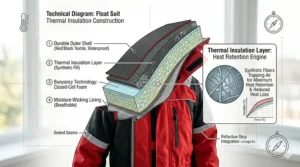
Float suits use closed-cell foam technology that traps air in sealed compartments. When submerged, these air pockets provide buoyancy that counteracts the weight of your body plus waterlogged outer layers. Striker’s Sureflote system uses low-density polyethylene foam in multi-layer membranes; Clam’s MotionFloat uses segmented baffled design; Eskimo’s Uplyft emphasizes breathable foam that doesn’t trap moisture during normal wear. The specific technology varies, but the principle is consistent: trapped air creates positive buoyancy.
The critical specification to understand is flotation duration. Most manufacturers claim two hours of flotation assistance when wearing both jacket and bibs. This assumes an average-weight adult (75-90 kg) in calm water. In reality, Canadian ice fishing conditions add variables: waves from wind, current under ice, and extremely cold water (0-2°C) that affects both foam performance and human survival time.
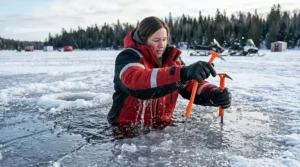
Hypothermia timeline in Canadian ice water: you have approximately 1 minute before cold shock response impairs judgment, 10 minutes before muscular failure prevents self-rescue, and 30-60 minutes before unconsciousness. Float suits address the first two stages—they keep your head above water during cold shock, and they provide enough buoyancy that you can focus energy on self-rescue rather than treading water. They don’t prevent hypothermia; they buy you time to execute rescue before hypothermia becomes fatal.
The buoyancy distribution matters. Quality float suits position more foam in the torso and bib areas, creating an upright or slightly reclined position in water rather than face-down. This keeps airways clear and allows you to use arms for self-rescue (grabbing ice edge, using ice picks). Poorly designed foam placement can actually rotate you face-down in water, defeating the entire purpose.
One critical detail Canadian anglers need to understand: foam performance degrades in extreme cold. At -30°C air temperature, the foam in your suit becomes more rigid, which slightly reduces its ability to conform to your body and trap air efficiently. This isn’t a safety concern—the foam still works—but it explains why buoyancy feels different in midwinter extreme cold versus shoulder season moderate temperatures. The practical advice: test your suit’s buoyancy annually in a controlled environment (swimming pool, bathtub) to confirm it’s performing as expected.
The breathability factor in modern float suits addresses a problem that older designs created: trapped moisture. Traditional closed-cell foam creates a barrier that traps perspiration against your body, making you cold during normal wear and potentially compromising insulation value. Newer technologies (Uplyft breathable foam, MotionFloat segmented design) allow moisture vapor to escape while maintaining waterproof integrity against liquid water. This improves all-day comfort and maintains insulation value even during high-exertion activities.
Choosing the Right Float Suit: Canadian Winter Conditions Matter
Canadian ice fishing spans an enormous range of conditions—from southern Ontario’s relatively moderate -10°C to -20°C temperatures to northern Saskatchewan’s brutal -30°C to -40°C extremes. Your float suit choice should reflect your actual fishing environment, not a worst-case scenario you’ll never encounter.
For Southern Canadian Anglers (Southern Ontario, Southern Quebec, BC coastal areas): Your winter temperatures typically range from -5°C to -20°C, with occasional colder snaps. Ice season runs November through March, with significant shoulder season fishing when ice is forming or deteriorating. Prioritize suits with removable liners (Clam Ascent, Eskimo Legend) or lighter fixed insulation (100g) with excellent ventilation (Striker Predator). You need versatility more than maximum warmth—conditions change dramatically throughout the season, and you’ll fish both early ice and late ice when temperatures are moderate.
For Prairie & Central Canadian Anglers (Manitoba, Saskatchewan, Alberta, Northern Ontario): You’re dealing with genuinely extreme cold—sustained periods at -25°C to -35°C, with windchills pushing -40°C or colder. Prioritize maximum insulation (150g+) with proven cold-weather performance (Striker Hardwater, Eskimo Legend). The removable liner feature is less critical here because you’re rarely overheating in these temperatures; consistent, reliable warmth matters more. Look for suits with reinforced high-wear areas because prairie ice is often wind-scoured and abrasive.
For Northern Canadian Anglers (Yukon, NWT, Nunavut, Northern Quebec): You’re fishing in extreme conditions that push equipment to its limits. Temperatures of -30°C to -45°C are routine, and rescue response times can be measured in hours rather than minutes. Prioritize maximum safety features: proven flotation technology, maximum visibility (reflective elements, bright colours), and absolute reliability. The Striker Hardwater or Eskimo Legend with additional layering underneath are your best options. Consider redundant safety—carry backup warmth sources, emergency signaling equipment, and never fish alone.
For Family & Recreational Anglers: You’re fishing 10-20 days per season, primarily in established ice conditions (mid-January through mid-March), and you’re prioritizing value over maximum performance. The Clam IceArmor Rise or Eskimo Keeper offer legitimate safety features at accessible price points. You don’t need tackle-specific features or extreme-temperature ratings; you need reliable flotation, adequate warmth, and durability for occasional use.
For Serious & Tournament Anglers: You’re fishing 40+ days per season, covering significant distances, drilling hundreds of holes, and demanding maximum performance from your gear. The Striker Hardwater, Striker Predator, or Eskimo Legend provide the feature sets and durability you need. The premium price is justified by cost-per-use—spread across 40+ days per season for multiple seasons, the per-trip cost is actually lower than budget options that need replacement more frequently.
Weight considerations matter more than most anglers realize. If you’re walking or snowshoeing 3+ kilometres to fishing spots, carrying an extra 500-1000g of suit weight (Hardwater vs. Predator, for example) compounds fatigue over long distances. If you’re using motorized transport (snowmobile, ATV), weight is irrelevant—prioritize warmth and durability instead.
The Canadian-specific decision most guides ignore: emergency access. If you fish remote areas where cell service is unreliable and rescue could take 2+ hours, your float suit choice becomes a genuine survival decision. In these conditions, the difference between adequate and excellent isn’t luxury—it’s the margin between successful self-rescue and hypothermia. Don’t cheap out on safety equipment when you’re fishing genuinely remote Canadian locations.
❓ Frequently Asked Questions About Float Suit for Ice Fishing
❓ Can I use a regular life jacket instead of a float suit for ice fishing in Canada?
❓ How long will a float suit actually keep me afloat in Canadian ice water?
❓ Do I need a float suit if I'm fishing on a thick ice in established mid-winter conditions?
❓ Are float suits available on Amazon.ca the same quality as US models?
❓ How should I size a float suit if I plan to layer heavily for extreme cold?
Conclusion: Invest in Safety, Not Just Warmth
The best float suit for ice fishing isn’t the warmest one or the cheapest one—it’s the one that matches your specific fishing conditions, budget, and safety needs while providing reliable flotation assistance when you need it most.
For most Canadian anglers fishing in moderate conditions (southern provinces, -15°C to -25°C temperatures, established mid-winter ice), the Clam IceArmor Ascent offers the ideal balance of safety, versatility, and value. The removable liner extends usability from early season through late season, the MotionFloat technology provides genuine flotation assistance, and the price point in the $350-$450 CAD range makes it accessible without compromising on critical features.
If you’re fishing extreme conditions (prairies, northern regions, sustained -25°C to -35°C temperatures), the Striker Hardwater justifies its premium price through superior insulation, proven durability, and feature-rich design that stands up to the harsh Canadian winters that push lesser suits to failure.
For families and recreational anglers prioritizing value, the Eskimo Keeper delivers legitimate safety features at an accessible price point, with youth sizing available for getting kids into ice fishing safely.
The critical decision isn’t choosing between good and bad float suits—every suit I’ve reviewed here provides genuine flotation assistance and adequate warmth for ice fishing. The decision is choosing the right suit for your specific conditions, fishing frequency, and budget. A $600 premium suit isn’t better if you’re fishing 10 days per season in moderate conditions; a $300 budget suit isn’t adequate if you’re fishing remote northern locations where rescue takes hours.
Whatever you choose, remember that flotation technology only works if you’re wearing the suit. I’ve seen too many anglers leave their float suits in the truck because “the ice looks solid today.” Ice conditions change rapidly in Canadian winters—the 15 cm of solid ice you walked on this morning can have thin spots by afternoon as temperatures rise or wind shifts create pressure cracks. Wear your float suit every time you step onto ice, not just when conditions look questionable.
Your float suit is the single most important piece of safety equipment you’ll own as an ice angler. It’s more important than your auger, your shelter, or your electronics. It’s the difference between a rescue story and a tragedy—invest accordingly.
Recommended for You
- Best Flotation Bibs Ice Fishing Canada 2026 | 7 Top Safety Picks
- Best Two Piece Ice Fishing Suits Canada 2026
- One Piece vs Two Piece Ice Suit: 7 Best Options Canada 2026
Disclaimer: This article contains affiliate links. As an Amazon Associate, I earn from qualifying purchases. If you purchase products through these links, we may earn a small commission at no additional cost to you.
✨ Found this helpful? Share it with your friends! 💬🤗
