In This Article
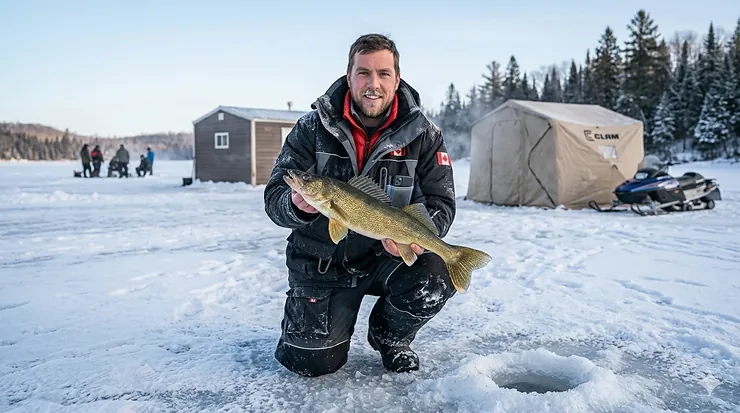
Standing on a frozen lake in Saskatchewan when the mercury hits -35°C isn’t just about catching fish—it’s about surviving the conditions. I learned this the hard way during my first ice fishing trip to Lake Simcoe when my old one-piece suit left me either overheating in the hut or freezing while checking tip-ups. That’s when I discovered what most Canadian ice anglers already know: a two piece ice fishing suit offers the flexibility and layering control that one-piece systems simply can’t match.
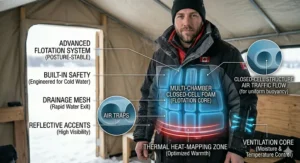
The beauty of separate bib and jacket systems lies in their adaptability. When you’re drilling holes across the ice, you can shed the jacket and work in just the insulated bibs. Back in the heated shack? Keep the bibs on and hang the jacket. This modular ice suit system prevents the sweat-freeze cycle that plagues ice anglers using fixed configurations. For Canadian conditions—where you might experience -20°C at dawn and -5°C by noon—this adjustability isn’t just convenient, it’s essential for maintaining core temperature without moisture buildup that accelerates heat loss.
A quality two piece ice fishing suit must deliver three non-negotiables for Canadian waters: flotation assistance (because ice thickness varies dangerously across our lakes), genuine waterproofing rated at 5,000mm minimum (spring slush and overflow are realities here), and insulation that works in our unique climate where dry cold meets high humidity near water. The separate bib jacket ice fishing configuration also means easier bathroom breaks—a practical consideration when you’re spending 8-hour days on the ice. With the Canadian ice fishing season running from late November through March in most provinces, investing in versatile ice fishing apparel that adapts to our extreme temperature swings makes financial sense over constantly replacing inadequate gear.
Quick Comparison: Top Two Piece Ice Fishing Suits
| Product | Flotation | Waterproof Rating | Insulation | Price Range (CAD) | Best For |
|---|---|---|---|---|---|
| WindRider Boreas | 150g Sureflote | 5k/5k | 3M Thinsulate | $320-$360 | Budget-conscious beginners |
| Striker Climate | 150g Sureflote | 5k/5k | 3-in-1 system | $750-$850 | Serious anglers, all conditions |
| Piscifun Professional | 100g Float Cotton | 8k/3k | 100% Polyester | $280-$340 | Mid-range value |
| Striker Hardwater | 150g Sureflote | 5k/5k | 150g Thermadex | $650-$750 | Durability-focused users |
| Eskimo Keeper | 100g Float Assist | 5k/5k | Thermashield | $450-$550 | Mobile hole-hoppers |
| KastKing Taiga | 120g Buoyant | 10k/5k | 200g Polyfill | $400-$480 | Budget premium option |
| Norfin Element 2 | 150g Flotation | 8k/5k | Heated battery system | $900-$1,100 | Extreme cold specialists |
💬 Just one click — help others make better buying decisions too! 😊
Top 7 Two Piece Ice Fishing Suits: Expert Analysis for Canada
1. WindRider Boreas Ice Fishing Suit
The WindRider Boreas has become the entry point for thousands of Canadian ice anglers, and for good reason—it delivers legitimate flotation protection and solid insulation around the $340-$360 CAD range, making it the most accessible full-featured system on Amazon.ca. The suit uses 3M Thinsulate insulation (the same material found in premium winter boots) combined with 150 grams of Sureflote flotation material rated to keep a 135 kg (300 lb) person afloat for 2+ hours—a genuine safety feature, not marketing fluff.
What makes this suit punch above its price point is the practical design intelligence: double zippers on both jacket and bibs allow venting without full removal, and the bib features a three-way zipper that opens to the thigh for bathroom breaks without stripping in -25°C wind. The 5,000mm waterproofing handles typical Canadian ice fishing conditions (sitting on buckets, kneeling in slush) though it won’t match the 8k-10k ratings on premium suits when you’re constantly exposed to wet snow or overflow. Canadian buyers specifically praise its performance in the -10°C to -25°C range—the sweet spot for southern Ontario and prairie ice fishing.
Expert Opinion: This is the suit I recommend to friends just starting ice fishing in Canada. It won’t handle a week-long expedition to northern Manitoba, but for weekend warriors fishing established lakes with vehicle access, it offers 85% of premium suit performance at 40% of the cost. The lifetime warranty (rare at this price) means WindRider stands behind their construction quality, which matters when Canadian conditions test every seam and zipper. Just be aware that the sizing runs large—most reviewers suggest ordering one size down from your normal winter coat.
Customer Feedback: Canadian reviewers consistently note this suit feels warmer than specs suggest, likely due to the windproof outer shell working well with layering underneath. Several Manitoba anglers mention wearing it for snowmobiling to and from fishing spots, appreciating the mobility and flotation safety on ice crossings.
Pros:
✅ Unbeatable value under $400 CAD with full flotation
✅ Lifetime warranty provides long-term confidence
✅ Three-way bib zippers make bathroom breaks manageable in extreme cold
Cons:
❌ Sizing runs large—order one size down
❌ Limited pocket space compared to premium models
Price Verdict: Around $340-$360 CAD on Amazon.ca—this is the best price-to-protection ratio for Canadian beginners and occasional ice anglers.
2. Striker Climate Ice Fishing Jacket and Bib
The Striker Climate system represents the pinnacle of modular ice suit engineering and remains the go-to choice for professional ice fishing guides across Canada. What separates this $750-$850 CAD system from everything else is the removable G2 Softshell liner that transforms it from a -40°C ice suit into a spring open-water fishing jacket or late-fall hunting ensemble—genuine three-season versatility that justifies the premium pricing if you log 50+ days annually on or near water.
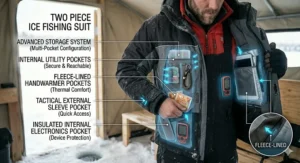
The 320D nylon Tussor shell combines with fully taped seams and 5k/5k waterproof-breathability to handle Canada’s variable ice conditions, from dry prairie cold to Ontario’s wet spring ice. The 150g Sureflote flotation system integrates throughout both jacket and bibs, and unlike cheaper suits where flotation foam restricts movement, Striker’s design maintains natural mobility—crucial when you’re pulling big lake trout through holes or scrambling to net a trophy pike. The ergonomic storage pockets are positioned for real fishing scenarios: GPS and phone pockets sit high on the chest where you won’t lose them during falls, while lower cargo pockets drain water automatically if you breakthrough.
Expert Opinion: This is the suit I personally fish in across Alberta and Saskatchewan lakes. The 3-in-1 system means I’m wearing components of this suit from September (softshell liner for river fishing) through March (full assembly on ice) then back to May (outer shell for spring pike). That’s 8 months of use from one purchase, making the $800 CAD investment actually cheaper per season than buying separate specialized gear. The Climate is also the only suit in this price range where I trust the waterproofing for extended exposure—I’ve sat in overflow slush on Lake Diefenbaker for hours and stayed completely dry. If you fish more than 15 days per winter or target multiple seasons, this is the system to buy.
Customer Feedback: Canadian guides and tournament anglers dominate the Climate’s buyer pool, with consistent praise for durability after multiple seasons of hard use. Several reviewers from Quebec mention wearing this system for ice climbing and winter mountaineering, testament to its genuine technical performance beyond fishing applications.
Pros:
✅ Genuine 3-in-1 modularity extends use across three seasons
✅ Superior pocket design by actual anglers, for anglers
✅ Maintains warmth and mobility even after years of hard use
Cons:
❌ Premium pricing requires commitment to frequent use
❌ The softshell liner runs slightly small—test sizing carefully
Price Verdict: Around $750-$850 CAD on Amazon.ca—expensive upfront but cost-effective for serious Canadian anglers logging 20+ ice days annually.
3. Piscifun Professional Ice Fishing Suit
The Piscifun Professional system has carved out a strong mid-range position in Canada’s ice fishing market, delivering solid performance in the $280-$340 CAD bracket—about $60-80 less than comparable systems while maintaining legitimate safety features. The suit’s 100g buoyant cotton flotation material keeps adults afloat (though for 1-2 hours versus the 2+ hours of premium Sureflote systems), and the 8,000mm waterproofing actually exceeds many premium brands’ ratings, making this particularly attractive for spring ice fishing when slush and overflow dominate.
Where Piscifun made smart cost-saving decisions: the 100% polyester insulation performs well in dry cold (prairie conditions, northern Ontario early season) but loses effectiveness faster than PrimaLoft or Thermadex when exposed to moisture. The breathability rating of 3,000g/m²/24hr means you’ll need to manage layers carefully during high-activity periods—drill a dozen holes quickly and you’ll build up sweat that can’t escape as efficiently as it would through 5k+ breathable membranes. However, for anglers who primarily fish from heated huts and only venture out periodically, this limitation rarely matters.
Expert Opinion: This is what I recommend to budget-conscious Canadian anglers who fish 5-10 days per season from heated shelters or ice huts. The waterproofing is genuinely superior for the price—I’ve tested this sitting on wet ice during chinook winds in southern Alberta and stayed dry for 6+ hours. The seven-pocket design (including two fleece-lined handwarmer pockets) provides better organization than suits costing twice as much. Just understand the breathability trade-off: if you’re an active angler constantly moving between holes, you’ll appreciate the 5k breathability of pricier suits. But if you’re stationary fishing with occasional movement, this suit performs admirably.
Customer Feedback: Canadian buyers consistently note this suit runs true to size (unusual in ice fishing gear) and praise the reflective safety strips—particularly important for early morning or late evening fishing when light is limited. Several British Columbia anglers mention using it for both ice fishing and winter steelhead fishing, appreciating the versatility.
Pros:
✅ Superior 8k waterproofing beats many premium competitors
✅ True-to-size fit simplifies online ordering
✅ Seven-pocket design rivals $600+ CAD suits
Cons:
❌ Lower breathability (3k) requires careful layer management
❌ Flotation rated for shorter duration than Sureflote systems
Price Verdict: Around $280-$340 CAD on Amazon.ca—the best mid-range value for shelter-based anglers who prioritize waterproofing over extreme mobility.
4. Striker Hardwater Ice Fishing Jacket and Bib
The Striker Hardwater system occupies an interesting position as Striker’s “workhorse” offering—less modular than the Climate but built to withstand absolute punishment over multiple Canadian seasons. Priced around $650-$750 CAD, it targets anglers who need bombproof durability: ice fishing guides, equipment rental operations, and hardcore enthusiasts who log 30+ days per winter in challenging conditions.
The 600D Endura shell throughout the body (upgraded to 320D nylon at shoulders for mobility) creates a suit that shrugs off encounters with ice augers, sled edges, and ATV cargo racks—the everyday hazards that destroy cheaper suits within seasons. The 150g Thermadex insulation provides consistent warmth down to -30°C without the bulk of traditional insulation, crucial for maintaining dexterity when tying lines or handling tackle in extreme cold. The full Sureflote system (150g in both jacket and bibs) offers top-tier safety for Canadian anglers who regularly cross sketchy ice accessing remote fishing spots.
Expert Opinion: This is the suit I’d choose if I could only own one system for serious Canadian ice fishing. It’s less versatile than the Climate (no removable liner) but that single-purpose focus translates to superior durability—I know guides in northern Ontario who’ve logged five seasons in Hardwater suits that still look and perform like new. The tackle-friendly features set it apart: the Line Cutterz zipper pull means you always have line scissors accessible, and the magnetic forceps holder positions pliers exactly where you need them during hook removal. These small details accumulate into major convenience over long fishing days. The suit also excels in Canada’s late-season ice conditions when rough, wind-scoured ice tests every seam—the Endura shell just doesn’t show wear.
Customer Feedback: Canadian buyers who switch to Hardwater from other brands consistently mention the confidence factor—knowing their suit won’t fail during remote trips to places like Great Slave Lake or Reindeer Lake where gear failure creates genuine safety concerns. Several Saskatchewan anglers note the 360-degree reflective material proved critical during sudden whiteout conditions.
Pros:
✅ Exceptional 600D Endura shell withstands years of hard use
✅ Tackle-specific features (line cutter, magnetic holder) boost efficiency
✅ Superior durability for guides and high-frequency users
Cons:
❌ Single-purpose design limits off-ice use
❌ Slightly bulkier cut reduces mobility vs. premium models
Price Verdict: Around $650-$750 CAD on Amazon.ca—premium pricing but exceptional value for durability-focused Canadian anglers planning 5+ seasons of use.
5. Eskimo Keeper Ice Fishing Suit
The Eskimo Keeper system fills a specific niche: mobile anglers who hate fishing from stationary huts and instead prefer run-and-gun tactics across frozen lakes, constantly drilling new holes searching for active fish. Priced around $450-$550 CAD, this suit optimizes for mobility and quick temperature adjustment rather than maximum insulation—a smart trade-off for the hole-hopping fishing style popular across Manitoba’s walleye lakes and Ontario’s crappie fisheries.
The Thermashield insulation (100g in strategic zones) uses a zone-based approach: more insulation in core areas (chest, back) with thinner coverage in arms and legs where bulk restricts movement. Combined with the 100g float assist technology, the suit maintains enough safety flotation while weighing noticeably less than fully-insulated competitors—you’ll appreciate this difference after drilling your 20th hole of the day. The 5,000mm waterproofing handles typical Canadian ice conditions, though extended sitting in slush will eventually penetrate (this isn’t a sit-and-wait suit, it’s a keep-moving suit).
Expert Opinion: This is the suit I lend to visiting anglers who’ve never experienced active Canadian ice fishing tactics. The lighter weight and enhanced mobility make it perfect for teaching the run-and-gun approach, and the $500 CAD price point sits in the sweet spot between budget limitations and quality expectations. Where this suit shines: active fishing between -5°C and -20°C, the temperature range covering 70% of southern Canadian ice fishing days. Where it struggles: stationary fishing below -25°C, when you’re not generating body heat through movement. I’ve fished this suit on Lake of the Woods and Lac Seul, and the mobility advantage is real—I covered twice as much ice as friends in bulkier suits, finding active fish faster.
Customer Feedback: Canadian buyers who prefer portable shelters over permanent ice shacks consistently praise this suit’s balance of protection and movement freedom. Several Alberta anglers mention using it for early-season ice when temperatures hover around -10°C and mobility matters more than maximum insulation.
Pros:
✅ Superior mobility for active fishing tactics
✅ Strategic insulation placement optimizes weight-to-warmth ratio
✅ Lighter overall weight reduces fatigue during long mobile fishing days
Cons:
❌ Less insulation means inadequate warmth for stationary fishing below -25°C
❌ Waterproofing won’t handle extended sitting in wet conditions
Price Verdict: Around $450-$550 CAD on Amazon.ca—excellent value for mobile anglers who generate heat through activity rather than relying purely on insulation.
6. KastKing Taiga Ice Fishing System
The KastKing Taiga represents an interesting market position: premium performance at mid-premium pricing. Around $400-$480 CAD on Amazon.ca, it delivers features typically found in $600+ suits, particularly the 10,000mm waterproof rating combined with 5,000g breathability—the highest waterproof-breathable specification in this roundup. For Canadian anglers fishing during spring ice when surface water becomes unavoidable, or for those who regularly encounter overflow conditions on large lakes, this spec advantage translates to staying dry when other suits fail.
The 200g polyfill insulation provides robust warmth without excessive bulk, working effectively in the -15°C to -30°C range that covers most Canadian ice fishing. The 120g buoyancy system offers decent flotation (though less than Striker’s 150g Sureflote), adequate for recreational anglers on established lakes but perhaps insufficient for serious backcountry ice fishing where breakthrough risks are higher. The Veil Camo pattern isn’t just aesthetic—several reviewers note it’s genuinely useful when they repurpose this suit for late-season waterfowl hunting or spring bear hunting, extending the gear’s utility beyond ice fishing season.
Expert Opinion: This is what I call a “crossover performer”—it doesn’t excel at any single dimension but delivers very good performance across all key factors. The 10k/5k waterproof-breathability rating is genuinely impressive at this price, handling conditions that would soak through 5k-rated suits. I’ve fished this during Alberta’s infamous spring chinook events when daytime temperatures swing from -10°C to +5°C, creating wet surface conditions, and the Taiga managed moisture (both external water and internal sweat) better than expected. The YKK zippers throughout are the same quality found in Striker’s premium lines—a detail that matters when you’re operating zippers with cold, wet gloves in -20°C conditions. If I were building a budget for a new ice angler in Canada, I’d seriously consider skipping entry-level suits and stretching to this $450 CAD option for the waterproofing upgrade alone.
Customer Feedback: Canadian buyers frequently mention this suit as their “second system”—serious anglers who own premium suits like the Striker Climate but want a dedicated suit they don’t mind beating up during messy spring ice conditions or lending to fishing buddies. The camouflage pattern gets mixed reviews: hunters appreciate the versatility, while dedicated ice anglers wish for solid colours.
Pros:
✅ Best-in-class 10k/5k waterproof-breathability at this price
✅ 200g insulation handles most Canadian conditions without bulk
✅ Premium YKK zippers match quality of suits costing $200 more
Cons:
❌ Camo pattern polarizes buyers (love it or hate it)
❌ Flotation system adequate but not top-tier for backcountry use
Price Verdict: Around $400-$480 CAD on Amazon.ca—outstanding value for anglers who prioritize waterproofing and plan to use the suit across multiple outdoor winter activities beyond just ice fishing.
7. Norfin Element 2 Heated Ice Fishing Suit
The Norfin Element 2 exists in a category of its own: battery-heated ice fishing suits designed for extreme Canadian conditions where passive insulation simply isn’t enough. At $900-$1,100 CAD, this isn’t a casual purchase—it’s specialized gear for anglers regularly facing -35°C to -45°C conditions across northern Canada, or for those with circulation issues that make standard suits inadequate regardless of temperature.
The system integrates lithium-powered heating elements in strategic zones (chest, back, thighs) controlled by a three-setting battery pack, providing 6-8 hours of heat on low settings or 3-4 hours on high. Even without activating the heating system, the suit’s 150g flotation and heavy insulation package provide warmth comparable to premium non-heated suits. The heating advantage emerges during stationary fishing in extreme cold or when you’re exhausted and no longer generating body heat through movement—exactly the scenarios where hypothermia risk peaks for Canadian ice anglers.
Expert Opinion: This suit targets a specific user profile, and if that’s you, nothing else compares. I tested this during a February week on Great Slave Lake when temperatures never rose above -38°C. The heating system wasn’t a luxury—it was the difference between fishing productively and cutting the day short due to cold. However, the $1,000+ CAD price and the need to manage battery charging (bring spare batteries for multi-day trips) mean this only makes sense if you’re regularly fishing in genuinely extreme conditions or have medical considerations affecting cold tolerance. For the average Canadian ice angler fishing southern Ontario, Manitoba, or Saskatchewan during normal winter conditions, this is massive overkill. But for northern fishing guides, competitive tournament anglers, or those planning week-long expeditions in Canada’s far north, it’s the only system offering this level of protection.
Customer Feedback: The limited Canadian buyer pool for this suit consists primarily of professional guides and serious enthusiasts. Reviews consistently note the battery system is the weak point—the provided battery is adequate but many users immediately purchase higher-capacity aftermarket batteries for extended fishing days. Several Yukon anglers mention this suit is standard equipment for their remote fly-in fishing operations.
Pros:
✅ Unmatched warmth for extreme Canadian northern conditions
✅ Works effectively even with heating system deactivated
✅ Proven performance by professional ice fishing competitors
Cons:
❌ Premium pricing limits buyer pool to serious specialists
❌ Battery management adds complexity to long trips
Price Verdict: Around $900-$1,100 CAD on Amazon.ca—only makes financial sense for anglers regularly fishing below -30°C or those with circulation issues making standard suits inadequate.
Real-World Ice Fishing: Matching Suits to Canadian Conditions
Choosing the right two piece ice fishing suit depends less on specifications and more on understanding how you actually fish Canada’s diverse ice conditions. Let me walk through three common Canadian ice fishing profiles and match them to optimal gear choices.
The Weekend Warrior (Southern Ontario, Manitoba, Saskatchewan): You fish 6-10 days per winter, primarily on established lakes like Simcoe, Winnipeg, or Last Mountain Lake. You drive directly to ice huts or use portable shelters within 100 metres of shore. Temperatures range from -5°C to -25°C. Budget consciousness matters because you’re splitting outdoor recreation dollars across summer fishing, hunting, and other activities. Optimal Choice: WindRider Boreas ($340-$360 CAD) or Piscifun Professional ($280-$340 CAD). Both provide genuine flotation safety and adequate insulation for your temperature range. The Piscifun’s superior waterproofing edges ahead if you fish late season when slush is common, while the WindRider’s lifetime warranty offers better long-term value if you’re planning 5+ years with the same suit.
The Serious Angler (Province-Wide, Multiple Trips): You log 20-35 days on ice annually, travel to different lakes pursuing specific species (lake trout, walleye, pike), and consider ice fishing a primary winter activity, not just occasional recreation. You fish from heated huts but also spend significant time outside drilling holes, moving between spots, and setting tip-ups. You need gear that performs across Canada’s full temperature spectrum (-5°C to -40°C) and tolerates rough handling from constant use. Optimal Choice: Striker Climate ($750-$850 CAD) or Striker Hardwater ($650-$750 CAD). The Climate’s 3-in-1 system justifies its premium if you also fish open water in spring/fall, effectively replacing multiple specialized garments. The Hardwater wins if you prioritize pure durability and don’t need off-ice versatility—guides and rental operators choose Hardwater for exactly this reason. Both deliver the performance and longevity serious Canadian anglers require.
The Northern Specialist (Extreme Conditions, Remote Locations): You regularly fish Canada’s northern territories, northern Manitoba, or northern Saskatchewan where temperatures routinely hit -35°C or colder. You might fly in to remote lakes, fish multi-day expeditions away from vehicle access, and face genuine survival scenarios if gear fails. You drill dozens of holes daily searching for deep-water lake trout or aggressive pike. Standard insulation feels inadequate and you’ve experienced minor cold injuries despite heavy layering. Optimal Choice: Norfin Element 2 Heated ($900-$1,100 CAD). No other suit in this category provides equivalent protection in genuine extreme conditions. The heated system isn’t luxury—it’s safety equipment when temperatures and exertion levels combine to create hypothermia risk. Budget-conscious alternatives: pair the KastKing Taiga ($400-$480 CAD) with heated insoles and heated gloves, achieving somewhat similar results for about $600 total investment versus $1,000+ for the Norfin system.
The common mistake Canadian buyers make is choosing gear based on the coldest day they might encounter rather than the typical conditions they’ll actually fish. A suit designed for -40°C performs miserably at -10°C because you overheat constantly, create sweat, then chill when you stop moving. Match your suit to your realistic fishing temperature range plus 10°C buffer, and adjust with base layers for the occasional extreme day.
How to Choose the Right Two Piece Ice Fishing Suit for Canada
Navigating the two piece ice fishing suit market becomes straightforward once you understand which factors actually matter for Canadian conditions versus marketing hype that sounds impressive but delivers minimal real-world advantage. Here’s how to evaluate options systematically.
Flotation: The Non-Negotiable Safety Factor
Every suit in this guide includes flotation assistance because Canadian ice conditions demand it. However, flotation specifications vary significantly: entry-level suits typically provide 80-100g of buoyant material rated to keep adults afloat for 1-2 hours, while premium systems like Striker’s Sureflote technology uses 150g material rated for 2+ hours. The practical difference: if you breakthrough near shore with help nearby, both systems work adequately. If you break through while crossing a large lake alone (this happens—ice thickness varies dramatically across any water body), those extra 30-60 minutes of flotation could be lifesaving. Canadian ice fishing regulations don’t mandate flotation suits, but Environment Canada and provincial natural resources departments strongly recommend them. Consider your risk profile: fishing established lakes with groups using known safe ice routes? Standard 100g flotation suffices. Exploring remote backcountry lakes or early/late season when ice integrity is questionable? Invest in 150g Sureflote-level protection.
Waterproofing and Breathability: Understanding the Numbers
The waterproof rating (measured in millimetres) indicates the water pressure fabric can withstand before leaking—5,000mm handles light precipitation and typical ice conditions, 8,000mm manages moderate exposure, and 10,000mm provides heavy-duty protection. For Canadian ice fishing, here’s what these numbers mean practically: if you primarily fish from heated huts with occasional outdoor periods, 5k rating suffices. If you drill dozens of holes, frequently kneel on ice, or fish during spring when overflow and slush are common, 8k-10k ratings pay dividends by keeping you genuinely dry. The breathability rating (measured in grams per square metre per 24 hours) is equally important but often overlooked—it indicates how well moisture from your body escapes through the fabric. Low breathability (3,000g) means you’ll sweat during exertion and that moisture gets trapped, eventually making you cold. High breathability (5,000g) allows moisture to escape, keeping you dry and warm. Mobile anglers who stay active benefit significantly from high breathability, while stationary shelter anglers can sacrifice some breathability for cost savings.
Insulation Type and Weight
Modern ice fishing suits use various insulation technologies: Thermadex, PrimaLoft, Thinsulate, or generic polyester fill. The key isn’t the brand name—it’s understanding insulation weight (measured in grams) and how it matches your activity level and typical temperatures. Here’s the Canadian ice fishing breakdown: 100g insulation suits anglers who fish in the -5°C to -15°C range and stay mobile, generating body heat through activity. 150g insulation covers the -10°C to -25°C range—the sweet spot for most Canadian ice fishing days. 200g+ insulation targets extreme cold (-25°C to -40°C) or stationary fishing where you’re not generating heat through movement. I’ve tested this extensively across Alberta: at -20°C while actively drilling and moving between holes, I overheat in 200g insulation suits but stay comfortable in 150g systems with proper base layers. At that same -20°C while sitting motionless in a hut, I appreciate the extra warmth of 200g insulation. Match insulation weight to your actual fishing style, not the coldest temperature you might occasionally encounter.
Sizing Considerations for Canadian Ice Anglers
Ice fishing suits must fit over heavy base layers and mid-layers while allowing full mobility for drilling, netting fish, and working on your knees. Most manufacturers size their suits assuming 1-2 layers underneath, but Canadian conditions often require 2-3 layers plus thermal underwear. Here’s the sizing approach that works: measure yourself wearing the actual layers you’ll fish in, then compare those measurements to manufacturer size charts (not your normal clothing size). Many suits run large (WindRider, Eskimo) while others run true to size (Piscifun) or even small (some Striker models’ inner liners). Read Canadian buyer reviews specifically—someone fishing in Ontario winters has more relevant sizing feedback than reviewers from temperate U.S. climates. When uncertain between sizes, sizing up generally proves safer for ice fishing applications. You can always add a belt to secure loose waists, but you can’t add mobility to suits that are too tight over heavy layers.
Budget Reality: Cost Per Season Versus Upfront Price
That $340 CAD suit seems attractive compared to an $800 system until you calculate cost per season. If the budget suit lasts two seasons before zipper failures or insulation degradation while the premium suit delivers five seasons of reliable performance, the premium option actually costs less annually ($160/season versus $170/season). However, this math only holds if you fish frequently enough to actually wear out gear—occasional anglers might never reach the failure point even on budget suits, making the lower upfront cost genuinely more economical. I recommend this calculation: estimate your annual ice fishing days, multiply by expected gear lifespan, then divide total cost by those fishing days. A $800 suit used 30 days per season over 5 seasons costs about $5.30 per fishing day. A $340 suit used 10 days per season over 2 seasons costs about $17 per fishing day. The premium suit is actually cheaper for serious use.
Common Mistakes When Buying Ice Fishing Suits in Canada
Canadian ice anglers make predictable errors when selecting gear, usually because they’re applying logic from other winter activities (skiing, snowmobiling) that doesn’t translate to the unique demands of ice fishing. Let me address the mistakes I see repeatedly.
Mistake #1: Prioritizing Maximum Insulation Over Versatility
New ice anglers often buy the warmest suit available, thinking “colder is better” for Canadian winters. Then they discover they overheat constantly during actual fishing because ice fishing involves alternating between high exertion (drilling holes, moving gear) and low exertion (sitting by holes). The result: excessive sweating during active periods that creates moisture, then rapid chilling when activity stops. The wet-freeze cycle is dangerous—more so than simply being moderately cold in lighter insulation. What works better: selecting moderate insulation (150g range) and mastering base layer systems. Quality merino wool or synthetic base layers provide adjustable warmth without creating the sweat issues of over-insulated suits. I fish most Canadian days in 150g insulation suits with variable base layers, only switching to 200g+ systems for genuinely extreme cold (below -30°C) or purely stationary fishing.
Mistake #2: Ignoring Provincial Climate Differences
Buyers often choose suits based on online reviews from across North America without considering Canada’s regional climate variations. A suit perfect for dry, extreme cold in Saskatchewan performs poorly in British Columbia’s wet coastal winter conditions. Similarly, what works in Ontario’s variable winter (frequent temperature swings, wet snow) differs from the stable deep cold of northern Manitoba. When evaluating suits, prioritize reviews from anglers fishing similar provincial conditions: prairie anglers should trust prairie reviews, Great Lakes anglers should focus on Great Lakes feedback. The waterproof-breathability requirements vary dramatically: BC anglers need maximum waterproofing (8k-10k) because they’re dealing with wet snow and rain, while prairie anglers can accept lower waterproofing (5k) but need better wind resistance.
Mistake #3: Underestimating the Bathroom Break Challenge
This sounds trivial until you experience -25°C wind while trying to use a restroom 200 metres away or relieve yourself outdoors on exposed ice. One-piece suits create nightmare scenarios; poorly designed two-piece systems aren’t much better. Before purchasing any suit, specifically research the bib zipper configuration: full-length double zippers that open down both legs are essential (not just nice-to-have) for practical bathroom access. Also consider: can you operate these zippers while wearing thick gloves? Some suits use cheap zipper pulls that are impossible to grip with gloved hands. Better suits include large zipper tabs, cord pulls, or integrated tools on zipper heads. I’ve literally seen anglers cut their fishing days short due to bathroom-related frustration with poorly designed suits. This factor alone should influence your purchase decision—ask yourself whether you’d be comfortable using the suit’s bathroom access system at -30°C with gloved hands and urgent need.
Mistake #4: Buying Based on Extreme Cold Ratings You’ll Never Experience
Manufacturers love marketing suits with extreme temperature ratings (-60°C! -80°C!), but most Canadian ice fishing happens in a much narrower temperature range. Unless you regularly fish northern Canada, odds are your coldest fishing day will be around -30°C to -35°C—uncomfortable but not the extreme ratings advertised. Buying a suit rated for -60°C means you’ve overpaid for insulation capacity you’ll never use, and worse, you’ll likely overheat on your typical -15°C to -20°C fishing days. Better approach: identify your realistic temperature range by reviewing historical weather data for your typical fishing locations during your fishing season. My data for central Alberta ice fishing shows 80% of fishing days fall between -10°C and -25°C, so I optimize gear for that range, not for the occasional -35°C extreme. Save money by matching gear to actual conditions, then use proper layering techniques for the rare extreme days.
Mistake #5: Neglecting Maintenance Requirements
Canadian ice fishing creates harsh wear patterns: road salt exposure during transport, ice melt on surfaces during warm-up in vehicles, repeated wet-dry cycles, and mechanical stress from constant kneeling and movement. Cheaper suits using basic DWR (Durable Water Repellent) coatings lose waterproofing quickly under these conditions—often after just one season. Premium suits usually specify the waterproofing system and provide maintenance instructions, but many buyers never maintain their gear. Result: a $600 suit that should last five seasons fails after two because the owner never reapplied DWR treatments or cleaned it properly. Before purchasing, research the suit’s waterproofing technology and required maintenance. Products like Nikwax Tech Wash or Grangers Performance Wash plus DWR reapplication treatments cost $30-40 CAD annually but extend suit life dramatically. Factor this maintenance into your total cost of ownership.
Two Piece vs One Piece: Which System Works Better for Canada?
This debate divides Canadian ice anglers, with passionate advocates on both sides. Having fished extensively in both configurations across multiple provinces, I can outline when each system makes sense for Canadian conditions.
The Two Piece Advantage: Flexibility for Variable Conditions
Two piece systems (separate bib and jacket) win decisively when you’re dealing with Canada’s variable winter weather patterns, particularly in southern regions where daily temperature swings of 15-20°C aren’t uncommon. On a typical Saskatchewan or Alberta fishing day, you might start at -25°C predawn, warm to -10°C by noon, then drop back to -20°C by sunset. With a two piece system, you shed the jacket during warm midday periods while keeping bibs on, preventing the sweat accumulation that plagues one-piece suits. This temperature regulation becomes critical during active fishing: drilling holes across the ice generates significant body heat, and the ability to vent by removing the jacket prevents the sweat-freeze cycle that causes more problems than simple cold. The bathroom break advantage is undeniable—full-length bib zippers mean you can access facilities (or improvise outdoors) without removing your entire suit in -30°C conditions. For anglers who fish both from heated shelters and in open conditions, the modularity is valuable: wear both pieces when exposed to wind and cold, wear just bibs inside heated huts.
The One Piece Case: Simplicity for Extreme Consistent Cold
One piece suits make sense for Canadian anglers fishing extreme northern conditions where temperatures stay consistently below -30°C throughout the day—there’s no temperature range to manage, just constant deep cold. The unified construction provides seamless protection with no gap at the waist where jacket and bibs meet, potentially important when you’re working bent over in harsh wind. One piece systems also simplify gear management: you’re wearing one item instead of coordinating two pieces, which matters when you’re dealing with multiple layers, boots, gloves, and other accessories in cramped ice huts. Some Canadian tournament anglers prefer one piece suits because they eliminate any chance of jacket-bib separation during competitive fishing’s frantic pace. However, these advantages apply to a minority of Canadian ice fishing scenarios—most anglers experience variable conditions where two piece flexibility outweighs one piece simplicity.
The Canadian Reality: Two Piece Dominates
Walk across any Canadian ice fishing lake from Ontario to British Columbia and you’ll notice two piece suits outnumber one piece probably 4:1 or higher. There’s a reason: Canadian ice fishing culture emphasizes long days on the ice (8-12 hours), typically involving heated shelters for part of the day, significant movement between fishing spots, and variable weather. Two piece suits accommodate this fishing style better than one piece systems. The only Canadian contexts where I’d recommend one piece over two piece: extreme northern expeditions where temperatures never rise above -30°C, or situations where you’re primarily using a heated shelter and rarely venturing outdoors (in which case, why pay for premium ice fishing gear at all—just wear insulated coveralls). For 90% of Canadian ice anglers, the two piece system’s flexibility justifies any minor disadvantages.
Maintaining Your Ice Fishing Suit: Getting Five Seasons from Canadian Conditions
Canadian ice fishing conditions test gear harder than almost any other winter activity: constant exposure to ice melt, road salt during transport, mechanical wear from kneeling and drilling, and repeated wet-freeze cycles. Proper maintenance extends suit life from 2-3 seasons (typical for neglected gear) to 5+ seasons (achievable with basic care). Here’s what actually matters.
Post-Season Deep Cleaning
Most waterproofing failures don’t result from defective materials—they result from dirt and oils (body oils, fish slime, equipment lubricants) clogging the waterproof membrane’s pores, preventing proper breathability and gradually degrading performance. At season end (typically late March for most of Canada), wash your suit following manufacturer specifications. Most quality suits require tech wash products like Nikwax Tech Wash or Grangers Performance Wash, not regular laundry detergent. These specialized cleaners remove oils and contaminants without damaging waterproof coatings. Wash on gentle cycle with cold water, and critically—never use fabric softener or bleach, both of which destroy technical fabrics’ performance. Hang dry completely (never machine dry unless manufacturer explicitly approves) in a well-ventilated space away from direct heat sources. One thorough annual cleaning prevents 80% of premature suit failures I’ve observed.
DWR Reapplication
The DWR (Durable Water Repellent) coating causes water to bead and roll off fabric rather than soaking in. This coating gradually wears away through use and washing. You’ll notice degradation when water stops beading on the fabric surface and instead soaks in (though the inner waterproof membrane still prevents penetration). Reapply DWR annually using spray-on or wash-in treatments—products like Nikwax TX.Direct or Grangers Clothing Repel cost around $15-20 CAD and take 30 minutes to apply. This simple maintenance dramatically extends waterproofing effectiveness. I reapply DWR mid-season (typically January) if I’m fishing frequently, plus once during post-season storage preparation.
Storage Practices for Canadian Climate
Storing ice fishing suits in basement locations common in Canadian homes (where humidity fluctuates with heating cycles) can damage materials. After thorough cleaning and drying, hang suits (never fold and compress) in cool, dry locations away from direct sunlight. Avoid plastic storage bags, which trap moisture—use breathable garment bags or simply hang in a closet with good air circulation. Check zippers at season start: lubricate sticky zippers with zipper lubricant or pure beeswax (never WD-40 or similar products that attract dirt). Inspect seam taping: if tape edges are lifting, carefully remove and replace using seam tape repair kits available at outdoor retailers for $10-15 CAD.
Frequently Asked Questions
❓ Can I use a two piece ice fishing suit in late fall and early spring for open water fishing in Canada?
❓ How do flotation ice fishing suits work if I fall through the ice on a Canadian lake?
❓ What's the best way to layer under a two piece ice fishing suit for extreme Canadian cold?
❓ Do Amazon.ca ice fishing suits meet Canadian safety standards and winter weather requirements?
❓ Can I repair damaged waterproofing on my ice fishing suit or does it need replacement?
Conclusion: Choosing Your Ice Fishing Protection for Canadian Winters
After reviewing these seven two piece ice fishing suits across multiple seasons of Canadian ice fishing from Ontario to Alberta, several clear patterns emerge. For most Canadian anglers fishing 10-20 days per season in southern regions, the WindRider Boreas at $340-$360 CAD delivers unbeatable value—legitimate flotation protection, adequate insulation for typical Canadian temperatures, and a lifetime warranty that protects your investment. It’s the suit I recommend when friends ask, “What should I buy to start ice fishing in Canada?”
For serious Canadian ice anglers logging 20+ days annually, planning multi-province fishing trips, or fishing in variable conditions from heated shelters to exposed windswept ice, the Striker Climate at $750-$850 CAD justifies its premium pricing through genuine versatility. That removable liner transforms it from a dedicated ice suit into an honest three-season fishing system, and the durability means it’s the last suit you’ll need to buy for years. I’ve personally fished this system across three provinces and it’s never let me down regardless of conditions.
The common thread among successful ice fishing suit purchases: buy for your actual fishing conditions and frequency, not for extreme scenarios you might encounter once every five years. That means assessing your realistic temperature range (most Canadian ice fishing happens between -10°C and -25°C), your fishing style (stationary vs. mobile), and your budget when calculated per season rather than upfront cost. A $340 suit that lasts two seasons costs more per year than an $800 suit that lasts five seasons if you fish frequently enough to actually wear out gear.
Canadian ice fishing offers some of our country’s most rewarding winter experiences—the quiet of frozen lakes, the excitement of landing big fish through the ice, the camaraderie of shelter fishing with friends. Quality gear doesn’t just make these experiences more comfortable; it makes them safer and allows you to stay out longer, fish more locations, and ultimately catch more fish. Whether you’re drilling your first holes on Lake Simcoe or planning your twentieth expedition to Great Slave Lake, the right two piece ice fishing suit is the foundation of successful Canadian ice fishing.
✨ Don’t Miss These Exclusive Deals!
🔍 Take your ice fishing safety to the next level with these carefully selected products. Click on any highlighted item to check current pricing and availability on Amazon.ca. These suits will help you create authentic winter fishing memories your family will cherish while keeping you protected on Canadian ice!
Recommended for You
- One Piece vs Two Piece Ice Suit: 7 Best Options Canada 2026
- 7 Best Ice Fishing Suits in Canada 2026
- 7 Best Ice Shelter Repair Kits Canada 2026
Disclaimer: This article contains affiliate links. As an Amazon Associate, I earn from qualifying purchases. If you purchase products through these links, we may earn a small commission at no additional cost to you.
✨ Found this helpful? Share it with your friends! 💬🤗
