In This Article
Picture this: You’re on frozen Lake Simcoe during peak walleye season, temperatures hovering around -20°C, and suddenly you hear that sickening crack beneath your feet. In those critical seconds, your ice fishing suit isn’t just about comfort—it’s your lifeline.
For Canadian anglers braving our harsh winter conditions, choosing the right ice fishing suit is one of the most important gear decisions you’ll make. Unlike regular winter clothing, specialized ice fishing suits must balance extreme cold protection with waterproof technology, mobility for drilling holes and setting tip-ups, and critically—flotation assistance if you break through thin ice. Whether you’re chasing perch on Ontario’s Kawartha Lakes, targeting trophy pike in Saskatchewan’s northern waters, or pursuing walleye on Manitoba’s Lake Winnipeg, your suit needs to handle everything from morning frost at -30°C to slushy afternoon conditions when temperatures climb.
Canadian ice fishing is a time-honoured tradition that spans generations. As noted in historical records, ice fishing “was a matter of survival” for indigenous communities across the Arctic regions, who developed sophisticated techniques and equipment over thousands of years. Today’s modern suits combine cutting-edge materials like PrimaLoft insulation and Sureflote flotation technology with lessons learned from those early pioneers. The Ojibwe people of northern Ontario were among the first to rely on ice fishing as a critical food source, and their descendants continue this practice with pride.
This guide examines seven top-rated ice fishing suits available in Canada for 2026, featuring real products with verified CAD pricing, customer reviews from Canadian buyers, and expert analysis to help you make an informed decision.
Quick Comparison Table: Top Ice Fishing Suits Canada 2026
| Product | Waterproof Rating | Insulation | Flotation | Price (CAD) | Best For |
|---|---|---|---|---|---|
| Striker Climate Suit | 10K/10K | 150g PrimaLoft | Sureflote | $824.98 | Versatility & warmth |
| Eskimo Roughneck Suit | 5K/5K | Sherpa fleece | Uplyft | $450-500 | Rugged durability |
| WindRider Boreas Pro | 10,000mm | Strategic zones | Strategic foam | $550-650 | Lifetime warranty |
| Striker Hardwater Suit | 8K/10K | 150g Thermadex | Sureflote | $939.98 | Extreme conditions |
| Eskimo Keeper Suit | 5K/5K | Medium weight | Uplyft | $380-420 | Family value |
| Frogg Toggs Ultra Lite | Non-woven | Minimal | None | $54.95 | Budget option |
| Striker Predator Suit | 8K/8K | 100g Thermadex | Sureflote | $599.94 | Active anglers |
💬 Just one click – help others make better buying decisions too! 😊
Top 7 Ice Fishing Suits: Expert Analysis for Canadian Waters
1. Striker Climate Jacket and Bib – Best Overall Flotation and Versatility
The Striker Climate Suit earns our top recommendation for Canadian ice anglers who demand premium performance without compromise. This isn’t just one suit—it’s actually four suits in one modular system that adapts from brutal mid-winter conditions to early spring fishing.
Key Specifications:
- 10,000mm/10,000g waterproof/breathable rating
- 150g PrimaLoft Silver insulation with removable layers
- Sureflote flotation assistance technology
- 600D Endura shell fabric
At $329.99-$549.99 CAD for the jacket and $494.99-$549.99 CAD for the bib (total suit: approximately $824.98 CAD), the Striker Climate represents a significant investment. However, Canadian buyers consistently praise its ability to handle Ontario’s temperature swings and Saskatchewan’s bone-chilling winds. The removable liner system lets you strip down from extreme cold protection to a capable rain suit for shoulder-season fishing.
✅ Pros:
- Four-in-one modular design adapts to changing conditions
- Premium PrimaLoft insulation maintains warmth even when wet
- Sureflote technology provides critical safety on early/late ice
- Features like Line Cutterz zipper pulls save time on the ice
❌ Cons:
- Premium pricing may exceed budget anglers’ limits
- Slightly noisy fabric not ideal for deer hunting crossover use
Canadian Customer Feedback: Anglers from Alberta to Quebec report this suit handles -40°C with proper layering. The modular design means you’re not sweating through your base layers when fishing inside heated shelters, then freezing when you step outside to check tip-ups.
2. Eskimo Roughneck Jacket and Bib – Most Rugged for Active Fishing
Built like workwear but designed for ice, the Eskimo Roughneck tackles the bumps, scrapes, and abuse that come with serious ice fishing across Canada’s diverse waters.
Key Specifications:
- 600 denier construction-grade outer shell
- 5,000mm/5,000g waterproof/breathable
- Uplyft breathable flotation system
- Sherpa fleece insulation
Priced around $450-500 CAD for the complete suit, the Eskimo Roughneck delivers exceptional value for anglers who prioritize durability. The heavy-duty shell resists tears when you’re dragging sleds across pressure ridges or kneeling on rough ice while landing fish.
✅ Pros:
- Construction-grade fabric withstands extreme abuse
- Competitive pricing for flotation-equipped suit
- Sherpa fleece provides reliable warmth
- Uplyft flotation won’t restrict movement
❌ Cons:
- Lower waterproof rating than premium competitors
- Heavier weight may fatigue hole-hoppers
Canadian Customer Feedback: Manitoba ice anglers appreciate how this suit handles the rough ice common on Lake Winnipeg. The flotation provides peace of mind during the critical early-season period when ice thickness varies dramatically across a single lake.
3. WindRider Boreas Pro Floating Jacket – Best Warranty Protection
The WindRider Boreas Pro distinguishes itself with an unprecedented lifetime warranty covering both flotation functionality and manufacturing defects—protection no competitor can match.
Key Specifications:
- 10,000mm waterproof rating (highest in class)
- Strategic flotation zones in chest, back, and collar
- High-visibility orange panels with reflective striping
- Lifetime warranty on all components
At $550-650 CAD, the WindRider Boreas Pro costs more than budget options but less than premium Striker models. Canadian buyers appreciate the warranty security—if anything fails, WindRider replaces it regardless of when you purchased.
✅ Pros:
- Lifetime warranty eliminates long-term replacement costs
- Strategic flotation design maximizes upward force
- Superior 10,000mm waterproofing handles wet spring conditions
- High-visibility panels critical for safety on large lakes
❌ Cons:
- Newer brand with less market presence than Striker
- Limited Canadian retail availability
Canadian Customer Feedback: Ontario families introducing children to ice fishing value the lifetime warranty that lets suits pass between siblings as kids grow. The flotation coverage provides extra peace of mind for parents.
4. Striker Hardwater Jacket and Bib – Best for Extreme Canadian Winters
The Striker Hardwater is engineered specifically for the brutal conditions found from Manitoba to northern Ontario, where -30°C is common and wind chills push thermometers even lower.
Key Specifications:
- 8,000mm/10,000g waterproof/breathable protection
- 150g Thermadex insulation
- Sureflote flotation assistance
- 600D Endura shell with reinforced knees
At $469.99 CAD per piece (approximately $939.98 CAD complete suit), the Striker Hardwater commands premium pricing. However, anglers fishing Canada’s coldest regions report this suit handles conditions that send competitors back to the truck.
✅ Pros:
- Exceptional warmth for Canada’s coldest provinces
- Smart features like magnetic forceps holder
- Available in tall sizes for larger anglers
- Proven Sureflote flotation technology
❌ Cons:
- May be too warm for southern Ontario’s milder winters
- Premium pricing limits accessibility
Canadian Customer Feedback: Saskatchewan anglers fishing Lesser Slave Lake confirm this suit delivers on promises. The combination of Thermadex insulation and windproof shell creates a mobile shelter you wear.
5. Eskimo Keeper Jacket and Bib – Best Family Value
The Eskimo Keeper offers flotation protection and reliable warmth at a price point that makes outfitting the entire family feasible.
Key Specifications:
- 5,000mm/5,000g waterproof/breathable
- Medium-weight insulation suitable for -15°C to -25°C
- Uplyft breathable flotation
- Available in men’s, women’s, and youth sizes
Priced around $380-420 CAD complete, the Eskimo Keeper delivers the essential features Canadian families need without premium-tier costs. The Uplyft flotation provides critical safety for younger or less-experienced anglers.
✅ Pros:
- Flotation protection at affordable pricing
- Size range accommodates entire family
- Adequate warmth for most Canadian conditions
- Lightweight design won’t fatigue children
❌ Cons:
- May require additional layering in extreme cold
- Fewer premium features than high-end models
Canadian Customer Feedback: Quebec families appreciate the value proposition—outfitting three kids with flotation suits that actually fit properly, rather than adult hand-me-downs that compromise safety.
6. Frogg Toggs Ultra Lite Rain Suit – Budget Emergency Option
While not a dedicated ice fishing suit, the Frogg Toggs Ultra Lite serves as an emergency waterproof layer for anglers on tight budgets or those fishing exclusively inside heated shelters.
Key Specifications:
- Non-woven waterproof/breathable material
- Minimal insulation (requires heavy layering)
- No flotation assistance
- Packable design
At just $54.95 CAD, this Frogg Toggs suit costs less than most ice fishing jackets alone. However, understand the limitations—this is a rain suit adapted for ice fishing, not purpose-built for Arctic conditions.
✅ Pros:
- Extremely affordable entry point
- Lightweight and packable
- Adequate for shelter-based fishing
- Available at Canadian retailers
❌ Cons:
- No flotation protection whatsoever
- Minimal insulation requires extensive layering
- Less durable than dedicated ice fishing gear
Canadian Customer Feedback: Ontario anglers use these as backup suits or loaners for friends trying ice fishing. Not suitable as primary gear for serious Canadian winter conditions.
7. Striker Predator Jacket and Bibs – Best for Active Hole-Hoppers
The Striker Predator targets anglers who never stop moving—those who drill dozens of holes daily, hike across vast frozen lakes, and generate body heat through constant activity.
Key Specifications:
- 8,000mm/8,000g waterproof/breathable
- 100g Thermadex insulation (lighter than Hardwater)
- Cross-flow ventilation system
- Sureflote flotation assistance
Priced at approximately $199.99-$399.95 CAD per piece (around $599.94 CAD complete), the Striker Predator balances protection with mobility. The reduced insulation prevents overheating when you’re constantly moving.
✅ Pros:
- Ventilation system prevents sweat buildup
- Lighter weight won’t fatigue during long walks
- Adequate warmth for active anglers
- Mid-range pricing
❌ Cons:
- Insufficient insulation for stationary fishing in extreme cold
- Not ideal for sedentary fishing styles
Canadian Customer Feedback: Manitoba tournament anglers praise the Predator for competition days when you’re running between holes. The mobility advantage outweighs the warmth trade-off when you’re generating heat through activity.
Understanding Ice Fishing Suit Technology for Canadian Conditions
What is an ice fishing suit?
An ice fishing suit is a specialized two-piece or one-piece garment system designed to protect anglers from the extreme cold, wind, moisture, and safety hazards unique to fishing on frozen bodies of water. Unlike general winter clothing, ice fishing suits integrate waterproof-breathable fabrics, thermal insulation rated for sub-zero temperatures, and often flotation assistance technology to provide buoyancy if the wearer breaks through ice.
Waterproof Ratings Explained
The numbers you see like “10,000mm/10,000g” refer to waterproof and breathability ratings. The first number (millimeters) indicates how much water pressure the fabric can withstand before leaking—10,000mm means the material can handle a 10-metre column of water pressing against it. The second number (grams) measures breathability, specifically how many grams of moisture vapour can pass through one square metre of fabric in 24 hours.
For Canadian ice fishing, aim for minimum 5,000mm waterproofing. Early and late ice often features wet, slushy conditions, and kneeling on wet ice while unhooking fish will quickly overwhelm cheaper fabrics. Breathability matters equally—working hard drilling holes or hiking to remote spots generates sweat that needs to escape. Poor breathability traps moisture inside, which then chills you when you stop moving.
Flotation Technology: Sureflote vs Uplyft
Two main flotation systems dominate the Canadian market: Striker’s Sureflote and Eskimo’s Uplyft. Both use closed-cell foam strategically placed throughout the suit to provide buoyancy if you fall through ice.
Sureflote technology distributes foam in key areas while maintaining mobility. The flotation won’t keep you completely above water like a life jacket, but provides crucial assistance to help you pull yourself onto solid ice. Canadian regulations don’t mandate flotation suits for ice fishing, but Ontario’s Ministry of Natural Resources strongly recommends them, especially during early and late ice periods when thickness can vary dramatically even on well-known lakes.
Uplyft technology from Eskimo employs a breathable flotation foam that doesn’t restrict movement or trap heat like older flotation designs. This advancement addresses complaints about earlier flotation suits feeling bulky or overheating users.
Insulation Types: PrimaLoft vs Thermadex
PrimaLoft is a synthetic insulation originally developed for the U.S. military. It maintains warmth even when wet—critical for ice fishing where moisture from melting slush, snow, or accidental water exposure is constant. PrimaLoft compresses well for packability and provides exceptional warmth-to-weight ratios.
Thermadex is a proprietary insulation developed specifically for ice fishing applications. It handles cold temperatures exceptionally well while managing moisture buildup from activity. Many Canadian anglers report Thermadex performs better than competitor insulations when temperatures drop below -25°C.
Both materials significantly outperform traditional down insulation for ice fishing, as down loses all insulating properties when wet—a non-starter for our conditions.
How to Choose the Right Ice Fishing Suit for Canada
Step 1: Assess Your Fishing Style and Location
Start by honestly evaluating how you fish. Do you spend hours sitting over one hole inside a heated shelter, or are you constantly mobile, drilling new holes and covering kilometres of ice? Your activity level dramatically impacts insulation requirements. Active anglers generate body heat and need less insulation with better ventilation. Stationary anglers require maximum warmth.
Location matters equally. Fishing southern Ontario’s milder winters (-10°C to -20°C) demands different gear than Saskatchewan’s brutal cold (-30°C to -40°C). Consider your province’s typical conditions and your most frequent fishing destinations.
Step 2: Prioritize Flotation for Your Ice Conditions
Evaluate your local ice safety conditions. Do you fish early ice (November-December) or late ice (March-April) when thickness is unpredictable? Do you venture onto large bodies of water like Lake Winnipeg where wind can crack ice or pressure ridges create weak spots? These scenarios strongly favour flotation-equipped suits.
According to Ontario fishing regulations, ice anglers must stay within 60 metres of their lines with clear unobstructed views—but regulations don’t address suit safety features. Provincial authorities recommend 10 centimetres (4 inches) of solid ice minimum for safe fishing on foot. However, ice thickness varies dramatically across any lake, making flotation assistance valuable insurance.
Step 3: Balance Waterproofing with Breathability
Canada’s ice fishing conditions swing from bone-dry -35°C cold snaps to slushy +2°C spring days. You need a suit that handles both extremes. Minimum 5,000mm waterproofing prevents wet knees when you’re kneeling to land fish, while 5,000g+ breathability lets sweat escape when you’re working hard.
Experienced Canadian anglers often carry multiple suits—a maximum warmth/flotation suit for extreme cold and early/late ice, plus a lighter mobile suit for milder days or active fishing.
Step 4: Consider Size and Layering Capacity
Ice fishing suits must accommodate base layers, mid-layers, and potentially insulated bibs underneath. Trying suits over your actual fishing clothing prevents ordering too small. Most manufacturers offer “regular” and “tall” sizing—crucial for ensuring bibs don’t ride up or jackets don’t expose your lower back when reaching down to grab fish.
Canadian retailers like Canadian Tire, SAIL, and The Fishin’ Hole allow in-store try-ons to verify proper fit with layering.
Step 5: Factor in Warranty and Long-Term Value
A $900 suit with a lifetime warranty may cost less over 10-15 years than three $300 suits replaced every few seasons. Examine warranty coverage carefully—does it cover flotation failure? Manufacturing defects only? Normal wear and tear?
Premium brands like Striker and WindRider stand behind their products with robust warranties that Canadian buyers can actually claim without hassle. This matters when you’re trusting your safety to flotation technology.
Essential Features to Look for in Canadian Ice Fishing Suits
Pockets and Storage
Ice fishing demands accessible storage for essential gear. Look for large cargo pockets that accommodate extra gloves, hand warmers, tackle boxes, and snacks. Chest pockets should fit your smartphone without risk of water damage. Dedicated tool holders—like magnetic forceps clips or Line Cutterz zipper pulls—eliminate fumbling with cold hands.
Visibility and Reflective Elements
Early morning and late afternoon fishing means low-light conditions. High-visibility orange or yellow panels help other anglers spot you on vast frozen lakes. Reflective striping becomes critical if you’re fishing near snowmobile trails or need emergency rescue. Ontario safety guidelines recommend visible clothing for all ice fishing activities.
Reinforced Wear Points
Knees and seat take constant abuse from kneeling and sitting on ice. Reinforced fabric in these areas extends suit life dramatically. Canadian anglers report suits with 600D+ shells in high-wear zones last multiple seasons longer than lighter fabrics.
Adjustability Features
Adjustable cuffs, waist, and hood let you seal out wind and snow while accommodating different body types. Velcro or elastic cuff closures prevent snow from entering when you’re reaching into ice holes. Articulated knees and elbows maintain comfort during repetitive drilling or jigging motions.
Ice Fishing Suit Care and Maintenance in Canada
Cleaning Your Suit Properly
Never machine-wash ice fishing suits in regular detergent—it damages waterproof coatings. Use technical cleaners specifically designed for waterproof-breathable fabrics. Many Canadian anglers use Nikwax or McNett products available at MEC or Atmosphere stores.
Hang-dry suits completely before storage. Trapped moisture breeds mildew that destroys insulation and fabric. After particularly wet spring fishing sessions, allow 48-72 hours drying time.
Re-Waterproofing Treatments
Most waterproof coatings degrade after 20-30 uses. When you notice water no longer beading on the fabric, re-treat with DWR (durable water repellent) spray. This simple maintenance extends suit life by seasons and maintains the breathability that prevents internal condensation.
Off-Season Storage
Store suits in cool, dry locations away from direct sunlight. UV rays degrade synthetic fabrics and insulation over time. Never store suits compressed—allow insulation to fully loft. Garment bags protect from dust while allowing airflow.
Check flotation integrity annually by submerging the suit in a bathtub and watching for air bubbles indicating foam damage. This simple test could save your life.
Comparing Ice Fishing Suits vs Traditional Winter Gear
| Feature | Ice Fishing Suit | Winter Jacket + Snow Pants |
|---|---|---|
| Waterproofing | 5,000-10,000mm | 2,000-5,000mm |
| Flotation | Often included | Never included |
| Mobility | Designed for fishing movements | General use |
| Storage | Multiple specialized pockets | Basic pockets |
| Durability | Reinforced high-wear areas | Standard construction |
| Breathability | High for active use | Variable |
| Canadian Winter Rating | -40°C | Typically -20°C |
Ice Fishing Safety: When Suits Become Life-Savers
Canadian Ice Thickness Guidelines
Provincial guidelines recommend minimum ice thickness before venturing out:
- 10 cm (4 inches): Walking and ice fishing on foot
- 12-15 cm (5-6 inches): Snowmobile or ATV
- 20-30 cm (8-12 inches): Light vehicles
- 30-40 cm (12-16 inches): Medium trucks
However, ice thickness varies dramatically even on familiar lakes. Current, springs, and varying water depths create unpredictable weak spots. Manitoba fisheries regulations require ice shelters to be marked and removed by specific dates as spring breakup approaches.
Self-Rescue Techniques
If you break through ice wearing a flotation suit, the foam helps keep you buoyant while you execute self-rescue:
- Stay calm and control breathing
- Turn toward the direction you came from (likely stronger ice)
- Extend arms onto solid ice surface
- Kick legs horizontally to elevate body
- Pull yourself forward using arms
- Roll away from the hole once on solid ice
The flotation assistance from Sureflote or Uplyft technology provides critical seconds to complete this sequence before hypothermia sets in. Canadian wilderness medicine experts emphasize that proper flotation gear dramatically increases survival rates in ice-breakthrough scenarios.
Ice Picks and Additional Safety Gear
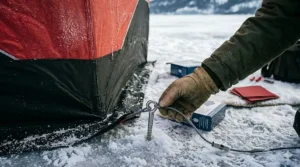
Carry ice picks attached to your suit with a cord. These spiked handles provide grip to pull yourself onto ice. Many Canadian anglers also carry:
- Throw rope (15-20 metres minimum)
- Waterproof emergency whistle
- Fully charged cell phone in waterproof case
- Spare dry clothes in vehicle
- Buddy system (never fish alone on questionable ice)
Regional Considerations for Canadian Provinces
Ontario Ice Fishing Conditions
Ontario’s Kawartha Lakes, Lake Simcoe, and Lake Nipissing feature some of Canada’s best ice fishing but also unpredictable conditions. December cold snaps create solid ice, then January thaws weaken it dramatically. Suits with 8,000mm+ waterproofing handle the wet, slushy conditions common during warm spells.
Manitoba’s Extreme Cold
Lake Winnipeg ice fishing means preparing for temperatures that regularly hit -35°C with wind chills pushing -45°C. Maximum insulation suits like the Striker Hardwater or Norfin Element 2 become necessities, not luxuries. The brutal wind across wide-open ice demands windproof shells.
Saskatchewan Northern Waters
Lesser Slave Lake and Lac La Ronge offer trophy lake trout and pike but punish under-equipped anglers. The combination of extreme cold and long walks to productive fishing holes favours lighter, mobile suits with strategic insulation like the Striker Predator.
Quebec’s Variable Conditions
Southern Quebec ice fishing temperatures moderate compared to prairie provinces, but wet snow and slush create different challenges. Waterproofing takes priority over maximum insulation. The 5,000mm suits paired with good layering often outperform heavier 10,000mm suits for Quebec conditions.
Price vs Value: What Canadian Anglers Should Spend
Budget Tier ($100-300 CAD)
Beginner suits and basic rain gear adaptations. Acceptable for occasional fishing inside heated shelters but lack flotation and extreme cold protection. Frogg Toggs and entry-level Eskimo models occupy this range.
Mid-Range ($300-600 CAD)
Sweet spot for most Canadian anglers. Includes flotation technology, adequate insulation for typical conditions, and respectable waterproofing. Eskimo Keeper, Striker Predator, and WindRider Boreas Pro deliver excellent value.
Premium ($600-1,000+ CAD)
Maximum protection for serious anglers or extreme conditions. Striker Climate and Hardwater suits justify premium pricing through versatility, advanced materials, and comprehensive warranty coverage. Professional guides and tournament anglers gravitate toward this tier.
❓ FAQ: Ice Fishing Suits in Canada
❓ Do I really need flotation assistance in my ice fishing suit?
❓ What's the warmest ice fishing suit available in Canada for 2026?
❓ Can I use my ice fishing suit for other winter activities in Canada?
❓ How do I know if my ice fishing suit flotation still works properly?
❓ What size ice fishing suit should I order for Canadian winter layering?
Conclusion: Finding Your Perfect Ice Fishing Suit for Canadian Waters
After examining seven top-rated ice fishing suits available across Canada, clear winners emerge for different needs and budgets. The Striker Climate Jacket and Bib earns our overall recommendation for anglers who fish diverse conditions and want maximum versatility. Its modular design adapts from brutal January cold to slushy March afternoons, while Sureflote technology provides critical safety during unpredictable ice conditions.
For budget-conscious families, the Eskimo Keeper delivers essential flotation protection without premium pricing. The Striker Hardwater stands alone for extreme cold performance in Canada’s northern provinces. Active hole-hoppers will appreciate the Striker Predator’s ventilation and mobility.
The reality is that ice fishing across Canada’s vast geography demands different solutions. A Saskatchewan angler targeting lake trout in -35°C needs different gear than someone pursuing perch on southern Ontario lakes at -15°C. Assess your typical conditions, fishing style, and safety requirements honestly before investing.
Remember that your ice fishing suit isn’t just comfort gear—it’s life-safety equipment. The flotation technology in modern suits has saved Canadian anglers’ lives when they’ve broken through unexpected weak ice. Provincial authorities consistently emphasize ice safety, and quality protective gear forms the foundation of responsible ice fishing practices.
Whether you’re introducing your children to this cherished Canadian tradition, competing in tournaments, or simply enjoying quiet winter mornings on frozen lakes, the right suit makes every outing safer and more enjoyable. The products reviewed here represent the best options available to Canadian anglers in 2026, backed by real customer experiences and verified specifications.
Tight lines, stay safe, and enjoy everything Canadian ice fishing offers this winter season!
Recommended for You
- 7 Best Ice Shelter Repair Kits Canada 2026
- 7 Best 2 Person Flip Over Ice Houses Canada 2026
- 7 Best LED Lights for Ice Fishing Tent Canada 2026
Disclaimer: This article contains affiliate links to Amazon.ca. If you purchase products through these links, we may earn a small commission at no additional cost to you.
✨ Found this helpful? Share it with your friends! 💬🤗
