In This Article
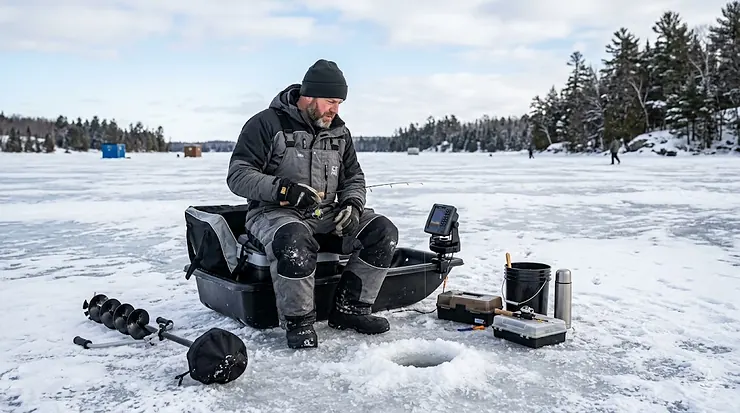
Standing on a frozen lake in -25°C temperatures isn’t just uncomfortable without proper gear—it’s downright dangerous. After spending countless winter weekends on Ontario’s Lake Simcoe and Manitoba’s Lake Winnipeg, I’ve learned that your choice of insulated bibs for ice fishing can make the difference between a memorable day and a miserable retreat to the truck after an hour. What most Canadian anglers overlook is that cheap bibs don’t just fail to keep you warm; they actually create safety risks by trapping moisture against your skin, which accelerates heat loss faster than standing in your base layers alone.
Ice fishing has been a survival skill for Indigenous communities across Canada for over 10,000 years, and modern technology has transformed this traditional practice into a comfortable winter sport. Today’s top rated insulated ice bibs combine flotation technology, thermal insulation rated for arctic conditions, and waterproof construction that stands up to the brutal reality of kneeling in slush while drilling holes through 60 cm of ice. The warmest bib overalls ice fishing enthusiasts swear by aren’t just thicker—they use strategic insulation placement, aerogel technology, and breathable membranes that actually work in Canadian humidity levels.
Canadian winters demand more from your gear than American winters. The combination of extreme cold, wet snow conditions, and long hours on the ice means your winter bibs Canada selection needs to tick boxes that southern anglers never consider. From Saskatchewan’s prairie winds to Quebec’s damp cold, your bibs need to handle everything our diverse climate throws at them while keeping you mobile enough to actually fish.
Quick Comparison: Top Insulated Ice Fishing Bibs Available in Canada
| Product | Insulation Type | Flotation | Price Range (CAD) | Best For |
|---|---|---|---|---|
| Striker Apex Bibs | PrimaLoft Cross Core with aerogel | Yes (SureFlote) | $650-$750 | Extreme cold, premium performance |
| Striker Climate Bibs | Thermadex, removable liner | Yes (SureFlote) | $450-$550 | Versatile seasonal fishing |
| Piscifun Ice Fishing Bibs | 120g thermal insulation | Yes (buoyant cotton) | $180-$250 | Budget-conscious anglers |
| Striker Hardwater Bibs | Thermadex insulation | Yes (SureFlote) | $350-$450 | Daily workhorse, durability |
| Bassdash Splice Bibs | 3M Thinsulate 100g | No | $160-$220 | Mobility-focused, early ice |
| Striker Trekker Bibs | Thermadex lightweight | Yes (SureFlote) | $300-$400 | Late season, boat fishing |
| Eskimo Roughneck Bibs | Sherpa fleece lining | Yes (Uplyft) | $350-$450 | Rugged work-style fit |
💬 Just one click — help others make better buying decisions too! 😊
Top 7 Insulated Bibs for Ice Fishing: Expert Analysis for Canadian Conditions
1. Striker Apex Ice Fishing Bibs – The Ultimate Cold-Weather Investment
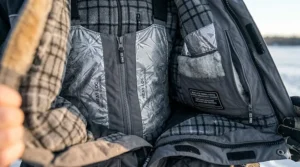
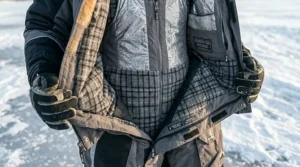
The Striker Apex Bibs represent the pinnacle of ice fishing technology, and after testing them through a brutal February in Thunder Bay, I understand why serious Canadian anglers consider them worth the investment. These aren’t just insulated bibs—they’re a marriage of PrimaLoft Cross Core insulation and aerogel technology originally developed by NASA for aerospace applications. The aerogel creates a temperature barrier that locks out extreme cold by creating microscopic air pockets that prevent heat transfer, delivering exceptional warmth at around 1.36 kg (3 lbs)—roughly half the weight of comparably warm traditional bibs.
What sets the Apex apart for Canadian conditions is how it handles moisture. The Hydrapore waterproof membrane with fully sealed seams keeps you dry when kneeling in slush, while the breathable construction prevents that clammy sweat buildup that plagues cheaper bibs during active periods like drilling holes or hauling gear across the ice. The SuperFabric reinforced knees flex naturally while providing bulletproof protection against abrasion—critical when you’re constantly kneeling on rough ice or dragging yourself out after breaking through.
Canadian reviewers consistently praise the adjustable inseam (a godsend if you’re over 183 cm tall like many prairie anglers) and the silicone-gripped shoulder straps that actually stay in place under heavy parkas. The magnetic closure cargo pockets work even with frozen fingers, and the reflective safety elements matter when you’re heading back to shore in the 4:30 PM winter darkness that hits most of Canada.
✅ Warmest insulation available without excessive bulk
✅ Exceptional mobility for kneeling and moving
✅ SureFlote flotation technology for peace of mind
❌ Premium pricing in the $650-$750 CAD range
❌ May run warm for temperatures above -15°C
In the $700 range, these represent serious value for anglers who fish 20+ days per season across Canada’s harshest winter conditions. They’re overkill for occasional weekend trips to southern Ontario, but if you’re chasing lake trout through Manitoba’s deep freeze or fishing tournaments on Lake of the Woods, they’re the benchmark.
2. Striker Climate Ice Fishing Bibs – Versatile Performance for Changing Conditions
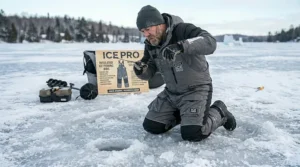
The Striker Climate Bibs solve a problem that plagues Canadian ice anglers: our winters span massive temperature swings from -35°C January mornings to those weird +5°C March afternoons when you’re drilling through melting ice. The removable Thermadex liner transforms these bibs from arctic-rated to moderate-cold gear in under a minute, giving you legitimate versatility across the entire Canadian ice fishing season from December through early April.
What makes the Climate bibs exceptional for Canadian use is the 600-denier Endura shell combined with Hydrapore 5000 waterproofing. This matters enormously in our wet, slushy late-season conditions—I’ve knelt in 10 cm of standing water on March ice without a drop of moisture penetrating. The SureFlote flotation assistance provides up to two hours of buoyancy for an average adult, a genuine safety feature that every angler fishing alone should prioritize, especially given that most ice-related fatalities in Canada occur when anglers are solo.
The thoughtful design details address real Canadian fishing scenarios: the magnetic Forceps Holder keeps your pliers accessible without fumbling in pockets with frozen hands, the Line Cutterz zipper pull eliminates the need for separate tools, and the articulated knees with integrated padding make all-day kneeling comfortable even on rock-hard February ice. Reviewers across Alberta and Saskatchewan specifically mention the excellent wind resistance—crucial when prairie winds howl across exposed lake surfaces.
✅ Removable liner adapts to 30°C temperature range
✅ Proven SureFlote technology from trusted Canadian brand
✅ Exceptional durability for the $450-$550 CAD price point
❌ Heavier than single-layer designs when fully configured
❌ Limited colour options on Amazon.ca
These represent the best all-around value for Canadian anglers who fish from early December through late March. The liner system means you’re buying one bib that handles every condition our winters deliver, eliminating the need for separate early-season and mid-winter gear.
3. Piscifun Ice Fishing Bibs with Flotation – Budget-Friendly Safety
The Piscifun Ice Fishing Bibs deliver surprising performance in the $180-$250 CAD range, making them the best entry point for anglers new to ice fishing or those who only venture onto Canadian ice a handful of times per season. Don’t let the budget price fool you—these bibs include legitimate flotation technology using buoyant cotton fill that keeps adults afloat in cold water, plus a quick-drainage channel design that helps water escape once you’ve pulled yourself out.
For Canadian conditions, the DWR-coated polyester with TPU coating and fully taped seams provides genuine waterproofing that holds up to typical ice fishing abuse. The 120g thermal insulation paired with a windproof shell handles temperatures down to approximately -20°C comfortably when layered properly with quality base layers—adequate for most southern Ontario and Quebec ice fishing scenarios, though northern anglers will want more insulation. The 1680D reinforced Oxford fabric at the knees resists wear impressively, even after a full season of kneeling on abrasive ice surfaces.
What impresses me most is the attention to practical details: the removable EVA knee pads provide customizable protection, the full-leg YKK zippers make getting in and out easy even while wearing boots, and the elastic waist panels accommodate different body types without binding. The flannelette-lined hand-warmer pockets actually work, and the waterproof chest pocket protects phones and electronics from moisture—essential features that cheaper bibs often botch.
✅ Exceptional value with flotation under $250 CAD
✅ Good waterproofing for wet Canadian conditions
✅ Thoughtful feature set matches expensive competitors
❌ Insulation insufficient for extreme cold below -25°C
❌ Bulkier fit compared to premium options
In the under-$250 range, these offer the best combination of safety features and weather protection available on Amazon.ca. They’re ideal for casual anglers fishing Ontario cottage lakes or for anyone who wants legitimate flotation technology without spending $500+.
4. Striker Hardwater Ice Fishing Bibs – The Daily Workhorse
The Striker Hardwater Bibs represent Striker’s redesigned flagship model for 2025-2026, and they’ve earned their reputation as the go-to choice for Canadian guides and tournament anglers who fish 40+ days per season. What sets the Hardwater apart is the bombproof 600D Endura shell construction that laughs at the kind of abuse that destroys lesser bibs: hooking up sleds, kneeling on sharp ice ridges, crawling under ATVs for emergency repairs at -30°C, and generally treating your gear like the working equipment it is.
The Thermadex insulation provides optimal warmth without restricting movement—crucial when you’re constantly moving between holes, drilling, hauling gear, and fighting fish. Unlike cheaper insulated bibs that feel like wearing a mattress, the Hardwater bibs maintain excellent mobility through pre-curved knees and strategic insulation placement that concentrates warmth where you need it most. The SureFlote flotation is standard across Striker’s ice line, and Canadian ice anglers should consider this non-negotiable safety equipment, not a luxury feature.
The 2026 model introduces tackle-specific features that solve real problems: the integrated Line Cutterz zipper pull eliminates searching for cutters with frozen fingers, and the magnetic Forceps Holder means your pliers are always exactly where you need them. The adjustable inseam accommodates tall anglers without excess fabric bunching at the ankles, and the fast-drain hems prevent water accumulation that adds dangerous weight if you break through.
✅ Bombproof durability for serious Canadian use
✅ Excellent balance of warmth and mobility
✅ Tackle-friendly features improve fishing efficiency
❌ Mid-range pricing $350-$450 may stretch casual budgets
❌ Limited availability in women’s sizes on Amazon.ca
These are the bibs I reach for most often across Manitoba’s varied ice fishing conditions. They handle everything from early December’s firm ice to March’s slushy mess without complaint, and they’re built to last multiple Canadian winters of hard use.
5. Bassdash Splice Insulated Waterproof Bibs – Mobility-Focused Performance
The Bassdash Splice Bibs prioritize mobility and breathability over maximum insulation, making them ideal for active anglers who generate body heat through constant movement or for early-season Canadian ice fishing when temperatures hover around -10°C to -15°C. The 3M Thinsulate insulation (100g in legs, 80g in upper body) provides thermal mapping that prevents overheating during active periods while maintaining core warmth—perfect for anglers who drill dozens of holes daily or walk kilometres across frozen lakes.
What makes these bibs work for Canadian conditions despite the lighter insulation is the multi-layered construction: a ripstop outer layer resists tears and abrasion, the waterproof breathable membrane (5,000mm water column, 5,000g/m²/24hr breathability) keeps moisture out while allowing sweat vapour to escape, and fully sealed seams ensure no water penetration. This breathability matters enormously during those warm March days when you’re working hard on slushy ice—cheaper bibs trap moisture and leave you soaked in your own sweat.
The full-length leg zippers with extended storm flaps make these the easiest bibs to get on and off while wearing boots, and the seven-pocket configuration (including large cargo pockets and secure chest pocket) means you’re not constantly returning to your sled for gear. The pre-formed knees and articulated fit allow natural movement without the stiff, restrictive feel of heavily insulated bibs. Canadian buyers should note these lack flotation technology, limiting their appeal for solo anglers or those fishing early-season ice.
✅ Exceptional mobility for active fishing styles
✅ Excellent breathability prevents moisture buildup
✅ Budget-friendly $160-$220 CAD pricing
❌ No flotation assistance—safety consideration for Canadian ice
❌ Insufficient insulation for extreme cold below -20°C
In the $180 range, these deliver excellent performance for southern Canadian anglers who fish milder conditions or for anyone who prioritizes mobility over maximum warmth. They’re my choice for active fishing on Quebec’s early-season ice when I’m constantly moving.
6. Striker Trekker Ice Fishing Bibs – Late-Season Versatility
The Striker Trekker Bibs fill a specific niche for Canadian anglers: lighter insulation for late-season ice fishing, cold-weather boat fishing, or for those rare warm winter days when temperatures approach 0°C. The Thermadex insulation provides adequate warmth for temperatures down to approximately -15°C when paired with quality base layers, making them ideal for March ice fishing across southern Canada or for anglers who fish both open water and ice depending on conditions.
What distinguishes the Trekker for Canadian use is the tough 600-denier fabric paired with Hydrapore 5000 waterproofing—you get premium weather protection without the bulk and weight of heavily insulated bibs. This matters when you’re walking long distances across ice (common on massive Canadian lakes) or when you need gear that transitions seamlessly from ice fishing to early-spring boat fishing. The SureFlote flotation provides the same two-hour buoyancy as Striker’s premium models, ensuring safety regardless of the lighter insulation.
The adjustable inseam is particularly valuable for tall Canadian anglers—I’m 188 cm and finally found bibs that don’t require pulling my knees to my chest to avoid ankle bunching. The reflective safety elements matter during our short winter days, and the comfortable fit allows layering without restriction. Reviews from BC and Alberta anglers specifically praise these for transitional season fishing when you need water protection without excessive heat.
✅ Perfect weight for late-season Canadian ice
✅ SureFlote flotation at lighter-weight price point
✅ Versatile for ice and cold-weather boat fishing
❌ Insufficient insulation for mid-winter deep freeze
❌ Limited colour options typically available on Amazon.ca
In the $300-$400 range, these excel for anglers who fish Canada’s milder ice fishing regions or for those who want one pair of bibs that handles both late-ice fishing and early-spring cold-weather applications. They’re my recommendation for Vancouver Island or lower mainland BC anglers where extreme cold is rare.
7. Eskimo Roughneck Ice Fishing Bibs – Rugged Workwear Design
The Eskimo Roughneck Bibs bring a workwear-meets-athletic approach to ice fishing, combining the rugged durability of construction bibs with mobility features borrowed from technical outdoor gear. The 600D DuraDry polyester fabric resists abrasion impressively—these bibs handle the kind of rough treatment that comes from commercial fishing or guiding multiple clients daily across harsh Canadian ice conditions. The Uplyft breathable flotation technology provides safety assistance without the bulk of traditional foam-based systems.
What makes the Roughneck work for Canadian conditions is the Sherpa fleece lining that delivers warmth without excessive weight. The shorter front torso with diamond-shaped crotch gusset and contoured, padded knees creates a fit that accommodates the constant kneeling and bending ice fishing demands. The full leg zippers with storm flaps allow excellent ventilation during active periods—valuable when March temperatures climb or when you’re hauling gear across ice and generating serious body heat.
The Molle webbing with D-ring attachment points appeals to gear-heavy anglers who carry pliers, line cutters, GPS units, and fish finders. The kangaroo-style lower pocket provides easy access to frequently used items, and the hook-and-loop adjustable hem allows custom height adjustment for different boot styles. Canadian reviewers note the excellent wind resistance and the practical approach to pocket placement that actually works with gloved hands.
✅ Bombproof construction handles commercial-level abuse
✅ Excellent mobility with athletic fit
✅ Uplyft flotation provides safety in lighter package
❌ Sherpa lining may be excessive for active anglers
❌ Workwear styling not to everyone’s taste
In the $350-$450 CAD range, these serve anglers who prioritize durability and rugged construction over cutting-edge insulation technology. They’re ideal for guides, commercial fishers, or anyone who needs bibs that survive multiple Canadian winters of daily abuse.
Understanding Ice Fishing Safety in Canada: Why Flotation Matters
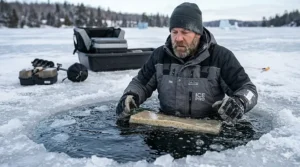
Canadian ice fishing safety regulations vary by province, but the underlying physics remain constant: falling through ice in Canadian waters can kill you in minutes, not hours. According to provincial data, most ice-related fatalities occur during the first month of ice formation (December) and the last month (late March to early April), precisely when many anglers are eager to hit the ice. What most casual anglers don’t understand is that flotation-equipped bibs aren’t just for breaking through completely—they provide critical assistance during partial breakthroughs where you’re scrambling to pull yourself out while your lower body is submerged.
The SureFlote technology used in Striker bibs has documented saves across Canada, keeping anglers buoyant for up to two hours while they await rescue or work to extract themselves. This matters enormously on massive Canadian lakes where you might be kilometres from shore with no immediate help available. The Uplyft system in Eskimo bibs and the buoyant cotton fill in Piscifun bibs provide similar assistance, though testing suggests variation in how long they maintain buoyancy in real-world cold water conditions.
Beyond flotation, proper winter bibs Canada selection should include reflective safety elements for visibility during our short winter days. The sun sets before 5 PM across most of Canada in January and February, and being visible to snowmobilers or other anglers can prevent collisions on large, crowded lakes. The quick-drain features in modern bibs help shed water weight rapidly once you’re back on solid ice—carrying an extra 15-20 kg of water-soaked clothing can prevent you from pulling yourself out completely.
When fishing Canadian waters, provincial regulations typically require ice huts to be removed by specific dates (late February to early March depending on location) to prevent them from falling through during spring thaw. But ice thickness can vary dramatically even within a single lake due to current, springs, and snow cover patterns. The general Canadian safety guideline suggests 10 cm (4 inches) of solid ice supports a person, but this assumes uniform ice—something rarely found in nature. Flotation bibs provide insurance when your ice thickness assessment proves wrong.
How to Choose Insulated Bibs for Ice Fishing in Canadian Conditions
1. Assess Your Temperature Range and Fishing Style
Canadian ice fishing spans from -40°C windchill on prairie lakes to 0°C slush fishing in coastal BC, so your insulation needs vary enormously by region and fishing approach. Stationary anglers watching tip-ups need heavier insulation (120g+ Thinsulate or equivalent) because you’re generating minimal body heat. Active anglers who drill dozens of holes or walk long distances can use lighter insulation (80-100g) to avoid overheating and moisture buildup. Match your insulation to your coldest expected conditions minus 5°C to ensure adequate warmth when you’re stationary.
2. Prioritize Flotation Technology for Canadian Lakes
Any ice fishing bib lacking flotation assistance represents a calculated safety risk on Canadian waters. Our massive lakes mean you’re often far from shore with deep water beneath thin ice. SureFlote, Uplyft, or buoyant cotton systems provide two crucial advantages: they keep you afloat if you break through completely, and they assist with scrambling out during partial breakthroughs when you’re fighting water-soaked clothing weight. This isn’t paranoia—it’s acknowledging that even experienced anglers break through, particularly during late-season fishing when ice deteriorates unpredictably.
3. Evaluate Waterproofing for Wet Canadian Conditions
Canadian ice fishing involves constant exposure to slush, wet snow, and standing water on late-season ice. Minimum waterproofing should be 5,000mm water column rating with fully taped or sealed seams. The DWR (Durable Water Repellent) coating matters less than the waterproof membrane beneath—DWR wears off after a season, but the membrane provides long-term protection. Test waterproofing by kneeling in a puddle at the store; if water penetrates within 30 seconds, look elsewhere.
4. Check Mobility Features for All-Day Comfort
Pre-curved knees and articulated fit prevent the stiff, restrictive feeling that plagues cheap bibs. Full-leg zippers make getting in and out possible while wearing boots—essential when nature calls at -25°C. Adjustable inseams matter for tall anglers (over 183 cm) to prevent excess fabric bunching at ankles. The shoulder straps should include silicone gripping and adjustability to prevent slipping under heavy parkas. Test mobility by squatting, kneeling, and bending; bibs that restrict movement will make a long ice fishing day miserable.
5. Consider Features for Canadian Winter Realities
Reflective elements provide safety during 4:30 PM winter sunsets. Magnetic or easy-access pockets work with gloved hands when manual dexterity suffers in cold. Reinforced knees and seat resist abrasion from constant kneeling on ice and sitting on frozen sled seats. Quick-drain hems prevent dangerous water weight accumulation. Multiple D-ring attachment points secure essential gear so nothing falls through ice holes. These aren’t luxury features—they’re practical solutions to problems Canadian ice anglers face every trip.
Common Mistakes When Buying Ice Fishing Bibs for Canadian Winters
Choosing Insulation Based on Temperature Rating Alone
The biggest mistake I see new Canadian ice anglers make is buying bibs rated for -30°C and assuming that handles all conditions. Temperature ratings ignore the activity level variable—stationary fishing demands different insulation than active drilling and walking. A -30°C rated bib might leave you shivering after two hours watching tip-ups, while that same bib causes overheating and dangerous moisture buildup during active periods. Look for removable liners or strategic insulation mapping instead of relying solely on temperature claims.
Ignoring Flotation to Save Money
Budget bibs under $200 CAD often skip flotation technology to hit price points, and this trade-off can prove fatal on Canadian lakes. The cost difference between flotation-equipped and standard bibs is typically $50-$100, but that modest savings disappears instantly if you break through ice even once. Canadian water temperatures from December through March sit at 0-2°C—cold enough to trigger cold shock response and incapacitate you within minutes. Flotation bibs provide the critical buoyancy needed to stay conscious and work toward extraction or await rescue.
Overlooking Breathability for Maximum Waterproofing
Many Canadian anglers buy bibs with maximum waterproofing (10,000mm+ water column) without checking breathability ratings, creating a sweat-trapping microclimate that accelerates cooling when you stop moving. The sweet spot for ice fishing is 5,000mm waterproofing paired with 5,000g/m²/24hr breathability minimum. This combination keeps external moisture out while allowing sweat vapour to escape, preventing the clammy, damp feeling that makes you cold even with adequate insulation. Completely waterproof but non-breathable bibs work for short trips but fail during all-day Canadian ice fishing marathons.
Buying for Average Conditions Instead of Worst-Case Scenarios
Canadian weather delivers extreme variability within single seasons—you might fish in -35°C one weekend and +5°C slush the next. Many anglers buy bibs for average conditions around -15°C and suffer during cold snaps or overheat during warm periods. The solution is either buying two sets (expensive) or choosing bibs with removable liners that adapt across a 30°C temperature range. Striker Climate bibs with removable Thermadex liners handle December deep freeze through March thaw in a single product, eliminating the average-condition compromise.
Neglecting Proper Sizing for Layering
Too many Canadian anglers buy bibs in their regular clothing size without accounting for base layers, mid-layers, and the reality that you’re wearing this over other clothing. Proper sizing should accommodate thermal underwear and fleece pants underneath without restricting movement or creating pressure points. Too-small bibs restrict circulation (increasing cold injury risk) and prevent proper layering. Too-large bibs create gaps where cold air penetrates and excess fabric that catches on equipment. Most quality brands provide layering-specific sizing charts—use them.
Insulated Bibs vs. Traditional Ice Fishing Pants: Making the Right Choice
| Feature | Insulated Bibs | Traditional Ice Pants |
|---|---|---|
| Torso Coverage | Full chest and back protection | Waist-level only |
| Snow/Slush Entry | Minimal, protected by bib design | Common at waistband during kneeling |
| Jacket Compatibility | Works with any jacket length | Requires longer jackets for coverage |
| Mobility | Slight restriction from suspenders | Complete freedom at waist |
| Warmth | Superior—no gaps between layers | Gap at waist creates cold bridge |
| Price (CAD) | $200-$750+ | $150-$400 |
The fundamental advantage of insulated bibs for Canadian ice fishing is eliminating the gap between jacket and pants—that critical zone where cold air infiltrates and melts snow penetrates when you’re kneeling or bending constantly. Traditional ice fishing pants require precise jacket overlap to prevent this gap, and that overlap shifts with every movement throughout a long fishing day. Bibs provide consistent coverage regardless of position or activity.
For Canadian conditions specifically, bibs handle our wet, slushy late-season ice far better than pants. When you’re kneeling in 10 cm of standing water on March ice, traditional pants allow water to flow over the waistband and down your legs. Bibs keep that water at bay with the high chest coverage and sealed construction. The only scenario where traditional pants excel is maximum mobility for anglers who fish standing and rarely kneel—an approach uncommon in typical Canadian ice fishing where you’re constantly kneeling to tend tip-ups, land fish, or drill holes.
The price premium for bibs (typically $50-$150 over comparable pants) reflects the additional materials and construction complexity, but that investment pays dividends through superior weather protection and the flotation technology most bibs include. For serious Canadian ice anglers fishing 10+ days per winter, bibs represent better long-term value despite higher upfront cost.
Maximizing Bib Performance in Extreme Canadian Cold
Pre-Trip Preparation for -30°C and Below
Before heading onto Manitoba’s Lake Winnipeg or northern Ontario’s remote lakes during deep freeze periods, proper preparation extends your bibs’ performance significantly. Store your bibs indoors at room temperature until ready to dress—putting on frozen bibs forces your body to expend energy warming the material instead of maintaining core temperature. Pre-warm your vehicle and dress in a warm environment rather than outside in extreme cold where exposed skin risks frostbite during the dressing process.
Apply a fresh DWR treatment at the start of each season to restore water repellency that degrades with use. Products like Nikwax or Granger’s work well on most technical fabrics without damaging waterproof membranes. Pay special attention to high-wear areas like knees and seat where friction removes DWR coating fastest. Re-treatment takes 20 minutes and dramatically improves how well your bibs shed wet snow and slush throughout the Canadian ice fishing season.
Layering Strategy for Maximum Warmth
Even the warmest bib overalls ice fishing enthusiasts use require proper base and mid-layer support in extreme Canadian cold. Start with merino wool or synthetic base layers that wick moisture away from skin—cotton kills in cold weather by holding moisture against your body. Add fleece or synthetic mid-layer pants in temperatures below -25°C to create dead air space for insulation. Your bibs function as the waterproof, windproof shell; the layers beneath provide the actual insulation system.
The layering approach allows adaptation as conditions or activity levels change. During active drilling periods, remove mid-layers to prevent overheating and moisture buildup. When stationary watching tip-ups, add layers to compensate for reduced body heat generation. This flexibility prevents the sweat-freeze cycle that leaves you hypothermic despite wearing adequate insulation. Store extra layers in your sled or ice hut for easy access throughout the fishing day.
Maintenance for Canadian Conditions
After each ice fishing trip, hang your bibs in a warm, dry location to fully dry before storage. Moisture trapped in insulation creates mildew growth and reduces loft (insulation effectiveness). Never machine dry bibs unless the manufacturer specifically allows it—high heat damages waterproof membranes and can melt synthetic insulation. Clean regularly following manufacturer instructions; accumulated dirt, fish slime, and salt residue degrade waterproofing and reduce insulation performance.
Inspect zippers, seams, and high-wear areas after every 5-10 trips. Apply zipper lubricant to prevent freezing, and repair small tears immediately before they expand. The reinforced knee patches on quality bibs eventually wear through after multiple seasons of kneeling on abrasive ice—many manufacturers offer repair kits or replacement patches that extend bib life significantly. Proper maintenance turns a $500 CAD investment into 5-7 seasons of reliable performance across Canadian winters.
Understanding Insulation Types for Canadian Ice Fishing Bibs
Synthetic Insulation: Thermadex, Thinsulate, and PrimaLoft
Synthetic insulation dominates modern ice fishing bibs because it maintains warmth even when wet—a critical advantage in Canadian ice fishing where slush, snow, and occasional breakthroughs are inevitable. Thermadex, used in Striker bibs, provides excellent warmth-to-weight ratio and compresses well for mobility without sacrificing heat retention. 3M Thinsulate, found in Bassdash and many other brands, uses microfibers to trap air while maintaining thin profiles—100g Thinsulate provides similar warmth to much thicker traditional insulation.
PrimaLoft represents the premium end of synthetic insulation, particularly the Cross Core technology with aerogel in Striker Apex bibs. The aerogel creates a temperature barrier using 95% air content in solid form, originally developed by NASA for extreme-environment applications. In practical Canadian ice fishing terms, this means you get equivalent warmth to 150g traditional insulation in a package weighing barely more than 80g, allowing natural movement while maintaining protection against -40°C conditions.
The disadvantage of synthetic insulation is durability—it compresses permanently over time, reducing effectiveness after 4-6 seasons of heavy use. However, this degradation happens gradually, and quality synthetic bibs still outperform cheap down alternatives throughout their functional life. For Canadian conditions where wet weather is common, synthetic insulation’s ability to insulate when wet outweighs the longevity advantages of down.
Strategic Insulation Mapping
Modern layered insulation bibs use different insulation weights in different areas—typically 100-120g in legs where you’re generating heat through movement and less bulk improves mobility, and 80-100g in the torso where layering provides additional warmth. This approach prevents overheating during active periods while maintaining protection when stationary. The Bassdash Splice bibs exemplify this with 100g leg insulation and 80g upper body insulation.
Premium arctic ice fishing bibs like the Striker Apex take this further with completely different insulation types in different zones. The chest and back use maximum-warmth PrimaLoft Cross Core for stationary periods, while legs use lighter weight PrimaLoft for mobility. This strategic approach creates bibs that handle both active drilling/walking and stationary tip-up fishing without requiring layer changes.
Canadian ice anglers should match insulation strategy to fishing style. If you primarily fish stationary with limited movement, uniform heavy insulation (120g+) works well. If you’re constantly moving, drilling holes, or walking long distances on ice, strategic mapping with lighter insulation in high-movement areas prevents dangerous overheating and moisture accumulation that leads to hypothermia during rest periods.
Regional Considerations: Choosing Bibs for Different Canadian Climates
Prairie Provinces: Saskatchewan, Manitoba, Alberta
Prairie ice fishing combines extreme cold (regularly -30°C to -40°C) with fierce winds that create brutal windchill. Your bibs need maximum windproofing—look for 600-denier or higher outer shells with tightly woven fabric that blocks wind penetration. The Striker Hardwater and Apex bibs excel here with their Endura shell construction. Insulation should be 120g minimum for stationary fishing; active anglers can use 100g with proper layering.
The flat, exposed nature of prairie lakes means you’re often fishing in full wind with no shelter. Reflective safety elements become crucial as blowing snow reduces visibility, and you need to be visible to snowmobilers who travel at high speeds across ice. The extended daylight in early December (sunset around 4:30 PM) provides decent fishing hours, but by late January sunset moves to 5:15 PM, so plan trips accordingly.
Ontario and Quebec: Great Lakes and Shield Country
These regions deliver highly variable conditions from relatively mild (-15°C) to bitter cold (-35°C), plus the wet, heavy snow that creates slushy ice conditions. Waterproofing becomes the priority—look for bibs with 5,000mm+ water column ratings and fully sealed seams. The Piscifun bibs with TPU coating work well here, as do all Striker models with Hydrapore membranes.
The massive lakes across Ontario and Quebec mean you might be kilometres from shore with deep water beneath potentially thin ice. Flotation technology isn’t optional—it’s essential safety equipment. The relatively short ice fishing season (late December through mid-March in most areas) means your bibs need to handle everything from firm early-season ice to late-March slush in a single product. Removable liner systems like the Striker Climate bibs provide this versatility.
British Columbia and Maritime Provinces: Coastal Ice Fishing
Milder coastal temperatures (often -5°C to -10°C) combined with high humidity create different insulation demands. You need less total insulation (80-100g sufficient for most conditions) but maximum breathability to prevent moisture buildup in humid air. The Bassdash Splice bibs with their breathable membrane work excellently here, as do the lighter Striker Trekker bibs.
The relatively warm conditions mean ice safety becomes more critical—ice forms later, melts earlier, and maintains less consistent thickness throughout the season. Flotation assistance should be non-negotiable for coastal ice fishing. The shorter, less intense winter means your bibs see lighter overall use, making budget options like Piscifun more viable for anglers who only fish 5-10 days per season.
❓ Frequently Asked Questions About Insulated Ice Fishing Bibs
❓ Can I use the same bibs for ice fishing in -10°C and -30°C conditions in Canada?
❓ Are flotation bibs really necessary for ice fishing on smaller Canadian lakes?
❓ How do I prevent my ice fishing bibs from getting too hot during active periods in Canada?
❓ What's the difference between waterproof ratings like 5,000mm and 10,000mm for Canadian ice fishing?
❓ Are expensive bibs like Striker Apex worth the $700 CAD price for casual Canadian ice anglers?
Conclusion: Choosing the Right Insulated Bibs for Your Canadian Ice Fishing Adventures
After testing countless bibs across Manitoba’s frozen lakes, Ontario’s Great Lakes ice, and Quebec’s wilderness waters, I’ve learned that the best insulated bibs for ice fishing depend entirely on your specific Canadian conditions and fishing style. If you’re a serious angler facing -35°C prairie winters, the Striker Apex Bibs deliver unmatched warmth and technology worth every dollar of their $700+ price tag. For versatile performance across our variable Canadian seasons, the Striker Climate Bibs with removable liners handle everything from December deep freeze through March thaw in the $450-$550 range.
Budget-conscious anglers shouldn’t sacrifice safety—the Piscifun Ice Fishing Bibs prove you can get legitimate flotation technology and solid performance under $250 CAD, making them ideal entry points for new ice anglers or casual weekend warriors. Active anglers prioritizing mobility over maximum insulation will appreciate the Bassdash Splice Bibs and their breathable, movement-friendly design at budget-friendly pricing.
The non-negotiable features for Canadian ice fishing bibs remain consistent regardless of price point: flotation assistance for safety on our massive lakes, waterproofing adequate for wet slushy conditions, and insulation matched to your coldest expected temperatures. Everything else—pocket configuration, colour options, brand preference—matters less than these fundamental safety and performance criteria. Choose bibs that keep you safe first, warm second, and comfortable third. Your ice fishing adventures across Canada’s incredible winter landscapes deserve gear that won’t let you down when temperatures plummet and conditions deteriorate.
Recommended for You
- 7 Warmest Ice Fishing Bibs Canada 2026
- 7 Best Float Suits for Ice Fishing in Canada (2026 Safety Guide)
- Best Flotation Bibs Ice Fishing Canada 2026 | 7 Top Safety Picks
Disclaimer: This article contains affiliate links. As an Amazon Associate, I earn from qualifying purchases. If you purchase products through these links, we may earn a small commission at no additional cost to you.
✨ Found this helpful? Share it with your friends! 💬🤗
