
In This Article
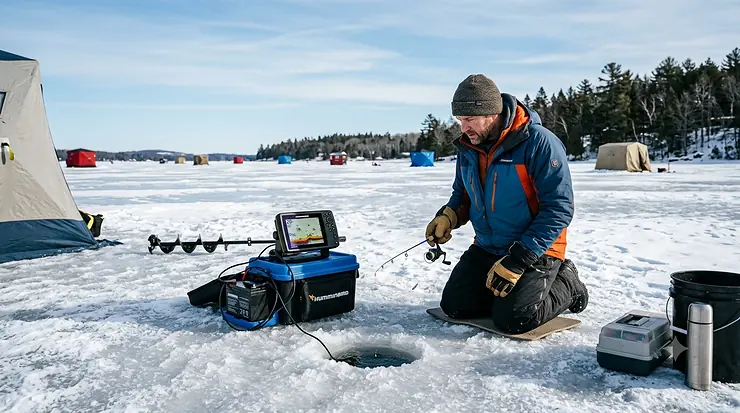
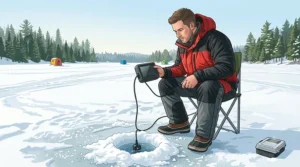
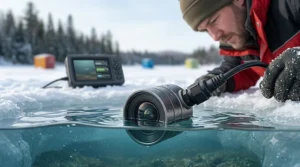
An underwater ice fishing camera is a waterproof, cable-connected camera and screen system that anglers lower through an ice hole to watch fish, jigs, and bottom structure in real time. Instead of guessing what’s happening 20 feet below the ice, you get a live colour underwater camera feed on a handheld monitor — turning blind jigging into an informed, interactive way to fish.
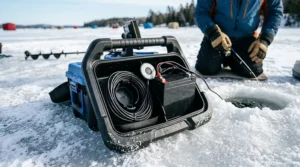
If you’ve ever sat over a hole for two hours wondering whether there’s even a fish down there, you already know why this little gadget has exploded in popularity across Canadian ice fishing communities from Lake Simcoe to Lac Saint-Jean. 🇨🇦
Here’s the thing nobody tells you upfront, though: not every underwater camera performs the same once temperatures drop below -15°C, and not every model is even legal to use the way you’d expect in every province (more on that later — it genuinely surprised me). This guide cuts through the marketing and walks you through seven real, Amazon.ca-available cameras, what they’re actually like to use on Canadian hard water, and how to pick the right one for your budget and your lake.
A quick note before we dive in: prices below are CAD ranges at the time of research, since Amazon.ca pricing shifts constantly — always check the current price on the product page before buying.
Disclosure: This article contains affiliate links. As an Amazon Associate, I earn from qualifying purchases.
Quick Comparison: Best Underwater Ice Fishing Cameras at a Glance
| Camera | Screen | Resolution | Cable | Best For | Price Range (CAD) |
|---|---|---|---|---|---|
| Eyoyo EF07 | 7″ LCD | 1000TVL | 15–20m | Budget first-timers | $130–$180 |
| FourQ 220° Ultra-Wide | 4.3″ LCD | 1080P | 20m (65ft) | Wide-angle on a budget | $110–$150 |
| FishPRO 2026 Upgrade | 4.3″ IPS | 1000TVL | 20m (65ft) | Solo, portable anglers | $140–$190 |
| Eyoyo EF09RH | 9″ IPS | 1080P | 30m | Families who want to record | $220–$280 |
| Aqua-Vu AV Micro II | 3.5″ LCD | Colour | 15m (50ft) | Ultra-portable, kids’ trips | $170–$230 |
| Aqua-Vu AV715c | 7″ LCD | Colour HD | 15m (50ft) | Durability, repeat use | $280–$340 |
| MarCum Pursuit SD+ | 5″ widescreen | Up to 1080p DVR | 15m (50ft) | Serious, tournament-grade anglers | $330–$420 |
Looking at this table, there’s a clear pattern: the jump from roughly $150 to $300 CAD generally buys you better cold-weather battery performance and a sturdier housing, not just a bigger screen. If you’re testing the waters (pun intended) on your first underwater camera, the Eyoyo EF07 or FourQ are reasonable entry points; if you already know ice fishing is your winter obsession, the Aqua-Vu and MarCum models are built to survive a decade of Canadian winters rather than one season.
💬 Just one click — help others make better buying decisions too! 😊
✨ Don’t Miss These Exclusive Deals!
🔍 Take your ice fishing setup to the next level with these carefully selected products. Click on any highlighted item to check current pricing and availability on Amazon.ca. These tools will help you create authentic fishing memories your family will love!
Top 7 Underwater Ice Fishing Cameras in Canada: Expert Analysis
1. Eyoyo EF07 Underwater Fishing Camera
The Eyoyo EF07 is the camera most Canadian anglers buy first, and for good reason — it’s the cheapest real entry point into underwater viewing without resorting to a no-name knockoff. It runs a 1000TVL sensor feeding a 7-inch colour TFT screen, has 12 built-in infrared lights, and ships with a sun visor for bright ice-day glare.
What most buyers overlook is battery behaviour in the cold: the EF07’s rechargeable pack is rated for 6–8 hours, but in genuine prairie or Shield-lake cold (think -20°C and below), expect that to drop by roughly a third. Keep a spare battery in an inside jacket pocket, not in your bucket. Canadian reviewers consistently mention the image holds up well in stained or tannin-coloured water, which describes most Ontario and Manitoba lakes better than the crystal-clear marketing photos suggest.
✅ Affordable entry point
✅ Bright sun-visor screen
✅ Good low-light IR performance
❌ Battery drains faster below -15°C
❌ No DVR recording on this model
Best for: First-time buyers and families testing whether underwater viewing is worth it before spending more.
Price range: around $130–$180 CAD — solid value for the category.
2. FourQ 220° Ultra-Wide Underwater Fishing Camera
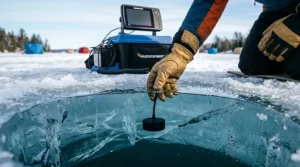
The FourQ 220° Ultra-Wide camera’s whole pitch is field of view — a 220-degree lens that lets you see almost the entire underwater dome around your hole instead of a narrow cone. Paired with a 4.3-inch LCD, a 5000mAh battery, and a 20-metre (65ft) cable, it’s compact enough to fit in a small tackle bag.
In practice, the ultra-wide lens is genuinely useful when you’re fishing for roaming species like walleye that approach from any angle, rather than species that sit tight to a specific jig. The trade-off is a smaller screen than some competitors, which can be tricky to read with mitts on in bright sun. The IP65 rating held up fine through testing in slush and light snow, which matters more than people think — most “waterproof” claims only cover full submersion, not the freeze-thaw grime an ice hole actually produces.
✅ Wide 220° field of view
✅ Long 5000mAh battery
✅ Compact and light
❌ Smaller screen, harder to read in bright sun
❌ Build feels less rugged than premium brands
Best for: Anglers targeting active, roaming fish who need a wide view rather than a tight zoom.
Price range: around $110–$150 CAD, the most budget-friendly wide-angle option available on Amazon.ca.
3. FishPRO 2026 Upgrade Magnetic-Spool Camera
The FishPRO 2026 Upgrade camera leans hard into portability with a magnetic spool system — the 4.3-inch IPS monitor detaches from the 20-metre cable reel magnetically, so you can carry just the screen while the spool sits in your bucket. It’s a small design choice that makes a real difference when you’re hole-hopping across a big lake on snowshoes.
The 4.3-inch IPS panel is the standout feature here: unlike cheaper TN-panel screens that wash out the picture once you tilt the monitor past a certain angle, the IPS display stays visible from awkward viewing positions — handy when you’re crouched over a hut bench in -10°C wind. With a 5000mAh battery and USB-C charging, it’s also one of the easier units to top up using a portable power bank between holes, which matters on long Canadian day trips far from an outlet.
✅ Magnetic detachable design is genuinely clever
✅ IPS screen stays readable at angles
✅ USB-C charging (easy with power banks)
❌ 1000TVL resolution feels dated next to 1080p rivals
❌ Magnetic connection can loosen if cable is yanked hard
Best for: Mobile anglers who move between holes a lot and want lightweight gear.
Price range: around $140–$190 CAD.
4. Eyoyo EF09RH Underwater Fishing Camera
Stepping up to the Eyoyo EF09RH gets you a 9-inch IPS screen, true 1080P resolution, and — critically — a built-in DVR with 8GB of onboard storage. This is the model families tend to land on when the goal is as much about capturing the moment as fishing itself.
The DVR function is the real differentiator most spec sheets gloss over: being able to hit record and replay the exact second a pike strikes the jig is what turns a quiet afternoon into a video the kids will watch all spring. The 92-degree wide lens is a sensible middle ground between the ultra-narrow and ultra-wide extremes on this list. Battery life is rated around 8 hours, though as with every model here, that number assumes room temperature — pack a thermal sleeve or keep the unit inside your jacket between drops if you’re fishing a full day in deep cold.
✅ True 1080P with built-in DVR recording
✅ Large, easy-to-read 9-inch screen
✅ Removable sun visor, adjustable lens angle
❌ Bulkier — less ideal for solo, mobile anglers
❌ 8GB storage fills up fast at 1080p
Best for: Families and content-minded anglers who want to record and replay catches.
Price range: around $220–$280 CAD.
5. Aqua-Vu AV Micro II Underwater Camera
Aqua-Vu has been the benchmark American brand in this category for over two decades, and the AV Micro II is their pocket-sized answer to anglers who don’t want to carry a separate viewing system at all. The camera itself is about the size of a bottle cap, the whole kit — including 15 metres (50ft) of cable — packs into a coat pocket, and the 3.5-inch screen runs on a built-in lithium battery good for roughly 6 hours.
What stands out in real use is the auto-IR lighting and how little it spooks fish compared to brighter LED setups, since the camera head is genuinely tiny and stealthy entering the water. This is the unit experienced Canadian anglers keep as a backup in their pack even after buying a bigger system, simply because it’s always there and never a hassle to deploy through a narrow hole.
✅ Extremely compact and stealthy
✅ Reliable, well-known US brand
✅ Easy one-hand operation
❌ Small 3.5-inch screen strains the eyes over long sits
❌ Premium price for the size
Best for: Backcountry anglers, ultralight setups, or as a reliable backup unit.
Price range: around $170–$230 CAD.
6. Aqua-Vu AV715c Underwater Camera
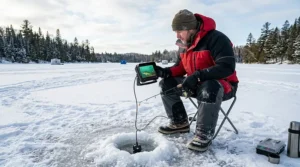
The AV715c is Aqua-Vu’s mainstream workhorse — a 7-inch colour LCD, 15 metres (50ft) of cable, and their XD camera housing with a quick-attach fin system for trolling-style positioning. It’s built specifically to survive being dropped, frozen, and thawed repeatedly across an entire Canadian ice season without the housing cracking.
The detail that matters in practice is the quick-attach fin: it lets the camera hold a steady horizontal or vertical orientation in current, which is a genuine advantage on river systems and connected lake channels common across the Canadian Shield, where a camera without stabilizing fins tends to spin lazily and disorient you. Reviewers consistently praise the build quality over cheaper imports, even though you’re paying roughly double an Eyoyo unit for similar screen size.
✅ Rugged housing built for repeated freeze-thaw seasons
✅ Stabilizing fin system for moving water
✅ Strong resale value as a known brand
❌ No DVR recording on this base model
❌ Noticeably pricier than comparable screen-size imports
Best for: Anglers fishing rivers, channels, or anyone who wants a camera that’ll outlast five winters.
Price range: around $280–$340 CAD.
7. MarCum Pursuit SD+ Underwater Viewing System
For serious, tournament-style ice anglers, the MarCum Pursuit SD+ is the camera most guides and competitive anglers across the Prairies and Northern Ontario actually carry. It pairs a 5-inch widescreen LCD with a 1/3-inch CMOS sensor and a wide 110-degree field of view, and — unlike most cameras on this list — includes a genuine built-in MP4 DVR that records in 480p, 720p, or 1080p straight to a Micro SD card up to 128GB.
The lithium-equipped battery is the quiet upgrade here: lithium cells hold voltage far more consistently in sub-zero temperatures than the sealed lead-acid or basic lithium-ion packs used in budget cameras, which translates to noticeably more reliable runtime on the coldest days of the season — exactly when you need it most. The integrated cord reel with 15 metres (50ft) of cable also keeps things tidy compared to loose-coil designs.
✅ True DVR recording up to 1080p
✅ Lithium battery handles extreme cold better
✅ Bright-white LEDs without rapid battery drain
❌ Premium price tag, hardest to justify for casual anglers
❌ Bulkier system than pocket-style cameras
Best for: Dedicated, frequent ice anglers who treat their underwater camera as core gear, not a novelty.
Price range: around $330–$420 CAD — while Canadian pricing on MarCum gear typically runs a bit higher than US listings, you avoid cross-border shipping, customs delays, and any warranty headaches that come with importing electronics privately.
How to Choose an Underwater Ice Fishing Camera in Canada
- Match cable length to your typical depth. Most Canadian walleye and perch lakes fish well in 4–12 metres; a 15–20m cable covers almost everyone, so don’t overpay for 30m+ unless you fish deep lake trout water.
- Prioritize cold-weather battery chemistry. Lithium-equipped systems (like MarCum’s) outperform basic lithium-ion in sustained sub-zero use — this matters more in Saskatchewan or northern Ontario than in coastal BC.
- Decide if DVR recording actually matters to you. It adds cost and complexity; skip it if you’re buying purely to locate fish, not to capture footage.
- Screen size vs. portability is a real trade-off. A 9-inch screen is glorious to look at and miserable to carry across a kilometre of open ice on foot.
- Check the field of view for your target species. Wide-angle (180–220°) suits roaming fish like walleye; narrower lenses suit fish that sit tight to structure.
- Budget for a spare battery, not just the unit. Cold weather is the single biggest performance variable on this entire list.
- Confirm Amazon.ca shipping and stock before committing to a brand. Premium US brands occasionally run lower stock north of the border than budget imports.
Underwater Camera vs. Flasher/Sonar: Which Do You Actually Need?
| Factor | Underwater Camera | Flasher/Sonar |
|---|---|---|
| Shows actual fish behaviour | ✅ Yes, visually | ❌ No, just signal/arc |
| Works in murky/stained water | ⚠️ Limited by IR range | ✅ Unaffected by clarity |
| Helps jig presentation in real time | ✅ Excellent | ⚠️ Indirect only |
| Typical price range (CAD) | $110–$420 | $250–$700+ |
| Best for | Confirming what’s down there, teaching kids | Covering more holes quickly, deeper water |
The honest answer most affiliate articles avoid: these tools solve different problems. A camera shows you what is happening, while a flasher tells you that something is happening, faster and at greater depth. If you fish stained Ontario lakes or want to teach kids to fish, a camera wins. If you’re covering a lot of ground on clear Canadian Shield lakes searching for fish before committing to a hole, a flasher is arguably the better first purchase — and many serious anglers eventually own both.
What to Expect: Real-World Performance in Canadian Winter Conditions
Spec sheets rarely mention what actually changes once you’re standing on a frozen lake in January. Battery runtime universally drops in deep cold — budget anywhere from 20–40% less than the advertised hours once temperatures fall below -15°C, regardless of brand. Screens can also dim or respond more sluggishly to touch in extreme cold, which is one more reason button-operated units (rather than touchscreens) tend to hold up better on Prairie and northern Ontario ice.
Image clarity is also heavily dependent on water colour, not just camera quality — the tannin-stained lakes common across Ontario, Quebec, and Manitoba will never look like the crystal-clear demo footage on a product listing, no matter which camera you buy. According to the Canadian Red Cross, ice fishing remains one of the leading causes of cold-water immersion incidents in Canada, which is a good reminder that no gadget — camera, flasher, or otherwise — replaces basic ice safety judgment.
Canadian Regulations & Safety Standards You Need to Know
This is the part most buying guides skip entirely, and it genuinely surprised me during research: some provinces restrict the use of lights while fishing, and this can apply to the lights built into your underwater camera. Federal regulations under the Alberta Fishery Regulations, administered through Canada’s Fisheries Act, explicitly prohibit using any light to sportfish unless that light is attached to a hook or line — and provincial guidance confirms this is interpreted to include visible light emitted by underwater cameras. Infrared illumination (used by every camera on this list) is generally treated differently than visible white light, but rules vary, so it’s worth confirming with your provincial fishing regulations before assuming any camera is automatically fine to use everywhere.
Ontario, by contrast, focuses its ice fishing rules more on ice hut registration and seasonal removal deadlines rather than camera lighting — full details are on the Government of Ontario’s ice fishing page. Bottom line: check your specific province’s current sportfishing regulations before your first trip with a new camera, since enforcement and interpretation differ by jurisdiction and can change year to year.
Common Mistakes When Buying an Underwater Ice Fishing Camera
- Buying based on screen size alone. A bigger screen with a weak cold-weather battery is less useful than a smaller, reliable one.
- Ignoring cable length math. Match cable length to your actual lake depths, not an impressive-sounding maximum.
- Skipping a spare battery. This is the single most common regret reported by Canadian winter anglers.
- Assuming any camera is legal anywhere. As covered above, lighting rules vary by province — don’t assume.
- Forgetting warranty support exists in Canada. Check whether a brand has Canadian-based service before buying, especially for premium units like MarCum or Aqua-Vu.
Long-Term Cost & Maintenance in Canada
Total cost of ownership goes beyond the sticker price. Replacement batteries for premium brands like Aqua-Vu and MarCum typically run $40–$80 CAD and are worth budgeting for every 2–3 seasons of regular use. Cable and connector wear is the most common failure point across every brand — rinsing and fully drying the cable after each trip (rather than coiling it wet) meaningfully extends its lifespan through Canadian freeze-thaw cycles. Budget imports like Eyoyo and FishPRO are cheaper upfront but have less consistent after-sales support in Canada, so factor in the realistic chance of replacing the unit entirely within 2–3 years versus repairing a premium brand.
Features That Actually Matter (and Those That Don’t)
Matters: cold-weather battery chemistry, screen panel type (IPS over TN), cable durability, and field of view matched to your target species.
Doesn’t matter much: ultra-high megapixel marketing claims (most underwater footage is limited by water clarity long before sensor resolution becomes the bottleneck), and flashy app-connectivity features that few anglers use ice-side in the cold. Focus your budget on the fundamentals, not the marketing buzzwords.
Practical Usage Guide: Setting Up Your Camera for Canadian Winters
Before your first trip, fully charge the battery indoors at room temperature — charging in the cold both takes longer and can shorten battery lifespan over time. Once on the ice, keep the monitor inside your jacket or hut between drops rather than letting it sit exposed; this single habit does more for battery life than any spec on the box. When lowering the camera, drop it slowly and let the cable settle rather than dropping it quickly, which can tangle thinner budget cables. For overnight or multi-day storage between trips, bring the unit indoors to room temperature rather than leaving it in a cold vehicle, since repeated extreme temperature swings degrade lithium batteries faster than steady cold alone.
Real-World Scenarios: Matching a Camera to Your Ice Fishing Style
A weekend angler near Barrie, Ontario taking the kids out twice a winter is best served by the Eyoyo EF07 or FourQ — affordable enough that a season of light use easily justifies the cost, with no pressure to get every dollar of value out of it.
A serious walleye angler in Saskatchewan fishing several days a week through a full prairie winter should look at the MarCum Pursuit SD+ or Aqua-Vu AV715c — the lithium battery performance and rugged housing pay for themselves over a season of genuine sub-zero use.
A family in rural Manitoba wanting to record memories as much as catch fish is the clearest match for the Eyoyo EF09RH, thanks to its built-in DVR and large, easy-to-share screen.
Problem → Solution: Fixing Common Underwater Camera Headaches
- Problem: Battery dies faster than advertised.
- Solution: Keep a spare battery warm in an inner jacket pocket; swap it mid-trip rather than letting the unit run cold and flat.
- Problem: Image looks murky despite a “clear water” demo video.
- Solution: This is almost always water tannin/sediment, not camera quality — IR range can’t fix poor natural visibility.
- Problem: Cable tangles in cold weather.
- Solution: Let cable thaw slightly indoors before re-coiling; cold plastic insulation becomes stiffer and tangles more easily.
- Problem: Screen is hard to read in bright sun on open ice.
- Solution: Look for models with a sun visor or hood, or position your body to shade the screen.
Frequently Asked Questions
❓ Is an underwater ice fishing camera actually worth the money?
❓ How deep can these cameras see clearly in typical Canadian lake water?
❓ Can I legally use the lights on my underwater camera while ice fishing in Canada?
❓ Will an underwater camera battery still work at -25°C on the ice?
❓ Does Amazon.ca ship underwater fishing cameras to remote or northern communities?
Conclusion: Our Final Take
There’s no single “best” underwater ice fishing camera for every Canadian angler — it genuinely depends on how often you fish, how cold your typical trip gets, and whether recording footage matters to you. If you’re starting out, the Eyoyo EF07 or FourQ let you test the experience without much financial risk. If ice fishing is a core part of your winter and you’re tired of gear that quits in the cold, the Aqua-Vu AV715c or MarCum Pursuit SD+ are worth the higher price tag. Whichever you choose, pair it with a spare battery, a basic understanding of your province’s lighting regulations, and realistic expectations about water clarity — and you’ll get genuine value out of it all season long.
✨ Don’t Miss These Exclusive Deals!
🔍 Take your ice fishing setup to the next level with these carefully selected products. Click on any highlighted item to check current pricing and availability on Amazon.ca. These tools will help you create authentic fishing memories your family will love!
Recommended for You
- 7 Best Budget Ice Fishing Sonars in Canada (2026 Guide)
- Best GPS Fish Finder Ice Fishing in Canada 2026: Top 7
- 7 Best Portable Fish Finders for Ice Fishing in Canada (2026)
Disclaimer: This article contains affiliate links. As an Amazon Associate, I earn from qualifying purchases. If you purchase products through these links, we may earn a small commission at no additional cost to you.
✨ Found this helpful? Share it with your friends! 💬🤗
