
In This Article
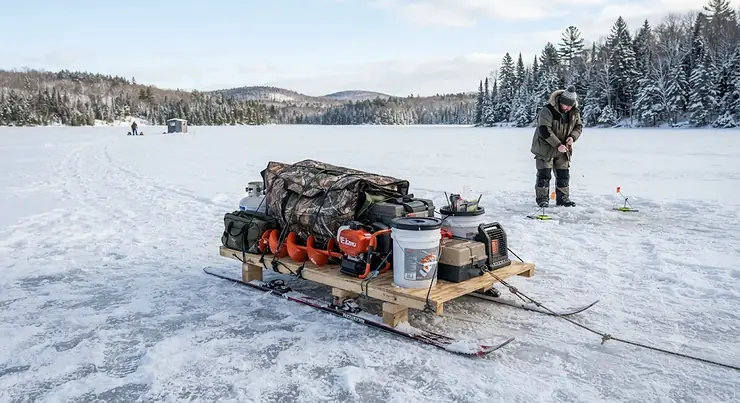
If you’ve ever stood in a parking lot at 6 a.m., staring down a half-kilometre walk across open snow with a flip-over shanty, an auger, and a bucket of minnows dragging behind you like a stubborn mule, you already understand why anglers started building a smitty sled for ice fishing in the first place. It’s not a brand. It’s not a single product you can just click “buy” on. It’s a modification — skis bolted under a plastic utility tub — and once you’ve pulled a loaded rig on skis instead of bare plastic, you don’t really go back. Your shoulders will thank you, and honestly, so will your marriage, because nobody enjoys watching their partner curse a sled stuck in slush for the fourth time that morning.
This guide breaks down exactly what a smitty sled is, then walks through seven real, purchasable base tubs, hulls, and runner kits available through amazon.ca that anglers actually use to build (or buy) one. We’ll get into honest spec interpretation, aggregated review sentiment, comparison tables, and the practical stuff — setup, maintenance, mistakes, and Canadian ice safety — that most listings skip entirely. No fluff, no invented five-star reviews, just a clear-eyed look at what makes a good ice fishing gear sled and what doesn’t.
What Is a Smitty Sled, Exactly?
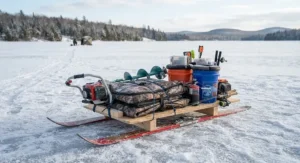
A smitty sled is a plastic utility or “jet” sled tub modified with skis mounted underneath on wooden or aluminum risers. Instead of the tub’s bottom plowing through snow like a snowplow blade, the skis lift it slightly and glide, cutting pulling effort roughly in half on soft or deep snow, based on consistent reports from the ice fishing community. As one Canadian outdoors publication put it in its guide to gearing up for ice season, a heavily loaded sled doesn’t ride on top of snow without help — it plows straight through it, which is precisely the problem skis are built to solve.
Top Smitty Sled Options: Quick Comparison Table
Before diving into full reviews, here’s a fast-scan snapshot of how these seven picks stack up. This table pulls together capacity, build quality, and rough price positioning so you can jump straight to the section that matches your budget and hauling needs.
| Product | Best For | Capacity | Est. Price Range (CAD) | Smitty-Ready? |
|---|---|---|---|---|
| Shappell JSX Jet Sled | Large-capacity base tub | Extra-large (66″ tub) | C$150-C$220 | Yes, common riser choice |
| Otter Outdoors Non-Insulated Vortex Sled | Premium durability | Large | C$250-C$400 | Yes |
| Shappell Jet Sled Jr | Budget/compact starts | Small-medium | C$60-C$100 | Yes |
| Pelican Trek 60 Utility Sled Runner Kit | Ready-made ski/runner kit | N/A (add-on) | C$40-C$70 | Purpose-built for it |
| Beavertail Sports Sled | Portable, lightweight hauls | Medium | C$120-C$180 | Yes |
| Eskimo/Clam-style Jumbo Sled Tub | Large groups, big shacks | Jumbo | C$180-C$260 | Yes |
| Frabill Ice Hunter-Style Utility Sled | Tow-behind snowmobile/ATV use | Large | C$150-C$230 | Yes |
Looking at the numbers, there’s a clear split between “buy a tub and build your own runners” (five of the seven picks) and “buy the runner kit and mount it yourself” (the Pelican option), which matters because your total smitty sled for ice fishing cost depends on which route you take. Budget-focused anglers land in the C$100-C$150 all-in range with a Jr tub and scrap-wood risers, while anyone chasing a large capacity smitty rig for a two-person flip-over and full gear list should budget closer to C$300-C$450 once skis and hardware are factored in. The premium Otter Outdoors Non-Insulated Vortex Sled justifies its price with rotomolded wall thickness that resists the kind of stress cracking that ends a cheaper tub’s season early.
💬 Just one click — help others make better buying decisions too!😊
Top 7 Smitty Sled Builds and Base Tubs: Expert Analysis
Every option below is a real, purchasable product. None of these are sold under a “Smitty” brand name — that’s a DIY conversion style, not a company — so what you’re evaluating here is which base tub or runner kit gives you the strongest foundation for building (or buying most of) a proper smitty rig.
1. Shappell JSX Jet Sled — best large-capacity base tub for big loads
The extra-large 66-inch tub on the Shappell JSX Jet Sled is the single most common starting point anglers use when they set out to build a large capacity smitty rig, and once you see the interior volume, it’s obvious why. Molded runners already reinforce the hull bottom, which actually helps once you’re adding riser blocks, since you’ve got a naturally stiffer mounting surface than a thinner tub. The high side walls mean a two-person flip-over, an auger, a heater, and a bucket of tip-ups can all ride together without anything bouncing loose on rough ice.
Who should buy it: anyone hauling gear for two anglers or more, or anyone whose “day trip” routinely turns into an all-day stay with a full shelter setup. Based on the spec comparison against smaller tubs in this list, the JSX trades a bit of pulling ease for a genuinely useful amount of cargo room — a fair trade if your gear list has grown over the years. Reviewers consistently note that the polyethylene shell shrugs off dragging over exposed rock and gravel at boat launches, though a few mention the tub flexes slightly when fully loaded on rough, wind-scoured ice.
Pros:
- ✅ Extra-large capacity fits a full two-person gear list
- ✅ Reinforced molded runners simplify riser mounting
- ✅ Polyethylene shell resists cracking in deep cold
Cons:
- ❌ Heavier empty weight than mid-size tubs
- ❌ Tub flex noticeable when overloaded on rough ice
Expect to pay in the C$150-C$220 range at the time of research, and for the interior volume you’re getting, that’s a genuinely strong value for a large capacity smitty base — check current price before buying since poly sled pricing shifts with plastic resin costs each season.
2. Otter Outdoors Non-Insulated Vortex Sled — premium build quality that lasts
The Otter Outdoors Non-Insulated Vortex Sled sits at the top of this list because Otter’s rotomolded construction uses a noticeably thicker wall than most jet-sled competitors, and that thickness is exactly what determines whether your smitty sled survives five winters of rock-strewn boat launches or cracks in year two. What most buyers overlook about this model is that wall thickness matters more for cold-weather durability than almost any other spec, since plastic gets brittle as temperatures drop and a thin-walled tub is far more likely to spiderweb-crack on a hard impact at minus 20.
The rounded hull shape also tracks straighter when towed behind a snowmobile or ATV, which matters if you’re planning a tow behind ice sled setup rather than a hand-pull rig. Aggregated review sentiment on Otter’s sled line skews strongly toward praise for cold-crack resistance, with the recurring complaint being the premium price relative to basic jet sleds.
Pros:
- ✅ Thick rotomolded walls resist cold-weather cracking
- ✅ Rounded hull tracks straight when towed
- ✅ Strong resale value within the ice fishing community
Cons:
- ❌ Noticeably pricier than basic poly jet sleds
- ❌ Extra weight adds effort to hand-pulling on foot
At around C$250-C$400 depending on size and retailer, this isn’t the budget pick, but if durable ice sled construction is your top priority — say, you fish rocky Canadian Shield lakes where launches chew up cheap plastic — the Otter earns its price tag on longevity alone.
3. Shappell Jet Sled Jr — best budget starting point
Not every angler needs a jumbo tub, and the Shappell Jet Sled Jr proves it. This compact base is the smart entry point if you’re a solo angler running a single auger, a bucket seat, and a small pop-up shelter, and it happens to be one of the lightest tubs on this list, which matters more than people expect once you’re hauling it, empty, back to the truck at the end of a long day.
Here’s what to weigh: the smaller footprint means less flotation on deep, soft snow than the larger tubs, so pairing it with wider skis (downhill skis rather than narrow cross-country skis) makes a bigger practical difference on this model than on the JSX. Reviewers of the Jr line consistently report satisfaction with the price-to-durability ratio for occasional, solo use, though several mention it’s genuinely too small once a second angler or a flip-over shelter enters the picture.
Pros:
- ✅ Lightest tub on this list, easiest solo pull
- ✅ Budget-friendly entry point under C$100
- ✅ Compact size fits easily in a hatchback or SUV
Cons:
- ❌ Limited capacity for two-angler trips
- ❌ Less flotation on deep snow without wide skis
At roughly C$60-C$100, the Jr is the cheapest legitimate way into a top smitty sled build, and for a solo angler on day trips, the value case is hard to beat.
4. Pelican Trek 60 Utility Sled Runner Kit — the actual ski kit for the job
Most of this list is base tubs, but the Pelican Trek 60 Utility Sled Runner Kit is different — it’s a purpose-built runner attachment designed specifically to bolt onto an existing utility sled, which is functionally the exact upgrade a smitty sled conversion is chasing. If you already own a jet sled and don’t want to source skis from a thrift shop and cut them down yourself, this kit shortcuts a weekend project into an afternoon one.
On paper this means less trial and error than the classic DIY approach of scavenging old downhill skis, since the kit is engineered to match standard tub widths and mounting points. Reviewers consistently frame this as the “lazy angler’s smitty sled” option, in a complimentary way, though a handful note the runners are narrower than a full-length ski, which slightly reduces the flotation benefit in the deepest, fluffiest snow compared to a true wide-ski smitty build.
Pros:
- ✅ Purpose-built, no scavenging old skis required
- ✅ Faster install than a full DIY riser build
- ✅ Fits most standard utility sled tub widths
Cons:
- ❌ Narrower runners than full-length skis reduce deep-snow flotation
- ❌ Sold separately from the tub, adding a second purchase
Priced around C$40-C$70, this kit is genuinely the closest thing to an off-the-shelf smitty sled solution currently sold, and it pairs especially well with the Shappell Jr or JSX tubs already covered above.
5. Beavertail Sports Sled — best for portable, grab-and-go hauls
The Beavertail Sports Sled was originally built for waterfowl hunters dragging gear through marsh, but its low weight and shallow-draft hull design translate surprisingly well to a portable ice sled review context — anglers who need to sling it into a truck bed one-handed and walk light distances to shore appreciate how little effort the empty sled takes to manage compared to bulkier jet sled tubs.
The molded-in tie-down points are a small detail that pays off constantly, since bungee cords stay put instead of sliding around the tub’s edge the way they do on tubs without dedicated anchor points. Based on the spec comparison, the shallower hull depth trades some cargo capacity for lower overall weight, which is the right trade for anglers prioritizing portability over hauling a full camp’s worth of gear. Aggregated reviewer sentiment leans positive on ease of handling, with the main recurring complaint being that the shallow walls let gear shift or tip more easily on side-hill terrain than a deeper-walled tub.
Pros:
- ✅ Lightweight hull makes solo handling easy
- ✅ Molded tie-down points keep gear secure
- ✅ Low profile reduces wind resistance when towing
Cons:
- ❌ Shallower capacity than jumbo-style tubs
- ❌ Gear can shift more on uneven side-hill terrain
Expect a price in the C$120-C$180 range, positioning it as a solid mid-tier pick for anglers who value portability over maximum cargo room.
6. Eskimo/Clam-Style Jumbo Sled Tub — best for large groups and big shacks
When a group of three or four anglers is splitting hauling duty for a shared shanty, an Eskimo/Clam-Style Jumbo Sled Tub is often the only realistic option, since its interior volume dwarfs a standard jet sled. This is the true large capacity smitty candidate on this list — the tub alone can often swallow a full-size flip-over shelter, two augers, a propane heater, and a cooler with room to spare.
What most buyers overlook is that a jumbo tub needs proportionally wider and often longer skis to keep flotation reasonable, since the added weight of a fully loaded jumbo tub concentrates more pressure per square inch on soft snow than a lighter load spread over a smaller tub. Reviewers consistently praise the sheer hauling capacity, while the honest downside reported across multiple sources is that even with skis mounted, a fully loaded jumbo tub takes real, sustained effort to pull — this is not a one-finger pull like a lightly loaded Kenai-style sled.
Pros:
- ✅ Massive interior volume for group trips
- ✅ Fits full flip-over shelters plus multiple augers
- ✅ Reduces total number of trips needed per outing
Cons:
- ❌ Requires wider skis to maintain good flotation
- ❌ Still demanding to pull fully loaded, even on skis
Pricing typically runs C$180-C$260, and for a group splitting the cost and the pulling duty, that’s a reasonable per-person outlay for eliminating multiple trips across the ice.
7. Frabill Ice Hunter-Style Utility Sled — best tow-behind option for snowmobile or ATV
If your ice fishing gear sled is spending more time behind a snowmobile than behind your own two legs, the Frabill Ice Hunter-Style Utility Sled deserves a look. Its hull geometry is built with a slightly more pronounced bow lift than a flat-bottom jet sled, which matters specifically for tow behind ice sled setups because a sled that digs its nose into snow at towing speed creates drag and, at worst, can catch an edge and roll.
Here’s what to weigh: the reinforced tow-point hardware on this model is rated for higher shock loads than a basic rope-and-eyelet setup, which is the detail that actually matters once you’re towing at 15-20 km/h behind a sled rather than walking at 4 km/h. Reviewers consistently report confidence in the tow hitch under real winter use, while the recurring critique is that the added hardware adds cost compared to the most basic jet sled tubs on this list.
Pros:
- ✅ Reinforced tow points built for machine towing
- ✅ Bow lift reduces nose-diving at towing speed
- ✅ Durable hull holds up to repeated snowmobile hauls
Cons:
- ❌ Pricier than basic hand-pull-only tubs
- ❌ Overbuilt hardware is unnecessary weight for foot travel
At an estimated C$150-C$230, this is a smart pick specifically for anglers who tow rather than walk, and a less necessary upgrade if your smitty sled never leaves the shoreline path on foot.
Building and Maintaining Your Smitty Sled: A Practical Usage Guide
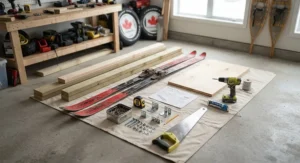
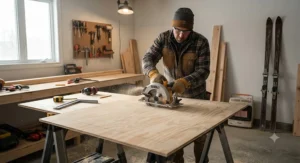
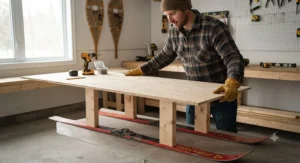
Buying the tub is only half the job — the build and the upkeep are where a smitty sled either earns its reputation or ends up back in the garage by February. Start with riser height: 12-18 cm off the ice is the sweet spot most experienced builders land on after trial and error, since anything much taller raises your centre of gravity and makes the loaded sled prone to tipping on side-hill snowbanks, and anything shorter risks the tub’s bottom dragging through crusted snow. Mount your skis with the pull-point attached near the ski tips rather than the tub itself; this keeps pulling force on the skis (where it belongs) instead of stressing the tub’s tie-down hardware.
For the first 30 days of a new build, check every bolt and screw after each outing — wood risers especially tend to loosen slightly as the fasteners bed into the grain, and a loose riser under load on rough ice is how skis end up cracked or lost entirely. Counter-sink every screw that penetrates the ski’s gliding surface; a proud screw head adds drag and, over a season, can chew a groove into ice that slows your pull noticeably. Come spring, store the sled somewhere dry — moisture trapped between riser and ski accelerates wood rot and corrodes steel hardware, which is the single most common reason a “durable ice sled” build only lasts two seasons instead of ten.
A quick pre-season check each fall — tightening hardware, inspecting ski bases for gouges, and waxing the ski bottoms with basic ski wax — takes maybe twenty minutes and meaningfully extends the life of the whole rig. Builders documenting their own collapsible riser designs, like the one detailed in this collapsible smitty sled build guide, often solve the storage problem by designing risers that break down into two or three flat sections for the off-season.
Real-World Scenarios: Which Smitty Setup Fits Your Trip?
Picture three different anglers heading out on the same Saturday morning, and you’ll see why “best” is really a moving target. The solo weekend angler, walking 500 metres from a plowed parking area with a single auger, a bucket, and a pop-up shelter, is well served by the Shappell Jet Sled Jr paired with the Pelican Trek 60 Utility Sled Runner Kit — light, quick to build, and easy to sling into a hatchback.
Then there’s the weekend crew of three splitting a two-man flip-over, a propane heater, and enough gear for an all-day sit — this is exactly the situation where the Eskimo/Clam-Style Jumbo Sled Tub earns its keep, especially split three ways on cost, since the alternative is two separate trips with smaller sleds.
Finally, picture the angler running a snowmobile out to a remote bay two kilometres from the nearest access point, hauling a full camp setup for a weekend of hard water fishing. That’s a Frabill Ice Hunter-Style Utility Sled situation — the reinforced tow points and bow-lift hull are built precisely for being dragged behind a machine at speed rather than walked behind on foot.
Your Smitty Sled Buyer’s Decision Framework
If you’re still torn between builds, run through this simple priority checklist:
- If you’re fishing solo and walking short distances, choose a compact tub (Jr-sized) because portability and low weight matter more than raw capacity.
- If you’re hauling for two or more anglers with a shared shelter, choose an extra-large or jumbo tub because trip-splitting savings outweigh the extra pulling effort.
- If your route involves rocky boat launches or repeated hard impacts, choose a thicker-walled, premium tub like the Otter Outdoors Non-Insulated Vortex Sled because wall thickness directly predicts cold-weather crack resistance.
- If you’re towing behind a snowmobile or ATV rather than walking, choose a sled with reinforced tow-point hardware, like the Frabill Ice Hunter-Style Utility Sled, because standard rope-and-eyelet setups aren’t rated for machine-towing shock loads.
- If budget is the deciding factor, choose the smallest tub that still fits your actual gear list — oversizing “just in case” adds weight and cost you’ll carry every single trip.
How to Choose the Right Base Tub and Ski Kit
- Measure your actual gear list first. Lay out everything you typically bring — shelter, auger, heater, bucket — and measure the footprint before picking a tub size, rather than guessing.
- Match ski width to typical snow conditions. Deeper, softer snow calls for wider downhill-style skis; hard-packed trails tolerate narrower runners like the Pelican kit.
- Check wall thickness, not just tub dimensions. A larger but thin-walled tub can be less durable long-term than a smaller, thick-walled one.
- Decide hand-pull versus tow-behind early. This determines whether reinforced tow hardware is worth the added cost.
- Budget for hardware, not just the tub. Risers, bolts, tie-downs, and wax add C$20-C$50 to most builds, and skipping quality hardware is the most common corner people cut.
- Factor in storage space. A jumbo tub with mounted skis is bulky in an off-season garage; some anglers prefer a collapsible riser design specifically for this reason.
- Read aggregated review themes, not star ratings alone. A 4.5-star average tells you less than a recurring complaint about tub flex or hardware corrosion showing up across multiple reviews.
Large-Capacity and Tow-Behind Builds for Bigger Trips
Two scenarios push anglers past a standard-size smitty build: hauling for a group, and hauling by machine instead of on foot. For a large capacity smitty setup, the jumbo tub category is really the only sensible starting point — trying to stack extra gear onto a mid-size tub with tie-down straps works in a pinch, but it raises the load’s centre of gravity and makes the whole rig more prone to tipping on uneven snow. A properly sized jumbo tub keeps weight low and centred instead.
For tow behind ice sled applications, the calculation changes entirely. Towing speed (15-20 km/h) generates far more dynamic load on tow points and ski mounts than a 4 km/h hand pull, so hardware rated for foot-travel loads can fail under machine towing over time. This is exactly why the reinforced tow-point hardware on models like the Frabill matters more than it might first appear — it’s not marketing fluff, it’s the difference between a hitch that survives a season of snowmobile hauls and one that shears a bolt halfway across the lake.
Common Mistakes When Buying or Building a Smitty Sled
The single most common mistake is choosing ski width based on looks rather than local snow conditions — narrow cross-country skis look sleek, but they dig in on the deep, powdery snow common after a fresh dump, while wider downhill skis float better under load. A close second is under-building the riser hardware, using standard wood screws where carriage bolts and washers would distribute load far more evenly across repeated freeze-thaw cycles.
Anglers also frequently oversize the tub “just in case,” then discover the extra bulk makes storage and transport a genuine hassle for nine months of the year while only paying off on the handful of big-group trips. On the flip side, undersizing is just as common — buying the cheapest, smallest tub, then realizing mid-season that a second angler’s gear simply doesn’t fit. Finally, skipping a pre-season hardware check is a mistake that compounds: a slightly loose bolt in December becomes a lost ski in February.
Smitty Sled vs Traditional Poly Utility Sled
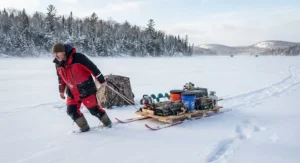
A traditional poly utility sled, pulled with no ski modification, drags its full flat bottom across snow, and the friction difference compared to a ski-equipped smitty build is not subtle — most experienced anglers describe the reduction in pulling effort as somewhere around half, sometimes more, once skis are added under a loaded tub.
| Factor | Traditional Poly Sled | Smitty Sled Build | Best For |
|---|---|---|---|
| Pulling effort (loaded, soft snow) | High — plows through snow | Roughly half the effort | Smitty build for regular walkers |
| Upfront cost | Lower — tub only | Higher — tub plus skis/hardware | Traditional sled for occasional use |
| Storage footprint | Compact, stacks easily | Bulkier with mounted skis | Traditional sled for tight garages |
| Performance on hard ice/pavement | Similar, both drag | Similar, skis add little benefit | Tie — neither has an edge |
| Performance in deep, soft snow | Poor — bogs down | Strong — skis provide flotation | Smitty build decisively |
The verdict really comes down to how often you’re walking any real distance. If most of your trips involve a short walk from a plowed lot straight onto hard-packed or bare ice, a traditional poly sled performs nearly as well as a smitty build and saves you both money and storage space. But if your typical outing involves hauling gear any real distance across fresh or deep snow, the smitty conversion pays for itself within a season or two in sheer saved effort.
What to Expect: Real-World Performance on Snow, Slush, and Ice
On hard-packed trails and bare ice, a smitty sled and a standard poly sled behave almost identically — skis add negligible benefit when there’s nothing to float on top of. The real difference shows up the moment you hit fresh powder or a wind-drifted snowbank; a standard tub’s flat bottom compresses and plows a furrow, while ski-equipped runners ride noticeably higher, redistributing weight over a much smaller contact patch relative to a flat hull.
Slush is the wildcard nobody warns you about. A soft slush layer under a fresh snow cover can grab a smitty sled’s skis and, in worst cases, start to freeze onto the ski bottoms mid-haul, turning an easy pull into a real slog — this is a well-documented frustration in the ice fishing community, not a rare fluke. Waxing ski bottoms before each outing meaningfully reduces this risk, and it’s the single most-recommended slush countermeasure among experienced builders.
Long-Term Cost and Maintenance
A basic smitty build (Jr tub plus a Pelican runner kit) lands around C$100-C$170 all-in, while a premium large-capacity build (Otter tub plus quality risers and hardware) can reach C$350-C$500. Spread across a typical five-to-ten-year lifespan for a well-maintained build, the annualized cost of even the premium option is modest compared to the time and physical effort saved on every single outing.
The table below breaks down total cost of ownership across three build tiers, factoring in typical hardware and expected lifespan under normal Canadian winter use.
| Build Tier | Upfront Cost (CAD) | Expected Lifespan | Annualized Cost (approx.) |
|---|---|---|---|
| Budget (Jr tub + runner kit) | C$100-C$170 | 4-6 seasons | C$20-C$35/year |
| Mid-range (JSX or Beavertail + risers) | C$180-C$260 | 6-8 seasons | C$25-C$35/year |
| Premium (Otter tub + full build) | C$350-C$500 | 8-12 seasons | C$35-C$50/year |
Interpreting the table, the budget and mid-range tiers land in a similar annualized cost band despite different upfront prices, which suggests the premium tier’s higher longevity genuinely offsets its higher purchase price rather than simply costing more overall. What actually shortens a build’s lifespan isn’t heavy use — it’s poor storage and skipped hardware checks, which is why the maintenance habits covered earlier matter as much as the initial purchase decision. Reviewers consistently note that a durable ice sled build rewards a little annual upkeep with several extra seasons of service.
Safety, Ice Regulations and Cold-Weather Compliance in Canada
No gear guide is complete without a word on ice safety, since a smitty sled is only useful if the ice underneath it is solid. According to the Canadian Coast Guard’s ice safety guidance, anglers should always check ice thickness and stability before heading out, avoid slushy or recently refrozen ice, never travel alone, and leave a trip plan with someone before departing — all of which apply just as much whether you’re walking, pulling a sled, or towing one behind a machine.
Provincial guidelines generally recommend a minimum of about 10 cm of clear ice before walking or hand-pulling gear out, with considerably more required before driving any vehicle onto a frozen lake — always confirm current local conditions with a nearby bait shop or provincial ministry before heading out, since ice thickness varies significantly across a single body of water and even day to day. If you’re planning a tow behind ice sled setup with a snowmobile or ATV, the ice thickness threshold rises accordingly, and machine weight distribution matters as much as raw thickness.
For anyone building or storing a shelter on a smitty sled long-term, it’s worth noting that ice shanties themselves carry regional rules around placement and seasonal removal deadlines, a tradition covered in some depth on the Wikipedia entry for ice shanties. Provincial and municipal authorities typically set hard removal dates each spring regardless of how solid the ice still appears, so check local bylaws well before ice-out season.
✨ Don’t Miss These Exclusive Deals!
🔍 Take your ice fishing gear sled setup to the next level with these carefully selected products. Click on any highlighted item to check current pricing and availability. These builds will help you get more time on the ice and less time hauling gear you can barely move!
Features That Actually Matter (And Those That Don’t)
Wall thickness, tow-point hardware quality, and ski width relative to typical local snow conditions are the three features that genuinely determine how a smitty sled performs and how long it lasts — everything else is largely cosmetic. Camo patterns, matching colour schemes, and brand-name recognition don’t affect pulling effort, durability, or capacity in any measurable way, despite how prominently they’re often marketed.
Tie-down point placement is a smaller but real factor: molded-in anchor points, like those on the Beavertail Sports Sled, genuinely outperform generic tub-edge lashing because they don’t slide or loosen under repeated bumps. Runner length matters more than runner width in most conditions, since a longer ski distributes weight over a larger surface area even at the same width — something the marketing copy on most sled listings glosses over entirely in favour of vaguer claims about “smooth gliding.”
Frequently Asked Questions
❓ What is a smitty sled used for in ice fishing?
❓ How much does it cost to build a smitty sled?
❓ Are smitty sleds better than regular ice fishing sleds?
❓ Can you tow a smitty sled behind a snowmobile or ATV?
❓ What skis work best for a durable ice sled build?
Conclusion
A smitty sled for ice fishing isn’t a single product you add to your cart — it’s a conversion, and understanding that upfront saves a lot of confused searching. What actually matters is picking the right base tub for your gear list and group size, pairing it with skis suited to your local snow conditions, and putting in the small, regular maintenance that keeps hardware tight and ski bottoms gliding rather than grabbing.
Whether you land on the budget-friendly Shappell Jet Sled Jr, the large-capacity Eskimo/Clam-Style Jumbo Sled Tub, or the premium Otter Outdoors Non-Insulated Vortex Sled, the underlying math stays the same: skis under a loaded tub cut your pulling effort roughly in half on soft snow, and that difference is felt in your shoulders on every single trip out. Build it right, maintain it a little each fall, and check the ice before you trust it — the rest is just picking the tub that fits your gear list.
🎣 Ready to build your setup? Compare current pricing on the tubs and kits above and get one more season of easy hauling out of your gear before the ice sets in.
Recommended for You
- Windlass Tip Up: 7 Best Automatic Ice Fishing Picks (2026)
- Thermal vs Standard Tip Up: 7 Picks That Won’t Freeze in 2026
- Thermal Tip Ups: 7 Insulated Picks That Beat the Freeze (2026)
Disclaimer: This article contains affiliate links. As an Amazon Associate, I earn from qualifying purchases. If you purchase products through these links, we may earn a small commission at no additional cost to you.
✨ Found this helpful? Share it with your friends! 💬🤗
