
In This Article
Anyone who has ever dragged a fully loaded tub across a windswept bay in February already knows the feeling: the rope goes taut, your boots slip, and the sled behind you might as well be filled with wet cement. That’s usually the moment the smitty sled vs jet sled debate stops being internet chatter and starts being personal. One camp swears by a stock plastic tub with a rope, because it’s cheap, tough, and you can buy it this afternoon. The other camp has spent a weekend in the garage bolting old downhill skis to a plywood frame, convinced that friction is the real enemy on the ice, not horsepower. Both camps have a point, and in this piece we’re going to pull apart the smitty sled vs jet sled comparison honestly — real products, real specs, real trade-offs — so you can figure out which setup actually earns its keep on your lake this winter.
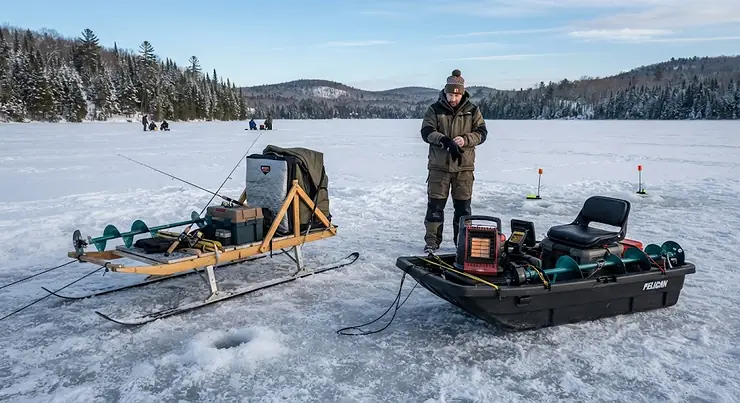
Before we get into gear, it’s worth grounding this in real ice safety guidance, since no sled — smitty, jet, or otherwise — matters if the ice underneath it isn’t sound. We’ll cover that later in more depth. For now, know this: a jet sled is a purpose-built plastic tub (Shappell more or less invented the category), while a smitty sled is a modification — skis or runners bolted under a tub or frame to lift it above the snow. They solve overlapping but distinct problems, and understanding which ice sled is better for your situation comes down to snow depth, gear weight, and how far you’re actually walking.
Quick Comparison Table
| Feature | Jet Sled (Tub Style) | Smitty Sled (Ski/Runner Style) |
|---|---|---|
| Best For | Short hauls, hard-packed snow, budget setups | Deep snow, slush, long walks with heavy loads |
| Typical Price Range | C$50 – C$300 depending on size | C$0 (DIY) to C$300+ for a built kit |
| Setup Effort | Ready to use out of the box | Requires building or buying a ski kit |
| Ground Clearance | Low — hull rides on the snow surface | High — tub rides above snow on runners |
| Portability | Stacks flat, fits most vehicles | Bulkier, sometimes needs to be disassembled |
Looking at this table, the honest takeaway is that neither option is a universal winner. A jet sled wins on convenience and price for anglers who park close to their spot, while a smitty setup earns its complexity back the moment you’re hauling gear 500 metres or more through fresh powder. If you fish deep-snow lakes in northern Ontario or the Prairies, the extra weekend spent building a smitty rig tends to pay for itself in saved energy by your second or third trip.
💬 Just one click — help others make better buying decisions too!😊
What Is a Smitty Sled, Really?
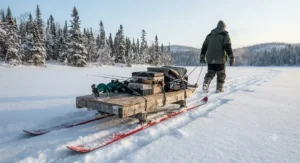
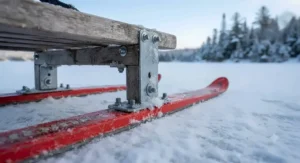
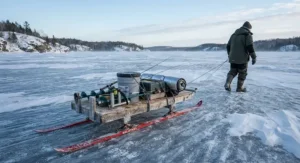
A smitty sled is not a single branded product — it’s a do-it-yourself modification where an angler mounts a pair of skis or metal runners under an existing tub or frame, lifting it above the snow so it glides instead of plows. The name reportedly traces back to an online ice fishing forum around 2009, and it has stuck as shorthand for any ski-elevated pull sled ever since.
That distinction matters for anyone comparing sled types for ice fishing, because it changes what you’re actually shopping for. A jet sled is a finished consumer product with a model number and a price tag. A smitty sled is a technique — sometimes sold as a complete kit, sometimes built from spare parts in an afternoon. Both approaches can carry the same gear; they just distribute the load differently across the snow.
Top 7 Ice Fishing Sleds: Expert Analysis
Below are seven real, currently available products that represent both sides of the smitty sled vs jet sled debate — from stock tubs to purpose-built ski conversions. Coverage spans budget, mid-range, and premium options, plus the accessory kits serious anglers use to convert a plain tub into a smitty-style hauler.
1. Shappell Jet Sled 1 (ATC) — the classic all-purpose workhorse
The original jet sled that basically defined the category, the Shappell Jet Sled 1 is the sled most Canadian anglers picture when someone says “jet sled” at all. Built from rotomolded polyethylene at roughly 54 by 25 by 10 inches, it comes with a tow rope and a contoured hull that’s meant to plane over snow rather than dig into it. In practice, that hull shape means it tows reasonably well on packed trails and groomed lake access points, though it starts to plow once snow gets past ankle depth. Based on the spec comparison with pricier options, this is the sled most beginners should start with before deciding whether they need something bigger or something with runners. Reviewers consistently report that it swallows a surprising amount of gear for the size, with one buyer noting it made hauling everything to the shanty far easier once driving onto the lake wasn’t an option — though the same reviewer flagged that the stock tow-rope holes can tear out under heavy loads without added backing material, a detail worth knowing before you overload it.
Pros:
- ✅ Tough rotomolded hull holds up to years of abuse
- ✅ Wide, deep tub swallows a full day’s gear easily
- ✅ Priced low enough to be a low-risk first sled
Cons:
- ❌ Tow rope holes can rip without reinforcement
- ❌ Plows rather than glides in deep, soft snow
Expect this sled to land in the under-C$100 range at most Canadian retailers, making it one of the better value entries on this list — check current price and availability before heading out, since stock and pricing shift by season.
2. Shappell JSX Jet Sled (Extra-Large) — biggest hold for serious haul days
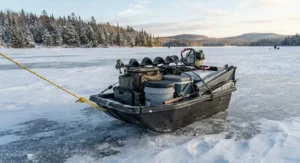
Step up to the Shappell JSX Jet Sled and you’re looking at a package that measures around 66 to 67 inches long and 31 to 32 inches wide, essentially doubling the interior volume of the standard model. What most buyers overlook about this size class is that the extra length isn’t just about capacity — it also improves how the sled tracks behind you, since a longer hull resists the side-to-side wobble that shorter tubs get on uneven ice. This is the sled for anglers running a full flip-over shelter, a heater, an auger, and two rod cases in a single load rather than splitting gear across trips. Aggregated owner feedback across major retailers tends to cluster around durability in cold temperatures and skepticism about towing it solo once fully loaded — several owners mention pairing it with an ATV or snowmobile hitch rather than hand-towing for long distances.
Pros:
- ✅ Massive interior fits a shelter plus full gear kit
- ✅ Longer hull tracks straighter than shorter sleds
- ✅ Rugged polyethylene shrugs off cold-weather cracking
Cons:
- ❌ Heavy and awkward to hand-tow once fully loaded
- ❌ Takes up significant garage or truck bed space
Price typically sits in the C$150-C$250 range depending on retailer promotions, and given the capacity-to-price ratio, it’s a strong pick for anyone who fishes with a group or hauls a shanty every outing.
3. Shappell Jet Sled Jr (JSR) — most nimble for solo, light-gear trips
At roughly 21 by 43 by 8 inches, the Shappell Jet Sled Jr is built for anglers who travel light — a rod case, a small auger, a bucket, and maybe a folding chair. Here’s what to weigh: the smaller footprint means less material dragging across the snow, which translates directly into less pulling effort per trip, but it also means you’ll be making two trips if you’re hauling a shelter. This sled shines for solo run-and-gun anglers who move between holes frequently rather than setting up a full basecamp. Reviewers who use it as a secondary sled — towed behind a larger one, or carried in a truck bed as backup — consistently describe it as nearly weightless when empty, which matters if you’re the one carrying it down an icy boat launch before you even start towing.
Pros:
- ✅ Lightweight enough to carry empty, not just tow
- ✅ Compact size fits easily in most vehicle trunks
- ✅ Low price makes it a smart backup or kids’ sled
Cons:
- ❌ Not enough volume for a shelter or full day kit
- ❌ Shallow sides let gear slide out on rough ice
Expect a price in the C$50-C$90 range, positioning it as the budget entry point for anyone who wants a dedicated jet sled without committing to a full-size tub.
4. Otter Pro Series Sled (Magnum) — toughest hull for rough portages
Otter Outdoors has been building ice fishing gear since 1995, and the Otter Pro Series Sled in the Magnum size reflects that experience with a reinforced outer lip and notably stable sidewalls compared with entry-level tubs. On paper this means the hull resists the flexing and cracking that cheaper polyethylene sleds develop after a few seasons of being dragged over rocks near shore or dropped off a tailgate. The Magnum size sits between the mid and large Otter offerings, giving it enough volume for a two-person gear load without the unwieldy length of the largest tubs. Based on the spec comparison with Shappell’s lineup, Otter’s sidewall reinforcement is the standout differentiator — it’s the detail owners of both brands mention when asked why they’d pay a bit more for Otter.
Pros:
- ✅ Reinforced lip resists cracking on rocky shorelines
- ✅ Stable sidewalls keep gear from shifting mid-tow
- ✅ Strong resale value thanks to brand reputation
Cons:
- ❌ Costs noticeably more than comparable Shappell sizes
- ❌ Larger sizes are frequently out of stock in-season
Price for the Magnum size tends to fall in the C$250-C$300 range at the time of research, which puts it firmly in premium territory — worth it if durability over a decade matters more to you than upfront cost.
5. Pelican Trek 45 Utility Sled — best budget-friendly starter tub
The Pelican Trek 45 Utility Sled uses Pelican’s RAM-X construction and is rated to carry up to 130 pounds, making it a genuine mid-capacity option despite its smaller footprint compared with the Shappell JSX. The clever design detail here is that two Trek sleds can be paired nose-to-tail to fully enclose gear during transport or storage — a trick that owners of hunting gear sleds have used for years and that translates nicely to ice fishing tackle protection. What most first-time buyers overlook is that the black finish absorbs more solar heat on sunny late-winter days, which can make the plastic slightly more flexible (and arguably more glide-friendly) than sleds in lighter colours. Reviewer sentiment on this line skews positive for the price point, with buyers frequently comparing it favourably against pricier Otter models for casual, occasional use.
Pros:
- ✅ Rated to 130 lb capacity despite compact size
- ✅ Two units can nest together for storage or transport
- ✅ Noticeably cheaper than comparable Otter or Shappell sizes
Cons:
- ❌ RAM-X shell flexes more than thicker rotomolded hulls
- ❌ Smaller capacity than a Shappell JSX or Otter Magnum
Pricing generally sits in the C$60-C$100 range, making it one of the more accessible entries for anglers testing whether a dedicated sled is worth the investment at all.
6. Easy Sled Collapsible Aluminum Kit — the true smitty-style champion
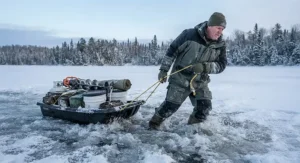
Where the previous five entries are all variations on the plastic tub, the Easy Sled is a genuine commercial take on the smitty sled concept — a lightweight, collapsible aluminum sleigh kit designed specifically to reduce pulling effort in deep snow and slush. Its origin story is telling: the maker built the first prototype after a plastic jet sled froze solid to slush mid-lake at minus 25°C, forcing a gear-carrying slog back to shore in three separate trips. That’s the exact failure mode a smitty-style runner system is designed to prevent, since the elevated tub never makes contact with the slush layer that causes plastic hulls to seize up. Worth noting honestly: this model is sold directly through the manufacturer’s own site rather than through Amazon.ca, so shoppers used to one-click affiliate purchases will need an extra step to order it — a small trade-off for a product built specifically to solve the problem stock jet sleds struggle with most.
Pros:
- ✅ Purpose-built to glide over slush without freezing solid
- ✅ Tool-free assembly and disassembly for easy transport
- ✅ Aluminum frame is significantly lighter than a wood-and-ski build
Cons:
- ❌ Not sold through Amazon.ca — ordering takes an extra step
- ❌ Higher upfront cost than a basic plastic tub sled
Pricing varies by kit size and isn’t published as a flat rate, so check the manufacturer’s current pricing directly rather than assuming a fixed figure — but budget meaningfully more than you would for a basic jet sled.
7. Otter Pro Sled HDX Hyfax Runner Kit — best DIY smitty conversion upgrade
For anglers who already own a tub sled and want smitty-style glide without building an entirely new rig, the Otter Pro Sled HDX Hyfax Runner Kit bolts directly onto compatible Otter hulls to add low-friction runners underneath. Here’s what the spec sheet won’t tell you outright, but longtime users note: hyfax material (the same UHMW plastic used on snowmobile skis) cuts drag dramatically compared with a bare polyethylene hull, particularly on packed snow and light ice glaze. This is a transformation product in the truest sense — it doesn’t replace your sled, it upgrades how the sled interacts with the snow beneath it, which is precisely the principle behind every homemade smitty build. Owners generally report a noticeable difference in pulling effort once installed, though a few note that installation requires basic tools and a bit of patience to align the runners evenly.
Pros:
- ✅ Dramatically reduces drag on packed snow and glare ice
- ✅ Fits existing sleds — no need to buy a new tub
- ✅ Uses durable UHMW material similar to snowmobile skis
Cons:
- ❌ Only fits specific compatible sled models and sizes
- ❌ Requires basic installation tools and some patience
Kits typically run in the C$100-C$200 range depending on size, and for anyone who already owns a tub sled, it’s often the smartest single upgrade toward true smitty-style performance.
Practical Usage Guide: Setting Up, Maintaining, and Upgrading Your Sled
Getting the most out of either style starts before the first trip of the season. For jet sleds, inspect the tow rope attachment points every fall — this is the single most common failure point owners report, and reinforcing it with a backing plate or fender washer takes ten minutes and prevents a mid-lake rope tear-out. Wax the hull bottom with a basic ski or snowmobile wax before the season starts; it’s a five-dollar trick that meaningfully reduces friction on packed snow, essentially borrowing the same glide principle a smitty sled achieves mechanically.
For a smitty-style build or kit, the maintenance routine shifts toward the hardware: check ski or runner bolts for looseness after the first few outings, since vibration over rough ice will work fasteners loose faster than most people expect. If you’re mounting used downhill skis yourself, sand down any sharp edges where you cut them to length, and seal exposed metal to avoid rust bleeding into the wood or aluminum frame. A common first-30-days mistake is mounting runners too close together, which sacrifices the side-to-side stability a wider stance provides — aim for runners roughly shoulder-width apart under the tub for the best balance between glide and tip resistance.
Real-World Scenarios: Matching the Sled to Your Ice Fishing Style
Consider a college student in Thunder Bay who fishes weekends between classes, parking within a hundred metres of the ice and hauling a single rod case and auger. A Shappell Jet Sled Jr is genuinely all this angler needs — anything bigger adds cost and bulk without adding value to that specific routine.
Now picture a retired couple who fish a remote lake in Manitoba every week of the season, hauling a flip-over shelter, a propane heater, and enough gear for a full day, often through knee-deep snow after a fresh dump. For them, the calculus changes entirely: a Shappell JSX Jet Sled paired with an Otter Pro Sled HDX Hyfax Runner Kit solves both the capacity problem and the deep-snow drag problem in one combination, without the DIY labour of a full smitty build.
Finally, think about a hardcore ice angler in northern Saskatchewan who walks two kilometres onto a lake most trips, hauling everything on foot because no roads reach the good water. This is the exact profile the Easy Sled was designed for — when slush and deep snow turn a plastic hull into an anchor, a true ski-elevated build stops being a novelty and starts being the only setup that makes the walk sustainable.
How to Choose Between a Smitty Sled and a Jet Sled
- Measure your typical snow depth. Under 10 cm of packed snow, a stock jet sled glides fine; beyond that, runners start paying off.
- Estimate your walking distance. Short hauls under 200 metres rarely justify a smitty build; longer treks change the math fast.
- Weigh your full gear load. Heavier loads amplify the friction difference between a flat hull and elevated runners.
- Factor in your budget and time. A jet sled is ready today; a smitty setup costs a weekend or a specialty-retailer order.
- Consider storage and transport. Tub sleds stack flat in a truck bed; ski-based rigs often need disassembly to fit.
- Think about upgrade paths. A hyfax runner kit lets you start with a jet sled and add smitty-style glide later.
- Check regional conditions. Prairie anglers dealing with deep, dry snow benefit more from runners than coastal anglers on wind-packed lakes.
Smitty Sled vs Jet Sled: The Detailed Comparison
The honest answer to which ice sled is better depends less on brand loyalty and more on physics. A jet sled’s contoured hull is engineered to plane across the surface, which works well until snow depth exceeds the hull’s natural float point — at which point the tub starts pushing snow instead of sliding over it, and every extra centimetre of depth costs you real pulling effort. A smitty sled sidesteps that problem entirely by lifting the load above the snow line using narrow runners, which contact far less surface area and therefore generate far less resistance, particularly in soft or wet snow where a flat hull would otherwise bog down.
| Comparison Point | Jet Sled | Smitty Sled |
|---|---|---|
| Performance in packed snow | Excellent | Good, marginal advantage |
| Performance in deep/wet snow | Poor to fair | Excellent |
| Upfront cost | Low | Moderate to high |
| Setup time | None | Hours (DIY) or an order wait (kit) |
| Best For | Casual anglers, short hauls | Frequent anglers, long or slushy hauls |
What the table doesn’t fully capture is how conditions change through a single season — early ice with light snow favours the jet sled, while late-season slush and heavy dumps favour the smitty setup. Anglers who fish an entire season on the same lake often end up owning both, using the jet sled for early ice and switching to a runner-equipped rig once the snow piles up.
Capacity Showdown: Smitty Sled vs Jet Sled
Capacity is where jet sleds generally win outright. Because a smitty conversion adds height and structural framing beneath the tub, the usable interior volume of the tub itself typically stays the same or shrinks slightly compared with a bare hull, while the added ski framework adds bulk without adding storage. A Shappell JSX Jet Sled or an Otter Pro Series Sled in the Magnum size will out-carry most homemade smitty rigs pound for pound, simply because every ounce of the smitty’s added hardware goes toward glide rather than storage.
That said, capacity on paper doesn’t always translate to capacity in practice. A jet sled loaded to its visual limit in deep snow may become genuinely un-towable, meaning the real-world usable capacity of a smitty-equipped rig can exceed a jet sled’s despite a smaller-looking tub — because you can actually move the load. For anglers deciding based on best sled type for gear volume alone, the honest advice is to size the tub first, then decide separately whether that tub needs a runner upgrade for your typical snow conditions.
Towing Ease: Which Sled Pulls Easier
This is the category where the smitty sled vs jet sled debate gets settled fastest in the field. Multiple longtime users describe cutting their pulling effort by half or more after switching to a ski-elevated setup, particularly once a loaded sled would otherwise be plowing rather than gliding. The mechanism is straightforward physics: reducing the contact area between the sled and the snow reduces friction almost linearly, and narrow runners contact dramatically less surface than a flat polyethylene hull.
Jet sleds still hold their own on hard-packed trails, boat ramps, and wind-scoured lake ice, where there’s minimal snow to plow through in the first place. On that terrain, the extra weight and bulk of a smitty conversion can actually make towing slightly harder than a stripped-down jet sled, since you’re now dragging ski hardware that isn’t doing useful work. Towing ease, in other words, is entirely conditional — match the tool to the snow you’re actually walking through rather than assuming one setup wins everywhere.
Durability Comparison: Which Sled Lasts Longer
Stock jet sleds from Shappell, Otter, and Pelican are all built from UV-stabilized polyethylene or RAM-X composite, materials chosen specifically to resist cracking in extreme cold — a real engineering consideration, since standard plastics become brittle well before typical ice fishing temperatures. Reviewers across these brands report multi-season durability as long as the tow-rope attachment points are reinforced early, since that’s consistently the first failure point rather than the hull itself.
Smitty-style builds introduce a different durability profile entirely: the hardware (bolts, brackets, hinges) becomes the wear point rather than the shell. A well-built aluminum kit like the Easy Sled sidesteps rust concerns that plague steel-hardware DIY builds, while homemade wooden-frame smitty sleds need annual inspection for rot and loosening fasteners. Neither approach is inherently more durable — it comes down to build quality and maintenance discipline, with commercial kits generally outlasting rushed weekend builds simply due to engineering tolerance.
Common Mistakes When Buying an Ice Fishing Sled
The most frequent mistake is buying based on price alone without considering local snow conditions — a bargain jet sled that plows through every trip costs more in wasted energy than the money it saved upfront. A close second is underestimating gear growth: anglers routinely add a heater, a second auger, and extra rod cases within a season or two, so buying a sled sized for today’s gear often means an unwanted upgrade by next winter.
Buyers also frequently skip reinforcing the tow point before the first heavy load, despite this being the single most commonly reported failure across nearly every jet sled brand. Finally, plenty of anglers assume a smitty conversion is either free or trivial, when in reality a well-built kit like the Easy Sled or a proper hyfax runner installation takes real budget and time — treating it as a weekend afterthought tends to produce a wobbly, short-lived build.
Long-Term Cost & Maintenance
A basic jet sled purchased in the C$50-C$100 range can realistically last five to eight seasons with minor reinforcement work, putting its effective annual cost well under C$20 once amortized. Premium tub sleds in the C$250-C$300 range last comparably long but come with better resale value, since brands like Otter hold their reputation well on the used market.
A smitty-style setup shifts the cost curve differently: the Easy Sled or a hyfax runner kit represents a higher upfront investment, but the payoff is measured in reduced physical strain rather than dollars saved — a real consideration for anglers managing joint pain or simply wanting to fish longer distances without exhaustion. occupational safety guidance on ice-covered work sites even echoes this principle for a different audience, noting that reducing load and managing weight distribution meaningfully lowers physical and safety risk when working on frozen surfaces — the same logic that makes a well-built smitty rig worth its added cost for anglers covering real distance.
Safety and Regulations: Towing Gear on Canadian Ice
No sled comparison for ice fishing is complete without a safety check, since the sled itself is irrelevant if the ice underneath can’t support you and your gear. The Canadian Red Cross recommends a minimum of 15 cm of clear blue ice for an individual walking or skating, with thicker ice required for groups or added weight like a loaded sled. Heavier loads — a full jet sled with a shelter, heater, and gear — effectively add the weight of another person to the ice, so err toward the more conservative thickness guidelines when towing a fully loaded rig.
Provincially, most Canadian jurisdictions also require anglers between certain ages to carry a valid fishing licence before heading onto the ice, and provincial tourism safety resources recommend telling someone your planned route and return time regardless of how experienced you are. Whichever sled you choose, treat ice assessment as the first step of every outing, not an afterthought once you’re already loaded up and walking.
Frequently Asked Questions
❓ Is a smitty sled better than a jet sled for ice fishing?
❓ How do I build a smitty sled at home?
❓ What is the weight capacity of a typical jet sled?
❓ Can I add runners to an existing jet sled?
❓ How thick does ice need to be to tow a loaded sled safely?
Conclusion
The smitty sled vs jet sled question doesn’t really have a single winner — it has a right answer for your specific lake, your specific gear pile, and your specific tolerance for a weekend spent with a drill in hand. Anglers fishing close to the truck on packed snow will get everything they need from a Shappell Jet Sled 1 or a Pelican Trek 45 Utility Sled, without ever thinking about runners again. Anglers walking real distance through deep or slushy snow, on the other hand, will feel the difference a properly built Easy Sled or an Otter Pro Sled HDX Hyfax Runner Kit makes within the first fifty metres.
What matters most is matching the tool honestly to the terrain rather than defaulting to whatever’s cheapest or trendiest on a forum thread. Start with an accurate read of your typical snow depth and walking distance, size your tub for the gear you actually carry — not the gear you might carry someday — and treat any runner upgrade as an investment in your own energy rather than a luxury. Whichever direction you land, the sled is only ever as good as the judgment behind it, so keep ice safety at the centre of every trip, no matter how well your gear glides.
✨ Ready to gear up?
Compare current prices on jet sleds and smitty conversion kits before your next trip out — the right sled makes every outing easier. 🎣
Recommended for You
- Smitty Sled for Ice Fishing: 7 Top Builds for 2026 (C$50-C$400)
- Windlass Tip Up: 7 Best Automatic Ice Fishing Picks (2026)
- Thermal vs Standard Tip Up: 7 Picks That Won’t Freeze in 2026
Disclaimer: This article contains affiliate links. As an Amazon Associate, I earn from qualifying purchases. If you purchase products through these links, we may earn a small commission at no additional cost to you.
✨ Found this helpful? Share it with a fellow ice angler before your next trip out! 🎣❄️
