
In This Article
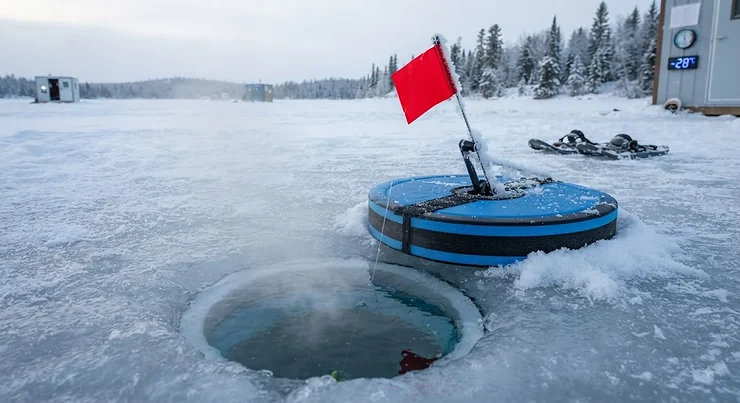
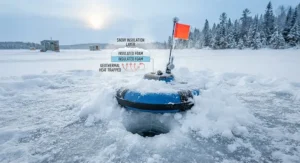
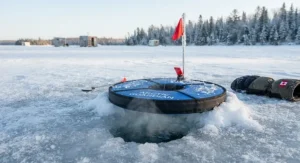
Somewhere around your third trip to the auger shack, chipping a fist-sized chunk of grey ice out of a hole that froze solid in twenty minutes flat, you start asking the question every hard-water angler eventually asks: is there a better way? That question usually leads straight to thermal vs standard tip up, and it’s a genuinely useful fork in the road, not just marketing noise. A tip-up is a spring-loaded, flag-triggered device that suspends bait under the ice and signals a strike without you standing over the hole — it lets an angler manage multiple holes at once rather than fishing a single line by hand. The “thermal” or “insulated” versions add a hooded, often round base that seals over the hole to slow refreezing and block light. Standard tip-ups — wood cross-sticks, flat-board designs, and simple poly frames — skip that hood entirely and rely on a lubricated shaft to keep the mechanism itself from seizing.
Here’s the thing nobody tells you at the bait shop: neither style is objectively “better.” One trades weight and packability for freeze protection; the other trades a bit of ice-chipping for a lighter pack and a lower price tag. This guide breaks down real products sold in Canada, walks through when insulation actually earns its keep, and shows you exactly which of the seven models below deserves a spot in your sled. We’ll also touch on Ontario’s two-line rule, cold-weather setup tricks, and the maintenance schedule that keeps either style firing reliably through a full winter. Prices below are shown as ranges in Canadian dollars because Amazon.ca pricing shifts constantly — always check current pricing before you buy.
Quick Comparison: Thermal vs Standard Tip Up at a Glance
| Feature | Thermal / Insulated Tip-Up | Standard Tip-Up |
|---|---|---|
| Hole freezing resistance | Excellent — hooded base blocks air and light | Fair — depends on ambient temp and wind |
| Weight & pack size | Bulkier, less nestable | Lighter, stacks easily in a bucket |
| Best temperature range | -25°C and below, windy days | -15°C and warmer, calm days |
| Typical price range (CAD) | C$45–C$95 | C$20–C$65 |
| Best For | Extended sets, extreme cold, exposed lakes | Quick sets, mild days, budget spreads |
Looking at the table, the split really comes down to how long your line sits unattended and how brutal the wind is on your lake. A thermal tip-up’s hooded base is doing double duty — it’s not just stopping slush from creeping back into the hole, it’s also blocking sunlight that can spook wary walleye and lake trout in shallower water. Standard tip-ups aren’t obsolete, though; on a calm -10°C afternoon with an hour-long set, the weight savings and lower price often make more practical sense than paying for insulation you won’t need that day.
💬 Just one click — help others make better buying decisions too! 😊
Top 7 Tip-Ups for 2026: Expert Analysis
1. Frabill Pro Thermal Tip-Up — best all-around insulated pick
The Frabill Pro Thermal earns its reputation as the benchmark insulated design, and the reason comes down to coverage: its round base covers a full 10-inch hole, which stops slush from creeping back in and keeps your line running free. That matters more than it sounds — a partially frozen hole doesn’t just slow your hookset, it can shear your line against a jagged ice edge right when a big pike decides to run. Beyond the hood, this model is built with a removable spool shaft that lets you clear ice or re-grease it mid-trip without tools, and it collapses to fit inside a standard five-gallon bucket, so a spread of six or eight of these doesn’t turn into a hauling nightmare. Based on the spec comparison against lighter poly models, the trade-off is bulk: this is not the tip-up you’re stuffing eight-deep into a jacket pocket.
Reviewers consistently note that the insulated hood genuinely does what it claims in sustained sub-zero weather, and several mention the added benefit that blocking sunlight from entering the hole appears to make fish less wary near the bait. The most common complaint centres on storage bulk rather than performance — a fair trade for anglers who set lines and leave them for hours.
Pros:
- ✅ Full 10-inch hood stops slush and refreeze in deep cold
- ✅ Removable spool shaft simplifies mid-trip cleaning
- ✅ Blocks light, which reviewers link to more confident bites
Cons:
- ❌ Bulkier to store than wood or poly-frame models
- ❌ Higher price point than budget thermal options
Expect to pay in the C$70–C$90 range at the time of research. For anglers who fish exposed lakes in January and February, the value case is strong: fewer ice-chipping stops means more time watching flags.
2. HT Enterprises Polar Therm Extreme Tip-Up — best for all-day unattended sets
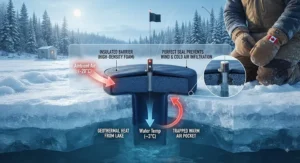
The Polar Therm Extreme is engineered as an “underwater” tip-up with a patented, freeze-proof trip mechanism, meaning the trigger itself is designed not to seize even well below zero. What most buyers overlook about this model is that the insulation isn’t just a physical hood — it works by trapping the thermal action of the open water beneath the ice, which is what keeps the hole from sealing shut in sub-zero temperatures. Practically, that means less time babysitting each hole and more confidence leaving a six-line spread out for a full afternoon. The whole unit is built to fit inside a five-gallon pail for transport, and a foam hook holder at the base of the spool keeps things tangle-free between sets.
The thermal cover seals holes from six to ten inches, blocking blowing snow and refreeze while keeping the trip action smooth through long sets. Aggregated review sentiment is largely positive on cold-weather reliability, though a handful of buyers note the flag spring can occasionally trip in strong wind — a minor annoyance rather than a dealbreaker for most.
Pros:
- ✅ Freeze-proof trip mechanism rated for extended sub-zero sets
- ✅ Adjustable tension trip works for panfish through lake trout
- ✅ Built-in tackle box speeds up on-ice setup
Cons:
- ❌ Flag can trip prematurely in gusty wind, per user reports
- ❌ Sits at the premium end of the thermal category
Expect a price around C$75–C$95. This is the pick for anglers who fish remote or windswept lakes where checking a line every 20 minutes just isn’t realistic.
3. CLAM Trophy Thermal Tip-Up — best adjustable-shaft thermal model
The CLAM Trophy Thermal Tip-Up distinguishes itself with an adjustable shaft that fits essentially any hole diameter, which solves a real annoyance with fixed-hood thermal designs: if your auger is 8 inches and your buddy’s is 10, you’re not stuck swapping gear. Here’s what the spec sheet won’t tell you outright, but the design implies — an adjustable shaft also means the hood seats more snugly against variable ice-hole shapes, which cuts down on the gap where cold air sneaks in and starts refreezing the edges. Dual trip settings let you dial sensitivity down for finicky panfish or crank it up for aggressive northern pike without swapping hardware.
Based on the spec comparison with fixed-diameter models, the CLAM Trophy Thermal Tip-Up sits in a sweet spot: freeze-resistant performance close to premium models, at a price that undercuts them. Reviewers commonly cite the dual trip settings as the standout feature for mixed-species days.
Pros:
- ✅ Adjustable shaft fits a wide range of hole sizes
- ✅ Dual trip settings suit panfish and predator species alike
- ✅ Freeze-resistant hood performs close to premium-tier models
Cons:
- ❌ Fewer accessory add-ons than the Frabill or HT lineups
- ❌ Smaller dealer network for warranty support in some regions
Look for the CLAM Trophy Thermal Tip-Up in the C$55–C$70 range. It’s a strong middle-ground choice for anglers upgrading from a budget thermal without committing to premium pricing.
4. Frabill Arctic Fire Tip-Up — best budget-friendly thermal option
Not every angler needs the full premium package, and the Frabill Arctic Fire Tip-Up proves you don’t have to spend big to get real thermal protection. Built from a durable, molded poly base in a pop-up style, it carries features usually reserved for pricier models, including dual trip settings and a molded-in ruler for quick length checks at the hole. What most buyers overlook is that a poly-based hood, while less rugged-looking than metal-reinforced competitors, actually sheds ice buildup more easily because nothing sticks to the smooth moulded surface the way it clings to seams or hinges.
Aggregated reviewer sentiment describes the Frabill Arctic Fire Tip-Up as punching above its price point for cold-hole protection, with the fluorescent flag praised for visibility across a wide spread. The most repeated criticism concerns the flag spring tension, which some owners say needs periodic readjustment through a season of heavy use.
Pros:
- ✅ Genuine thermal protection at a budget-tier price
- ✅ Dual trip settings and molded ruler add real convenience
- ✅ Poly base sheds ice buildup more easily than seamed designs
Cons:
- ❌ Flag spring tension can loosen with heavy seasonal use
- ❌ Less rugged long-term than metal-frame premium models
At around C$35–C$45, the Frabill Arctic Fire Tip-Up is the pick for anglers building out a first multi-line spread without draining the tackle budget.
5. Beaver Dam Original Rail Tip-Up — best traditional standard design
If thermal tip-ups are the new guard, the Beaver Dam Original Rail Tip-Up is the old guard proving it still has a place on the ice. This is a freeze-proof, windproof, foolproof rail design with a seamless steel tube filled with special freeze-proof lubricant to keep the mechanism smooth, plus an anti-wind slot for breezy days and a spool capacity of 150 feet of line. Each unit is handmade with solid pine construction and a spinner-style trigger offering both straight and tapered line trips, letting you target everything from panfish to pike with one rig. The honest analytical take here: this design skips hole insulation entirely, so it relies on shaft-level lubrication rather than blocking cold air from the hole itself — a fundamentally different approach to freeze prevention than the thermal category.
Beaver Dam has built this reputation over five decades as an American-made icon of the category, and that longevity shows up in review sentiment — owners frequently mention units still running after a decade or more of seasonal use. The trade-off is that on the coldest, windiest days, you’ll be back out chipping the hole clear more often than with a hooded thermal model.
Pros:
- ✅ Freeze-proof lubricated tube keeps the trip mechanism smooth
- ✅ Handmade pine construction known for multi-decade durability
- ✅ Spinner trigger with straight and tapered trip options
Cons:
- ❌ No hood, so the hole itself still needs periodic clearing
- ❌ Less effective than thermal models below roughly -20°C
Expect a price in the C$50–C$65 range. This is the pick for traditionalists who fish moderate cold and value proven mechanical simplicity over hole insulation.
6. Vexan Ice Fishing Tip-Up — best budget standard tip-up
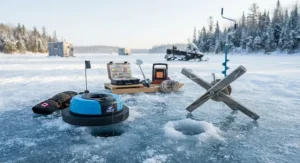
For anglers stretching a spread across eight or ten holes on a tight budget, the Vexan Ice Fishing Tip-Up is a sensible entry point. It’s built as a high-visibility green frame with a reflective strike-indicator flag and an 18-inch max span, paired with easy-deploy hardware that doesn’t demand much assembly fuss at the hole. What stands out in practice is the flag visibility — the reflective element genuinely helps at dawn and dusk, which is exactly when a lot of predator species turn on. Here’s what the spec sheet undersells: at this price, you’re not getting freeze insulation of any kind, so on a windy sub-zero day you’ll need to check holes more frequently than with either a thermal model or the lubricated-shaft Beaver Dam.
Review sentiment is generally positive for the price bracket, with anglers noting good value for building out a full multi-line spread. The trade-off is durability over multiple seasons, which several reviewers describe as adequate rather than exceptional.
Pros:
- ✅ Genuinely affordable for building a full multi-hole spread
- ✅ Reflective flag improves visibility at dawn and dusk
- ✅ Easy-deploy hardware speeds up setup at the hole
Cons:
- ❌ No freeze protection — holes need frequent manual clearing
- ❌ Build quality trails premium standard and thermal models
At under C$25, the Vexan Ice Fishing Tip-Up is the pick for anglers who’d rather buy four or five budget units than one premium thermal.
7. HT Enterprises Windlass Tip-Up (TU-1) — best for adding bait action
The HT Enterprises Windlass Tip-Up is the lesser-known alternative most beginner guides skip entirely, and that’s a shame because it solves a problem neither thermal nor standard flat designs address: dead bait. A small fin catches the wind and moves a wire that gently jigs the line up and down, giving suspended bait lifelike motion without you touching the rig. On slow bite days, that subtle movement can be the difference between a bare hook at 4pm and a flag flying by lunch. What most buyers overlook is that this only works with at least a light breeze — dead-calm days neutralize the entire advantage, so it’s a situational tool rather than an everyday spread anchor.
Pros commonly cited include the fully enclosed housing for basic insulation, a removable spool shaft, and dual trip settings, while the main criticism is that it sits toward the pricier end of the standard category relative to simpler flat-board designs. Reviewers who fish moving-water-adjacent lakes or open, windy bays rate this one highest.
Pros:
- ✅ Wind-driven jigging adds lifelike action to static bait
- ✅ Partially enclosed housing offers modest freeze resistance
- ✅ Dual trip settings and removable spool for easy cleaning
Cons:
- ❌ Loses its main advantage entirely on calm, windless days
- ❌ Pricier than comparable non-jigging standard tip-ups
Look for the HT Enterprises Windlass Tip-Up around C$35–C$45. It’s a smart specialty addition to a spread rather than a full replacement for your other six lines.
Setting Up for Extreme Weather Tip Ups: A Practical Guide
Extreme weather tip ups only perform as advertised when they’re set up correctly, and the setup window matters more than most anglers assume. Start by drilling your hole slightly oversized if you’re running the Frabill Pro Thermal or HT Enterprises Polar Therm Extreme, since a snug hood seals better against a clean-cut edge than a chipped or irregular one. Skim any slush immediately after drilling — thermal hoods work by trapping existing open water’s warmth, not by melting ice that’s already forming, so a head start matters.
For the first 30 days of a new season, re-grease the trip shaft on lubricated models like the Beaver Dam Original Rail Tip-Up every three to four outings; cold snaps below -20°C thicken standard grease fast, and a stiff trigger is the single most common cause of missed flags. On thermal units, periodically check that the hood is sitting flush — wind can shift a lightweight poly base like the Frabill Arctic Fire Tip-Up off-centre, cracking the seal that keeps refreeze out. A common early-season mistake is over-tightening trip tension to “prevent false flags,” which often backfires by dulling sensitivity enough to miss a light-biting walleye altogether; set tension for your target species first, and adjust from there only if false trips become a real pattern.
Who Actually Needs a Thermal Tip-Up? Three Real-World Scenarios
Picture a retired angler who fishes a sheltered bay near shore three afternoons a week, checking lines every 45 minutes. For that profile, the Beaver Dam Original Rail Tip-Up or Vexan Ice Fishing Tip-Up covers the need completely — frequent checks mean hole freezing never gets the chance to become a problem, and the lighter standard design is easier to haul across shore ice.
Now picture a father-and-daughter team setting eight lines on an exposed 15-kilometre lake in Northern Ontario and leaving them out for a full six-hour day. That’s the exact scenario the HT Enterprises Polar Therm Extreme Tip-Up was built for — unattended, wind-exposed, all-day sets where a frozen hole means a lost fish, full stop. Budget for the premium price here; the alternative is a wasted afternoon of chiselling.
Finally, picture a budget-conscious weekend angler running a six-line spread for the first time. The Frabill Arctic Fire Tip-Up hits the sweet spot — genuine thermal protection without the premium cost of a full metal-hooded model, letting a beginner build a complete spread without overspending on gear they’re still learning to use.
✨ Ready to build your spread?
Check current availability on the models above before your next trip out.
Thermal vs Standard Tip-Up: What’s Actually Different
The core distinction in the thermal vs standard tip up debate isn’t build quality — both categories include well-made, durable products. It’s where the freeze-prevention happens. Thermal models fight cold at the hole itself, using a hood that traps residual warmth from the open water below and physically blocks wind and falling snow from reaching the surface. Standard models fight cold at the mechanism, using grease-filled tubes and lubricated shafts so the trigger stays responsive even as the hole around it slowly skins over.
| Factor | Thermal Design | Standard Design |
|---|---|---|
| Where freeze protection happens | At the hole (hood/cover) | At the trigger (lubricated shaft) |
| Unattended set duration | Long (hours) | Moderate (30–60 min ideal) |
| Wind performance | Strong — hood blocks gusts | Weaker — exposed hole catches wind |
| Light-blocking for wary fish | Yes, hooded models | No |
Reading the table, the honest takeaway is that standard tip-ups aren’t a downgrade — they’re a different tool optimized for shorter, more attended sets. Thermal tip-ups earn their premium specifically when you can’t check a line every half hour, whether that’s because you’re covering more holes than you can realistically monitor or because you’re leaving lines out overnight-adjacent for lake trout. On a mild, calm day with frequent hole checks, a standard model like the Beaver Dam Original Rail Tip-Up performs essentially identically to a thermal one, minus the bulk and the extra cost.
How to Choose Between a Thermal and Standard Tip Up
- Check your typical set duration first. If you’re checking holes every 20–30 minutes, insulation benefits tip up performance less than you’d think — a standard design like the Vexan Ice Fishing Tip-Up will keep pace.
- Weigh your lake’s wind exposure. Sheltered bays favour standard designs; open, wind-scoured lakes favour the hooded protection of the Frabill Pro Thermal Tip-Up.
- Match tension settings to target species. Panfish need a light, sensitive trip; lake trout and pike need a heavier setting — most models on this list, including the CLAM Trophy Thermal Tip-Up, offer dual or adjustable tension for exactly this reason.
- Budget for the whole spread, not one unit. Six standard tip-ups often costs less than three thermal ones, and for casual day trips, more lines in the water can matter more than insulation on each.
- Consider storage and transport. If you’re hiking in rather than driving to your spot, the lighter Vexan or Beaver Dam designs pack down considerably easier than hooded thermal units.
- Factor in maintenance tolerance. Standard lubricated-shaft designs need more frequent re-greasing in deep cold; thermal hoods need less mechanical upkeep but more attention to hood-seating.
- Don’t ignore the specialty options. If bite activity is slow and you fish windy water, the jigging action of the HT Enterprises Windlass Tip-Up can outperform either category on a dead-bait day.
Common Mistakes When Buying a Tip-Up
The most frequent misstep is buying an entire spread of premium thermal units for a lake that never demands it — if you’re fishing a sheltered pond and checking lines constantly, that money is better spent on more standard units or better bait. The second common mistake is assuming “insulated” means zero maintenance; even the HT Enterprises Polar Therm Extreme Tip-Up still needs its trip mechanism checked periodically, since insulation protects the hole, not the internal spring. A third mistake is mismatching hole size to hood size — a 10-inch auger with an 8-inch-rated hood, or vice versa, undermines the entire point of a thermal design by leaving a gap around the edge. Finally, anglers frequently underestimate flag visibility needs; a reflective or high-vis flag like the one on the Vexan Ice Fishing Tip-Up matters more at dawn, dusk, or on overcast prairie-grey days than most buyers expect going in.
Hole Freezing Prevention: Solving 5 Cold-Weather Tip-Up Problems
Problem 1: The hole skins over within 15 minutes. This is almost always a standard-design issue in deep cold. Solution: switch that specific hole to a hooded model like the Frabill Arctic Fire Tip-Up, or shorten your check interval to every 15–20 minutes if you’re staying with a standard rig.
Problem 2: The trigger sticks even though the hole looks clear. The hole isn’t the issue here — the shaft grease has thickened. Solution: re-lubricate with a cold-rated grease, which is standard maintenance on wood-frame models like the Beaver Dam Original Rail Tip-Up.
Problem 3: Wind keeps shifting a lightweight thermal hood off the hole. Solution: anchor the base with a small mound of slush or snow around the perimeter before it refreezes, sealing the hood in place without affecting the trip mechanism.
Problem 4: Flags trip falsely in gusty conditions. Solution: increase tension slightly on adjustable models like the CLAM Trophy Thermal Tip-Up, and reposition the flag angle away from prevailing wind where the design allows.
Problem 5: Bait goes lifeless and stops attracting strikes on slow days. This isn’t a freezing problem at all — it’s a presentation problem. Solution: rotate in the HT Enterprises Windlass Tip-Up, which uses wind-driven motion to keep bait moving without manual jigging.
Is an Insulated Tip-Up Worth It? Long-Term Cost & Maintenance
Running the numbers honestly: a thermal unit like the Frabill Pro Thermal Tip-Up costs roughly double a budget standard model like the Vexan Ice Fishing Tip-Up up front. But cost-per-outing tells a different story over a full season. If hole freezing costs you even one lost fish or one wasted 20-minute chiselling session per trip, and you fish 15–20 times a winter, that time adds up fast — especially on short daylight-hour trips where every unproductive minute matters. Maintenance costs run roughly comparable between categories over a multi-year span: standard models need more frequent shaft re-greasing, while thermal models need occasional hood-seal inspection and, eventually, hinge or gasket replacement on heavily used units. Neither category is meaningfully more expensive to own long-term — the real ROI question is whether insulation saves you enough on-ice time, per trip, to justify the upfront gap. For anglers averaging fewer than five outings a season, the standard category almost always wins on total cost of ownership; for anyone fishing 15-plus days including exposed, windy lakes, thermal pays for itself within a season or two.
What to Expect: Real-World Performance in Extreme Weather
On paper, insulation benefits tip up performance in every cold-weather scenario — but real-world results are more nuanced. In moderate cold (-5°C to -15°C) with light wind, standard and thermal models perform almost identically; the difference only becomes obvious once temperatures drop below roughly -20°C or wind picks up past 20 km/h. At that point, hooded models like the HT Enterprises Polar Therm Extreme Tip-Up noticeably outperform, keeping holes workable for hours where an unhooded design would need clearing every 30–40 minutes. Reviewers fishing genuinely extreme days — sustained sub-minus-25°C stretches common in parts of Northern Ontario, the Prairies, and Quebec’s back country — consistently rate thermal designs as the difference between a productive day and a frustrating one spent mostly chiselling ice.
Features That Actually Matter (And Those That Don’t)
Line capacity above 150 feet matters far more in practice than most marketing copy suggests, especially for deep lake trout water — running short mid-fight is a real and preventable failure. Adjustable tension trip settings matter enormously for mixed-species days; fixed-tension units force compromises that cost strikes. On the other hand, flashy accessory bundles — bells, lights, and extra flag colours — matter far less than base build quality; a bright flag and a reliable trip mechanism will out-fish a feature-loaded unit with a mediocre trigger every time. Hole diameter compatibility is a genuinely important spec that’s easy to overlook until you’re standing on the ice with a mismatched hood.
Safety and Regulations: Ice Fishing Tip-Ups in Canada
Before any thermal-vs-standard decision matters, ice safety has to come first. The Canadian Red Cross is clear that there’s no such thing as 100 percent safe ice, though clear blue or black ice is generally the strongest and should still be checked in multiple locations before you commit to a spot. Beyond safety, regulations vary by province and directly affect how many tip-ups you can legally run. In Ontario, for example, anglers can use two lines for ice fishing in most waters, provided they stay within 60 metres of any line or tip-up at all times and maintain a clear, unobstructed view of it. That distance rule matters for spread planning — six or eight tip-ups spaced too widely apart can put you in violation even if the total-line count is fine. Always confirm your province’s current Recreational Fishing Regulations Summary before heading out, since zone-specific exceptions are common.
Bait handling rules also intersect with tip-up use more than most anglers realize. Under federal Aquatic Invasive Species Regulations, it’s illegal to introduce an aquatic species into a body of water where it isn’t native unless specifically authorized, and provincial enforcement blitzes actively check anglers’ equipment for compliance. Dumping unused bait or bait-bucket water into a lake at the end of the day isn’t just discouraged — it’s a genuine legal and ecological risk, so plan to dispose of leftover live bait on land, away from any waterway.
Frequently Asked Questions
❓ Are thermal tip-ups worth the extra cost?
❓ Do insulated tip-ups really stop holes from freezing?
❓ Can I use a standard tip-up in extreme cold?
❓ How many tip-ups can I legally use ice fishing in Canada?
❓ What's the best tip-up for winter walleye in Canada?
Conclusion
The thermal vs standard tip up decision really comes down to how long your lines sit unattended and how much wind and cold your lake typically throws at you. For extended, exposed, or genuinely extreme-weather sets, the insulated hood on the Frabill Pro Thermal Tip-Up or HT Enterprises Polar Therm Extreme Tip-Up earns its higher price by keeping holes workable for hours at a stretch. For shorter, more attended sets or tighter budgets, a proven standard design like the Beaver Dam Original Rail Tip-Up or Vexan Ice Fishing Tip-Up performs just as well without the extra bulk or cost. The smartest spreads, honestly, often mix both — a couple of thermal units for your farthest or windiest holes, and standard units for the ones you’re checking regularly anyway. Whichever direction you go, match the tool to your actual fishing pattern rather than buying based on price alone, and always check current availability and pricing on amazon.ca before you head out.
✨ Found the right tip-up for your spread?
Check current pricing and availability before your next trip on the ice! 🎣
Recommended for You
- Thermal Tip Ups: 7 Insulated Picks That Beat the Freeze (2026)
- Wooden Tip Up vs Plastic: 7 Best Options Ranked for 2026
- Rail Tip Ups for Ice Fishing: 7 Trusted Picks for Canada in 2026
Disclaimer: This article contains affiliate links. As an Amazon Associate, I earn from qualifying purchases. If you purchase products through these links, we may earn a small commission at no additional cost to you.
✨ Found this helpful? Share it with your friends! 💬🤗
