
In This Article
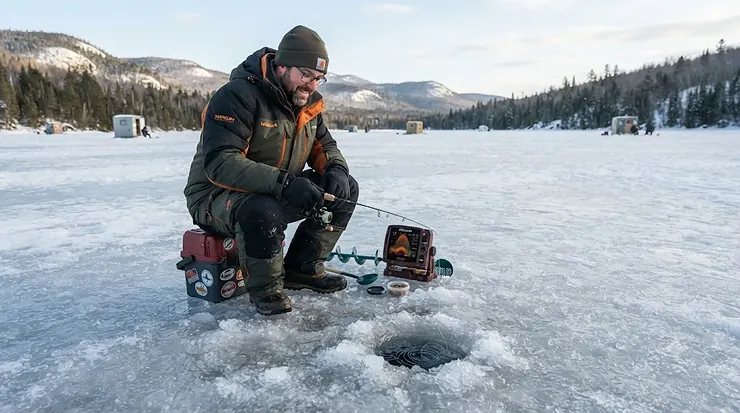
Somewhere around your fourth hour on the ice, staring at a flasher screen that refuses to show a mark, you start blaming the jig. Fair enough — sometimes it really is the jig. The tungsten vs lead jigs ice fishing debate isn’t just tackle-shop small talk; it’s the difference between a bait that flutters down like a falling leaf and one that drops like it means business. Tungsten is denser, so a jig the same size as its lead cousin actually weighs more, sinks faster, and telegraphs a nibble straight up your line instead of swallowing it in slack.
That matters more on a Canadian lake in January than most anglers admit. Twenty-five feet of water, a stiff crosswind pushing your line at an angle, and a walleye that inhales and blows out a bait in under a second — every extra split-second of sensitivity counts. This guide breaks down what tungsten actually buys you, where lead still earns its keep, and which jig material is better for your specific situation, backed by real specs, real review patterns, and honest analysis rather than marketing gloss. We’ll walk through seven real jigs spanning budget to premium, three head-to-head comparison tables, and the practical setup tricks nobody prints on the packaging.
What Is Tungsten vs Lead Jigs Ice Fishing?
Tungsten vs lead jigs ice fishing refers to comparing the two dominant jig-head materials — dense tungsten alloy and traditional soft lead — based on sink rate, sensitivity, cost, and environmental impact, to decide which delivers better results for a given species, depth, and budget.
Quick Comparison Table
| Attribute | Tungsten Jigs | Lead Jigs | Best For |
|---|---|---|---|
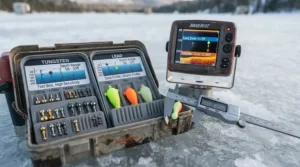
| Density | ~19.25 g/cm³ | ~11.34 g/cm³ | Tungsten — faster drop, smaller profile |
| Sensitivity | Transmits bites directly through a stiffer head | Softer metal absorbs some vibration | Tungsten — finicky biters |
| Price Range | C$3–C$14 per jig or small pack | C$2–C$8 per pack | Lead — budget days on the water |
| Environmental Impact | Non-toxic, safe near waterfowl | Toxic if ingested by loons and other birds | Tungsten — lakes with loon populations |
| Compact Profile | Smaller head for the same weight | Bulkier head at equal weight | Tungsten — pressured panfish |
Looking at that table, the case for tungsten isn’t hype — it’s basic physics. A tungsten jig packs roughly 70% more weight into the same footprint as a lead jig, which is exactly why a size-12 tungsten Chekai can out-sink a bulkier lead jig two sizes larger while still looking like a snack instead of a threat. Lead still wins on raw cost per jig, which matters when you’re re-rigging after losing a few to a snag-choked drop-off. The environmental line item isn’t a footnote either — as we’ll cover later, Canadian regulation already treats lead tackle differently in specific waters.
💬 Just one click — help others make better buying decisions too!😊
Top 7 Tungsten vs Lead Ice Fishing Jigs: Expert Analysis
Coverage below spans budget panfish jigs through premium deep-water tungsten, plus a direct lead-vs-tungsten matchup using the same jig shape so you can isolate the material’s effect with nothing else changing.
1. Custom Jigs & Spins Chekai Tungsten Jig — tournament-proven micro profile for panfish
The Chekai built its reputation on doing a lot with a little, and that starts with its tournament pedigree among competitive panfish anglers. Available in roughly 1/16 to 1/12 oz sizes (about 3–4.5mm), the 100% pure tungsten head sinks well past the point where a lead jig the same size would still be fluttering, and it’s paired with an ultra-sharp Owner hook and a paint-free eye that keeps hook-sets clean. Based on the spec comparison, this is the jig for anglers targeting suspended crappie and bluegill in 15–30 feet of water, where a slow lead fall means missed opportunities before the school moves on. Reviewers consistently note the epoxy paint holds up through dozens of outings without chipping, and several long-time users specifically call out the hookup percentage as noticeably higher than typical lead micro-jigs. What most buyers overlook is that the compact head still shows up clearly on a flasher despite its small size — a direct benefit of tungsten’s density.
Pros:
- ✅ 100% pure tungsten drops fast past 20 feet
- ✅ Ultra-sharp Owner hook boosts hookup rate
- ✅ Compact profile still marks clearly on sonar
Cons:
- ❌ Small sizes are easy to lose in a crowded box
- ❌ Costs more per jig than comparable lead options
Expect this one in the C$3–C$6 per-jig range depending on pack size, and at that price it’s a smart value pick for anyone serious about panfish — check current price before you buy, since tackle pricing shifts with tungsten commodity costs.

2. Custom Jigs & Spins Magnum Chekai Tungsten Jig — best for deep-water walleye and jumbo perch
Where the standard Chekai plays finesse, the Magnum Chekai (model CT7) is built for depth and current. At 7mm and roughly 9/64 oz, it’s noticeably heavier than its smaller sibling, and it rides a long-shank Japanese hook set at a 30-degree angle specifically engineered for instant hook-sets on structure-oriented fish. Here’s what to weigh: that extra mass means faster, more direct bottom contact in 30–50 foot basins, exactly where walleye and jumbo perch stack up mid-winter. The long shank also makes baiting with a minnow head far easier with cold fingers than a short-shank micro jig ever could. Reviewers and pro anglers alike report it holds up well fished in current, which is unusual for an ice jig and opens it up as a year-round open-water option too — a nice bit of added value most single-purpose lead jigs can’t match.
Pros:
- ✅ Heavier 9/64 oz size reaches bottom fast in current
- ✅ Long-shank hook simplifies baiting with minnow heads
- ✅ Doubles as a finesse jig in open water
Cons:
- ❌ Overkill for skittish bluegill in shallow water
- ❌ Fewer color options than the standard-size Chekai
Priced in the C$4–C$7 range per jig, it’s a mid-range pick that punches above its weight class for walleye anglers.
3. VMC Tungsten Fly Jig — glow-finish insect imitator for suspended panfish
The VMC Tungsten Fly Jig leans into a specific niche: mimicking the small aquatic insects panfish key in on mid-winter, when their metabolism slows and they stop chasing anything that looks like effort. The exclusive Power Gap hook offers a wider round gap than most competing micro jigs at the same size, which on paper means fewer short strikes turning into misses. A 90-degree hook eye keeps the tiny profile riding perfectly horizontal — a detail that matters enormously at this scale, since a jig tipped even slightly off-axis looks unnatural to a wary crappie. The glow finish, rated for roughly 15 minutes of charge per flashlight hit, gives it a genuine edge in stained water or the low-light window at dawn and dusk. Based on aggregated user feedback, anglers targeting pressured lakes — where fish have seen every glow-bead rig in the region — report this jig’s realistic silhouette draws more committed bites than flashier alternatives.
Pros:
- ✅ Glow paint holds a usable charge for about 15 minutes
- ✅ Wide Power Gap hook improves hook-set ratio
- ✅ 90-degree eye keeps the profile riding horizontal
Cons:
- ❌ Glow needs frequent recharging with a light
- ❌ Tiny hook size is fiddly to tie with cold hands
Typically found in the C$4–C$6 range for small multi-packs, this is a reasonable mid-tier buy for anyone fishing heavily pressured panfish water.
4. HT Enterprises Marmooska Ice Jig (Original) — budget-friendly classic since 1991
First introduced to North America in 1991 and originally popularized by Scandinavian and Russian ice-fishing champions under the name “mormyska,” the original Marmooska is lead-bodied and still sold today in assorted color packs across sizes 8–12. Its offset head design is the whole story here — it creates a subtle darting swim with barely any rod movement, which is exactly the kind of finesse presentation that fools light-biting winter panfish. On paper, being lead means a slower fall rate than its tungsten counterparts, but honestly, that slower fall is part of why this jig still works: some days a subtle, hovering drop out-fishes an aggressive tungsten plummet. Reviewers who’ve fished it for years describe it as one of the few jigs they never leave home without, citing the light-wire hooks as key to sticking soft-mouthed bites other hooks miss entirely.
Pros:
- ✅ Offset head swims with almost no rod action
- ✅ Light-wire hooks stick light-biting panfish reliably
- ✅ Inexpensive enough to lose several without stress
Cons:
- ❌ Slower sink rate than any tungsten equivalent
- ❌ Contains lead, restricted in national parks and wildlife areas
At roughly C$5–C$9 for a 12-pack, this is the budget benchmark against which every tungsten jig on this list gets measured.
5. HT Enterprises Marmooska Tungsten Deluxe — same legendary shape, tungsten-fast fall
This is the direct experiment every angler curious about lead vs tungsten comparison should try: the identical Marmooska profile, rebuilt in tungsten. What most buyers overlook is how useful this pairing is for isolating the material variable — same swim action, same hook geometry, different density. The tungsten version’s hand-painted two-tone epoxy finish is noticeably more durable against chipping than the standard-issue paint on the lead original, and the added density means it reaches depth markedly faster in the same water column. Based on the spec comparison, anglers fishing deeper basins or faster-moving schools get a genuine, measurable advantage switching to this version, while shallow-water panfish anglers may not notice enough difference to justify the price gap. It’s a useful reminder that “tungsten is always better” isn’t quite the whole story — depth and presentation speed decide the winner, not the material alone.
Pros:
- ✅ Tungsten body sinks noticeably faster than the original
- ✅ Hand-painted finish resists chipping all season
- ✅ Familiar profile anglers already trust and know
Cons:
- ❌ Costs several times more than the lead original
- ❌ Narrower size range than the classic lead version
Expect a price range around C$8–C$14 for a small deluxe pack — a fair mid-to-premium jump if depth is your priority.

6. Northland Tackle Puppet Minnow Ice Jig — darting swim action for bass, pike and trout
Where most jigs on this list target panfish, the Puppet Minnow is built for predators. Worked below a boat or through an ice hole with a quick lift-and-drop of the rod tip, its lead body swings through a seductive semi-circle “darting” action that’s proven effective across bass, pike, perch, and trout. The lead construction here is arguably a feature rather than a limitation: a slightly slower, wider swing pattern reads as more lifelike to predator species keying in on an injured baitfish, versus the tighter, faster fall a tungsten jig of the same size would produce. Reviewers targeting pike and lake trout through the ice consistently point to the swim action — not the sink speed — as the reason this jig produces, which is a good illustration that tungsten’s speed advantage isn’t universal; it depends entirely on what action the target species actually responds to.
Pros:
- ✅ Semi-circle darting action triggers reaction strikes
- ✅ Versatile across bass, pike, perch and trout
- ✅ Effective fished below a boat or through an ice hole
Cons:
- ❌ Slower sink rate than tungsten in 30+ feet of water
- ❌ Bulkier profile can spook ultra-finicky panfish
Priced around C$3–C$6 per jig, it remains one of the most versatile budget predator jigs available.
7. Mermaid Gear Lucky 7 Tungsten Gold Pack — affordable tungsten variety pack for beginners
For anglers who want to try tungsten without committing to a single brand or profile, this seven-piece pack (one of each style pictured, roughly 4–6mm, 1–2g, on #8–10 hooks) is a low-risk entry point. Each jig carries an anodized exterior coating with embedded metallic flecks designed to catch sunlight and trigger reaction strikes — a nice touch for sight-fishing shallow, clear water. Based on the spec comparison, the density advantage over lead is identical to the premium brands above; what you’re trading away at this price point is the pedigree of a name-brand hook and years of tournament-level refinement. Reviewers describe it as a solid “try tungsten before you buy in bulk” option, particularly for anglers upgrading an existing lead-only box one experiment at a time, though a few note the solder-mix hook security hasn’t been battle-tested to the same degree as brand-name alternatives.
Pros:
- ✅ Seven different tungsten styles in a single pack
- ✅ Anodized coating adds extra sun-catching sparkle
- ✅ Low-cost way to try tungsten before buying more
Cons:
- ❌ Solder-mix hooks are less proven than name brands
- ❌ Only one jig per style limits color options
At around C$10–C$15 CAD for the full pack, it’s genuinely one of the more approachable ways to test which jig material is better for your own water before investing further.
How to Choose Between Tungsten and Lead Jigs
- Start with your target depth. Past 20–25 feet, tungsten’s faster fall saves real time between drops — a meaningful edge when you’re fishing a moving school.
- Consider the species’ bite style. Light, finicky bites (crappie, pressured bluegill) benefit from tungsten’s direct sensitivity; predator species chasing action (pike, bass) often respond just as well to a lead jig’s slower, wider swim.
- Factor in current or wind drift. A jig that’s too light for the conditions won’t hold a vertical presentation — tungsten’s compact-but-heavy profile fights drift better at equal size.
- Check the water body’s regulations. Some Canadian national parks and wildlife areas prohibit lead tackle outright, which we’ll cover in detail below.
- Weigh cost against the number of jigs you typically lose. If you fish snag-heavy structure and lose several jigs a trip, lead’s lower per-unit cost may outweigh tungsten’s performance edge.
- Match hook size to your bait. Long-shank tungsten jigs like the Magnum Chekai simplify baiting with minnow heads in cold weather; short-shank jigs suit plastics and single spikes.
- Buy a small assortment before committing. A variety pack lets you compare drop speed and action side by side on the same day, on the same water.
Tungsten Jig Advantages
The core tungsten jig advantages all trace back to one property: density roughly 70% higher than lead in an identical volume. That translates into a smaller physical head for the same total weight, which means less resistance to a suspicious fish and a more natural profile at the terminal end of your line. The added mass also improves sensitivity — a denser head transmits the subtle “tick” of a light bite more directly up a taut line than a softer lead head, which can absorb some of that vibration before it ever reaches your rod tip. Reviewers across multiple tungsten product lines report noticeably crisper bite detection specifically in 20+ foot water, where line stretch and slack already work against feel. Tungsten is also non-toxic, which matters both for handling and for the water itself, a point we expand on later. None of this makes tungsten universally correct — as the Puppet Minnow entry above shows, some presentations genuinely benefit from lead’s softer fall — but for finesse presentations targeting pressured fish, the advantages are concrete rather than marketing spin.
Density: Why Tungsten Jigs Sink Faster
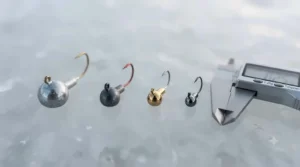
Pure tungsten carries a density of roughly 19.25 g/cm³, compared to lead’s approximately 11.34 g/cm³ — nearly 70% denser in the same volume, a figure confirmed by tungsten’s material properties on Wikipedia. In practical terms, a tungsten jig sized to match a lead jig’s weight can be built noticeably smaller, or a tungsten jig built to the same physical size will weigh substantially more and fall through the water column faster. What the spec sheet won’t tell you, but experienced ice anglers note, is that this isn’t just about speed for its own sake — a faster-sinking jig spends less time in the “strike zone” of predators lurking higher in the water column that might otherwise intercept your bait before it reaches the fish you’re actually targeting near bottom. On windy days with slack forming in your line through the hole, that extra density also helps maintain a more vertical presentation instead of an unnatural drifting fall.
Sensitivity: Tungsten vs Lead
Sensitivity is where the tungsten vs lead comparison gets most personal, because it depends partly on your rod and line setup, not just the jig. That said, the material itself plays a real role: tungsten’s rigidity transmits vibration more directly than lead’s softer, more malleable structure, which can dampen subtle taps before they reach your hand. Reviewers consistently report an easier time distinguishing a genuine bite from a bump against structure when using tungsten, particularly with a fast-action rod and low-stretch line pairing that doesn’t already absorb feel on its own. Here’s what to weigh: if you already fish a soft, parabolic rod, upgrading to tungsten may deliver a smaller noticeable improvement than upgrading the rod itself first — the two work together, and neither compensates fully for the other’s shortcomings.
Cost Comparison of Jig Materials
Run the numbers over a full season and the cost comparison of jig materials looks different than a single price tag suggests. Lead jigs typically run C$2–C$8 for a multi-pack, while comparable tungsten jigs sit in the C$3–C$14 range depending on brand and size — tungsten is genuinely pricier per unit, largely because tungsten carbide processing costs more than casting soft lead. But total cost of ownership isn’t just sticker price. Tungsten jigs tend to hold their paint and finish longer, per reviewer reports across multiple brands, meaning fewer replacements from chipped or faded jigs over a season. Lead jigs are cheaper to lose, which matters if you regularly fish snag-heavy rock piles or deadfall where losing several jigs a trip is normal. A reasonable approach: stock lead for high-snag structure fishing and reserve tungsten for open-water suspended presentations where you’re less likely to lose gear and more likely to benefit from the sensitivity upgrade.
Practical Usage Guide: Setting Up Tungsten and Lead Jigs
Rigging either material starts the same way — a clinch or improved clinch knot cinched snug against the eye — but the details diverge from there. Tungsten’s smaller profile at equal weight means you can often drop down 6-pound to 4-pound fluorocarbon without sacrificing control, since there’s less bulk fighting the water. Lead jigs, being bulkier at the same weight, sometimes benefit from a slightly heavier line to maintain a straight vertical drop in wind. In the first 30 days with a new tungsten jig box, the most common mistake is overloading the hook with plastic or bait, which masks the fast-fall advantage you paid extra for — keep tippings light and let the tungsten do the work. For maintenance, rinse jigs in fresh water after each outing to prevent hook corrosion, and inspect points regularly; a dulled hook undoes every material advantage tungsten offers. Storage matters too — tungsten’s harder finish resists scuffing in a crowded box better than lead’s softer paint, but separating colors still prevents chipped finishes on either material.
Real-World Scenarios: Which Jig Fits Which Angler
Consider three common profiles. First, the weekend panfish angler fishing shallow bays in 10–15 feet of water for bluegill and crappie — for this angler, either material works, but a lighter lead jig like the original Marmooska often presents more naturally in shallow, calm water where a fast-sinking tungsten jig can look unnaturally aggressive. Second, the deep-basin walleye angler working 30–45 foot main-lake structure on a budget — here, the Magnum Chekai tungsten jig earns its higher price through faster bottom contact and better feel on subtle structure bites, worth the investment given how much jigging time it saves over a full day. Third, the predator angler chasing pike and lake trout through deadfall-littered bays — the Northland Puppet Minnow’s lead-driven swim action outperforms tungsten here, since the target species responds to the wider, slower darting motion rather than raw sink speed.
Buyer’s Decision Framework
If you’re fishing deep water for pressured, light-biting panfish, choose tungsten because the combination of fast sink and direct sensitivity solves both your depth and finesse problems at once. If you’re fishing shallow, snag-prone structure for predator species that respond to swim action, choose lead because the slower, wider fall reads as more natural and the lower replacement cost matters when you’re losing gear to deadfall. If you’re building your first serious ice box on a limited budget, choose a mix — lead for your bulk panfish jigs, and a handful of tungsten jigs reserved for deep water or your most pressured lake. If you’re fishing any body of water inside a national park or designated wildlife area, choose tungsten (or another non-lead alternative) because the choice isn’t optional there.
✨ Don’t Miss These Exclusive Deals!
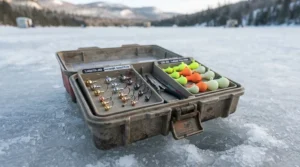
🔍 Take your ice season to the next level with these carefully selected jigs. Click on any highlighted item to check current pricing and availability. These tungsten and lead options will help you build a box that covers every depth and species your lake throws at you!
Common Mistakes When Buying Ice Fishing Jigs
The single biggest mistake is buying jig weight based on hook size alone rather than target depth — a size-12 hook doesn’t tell you anything about how fast that jig sinks if you don’t also know the material and head volume. A close second is assuming tungsten is automatically the better choice regardless of species; as the Puppet Minnow comparison above shows, a slower lead fall genuinely out-produces tungsten for some presentations. Anglers also frequently overlook line pairing, mismatching a heavy tungsten jig with line too thick to let it fall naturally, which cancels out much of the sensitivity advantage they paid for. Finally, many anglers stock an entire box in one material rather than mixing lead and tungsten by scenario, which leaves them under-equipped the moment conditions or species change mid-day.
Safety, Regulations & Lead in Canadian Waters
This is worth taking seriously rather than treating as fine print. According to federal guidance on moving toward lead-free fishing tackle, ingested lead sinkers and jigs are a leading cause of death in breeding Common Loons across Canada, and the same federal source notes that non-lead alternatives including tungsten, tin, bismuth, and steel are widely available at comparable cost to overall fishing expenditures. Provincially, Ontario’s rules on fishing tackle confirm that lead sinkers and jigs are prohibited specifically within Canada’s national parks and national wildlife areas, even though lead tackle otherwise remains legal on most provincial waters. Practically speaking, that means the jig box you build for a provincial lake trip may not be the box you’re legally allowed to open at a national park a few hours away — worth checking before you go. Beyond the legal angle, switching even a portion of your box to tungsten or another non-toxic material is a low-cost way to reduce your own footprint on lakes where loons and other waterfowl feed, and organizations like Fish Lead Free offer more detail for anglers who want to go further.
Frequently Asked Questions
❓ Is tungsten better than lead for ice fishing?
❓ Why are tungsten jigs so much more expensive than lead?
❓ Can you use lead jigs anywhere in Canada?
❓ What size tungsten jig should I use for panfish?
❓ Do tungsten jigs catch more fish than lead jigs?
Conclusion
The honest answer to which jig material is better is: it depends on what you’re fishing for, not on brand loyalty or which metal sounds more premium. Tungsten earns its higher price in deep water, pressured lakes, and finesse presentations where sensitivity and sink speed decide whether you detect a bite before it’s gone. Lead still holds its ground for predator species that respond to a slower, wider swim, for snag-heavy structure where losing jigs is routine, and for anglers building a first box on a tight budget. What matters most is stocking both, understanding when each earns its place on your line, and checking local regulations before you assume lead is fair game everywhere you fish. Build a box with a few options from each material covered above, and you’ll be equipped for whatever the ice throws at you this season.
✨ Ready to build your ice box? Check current prices on the tungsten and lead jigs above and get your line in the water this season!
Recommended for You
- Tungsten Jigs for Ice Fishing: 7 Top Picks for 2026
- Night Vision Ice Fishing Camera: 7 Best Picks for 2026
- DVR Ice Fishing Camera System: 7 Best Picks for Canada in 2026
Disclaimer: This article contains affiliate links. As an Amazon Associate, I earn from qualifying purchases. If you purchase products through these links, we may earn a small commission at no additional cost to you.
✨ Found this helpful? Share it with your friends! 💬🤗
