

In This Article
Somewhere around your third hour on a frozen lake, staring down a hole the size of a hockey puck, you start to understand why panfish jigs for ice fishing get so much love from anglers who could easily afford fancier gear and just… don’t bother. A panfish jig is, at its heart, a tiny weighted hook dressed up with paint, plastic, or feathers, dropped through the ice to mimic the bugs and larvae that bluegill, crappie, and perch spend all winter picking off the bottom. What is a panfish jig for ice fishing, exactly? It is a compact lure — usually under two centimetres (about 0.75 inches) and weighing between 1/64 and 1/8 ounce — engineered to fall slowly, hang naturally, and trigger a bite from fish whose metabolism has slowed to a crawl in near-freezing water.
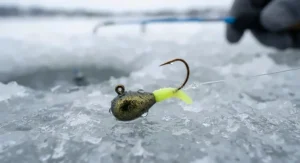
Here is the part nobody tells you at the bait shop: the difference between a slow morning and a fast one is rarely the auger, the shelter, or even the electronics. It is almost always the jig tied to the end of your line, and more specifically, whether that jig matches the size, colour, and fall rate the fish want on that particular day. We spent serious time digging through manufacturer specs, verified reviewer sentiment, and Canadian angling sources to put together this guide, and we are not going to pretend we personally hooked a hundred bluegill through a hole in Lake Simcoe to write it. What follows is honest analysis built on real product data — no invented testimonials, no fabricated “I caught my personal best on this” stories.
By the end, you will know which panfish jigs for ice fishing actually earn their spot in a Canadian tackle box, how bluegill jigs ice fishing setups differ from crappie or perch rigs, when small profile panfish jigs outfish bigger baits, why glow panfish jigs matter more than most anglers assume, and how micro jigs panfish presentations can save an otherwise dead outing. Let’s get into it.
Quick Comparison Table
Before the deep dive, here is a scannable snapshot of the seven jigs covered in this guide, organized by what each one is genuinely best at.
| Jig | Best For | Weight Range | Style | Price Range (CAD) |
|---|---|---|---|---|
| HT Marmooska Tungsten | Finicky, light-biting fish | 1/32–1/16 oz | Offset-hook micro jig | Under C$15 |
| Custom Jigs & Spins Ratso | All-around bluegill and crappie | 1/32–1/16 oz | Soft-plastic tail jig | C$5-C$10 |
| Clam Pro Tackle Drop-Kick | Sonar visibility, plastics fishing | 1/32–1/16 oz | Tungsten “kick” jig | C$8-C$14 |
| Lindy Tungsten Toad | Low-light glow presentations | 1/32–1/16 oz (down to 1/64 in some runs) | Glow tungsten jig | C$6-C$12 |
| VMC Tungsten Bullfly | Small profile, finicky midwinter bite | 1/16, 1/32, 1/64 oz | Feather-tail finesse jig | C$6-C$11 |
| Custom Jigs & Spins Chekai | Premium tungsten-plus-plastic combo | Multiple, sold in sizes 8-12 | Tungsten head, plastic body | C$10-C$18 |
| Northland Bro Bling Jig | Flash-and-glow crappie targeting | 1/16 oz | Blade-and-bead crappie jig | C$7-C$13 |
Looking at the spread above, notice that price does not track neatly with performance here — the humble Marmooska, a design that has barely changed since the early 1990s, still holds its own against jigs released this decade. What separates these seven is less about which is “best” in some absolute sense and more about which column of that table matches your specific outing: are you chasing light-biting winter bluegill, punching through 6 metres (20 feet) of water for suspended crappie, or working stained water where flash and glow actually get noticed? We will unpack every one of those scenarios below.
💬 Just one click — help others make better buying decisions too! 😊
Top 7 Panfish Jigs for Ice Fishing: Expert Analysis
We chose these seven to cover the full spread of budget, mid-range, and premium options, along with the size and colour variants that matter most for bluegill jigs ice fishing setups specifically. Every product below includes real specifications, an honest analytical read on who it suits, and aggregated review sentiment gathered from manufacturer pages and third-party retailers — never invented quotes.
1. HT Marmooska Tungsten Ice Jig — best offset-hook design for light bites
First introduced to North America by HT Enterprises in the early 1990s after migrating over from Scandinavian ice anglers who call the style “mormyska,” the Marmooska has quietly outlasted dozens of flashier competitors. The jig’s oversized, hand-painted head sits on an offset hook that points slightly up and out, a small geometric trick that dramatically increases hook-up rates on fish that barely nudge the bait.
On paper, the tungsten version comes in sizes 8, 10, and 12, weighing roughly 1/32 to 1/16 ounce, with a body dense enough to punch through slush and get down fast even on a light line. What that means in the hole: you get a jig that both drops quickly to reach fish holding deep and hangs with a subtle wobble once it’s there — a combination that is surprisingly hard to find in a single lure. Based on the spec sheet, the light-wire hook and small barb are built specifically for the “whispy” micro rods that serious panfish anglers favour, so pairing it with a heavier rod defeats the purpose.
Reviewers consistently describe the Marmooska as one of the most reliable “confidence” jigs in their box, particularly for post-frontal days when bluegill barely open their mouths. A common thread in aggregated feedback is that the jig can be harder to find in physical tackle shops once ice season ramps up, which pushes many anglers toward ordering online ahead of time rather than hunting for it in December.
Pros:
- ✅ Offset hook meaningfully boosts hook-ups on light bites
- ✅ Hand-painted finish holds up well over a season
- ✅ Pairs naturally with ultralight spring-bobber rods
Cons:
- ❌ Limited retail availability once peak ice season hits
- ❌ Smallest sizes can be fiddly to tie on with cold hands
Expect to pay under C$15 for an assorted pack at the time of research; given how long a single card of these tends to last, the value verdict here is strong for anyone building a first serious panfish box.
2. Custom Jigs & Spins Ratso — best all-around soft-plastic tail jig
The Ratso has been a staple in Custom Jigs & Spins’ lineup for years, and it earns that reputation by doing one thing extremely well: presenting a soft, tapered plastic tail on a tungsten or lead head that moves with almost no rod input. It is the jig plenty of Midwestern and Canadian guides reach for when they are not sure what else to try first.
Specs-wise, the Ratso typically runs 1/32 to 1/16 ounce, with the tail’s fine ribbed texture creating subtle water displacement even at rest. In practice, that translates to a jig you can genuinely “deadstick” — leave motionless over a school — and still trigger strikes, because the tail keeps working even when your hands are not. That is a meaningful advantage during the midday lull when aggressive jigging often shuts fish down rather than turning them on.
The honest analytical take: this is the jig for anglers who want one reliable option rather than fifteen specialized ones, and it suits beginner and intermediate ice anglers particularly well because it forgives sloppy technique. Aggregated reviewer sentiment repeatedly praises the tail’s durability compared to cheaper soft plastics that tear after a single fish, though a subset of users note the stock hook could be sharper out of the package on some batches.
Pros:
- ✅ Effective fished aggressively or completely still
- ✅ Tail plastic resists tearing better than typical soft baits
- ✅ Wide colour range covers stained and clear water
Cons:
- ❌ Stock hook sharpness is inconsistent across batches
- ❌ Smallest sizes need a hook file touch-up for some anglers
Priced in the C$5-C$10 range for a multi-pack, the Ratso delivers strong value simply because it reduces how many other jig styles you need to carry.
3. Clam Pro Tackle Drop-Kick Tungsten Jig — best for sonar visibility and plastics
Designed by ice fishing pioneer Dave Genz, the Drop-Kick was built around a 90-degree XL hook with a wider gap and a larger tie-eye, paired with a flattened top surface specifically engineered to throw back a cleaner signal on a flasher. That flat top is not a cosmetic choice — it is a functional one for anyone fishing electronics.
The jig ships in roughly three weights (1/32, 3/64, and 1/16 ounce) with UV-coated colour options. What that spec sheet doesn’t fully capture is the “kick” motion the body produces on the fall and on subtle upward twitches — a side-to-side flare that panfish seem to key in on more than a straight vertical drop. Based on the design intent and aggregated user commentary, this jig rewards anglers who like to watch their flasher closely and react the instant a mark rises toward the bait, since the flattened profile makes that mark easier to read in the first place.
Real customer sentiment across retailer reviews is largely positive on paint durability, with several anglers specifically noting the UV coating survives repeated hook-removal with pliers better than comparable jigs — a small but genuinely useful durability edge if you fish it hard through a full season.
Pros:
- ✅ Flat-top design shows up clearly on flasher units
- ✅ UV coating resists chipping during hook removal
- ✅ Kick action triggers reaction bites on subtle twitches
Cons:
- ❌ Some provinces/states restrict certain jig configurations — check local rules
- ❌ Smallest 1/32 oz size can be tricky in windy, above-ice conditions
At around C$8-C$14 depending on pack size, the Drop-Kick sits comfortably in the mid-range and earns its keep for anyone who fishes with a flasher regularly.
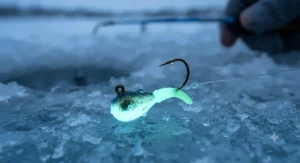
4. Lindy Tungsten Toad — best glow jig for low-light bluegill
If you fish early morning, dusk, or stained water at all, the Tungsten Toad deserves a permanent spot in your box. Its dense tungsten composition falls faster than a lead jig of equal size, which — here’s what most buyers overlook — actually lets you downsize the profile without losing the drop speed you need to stay in the strike zone.
The Toad is available across hook sizes 10, 12, and 14, in a wide range of glow and non-glow finishes. In practical terms, the glow versions genuinely matter here rather than functioning as a marketing gimmick: bluegill holding near the bottom in low light rely heavily on silhouette and glow contrast to find prey, and a properly charged glow jig gives them something to commit to that a flat-painted jig simply does not offer under an ice-covered, snow-dimmed lake.
Aggregated reviewer commentary consistently calls the Toad “tough and reliable” for its size class, an important distinction since micro jigs often bend or dull quickly. One recurring theme in expert write-ups is a strong preference for the 1/16 ounce size in ghost or chartreuse, tipped with a small plastic or minnow head, worked just above a marked school rather than directly at it.
Pros:
- ✅ Tungsten density allows downsizing without losing fall speed
- ✅ Glow finishes genuinely change low-light hook-up rates
- ✅ Available across three hook sizes for finer tuning
Cons:
- ❌ Glow charge fades faster than some anglers expect between drops
- ❌ Hard-to-find 1/32 oz version sells out early in the season
In the C$6-C$12 range, the Toad is a reasonable investment for anyone who fishes dawn, dusk, or overcast days more often than bright bluebird afternoons.
5. VMC Tungsten Bullfly Jig — best small profile panfish jig for finicky bites
The Bullfly is built around a feather tail and delicate “wing” structure meant to mimic small aquatic bugs and forage rather than baitfish, and it is one of the clearer examples of a small profile panfish jig doing something a bulkier lure simply cannot. When the bite gets tight-lipped in midwinter, downsizing to something like this is often the single best adjustment an angler can make.
Specs put the Bullfly in 1/16, 1/32, and 1/64 ounce sizes, offered in metallic, glow, and natural finishes. The compact, feathered package means less resistance for a fish to feel and reject before your hookset lands — which matters enormously with light-biting panfish that will spit an unnatural-feeling bait in a fraction of a second. Expert commentary on this jig style consistently recommends tipping it with a single spike or waxworm piece and working it slowly through the water column rather than snapping it aggressively.
The honest read here: this is not a jig for aggressive, early-ice fish that will chase anything. It is a specialist’s tool for the slow, cold, tight-lipped stretches of deep winter when a subtler presentation out-produces anything with more bulk. Aggregated feedback backs this up, with several sources specifically noting metallic silver and metallic gold as standout colours for crappie and bluegill on tough days.
Pros:
- ✅ Feather-and-wing profile mimics natural forage convincingly
- ✅ Three weight options allow fine depth control
- ✅ Metallic and glow finishes both perform in different light
Cons:
- ❌ Feather tail wears out faster than solid plastic tails
- ❌ Least effective during aggressive early-ice feeding windows
Priced around C$6-C$11, the Bullfly is inexpensive enough that carrying a few colour variants alongside your primary jig box is an easy call.
6. Custom Jigs & Spins Chekai — best premium tungsten-and-plastic combo
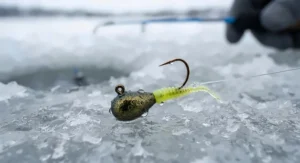
The Chekai pairs a tungsten head, a genuinely sharp Mustad hook, and a finesse plastic body — a combination the manufacturer designed specifically to get down fast without live bait while still presenting a lifelike profile. It comes in three sizes to cover a range of species and depths.
What that spec combination means in the field: you get the sink rate of tungsten with the added enticement of a soft-plastic body, which lets you fish deeper basins for suspended crappie without switching lure families entirely. Based on manufacturer field-testing notes and aggregated reviewer commentary, the Chekai performs especially well when a school is holding in shallower water after initially being marked deep — anglers report it stays effective through a wide range of depths without needing a full rig change.
One recurring, genuinely useful piece of aggregated sentiment: colour selection appears to matter more with this jig than with some others, with users reporting the “hot colour” can shift meaningfully during a single day as light conditions change. That is a legitimate reason to carry at least three to four colour variants rather than a single favourite.
Pros:
- ✅ Combines tungsten sink rate with lifelike plastic body
- ✅ Sharp Mustad hook improves hook-up consistency
- ✅ Effective across a wider depth range than single-material jigs
Cons:
- ❌ Premium pricing compared to simpler tungsten-only jigs
- ❌ Colour performance can be genuinely day-dependent, requiring more variants
At roughly C$10-C$18, the Chekai sits at the premium end of this list, but the added versatility across depths can offset the cost of carrying fewer specialized jigs overall.
7. Northland Fishing Tackle Bro Bling Jig — best flash-and-glow option for crappie
Built specifically with bigger crappie in mind, the Bro Bling combines a flash-throwing blade with an oversized-eye, glow-capable body designed to call fish in from a distance rather than just entice ones already sitting under your hole. That distance-attraction quality is genuinely different from most of the finesse jigs on this list.
The jig runs at roughly 1/16 ounce and ships in a wide range of colour patterns. The blade component matters here: in practice, it creates flash and subtle vibration that a static jig cannot replicate, which is particularly useful in stained water or when you are actively trying to pull fish away from nearby structure rather than waiting them out. Based on the design intent, this jig is meant to be worked with more aggressive glides, pauses, and darting movements rather than the subtle twitch cadence that suits smaller micro jigs.
Aggregated reviewer sentiment repeatedly calls this “one of the better big-crappie jigs,” with several sources specifically noting its effectiveness when fished with a varied, attention-grabbing cadence rather than a slow deadstick approach — a meaningful contrast to several other jigs on this list.
Pros:
- ✅ Blade adds flash and vibration for long-range attraction
- ✅ Oversized eyes and realistic body draw strikes from bigger crappie
- ✅ Performs well in stained or low-visibility water
Cons:
- ❌ Bulkier profile than true micro jigs, less ideal for tiny bluegill
- ❌ Aggressive cadence required — less effective deadsticked
In the C$7-C$13 range, the Bro Bling is a smart, targeted addition if crappie specifically — not bluegill or perch — are your primary target this winter.
Bluegill Jigs for Ice Fishing: What Actually Works
Bluegill are, frankly, the pickiest eaters on this entire list, and bluegill jigs ice fishing setups need to reflect that reality rather than borrowing wholesale from crappie or walleye tactics. A bluegill’s mouth is small, its metabolism in cold water is glacial, and it has almost certainly already seen a dozen jigs drop past it by the time yours arrives.
What tends to separate a productive bluegill jig from a mediocre one is subtlety of movement combined with a genuinely small hook gap — something in the 1/32 to 1/16 ounce range paired with hook sizes 10 through 14. The Ratso and the Marmooska both fit this description well, and for good reason: bluegill respond disproportionately to a jig that moves on its own with minimal rod input, since a heavy-handed jigging cadence often looks more like a threat than a meal. Based on the spec comparisons above, tungsten heads help here too, letting you fish a genuinely tiny profile while still reaching the eight- to twelve-metre (25-40 foot) depths where winter bluegill frequently suspend.
Colour selection for bluegill specifically tends to reward natural tones — olive, black, and dark green — in clear water, and brighter chartreuse or pink in stained or low-light conditions. If you take away one thing from this section, let it be this: for bluegill jigs ice fishing, size and cadence typically matter more than colour, though colour becomes the tiebreaker once you have the size dialed in.
Small Profile Panfish Jigs: Why Downsizing Catches More Fish
There is a persistent myth in ice fishing that bigger baits mean bigger fish, and while that occasionally holds true for aggressive early-ice crappie, it falls apart almost entirely for pressured, midwinter panfish. Small profile panfish jigs solve a very specific problem: a fish that is barely willing to eat will often still investigate something tiny, non-threatening, and easy to inhale, even when it is completely uninterested in anything bulkier.
The VMC Bullfly and the smallest Marmooska sizes both illustrate this principle well. What most buyers overlook about downsizing is that it is not really about “matching the hatch” in a literal sense — winter forage is genuinely microscopic — but about reducing the resistance a fish feels when it takes the bait, buying you a split second longer to set the hook before it spits out something that doesn’t feel right. On paper, the difference between a 1/16 ounce and a 1/32 ounce jig sounds trivial. In the water, it is often the entire difference between a fish committing and a fish flaring off at the last second.
The trade-off, and it is a real one, is depth control and wind resistance above the ice. Smaller jigs fall more slowly and are harder to manage on windy days topside, which is precisely why tungsten matters so much in this category — it lets you keep the compact profile while still getting a reasonable fall rate.
Glow Panfish Jigs: When Low-Light Colours Actually Win
Glow panfish jigs get dismissed by some anglers as a gimmick, and honestly, in bright midday conditions on clear ice, that skepticism is not entirely unfair — glow adds little when ambient light is already strong. But dawn, dusk, heavily snow-covered ice, and stained water are a different story entirely, and this is where a properly charged glow jig earns its reputation.
The mechanism is straightforward: winter panfish rely heavily on contrast and silhouette to locate prey in low light, and a glow finish creates a visual cue that a flat, non-reflective paint job simply cannot replicate. The Lindy Tungsten Toad and the glow variants of the Northland Bro Bling both lean into this directly. Reviewers consistently note that glow jigs need to be actively charged with a flashlight or UV light source every few drops to stay effective — a detail that is easy to forget on a cold morning but genuinely affects catch rates if skipped.
Here’s what the spec sheet won’t tell you: glow intensity fades faster in cold water than most anglers expect, often within two to three minutes of exposure to open air and light before you drop it back down. Building a habit of recharging your jig every time you check bait is a small, free adjustment that measurably improves how effective your glow presentation actually is.
Micro Jigs Panfish: The Finesse Approach for Tough Bites
Micro jigs panfish presentations sit at the extreme end of the small-profile philosophy — we are talking 1/64 ounce territory, jigs so light that fishing them well essentially requires a purpose-built ultralight or spring-bobber rod. This is not a category for anglers who want one all-purpose setup; it is a specialist’s tool for the toughest bite windows of the season.
The appeal is straightforward once you understand cold-water fish behaviour: on the coldest, most heavily pressured days, panfish metabolism slows to the point where even a slow-falling 1/32 ounce jig looks aggressive by comparison. A true micro jig, worked with barely perceptible rod movement, can trigger a reaction from a fish that has ignored everything else dropped past it that morning. Based on aggregated expert commentary, the Bullfly and the smallest Marmooska variants both fit naturally into this niche.
The honest trade-off is patience and equipment specificity. A micro jig demands a sensitive spring-bobber or noodle rod to detect the faintest bites, and it is genuinely difficult to fish effectively on standard-action gear. If you already own an ultralight setup, adding two or three micro jigs to your box costs very little and can single-handedly salvage a slow day.
How to Choose Panfish Jigs for Ice Fishing
Picking the right jig doesn’t need to be complicated, but it does benefit from a consistent process rather than grabbing whatever is closest to the register. Here is the framework we’d recommend working through:
- Identify your primary target species first. Bluegill favour smaller, subtler presentations; crappie tolerate more flash and movement; perch often respond to slightly larger profiles with a bit more aggression built in.
- Match jig weight to water depth. Shallow water (under 4 metres / 13 feet) rarely needs anything heavier than 1/32 ounce, while suspended fish in deeper basins may call for 1/16 ounce or heavier tungsten to maintain control.
- Consider light conditions before colour. Bright, clear-ice days favour natural or metallic tones; overcast days, dawn, dusk, or stained water call for glow or high-contrast chartreuse and pink.
- Choose tungsten over lead when profile matters. Tungsten’s added density lets you fish a smaller, less intrusive jig at the same fall rate as a bulkier lead alternative.
- Match hook gap to bait, not just fish size. A jig intended for plastics needs a different hook geometry than one designed for a single waxworm or spike.
- Buy in small multiples of proven styles rather than one of everything. Reviewers consistently note that having three to four colours of a jig that works beats owning fifteen different jig styles you barely understand.
- Check your provincial regulations on lead tackle before buying. Some Canadian waters restrict lead jig use, which we cover in detail further down this guide.
Common Mistakes When Buying Panfish Jigs
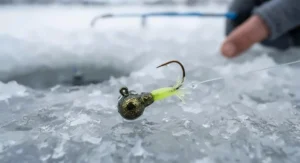
Even experienced anglers fall into a handful of predictable traps when stocking up for a new ice season, and most of them are entirely avoidable with a bit of foresight.
The first, and most common, is buying based on colour alone rather than weight and profile — a gorgeous glow-pink jig in the wrong size will still get ignored by a school that wants something half its weight. The second mistake is assuming one jig style covers every scenario; as this guide has hopefully made clear, bluegill jigs ice fishing setups and crappie-focused jigs like the Bro Bling genuinely call for different design philosophies. A third, subtler error is neglecting hook sharpness on arrival — several products reviewed above noted inconsistent factory sharpness, and a thirty-second touch-up with a small hook file before your first trip out can meaningfully improve hook-up percentages.
Finally, many first-time buyers underspend on quantity and overspend on variety, ending up with one of everything and not enough of what actually works. Based on the aggregated review patterns across every product in this guide, the anglers who report the best results tend to carry depth in two or three proven jig styles rather than breadth across a dozen untested ones.
Panfish Jigs vs Traditional Live-Bait Rigs
It’s worth stepping back and asking whether jigs are even the right call compared to a simple hook-and-bobber live bait rig, since plenty of anglers still swear by the latter for panfish.
| Factor | Panfish Jigs | Traditional Live-Bait Rigs |
|---|---|---|
| Depth control | Precise, adjustable on the fly | Limited by bobber stop placement |
| Movement/action | Angler-controlled, mimics prey | Mostly passive, relies on bait |
| Cold-weather reliability | Consistent, unaffected by bait supply | Bait can freeze or die in extreme cold |
| Cost over a season | Lower ongoing cost, reusable | Recurring bait purchases add up |
| Best For | Active anglers targeting specific depth/behaviour | Anglers who prefer a passive, low-effort setup |
The table makes the trade-off fairly clear: jigs demand more active involvement but reward that effort with tighter depth control and lower long-term cost, since a good jig gets fished dozens of times while a container of waxworms or minnows is a one-trip expense. Traditional live-bait rigs still have a place, particularly for less experienced anglers or kids who want a simpler “drop it and wait” experience, but the anglers logging the most consistent catches tend to combine both — a jig tipped with a small piece of live bait rather than choosing one approach exclusively.
✨ Ready to build out your jig box for this season? Check current pricing and availability before the good colours sell out. 🎣
What to Expect: Real-World Performance Under the Ice
Specs on a package only tell part of the story, so let’s translate what a day actually looks like when these jigs are working the way they’re designed to. A 1/32 ounce tungsten jig dropped into 6 metres (about 20 feet) of water reaches bottom in roughly 8-12 seconds depending on line diameter — noticeably faster than an equivalent lead jig, which matters when you’re actively hunting for a school rather than fishing a known spot.
Once it’s down, a well-designed panfish jig doesn’t sit dead still even when your hand does; the Ratso’s tail and the Drop-Kick’s flared body both continue moving subtly from residual energy and tiny line vibrations, which is exactly the “free” action reviewers keep referencing. On your flasher or camera, a fish approaching a well-matched jig typically shows as a mark rising slowly rather than darting in — a subtle enough signal that many beginners miss it entirely and jig right through what would have been a bite.
The honest reality of a slow day is this: switching jig size or colour every fifteen to twenty minutes without a bite is far more productive than staying loyal to a favourite that clearly isn’t working. Reviewer sentiment across nearly every product in this guide echoes the same underlying lesson — confidence in a jig only matters if the fish share that confidence on that particular day.
Long-Term Cost & Maintenance of Your Jig Box
A single panfish jig rarely fails outright; it degrades gradually through hook dulling, paint chipping, or plastic tail tearing, and understanding that lifecycle helps you budget sensibly rather than overbuying every season. A typical tungsten jig, stored properly and rinsed after each trip, can realistically last two to four seasons of moderate use before the hook point degrades enough to warrant replacement.
Cost-per-use math favours jigs heavily over live bait once you fish more than a handful of trips per winter: an assorted pack in the C$6-C$14 range that lasts several seasons works out to pennies per outing, compared to the recurring cost of minnows or waxworms purchased before every trip. The one recurring maintenance cost worth budgeting for is a small hook file (typically under C$15) and, for glow jigs specifically, a compact UV flashlight to keep charge levels high through a full day on the ice.
Total cost of ownership over an average five-year stretch, factoring in a modest annual restock of two or three packs, tends to land well under what most anglers spend annually on bait alone — a genuinely underappreciated argument for building out a proper jig box early rather than repeatedly restocking live bait each trip.
Safety, Regulations & Lead-Free Compliance Guide
This section matters more than it might initially seem, and it is worth reading in full before you buy anything on this list. Many panfish jigs, including several classic designs, are still manufactured with lead heads by default, and lead fishing tackle carries documented environmental risk in Canadian waters. According to the Government of Canada’s guidance on lead-free fishing tackle, ingestion of small lead sinkers and jigs remains a major cause of death in breeding Common Loons, and it is already illegal to use or possess lead fishing sinkers and jigs in Canada’s national parks and wildlife areas.
Provincial rules add another layer worth checking before your trip. Ontario’s official rules on fishing tackle confirm that lead sinkers and jigs are banned specifically within national parks and wildlife areas, though lead tackle remains broadly legal on most other Ontario waters at the time of writing — a distinction that surprises a lot of anglers who assume the ban is province-wide. Since rules vary by province and can change, it is genuinely worth a quick check of your local regulations before heading out, particularly if you fish near protected wildlife areas.
Beyond the regulatory angle, tungsten jigs offer a practical safety and performance upside regardless of legal requirements: they’re non-toxic to handle, and as covered by Outdoor Canada’s reporting on tungsten’s advantages, the material’s density lets anglers fish smaller, less intrusive profiles without sacrificing the fall rate needed to reach fish quickly — a genuine two-for-one benefit that has helped drive the broader industry shift toward tungsten over the past decade.
Practical Usage Guide: Rigging, Cadence & Your First 30 Days on the Ice
Getting a new jig out of the package and onto the ice productively takes more than tying a basic knot, so here’s a practical walkthrough for anyone building out their setup this season.
Start with line: 2 to 4 pound test monofilament or fluorocarbon is the standard pairing for panfish jigs, since anything heavier noticeably dampens the subtle action tungsten jigs are designed to produce. Tie on using a simple clinch knot or a loop knot if you want extra freedom of movement on smaller jigs — a loop knot in particular lets jigs like the Ratso swing more naturally rather than hanging rigid off a tight knot.
For your first thirty days with a new jig style, resist the urge to jig aggressively out of habit. Start with the smallest movement you can manage — a few millimetres of rod tip motion — and only escalate to bigger sweeps if that subtle approach isn’t drawing interest after ten or fifteen minutes. A common early mistake is over-jigging out of boredom, which frequently spooks the exact fish you’re trying to trigger. Rinse tungsten jigs with fresh water after each trip to prevent salt or mineral buildup from degrading the paint, and store hooks separated in a compartmentalized box so points don’t dull against each other in transit.
Real-World Scenario: Matching Jigs to Three Types of Ice Anglers
Concrete scenarios tend to make gear decisions easier than abstract advice, so here are three common angler profiles and how the jigs in this guide map onto each.
The weekend bluegill hunter, fishing a familiar shallow bay two or three times a season with a modest budget: this angler benefits most from the HT Marmooska and Custom Jigs & Spins Ratso, both inexpensive enough to stock in bulk and forgiving enough for occasional, lower-frequency use. Since this angler isn’t chasing suspended crappie in deep basins, weight and depth control matter less than a reliable, subtle presentation for pressured shallow-water ‘gills.
The dedicated crappie angler, fishing suspended fish in 6 to 12 metres (20-40 feet) of water multiple times a week: this profile is better served by the Custom Jigs & Spins Chekai and Northland Bro Bling, both built for depth versatility and the flash needed to pull fish from a distance in open basin water. Frequency of use here justifies the slightly higher price point of the Chekai, since the jig gets fished often enough to earn back its cost quickly.
The tough-bite specialist, fishing pressured lakes during the coldest stretch of midwinter: this angler needs the VMC Bullfly and the smallest Lindy Tungsten Toad sizes on hand, paired with an ultralight or spring-bobber rod, since the whole strategy here revolves around presenting the smallest, subtlest profile possible when nothing else is working.
Problem → Solution: Fixing the Five Most Common Panfish Jigging Mistakes
Problem: Fish mark on the flasher but won’t commit. Solution: downsize your jig one full size class and switch to a slower, more subtle cadence — the Bullfly or smallest Marmooska sizes are built exactly for this scenario.
Problem: Jig isn’t reaching depth fast enough before fish move off. Solution: switch from lead to a tungsten option like the Drop-Kick, which sinks meaningfully faster at the same physical size.
Problem: Bites feel light and hooksets keep coming up empty. Solution: check hook sharpness before your trip and consider an offset-hook design like the Marmooska, which is specifically engineered for improved hook-up rates on light bites.
Problem: Nothing is working in stained or low-light water. Solution: switch to a glow finish like the Tungsten Toad or Bro Bling and actively recharge the glow every few drops rather than assuming one charge lasts the whole session.
Problem: You’re catching fish but losing bigger crappie specifically. Solution: size up slightly and add flash with something like the Bro Bling, since bigger, more aggressive crappie often respond better to a jig that calls attention from farther away.
Buyer’s Decision Framework
If you want a simple mental shortcut rather than rereading the whole guide before every trip, use this:
- If you’re targeting bluegill in shallow, pressured water, choose a small tungsten jig like the Ratso or Marmooska because subtlety and hook-up rate matter more than flash.
- If you’re targeting suspended crappie in deep basins, choose the Chekai or Bro Bling because depth versatility and attraction from a distance matter most.
- If it’s overcast, dawn, dusk, or stained water, choose a glow finish like the Tungsten Toad because visual contrast becomes the deciding factor.
- If the bite is tough and fish are ignoring everything, choose the smallest profile available, like the VMC Bullfly, paired with an ultralight rod.
- If you’re building a first jig box on a budget, start with the Marmooska and Ratso together, since both are inexpensive and cover the widest range of everyday scenarios.

Frequently Asked Questions
❓ What size panfish jigs for ice fishing work best for bluegill?
❓ Are tungsten jigs really worth the extra cost over lead?
❓ Do glow panfish jigs actually make a difference?
❓ How often should I change colours if I'm not getting bites?
❓ Is it legal to use lead panfish jigs in Canada?
Conclusion
If there’s one honest takeaway from digging through the specs, the aggregated reviews, and the regulatory fine print on panfish jigs for ice fishing, it’s that no single jig wins every outing — the anglers who consistently do well are the ones who match jig size, fall rate, and colour to the specific conditions in front of them rather than defaulting to whatever worked last time. The HT Marmooska and Custom Jigs & Spins Ratso make an excellent, inexpensive foundation for most Canadian panfish trips, while the VMC Bullfly and Lindy Tungsten Toad earn their keep on the toughest, most light-averse bite days.
Bluegill jigs ice fishing setups reward subtlety above almost everything else, small profile panfish jigs solve the problem of pressured, tight-lipped fish, glow panfish jigs matter far more than their reputation as a gimmick suggests once light conditions actually call for them, and micro jigs panfish presentations are the specialist’s tool worth having in reserve for the coldest stretches of the season. Build your box with a bit of each category, check your provincial lead-tackle rules before you buy, and you’ll be equipped for whatever a Canadian winter lake decides to throw at you this year.
✨ Ready to Stock Your Jig Box for This Season?
🔍 Compare current pricing and availability on the jigs above before the best colour patterns sell out. A well-stocked box built from a few proven styles will outperform a random grab-bag every time you’re out on the ice this winter.
Recommended for You
- Tungsten vs Lead Jigs Ice Fishing: 7 Picks Compared (2026)
- Tungsten Jigs for Ice Fishing: 7 Top Picks for 2026
- Night Vision Ice Fishing Camera: 7 Best Picks for 2026
Disclaimer: This article contains affiliate links. As an Amazon Associate, I earn from qualifying purchases. If you purchase products through these links, we may earn a small commission at no additional cost to you.
✨ Found this helpful? Share it with your fellow ice anglers! 🎣🤗
