
In This Article
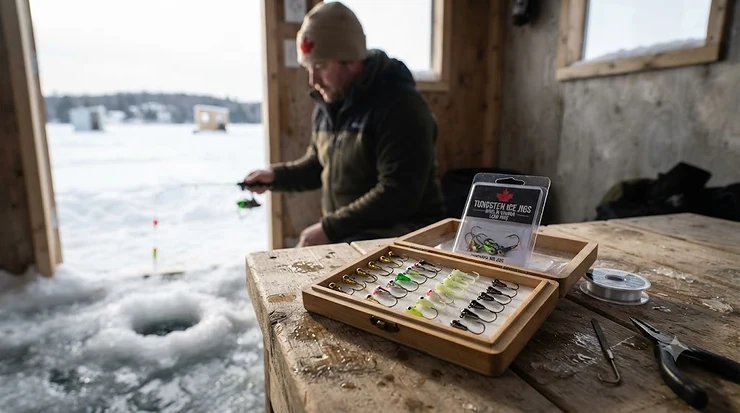
Somewhere around your third hour on a Canadian lake, staring down a hole that’s swallowed two jigs and given up nothing but a sore thumb, you start wondering if the problem is the fish or the tackle. Often, it’s the tackle. Lead jigs drift on the way down like a leaf caught in a breeze — slow, wandering, giving fish time to think twice. Tungsten jigs for ice fishing solve that specific problem: because tungsten is roughly 1.7 times denser than lead, a tungsten jig of the same weight is noticeably smaller, and it drops through the water column fast and straight, which matters enormously when panfish are suspended and impatient.
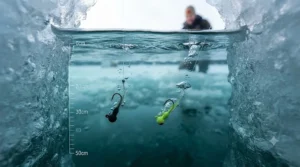
So what is a tungsten jig, exactly? It is a small ice fishing lure with a head cast from tungsten metal instead of lead, paired with a hook, designed to sink quickly and transmit bottom contact and bite sensitivity with unusual clarity through the line. That density difference is the whole story, and it’s why so many competitive ice anglers in Canada have quietly swapped their entire jig boxes over the last decade.
This guide breaks down seven real, currently available tungsten jigs spanning budget multi-packs to premium tournament-grade options, with honest analysis grounded in verified specs and aggregated reviewer sentiment — not invented hands-on claims. You’ll get a side-by-side comparison table, a buyer’s decision framework, safety notes specific to Canadian ice, and answers to the tungsten-versus-lead debate that comes up in every bait shop conversation. Whether you’re chasing bluegill through eight inches of clear ice or dropping perch jigs in twenty feet of water, there’s a jig size and profile below built for it.
Quick Comparison: Top Tungsten Ice Jigs at a Glance
| Jig | Type | Typical Size Range | Price Range (CAD) | Best For |
|---|---|---|---|---|
| Custom Jigs & Spins Chekai | Teardrop, micro | Size 16–10 (3–4.5mm) | C$3–C$5 each | Finicky panfish, tournament use |
| Custom Jigs & Spins Magnum Chekai | Heavy teardrop | 7mm / 9/64 oz | C$4–C$6 each | Deep walleye, jumbo perch |
| Clam Drop Jig | Round-tapered | 1/64–1/16 oz | C$4–C$6 per pack | Budget panfish staple |
| Northland Tungsten Mud Bug | Insect profile | 1/28–1/16 oz | C$4–C$6 per pack | Bottom-feeding bluegill |
| VMC Tungsten BugBite | Bug profile | Assorted micro | C$5–C$8 per pack | Mid-range all-rounder |
| HT Marmooska Tungsten | Diamond/mormyshka | Assorted heavy | C$5–C$8 per pack | Deep, fast-sinking presentations |
| Reaction Tackle Tungsten Assortment | Teardrop multi-pack | 1/32–1/8 oz mixed | C$12–C$20 per pack | Beginners building a box fast |
A quick scan of the table above tells the real story: there’s no single “best” tungsten jig, only the right density-to-profile ratio for your target species and depth. Budget-conscious anglers filling a first tackle box lean toward the Reaction Tackle assortment or Clam Drop Jig, since both deliver real tungsten sink-rate benefits without per-jig sticker shock. Anglers chasing pressured panfish on heavily-fished lakes, on the other hand, tend to gravitate toward the Chekai and BugBite for their finer profiles and sharper hooks. If you’re after suspended walleye or perch in deep basins, the Magnum Chekai and Marmooska pull ahead simply because they’re built heavier without ballooning in visible size.
💬 Just one click — help others make better buying decisions too!😊
Top 7 Tungsten Jigs for Ice Fishing: Expert Analysis
1. Custom Jigs & Spins Chekai Tungsten Jig — best all-around top rated tungsten ice jig for panfish
The Chekai is arguably the most talked-about jig among competitive panfish anglers in North America right now, and the standout feature is drop speed paired with an unusually clean hookset. The dense tungsten head is cast in sizes running from a tiny #16 up to #10, in profiles around 3–4.5mm, which lets you match the hatch for bluegill, crappie, and perch that have seen every jig in the lake. The Owner-brand hook rides at an optimized gap, and the non-chip epoxy paint holds up through repeated bottom contact without flaking, which matters more than it sounds like it should when you’re re-baiting forty times a session.
Based on the spec comparison with cheaper alternatives, what stands out is the paint-free eye — a small detail that keeps your knot from slipping on painted buildup, something budget jigs routinely skip. This jig is for anglers targeting pressured, educated fish, not necessarily beginners looking for a first tungsten jig; the smaller sizes reward finesse presentation more than raw aggression. Reviewers consistently report strong hookup rates and note the drop speed lets them fish faster water columns without losing bite detection, and tournament anglers have specifically credited the Chekai’s fall rate for keeping their line in the water instead of feeding slack.
Pros:
- ✅ Ultra-sharp Owner hook improves hookset consistency
- ✅ Non-chip epoxy paint survives repeated fish contact
- ✅ Wide size range fits nearly every panfish scenario
Cons:
- ❌ Smaller sizes are fiddly to tie on with cold fingers
- ❌ Priced higher per-jig than most competitors
Individual Chekai jigs run around C$3–C$5 each depending on size and retailer, which is steep per-unit but reasonable once you consider how few you’ll lose to snags with careful vertical presentation. For anglers who fish pressured lakes weekly, the value verdict leans firmly positive.

2. Custom Jigs & Spins Magnum Chekai Tungsten Ice Jig — heavy tungsten jig review pick for deep walleye and perch
Where the standard Chekai shines small, the Magnum Chekai goes the opposite direction: a 7mm, 9/64-ounce head — just a touch heavier than a standard 1/8 ounce — built around a long-shank #6 Japanese hook set at a thirty-degree angle for instant hooksets on bigger fish. What most buyers overlook about this model is that the extra mass isn’t just for depth; it’s also for punching through current, since moving water pushes lighter jigs off a true vertical drop and ruins your presentation.
The spec sheet won’t tell you this, but the added weight-to-size ratio is exactly why walleye and jumbo perch anglers keep this jig in rotation for deep basins — a lead jig with equivalent sink speed would need a noticeably bulkier profile, which spooks wary fish in clear winter water. This is a jig for anglers targeting deep-water gamefish or fishing current-affected holes, not panfish finesse situations. Aggregated reviewer sentiment consistently praises the fast, controlled drop in 20-plus feet of water and notes the long-shank hook holds whole minnows securely, though a handful of reviewers mention the larger profile is overkill for typical bluegill.
Pros:
- ✅ Long-shank hook holds whole minnows without slipping
- ✅ Thirty-degree hook angle improves hookset on bigger bites
- ✅ Punches through current better than lighter tungsten heads
Cons:
- ❌ Too large a profile for finicky small panfish
- ❌ Limited to eight colour options
Priced around C$4–C$6 per jig, the Magnum Chekai sits in the mid-to-premium range; anglers specifically targeting deep walleye or perch will find the value justified by fewer missed hooksets on bigger fish.
3. Clam Drop Jig (Tungsten Drop Series) — fast sinking tungsten staple for budget panfish anglers
The Clam Drop Jig built Clam’s reputation in tungsten tackle, and the standout feature is straightforward: a round-ball, bulbous-front head that hangs at roughly a 45-degree angle on the drop, creating a pivoting hook orientation that catches the top of a fish’s mouth on the hookset. It’s cast from what Clam states is 99.7% pure tungsten, paired with a 90-degree Japanese high-carbon steel hook, in sizes from 1/64 to 1/16 ounce.
Here’s what to weigh: this jig fishes heavier than lead equivalents at the same physical size, meaning you get faster drop speed without upsizing your profile — exactly the tradeoff panfish anglers want in gin-clear late-ice conditions. It’s built for anglers who want a dependable, no-frills go-to jig rather than a specialty tool, and the flat tie eye is a small but genuinely useful touch that keeps the jig centred and balanced instead of twisting on the fall. Reviewers consistently describe it as nearly identical in performance to pricier competitor jigs, with several noting it’s their default choice specifically because it’s cheaper without sacrificing sink rate or hook quality.
Pros:
- ✅ Vertical presentation aids natural, lifelike movement
- ✅ Flat tie eye keeps the jig balanced on the drop
- ✅ Strong value relative to comparable premium jigs
Cons:
- ❌ Fewer size options than the Chekai lineup
- ❌ Basic colour selection compared to glow-heavy competitors
At roughly C$4–C$6 for a small pack, the Drop Jig is the jig most reviewers recommend buying first — it’s the benchmark other budget tungsten jigs get measured against.
4. Northland Tungsten Mud Bug Jig — fast-dropping insect profile for bottom-hugging bluegill
The Mud Bug takes a different design approach: instead of a generic teardrop, it’s molded into a compact, insect-like “Fathead” body with bulging glow eyes, aimed squarely at panfish keying on copepods and nymphs along muddy bottoms. The standout feature is how well the shape mimics natural forage rather than just looking like generic hardware.
What most buyers overlook about this model is the hook geometry — a premium needle-point hook set at a 60-degree angle, fine-wire enough to load with waxworms or a small plastic trailer without killing the bait’s natural movement. On paper this means better presentation for subtle bites, since a heavier hook wire would dampen the action a live grub naturally provides. This is a jig built for anglers specifically targeting bottom-oriented panfish rather than suspended fish, and it particularly shines in early and late season when bugs, not baitfish, dominate the forage base. Reviewers consistently note that the tungsten version outperforms the original lead Mud Bug for punching through slush-filled holes and getting into the strike zone before fish lose interest, and several long-time users specifically call it their “go-to” for all-around panfish work.
Pros:
- ✅ Insect-mimicking profile appeals to bottom feeders
- ✅ Glow eyes and premium paint add low-light visibility
- ✅ Fine-wire hook preserves live bait action
Cons:
- ❌ Only two hook sizes available (#12 and #10)
- ❌ Occasionally listed as out of stock in specific colours
Packs run around C$4–C$6 for two jigs, making this a mid-tier price point that’s easy to justify for anglers who specifically fish muddy or weedy basins.
5. VMC Tungsten BugBite Jig — versatile mid-range pick with a lifelike bug profile
VMC brings decades of hook-engineering expertise to the BugBite, and the standout feature is a high-density tungsten body shaped to imitate natural bug forage while keeping a fast drop rate. The premium hook is sharp out of the package — VMC’s manufacturing reputation is largely built on hook quality, and that shows here more than in the body shape itself.
Based on the spec comparison with insect-profile competitors like the Mud Bug, the BugBite’s advantage is versatility: its more neutral bug silhouette works across panfish, crappie, bluegill, perch, and even trout, rather than being tuned to one specific forage pattern. That makes it a smart pick for anglers who fish multiple species through a single season and don’t want five different specialty jig boxes. Reviewers consistently point to hookset reliability as the standout trait, with several specifically crediting the sharp hook for converting light, tentative bites that lesser jigs would miss entirely — a meaningful advantage in mid-winter when fish feed cautiously.
Pros:
- ✅ Multi-species versatility reduces the need for specialty jigs
- ✅ Sharp, durable hook converts light bites reliably
- ✅ High-density tungsten keeps drop speed fast
Cons:
- ❌ Less glow-specific detailing than dedicated glow jigs
- ❌ Newer to market with a smaller review history than legacy brands
Priced around C$5–C$8 per pack, the BugBite lands squarely in the mid-range, offering strong value for anglers who want one dependable jig style covering several species.
6. HT Enterprises Marmooska Tungsten Ice Jig — heavy tungsten jig review favourite for deep, fast drops
The Marmooska design has roots in Scandinavian and Russian competitive ice fishing — in Europe it’s called a “mormyshka” — and HT Enterprises brought the concept to North American anglers with a heavy tungsten body built for extreme presentation control. The standout feature is deliberate: this is a jig engineered to drop fast and hold its position precisely in deep water or when schools of fish are moving quickly beneath the ice.
What the spec sheet won’t tell you, but competitive anglers consistently note, is that Marmooska-style jigs shine specifically in high-line-angle jigging, where the diamond-shaped body creates a subtle wobble on the fall that triggers reaction strikes from suspended fish. The hand-painted two-tone epoxy coating also shows up distinctly on sonar, which matters when you’re trying to visually confirm your jig is in the strike zone before a fish commits. This is a jig for anglers fishing deep basins or actively chasing fast-moving schools rather than sitting over a stationary bottom spot. Reviewer sentiment aggregated from tackle retailers consistently highlights the sensitivity and fast fall rate as the primary draws, with the design’s European tournament pedigree cited repeatedly as a trust signal.
Pros:
- ✅ Aggressive fall rate excels for deep or fast-moving fish
- ✅ Distinctive wobble triggers reaction strikes
- ✅ Two-tone contrast paint shows clearly on sonar
Cons:
- ❌ Less beginner-friendly presentation than a standard teardrop
- ❌ Smaller colour selection than mainstream North American brands
At roughly C$5–C$8 for a two-pack, the Marmooska sits in premium territory, but for anglers actively working deep, technical water it earns its keep through sheer drop-speed control.
7. Reaction Tackle Tungsten Ice Fishing Jig Assortment — small tungsten jigs ice fishing pack for beginners on a budget
Rounding out the list is the jig most likely to actually be sitting in an Amazon.ca cart right now: the Reaction Tackle Tungsten Ice Fishing Jig Assortment, a multi-pack of teardrop-style jigs spanning roughly 1/32 to 1/8 ounce, with UV glow finishes across a wide colour spread. The standout feature is sheer breadth — this is how a new ice angler builds a functional jig box in one purchase instead of piecing it together jig-by-jig over a season.
Here’s what to weigh: buying a curated assortment sacrifices some of the fine-tuned hook geometry you get from specialty brands like Custom Jigs & Spins, but it dramatically lowers the cost-per-jig and gives a beginner room to experiment across sizes and colours before committing to a narrower, pricier lineup. This is squarely a jig for anglers new to tungsten, families outfitting multiple rods for a group outing, or anyone who wants small and micro tungsten jigs on hand without the per-unit cost of premium brands. Reviewers consistently describe the value proposition as the primary appeal, with many specifically noting the UV glow finish performs well in low-light conditions typical of dawn and dusk panfish bites, though a smaller number mention hook sharpness varies slightly across the assortment compared to single-brand premium jigs.
Pros:
- ✅ Wide size and colour range in one purchase
- ✅ Lowest cost-per-jig among tested options
- ✅ UV glow finish aids low-light presentations
Cons:
- ❌ Hook sharpness less consistent than premium single-brand jigs
- ❌ No specialty profile shapes like bug or insect bodies
At around C$12–C$20 for a full assortment pack, this is the clear budget-value winner for anyone stocking a first tungsten jig box, especially anglers still deciding which brand and profile suits their local fishery.
Practical Usage Guide: Rigging, Rod Pairing and the First 30 Days
Tungsten jigs reward a specific setup more than lead ever did, mostly because their sensitivity advantage disappears fast if the rest of your rig can’t transmit it. Start with a light-action rod — something in the 24 to 30 inch range with a soft, visible tip — since a stiff rod absorbs the subtle “tick” that tungsten is specifically good at conveying. Pair it with fluorocarbon line in the 2 to 4 pound test range for panfish jigs, or 4 to 6 pound for the heavier Magnum Chekai and Marmooska styles; fluorocarbon’s low stretch keeps the sensitivity advantage intact where monofilament would dampen it.
A common mistake in the first 30 days is over-jigging: because tungsten falls faster and hits bottom harder, new users tend to jig too aggressively out of habit built on slower lead tackle. Dial back your stroke and let the jig’s natural fall speed do more of the work — a subtle quiver often outperforms an exaggerated snap. Maintenance is minimal but matters: rinse jigs in fresh water after each trip to prevent hook corrosion, inspect hook points for dulling every few outings (a quick pass with a small hook file restores sharpness in seconds), and store painted jigs separately to avoid chipping the epoxy finish against bare metal hooks in a crowded tackle box.
Real-World Scenarios: Matching Jigs to Your Ice Season
Picture three different anglers on the same lake. The first is a weekend beginner with two kids, fishing shallow bays for whatever bites — for this group, the Reaction Tackle assortment and Clam Drop Jig cover nearly every scenario without requiring specialized knowledge, and the low per-jig cost tolerates the inevitable snags that come with new anglers learning depth control.
The second is a budget-conscious weekly angler chasing panfish on a pressured suburban lake within an hour of a major city — here, the Chekai and VMC BugBite earn their higher price through finer profiles and sharper hooksets that matter when fish have seen thousands of jigs that season. The third is a dedicated walleye and perch angler fishing 20 to 40 feet of water on a large Canadian lake several times a month — for this angler, the Magnum Chekai and Marmooska aren’t a luxury; the extra drop speed and control in deep, current-affected water directly translates into more fish in the bucket per outing, easily justifying the premium price over a season.
How to Choose Tungsten Jigs for Ice Fishing
- Match jig size to target species first. Panfish generally call for 1/32 to 1/16 ounce; walleye and perch in deeper water often need 1/8 ounce or heavier.
- Consider water depth before profile. Deeper water rewards heavier, faster-dropping jigs like the Magnum Chekai or Marmooska to reduce wait time between drops.
- Choose hook style based on bait. Long-shank hooks hold minnows better; fine-wire hooks preserve live bait movement for finicky bites.
- Factor in water clarity. Clear water favours smaller, natural profiles; stained or low-light water benefits from glow finishes and larger silhouettes.
- Weigh cost-per-jig against your snag rate. Beginners on unfamiliar structure should start with budget assortments before investing in premium single-brand jigs.
- Check line pairing. Fluorocarbon in 2–6 pound test preserves the sensitivity tungsten is bought for.
- Buy across the size spectrum, not just one size. Fish preference shifts daily; a narrow jig box limits your ability to adapt mid-trip.
Tungsten vs Lead Jigs: What the Weight Difference Actually Means
The tungsten vs lead jigs debate comes down to one physical fact: tungsten measures roughly 19.3 grams per cubic centimetre in density, compared to lead’s roughly 11.3 — meaning a tungsten jig of identical weight is meaningfully smaller and denser than its lead counterpart. In practice, that translates to a faster, straighter drop and noticeably crisper feedback through the line when the jig ticks bottom or a fish mouths it. For panfish anglers fishing finesse presentations in clear water, that smaller profile at equal weight is often the deciding factor over cost.
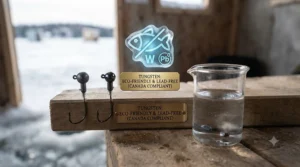
There’s also a regulatory and environmental angle Canadian anglers should know. Lead sinkers and jigs remain the leading documented cause of death for adult Common Loons in eastern Canada, and the Government of Canada has been actively encouraging a shift toward lead-free fishing tackle as a result. Lead sinkers and jigs are already banned in Canada’s national parks and wildlife areas. Tungsten isn’t a legal requirement outside those zones yet, but it’s the non-toxic alternative most competitive anglers have already adopted, and it sidesteps the issue entirely. The tradeoff is cost — tungsten typically runs several times the price of an equivalent lead jig — but for anglers fishing sensitive watersheds or simply wanting to reduce their environmental footprint, it’s a reasonable premium to pay.
Small and Micro Tungsten Jigs for Ice Fishing: When Tiny Wins
Small tungsten jigs ice fishing setups, running roughly 1/64 to 1/32 ounce, exist for a specific problem: pressured panfish that have learned to avoid anything resembling a normal-sized jig. Micro tungsten jigs in the 2–3mm range, like the smallest Chekai sizes, let anglers present a profile so subtle it barely registers as a threat, while tungsten’s density still delivers enough drop speed to reach a 15-foot hole in reasonable time — something a lead jig that small simply can’t match without drifting sideways on the fall.
Reviewers consistently note that micro tungsten performs best paired with 1 to 2 pound fluorocarbon and the lightest usable spring bobber, since the jig’s own weight is often too subtle to register a strike on a standard rod tip. This is squarely a late-season or heavily-pressured-lake tool rather than an early-ice, aggressive-bite scenario; when fish are eating anything that moves, a micro jig just slows down your hookup rate for no benefit.
Heavy Tungsten Jigs: When to Size Up
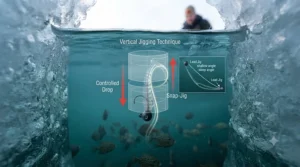
A heavy tungsten jig review conversation inevitably circles back to depth and current. Jigs like the Magnum Chekai and Marmooska, sitting around 1/8 to 3/16 ounce or more, exist because deep basins and moving water punish lighter tackle — a light jig drifts off the intended hole, loses bottom contact, and wastes fishing time re-locating structure. What most buyers overlook is that “heavy” in tungsten terms is still remarkably compact compared to an equivalent lead jig, so you’re not sacrificing profile subtlety to get the extra mass.
Based on aggregated reviewer sentiment, heavier tungsten jigs specifically shine for walleye, lake trout, and jumbo perch anglers working structure in 20-plus feet of water, where a controlled, vertical drop matters more than finesse. If you’re consistently losing bottom contact or feeling like your jig is “kiting” sideways on the fall, sizing up your tungsten weight — rather than switching profiles entirely — is usually the fix.
Fast Sinking Tungsten: Why Drop Speed Wins Bites
Fast sinking tungsten isn’t just a convenience feature; it directly affects how many fish you catch per hour. Suspended panfish and aggressive walleye often strike a bait on the initial fall, and a slow-sinking lead jig gives fish extra seconds to inspect and reject it, especially in clear water. On paper this means every additional second of fall time is a missed opportunity, and it compounds across a full day of jig-hopping between holes.
What the spec sheet won’t tell you is that fast sink rate also improves your efficiency covering water — dropping through 15 feet of water column takes noticeably less time with tungsten than lead at the same weight, meaning more holes checked, more presentations made, and ultimately more looks from active fish in a limited ice-fishing window.
Common Mistakes When Buying Tungsten Ice Jigs
Expert commentary on this topic keeps circling the same handful of pitfalls. First, buying only one jig size: fish preference shifts throughout a single day, and a narrow box limits your ability to adapt. Second, ignoring hook quality in favour of price alone — a dull or poorly-angled hook undermines every other advantage tungsten offers, since missed hooksets happen regardless of how fast the jig dropped. Third, mismatching line to jig size; heavy fluorocarbon on a micro jig kills the natural fall action tungsten is specifically bought for. Fourth, overlooking colour variety, particularly glow finishes for low-light dawn and dusk bites when visibility under the ice drops sharply. Finally, some anglers assume all “tungsten” jigs are created equal — purity varies between manufacturers, and lower-purity tungsten alloys sink measurably slower than the 97%+ pure tungsten used in premium brands like Clam and Custom Jigs & Spins.
Long-Term Cost and Care of Your Tungsten Jig Box
Tungsten jigs cost more upfront than lead — often three to five times more per unit — but the total cost of ownership story is more nuanced than the sticker price suggests. Because tungsten jigs hold their paint and hook sharpness longer than budget lead alternatives, and because their smaller profile at equal weight means less snagging on structure, many anglers report replacing tungsten jigs less frequently over a season despite the higher per-unit cost. Rinsing jigs after each trip, storing them in a divided box away from moisture, and periodically touching up hook points with a small file are the main maintenance habits that extend a tungsten jig’s usable life across multiple seasons rather than a single winter.
Safety and Regulations: Ice Fishing Rules Across Canada
Tackle choice matters, but none of it matters if the ice underneath you isn’t safe. Ice thickness guidelines are typically given for clear, solid ice: a common baseline is roughly 10cm (4 inches) as an absolute minimum for a single angler on foot, with recommendations increasing substantially for snowmobiles, ATVs, or groups, and white or slush-layered ice requiring double the thickness to be considered equivalent in strength. Conditions vary by lake, region, and even hour to hour, so always check locally before heading out.
Licensing and hut rules also vary by province. In Ontario, anglers can generally fish with two lines while ice fishing as long as they stay within 60 metres of each line at all times, and ice huts in many zones must be registered. Provincial fishing licences are required across most of Canada for anglers within a certain age range, and lead sinkers and jigs are prohibited in national parks and wildlife areas regardless of province — one more practical reason a tungsten-stocked jig box simplifies compliance if your season includes park waters. For broader ice safety fundamentals beyond regulations, groups like Fish’n Canada publish detailed seasonal ice safety guides worth reviewing before early and late-season trips specifically, when ice conditions are least predictable.
Problem → Solution: Fixing Common Tungsten Jig Frustrations
Problem: Fish are following the jig but not committing. Solution: downsize to a micro tungsten jig and slow your jigging cadence; aggressive movement often triggers curiosity without commitment from pressured fish.
Problem: Jig keeps drifting off the hole in deeper water. Solution: size up to a heavier tungsten profile like the Magnum Chekai rather than adding a separate weight, which disrupts the jig’s natural fall action.
Problem: Paint chips quickly after a few fish. Solution: choose non-chip epoxy-coated jigs like the Chekai line, and store jigs in individual compartments rather than loose in a bag where they knock against each other.
Problem: Missing light bites entirely. Solution: pair the jig with a sensitive spring bobber and fluorocarbon line, since tungsten’s sensitivity advantage is wasted on stiff rod tips or stretchy monofilament.
Problem: Hook dulls faster than expected. Solution: rinse jigs after saltwater-adjacent brine bait use, and run a small hook file across the point every few trips rather than waiting until hooksets start failing.
✨ Don’t Miss These Exclusive Deals!
🔍 Take your ice fishing tackle box to the next level with these carefully selected tungsten jigs. Click on any highlighted item to check current pricing and availability on Amazon.ca. These small upgrades help you catch more fish your family will actually want to eat for dinner!

Frequently Asked Questions
❓ Are tungsten jigs worth the extra cost for ice fishing?
❓ What size tungsten jig is best for bluegill and crappie?
❓ Does tungsten sink faster than lead at the same weight?
❓ Can you use tungsten jigs in open water fishing too?
❓ Is tungsten jig fishing legal everywhere in Canada?
Conclusion
Tungsten jigs for ice fishing aren’t a magic bullet, but the physics behind them is real and the on-ice difference is noticeable enough that most anglers who make the switch don’t go back. The right choice ultimately depends on what’s swimming under your specific patch of ice: budget assortments like the Reaction Tackle pack or the dependable Clam Drop Jig get beginners fishing effectively without a big investment, while specialty options like the Chekai, Magnum Chekai, and Marmooska reward anglers targeting pressured or deep-water fish with sharper hooksets and faster, more controlled drops.
Build your box across a few sizes rather than committing to just one, pay attention to hook quality as much as sink rate, and remember that ice safety always comes before tackle choice — no jig is worth fishing unsafe ice for. Start with two or three of the picks above that match your typical water, and expand from there as you learn what your local lakes actually respond to this season.
✨ Ready to build a better tungsten jig box this winter? The picks above are a solid place to start — tight lines out there.
Recommended for You
- Night Vision Ice Fishing Camera: 7 Best Picks for 2026
- DVR Ice Fishing Camera System: 7 Best Picks for Canada in 2026
- Wireless Ice Fishing Camera: 7 Top Picks for Canadian Anglers (2026)
Disclaimer: This article contains affiliate links. As an Amazon Associate, I earn from qualifying purchases. If you purchase products through these links, we may earn a small commission at no additional cost to you.
✨ Found this helpful? Share it with your friends! 💬🤗
