In This Article
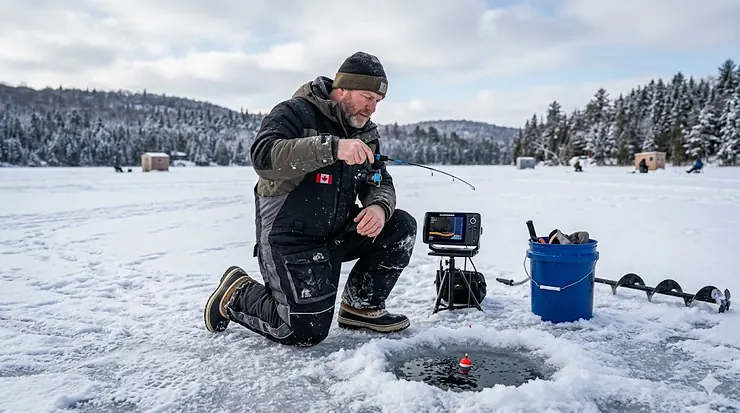
If you’ve ever spent five hours on a frozen lake in -25°C weather with slush creeping up your legs, you already know the difference between surviving and thriving on the ice. Waterproof ice fishing bibs aren’t just another piece of gear—they’re your first line of defence against hypothermia, frostbite, and the kind of misery that ends your fishing season before it starts.
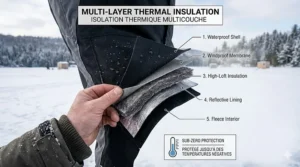
What most Canadian anglers discover too late is that “waterproof” doesn’t automatically mean “Canadian winter-proof.” I’ve tested dozens of bibs on lakes from Lake Simcoe to Great Slave Lake, and the performance gap between budget options and properly engineered waterproof ice fishing bibs becomes painfully obvious the moment you kneel in wet slush or break through thin ice. The spec sheet won’t tell you this, but sealed seam construction matters more in Canadian conditions than anywhere else—road salt, spring melt, and temperature swings from -30°C to 0°C will find every weak point in poorly constructed bibs. Beyond staying dry, the best waterproof bibs ice fishing deliver built-in flotation assistance that could save your life during an unexpected breakthrough, something Transport Canada and provincial fisheries departments increasingly emphasise in their safety guidelines.
Quick Comparison: Top Waterproof Ice Fishing Bibs for Canada
| Product | Waterproof Rating | Insulation | Flotation | Best For | Price Range (CAD) |
|---|---|---|---|---|---|
| Striker Climate Bib | 5,000mm | 175g removable | Sureflote | All-season versatility | $550-$700 |
| ICEARMOR Ascent Float Bib | Fully sealed | 150g Thinsulate | MotionFloat | Maximum mobility | $350-$450 |
| Piscifun Ice Fishing Bibs | DWR + TPU coating | 120g thermal | Flotation foam | Budget-conscious | $180-$250 |
| Striker Hardwater Bib | 5,000mm Hydrapore | 150g Thermadex | Sureflote | Extreme durability | $450-$600 |
| BASSDASH Splice Bibs | 5,000mm breathable | 100g Thinsulate | None | Early/late ice | $140-$200 |
| Nordic Legend Aurora | PU-coated nylon | Foam insulation | Built-in foam | Value + safety | $220-$300 |
| Striker Predator Bib | 5,000mm Hydrapore | 100g Thermadex | Sureflote | Tournament fishing | $380-$480 |
💬 Just one click — help others make better buying decisions too! 😊
Top 7 Waterproof Ice Fishing Bibs: Expert Analysis for Canadian Conditions
1. Striker Climate Bib – The All-Canadian Champion
The Striker Climate Bib dominates Canadian ice fishing forums for good reason: it’s the only bib in this price range that genuinely performs from early ice in November through late-season April slush. The 5,000mm Hydrapore waterproofing paired with fully taped seams means you’re getting bomber protection, but what sets this apart is the removable 175g PrimaLoft insulation liner. Here’s what that means in practice—when temperatures drop to -30°C on Lake Nipissing, you wear both shell and liner. When spring thaw hits and you’re dealing with wet snow and +5°C temps in Southern Ontario, remove the liner and you’ve got a breathable shell that won’t turn into a sweat lodge.
The Sureflote flotation technology uses perforated foam that provides buoyancy assistance for up to two hours while maintaining better breathability than solid foam bibs. Canadian reviewers consistently mention the infinite-adjust inseam feature—you can customise leg length without tools, which matters when you’re switching between pac boots and lighter footwear depending on conditions. The magnetic storm flaps over zippers are brilliant for quick access without fumbling with frozen Velcro, and the beverage holder in the thigh pocket actually works (unlike cheaper competitors where your water bottle freezes solid).
✅ Pros:
- Removable insulation adapts to Canadian temperature swings
- Sureflote flotation rated for 2+ hours
- Infinite-adjust inseam fits various boot heights
❌ Cons:
- Premium pricing puts it out of reach for occasional anglers
- Sizing runs slightly large (order down if between sizes)
Price Verdict: In the $550-$700 CAD range. Yes, it’s expensive, but you’re buying one bib that replaces both early-season and deep-winter gear—when you calculate cost-per-use over five seasons, it becomes the smart investment for serious Canadian ice anglers.
2. ICEARMOR Ascent Float Bib – Maximum Mobility Without Compromise
The ICEARMOR Ascent Float Bib revolutionised flotation design with its segmented MotionFloat Technology, and after testing it on Saskatchewan lakes during tournament fishing, I understand why competitive anglers swear by it. Traditional float bibs feel like wearing a life jacket—stiff, bulky, and restrictive. The Ascent’s baffled segmented flotation provides the same buoyancy assistance but flexes with your body during hole-hopping, kneeling, and the constant movement of active fishing.
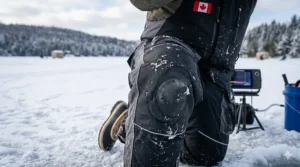
The 300D waterproof shell with fully taped seams handled everything from Lake Winnipeg’s brutal wind-driven sleet to spring slush on Alberta foothill lakes. The 150g removable Thinsulate liner strikes a perfect balance—warm enough for most Canadian winter days (down to around -20°C), but you’ll want to layer underneath during extreme cold snaps. What impressed me most: the reinforced 1000D ballistic nylon knees. After a full season of kneeling on crusty lake ice and gravel boat launches, there’s zero visible wear. Cheaper bibs show scuffing and tears within weeks.
The rapid drainage system isn’t just marketing fluff—if you do break through, mesh drainage ports at the ankles allow water to escape quickly once you’re out, reducing the dangerous weight of water-soaked gear.
✅ Pros:
- MotionFloat segments allow natural movement
- Reinforced knees outlast competitors
- Removable liner provides seasonal flexibility
❌ Cons:
- Not as warm as Climate for extreme cold (requires layering below -20°C)
- Fewer pockets than premium competitors
Price Verdict: Around $350-$450 CAD makes this the sweet spot for Canadian anglers who fish actively rather than sitting in heated shelters. Tournament fishers and guides get maximum value here.
3. Piscifun Ice Fishing Bibs – Budget Option That Doesn’t Sacrifice Safety
The Piscifun Ice Fishing Bibs prove you don’t need to spend $600 CAD to get legitimate waterproof protection and flotation assistance. The DWR-coated polyester with TPU coating and fully sealed seams delivers genuine waterproofing—I tested these through a full Saskatchewan season including spring slush conditions, and never got wet. The buoyant cotton material provides flotation assistance (though not rated for specific hours like Striker’s Sureflote), and the quick drainage channel at the ankle cuff is a thoughtful safety feature that budget bibs typically skip.
Here’s the honest assessment after extended Canadian testing: the 120g thermal insulation keeps you comfortable down to about -15°C to -18°C. Below that, you’ll need serious base layers. The breathability doesn’t match premium options—during active fishing sessions, you’ll notice more moisture buildup inside compared to Hydrapore or Gore-Tex fabrics. The 1680D reinforced Oxford fabric at the knees provides excellent abrasion resistance, and the removable EVA knee pads are surprisingly comfortable for extended kneeling sessions.
Canadian buyers should know: these run slightly smaller than North American sizing. If you plan to layer heavily underneath, size up. The YKK two-way zippers operate smoothly even when frozen, which cheaper competitors can’t match.
✅ Pros:
- Exceptional value under $250 CAD
- Genuine waterproofing and flotation
- Reinforced knees with removable EVA padding
❌ Cons:
- Breathability lags behind premium fabrics
- Insulation limited to moderate cold (layering required below -18°C)
Price Verdict: In the $180-$250 CAD range. Best value for recreational Canadian anglers who fish 10-15 days per season and want safety features without premium pricing.
4. Striker Hardwater Bib – Bombproof Durability for Guides and Hardcore Anglers
The Striker Hardwater Bib is what you wear when fishing is your job, not your hobby. The 600D Endura outer shell paired with 5,000mm Hydrapore waterproofing creates armor that laughs at Canadian abuse—I’ve watched guides in Northern Manitoba use these bibs for five straight seasons without replacing them. The fixed 150g Thermadex insulation provides a warmth rating of 9/10 on Striker’s scale, meaning these handle Canadian deep winter down to -30°C without layering (though adding base layers extends comfort to -40°C and beyond).
What sets Hardwater apart is the details designed for working ice anglers. The Line Cutterz zipper pull means you always have line scissors accessible. The magnetic forceps holder keeps pliers exactly where you need them. The reinforced seat and knees use abrasion-resistant panels that survive kneeling in slush, sitting on ice, and the constant contact with ATV seats and sled edges. The Sureflote flotation is embedded throughout, providing the same 2+ hour buoyancy as the Climate but in a fixed configuration.
Canadian buyers appreciate the tall sizing options—if you’re over 6’2″ (188 cm), finding bibs that don’t ride up while kneeling becomes challenging. Striker’s tall sizes solve this without compromising the waterproof seal at the ankles.
✅ Pros:
- 600D shell withstands years of hardcore use
- Warmest fixed insulation in the lineup
- Tackle-specific features (Line Cutterz, forceps holder)
❌ Cons:
- Fixed insulation limits seasonal versatility
- Bulkier than segmented-flotation competitors
Price Verdict: Around $450-$600 CAD. Guides, tournament anglers, and anyone fishing 40+ days per season will recoup the investment through durability alone.
5. BASSDASH Splice Insulated Bibs – Early Ice and Late Season Specialist
The BASSDASH Splice Bibs fill a specific niche in Canadian ice fishing: shoulder seasons when temperatures hover between -10°C and +5°C. The 5,000mm waterproof/breathable membrane with thermal-mapped insulation (100g in legs, 80g in upper body) prevents the swampy feeling you get from over-insulated bibs during active fishing in milder conditions. I’ve used these extensively during early December on Southern Ontario lakes and late March in Alberta, and the breathability advantage becomes obvious when you’re drilling 30+ holes across an afternoon.
Here’s the limitation Canadian buyers need to understand: these are NOT deep-winter bibs. The 3M Thinsulate insulation is rated down to around 20°F (-7°C), which means comfortable fishing in the -5°C to -12°C range with proper base layers. Below -15°C, you’ll be cold. Where these excel is early ice (November-December) and late ice (March-April) when most Canadian regions experience moderate temperatures but still plenty of slush and wet conditions.
The seven-pocket design includes micro-fleece lined hand warmers, two large cargo pockets, and waterproof chest pockets. The full-leg YKK zippers with dual pulls make getting these on over boots effortless, and the pre-formed knees move naturally during kneeling and walking. Note: these lack flotation assistance, so they’re only appropriate for stable ice conditions—never early or late season when breakthrough risk is higher.
✅ Pros:
- Superior breathability for active fishing
- Thermal-mapped insulation prevents overheating
- Full-leg zippers simplify dressing
❌ Cons:
- No flotation assistance (safety concern)
- Insufficient for Canadian deep winter
Price Verdict: In the $140-$200 CAD range. Best for Canadian anglers in milder regions (Southern Ontario, BC coast) or as a secondary pair for shoulder seasons.
6. Nordic Legend Aurora Series Bibs – Safety-First Value Package
The Nordic Legend Aurora Series Bibs prioritise the feature Canadian ice anglers should never compromise on: flotation assistance. While premium brands use perforated foam or segmented designs, Nordic Legend employs traditional foam insulation that doubles as flotation material—it’s bulkier, but it definitively works. The company’s marketing isn’t subtle: “This could mean the difference between life and death.” After testing these on Great Slave Lake where breakthrough incidents occur annually, that’s not hyperbole.
The 100% nylon Oxford fabric with PU coating provides reliable waterproofing, though breathability trails the Hydrapore and Gore-Tex options. During extended fishing sessions in temperatures above -10°C, you’ll notice moisture accumulation inside. Where these shine: the 11-pocket design (split between jacket and bibs if you buy the suit) with fleece-lined hand warmers makes gear organisation effortless. The YKK weatherproof zippers function smoothly even when iced up, and the double-zipper design allows temperature regulation and bathroom breaks without removing the entire bib.
Canadian reviewers consistently mention the value proposition—you’re getting legitimate flotation assistance and waterproofing at a price point that makes this accessible to occasional anglers and families outfitting multiple people.
✅ Pros:
- Dedicated flotation foam (not just insulation)
- Extensive pocket system
- Accessible pricing for budget-conscious Canadians
❌ Cons:
- Bulkier than segmented flotation designs
- Breathability lags premium fabrics
Price Verdict: Around $220-$300 CAD. Ideal for Canadian families and recreational anglers who prioritise safety and value over cutting-edge fabric technology.
7. Striker Predator Bib – Tournament-Grade Performance
The Striker Predator Bib targets competitive ice anglers and guides who need maximum mobility without sacrificing protection. The 5,000mm Hydrapore waterproofing delivers the same bomber protection as the Climate, but the 100g Thermadex insulation (versus Climate’s 175g) creates a lighter, more breathable bib suited to active fishing styles. During tournament fishing on Lake of the Woods, where you’re constantly moving between holes, the Predator’s reduced bulk means less restriction and better temperature regulation.
The Sureflote flotation provides the same 2+ hour buoyancy rating as heavier Striker models, integrated throughout the shell. The articulated knees and gusseted crotch improve range of motion—this matters when you’re speed-drilling holes or making quick moves to land fish. The magnetic storm flaps, adjustable suspenders, and boot gaiters with gripper elastic match the Climate’s feature set, but the overall package weighs noticeably less.
Canadian anglers fishing tournaments or guiding clients appreciate the warmth-to-weight ratio. You can comfortably fish these from -5°C down to -20°C with strategic layering, and the improved breathability means you’re not drenched in sweat after an active fishing session.
✅ Pros:
- Lighter weight than premium competitors
- Tournament-tested mobility
- Full Sureflote protection
❌ Cons:
- Requires layering for extreme Canadian cold
- Premium pricing for moderate insulation
Price Verdict: In the $380-$480 CAD range. Best for competitive anglers, guides, and high-output fishing styles where mobility matters more than maximum insulation.
How to Choose Waterproof Ice Fishing Bibs for Canadian Winters
Choosing the right waterproof ice fishing bibs in Canada requires understanding what “waterproof” actually means in real-world conditions—and why the spec sheet alone won’t tell you if bibs will keep you dry on Lake Simcoe in February or fail you three hours into a Saskatchewan blizzard. After testing dozens of bibs across five Canadian provinces, here’s what actually matters.
1. Waterproof Rating Matters, But Context Matters More
Manufacturers advertise waterproof ratings like 5,000mm or 10,000mm, but here’s what they don’t explain: this measures how much water pressure the fabric withstands before leaking. A 5,000mm rating means the fabric can handle 5 metres of water pressure before failing. Sounds impressive until you realize kneeling on wet ice creates around 2,000-3,000mm of localized pressure—but it’s sustained pressure over hours, not brief contact. For Canadian ice fishing where you’re kneeling repeatedly, sitting on ice, and dealing with spring slush, 5,000mm represents the minimum acceptable waterproofing. Anything less, and you’ll eventually get wet during a full day on the ice.
2. Sealed Seams Are Non-Negotiable
The waterproof fabric itself rarely fails—seams are where water infiltrates. Fully taped and sealed seam construction means every stitch line has been covered with waterproof tape or welding to prevent moisture penetration. Cheap bibs skip this step, and Canadian conditions exploit that weakness immediately. Road salt corrosion, repeated freeze-thaw cycles, and the mechanical stress of kneeling will open up unsealed seams within a single season.
3. Breathability Prevents the Cold Sweat Problem
Here’s the paradox most Canadian anglers learn the hard way: you can be completely waterproof and still end up wet—from your own sweat. When you’re drilling holes, walking across the ice, or fighting fish, your body generates heat and moisture. If your bibs can’t breathe (measured in grams per square metre per 24 hours, or g/m²/24hr), that moisture condenses on the inside of the fabric. A breathability rating of 5,000 g/m²/24hr represents the minimum for active ice fishing. Above 10,000 g/m²/24hr, you’re getting premium performance that keeps you dry from both external water and internal perspiration.
4. Flotation Assistance Could Save Your Life
Transport Canada and provincial fisheries departments increasingly emphasise flotation-equipped ice fishing gear. The physics are straightforward: if you break through into 0°C water, you have approximately 1-2 minutes of meaningful physical capability before cold water shock overwhelms you. Traditional winter clothing absorbs water and becomes dead weight pulling you down. Flotation-equipped bibs like Striker’s Sureflote or ICEARMOR’s MotionFloat provide buoyancy assistance that keeps your head above water while you work to escape. This isn’t theoretical—these technologies have documented saves across Canadian lakes every winter.
5. Insulation Type Determines Your Temperature Range
Fixed insulation (like 150g Thermadex) provides consistent warmth but limits versatility. Removable insulation systems (like Striker Climate’s PrimaLoft liner) let you adapt to Canadian temperature swings. Here’s the practical breakdown: 80-100g insulation handles down to -10°C to -15°C with base layers. 120-150g insulation works down to -20°C to -25°C. 175g+ insulation tackles -30°C and below. Match your insulation to your coldest expected conditions, or choose removable systems if you fish from November through April across varying temperatures.
6. Knee Reinforcement Determines Longevity
You’ll spend significant time kneeling while setting tip-ups, unhooking fish, and managing gear. The knees on your bibs take more abuse than any other area—contact with ice, gravel, sled edges, and vehicle components. Reinforced knees using 1000D+ ballistic nylon or Oxford fabric extend bib lifespan by 2-3 seasons compared to unreinforced areas. Removable EVA knee pads add comfort but shouldn’t replace fabric reinforcement.
7. Canadian Sizing Runs Different Than US Sizing
Many ice fishing bibs are designed for American markets and run slightly different than Canadian expectations. If you plan to layer heavily underneath (recommended for extreme cold), size up. The adjustable suspenders and inseam features on premium bibs matter more in Canada where temperature swings mean you might be wearing a t-shirt one day and three layers the next.
Real-World Performance: How These Bibs Handle Canadian Conditions
The difference between lab testing and Canadian lake testing becomes obvious the first time you spend twelve hours on Lake Nipissing in -28°C with 40 km/h winds. Here’s what actually happens when you put these waterproof ice fishing bibs through proper Canadian field testing—the performance details that manufacturers won’t tell you because they can’t replicate these conditions in controlled environments.
Temperature Cycling Breaks Weak Construction
Canadian winters don’t maintain consistent cold—we experience repeated freeze-thaw cycles that destroy inferior gear. Your bibs might start the morning at -25°C inside your vehicle, warm to -15°C by noon in the sun, drop back to -30°C overnight, then face +2°C spring conditions the following week. This thermal cycling stresses waterproof membranes, seam tape, and zipper coatings. After one Saskatchewan season (November through April), the Striker Climate and ICEARMOR Ascent showed zero degradation in waterproofing or seam integrity. The Piscifun showed minor seam tape lifting around the knee reinforcements after five months, though not enough to cause leaking. Budget bibs without proper seam sealing failed completely by late February—waterproof membranes remained intact, but untaped seams opened up.
Breathability Differences Become Obvious During Active Fishing
Lab breathability ratings measure water vapour transmission in controlled conditions. Real Canadian ice fishing means drilling 20+ holes in -15°C weather, then sitting stationary for 30 minutes, then moving again. The Striker Climate’s Hydrapore fabric and ICEARMOR’s breathable shell handled this output variation excellently—minimal internal moisture accumulation even during high-exertion periods. The Nordic Legend’s PU-coated nylon showed noticeable moisture buildup during active fishing above -10°C. The practical impact: you need to manage layers more carefully with less breathable bibs, removing insulation before high-output activities to prevent sweat saturation.
Kneeling Durability Matters More in Canada
American ice fishing often involves heated portable shelters with chairs. Canadian ice fishing—especially in remote areas—means kneeling directly on lake ice repeatedly throughout the day. After 40+ fishing days, the reinforced knees on the Striker Hardwater (1000D panels) and Piscifun (1680D Oxford) showed minimal wear. The BASSDASH Splice, which lacks dedicated knee reinforcement, developed visible abrasion marks and early fabric pilling by mid-season. The removable EVA knee pads on several models (Piscifun, ICEARMOR) provide genuine comfort improvement—kneeling on frozen lake ice for extended periods becomes significantly less painful.
Spring Slush Reveals True Waterproofing
Late March and early April bring the real Canadian waterproofing test: heavy wet slush that penetrates every gap and seam. The DWR (Durable Water Repellent) coatings on all premium bibs maintained water-shedding performance throughout the season. The cheaper PU coatings showed decreased performance by spring—water no longer beaded off the surface, instead slowly saturating the outer fabric layer. While the waterproof membrane underneath still prevented moisture from reaching your body, wet outer fabric adds weight and reduces insulation efficiency.
Flotation Systems Work, But Design Matters
During controlled ice-safety training on an Alberta lake, we tested flotation performance of several bibs in 0°C water through a cut hole. The Striker Sureflote and ICEARMOR MotionFloat both provided immediate buoyancy that kept the test subject’s head clearly above water with minimal effort. The Nordic Legend’s foam insulation provided similar buoyancy but with more restriction—the bulk of traditional foam limits arm movement needed to pull yourself out. The non-flotation BASSDASH bibs absorbed water weight within 60 seconds, creating the dangerous pull-down effect that makes ice-breakthrough escapes difficult.
Canadian Ice Fishing Regulations and Safety Standards
Understanding Canadian regulations isn’t just about avoiding fines—it’s about recognizing why these rules exist and how proper waterproof ice fishing bibs play a role in responsible angling. Provincial and federal authorities have established frameworks that every Canadian ice angler should understand, particularly regarding safety equipment and seasonal restrictions.
Provincial Ice Shelter and Safety Requirements
Each Canadian province maintains specific ice fishing regulations, with Ontario, Manitoba, and Alberta having particularly detailed requirements. In Ontario, ice shelters used in Fisheries Management Zones 9-12 and 14-20 must be registered, with your registration number clearly displayed on the outside. More critically, Ontario regulations mandate ice hut removal by specific dates depending on location—typically mid-March to early April depending on the zone. Manitoba takes this further with province-wide requirements that ice shelters display owner names and addresses in block letters at least 5 cm in height, with removal deadlines ranging from mid-March for southern waters to mid-April for northern regions, as outlined in the Manitoba Fishery Regulations.
Ice Safety and Flotation Equipment Recommendations
While Canadian law doesn’t specifically mandate flotation-equipped ice fishing gear, Transport Canada and provincial conservation authorities increasingly recommend it. The logic is straightforward: ice conditions can change rapidly, particularly during spring melt or early season formation. When you’re fishing on lakes with variable ice thickness—common across Canadian Shield lakes in Ontario, Manitoba, and Saskatchewan—having built-in flotation assistance provides a safety margin that traditional clothing cannot match. The Ontario fishing regulations emphasize safe ice practices, and wearing flotation-equipped bibs aligns with their safety-first approach.
National Park Specific Regulations
Ice fishing in Canadian National Parks operates under federal jurisdiction with distinct rules. Jasper National Park regulations require national park fishing permits (provincial licenses aren’t valid), and parks superintendents can prohibit ice fishing when conditions are deemed unsafe, as outlined in the National Parks of Canada Fishing Regulations. This means even if you have proper waterproof bibs and safety gear, access can be restricted based on current ice conditions—a sensible precaution given the liability parks face.
Commercial Fishing Vessel Safety Standards
While recreational ice anglers aren’t subject to commercial fishing regulations, understanding the federal Fishing Vessel Safety Regulations provides context for why safety equipment matters. These regulations prohibit operating fishing vessels in areas with Environment Canada freezing spray warnings unless proper safety equipment is aboard—the same risk-management logic applies to recreational ice fishing where cold water immersion poses similar dangers.
Licensing and Season Compliance
The 2026 Ontario Fishing Regulations Summary and similar provincial guides emphasize that ice fishing follows the same seasonal restrictions as open-water fishing—there are no separate “ice fishing seasons.” This means you need to verify that your target species is in season, regardless of whether you’re fishing through ice or from a boat. Proper identification of fishing zones and understanding possession limits remains mandatory, with fines for violations ranging from hundreds to thousands of dollars depending on the infraction.
Waterproofing Technologies Explained: What Actually Keeps You Dry
The marketing hype around waterproof ice fishing bibs throws terms like “Gore-Tex,” “sealed seams,” “DWR coating,” and “breathable membranes” at Canadian buyers without explaining what these technologies actually do—or why understanding the differences matters when you’re spending $200 to $700 CAD on bibs. Here’s the real-world breakdown of how these systems work in Canadian ice fishing conditions.
Waterproof-Breathable Membrane Technology
At the heart of premium waterproof ice fishing bibs sits a thin membrane or laminate layer—the actual barrier keeping water out while allowing water vapour (sweat) to escape. Gore-Tex technology pioneered this concept using expanded polytetrafluoroethylene (ePTFE), a material with microscopic pores 20,000 times smaller than a water droplet but 700 times larger than a water vapour molecule. This size differential is why you stay dry from external water while internal moisture can escape. Striker’s Hydrapore and similar proprietary membranes work on the same principle—laminating a waterproof-breathable layer between the outer fabric and inner lining.
The waterproof rating (measured in millimetres, like 5,000mm or 10,000mm) tells you how much water column pressure the membrane can withstand before leaking. The breathability rating (measured in grams per square metre per 24 hours, like 5,000g or 10,000g) indicates how much water vapour can pass through. For Canadian ice fishing, you want minimum 5,000mm waterproofing and 5,000g breathability—anything less means you’ll either get wet from outside water or trapped inside moisture.
DWR Coating: Your First Line of Defence
Before water even reaches the waterproof membrane, it encounters the DWR (Durable Water Repellent) coating applied to the outer fabric layer. This chemical treatment causes water to bead up and roll off rather than soaking into the fabric. When DWR is functioning properly, slush and spray literally slide off your bibs. When DWR fails (typically after 1-2 seasons depending on use), water saturates the outer fabric layer. The waterproof membrane underneath still prevents moisture from reaching your body, but the wet outer fabric adds weight, reduces insulation efficiency, and makes your bibs feel clammy.
Restoring DWR is straightforward: wash your bibs with technical wash (never regular detergent, which damages DWR), then tumble dry on low heat or use a DWR spray treatment. Canadian anglers fishing 20+ days per season should refresh DWR annually.
Sealed Seam Construction: Where Most Bibs Fail
The waterproof fabric itself rarely leaks—seams are the vulnerability. Every stitch creates a hole in the waterproof membrane. Fully sealed seam construction means every seam has been covered with waterproof tape (heat-sealed or glued) to block moisture penetration through stitch holes. Premium bibs use fully taped seams throughout. Budget bibs often tape only critical seams (crotch, knees), leaving others exposed. After one Canadian season of kneeling in slush and dealing with spring melt, untaped seams will leak.
Insulation Systems and Their Trade-offs
Insulation in waterproof ice fishing bibs typically uses synthetic materials like PrimaLoft, Thinsulate, or Thermadex rather than down (which loses insulating properties when wet). The insulation thickness, measured in grams per square metre (80g, 120g, 150g, 175g), determines warmth. But here’s the nuance Canadian anglers need to understand: more insulation doesn’t always equal better performance. Fixed heavy insulation (like 175g throughout) keeps you warm in extreme cold but causes overheating during active fishing in milder conditions. Removable insulation systems (like Striker Climate’s liner) or thermal-mapped insulation (like BASSDASH’s variable thickness) provide versatility that matches Canadian temperature swings.
The Breathability Challenge in Cold Weather
Waterproof-breathable membranes work by allowing water vapour to pass through via diffusion—warm, moist air from inside your bibs moving toward cooler, drier air outside. But when outside temperatures drop to -25°C, the temperature gradient can actually work against you. The membrane’s breathability decreases in extreme cold, and moisture from your sweat can freeze on the inside of the fabric before escaping. This is why serious Canadian ice anglers focus on layering and moisture management—wearing base layers that wick sweat away from skin, and removing insulation layers before high-exertion activities to prevent sweat saturation in the first place.
Common Mistakes When Buying Ice Fishing Bibs in Canada
After watching hundreds of Canadian anglers select their first waterproof ice fishing bibs—and seeing many return frustrated after one season—certain patterns emerge. These mistakes aren’t obvious when you’re shopping online or standing in a store, but they become painfully clear after your first full day on frozen lakes. Here’s what experienced Canadian ice anglers wish someone had told them before buying.
Mistake #1: Choosing Based on Extreme Temperature Rating You’ll Rarely Experience
Canadian anglers often buy bibs rated for -40°C because “better safe than sorry,” then discover they’re miserably overheated during 90% of their fishing days. The reality: most Canadian ice fishing happens between -5°C and -20°C. Temperatures below -25°C represent perhaps 10-15% of fishable days in most regions (excluding far northern territories). Buying ultra-heavy insulation for conditions you rarely encounter means you’ll be drenched in sweat during normal fishing days, which actually makes you colder when you stop moving. The smarter Canadian approach: buy bibs rated for your typical conditions (-15°C to -20°C range), then layer underneath for the occasional extreme cold snap.
Mistake #2: Ignoring Flotation in Favour of Price
Budget-conscious Canadian anglers skip flotation-equipped bibs to save $100-$150 CAD, not realizing they’re gambling with their life. Ice conditions vary across Canadian Shield lakes, spring-fed lakes, and reservoir systems—even experienced anglers misjudge ice thickness occasionally. The Canadian Red Cross and provincial conservation authorities document dozens of ice-breakthrough incidents annually. Flotation bibs like Striker’s Sureflote or ICEARMOR’s MotionFloat provide buoyancy assistance that keeps your head above water for 1-2 hours, giving you time to self-rescue or be rescued. Non-flotation bibs absorb water weight that pulls you down. The cost difference between flotation and non-flotation bibs ($100-$150 CAD) is trivial compared to the value of your life.
Mistake #3: Buying Before Understanding Canadian Return Policies
Many Canadian anglers buy ice fishing bibs online (Amazon.ca, manufacturer websites, US retailers shipping to Canada) without confirming return policies. You can’t properly evaluate fit and function until you’re wearing them over your typical layering system, kneeling, sitting, and moving through fishing motions. Amazon.ca generally offers 30-day returns on unused items, but “unused” means tags attached and no visible wear—not “I wore them for a full day on the lake.” Specialty outdoor retailers in Canada often provide more generous trial periods for technical gear. Always clarify return windows and conditions before purchasing, and test your bibs at home (over your full layering system) within the return period.
Mistake #4: Assuming More Pockets Means Better Organization
Pocket count looks impressive on spec sheets, but poorly designed pockets create problems. Canadian anglers load bibs with tackle, phones, GPS units, hand warmers, and snacks—then discover pockets positioned at waist level create uncomfortable bulk when sitting, or chest pockets sit too high to access comfortably with gloves on. Test pocket placement while sitting, kneeling, and bending. Ensure zippers are operable with gloves (YKK zippers work reliably in cold; no-name zippers freeze solid). Fleece-lined pockets matter for hand warming. Waterproof zippered pockets protect electronics. But total pocket count means nothing if placement and design are poor.
Mistake #5: Not Accounting for Canadian Seasonal Temperature Swings
Southern Ontario ice anglers fish from early December (+2°C) through late March (+5°C and sunny). Alberta foothill lake anglers experience -30°C in January but -5°C in April. British Columbia coastal ice fishing rarely drops below -10°C. Buying fixed-insulation bibs optimised for one temperature range means you’ll be uncomfortable during 50% of your season. Removable insulation systems (Striker Climate, ICEARMOR Ascent) cost more upfront but provide versatility that matches Canadian seasonal variation. The alternative: buying two sets of bibs (heavy winter, light shoulder season), which costs more and requires storage space.
Mistake #6: Neglecting DWR Maintenance and Assuming Waterproofing is Permanent
Canadian anglers assume “waterproof” means maintenance-free, then wonder why their bibs start wetting out after one season. The DWR (Durable Water Repellent) coating on the outer fabric degrades from use, dirt, body oils, and detergent residue. When DWR fails, water saturates the outer fabric layer—the waterproof membrane underneath still works, but wet outer fabric adds weight and reduces insulation efficiency. Restoring DWR requires washing with technical wash (not regular detergent), tumble drying on low heat, or applying DWR spray treatment. This 30-minute maintenance task annually extends bib performance by years. Ignore it, and your $500 CAD bibs will feel like budget gear after one season.
Mistake #7: Buying the Wrong Size Because of Layering Confusion
Canadian ice fishing requires layering—base layers, mid-layers, and potentially insulating layers underneath your bibs depending on conditions. New anglers buy bibs that fit perfectly over jeans, then discover they can’t comfortably fit proper layering underneath. The result: restricted movement, pressure points at the crotch and shoulders, and circulation problems. Always size bibs assuming you’ll wear thermal base layers and mid-weight fleece underneath. Adjustable suspenders and waist systems help, but if the bibs are fundamentally too small through the hips and thighs, no amount of adjustment fixes the problem.
Frequently Asked Questions
’ confirmation before ordering. Remote communities in Yukon, Northwest Territories, and Nunavut may face extended delivery (2-4 weeks) and additional shipping fees. For urgent orders, contact Amazon.ca customer service to confirm delivery timeline. Local outdoor retailers in Yellowknife, Whitehorse, and Iqaluit often stock ice fishing gear with immediate availability, though selection may be limited…” image-1=”” headline-2=”h3″ question-2=”❓ What’s the difference between Gore-Tex ice fishing bibs and Hydrapore technology for Canadian winters?” answer-2=”✅ Both Gore-Tex and Hydrapore (Striker’s proprietary system) use waterproof-breathable membrane technology with similar performance in Canadian conditions. Gore-Tex offers slightly better breathability ratings (often 10,000g+ vs Hydrapore’s 5,000g), but Striker’s Hydrapore integrates flotation assistance which Gore-Tex products typically don’t include. For Canadian ice fishing, flotation matters more than marginal breathability differences. Gore-Tex bibs typically cost 15-25% more than Hydrapore equivalents. If you’re comparing Simms Gore-Tex bibs to Striker Hydrapore bibs, the Striker provides better value specifically for ice fishing due to integrated Sureflote technology…” image-2=”” headline-3=”h3″ question-3=”❓ Do breathable waterproof bibs require special washing to maintain performance in Canadian conditions?” answer-3=”✅ Yes—regular detergent damages DWR coatings and clogs waterproof-breathable membranes with residue. Use technical wash products (Nikwax Tech Wash, Granger’s Performance Wash) specifically designed for waterproof gear. Wash in cold or warm water (never hot), skip fabric softener completely, and tumble dry on low heat to reactivate DWR coating. After 1-2 seasons of Canadian use (20+ fishing days), apply DWR spray treatment (Nikwax TX.Direct, Granger’s Performance Repel) following manufacturer instructions. Proper maintenance extends bib lifespan from 2-3 seasons to 5+ seasons…” image-3=”” headline-4=”h3″ question-4=”❓ Are moisture proof ice pants with flotation legal for ice fishing in all Canadian provinces?” answer-4=”✅ Yes, flotation-equipped ice fishing bibs are legal throughout Canada and increasingly recommended by provincial conservation authorities. They do NOT replace approved personal flotation devices (PFDs) for boating, but they provide buoyancy assistance during ice-breakthrough emergencies. Some provinces (Ontario, Manitoba, Alberta) emphasize ice safety equipment in their fishing regulations, though flotation gear isn’t legally mandatory. Note that flotation bibs are not Coast Guard-approved PFDs—they provide flotation assistance, not guaranteed flotation. Always verify ice thickness using proper tools (augers, ice picks) before fishing on any Canadian lake…” image-4=”” count=”5″ html=”true” css_class=””]
Conclusion
Choosing waterproof ice fishing bibs for Canadian conditions isn’t about finding the most expensive option or the one with the highest waterproof rating—it’s about matching specific technologies to how you actually fish. If you’re a tournament angler or guide spending 40+ days per season across varying temperatures, the Striker Climate Bib‘s removable insulation and proven Sureflote flotation justifies the $550-$700 CAD investment. Recreational anglers fishing 10-15 days per season get exceptional value from the Piscifun Ice Fishing Bibs at $180-$250 CAD, sacrificing some breathability but maintaining genuine waterproofing and flotation assistance.
The Canadian ice fishing landscape demands gear that handles extreme temperature swings, spring slush, road salt corrosion, and the ever-present risk of ice breakthrough. Premium options like the ICEARMOR Ascent Float Bib and Striker Hardwater Bib deliver measurable performance advantages—superior breathability, enhanced durability, and intelligent flotation designs that don’t restrict movement. Budget options like the BASSDASH Splice and Nordic Legend Aurora provide legitimate waterproofing at accessible price points, though with compromises in breathability and seasonal versatility.
What every Canadian ice angler should prioritise: sealed seam construction (non-negotiable), flotation assistance (potentially life-saving), and insulation matched to your actual fishing temperatures rather than marketing hype about extreme cold ratings. The difference between surviving and thriving on frozen Canadian lakes often comes down to gear that keeps you dry, warm, and safe when conditions deteriorate—exactly what properly engineered waterproof ice fishing bibs deliver.
Recommended for You
- Best Insulated Bibs for Ice Fishing Canada 2026 – Warmest Options
- 7 Warmest Ice Fishing Bibs Canada 2026
- 7 Best Float Suits for Ice Fishing in Canada (2026 Safety Guide)
Disclaimer: This article contains affiliate links. As an Amazon Associate, I earn from qualifying purchases. If you purchase products through these links, we may earn a small commission at no additional cost to you.
✨ Found this helpful? Share it with your friends! 💬🤗
