
In This Article
Choosing the right ice fishing rod can feel like navigating through a blizzard of technical specifications and marketing jargon. You’re not alone in this struggle. After watching countless anglers fumble with mismatched equipment on frozen Canadian lakes, I’ve learned that the difference between a trophy walleye and an empty bucket often comes down to one critical decision: selecting the proper rod for your target species and fishing style.
Ice fishing in Canada presents unique challenges that demand specialized equipment. Unlike our American neighbours who might fish through thinner ice for shorter seasons, Canadian anglers face brutal temperatures, thick ice formations, and diverse species ranging from delicate perch to massive lake trout. Your rod choice directly impacts your success rate, comfort level, and overall enjoyment on the ice.
The Canadian ice fishing market has evolved dramatically. Modern rods incorporate advanced materials like high-modulus graphite and solid carbon construction, offering sensitivity levels that would have seemed impossible just a decade ago. Whether you’re jigging for crappie in southern Ontario or targeting lake trout in the Northwest Territories, understanding how to choose ice fishing rod specifications will transform your hardwater experience. This comprehensive guide breaks down everything Canadian anglers need to know about rod power, action, length, and material selection—all tailored specifically for our northern conditions and species.
Quick Comparison Table: Top Ice Fishing Rods for Canada
| Rod Model | Length | Power | Action | Best For | Price (CAD) | Rating |
|---|---|---|---|---|---|---|
| Ugly Stik GX2 | 30″ | Medium | Fast | Walleye, Pike | $29.99-$59.99 | ⭐⭐⭐⭐ |
| 13 Fishing Widow Maker | 27″ | Medium | Fast | Walleye | $74.99-$124.95 | ⭐⭐⭐⭐⭐ |
| St. Croix Custom Ice | 28″-36″ | Light-Medium | Extra Fast | Multi-Species | $169.99+ | ⭐⭐⭐⭐⭐ |
| Fenwick Elite Tech | 24″-30″ | Medium Heavy | Fast | Lake Trout | $74.99 | ⭐⭐⭐⭐½ |
| 13 Fishing Wicked | 27″ | Medium Light | Fast | Panfish | $45.04-$59.99 | ⭐⭐⭐⭐ |
| Shimano Sienna | 28″ | Light | Moderate Fast | Perch, Panfish | $25.49-$29.99 | ⭐⭐⭐½ |
| St. Croix Avid Glass | 24″-28″ | Light | Extra Fast | Crappie, Panfish | $67.99-$79.99 | ⭐⭐⭐⭐½ |
💬 Just one click – help others make better buying decisions too!😊
Top 7 Ice Fishing Rods: Expert Analysis for Canadian Waters
1. Ugly Stik GX2 Ice Fishing Rod – Best Budget-Friendly All-Rounder 🍁
The Ugly Stik GX2 has earned legendary status among Canadian ice anglers for good reason. This workhorse combines affordability with the durability Ugly Stik is famous for, making it perfect for beginners and seasoned anglers who want a reliable backup rod.
Key Specifications:
- Length options: 26″, 28″, 30″, 36″
- Power: Medium to Medium-Light
- Construction: Graphite and fibreglass composite
- Price range: $29.99-$59.99 CAD
Available at Canadian Tire and local tackle shops across Canada, the Ugly Stik GX2 features the brand’s signature Clear Tip design for exceptional bite detection. The combination of graphite and fibreglass creates a rod that’s virtually indestructible—critical when you’re battling sub-zero temperatures that can make lesser rods brittle.
Canadian anglers consistently praise this rod’s versatility. Whether you’re targeting walleye on Lake Simcoe or pike in Saskatchewan, the medium power handles a wide range of presentations. The comfortable EVA foam grip stays manageable even with thick gloves, and the one-piece stainless steel guides resist ice buildup better than cheaper alternatives.
✅ Pros:
- Exceptional durability in extreme cold
- Affordable entry point for new ice anglers
- Wide availability across Canada
❌ Cons:
- Less sensitivity than premium carbon rods
- Heavier than high-end alternatives
2. 13 Fishing Widow Maker – Premium Walleye Specialist
The 13 Fishing Widow Maker represents the pinnacle of walleye-specific ice rod design. At 27 inches with medium power and fast action, this “tickle stick” has become the weapon of choice for serious Canadian walleye hunters.
Key Specifications:
- Length: 27″
- Power: Medium
- Blank: Tubular graphite construction
- Price range: $74.99-$124.95 CAD
This Widow Maker features REC Recoil guides that withstand brutal Canadian winters without icing up. The tubular graphite construction delivers remarkable sensitivity—you’ll feel the lightest tap from a cautious walleye while maintaining the backbone needed for solid hooksets through their bony mouths.
Canadian customers on fishing forums consistently rank this rod among their favourites for vertical jigging with rattle spoons and jigging Rapalas. The 27-inch length hits the sweet spot for shelter fishing while providing enough reach for hole-hopping scenarios. Many Ontario guides now carry multiple Widow Makers in their arsenals.
✅ Pros:
- Exceptional sensitivity for detecting light bites
- Perfect length for walleye jigging techniques
- Proven track record on Canadian waters
❌ Cons:
- Higher price point
- May be overkill for panfish applications
3. St. Croix Custom Ice Rod – Ultimate Performance Flagship 🇨🇦
When Canadian anglers want the absolute best, they turn to St. Croix Custom Ice rods. This technique-specific series incorporates five distinct blank platforms engineered specifically for hardwater conditions.
Key Specifications:
- Length options: 20″-36″
- Power range: Light to Medium
- Blank materials: Solid carbon and solid glass configurations
- Price range: $169.99+ CAD
The St. Croix Custom Ice lineup features extreme performance blanks with materials chosen for each specific application. Solid carbon models deliver unmatched sensitivity for finesse presentations, while solid glass versions provide the perfect action for spring bobber setups.
What sets these rods apart is St. Croix’s proprietary custom reel seat and split-grip handle design. Even in -30°C Manitoba conditions, the ergonomics remain comfortable for all-day fishing sessions. The carbon dust blank finish and flat reel seat represent St. Croix’s commitment to detail—features that matter during long days on Canadian ice.
Canadian reviewers consistently mention the rod’s ability to telegraph every bottom contour and subtle bite. Whether you’re fishing Lake Winnipeg’s aggressive walleye or targeting finicky crappie in southern Ontario, there’s a Custom Ice model engineered for your specific technique.
✅ Pros:
- Best-in-class sensitivity and construction quality
- Extensive model selection for specialized techniques
- Backed by St. Croix’s legendary warranty
❌ Cons:
- Premium pricing
- May require specific technique knowledge to maximize performance
4. Fenwick Elite Tech Ice Rod – Balanced Performance Choice
The Fenwick Elite Tech offers exceptional value in the mid-premium segment. Designed for ultra-lightweight finesse fishing up to heavy lake trout jigging, this versatile series covers serious ground.
Key Specifications:
- Length options: 24″-30″
- Power: Medium Heavy (multiple options available)
- Blank: Solid graphite with tapered construction
- Price: $74.99 CAD
These Elite Tech rods feature solid graphite blanks with faster tips that provide excellent action when fishing lighter jigs. The premium cork handles with ergonomic reel seats increase blank contact, allowing you to feel every subtle movement transmitted through the ice.
Canadian anglers particularly appreciate the 28″ medium-heavy model for lake trout applications. The solid graphite construction delivers sensitivity while maintaining the backbone needed to haul bigger fish through the hole. Available at Canadian retailers like Sports Headquarters and The Fishin’ Hole, these rods represent Fenwick’s commitment to accessible performance.
Some Canadian forum users note the backbone might feel lighter compared to St. Croix equivalents, but many consider this a feature rather than flaw—the softer action excels for finesse presentations and helps prevent pulling hooks from soft-mouthed species.
✅ Pros:
- Excellent sensitivity-to-price ratio
- Versatile across multiple species
- Quality cork handles for Canadian cold
❌ Cons:
- Lighter backbone than some competitors
- Limited availability in smaller communities
5. 13 Fishing Wicked Ice Rod – Best Budget Performance Rod
The 13 Fishing Wicked brings premium features to budget-conscious Canadian anglers. This rod punches well above its price point, offering performance that rivals rods costing twice as much.
Key Specifications:
- Length: 27″
- Power: Medium Light
- Construction: Quality carbon blank
- Price range: $45.04-$59.99 CAD
The Wicked series represents 13 Fishing’s commitment to making quality ice fishing accessible. The carbon blank construction delivers surprising sensitivity for detecting light-biting panfish, while the medium-light power handles everything from crappie to smaller walleye with ease.
Available across Canada at Sports Headquarters and other specialty retailers, these rods have built a loyal following among anglers who fish frequently and want reliable performance without breaking the bank. The 27-inch length works perfectly for shelter fishing and provides adequate reach for mobile fishing strategies.
Canadian customer reviews consistently praise the rod’s balance and feel. The grip design accommodates thick winter gloves comfortably, and the guide spacing resists ice buildup during those brutal cold snaps we experience across the prairies and northern regions.
✅ Pros:
- Outstanding value for money
- Lightweight and well-balanced
- Proven reliability in Canadian conditions
❌ Cons:
- Not ideal for large pike or lake trout
- May lack features of premium models
6. Shimano Sienna Spinning Ice Rod – Ultra-Budget Starter Option
For Canadians dipping their toes into ice fishing, the Shimano Sienna represents an affordable entry point that doesn’t sacrifice basic quality standards.
Key Specifications:
- Length: 28″
- Power: Light
- Blank: Graphite construction
- Price range: $25.49-$29.99 CAD
This Shimano Sienna won’t win any awards for cutting-edge technology, but it gets the job done for casual ice anglers and those building their first ice fishing arsenal. The lightweight graphite blank offers decent sensitivity for detecting bites from perch and panfish.
Available at Canadian tackle shops and online retailers, the Sienna’s price point makes it accessible for families introducing kids to ice fishing or for anglers who want dedicated rods for different presentations without major investment. The light power rating pairs perfectly with ultralight presentations and smaller tungsten jigs.
While Canadian reviewers note this rod lacks the refinement of premium options, its dependable performance and rock-bottom pricing make it a sensible choice for specific applications. Think of it as a specialized tool rather than an all-around performer.
✅ Pros:
- Extremely affordable for tight budgets
- Adequate performance for panfish
- Good option for kids and beginners
❌ Cons:
- Limited sensitivity compared to premium rods
- Not suitable for larger species
7. St. Croix Avid Glass Ice Rod – Spring Bobber Specialist
The St. Croix Avid Glass series targets anglers who demand ultra-sensitive presentations for finicky panfish and light-biting species common in Canadian waters.
Key Specifications:
- Length options: 24″-28″
- Power: Light
- Blank: Solid glass construction
- Price range: $67.99-$79.99 CAD
These Avid Glass rods feature solid glass blanks engineered specifically for spring bobber applications. The material choice provides the perfect flex characteristics for detecting subtle bites while maintaining enough backbone for positive hooksets.
Canadian crappie specialists swear by the 24″ model for tight quarters fishing inside portable shelters. The solid glass construction excels when paired with tungsten jigs and small spoons, offering the sensitivity needed to detect those barely-there taps that signal a cautious crappie or perch.
Available at Canadian retailers including Sports Headquarters (regular price $79.99, often on sale for $67.99), these rods represent St. Croix’s understanding of specialized ice fishing applications. The stain-resistant reel seats and technique-specific handles demonstrate attention to the details that matter during long Canadian winters.
✅ Pros:
- Exceptional sensitivity for light-biting fish
- Perfect action for spring bobber setups
- Quality St. Croix construction and warranty
❌ Cons:
- Specialized design limits versatility
- Not powerful enough for pike or lake trout
Understanding Ice Rod Length: What Size Ice Fishing Rod Do I Need?
Length selection dramatically impacts your ice fishing success, yet it’s often the most overlooked specification. Canadian ice anglers face unique considerations—our thick ice, diverse shelter types, and species variety demand thoughtful length choices.
The Canadian Ice Rod Length Spectrum
Ice fishing rod length typically ranges from 18 inches to 42 inches, with most Canadian anglers settling between 24-32 inches. Here’s why length matters more than you might think.
Short Rods (18-26 inches): These compact models excel for panfish specialists fishing inside portable shelters. The short length provides excellent control for vertical jigging tiny tungsten jigs. If you primarily target perch, bluegill, or crappie in tight quarters, a 24-inch rod offers precision without awkwardness. Many Ontario panfish guides run multiple 24-inch setups to maximize their inside-shelter efficiency.
Medium Rods (27-32 inches): This represents the sweet spot for Canadian walleye and multi-species anglers. A 28-30 inch rod provides versatility for both shelter fishing and hole-hopping. You’ll maintain adequate control for precise jigging while gaining reach for setting hooks and steering fish away from hole edges. Most Canadian anglers fishing Lake Simcoe, Lake Winnipeg, or similar waters gravitate toward 28-inch models as their primary walleye rods.
Long Rods (33-42 inches): Lake trout specialists and outside fishermen benefit from extended reach. A 36-inch rod helps manage big fish in deep water and provides leverage when battling trophy lakers. Northern Canadian anglers pursuing giant trout in waters like Great Slave Lake often choose 36-42 inch models. The extra length also helps when fishing outside in harsh wind conditions common across prairie provinces.
Shelter Considerations for Canadian Anglers
Your shelter type should influence length decisions. Flip-over shelters popular across Canada typically accommodate rods up to 30 inches comfortably. Hub-style shelters offer more headroom, making 32-36 inch rods practical. If you’re an outside angler braving the elements (respect!), longer rods provide better fish control and help prevent line freeze-up by keeping more line off the ice surface.
Species-Specific Length Recommendations
Panfish (Perch, Crappie, Bluegill): 22-26 inches
Walleye: 27-32 inches
Pike: 30-36 inches
Lake Trout: 36-42 inches
Multi-Species Setup: 28-30 inches
Remember that personal preference plays a role. Some anglers simply feel more confident with shorter rods, while others prefer the reach longer models provide. The key is matching length to your primary species and fishing environment.
Ice Rod Action Explained: Fast, Moderate, and Slow
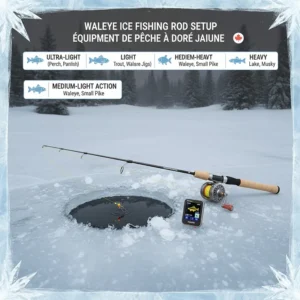
Rod action determines where your rod bends under load—a critical factor that affects sensitivity, hook-setting power, and fish-fighting characteristics. Understanding ice rod action explained properly transforms you from a casual ice angler into a technical hardwater specialist.
The Science Behind Rod Action
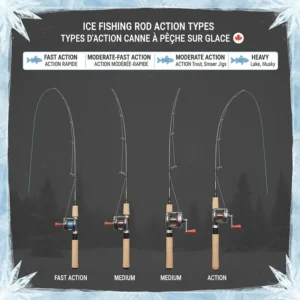
Fast Action: These rods bend primarily in the upper third of the blank. When you lift a fast-action rod, you’ll notice the tip flexes readily while the mid and butt sections remain relatively stiff. This design provides maximum sensitivity for detecting light bites while offering quick power transfer for aggressive hooksets.
Fast action dominates the Canadian ice fishing market for good reason. Our most popular species—walleye, pike, and perch—all benefit from the instant feedback fast action provides. When a walleye taps your jigging spoon 30 feet down through Lake Erie ice, that fast-action tip telegraphs the bite immediately, giving you precious milliseconds to react.
Moderate (Medium) Action: Moderate action rods flex into the middle section of the blank, creating a more progressive bend. This “forgiving” characteristic helps prevent hook pulls with treble hook lures and provides excellent shock absorption when fighting aggressive fish.
Canadian anglers fishing with jigging Rapalas or lipless crankbaits often prefer moderate action. The softer feel helps keep those treble hooks embedded during head-shaking battles. It’s also an excellent choice for light line presentations where a fast action might be too aggressive, causing break-offs.
Slow (Parabolic) Action: These rods bend deeply into the butt section, creating a full-length flex pattern. While less common in modern ice fishing, slow action excels for ultralight presentations and species with delicate mouths.
Spring bobber specialists targeting crappie or whitefish sometimes choose slow action rods. The deep flex amplifies subtle bites and prevents pulling hooks from soft-mouthed species. However, slow action sacrifices hook-setting power, making it less ideal for toothy predators like pike.
Matching Action to Canadian Species
Walleye: Fast or Extra-Fast action
Pike: Fast action
Lake Trout: Fast to Moderate action
Panfish: Extra-Fast to Moderate action depending on presentation
Crappie: Moderate to Fast action
The Temperature Factor
Canadian cold affects rod action more than many anglers realize. Graphite and carbon rods maintain consistent action across temperature ranges better than fibreglass models. When mercury drops to -25°C across Saskatchewan or Manitoba, cheap fibreglass rods become noticeably stiffer, reducing sensitivity. Quality graphite rods from brands like St. Croix and 13 Fishing maintain their intended action even in brutal conditions.
Rod Power and Action: The Dynamic Duo
While we’ve discussed action separately, understanding how rod power and action work together unlocks true ice fishing mastery. These two specifications create a matrix of possibilities that Canadian anglers must navigate.
Power Ratings Decoded
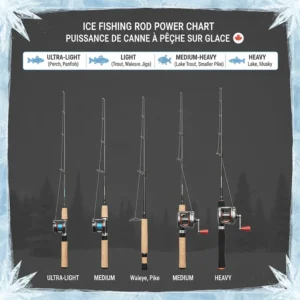
Power refers to the amount of force required to bend the rod—essentially its “stiffness” or “backbone.” The standard power scale runs:
- Ultra-Light (UL)
- Light (L)
- Medium-Light (ML)
- Medium (M)
- Medium-Heavy (MH)
- Heavy (H)
- Extra-Heavy (XH)
Ultra-Light to Light Power: These rods excel for small panfish, perch, and crappie fishing. Canadian anglers targeting jumbo perch on Lake Simcoe or crappie in southern Ontario reservoirs often choose light power rods paired with 2-4 lb test line. The lighter power allows tiny tungsten jigs to load the rod properly for adequate casting distance while providing the sensitivity to detect delicate bites.
Medium-Light to Medium Power: This range represents the Canadian ice fishing standard. Medium power handles everything from aggressive perch to mid-sized walleye and pike. It’s the Goldilocks zone—not too stiff, not too soft. Most anglers building a single-rod arsenal choose medium power for its versatility across species and presentations.
Medium-Heavy to Heavy Power: Lake trout specialists and big pike hunters require this power range. When you’re pulling trophy lakers through 40 feet of water and two feet of ice, you need serious backbone. Heavy power rods also excel for aggressive jigging with larger spoons and heavy jigs.
The Power-Action Relationship
Here’s where things get interesting: power and action combine to create distinct performance characteristics. A medium power, fast action rod behaves completely differently than a medium power, moderate action rod.
Medium Power + Fast Action: This combination dominates Canadian walleye fishing. You get sensitive tip sections for bite detection while maintaining mid-section backbone for solid hooksets. This is the Ugly Stik GX2 and 13 Fishing Widow Maker sweet spot.
Light Power + Extra-Fast Action: Panfish perfection. The light power prevents overpowering small fish, while extra-fast action provides instantaneous bite feedback. Perfect for Canadian crappie specialists.
Medium-Heavy Power + Fast Action: The lake trout standard. Enough power to muscle big fish while maintaining tip sensitivity for detecting strikes in deep water.
Canadian Species Power Guide
Perch: Light to Medium-Light
Crappie: Light to Medium-Light
Walleye: Medium to Medium-Heavy
Pike: Medium-Heavy to Heavy
Lake Trout: Medium-Heavy to Extra-Heavy
Whitefish: Medium-Light to Medium
Line Weight Correlation
Power ratings directly correlate with appropriate line weights. Canadian anglers should match:
- Ultra-Light Power: 1-4 lb test
- Light Power: 2-6 lb test
- Medium-Light Power: 4-8 lb test
- Medium Power: 6-12 lb test
- Medium-Heavy Power: 10-17 lb test
- Heavy Power: 15-25 lb test
Using line significantly outside these ranges reduces your rod’s effectiveness. Too-heavy line on a light rod creates an imbalanced system that reduces sensitivity, while too-light line on a heavy rod doesn’t utilize the rod’s power potential.
Fishing Rod Specifications: Material Science Matters
Modern ice fishing rods incorporate advanced materials that perform dramatically better than options available even a decade ago. Understanding fishing rod specifications at the material level helps Canadian anglers make informed choices for our harsh conditions.
Graphite vs. Fibreglass vs. Composite
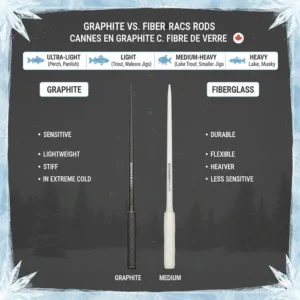
Graphite (Carbon Fibre): Premium rods like the St. Croix Custom Ice and 13 Fishing Widow Maker utilize high-modulus graphite. This material offers exceptional sensitivity—you’ll feel bottom composition changes and the lightest bites. Graphite’s stiffness-to-weight ratio creates incredibly lightweight rods that reduce fatigue during all-day sessions.
The downside? Pure graphite can be brittle in extreme cold. Quality manufacturers address this through proprietary resin systems and construction techniques, but cheaper graphite rods sometimes crack when subjected to -35°C temperatures common across the Canadian prairies.
Fibreglass: The Ugly Stik GX2’s secret weapon. Fibreglass offers incredible durability and flexibility, making it virtually unbreakable. In brutal Canadian conditions where rods get dropped on ice, stepped on, and generally abused, fibreglass survives. The trade-off is reduced sensitivity and increased weight compared to graphite.
Composite Construction: Many modern rods blend graphite and fibreglass. The Ugly Stik line exemplifies this approach—graphite provides sensitivity while fibreglass adds toughness. This combination often represents the best value for Canadian anglers who demand both performance and reliability.
Blank Construction Methods
Solid Blanks: Rods like the St. Croix Avid Glass use solid construction for maximum sensitivity. Solid blanks transmit vibrations more efficiently than tubular designs, making them ideal for light-biting species. They’re also more durable under the lateral stress common when fighting fish in current.
Tubular Blanks: The 13 Fishing Widow Maker features tubular graphite construction. This method reduces weight while maintaining strength. Tubular blanks typically provide faster action and better casting performance than equivalent solid blanks.
Guide Material and Placement
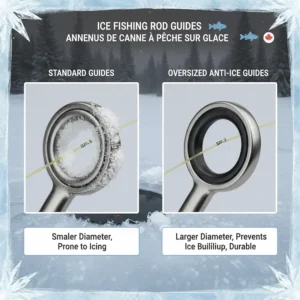
Guides matter more in Canadian ice fishing than most anglers realize. Ice buildup on guides remains our constant enemy. Quality rods feature:
Stainless Steel Guides: Standard on most decent rods. They resist corrosion from road salt exposure during transport and handle ice buildup reasonably well.
REC Recoil Guides: Featured on 13 Fishing rods, these single-foot guides reduce icing while withstanding extreme temperatures. Many Canadian guides swear by them.
Aluminum Oxide Inserts: Protect the guide ring from line wear while providing smooth line flow. Critical for braided line users common among Canadian ice anglers.
Guide spacing also matters. Too many guides add weight and icing points. Too few reduce casting performance and tip action. Quality rods balance these factors through computer modeling and field testing.
Handle Materials for Canadian Cold
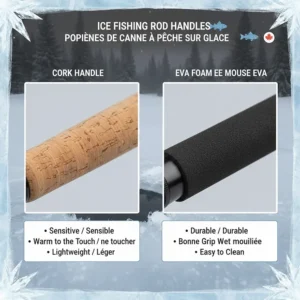
Cork: Premium rods like St. Croix models feature cork grips that remain comfortable in cold conditions. Cork insulates against extreme temperatures and won’t freeze to bare skin—important when you remove gloves momentarily.
EVA Foam: Common on mid-range rods. EVA provides decent insulation and grips well with gloves. The Ugly Stik GX2’s EVA handles have proven themselves across countless Canadian winters.
Rubber Grips: Some budget rods use rubber handles. They work but can become uncomfortably stiff in severe cold and may freeze to wet gloves.
Reel Seat Design
Quality reel seats matter in Canada’s temperature extremes. Metal seats can freeze in upright positions, while cheap plastic seats crack. Look for:
Graphite/Composite Seats: Won’t freeze and handle cold well. Featured on most quality ice rods.
Locking Mechanisms: Double-locking nut designs (like those on St. Croix rods) prevent reels from loosening during use—critical when you’re fighting a big pike.
Equipment Selection Criteria: Building Your Ice Rod Arsenal
Smart Canadian anglers don’t rely on a single rod. Building a strategic arsenal matched to your target species and fishing environments maximizes success while managing costs. Here’s how to approach equipment selection criteria intelligently.
The Three-Rod Strategy
Most Canadian ice anglers fish multiple lines legally (check your provincial regulations—Ontario allows two lines in many zones during ice season). A well-rounded three-rod setup covers virtually all hardwater scenarios:
Rod #1: Versatile Medium Power (28-30″) Your workhorse rod handles everything from aggressive perch to mid-sized walleye. The Ugly Stik GX2 30″ or 13 Fishing Wicked 27″ fills this role perfectly. This rod stays in action 70% of the time, making it worth investing in quality.
Rod #2: Light Power Panfish Specialist (24-26″) Dedicated to finesse presentations and smaller species. The St. Croix Avid Glass 24″ or Shimano Sienna 28″ excels here. This rod handles those days when walleye won’t cooperate but perch and crappie remain willing.
Rod #3: Heavy Power Trophy Rod (32-36″)
For lake trout, big pike, or jumbo walleye in deep water. The Fenwick Elite Tech 30″ MH or St. Croix Custom Ice 36″ provides the backbone for landing fish of a lifetime.
Budget Allocation Strategy
Canadian anglers working within financial constraints should prioritize intelligently:
$200-300 Total Budget:
- Primary rod: $80-120 (mid-tier quality)
- Secondary rod: $50-80 (budget option)
- Specialty rod: $40-60 (entry-level)
Example: 13 Fishing Wicked ($60) + Ugly Stik GX2 ($45) + Shimano Sienna ($26) = $131 CAD
$500-700 Total Budget:
- Primary rod: $150-200 (premium quality)
- Secondary rod: $80-120 (mid-tier)
- Specialty rod: $60-90 (decent quality)
Example: St. Croix Custom Ice ($170) + 13 Fishing Widow Maker ($90) + Fenwick Elite Tech ($75) = $335 CAD
$1000+ Total Budget:
- Build a comprehensive arsenal with multiple specialized premium rods
- Add backup rods for commonly used setups
- Invest in brand-specific series for consistency
Species-Specific Arsenal Building
Walleye-Focused Angler:
- Primary: 13 Fishing Widow Maker 27″ (medium, fast)
- Backup: Ugly Stik GX2 30″ (medium, fast)
- Deep water: St. Croix Custom Ice 32″ (medium-heavy, fast)
Panfish Specialist:
- Ultra-light: St. Croix Avid Glass 24″ (light, extra-fast)
- Versatile: 13 Fishing Wicked 27″ (medium-light, fast)
- Crappie-specific: Fenwick Elite Tech 24″ (light, fast)
Lake Trout Hunter:
- Primary: St. Croix Custom Ice 36″ (medium-heavy, fast)
- Secondary: Fenwick Elite Tech 30″ (medium-heavy, fast)
- Backup: Ugly Stik GX2 36″ (medium-heavy, moderate-fast)
Regional Considerations Across Canada
Ontario Anglers: Focus on versatile medium-power rods for mixed-species fishing. Lake Simcoe’s walleye and perch, Lake Nipissing’s pike, and countless southern lakes demand flexibility.
Prairie Provinces (Manitoba, Saskatchewan, Alberta): Invest in durable construction that handles extreme cold. Fibreglass-reinforced rods like Ugly Stik models prove their worth when mercury hits -40°C.
British Columbia: Longer rods for deeper lakes and larger trout. The 32-36″ range excels in BC’s unique ice fishing environments.
Atlantic Canada: Medium-power versatility for varied species in smaller water bodies. Compact rods for portable shelter fishing predominate.
Northern Territories: Heavy-duty construction for trophy lake trout and arctic char. Don’t cheap out—gear failures in remote locations create serious problems.
Quality vs. Quantity Philosophy
Canadian ice fishing presents a unique dilemma: buy one premium rod or multiple budget options? Here’s the reality: three quality rods beat seven cheap ones every time.
Cheap rods fail in critical moments—hooksets on trophy fish, battles with aggressive pike, or simply from extreme cold exposure. The Shimano Sienna at $26 CAD serves a purpose as a dedicated panfish rod, but building your entire arsenal from budget options leads to frustration.
A single St. Croix Custom Ice rod ($170) will outlast and outperform three $60 no-name rods while providing better warranty coverage. St. Croix’s warranty program has saved countless Canadian anglers money over the years.
Future-Proofing Your Arsenal
Buy rods that accommodate technique evolution. A quality medium-power, fast-action rod serves you well today and adapts to new presentations tomorrow. Hyper-specialized rods become obsolete if your fishing style changes or you relocate to different waters.
Consider rod series that offer comprehensive lineups. Starting with one St. Croix Custom Ice model makes future additions logical—you’ll know the quality and can match complementary lengths and powers seamlessly.
✨ Don’t Miss These Exclusive Deals!
🔍 Take your ice fishing to the next level with these carefully selected rods available across Canada. Check current pricing and availability at your local tackle shop or online retailers. These rods will help you land more fish and enjoy your time on the ice!
Reading Rod Specifications: Decoding Manufacturer Information
Every ice fishing rod displays specifications, but Canadian anglers often struggle to interpret what those numbers actually mean. Let’s decode the mystery.
Understanding Model Numbers
Manufacturers use standardized coding systems. Take the St. Croix model “CI36MF”:
- CI = Croix Ice (series designation)
- 36 = 36 inches (length)
- M = Medium (power)
- F = Fast (action)
The 13 Fishing system follows similar logic. “WM27MF” translates to:
- WM = Widow Maker (model series)
- 27 = 27 inches (length)
- M = Medium (power)
- F = Fast (action)
Line Rating Interpretation
Most quality rods print recommended line weights near the handle. “6-12 lb” means the rod performs optimally with line testing between 6 and 12 pounds. Using 2 lb line on this rod reduces casting distance and sensitivity. Running 20 lb line overpowers the rod’s design.
Canadian anglers using braided line should divide the test rating by approximately 3 for equivalent diameter. A “6-12 lb” rated rod pairs well with 10-20 lb braided line due to braid’s smaller diameter relative to monofilament.
Lure Weight Ratings
“1/16 – 3/8 oz” indicates optimal lure weights. Exceeding the upper limit risks rod damage, while going too light prevents proper rod loading during casts.
Canadian ice anglers primarily vertical jig, making lure weight less critical than for casting applications. However, these ratings still matter for jigging cadence and rod action. A 1/4 oz spoon on a rod rated for 1/32 – 1/8 oz creates sluggish action and reduces sensitivity.
Warranty Information
Premium manufacturers offer comprehensive warranties:
St. Croix: Industry-leading warranty covering defects and some accidental damage. Canadians can register rods online for streamlined service.
Ugly Stik: 7-year warranty on most models. The GX2 series includes rod registration cards.
13 Fishing: Limited warranty varies by model. Check specific product details.
Budget manufacturers typically offer minimal warranties. That $25 rod probably includes a 30-day replacement window at best.
Country of Origin Considerations
Most ice fishing rods sold in Canada are manufactured in Asia regardless of brand. Premium brands maintain strict quality control through their Asian manufacturing partners. What distinguishes St. Croix from no-name brands isn’t where it’s made but rather the quality standards, materials, and design engineering.
Some Canadian-proud anglers seek domestic production. Unfortunately, ice rod manufacturing has largely moved overseas. However, several Canadian custom rod builders create limited-run, handcrafted options for anglers willing to invest significantly more.
Balancing Price and Performance: Canadian Value Analysis
Ice fishing rods range from $20 to $300+ CAD. Understanding where money buys meaningful performance versus diminishing returns helps Canadian anglers maximize value.
The $20-50 CAD Segment
What You Get: Basic functionality, acceptable for casual use Examples: Shimano Sienna ($26-30), entry-level combos
Best For: Kids, absolute beginners, rare occasional use
Rods in this range sacrifice sensitivity, durability, and refined action. Materials are basic fibreglass or low-grade graphite. Guides ice up quickly and handles offer minimal ergonomics.
Canadian Reality Check: If you fish more than 3-4 times per season, invest more. These rods frustrate experienced anglers and handicap your success rate.
The $50-100 CAD Sweet Spot
What You Get: Significant performance improvement, good durability
Examples: Ugly Stik GX2 ($30-60), 13 Fishing Wicked ($45-60), Fenwick Elite Tech ($75)
This range represents exceptional value for Canadian ice anglers. You’re getting composite or quality graphite construction, decent guides, comfortable handles, and respectable warranties. Sensitivity jumps dramatically over cheaper options.
Why This Matters: That $60 13 Fishing Wicked provides 80% of a $150 rod’s performance at 40% of the cost. For many Canadian anglers, this range satisfies all needs without breaking the bank.
The $100-200 CAD Premium Zone
What You Get: Top-tier materials, refined actions, excellent warranties Examples: 13 Fishing Widow Maker ($75-125), St. Croix Avid Glass ($68-80), Fenwick Elite Tech ($75)
Premium graphite, advanced blank construction, and proprietary technologies emerge here. You’re paying for the final 20% of performance—incremental gains that matter to serious anglers.
Who Benefits: Anglers fishing 10+ days per season, guides, tournament competitors, and enthusiasts pursuing trophy fish. The sensitivity difference between a $70 and $120 rod may mean detecting that subtle trophy walleye tap versus missing it entirely.
The $200+ CAD Flagship Tier
What You Get: Absolute best available, cutting-edge technology
Examples: St. Croix Custom Ice ($170+), premium custom builds
This territory delivers bragging rights alongside performance. The quality difference between a $120 and $220 rod exists but becomes increasingly subtle. You’re funding advanced materials research, proprietary manufacturing processes, and brand prestige.
Canadian Perspective: Unless you’re a guide, pro angler, or true enthusiast, this investment isn’t necessary. However, if ice fishing represents your primary winter passion and you fish 20+ days annually, flagship rods provide satisfaction and performance worth the premium.
Evaluating Total Cost of Ownership
Smart Canadians calculate beyond initial purchase price:
Budget Rod ($30):
- Initial cost: $30
- Likely replacement within 2-3 seasons: $30
- Total 6-year cost: $60-90
Mid-Range Rod ($70):
- Initial cost: $70
- Lasts 5+ seasons with proper care
- Total 6-year cost: $70
Premium Rod ($150):
- Initial cost: $150
- Lasts 10+ seasons, often for life
- Total 6-year cost: $150 (but continues serving beyond)
When viewed through this lens, mid-range and premium rods often cost less over time while providing superior performance throughout.
Sales Timing in Canada
Savvy shoppers leverage Canadian retail cycles:
End of Winter (March-April): Retailers clear inventory. Expect 20-40% discounts at Canadian Tire, Bass Pro Shops, and local shops.
Black Friday/Boxing Day: Online retailers offer significant savings. Sports Headquarters and Angling Sports typically run ice fishing promotions.
Off-Season (Summer): While less common, some shops discount hardwater gear to move inventory.
Matching Rods to Canadian Species and Techniques
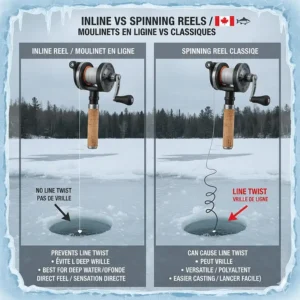
Canada’s ice fishing diversity demands species-specific approaches. Here’s how to match rods to our most popular targets.
Walleye: Canada’s Ice Fishing Staple
Optimal Setup:
- Length: 27-32 inches
- Power: Medium to Medium-Heavy
- Action: Fast to Extra-Fast
- Recommended: 13 Fishing Widow Maker 27″ MF
Walleye dominate Canadian ice fishing from Lake Winnipeg to Lake Simcoe to Lesser Slave Lake. Their bony mouths demand fast-action rods for positive hooksets, while their tendency to tap baits tentatively requires sensitivity.
The 27-30 inch range provides perfect jigging control for classic walleye presentations—jigging spoons, rattle baits, and swimming minnows. Medium power handles 1/8 – 3/8 oz lures common in walleye fishing while maintaining enough backbone for big fish.
Technique Considerations: Most Canadian walleye ice fishing involves vertical jigging 15-40 feet deep. Fast action rods telegraph bottom bounces clearly, helping you maintain precise depth control. When that walleye taps your spoon, the instant feedback lets you execute that quick snap-set critical for hooking through tough mouth tissue.
Yellow Perch: Consistent Canadian Producer
Optimal Setup:
- Length: 24-28 inches
- Power: Light to Medium-Light
- Action: Fast to Extra-Fast
- Recommended: St. Croix Avid Glass 24″ LXF
Perch fishing represents accessible ice angling across Canada. From Georgian Bay to Lake Winnipeg, perch schools provide reliable action. Light power rods pair perfectly with 4-6 lb test and small tungsten jigs.
The extra-fast action on light power rods creates a unique combination—incredibly sensitive tips detect delicate perch bites while maintaining enough backbone for hooksets on #8-#12 hooks.
Canadian Perch Pattern: Jumbo perch (12+ inches) often suspend 1-3 feet off bottom in 20-35 feet of water. This requires precise depth control and instant bite detection. Light rods loaded with 2 lb fluoro and 1/16 oz tungsten provide the presentation control perch demand.
Lake Trout: Canadian Trophy Experience
Optimal Setup:
- Length: 32-42 inches
- Power: Medium-Heavy to Heavy
- Action: Fast
- Recommended: St. Croix Custom Ice 36″ MHF
Lake trout define trophy ice fishing across Canada. These deep-dwelling predators require specialized approaches. The 36-42 inch length range provides critical leverage when pulling fish up through 40+ feet of water column.
Heavy power rods handle the aggressive jigging required with 3/4 – 2 oz tube jigs and spoons. You need serious backbone to drive hooks into tough laker jaws and muscle fish away from bottom structure.
Depth Dynamics: Canadian lake trout often inhabit 40-80 foot depths during ice season. This vertical fishing demands rods that maintain sensitivity despite heavy lures and deep water. Quality graphite construction transmits bottom taps clearly even when working 60 feet down.
Northern Pike: Canadian Power Fishing
Optimal Setup:
- Length: 30-36 inches
- Power: Medium-Heavy to Heavy
- Action: Fast
- Recommended: Fenwick Elite Tech 30″ MH
Pike ice fishing combines aggression with power. These toothy predators crush baits violently, requiring rods with enough backbone to absorb the initial strike without breaking.
Medium-heavy to heavy power handles large spoons, dead baits, and aggressive jigging techniques. The 30-36 inch length provides hookset leverage—critical when setting through pike’s bony jaws with heavier wire hooks.
Canadian Pike Behaviour: Prairie pike often prowl shallow weed edges under the ice. This means fishing 6-15 feet deep with larger presentations. Quick-tip rods allow aggressive jigging cadences that trigger pike strikes while maintaining control during explosive battles.
Crappie: Finesse Canadian Approach
Optimal Setup:
- Length: 24-28 inches
- Power: Light to Medium-Light
- Action: Moderate to Fast
- Recommended: 13 Fishing Wicked 27″ ML
Canadian crappie fishing requires delicate presentations. These soft-mouthed fish demand moderate action rods that prevent hook pulls during fights.
Light power pairs perfectly with 3-4 lb test and 1/32 – 1/16 oz jigs. The moderate action provides enough “give” to keep light-wire hooks embedded in crappie’s paper-thin mouths.
Shelter Fishing Reality: Most Canadian crappie specialists fish from portable shelters using spring bobbers for ultra-sensitive bite detection. The 24-27 inch rod length works perfectly in confined spaces while providing adequate control.
Provincial Regulations and Compliance
Canadian ice anglers must navigate provincial regulations affecting rod usage. While regulations don’t typically restrict rod specifications themselves, they govern how many lines you can fish simultaneously—directly impacting your rod arsenal strategy.
Ontario’s Two-Line Allowance
Most Ontario Fisheries Management Zones (FMZs) allow ice anglers to use two lines simultaneously, provided you stay within 60 metres of each line and maintain clear, unobstructed views. This regulation encourages many Ontario anglers to develop two-rod strategies.
For detailed Ontario ice fishing regulations, visit the Ontario Government’s official ice fishing page.
Western Canadian Variations
Manitoba, Saskatchewan, and Alberta maintain different regulations. Some waters allow single-line fishing only, while others permit multiple lines. Always verify current regulations for your specific water body.
Canadian federal regulations apply to waters under federal jurisdiction. Check Justice Canada’s Fishery Regulations for comprehensive federal rules.
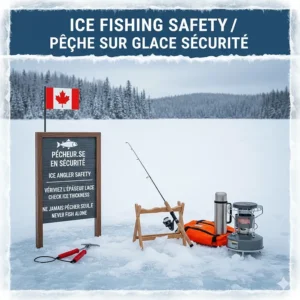
Safety Considerations
Transport Canada doesn’t regulate fishing rods specifically, but provincial regulations mandate safe ice practices. For Ontario anglers, the provincial government provides comprehensive safety guidelines on their fishing regulations page.
Ice hut registration remains mandatory in certain Ontario FMZs (9-12, 14-20). While this doesn’t affect rod choice, it’s critical compliance information for Canadian ice anglers.
Maintenance and Care for Canadian Conditions
Canadian winters punish ice fishing equipment mercilessly. Proper maintenance extends rod life and maintains performance through our harsh conditions.
Post-Trip Care Protocol
Immediate Actions:
- Remove ice buildup from guides using warm (not hot) water
- Wipe down blank, handle, and reel seat with dry cloth
- Loosen reel seat to prevent freezing in locked position
- Store rods horizontally to prevent warping
Weekly (During Active Season):
- Inspect guide inserts for cracks or wear
- Check reel seat threading for damage
- Clean cork handles with mild soap and water
- Apply cork sealer if needed
Storage Strategies
Between Trips: Store rods in temperature-controlled environments. Avoid leaving rods in vehicles overnight—temperature fluctuations stress blank materials and can crack cheap rods.
Use rod tubes or horizontal wall racks. Vertical storage in corners risks tip damage and creates uneven stress on blanks.
Off-Season (April-November):
- Clean thoroughly, removing all salt residue from road exposure
- Store in climate-controlled spaces away from direct sunlight
- Keep away from furnaces and heating vents
- Consider rod socks for multi-piece rods to prevent ferrule damage
Cold Weather Considerations
Preventing Guide Freeze-Up:
- Apply commercial guide coating products (Pam cooking spray works surprisingly well)
- Use thicker diameter lines less prone to icing
- Periodically flex rod to break ice accumulation
- Carry small towel for manual de-icing
Blank Protection: Never expose frozen rods to sudden temperature changes. Bringing a -30°C rod immediately into a warm ice hut can stress materials. Let rods acclimate gradually.
Repair and Warranty
Common Canadian Ice Rod Damage:
- Broken tips from slamming ice hut doors
- Cracked blanks from vehicle door closures
- Damaged guides from ice buildup stress
- Loose reel seats from temperature cycling
St. Croix maintains excellent Canadian warranty service. Register rods at purchase and keep receipts. Their Park Falls, Wisconsin facility handles Canadian warranty claims efficiently.
Ugly Stik’s 7-year warranty covers many failure modes. While not quite St. Croix’s level, it’s solid for the price point.
Budget rods typically offer minimal warranty support. That $25 rod probably isn’t worth shipping costs for warranty claims.
Extending Rod Lifespan
Quality rods last decades with proper care. Many Canadian guides run 10-15 year old St. Croix rods that perform like new.
Keys to Longevity:
- Never leave rods in vehicles during temperature extremes
- Use rod tubes during transport
- Avoid high-sticking fish (bending rod past 90 degrees)
- Don’t use rods as hole punches or walking sticks
- Inspect regularly for micro-cracks
When to Replace
Replace rods showing:
- Visible cracks in blank
- Loose or damaged guides
- Delaminating finish
- Soft spots in blank (indicates internal damage)
- Significant performance degradation
Don’t risk trophy fish battles with compromised equipment. A $70 replacement rod costs far less than losing your personal-best walleye.
Frequently Asked Questions
❓ What is the best length for an ice fishing rod in Canada?
❓ How much should I spend on my first ice fishing rod in Canada?
❓ What's the difference between fast and moderate action ice rods?
❓ Can I use a regular fishing rod for ice fishing in Canada?
❓ What ice rod power do I need for Lake Simcoe walleye?
Conclusion: Your Path to Ice Fishing Rod Mastery
Choosing the right ice fishing rod transforms your Canadian hardwater experience from frustrating to phenomenal. We’ve covered the critical elements—understanding what size ice fishing rod do i need based on species and environment, decoding ice rod action explained through practical applications, and grasping how rod power and action work together to create effective fishing systems.
The ice fishing rod length guide principles we’ve explored apply across Canada’s diverse waters. Whether you’re jigging perch through Georgian Bay ice, battling Lake Winnipeg walleye, or pursuing Saskatchewan pike, matching rod specifications to your target species and techniques dramatically improves success.
For most Canadian anglers building their first serious ice fishing arsenal, I recommend this progression:
Start with one versatile rod: The Ugly Stik GX2 30″ Medium-Fast ($45-60 CAD) or 13 Fishing Wicked 27″ Medium-Light-Fast ($45-60 CAD) covers 70% of hardwater scenarios while building your skills and understanding.
Add species-specific options: Once you’ve identified your primary targets, invest in specialized rods. Walleye specialists benefit from the 13 Fishing Widow Maker, while panfish enthusiasts should explore the St. Croix Avid Glass for finesse presentations.
Upgrade based on experience: As your skills develop and you spend more days on ice, premium rods like the St. Croix Custom Ice series deliver performance improvements that matter to experienced anglers.
Remember that fishing rod specifications matter, but they’re just one component of ice fishing success. Proper rod selection combined with quality reels, appropriate line, effective techniques, and understanding fish behaviour creates the complete package.
Canadian ice fishing offers experiences unmatched anywhere else—the thrill of trophy walleye crashing your spoon through 40 feet of Lake Erie water, the steady action of Georgian Bay jumbo perch, or the raw power of northern lake trout battles. Having the right rod in your hands when these moments arrive makes all the difference.
The equipment selection criteria we’ve explored will serve you well across changing conditions, evolving techniques, and different water bodies. Invest in quality, maintain your equipment properly, and your ice rods will provide decades of reliable service through countless Canadian winters.
Now get out there and put this knowledge to work. Those walleye won’t catch themselves, and the ice season is shorter than we’d like. Tight lines and stay warm out there, fellow Canadian ice anglers! 🎣🍁
Recommended for You
- 7 Best Lake Trout Ice Fishing Rods Canada 2026
- 7 Best Northern Pike Ice Fishing Rods 2026 Canada Guide
- 7 Best Perch Ice Fishing Rods Canada 2026
Disclaimer: This article contains affiliate links to Canadian fishing retailers and Amazon.ca. If you purchase products through these links, we may earn a small commission at no additional cost to you.
✨ Found this helpful? Share it with your fishing buddies! 💬🤗
