
In This Article
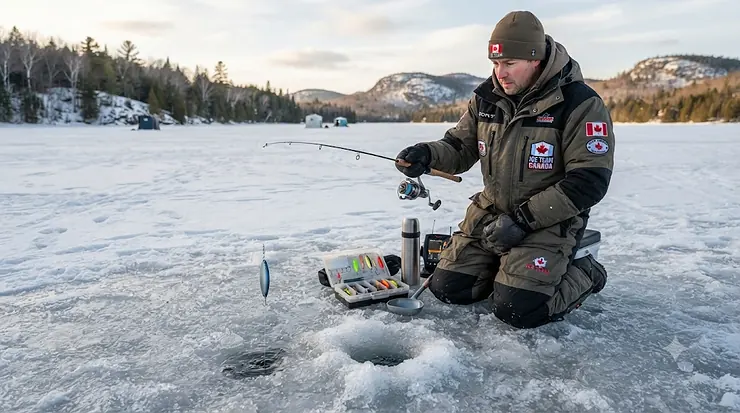
There’s a particular kind of quiet that settles over a frozen lake at 7 a.m., broken only by the crunch of your boots and the whir of an auger biting through eighteen inches of ice. Then you drop a lure down the hole, and everything changes. If you’ve ever wondered why some anglers seem to pull fish through the ice all day while others sit staring at a still line, the answer is often sitting in their tackle box: jigging spoons for ice fishing. These compact, metallic lures do the one thing live bait and plain jigs struggle to replicate on their own — they flash, flutter, and rattle their way into a fish’s field of vision from metres away, in water so cold and clear that subtlety matters more than volume.
As jigging as a fishing technique is generally defined, it relies on a vertical, jerky lure motion rather than a horizontal retrieve — and a spoon is one of the oldest, simplest tools built specifically to exploit that motion. This guide walks through seven real, currently available jigging spoons for ice fishing that Canadian anglers actually use on lakes from Lake of the Woods to the Bay of Quinte, with honest analysis of what each one does well, who it suits, and where it falls short. We’ll also dig into vertical jigging spoons, heavy jigging spoons ice anglers reach for on deep structure, flutter action spoons for finicky fish, and the metallic ice spoons that make up most tackle boxes across the country. No fabricated reviews, no invented ratings — just real specs, real aggregated review sentiment, and straight talk about value in Canadian dollars.
Quick Comparison Table: Top Jigging Spoons for Ice Fishing at a Glance
| Spoon | Action Type | Best Depth | Price Range (CAD) | Best For |
|---|---|---|---|---|
| Northland Buck-Shot Rattle Spoon | Rattle | Shallow–mid | C$8–C$12 | Multi-species, stained water |
| Rapala Jigging Rap | Swimming/darting | Mid–deep | C$6–C$10 | Aggressive walleye and pike |
| Acme Kastmaster | Fast sink, minimal wobble | Any | C$4–C$8 | Budget all-rounder |
| Bay de Noc Swedish Pimple | Flash/flutter | Shallow–mid | C$3–C$6 | Classic multi-species panfish/walleye |
| VMC Rattle Spoon | Compact rattle | Mid | C$5–C$8 | Pressured, finicky fish |
| Clam Leech Flutter Spoon | Slow flutter | Shallow–mid, clear water | C$5–C$7 | Trophy fish in clear lakes |
| HT Enterprises Marmooska Tungsten Jig | Fast-sink, micro-finesse | Deep | C$6–C$10 | Deep suspended fish |
Looking at the table, there’s a clear split between rattle-driven spoons like the Northland Buck-Shot Rattle Spoon and the VMC Rattle Spoon, which lean on sound to pull fish from a distance in low-visibility water, and flash-or-flutter spoons like the Bay de Noc Swedish Pimple and Clam Leech Flutter Spoon, which rely on light and movement instead. If you fish deep basin structure for suspended lake trout or walleye, the density of a tungsten option like the HT Enterprises Marmooska Tungsten Jig matters more than any of that — it gets down fast and stays precise once it’s there. Budget-minded anglers building a first spoon box should note that a handful of these, especially the Acme Kastmaster and Swedish Pimple, cost under C$6 each and still cover most of the situations you’ll run into this winter.
💬 Just one click — help others make better buying decisions too!😊
Top 7 Jigging Spoons for Ice Fishing: Expert Analysis
1. Northland Buck-Shot Rattle Spoon — loudest rattle for calling fish from a distance
The Northland Buck-Shot Rattle Spoon is built around a brass “buck-shot” rattle chamber that turns every lift-fall jigging motion into a nerve-jarring vibration fish can pick up from well outside their visual range. It’s molded from metal with a UV-enhanced, optically brightened finish, and it’s sold across a range of weights that scale from panfish-friendly 1/8 oz up to 1/2 oz for bigger water. What that weight spread means in practice is you can fish the same spoon family whether you’re chasing perch in eight feet of water or working a deep walleye hole, just by swapping sizes. Based on the design, the rattle is the whole point here: in stained water, under thick snow cover, or during low-light dawn and dusk windows, sound does a lot of the work that flash normally handles in clear water. Canadian bass pro and guide Jeff Gustafson has called it his favourite all-around ice bait for perch, walleye, and whitefish on Lake of the Woods, and reviewers on Northland’s own site describe having fished the spoon for decades and always keeping a rod rigged with one. That kind of long-term repeat use is a stronger signal than a five-star rating spike.
Pros:
- ✅ Rattle chamber calls fish from a wide radius in dark water
- ✅ Broad weight range covers panfish through big lake trout
- ✅ Trusted by guides as a genuine multi-species workhorse
Cons:
- ❌ Less of an edge in gin-clear water where flash outperforms sound
- ❌ Stock treble hooks need regular sharpening after repeated strikes
At around C$8–C$12 for a small pack, the value case is strong for anyone fishing multiple species out of one hole.
2. Rapala Jigging Rap — best swimming, darting action under the hole
Where most spoons flutter straight down, the Rapala Jigging Rap swims in tight, tantalizing circles thanks to its balanced, weighted minnow profile and single reversed hooks paired with a centre treble. That’s a meaningfully different presentation from a flat spoon fall, and it’s why so many ice guides keep one tied on for suspended, aggressive fish. The horizontal darting action mimics a disoriented baitfish rather than a wounded one, which tends to trigger reaction strikes from predators that have already ignored a dozen slower presentations that morning. Based on the spec sheet, sizes run from small W2s for panfish and trout up to W9s built for pike and big walleye, so the lure scales with target species the same way the Buck-Shot Spoon does. Tackle retailers consistently describe it as an ice-fishing mainstay rather than a novelty, and it’s one of the rare lures that transitions straight into open-water fishing once the ice melts, which stretches its per-use value further than a spoon that only sees action for three winter months.
Pros:
- ✅ Circular swimming action stands out from standard spoon fall
- ✅ Doubles as an effective open-water lure after ice-out
- ✅ Wide size range for panfish through trophy pike
Cons:
- ❌ Costs more per unit than a plain rattle or flutter spoon
- ❌ Side-mounted hooks catch on wood and rock structure more easily
Expect to pay in the C$6–C$10 range depending on size, which is reasonable given the dual-season use.
3. Acme Kastmaster — best budget brass all-rounder
The Acme Kastmaster has been a tackle-box staple for decades, and its reputation comes down to one simple engineering trick: a balance ratio that keeps the lure falling straight and fast without the line twist that plagues cheaper stamped spoons. It’s precision-machined from solid brass, which means it genuinely won’t bend, break, or corrode the way a soft alloy spoon can after a season of banging bottom. What most buyers overlook about this model is just how wide its weight range runs — from a featherlight 1/32 oz up to a full ounce — so a single Kastmaster family can cover finesse panfish presentations and deep, heavy jigging spoons ice duty on the same trip. Reviewers on tackle retail sites consistently mention hook durability specifically, with some noting years of use without a bent treble even on larger fish. That durability is the real selling point: this isn’t a flashy spoon, it’s a dependable one you can hand down a rod length at a time to a kid learning to jig.
Pros:
- ✅ Solid brass build resists bending and corrosion for years
- ✅ Balanced fall eliminates line twist other spoons cause
- ✅ Enormous weight range from panfish to deep walleye duty
Cons:
- ❌ No built-in rattle, so it underperforms in murky water
- ❌ Plain finishes offer less flash than dedicated UV spoons
At roughly C$4–C$8, it’s one of the best value entries in this whole lineup.
4. Bay de Noc Swedish Pimple — most trusted classic flash spoon
Few lures have earned the kind of multi-generational trust the Bay de Noc Swedish Pimple commands. Originally based on Swedish jigging lures and produced since the mid-1950s, it was later named one of Field & Stream’s 50 Greatest Lures of All Time, and it’s still hand-finished from solid brass today. The design is deceptively simple: an oblong, concave brass body with a coloured flipper attached off-centre, which creates an erratic, injured-baitfish flutter rather than a smooth, predictable fall. Here’s what the spec sheet won’t tell you, but generations of ice anglers have figured out — repositioning that flipper onto the flat side of the spoon kicks the action up for more aggressive fish, while leaving it as-is gives a subtler wobble for pressured, wary ones. It’s sold in sizes 2 through 14, so the same basic lure works for stocked pond panfish and big lake trout alike. Aggregated reviews across tackle retailers repeatedly mention multi-species success — pickerel, largemouth, trout, walleye, crappie — often from anglers who’ve fished the same handful of Pimples for years without replacing them.
Pros:
- ✅ Century-plus proven flash-and-flutter action across species
- ✅ Adjustable flipper position lets you tune aggressiveness on the ice
- ✅ Inexpensive enough to stock a dozen colours and sizes
Cons:
- ❌ No rattle option limits its edge in stained water
- ❌ Small sizes need careful hook maintenance for soft-mouthed panfish
At C$3–C$6, it’s arguably the cheapest way to build real confidence on the ice this season.
5. VMC Rattle Spoon — best for finicky, pressured fish
The VMC Rattle Spoon takes a different approach to sound than the Buck-Shot: a compact brass resonance chamber packed with multiple beads that produces what several gear reviewers describe as an unmatched rattle relative to its size class. That distinction matters on heavily pressured lakes near urban centres, where fish have already heard every loud, generic rattle spoon in the region. Based on the spec comparison, the compact profile keeps the overall lure smaller than the Buck-Shot while still delivering a strong acoustic signature, which lets you run a subtler silhouette without giving up the calling power that draws fish in from distance. What most buyers overlook is that rattle spoons aren’t just for murky water — on heavily fished lakes, a slightly different rattle frequency than what everyone else is using can be the deciding factor between a dead line and a bent rod. Reviewers consistently point to the resonance chamber as the standout feature, describing it as louder and more distinct than comparable rattle spoons on the market.
Pros:
- ✅ Distinct rattle frequency stands out on heavily pressured lakes
- ✅ Compact profile suits finesse presentations for wary fish
- ✅ Strong reputation specifically for triggering reluctant biters
Cons:
- ❌ Sits at the higher end of the price range per lure
- ❌ Benefits from colour and cadence rotation on hard-fished water
Expect C$5–C$8 per spoon, which is fair for a purpose-built finesse tool.
6. Clam Leech Flutter Spoon — best flutter action for clear-water trophy fish
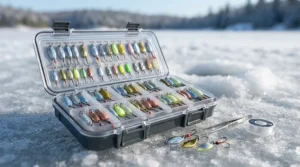
Flutter spoons play a different game than rattle spoons, and the Clam Leech Flutter Spoon is one of the clearest examples of the category. It’s noticeably lighter than a standard jigging spoon of the same length, so when you feed it slack line, it doesn’t drop straight down — it flutters side to side on the way, throwing flash and subtle vibration the whole time rather than in one quick burst. That slower, more theatrical fall is exactly what makes it a visual lure first and an acoustic one a distant second, which is why it shines specifically in clear water where fish can track movement from well outside strike range. Aggregated gear reviews describe it as a favourite specifically in clear-water conditions, with multiple sources noting better results on larger, more cautious fish than on aggressive small panfish. On paper, this means the flutter spoon rewards patience: let it fall on a slack line, watch your electronics, and resist the urge to rip it aggressively the way you would a rattle spoon.
Pros:
- ✅ Slow, theatrical flutter excels specifically in clear water
- ✅ Strong visual flash triggers reaction strikes from cruising fish
- ✅ Reported success skews toward larger, trophy-class fish
Cons:
- ❌ Slower fall makes it less efficient for fast fish-locating
- ❌ Underperforms rattle spoons in stained or dark water conditions
Priced around C$5–C$7, it’s a smart complement to a rattle spoon rather than a full replacement.
7. HT Enterprises Marmooska Tungsten Jig — best deep water jigging spoon for finesse control
When the fish are suspended thirty, forty, or fifty feet down over deep basin structure, sink speed and presentation control matter more than flash or rattle, and that’s where the HT Enterprises Marmooska Tungsten Jig earns its spot. Tungsten is significantly denser than lead, which means this jig packs real weight into a small, bullet-shaped body — it drops fast enough to reach deep water or fast-moving schools before they move off, without the bulky profile a lead spoon of equivalent weight would need. What that density means in practice is unusually precise micro-presentation control even at depth, where a lighter spoon would drift and lose contact with the bottom or the fish’s strike zone. It’s available in deluxe hand-painted, two-tone finishes designed for visibility against sonar and low light. Because HT Enterprises markets this primarily through tackle retailers rather than consumer review platforms, verified customer review volume is thinner here than for legacy brands like Kastmaster or Swedish Pimple — worth knowing if independent social proof matters to your buying decision, though the tungsten-versus-lead physics behind the sink-rate claim are well established.
Pros:
- ✅ Tungsten density reaches deep, suspended fish quickly
- ✅ Compact profile keeps heavy weight in a small, precise package
- ✅ Two-tone finishes show up clearly on sonar and flashers
Cons:
- ❌ Small hooks on the tiniest sizes can bend on larger fish
- ❌ Premium tungsten pricing runs higher per lure than brass options
Budget C$6–C$10 depending on pack size, with tungsten commanding a premium over lead or brass equivalents.
Practical Usage Guide: Setting Up and Fishing Your Jigging Spoon
Getting a jigging spoon rigged correctly matters more than most first-time ice anglers expect. Start with a short, sensitive ice rod — 24 to 32 inches — paired with a reel spooled in 4 to 8 lb fluorocarbon or a fluorocarbon leader over braid, since fluoro’s low visibility matters in the clear water under ice far more than it does in summer. Tie your spoon on with a small, high-quality snap rather than a direct knot; this lets you swap lure weight and colour in seconds without re-tying in numb fingers, and it preserves the spoon’s natural fluttering action, which a stiff knot can dampen. In your first 30 days on a new lure, resist the temptation to jig constantly — the most common mistake is over-working the spoon. Drop it to bottom, reel up a foot or two, then work a mix of aggressive rips and long pauses, watching your electronics for how fish react to each cadence. Maintenance is minimal but not optional: rinse spoons in fresh water after each trip to prevent hook corrosion, check treble points against your thumbnail every few outings, and re-sharpen or replace hooks the moment they start to dull, since a dull hook loses more fish than any lure choice ever will. One optimization trick many anglers miss — tipping the treble with a small piece of minnow head or a waxworm on an otherwise plain spoon adds scent without meaningfully hurting the action, particularly on the Northland Buck-Shot Rattle Spoon and Bay de Noc Swedish Pimple, both of which were designed with bait-tipping in mind.
Real-World Scenarios: Which Jigging Spoon Angler Are You?
Picture a college student in Thunder Bay with two hours between classes and a bus pass instead of a truck. Budget and portability matter more than variety, so a small box built around the Acme Kastmaster and Bay de Noc Swedish Pimple covers panfish and the occasional walleye for under C$20 total, with zero wasted trips re-tying gear in the cold. Now picture a retired angler in Manitoba who fishes five days a week on the same lake and has watched every generic spoon get “figured out” by pressured fish over a long season — for that angler, the VMC Rattle Spoon‘s distinct resonance and the ability to rotate colours weekly is worth the extra couple of dollars per lure, because consistency on hard-fished water comes from subtle variation, not from having the single best spoon. Finally, picture a family group renting a hut on Lake Simcoe for a weekend, targeting whatever bites for the kids and chasing lake trout in deep basin water once the kids nap. That trip calls for two very different tools in one box: the Northland Buck-Shot Rattle Spoon for shallow, active perch near the hut, and the HT Enterprises Marmooska Tungsten Jig for someone willing to work deep structure while the rest of the group stays put. Matching the spoon to the actual trip — not just the target species — is the real skill here.
How to Choose Jigging Spoons for Ice Fishing
Jigging spoons for ice fishing are compact, weighted metal lures worked with a vertical lift-and-fall motion through a hole in the ice to trigger reaction strikes from fish using flash, vibration, and sound. Choosing the right one comes down to matching a handful of variables to your actual conditions rather than grabbing whatever’s on the endcap:
- Match weight to depth and current. Light spoons (1/16–1/8 oz) suit shallow panfish water; heavier spoons (1/4 oz and up) reach deep basins or hold position in current without drifting off target.
- Choose action based on water clarity. Rattle spoons like the Northland Buck-Shot Rattle Spoon win in stained or dark water; flutter and flash spoons like the Clam Leech Flutter Spoon win when visibility is high.
- Consider hook style and bait-tipping needs. Trebles hold bait securely for scent presentations; single hooks reduce snagging on wood or rock structure.
- Account for target species mouth size and aggression. Panfish need small, light spoons; pike and lake trout demand bigger profiles that won’t get engulfed and ignored.
- Factor in your electronics. If you’re running a flasher or sonar, a spoon that produces a strong, readable signal — like tungsten’s dense return — helps you track lure position against fish marks in real time.
- Budget for a rotation, not a single lure. According to spoon lure fundamentals, the effectiveness of a spoon comes from the light reflection and turbulence it creates, both of which fish can grow conditioned to — carrying two or three action types hedges against that.
- Check your provincial regulations before you drop a line. Barbless hook rules, line limits, and species-specific gear restrictions vary by province and water body.
Vertical Jigging Spoons vs Live Bait and Jig Presentations
Vertical jigging spoons and traditional live-bait or plain-jig setups aren’t really competing tools — they solve different problems, and understanding the difference changes how you fish a day on the ice. A plain jig tipped with a minnow relies almost entirely on scent and subtle movement to convince a fish that’s already nearby to commit; it’s a finesse tool for neutral or negative fish that need convincing at close range. A vertical jigging spoon, by contrast, is a search-and-trigger tool — its flash, flutter, or rattle is built to pull fish in from well outside their immediate strike zone, then convert that curiosity into a reaction bite. That’s why so many experienced ice anglers run both: a spoon to locate and call fish from a wider radius, then a switch to bait or a small jig if the spoon draws fish in that won’t commit to a big metal profile. Reviewers and guides alike tend to agree that spoons out-produce plain jigs specifically when fish are aggressive or when covering unfamiliar water quickly, while bait wins the day when fish are lethargic, cold-stressed, or heavily pressured. The honest answer to “which is better” is that a two-rod spread — one spoon, one bait or finesse jig — consistently outperforms committing to either presentation alone.
✨ Ready to build your spoon box? Compare current availability and pick the action type your lake needs most.
Heavy Jigging Spoons for Ice: Matching Weight to Depth and Current
Heavy jigging spoons ice anglers reach for — generally 1/4 oz and up, running to a full ounce or more on big water — solve a specific problem: getting down fast and staying in contact with bottom or a target depth without drifting off in current or wind-driven under-ice flow. The Acme Kastmaster‘s wide weight range up to a full ounce and the larger sizes of the Bay de Noc Swedish Pimple both fall into this category, and the practical benefit is twofold. First, a heavier spoon punches through the water column faster, which matters on a cold morning when you’re trying to locate active fish across several holes before conditions change. Second, extra weight keeps the spoon working properly on structure with any current — river mouths, narrows between lake basins, or areas near culverts — where a light spoon would simply swing sideways and lose its intended action. What the spec sheet won’t tell you is that heavier spoons also transmit more feedback up the line, so subtle bottom contact and structure changes are easier to feel through a sensitive rod tip, which matters when you’re trying to jig just off bottom without constantly snagging.
Deep Water Jigging Spoons: Reaching Suspended Fish and Structure
Deep water jigging spoons face a different challenge than shallow presentations: by the time a lure reaches 30, 40, or 50 feet, its action has often been dampened by the sheer amount of line and water resistance involved, and the angler has lost some direct feel for what’s happening at the business end. This is precisely why tungsten options like the HT Enterprises Marmooska Tungsten Jig earn their premium price — tungsten’s higher density means more weight in a smaller package, which sinks faster and telegraphs bottom contact and strikes more clearly through the line than an equivalent lead or brass spoon would. Reviewers consistently point to sonar visibility as an underrated benefit here too: a dense tungsten body throws a cleaner, more distinct mark on a flasher, which makes it easier to confirm your lure is actually in the strike zone relative to fish marks rather than guessing. For lake trout suspended over deep basin water, or walleye holding on a mid-lake hump well off the drop, a purpose-built deep spoon isn’t a luxury — it’s the difference between fishing blind and fishing with real feedback on every drop.
Flutter Action Spoons vs Rattle Spoons: What to Expect
Drop a flutter spoon and a rattle spoon down adjacent holes on the same day, and you’ll notice the difference in the first thirty seconds. A rattle spoon like the Northland Buck-Shot Rattle Spoon or VMC Rattle Spoon drops with intent, its internal chamber clattering audibly enough that you can sometimes hear it through the ice, and the falling action tends to be tighter and more direct. A flutter spoon like the Clam Leech Flutter Spoon does the opposite: fed slack line, it wanders side to side on the way down, throwing flash without a sound. In practice, what to expect comes down to water clarity and fish mood. In stained water or heavy snow cover cutting light penetration, the rattle spoon’s acoustic signature does the heavy lifting of getting noticed at all. In clear water — the kind you find on many Canadian Shield lakes — fish can already see a lure from a long way off, so the flutter spoon’s exaggerated, visual fall tends to out-produce sound, especially on larger, warier fish that have learned to associate a loud rattle with pressure. Neither approach is universally better; the honest takeaway from comparing the two side by side is that conditions, not personal preference, should decide which one goes on your line first.
Metallic Ice Spoons: Why Brass, Tungsten and Zinc Fish Differently
Not all metallic ice spoons are built from the same material, and the choice affects more than just durability. Brass, used in the Acme Kastmaster and Bay de Noc Swedish Pimple, is soft enough to machine precisely and holds a bright, warm-toned flash that many anglers find especially effective on overcast days or in slightly stained water — it reflects light differently than cooler-toned metals. Tungsten, used in the HT Enterprises Marmooska Tungsten Jig, is roughly twice as dense as lead, which is the entire reason finesse anglers pay a premium for it: the same physical size delivers dramatically more weight, letting you fish a small, subtle profile at a depth or sink rate that would otherwise require a much bigger lure. Zinc alloy spoons, common in entry-level and promotional tackle, are lighter and less expensive to produce, but they dent and lose their finish faster under repeated bottom contact — a real consideration if you’re fishing rocky structure regularly. It’s the oblong, concave shape combined with material density that produces the wobble and light reflection fish key in on, so material choice isn’t cosmetic — it directly changes how the lure falls, flashes, and feels in your hand on a cold morning.
Common Mistakes When Buying Jigging Spoons for Ice Fishing
The single most common mistake is buying one spoon type and assuming it’ll cover every situation — a rattle spoon and a flutter spoon solve different problems, and neither replaces the other on a versatile day of ice fishing. A close second is ignoring weight-to-depth matching: anglers routinely fish a 1/8 oz panfish spoon in 40 feet of water and wonder why they can’t feel bottom, when the honest fix is simply sizing up. Another frequent misstep is over-buying colour variety before establishing a baseline — five colours of one proven spoon like the Bay de Noc Swedish Pimple will out-produce fifteen colours spread across five untested brands, at least until you’ve logged real time on your specific lake. Buyers also tend to underestimate hook maintenance, treating trebles as disposable when a few strokes with a hook file between trips would extend a good spoon’s working life by seasons rather than weeks. Finally, and this one’s specific to Canadian buyers: skipping the check on provincial hook and line regulations before purchase, only to find a favourite treble-hooked spoon isn’t legal on a barbless-only fishery, is an avoidable and common frustration. The Fisheries and Oceans Canada recreational fishing portal is a solid starting point for confirming which authority governs the water you’re fishing before you buy a box full of gear that turns out to be restricted.
Long-Term Cost & Maintenance
Judged purely on upfront price, jigging spoons look inexpensive individually — most of the seven featured here run C$3 to C$12 — but the real cost-per-use calculation depends heavily on durability and how many species one spoon can cover. A solid brass Acme Kastmaster, properly rinsed and hook-maintained, can realistically last several seasons without replacement, which puts its true cost-per-outing well below a cheaper zinc spoon that dents and needs replacing every year. Tungsten options like the HT Enterprises Marmooska Tungsten Jig cost more upfront, but their resistance to bending and their precision presentation reduce the “extra spoons bought to compensate for a bad one” problem that inflates the real cost of budget tackle. Total cost of ownership for a functional starter spoon box — covering rattle, flutter, and deep-water categories across five or six lures — typically lands in the C$35–C$60 range in Canadian dollars, which compares favourably to a single high-end rod or a season of live bait purchases. The maintenance side of the ledger matters just as much as the purchase price: a five-minute rinse-and-inspect routine after each outing is the single highest-leverage habit for extending any spoon’s working life, brass or tungsten alike.
Safety and Regulations: Ice Fishing in Canada
No lure comparison matters if the ice underneath you isn’t safe, and Canadian ice conditions vary enough by region, snow cover, and current that no single number is a guarantee. As a starting reference point, Outdoor Canada’s ice-safety guidance notes that clear, solid ice generally needs to be at least four inches thick to support a person walking, with considerably more required for snowmobiles, ATVs, or vehicles — and that white, “candled,” or slushy ice is meaningfully weaker than clear blue ice at the same thickness. Always test with a spud bar or auger as you go rather than trusting a single measurement near the shore, since thickness can vary significantly across one lake, especially near inflows, outflows, and pressure ridges. On the regulatory side, recreational fishing in Canada is managed through a mix of federal and provincial authority, and most inland ice fishing falls under provincial licensing, seasons, and gear rules that differ from Ontario to Manitoba to Quebec. Before heading out, confirm current season dates, possession limits, and any barbless-hook or single-hook restrictions for your specific water body, since these rules change by province and sometimes by lake.
FAQ
❓ What is the best jigging spoon for ice fishing walleye?
❓ Do jigging spoons work for perch through the ice?
❓ What size jigging spoon should I use in deep water?
❓ Do I need a rattle in a jigging spoon?
❓ How much do good ice fishing jigging spoons cost in Canada?
Conclusion
Building a jigging spoons for ice fishing collection doesn’t require guesswork once you understand what each action type is actually doing under the ice. A rattle spoon like the Northland Buck-Shot Rattle Spoon or VMC Rattle Spoon earns its place calling fish through stained water and low light, a flutter spoon like the Clam Leech Flutter Spoon takes over when clarity rewards a slower, more visual presentation, and dependable brass all-rounders like the Acme Kastmaster and Bay de Noc Swedish Pimple cover nearly everything in between without straining a budget. For serious deep-water work, the HT Enterprises Marmooska Tungsten Jig solves a problem lighter spoons simply can’t, while the Rapala Jigging Rap‘s swimming action gives you a genuinely different tool when fish want to chase rather than react to a fall. None of these seven is universally “the best” — the honest answer, backed by real specs and real aggregated review sentiment rather than hype, is that the right spoon depends on your water, your target species, and the conditions on the day you’re standing over the hole.
✨ Don’t Miss These Exclusive Deals!
🔍 Take your ice fishing setup to the next level with these carefully selected jigging spoons. Click on any highlighted item to check current pricing and availability on amazon.ca. The right spoon box turns a slow day on the ice into stories you’ll be telling next season!
Recommended for You
- Pike Jigs for Ice Fishing: 7 Proven Picks to Dominate 2026
- Jigging Raps for Walleye Ice Fishing: 7 Top Picks for 2026
- 7 Best Walleye Jigs for Ice Fishing in 2026: Expert Picks
Disclaimer: This article contains affiliate links. As an Amazon Associate, I earn from qualifying purchases. If you purchase products through these links, we may earn a small commission at no additional cost to you.
✨ Found this helpful? Share it with your friends! 💬🤗
