In This Article
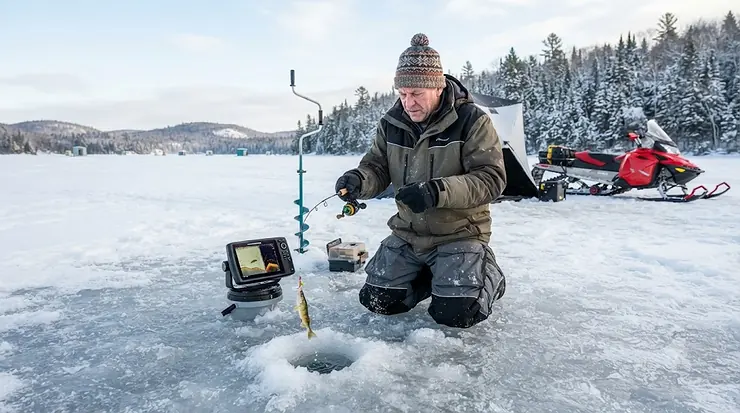
There’s a particular kind of quiet that settles over a frozen lake at 7 a.m., broken only by the crunch of boots and the faint whine of an auger. That silence is exactly why walleye jigs for ice fishing matter so much — in that stillness, presentation is everything, and the wrong jig sitting dead in the water is just an expensive piece of painted lead. Walleye are notoriously moody through the ice: aggressive one hour, locked-jaw the next, and the jig dangling twelve feet down is often the only variable you can control. This guide breaks down seven real, currently available jigs and gliding baits that Canadian ice anglers actually reach for, why each one earns its spot in a hardwater box, and how to match jig type, weight, and colour to the water in front of you. We’ll dig into 1/4 oz walleye jigs for that do-everything middle ground, glow walleye ice jigs for low-light bites, and the heavier gear you need once the depth finder reads past 25 feet. According to the Wikipedia entry on the species, walleye are a perciform fish native to most of Canada, prized as much for the dinner plate as for the fight — which is exactly why so much gear exists to catch them.
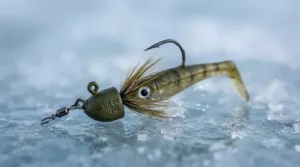
What is a walleye jig? A walleye jig is a weighted hook — usually a lead, tungsten, or zinc head molded onto a hook shank — designed to sink vertically and be worked with short lifts and drops, either bare, tipped with a minnow head, or dressed with soft plastic, to trigger strikes from bottom-oriented predators.
Top Walleye Ice Jigs at a Glance: Quick Comparison Table
Before we get into the weeds, here’s a fast-reference snapshot of the seven picks, their approximate street price in Canadian dollars, and who each one suits best.
| Jig | Type | Typical Weight | Price Range (CAD) | Best For |
|---|---|---|---|---|
| Northland Fire-Ball Jig | Ball-head jig | 1/16–1/2 oz | under C$10 (multi-pack) | Budget-friendly all-rounder |
| Rapala Jigging Rap | Gliding/swimming bait | W3–W9 | C$8–C$14 each | Aggressive, deep, suspended fish |
| VMC Mooneye Jig | Round-head jig | 1/8–1/2 oz | C$6–C$12 (pack) | Natural swim with soft plastics |
| Northland Puppet Minnow | Gliding bait | 1/4–3/8 oz | C$9–C$13 each | Compact, erratic reaction bites |
| Clam Leech Flutter Spoon | Flutter spoon | 1/16–3/8 oz | C$7–C$11 (pack) | Glow finishes, low light |
| Custom Jigs & Spins Slender Spoon | Slim vertical spoon | 1/8–1/2 oz | C$6–C$10 (pack) | Deep water, precise drop |
| Bay de Noc Swedish Pimple | Classic flutter spoon | 1/8–3/4 oz | C$5–C$9 each | Heavy, deep-basin search bait |
Looking at the table, the spread between the Northland Fire-Ball Jig and something like the Custom Jigs & Spins Slender Spoon isn’t really about which is “better” — it’s about matching action to conditions. Budget-conscious anglers building a first tackle box get most of their bites covered with the Fire-Ball Jig and the Swedish Pimple alone, while anglers chasing suspended fish over 30-foot basins will lean harder on the Rapala Jigging Rap and the Northland Puppet Minnow for their aggressive glide-and-fall action.
💬 Just one click — help others make better buying decisions too!😊
Top 7 Walleye Jigs for Ice Fishing: Expert Analysis
1. Northland Fire-Ball Jig — best all-around budget standby
The Northland Fire-Ball Jig has been a fixture in Canadian tackle boxes for decades, and it earns that reputation the boring way: by working. This is a simple painted ball-head jig with a short-shank hook, available from 1/16 oz up to 1/2 oz, which means it scales from shallow weed edges to moderate depths without you needing five different brands. The 1/4 oz and 3/8 oz sizes are the ones most Ontario and Prairie anglers reach for first, since they sink fast enough to stay in the zone without overpowering a light rod tip. Based on the spec comparison with pricier gliding baits, the Fire-Ball’s appeal is really its versatility: tip it with a minnow head for finesse bites or thread on a small plastic body for a more active presentation, and it performs both roles competently rather than excelling narrowly at one. Reviewers consistently report that the round head keeps the hook riding point-up, which cuts down on snags over rocky or sandy bottoms, and the wide colour selection (chartreuse, glow, fire tiger, orange) covers most water clarity situations you’ll encounter on hardwater. What most buyers overlook about this jig is that its hook, while serviceable, is not the sharpest out of the package — a few strokes with a hook file before your first drop noticeably improves hookup ratios. At a price that lets you carry a dozen colours without flinching, this is the jig you hand a beginner and the one veteran anglers still keep tied on as a confidence bait.
Pros:
- ✅ Extremely affordable across a wide weight range
- ✅ Point-up hook design reduces snagging on structure
- ✅ Huge colour selection for any water clarity
Cons:
- ❌ Factory hook benefits from sharpening before use
- ❌ Basic ball-head action lacks the erratic flash of gliding baits
The Northland Fire-Ball Jig typically runs under C$10 for a multi-pack, making it one of the best value entries in this whole lineup — for the money, it’s hard to justify not having a handful in every size.
2. Rapala Jigging Rap — best for aggressive, deep, or suspended walleye
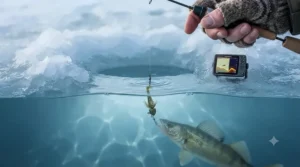
If there’s one bait that shows up on nearly every serious walleye angler’s must-have list, it’s the Rapala Jigging Rap. This isn’t a traditional lead-head jig at all — it’s a horizontally balanced, center-weighted swimming lure with a front and rear hook plus a belly treble, designed to dart outward on a sharp upward snap and glide back in a wide circle as it falls. Sizes run from the tiny W3 up through the W9, with W5 through W7 being the sweet spot for most walleye scenarios in 15 to 35 feet of water. On paper this means the Jigging Rap covers more water column per drop than a stationary jig, because its erratic glide can call fish in from several feet away rather than waiting for them to swim directly under your hole. Reviewers and guides alike note that the technique takes a little practice — a hard snap followed by a controlled fall, letting the bait settle completely before the next lift — but once dialed in, it produces some of the most explosive strikes you’ll see through the ice, often as the bait glides rather than on the pause. This lure genuinely shines for suspended fish marked on a flasher over deep basins, which makes it a natural complement to a deep water walleye jigs strategy later in this guide. The one honest trade-off: its two-hook-plus-treble rigging means more terminal tackle to manage in cold fingers, and it can hang up more easily in heavy weed cover than a simple ball jig.
Pros:
- ✅ Wide, erratic glide triggers reaction strikes from neutral fish
- ✅ Excellent for suspended walleye marked on electronics
- ✅ Available in sizes for everything from perch to trophy walleye
Cons:
- ❌ Steeper learning curve than a standard lift-and-drop jig
- ❌ Multiple hook points snag more in weeds or debris
Expect to pay in the C$8–C$14 range per bait, and given how often it’s cited as a top producer in deep-water walleye scenarios, most anglers consider that a fair trade for the strike rate.
3. VMC Mooneye Jig — best for natural swimming action with soft plastics
The VMC Mooneye Jig takes a different approach from the ball-head crowd: its rounded, slightly flattened profile is built specifically to let a paddle-tail or minnow-style soft plastic swim with a subtle side-to-side wobble rather than just sinking straight down. Weights typically run from 1/8 oz to 1/2 oz, and the hook is a VMC-branded model known for holding a sharp point through several fish. What the spec sheet won’t tell you, but reviewers note, is that this jig performs best paired specifically with a soft plastic rather than fished bare or with just a minnow head — the head shape is doing a lot of the work to create that swimming action, and you lose some of the benefit if you strip it down to bait alone. For anglers targeting neutral or slightly negative walleye that want to see a horizontal profile rather than a straight vertical presentation, the Mooneye Jig fills a real gap between the Fire-Ball’s simplicity and the Jigging Rap’s aggressive glide. Based on the spec comparison, its mid-weight range also makes it a strong companion piece to a 1/4 oz walleye jigs rotation, giving you a slightly heavier, faster-sinking option once wind or current on a river system starts pulling your line off vertical.
Pros:
- ✅ Shaped head creates natural swimming action with plastics
- ✅ Sharp, durable VMC hook holds up over repeated fish
- ✅ Fills the gap between finesse jigs and aggressive glide baits
Cons:
- ❌ Needs a soft plastic trailer to perform at its best
- ❌ Less effective fished completely bare compared to a ball jig
Priced around C$6–C$12 for a small pack depending on retailer, the VMC Mooneye Jig is a smart mid-range addition once your box already has the basics covered.
4. Northland Puppet Minnow — best compact glide bait for pressured fish
The Northland Puppet Minnow is a smaller, more compact cousin to the gliding-jig family, built to imitate a wounded baitfish with a tight, erratic dart-and-glide action rather than the wide circles of a larger swimming lure. Available in the 1/4 oz to 3/8 oz range that most ice anglers favour, it’s dressed with a soft-plastic tail on the rear treble for extra flash and movement. Here’s what to weigh: on pressured lakes where walleye have seen every spoon and jigging rap in the box, a smaller, subtler glide bait like this one can be the difference-maker, since its shorter profile and tighter action reads as less threatening while still triggering that reflexive strike response. Reviewers consistently note that a quick upward snap followed by a horizontal fall — rather than a full aggressive rip — gets the most consistent results, keeping the lure in the strike zone longer than a straight vertical drop would. It’s effective through the ice and just as useful for open-water vertical jigging in early season or late fall, so it earns its keep beyond just the winter months. The compact size does mean smaller hooks, which can occasionally cost you a hookset on a genuinely large fish if your drag isn’t set properly.
Pros:
- ✅ Subtle glide works well on pressured, heavily fished lakes
- ✅ Compact profile still triggers reaction strikes reliably
- ✅ Versatile for both hard water and open-water vertical jigging
Cons:
- ❌ Smaller hooks may lose an occasional big fish
- ❌ Less visible than larger baits in stained or deep water
At roughly C$9–C$13 per bait, the Northland Puppet Minnow sits solidly in mid-range territory, and it’s a smart second glide bait to pair with a larger Jigging Rap for days when fish seem call-shy.
5. Clam Leech Flutter Spoon — best glow finish for low light and deep water
Named for the leech-shaped silhouette that made the original design a hit with perch and walleye anglers alike, the Clam Leech Flutter Spoon brings a slow, wobbling fall that’s noticeably different from a standard vertical spoon’s flutter. It’s available from a delicate 1/16 oz up through 3/8 oz, with a zinc body construction and a dressed treble hook that adds extra motion on the drop. The reason this pick anchors our glow walleye ice jigs section is straightforward: Clam offers this spoon in a strong range of glow, UV, and plated finishes, and reviewers consistently note that the glow patterns specifically produce during the “golden hour” windows around sunrise and sunset when light penetration through the ice is at its lowest. Based on the spec comparison, the leech shape and lighter zinc build let this spoon fall more slowly than denser tungsten options, which is an advantage in shallower water where you don’t want the bait crashing straight to bottom, but becomes a limitation once you’re trying to punch down past 30 feet quickly. What most buyers overlook is that “glow” jigs need to actually be charged — a strong flashlight or dedicated UV charger for 20-30 seconds before dropping makes a measurable difference versus a quick flash from a headlamp.
Pros:
- ✅ Wide range of glow and UV finishes for low-light bites
- ✅ Slow, wobbling fall entices neutral or finicky fish
- ✅ Versatile size range from panfish-light to walleye-standard
Cons:
- ❌ Slower fall rate is a drawback in deeper water
- ❌ Glow effectiveness depends on properly charging the finish first
Typically priced C$7–C$11 for a multi-pack, this spoon is an easy addition to any box built around early and late-day walleye windows.
6. Custom Jigs & Spins Slender Spoon — best precision spoon for deep, vertical presentations
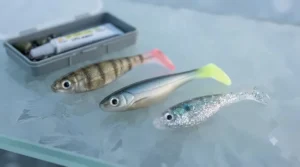
The Custom Jigs & Spins Slender Spoon is a narrower, more streamlined take on the vertical spoon concept, designed to fall almost perfectly straight down rather than fluttering off to the side. Weights run from a light 1/8 oz to a stouter 1/2 oz, and the slim profile means it slices through the water column quickly — a genuine advantage once you’re targeting the deep basins and main-lake humps where walleye stack up in midwinter. Here’s what to weigh: because this spoon’s fall is tighter and more direct than a wide-fluttering design like the Swedish Pimple, it reads on a flasher as a smaller, more precise target, which some anglers find produces better hookup ratios when fish are following without committing. Reviewers note the hook quality out of the package is a step above many mass-market spoons, holding a point well through multiple fish before needing attention. This is a jig built by a company that specializes almost exclusively in small, precision-made ice tackle, and that focus shows in the tight tolerances of the metal stamping and hook placement. The trade-off is availability and price per unit — this isn’t the jig you buy in bulk to lose without a second thought in snaggy structure.
Pros:
- ✅ Fast, direct fall ideal for deep-basin presentations
- ✅ Above-average factory hook sharpness and durability
- ✅ Precise action reads clearly on sonar and flashers
Cons:
- ❌ Higher price per unit than mass-market spoon options
- ❌ Narrower profile offers less flash than wider fluttering spoons
Priced around C$6–C$10 per spoon depending on size, this is the pick for anglers who treat their deep-water program as seriously as their shallow-water one.
7. Bay de Noc Swedish Pimple — best heavy, deep-water search spoon
Few lures in walleye ice fishing have the staying power of the Bay de Noc Swedish Pimple, a classic hammered-metal spoon that’s been dropping through Canadian ice holes for generations. It ranges from a light 1/8 oz all the way to a hefty 3/4 oz, which places it squarely in heavy walleye jigs ice territory once you move up past the 1/2 oz mark. The wide, wobbling fall and hammered finish throw off flash that shows up clearly on sonar even in deep or stained water, and its weighted, compact profile cuts through wind-driven line swing better than lighter baits — a real consideration on big, exposed lakes where a bow in your line can pull a jig completely out of the strike zone. Reviewers consistently describe this as a workhorse “search bait”: something you jig aggressively to call fish in from a distance, then tone down to a subtler hop once a fish shows interest on the flasher. Based on the spec comparison with the slimmer Custom Jigs & Spins option above, the Swedish Pimple’s wider flutter creates more sound and vibration, which matters more in dirty water or on wind-churned lakes, while the CJS spoon wins out for pure vertical precision in calm, clear conditions. It remains one of the most affordable heavy spoons on the market, which is part of why it’s stayed in production, largely unchanged, for as long as it has.
Pros:
- ✅ Heavy sizes available for fast drops in deep water
- ✅ Hammered finish produces strong flash visible on sonar
- ✅ Long-proven design at a genuinely affordable price
Cons:
- ❌ Wide flutter can be too aggressive for finicky, pressured fish
- ❌ Heavier sizes require slightly heavier line and rod backbone
At roughly C$5–C$9 each, the Bay de Noc Swedish Pimple remains one of the best value-per-bite options in this entire lineup, especially once you start fishing water past the 25-foot mark.
Practical Usage Guide: Setting Up Your Ice Jigging System
Getting a good jig isn’t the same as fishing it well, and the first thirty days with new gear are where most preventable mistakes happen. Start by matching line to jig weight: a 4–6 lb test fluorocarbon or monofilament handles most 1/8 to 3/8 oz jigs, while anything in the heavier Bay de Noc Swedish Pimple range benefits from stepping up to 6–8 lb to avoid line twist under a fast, aggressive jigging cadence. Before your first drop of the season, sharpen every hook in your box — even a brand-new Northland Fire-Ball Jig rarely comes as sharp from the factory as a quick pass with a diamond hook file will make it. A common early mistake is over-jigging: snapping a bait hard and repeatedly when walleye, especially in cold water, often respond better to a slow lift-pause-fall cadence with several seconds of dead stillness built in. Maintenance is minimal but matters — rinse hooks and metal spoons after each trip to prevent rust from forming around the eye and hook point, and store glow finishes away from direct heat, which can degrade the phosphorescent coating over time. One optimization trick many anglers skip: attach a small barrel swivel about 30 cm above a gliding bait like the Rapala Jigging Rap to cut down on line twist from its circular fall pattern, since twisted line is one of the most common reasons anglers report reduced action from an otherwise well-designed bait.
Real-World Scenarios: Matching Jigs to Conditions
Picture three different anglers on the same lake on the same morning. The first is a weekend angler fishing a shallow, 12-foot weed flat with two kids in tow — for this crew, a light Northland Fire-Ball Jig tipped with a minnow head, fished with slow, subtle lifts, keeps things simple and forgiving for young hands still learning to feel a bite. The second is a solo angler working a wind-exposed main-lake point in 30 feet of water, watching a flasher for suspended marks — this is exactly the scenario where a Rapala Jigging Rap or Northland Puppet Minnow earns its keep, since their aggressive glide calls fish up from well below where they’re initially marked. The third is a budget-conscious angler on a heavily pressured suburban lake where every walleye has seen a chartreuse jig a hundred times over — here, downsizing to a Clam Leech Flutter Spoon in a subtler glow or natural finish, fished with long pauses, often out-produces louder, flashier presentations. None of these anglers need every jig in this guide; they need the one or two that match their actual water, depth, and fishing pressure, which is really the whole point of building a box with variety rather than doubling down on a single favourite.
How to Choose Walleye Jigs for Ice Fishing
- Match weight to depth and current — lighter jigs (1/16–1/8 oz) suit shallow water under 15 feet, while anything past 25 feet calls for 3/8 oz or heavier to maintain a direct feel.
- Consider water clarity before colour — natural tones work in clear water, while chartreuse, orange, or glow finishes show up better in stained or low-light conditions.
- Decide between stationary and gliding action — ball-head jigs sit and hop in place, while gliding baits like a jigging rap cover more water and call fish from a distance.
- Check hook quality out of the package — a sharp, well-tempered hook matters more to hookup ratio than almost any other single factor.
- Buy in a range of weights, not just one — wind, current, and depth change throughout a single day, and a one-size box limits your options.
- Factor in fishing pressure — heavily fished lakes often reward subtler, smaller profiles over louder, flashier ones.
- Don’t ignore hook-to-bait fit — soft plastics and gliding baits are often designed around a specific head shape, and mixing brands can dull the intended action.
1/4 oz Walleye Jigs: The Versatile Middle Ground
If you could only own jigs in a single weight, most experienced ice anglers would tell you to stock up on 1/4 oz walleye jigs first. This weight sits at a genuine sweet spot: heavy enough to sink through 10 to 20 feet of water in a reasonable amount of time, yet light enough to still show a subtle, natural fall that doesn’t spook cautious fish. Both the Northland Fire-Ball Jig and the VMC Mooneye Jig are commonly stocked in this weight, and it’s not a coincidence — it’s the range where the largest percentage of ice-fishing holes in Canada happen to sit, particularly on mid-sized inland lakes rather than the Great Lakes’ deeper basins. Reviewers and guides alike point to 1/4 oz as the starting point for a day’s fishing, with anglers moving heavier only once wind, current, or depth demands it. If your local lake averages 15 feet of water over rock or gravel structure, this is the weight class to build your box around before adding specialty heavier or lighter options.
Common Mistakes When Buying Walleye Ice Jigs
The most frequent mistake is buying a single weight and colour and assuming it’ll cover an entire season — conditions change daily, and a box with only 1/4 oz chartreuse jigs will leave you underprepared the day fish move deep or the water turns gin-clear. A second common error is neglecting hook quality entirely, focusing purchase decisions on colour and shape while ignoring that a dull or poorly tempered hook can cost you fish regardless of how good the jig looks. Anglers also frequently underestimate how much a gliding bait like the Rapala Jigging Rap differs from a standard jig in technique, buying one expecting jig-like results and getting frustrated when a completely different retrieve is required. Finally, many buyers skip glow and UV finishes altogether, assuming natural colours are always safer, when in reality a Clam Leech Flutter Spoon in a glow pattern can be the single best producer during the low-light windows at dawn and dusk when walleye feed most aggressively.
Walleye Jigs vs Jigging Raps for Walleye: What’s the Real Difference
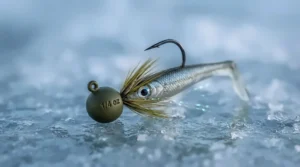
The distinction between a traditional walleye jig and a jigging rap for walleye comes down to action and application. A standard jig — like the Northland Fire-Ball Jig or VMC Mooneye Jig — is designed to fall relatively straight down and be worked with short lifts and drops in a fairly tight vertical zone, which makes it ideal for precise presentations to fish holding tight to structure or bottom. A jigging rap, by contrast, is built to travel horizontally on the lift and glide back in wide circles on the fall, covering a much larger radius around your hole and actively calling fish in from a distance rather than waiting passively. On paper this means jigging raps tend to out-produce standard jigs for suspended or actively feeding fish spread over open basins, while standard jigs often win out in tight, snag-prone structure or when fish are especially neutral and want a subtler presentation. Many experienced ice anglers simply carry both, switching between a jigging rap to locate and trigger fish and a standard jig to finish off a school once located — treating the two styles as complementary tools rather than competing options.
Glow Walleye Ice Jigs: Do They Actually Matter?
Glow finishes generate more debate among ice anglers than almost any other jig feature, but the honest answer is that their value is highly situation-dependent. In clear water during bright midday hours, a glow finish adds little over a natural or metallic pattern, since there’s already enough ambient light for fish to key in on flash and profile. Where glow walleye ice jigs genuinely earn their reputation is during the low-light windows at sunrise, sunset, and under thick snow cover on the ice, when a properly charged glow finish on something like the Clam Leech Flutter Spoon stands out dramatically against a darkened backdrop. Reviewers note that the effect is strongest in stained or deep water where natural light penetration is already limited, compounding the advantage a glow pattern provides. The key practical detail: glow only works if it’s charged with a strong light source before each drop, and the effect fades within several minutes underwater, so anglers fishing glow finishes seriously often carry a small UV flashlight specifically for recharging between drops.
What to Expect: Real-World Performance Through the Ice
Translating spec sheets into what actually happens at the end of your line matters more in winter than any other season, since cold water slows walleye metabolism and changes how aggressively they’ll chase. Expect a standard 1/4 oz jig to take roughly two to four seconds to reach bottom in 15 feet of water with 6 lb line, giving you a rough baseline for timing your presentations to specific depths marked on a flasher. A gliding bait like the Northland Puppet Minnow will typically travel a foot or more laterally on an aggressive snap, meaning fish don’t need to be directly under your hole to notice and respond to it — a real advantage when marks on your electronics are scattered rather than concentrated. Heavier spoons like the Bay de Noc Swedish Pimple produce a noticeably different feel and sound on the drop, one many anglers describe as a distinct “thump” you can feel through the rod as the spoon flutters, which becomes a useful feedback cue once you’ve fished it enough times to recognize a clean fall versus a snag or subtle bite interrupting it.
Deep Water Walleye Jigs: Getting Down Fast Past 25 Feet
Once you’re fishing water deeper than 25 feet — common on big Canadian lakes and reservoirs during midwinter — jig selection shifts noticeably. Deep water walleye jigs need enough mass to sink quickly and maintain a direct, sensitive connection to your rod tip, since a slow-falling bait spends too much time in open water where current or wind can pull it off target before it ever reaches fish. This is where the Custom Jigs & Spins Slender Spoon and heavier configurations of the Bay de Noc Swedish Pimple genuinely separate themselves from lighter, more finesse-oriented jigs. Reviewers consistently note that fishing deep basins rewards patience as much as gear — walleye holding in 30 to 40 feet of water in midwinter often sit tight to bottom and respond best to a slower cadence than the aggressive snaps effective in shallower water. Long-term cost matters here too: because deep-water spoons see more wear from constant bottom contact, budgeting for occasional hook replacement or touch-up sharpening extends the useful life of an otherwise durable spoon considerably.
Heavy Walleye Jigs for Ice: When More Weight Wins
Heavy walleye jigs ice anglers reach for — generally 1/2 oz and up — solve a specific set of problems rather than serving as an everyday default. Wind-driven line bow on big, open lakes is one: a lighter jig simply won’t stay vertical under your hole if wind is pushing your line at an angle, while a heavier spoon like the upper-weight Bay de Noc Swedish Pimple cuts through that resistance and holds position. Strong current in river systems is another scenario where extra weight becomes necessary just to maintain bottom contact and feel. The trade-off, and it’s a real one, is subtlety — heavier jigs fall faster and hit bottom harder, which can spook already-cautious fish in ultra-clear water or heavily pressured lakes. The practical solution many guides use is carrying two rods rigged differently: one with a lighter presentation for calm days and finesse bites, and a second pre-rigged with a heavier spoon ready to swap to the moment wind or current picks up, avoiding the time lost re-tying on the ice.
Safety and Regulations Guide for Canadian Ice Anglers
No jig, however well chosen, matters if the ice underneath you isn’t safe. Before heading out, always confirm ice thickness at multiple points using a spud bar or auger rather than trusting appearance alone, and never fish alone on unfamiliar water. The Lifesaving Society’s ice safety guidance notes that clear, solid ice needs to reach a recommended minimum thickness before it should reasonably support foot traffic, and that white or “rotten” ice — which forms from repeated freeze-thaw cycles — should be treated as considerably weaker for the same measured thickness. On the regulatory side, Canadian residents aged 18 to 65 generally need a valid provincial fishing licence to target walleye through the ice, along with knowledge of local catch limits and, in many zones, ice hut registration rules; the full current requirements for Ontario anglers are laid out in the Ontario Fishing Regulations Summary. Beyond licensing, carrying basic safety gear — ice picks worn around the neck, a length of rope, and a properly fitted flotation layer — costs little relative to the protection it provides on a day when conditions shift faster than expected.
Frequently Asked Questions
❓ What is the best jig for walleye ice fishing?
❓ What size jig is best for walleye?
❓ Do glow jigs really work for walleye?
❓ How deep should you fish for walleye through the ice?
❓ What's the difference between a jig and a jigging rap for walleye?
Conclusion
Building a walleye-ready ice box doesn’t require owning every jig on a tackle shop’s pegboard — it requires a handful of proven, purpose-built tools and the judgment to know when to reach for each one. A Northland Fire-Ball Jig in a couple of weights and colours, a Rapala Jigging Rap for aggressive or suspended fish, a glow-finished Clam Leech Flutter Spoon for low-light windows, and something heavier like the Bay de Noc Swedish Pimple or Custom Jigs & Spins Slender Spoon for deep water together cover the overwhelming majority of situations a Canadian ice angler will face in a typical season. The VMC Mooneye Jig and Northland Puppet Minnow round things out nicely for anglers targeting pressured water or wanting a natural swimming presentation with soft plastics. Depth, water clarity, fishing pressure, and current all shift throughout a season and even within a single day, so the anglers who consistently fill a bucket tend to be the ones who carry variety and aren’t afraid to change presentations when the first hour’s approach isn’t producing.
✨ Don’t Miss These Exclusive Deals!
🔍 Take your walleye jigs for ice fishing box to the next level with these carefully selected picks. Click on any highlighted product to check current pricing and availability on amazon.ca. These jigs will help you fill the livewell on your next trip out on the hard water!
Recommended for You
- Perch Ice Jigs 2026: 7 Proven Picks That Actually Load the Bucket
- 7 Best Crappie Ice Fishing Jigs for 2026
- 7 Best Panfish Jigs for Ice Fishing in 2026: Full Buyer Guide
Disclaimer: This article contains affiliate links. As an Amazon Associate, I earn from qualifying purchases. If you purchase products through these links, we may earn a small commission at no additional cost to you.
✨ Found this helpful? Share it with your friends! 💬🤗
