
In This Article
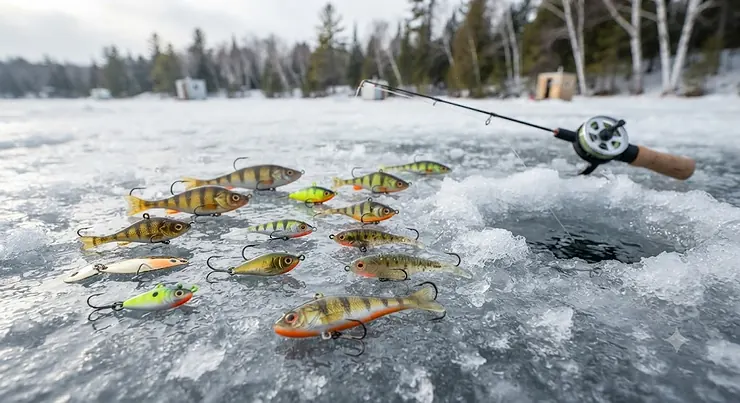
Perch ice jigs are small, weighted lures — tungsten or lead teardrops, spoons, and horizontal glide baits — designed to sink fast and trigger strikes from schooling yellow perch through a hole in the ice. Get the size, weight, and action wrong and you’ll watch your flasher light up with fish that swim past your bait like it owes them money. Get it right, and you’re the person hauling a five-gallon pail across the parking lot while everyone else asks what you’re using.
There’s a reason perch fishing has such a devoted following on this side of the border. The yellow perch, Perca flavescens, is a freshwater fish native to much of North America, and it happens to be one of the tastiest fish swimming under Canadian ice. Lake Simcoe, Lake Winnipeg, Lake Erie’s Canadian waters — perch don’t care about postal codes, and neither should your tackle box. What perch do care about is presentation: the drop speed, the flash, the sound, the size of the hook gap relative to their small, picky mouths.
This guide walks through seven real, current perch ice jigs available through amazon.ca — a mix of budget, mid-range, and premium options — with honest analysis of what each one does well, who it’s built for, and where it falls short. We’ll cover jumbo-perch tactics, aggressive versus finesse presentations, bright colours versus natural tones, rattling baits, and horizontal glide baits, because “perch jig” isn’t one category — it’s about six categories wearing the same trench coat. By the end you’ll have a shortlist that matches your water, your budget, and your patience level, because let’s be honest, some days perch have neither to spare.
Quick Comparison Table
| Jig | Style | Best For | Price Range (CAD) |
|---|---|---|---|
| Northland Gem-N-Eye Jig | Vertical jig | Best all-around, budget-friendly | Under C$10 |
| VMC Tungsten Mongo Jig | Tungsten teardrop | Fast drops in deep water | C$8-C$12 |
| Custom Jigs & Spins Chekai Tungsten | Finesse tungsten | Pressured, finicky schools | C$8-C$11 |
| Lindy Perch Talker | Rattling dropper chain | Calling fish from a distance | C$7-C$10 |
| VMC Rattle Spoon | Rattle spoon | Bright, loud, aggressive triggers | C$7-C$10 |
| Rapala Jigging Rap | Horizontal glide bait | Aggressive, roaming schools | C$8-C$13 |
| Salmo Chubby Darter | Horizontal glide bait | Search bait, slow wobble | C$12-C$16 |
Looking at the spread, there’s a clear split between vertical finesse jigs that excel when perch are sluggish and horizontal glide baits that shine when fish are actively hunting. Budget doesn’t map neatly to performance here either — the Northland Gem-N-Eye Jig punches well above its price simply because of how versatile the head shape is. If your local lake has heavy fishing pressure, lean toward the finesse end of this table; if you’re searching a big flat for scattered schools, the horizontal baits earn their keep.
💬 Just one click — help others make better buying decisions too!😊
Top 7 Perch Ice Jigs: Expert Analysis
1. Northland Gem-N-Eye Jig — best all-around vertical jig for jumbo perch
The Northland Gem-N-Eye Jig has quietly become a staple in perch circles because it does three jobs at once — jigged bare, fished under a slip float, or parked on a rattle reel inside a shack — without needing to be swapped out. It comes in a 1/16 to 1/8 oz range, which covers most perch water between 10 and 30 feet without over-weighting your line. The oversized eye and hammered finish create a flash pattern that fish key in on even in stained water, and the hook gap is wide enough to handle a full minnow head without perch short-striking it. Based on the spec comparison with other budget vertical jigs, the standout here is the head geometry — it settles horizontally at rest rather than hanging vertically, which mimics a wounded baitfish more convincingly than a straight-drop teardrop. This is the jig to tie on first when you’re not sure what perch want that day, especially for anglers building a first serious jig box. Reviewers consistently note strong catch rates across a wide range of conditions, though a handful mention the hooks benefit from a touch-up with a hook file after a few fish. What most buyers overlook is that this jig’s versatility makes it a poor choice only when you need a true finesse presentation for ultra-pressured perch — for that, you’ll want something smaller and subtler further down this list.
Pros:
- ✅ Works vertically, under a float, or on a rattle reel
- ✅ Wide hook gap handles minnow heads without missed strikes
- ✅ Wide colour range for stained or clear water
Cons:
- ❌ Stock hooks can dull faster than premium tungsten options
- ❌ Not the most subtle presentation for heavily pressured schools
At under C$10 for a multi-pack, the value here is hard to argue with — this is the jig most Canadian perch guides would tell you to buy first if they could only recommend one.
2. VMC Tungsten Mongo Jig — fastest sink rate for deep, active schools
The VMC Tungsten Mongo Jig solves a specific problem: getting a small profile down to 25-30 feet quickly without spooking fish with a big splashy lure. Tungsten is roughly twice as dense as lead, so the VMC Tungsten Mongo Jig achieves the same weight in a noticeably smaller package — that matters enormously for perch, which frequently inspect a bait longer than they should before committing. On paper this means less time wasted on the drop and more time with your bait actually in the strike zone, which adds up over a full day of jigging. The compact, heavy-for-size design also improves bite detection, since a taut tungsten jig telegraphs subtle pecks through the line far better than a lighter lead equivalent hanging slack. This jig is built for anglers fishing basin areas or deep mud flats where perch stack up mid-winter, tipped with a single waxworm or spike. Aggregated review sentiment across major tackle retailers points to strong praise for the hook sharpness out of the package and the fast, direct drop, with the more common complaint being that the smallest sizes can be fiddly to tie on with cold fingers — a problem tungsten fans have been grumbling about for years without much of a fix. Here’s what to weigh: this is not a search bait. It’s a finishing tool once you’ve located fish on your flasher or camera.
Pros:
- ✅ Tungsten density means faster drops in deep water
- ✅ Sharp hooks reduce missed hooksets out of the package
- ✅ Compact profile improves bite telegraphing through the line
Cons:
- ❌ Smallest sizes are fiddly to tie in cold conditions
- ❌ Less effective as a search or calling bait
Expect to pay in the C$8-C$12 range for a small pack, which is standard for tungsten — the density premium is real, and most serious perch anglers consider it worth paying.
3. Custom Jigs & Spins Chekai Tungsten Jig — best finesse jig for pressured perch
When perch have seen every spoon and rattle bait on the lake and gone lockjaw, the Custom Jigs & Spins Chekai Tungsten Jig is the downsize move that often reopens the bite. Its small, rounded profile and centered hook eye let it hang nearly horizontal at rest, which mimics a drifting insect larva far more convincingly than a vertically-hanging teardrop. Based on the spec comparison, the standout feature is how the weight is distributed toward the bend of the hook rather than the eye — this keeps the bait balanced and reduces the twisting motion that spooks wary fish on a slow presentation. What most buyers overlook about this jig is that it rewards a nearly motionless approach; anglers who jig it aggressively, expecting spoon-style results, tend to underperform with it. Reviewers who fish heavily pressured lakes near urban centres consistently report that this jig produces when nothing louder will, particularly tipped with a single spike or a micro soft-plastic tail. It is genuinely a finesse-specialist tool, not a do-everything jig, and that specialization is exactly the point.
Pros:
- ✅ Near-horizontal hang mimics natural insect drift
- ✅ Excellent for finicky, pressured perch schools
- ✅ Pairs well with micro soft plastics or a single spike
Cons:
- ❌ Underperforms when fished with an aggressive jigging cadence
- ❌ Small hook size limits use with larger minnow baits
Priced around C$8-C$11 for a small assortment, this is a specialist purchase — buy it once your go-to jigs stop working and you need a plan B.
4. Lindy Perch Talker — best rattling dropper-chain jig for calling fish
The Lindy Perch Talker takes the old-school spoon-and-dropper trick and builds it directly into one lure, and the dropper chain design solves a real, recurring problem: perch that strike short and miss the hook on a rigid jig. With the hook separated from the main body by a short chain of beads and disks, even a tentative nip on the dropper still results in a solid hookup, because the fish isn’t fighting the full weight and resistance of the spoon body. The beads and disks create both visual flash and an audible clicking sound that travels well through the water column, which is exactly why this bait is grouped with the rattling category rather than standard spoons. Reviewers who fish deeper basin water consistently describe it as effective at calling fish in from a distance before the finesse hook on the dropper seals the deal — a two-stage presentation in a single lure. What the spec sheet won’t tell you, but user reports suggest, is that the clicking sound seems to matter more in stained or low-light water than in gin-clear conditions, where perch may key more on flash than noise. This is a strong pick for anglers who want one lure that both locates and triggers fish rather than carrying separate search and finesse baits.
Pros:
- ✅ Dropper chain reduces missed strikes from short bites
- ✅ Audible clicking calls fish from a distance
- ✅ Doubles as both a search and finesse presentation
Cons:
- ❌ Chain hardware can tangle if not stored carefully
- ❌ Less subtle than pure finesse jigs in ultra-clear water
At roughly C$7-C$10, this is a reasonable mid-range buy, especially for anglers fishing larger, deeper lakes where perch scatter across wide basins.
5. VMC Rattle Spoon — brightest, loudest option for aggressive perch
The VMC Rattle Spoon is built for one job: getting noticed fast. Its hammered, high-visibility finishes and internal rattle chamber combine flash and sound into a single aggressive package, which makes it the go-to when you’re hole-hopping to locate active schools rather than coaxing a reluctant one. Tipped with a fathead minnow head, the VMC Rattle Spoon becomes a serious jumbo-perch producer, since the larger profile and loud presentation tend to pull in bigger, more aggressive fish while smaller perch hang back. Aggregated reviewer sentiment across tackle retailers points to strong results specifically during peak feeding windows — dawn, dusk, and the height of mid-winter when big schools are actively hunting — while the same reviewers note it’s less effective on tough, tentative bite days. What most buyers overlook is that swapping the stock treble for a small dropper chain (a common perch-angler modification) turns this loud, attracting spoon into a hybrid rig that can also handle finicky short-striking fish, giving you two presentations from one purchase.
Pros:
- ✅ High-visibility finishes stand out in stained water
- ✅ Internal rattle adds a strong sound trigger
- ✅ Modifiable with a dropper chain for finesse fishing
Cons:
- ❌ Can be too aggressive for tentative, tough-bite days
- ❌ Treble hook increases snagging risk near structure
Expect around C$7-C$10 for this spoon — good value given it effectively functions as two lures depending on how you rig it.
6. Rapala Jigging Rap (W2/W3) — best horizontal jig for aggressive, roaming perch
The Rapala Jigging Rap remains, by a wide margin, the most recognized horizontal glide bait in ice fishing, and the smaller W2 and W3 sizes are the versions perch anglers reach for specifically. Unlike a vertical teardrop, the Rapala Jigging Rap darts and circles on the fall due to its balanced fins, which means it covers a wider strike zone with every drop — a genuine advantage when you’re trying to pull fish in from several feet away rather than waiting for them to swim directly under your hole. The lure also fishes well in light current, gliding back toward the hole rather than simply dropping straight down, which keeps it in the strike zone longer. Based on the spec comparison with straight-drop jigs, the real advantage of this glide action is coverage — it’s less a finesse tool and more a search-and-trigger bait for aggressive, actively feeding perch. Reviewers consistently rate it as a top producer during the classic mid-winter window when large schools roam basin flats, with the most common critique being that it can be over-matched by extremely finicky fish that prefer a subtler drop. A sharp upward rip followed by a controlled fall is the standard cadence, and the treble hangs from the belly for solid, centered hooksets.
Pros:
- ✅ Circling glide action covers a wide strike zone per drop
- ✅ Excellent for actively feeding, roaming schools
- ✅ Fishes well even with light under-ice current
Cons:
- ❌ Less effective on extremely tentative, finicky bite days
- ❌ Belly treble can foul on slack line if not fished actively
Priced around C$8-C$13 depending on size and finish, this is a near-mandatory addition for anyone chasing aggressive daytime perch schools.
7. Salmo Chubby Darter — premium horizontal glide bait for search fishing
The Salmo Chubby Darter has built a cult following among ice anglers for a slower, wider wobble than most horizontal baits offer, and that slower action tends to shine specifically in shallower water — under about 20 feet — where a fast-darting bait can spook fish holding tight to structure. What most buyers overlook about the Salmo Chubby Darter is that its primary value isn’t as a finishing bait but as a search tool: its wide, visible profile and seductive glide are built to pull fish in from a distance across multiple holes, letting you locate active schools faster before switching to a smaller finesse bait to close the deal. Based on real angler commentary, this bait has become a “cult favourite” specifically in shallower water where the slower wobble outperforms faster horizontal options that can overrun the strike zone before a fish reacts. It’s a premium product, and the price reflects Scandinavian-made hard-bait construction, holographic finishes, and internal ballast tuned for a specific glide pattern rather than a generic mass-produced blank. Reviewers who fish shallow weed edges and early-ice periods consistently rate it highly for locating scattered fish, while noting it’s overkill for anglers only fishing one or two static holes all day.
Pros:
- ✅ Slower, wider wobble excels in shallower water under 20 feet
- ✅ Strong search bait for locating scattered schools
- ✅ Premium construction and finish durability
Cons:
- ❌ Higher price point than comparable horizontal baits
- ❌ Overkill for anglers fishing a single static hole all day
At roughly C$12-C$16, it’s the priciest jig on this list, and it earns that price specifically as a search tool rather than an everyday finesse bait.
How to Choose Perch Ice Jigs
Picking the right jig isn’t about finding “the best one” — it’s about matching the tool to the water in front of you. Here’s the decision framework worth running through before you drill your first hole.
- Match jig weight to depth, not habit. A 1/32 oz jig that’s perfect in 12 feet of water becomes painfully slow to reach bottom in 30 feet — swap up to 1/8 oz tungsten territory as depth increases.
- Start loud, then go quiet. Open with a rattling or flashy option like the VMC Rattle Spoon to locate fish, then downsize to a finesse jig like the Custom Jigs & Spins Chekai Tungsten Jig once you’ve found them but they’re hesitant.
- Read the water clarity. Bright, high-contrast colours dominate in stained or tannic water; natural, subtle tones tend to outperform in gin-clear lakes where perch get a long, suspicious look at your bait.
- Consider your presentation style. Anglers who fish aggressively and cover lots of holes lean toward horizontal glide baits; anglers who prefer to sit and finesse a school lean toward vertical tungsten jigs.
- Think about bait pairing. Some jigs, like the Northland Gem-N-Eye Jig, are built for a wide hook gap that accepts minnow heads, while finesse jigs work best with a single spike or micro plastic.
- Don’t ignore hook quality. A dull or oversized hook relative to a perch’s small mouth is the single most common reason for missed hooksets — file hooks or upgrade them if they arrive dull.
- Buy in small multiples. Perch fishing chews through terminal tackle fast between snags and toothy incidental pike — a single jig of each style is rarely enough for a full season.
Aggressive Perch Jigs vs Finesse Presentations: Which Wins Under the Ice
This is the debate that dominates every perch shanty conversation, and the honest answer is: it depends entirely on how the fish are behaving that day, not on which camp you personally belong to. Aggressive jigs — think the VMC Rattle Spoon and the Rapala Jigging Rap — rely on flash, noise, and a wide strike zone to trigger reaction bites from actively feeding fish. They excel during classic feeding windows: dawn, dusk, and the deep mid-winter period when perch school heavily and compete for food. Finesse jigs, like the Custom Jigs & Spins Chekai Tungsten Jig, take the opposite approach — small, subtle, nearly motionless, designed to slip past a suspicious perch’s guard rather than announce themselves.
| Approach | Strength | Weakness | Best For |
|---|---|---|---|
| Aggressive (spoons, glide baits) | Covers water fast, triggers reaction strikes | Can spook tentative fish | Active schools, low light |
| Finesse (tungsten, small jigs) | Fools pressured, wary fish | Slower to locate scattered schools | Pressured lakes, bright/clear water |
As one long-time Ontario guide put it in his field-tested tactics for tentative jumbo perch, heavy but compact jigs that drop fast while still looking small often out-produce a lighter, slower presentation on tough bite days. The practical answer most experienced perch anglers land on isn’t picking a side — it’s sequencing. Locate fish aggressively, then finish them with finesse once the bite gets tough. A common mistake is sticking rigidly with one style all day regardless of how the fish respond, which is a big reason some anglers blame “slow fishing” on the lake when the real issue was never switching gears.
Bright Colored and Rattling Perch Jigs: What Actually Triggers Bites
Colour and sound are the two variables perch anglers argue about most, and both matter — just situationally. Bright colored perch jigs, loaded with chartreuse, orange, pink, or glow finishes, tend to outperform in stained water, low light, or deeper water where natural light penetration is limited. In those conditions, high-contrast colours are simply easier for perch to spot from a distance, giving your bait an edge over a natural-toned lure that blends into a dim background. In gin-clear water under bright ice, however, the opposite can be true — a subtler, more natural finish sometimes draws more committed strikes from fish that get a long, close look before deciding.
Rattling perch jigs, like the Lindy Perch Talker and the VMC Rattle Spoon, add a sound trigger on top of colour and flash. The internal rattle or bead-and-chain hardware sends vibration through the water that perch pick up through their lateral line well before they can see the bait — genuinely useful for calling scattered fish in from several holes away on a search mission. What the spec sheet won’t tell you, but user reports suggest, is that rattling baits seem to lose some of their edge in extremely calm, gin-clear conditions where fish may become wary of an unnaturally loud presentation. The practical takeaway: carry both, and be willing to switch mid-session rather than assuming one approach covers every lake and light condition you’ll encounter this winter.
Horizontal Perch Jigs for Jumbo Yellow Perch
Horizontal jigs deserve their own category because they behave nothing like a standard vertical teardrop. Baits like the Rapala Jigging Rap and the Salmo Chubby Darter hang flat at rest and dart, circle, or glide on the fall rather than dropping in a straight line, which mimics an injured baitfish far more convincingly than a vertical profile. For jumbo perch specifically — the 10-inch-plus fish most anglers are chasing — this matters, because larger, more experienced perch are often the ones that key in on a wounded, easy-target profile rather than chasing something that looks perfectly healthy and fast.
In practice, horizontal jigs shine as search tools on big, open basin flats where fish could be anywhere within a wide radius of your hole. The wider strike zone they create per drop means you can cover more water without drilling as many holes, which matters when you’re mobile-fishing a large lake trying to locate the biggest schools rather than settling for the first perch that swims by. Once you’ve located a productive area, many anglers downsize to a vertical or finesse presentation to pick off the more cautious jumbos that hang back from the horizontal bait’s aggressive action. The trade-off is real: horizontal baits generally require a more active jigging cadence — a sharp rip and controlled fall — which isn’t for anglers who prefer to set a rod in a holder and wait.
✨ Don’t Miss These Exclusive Deals!
🔍 Take your perch season to the next level with these carefully selected jigs. Click on any highlighted item to check current pricing and availability on amazon.ca. These proven baits will help you fill the bucket with the jumbo perch your family actually wants on the dinner table!
Practical Usage Guide: Rigging, Depth Control and Your First 30 Days on the Ice
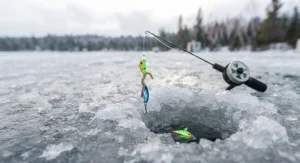
Getting the most from any perch jig starts before you drop it down the hole. Spool up with a light main line — most experienced perch anglers land in the two to four-pound-test range, with two-pound often becoming the go-to once conditions call for real finesse. A lighter line lets a tungsten jig fall faster and telegraphs subtle bites far more clearly than heavier line ever will. Pairing that line with an in-line spinning reel reduces the line twist that builds up fast when you’re repetitively jigging the same small lure hour after hour, which matters more than most beginners expect once a session stretches past an hour.
For depth control, drop your jig all the way to bottom first, then reel up a foot or two — perch frequently sit just off bottom rather than directly on it, and a bait hovering slightly above the fish’s eye line draws more strikes than one sitting on the lakebed where it’s harder for them to notice. In the first 30 days with new gear, the most common mistake is over-jigging: snapping the rod tip aggressively when a subtle lift-and-drop, or even near stillness with a finesse jig, would produce more bites. Watch your bait on a flasher or camera when possible — it recalibrates your sense of “how much movement is actually needed” faster than any amount of reading. Maintenance is minimal but matters: rinse jigs after each trip to prevent rust on hook points, check hook sharpness with a file every few outings, and store rattling baits separately so their hardware doesn’t tangle with other tackle in a cold, cramped box.
Real-World Scenarios: Matching Perch Ice Jigs to Your Trip
The weekend family outing. If you’re bringing kids out for their first ice fishing trip on a shallow, forgiving lake, reach for something simple and productive with minimal snag risk — the Northland Gem-N-Eye Jig tipped with a waxworm covers this perfectly. It’s forgiving of imperfect jigging technique and produces steady action that keeps young anglers engaged rather than bored between bites.
The mobile basin hunter. If you’re the type who drills 15 holes across a big lake chasing the biggest school rather than sitting still, horizontal glide baits like the Rapala Jigging Rap or the Salmo Chubby Darter are built for exactly this style, letting you cover water fast and identify productive zones before committing to a spot.
The pressured-lake regular. If you fish the same popular, heavily-pressured lake most weekends and the bite has clearly gotten tougher as the season wears on, it’s time to lean into finesse. The Custom Jigs & Spins Chekai Tungsten Jig, fished nearly motionless with a single spike, is built specifically for fish that have already seen every loud spoon on the lake this winter.
Problem → Solution: Fixing Common Perch Jigging Mistakes
Problem: You’re marking fish on the flasher, but they won’t commit. Solution: downsize your presentation and slow down. Switch from an aggressive spoon to a finesse tungsten jig and reduce your jigging cadence to a subtle shake rather than a hard rip.
Problem: Perch keep short-striking and missing the hook. Solution: switch to a dropper-chain style bait like the Lindy Perch Talker, which separates the hook from the main lure body so a tentative nip still results in a hookup.
Problem: You’re catching only small perch, no jumbos. Solution: upsize your bait and add a minnow head rather than a waxworm — bigger, more aggressive perch are more willing to commit to a larger, more substantial meal, while smaller perch tend to peck at subtler offerings.
Problem: Your jig keeps tangling or spinning on the drop. Solution: check your knot — a poorly seated improved clinch knot can throw off a jig’s balance point, causing an unnatural spin that spooks fish rather than attracting them.
Problem: You’re fishing the “right” jig but getting nothing all day. Solution: change depth before changing lures. Perch move up and down the water column throughout the day, and a jig that produced at 20 feet in the morning may need to come up to 12 feet by afternoon.
Common Mistakes When Buying Perch Ice Jigs
The biggest mistake new perch anglers make is buying one style of jig in bulk rather than a small, varied assortment. Perch behaviour changes hour to hour based on light, pressure, and feeding mood, and a tackle box stocked with only bright rattling spoons leaves you with no answer on a tough, tentative bite day. A second common mistake is under-buying tungsten because of the higher price per jig — but the faster sink rate and better bite detection genuinely translate into more fish over a season, particularly in deeper water where a lead jig’s slower drop wastes real fishing time. Anglers also frequently overlook hook quality, assuming all jigs in a similar price bracket perform the same — a dull or poorly-shaped hook relative to a perch’s small mouth is one of the most common, and most fixable, reasons for missed hooksets. Finally, many buyers skip color variety, stocking only natural tones or only bright colours rather than both, when water clarity and light conditions genuinely shift which one out-produces the other from lake to lake and even hole to hole.
Long-Term Cost & Maintenance of Your Perch Jig Box
Perch jigs are inexpensive individually, but the real cost adds up through attrition — snags on structure, the occasional incidental pike bite-off, and rust that creeps in when hooks aren’t dried properly between trips. A well-rounded starter box covering all seven styles in this guide runs somewhere in the C$60-C$90 range at current pricing, a modest investment relative to a season’s worth of ice time, gas, and bait. The better long-term value calculation isn’t the price per jig, though — it’s cost per fish. A C$10 tungsten jig that produces steadily all season because it’s genuinely well-suited to your water outperforms a C$4 generic jig replaced three times over the same period, both in dollars spent and in fish landed. Simple maintenance extends the life of every jig in your box substantially: rinse hooks in fresh water after each trip to prevent salt or mineral buildup from bait, dry everything before sealing tackle boxes to prevent rust, and periodically touch up hook points with a small file — a sharp hook on an older jig will consistently outfish a dull hook on a brand-new one.
Safety and Regulations: Ice Fishing for Perch in Canada
Before any tackle discussion matters, ice safety comes first. According to the Canadian Red Cross ice thickness guidelines shared by Ontario’s own angling resources, ice should be at least 15 centimetres thick before walking out alone, about 20 centimetres before taking a group out, and roughly 25 centimetres before travelling by snowmobile or ATV, with clear blue ice generally regarded as stronger than opaque or honeycombed ice. Always check conditions locally before heading out, and bring ice picks, a rope, and a floatation suit as standard kit rather than an afterthought.
On the regulatory side, rules vary by province, so check your local Fisheries Management Zone before you drill a hole. In Ontario, for example, anglers ice fishing in most waters may use two lines as long as they stay within 60 metres of every line at all times, and ice huts used in certain zones must be registered and clearly marked with a visible registration number. Possession limits, size restrictions, and open seasons for yellow perch vary by zone and are worth confirming annually, since regulations are periodically updated. None of this is exciting reading compared to picking out a new spoon, but it’s the difference between a great day on the ice and an expensive fine — or worse, a genuinely dangerous situation.

Frequently Asked Questions
❓ What is the best jig weight for jumbo perch?
❓ Do rattling jigs really work better for perch?
❓ What color perch jig works best in clear water?
❓ Are horizontal jigs better than vertical jigs for perch?
❓ How deep should I fish for perch through the ice?
Conclusion
Perch ice jigs aren’t a one-size-fits-all category, and that’s genuinely good news for anyone willing to carry a small, varied selection rather than betting the whole season on a single lure. The Northland Gem-N-Eye Jig earns its spot as the versatile all-rounder, the VMC Tungsten Mongo Jig and Custom Jigs & Spins Chekai Tungsten Jig cover the finesse end for deep or pressured water, the Lindy Perch Talker and VMC Rattle Spoon bring the noise and flash to call fish in, and the Rapala Jigging Rap and Salmo Chubby Darter handle the horizontal, search-and-cover role for roaming schools. None of these are exotic or hard to find — they’re proven, widely available picks that Canadian ice anglers have relied on for years, and the honest analysis matters more than any single “best” claim: the right jig depends entirely on your water, the day’s conditions, and how the fish are behaving in front of you.
Start with a small assortment covering both aggressive and finesse styles, pay attention to how the fish respond, and be willing to switch rather than stubbornly fishing the same bait all afternoon. That flexibility, more than any single lure on this list, is what separates anglers hauling home a full bucket from anglers wondering where all the perch went.
Recommended for You
- 7 Best Crappie Ice Fishing Jigs for 2026
- 7 Best Panfish Jigs for Ice Fishing in 2026: Full Buyer Guide
- Tungsten vs Lead Jigs Ice Fishing: 7 Picks Compared (2026)
Disclaimer: This article contains affiliate links. As an Amazon Associate, I earn from qualifying purchases. If you purchase products through these links, we may earn a small commission at no additional cost to you.
✨ Found this helpful? Share it with your friends! 💬🤗
