In This Article
There’s a particular kind of quiet that settles over a frozen lake right at last light, right when the crappie decide to feed. Your line twitches. Your heart doesn’t. That’s the moment crappie ice fishing jigs either earn their keep or get flung across the shanty in frustration. Choosing the right one isn’t about grabbing whatever’s chartreuse and cheap at the bait shop counter — it’s about matching profile, weight, and action to fish that can be maddeningly picky one hour and reckless the next.
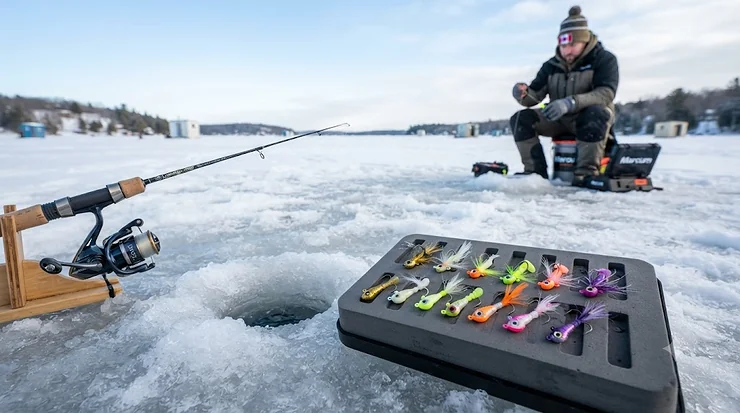
Crappie ice fishing jigs are small, weighted lures — typically 1/64 oz to 1/8 oz — built with lead or tungsten heads paired with tube plastics, hair, feathers, or soft-plastic tails, designed to be jigged vertically through a hole in the ice to trigger strikes from suspended black and white crappie. The right jig punches through slush fast, hangs at the correct angle, and shows up on your sonar without spooking fish that are, frankly, not that brave in 3°C water.
Ontario alone is home to some of the best black crappie ice fishing anywhere, with Rainy Lake, Lake of the Woods, and the Kawartha Lakes region all producing consistently through hardwater season. The fish itself is a freshwater sunfish species native to North America, easily identified by the seven or eight spines along its dorsal fin, and it behaves differently under two feet of ice than it does in open water — exactly why generic panfish jigs so often underperform. This guide breaks down seven real, currently available jigs across tube, hair, and tungsten categories, backed by genuine spec comparisons and aggregated reviewer sentiment, so you can build a box that actually catches slabs this winter.
Quick Comparison Table
| Jig | Type | Weight Range | Price Range (CAD) | Best For |
|---|---|---|---|---|
| Custom Jigs & Spins Ratso | Horizontal finesse plastic | Size 4–12 | C$4–C$6 (2-pack) | Finicky, pressured crappie |
| Northland Tungsten Mud Bug | Tungsten insect body | 1/16–1/8 oz | C$6–C$9 (2-pack) | Fast drops in deep water |
| Bobby Garland Baby Shad | Tube-style soft plastic | Pairs w/ 1/16 oz head | C$7–C$10 (18-pack) | Classic vertical tube jigging |
| VMC Tungsten Fly Jig | Hair/feather jig | 1/64–1/16 oz | C$8–C$12 (kit) | Ultra-finesse, pressured lakes |
| Clam Dave Genz Drop-Kick | Tungsten cadence jig | 1/32–1/16 oz | C$6–C$9 | Tipping with live bait |
| Northland Rigged Tungsten Bloodworm | Pre-rigged tungsten + plastic | 1/16 oz | C$8–C$11 (5-pack) | Ready-to-fish convenience |
| Goture 50-Piece Jig Kit | Mixed lead variety kit | 0.04–0.09 oz | C$15–C$22 | Beginners building a box |
Looking at the spread above, there’s a clear split between finesse presentations built for pressured, clear-water crappie and heavier tungsten options designed to punch down fast in 20-plus feet of water. Budget-conscious anglers do well starting with the Goture 50-Piece Jig Kit to figure out which profiles their local lake responds to, while anglers chasing wary slabs on well-pressured lakes should lean toward the Custom Jigs & Spins Ratso or VMC Tungsten Fly Jig. Depth and water clarity, more than brand loyalty, should really drive this decision.
💬 Just one click — help others make better buying decisions too!😊
Top 7 Crappie Ice Fishing Jigs: Expert Analysis
1. Custom Jigs & Spins Ratso — best horizontal profile for finicky slabs
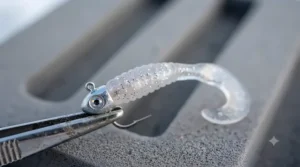
The Ratso earns its reputation by doing the opposite of what most panfish jigs do: it hangs horizontally instead of vertically, mimicking a small, stunned minnow rather than a bug. That single design choice changes everything about how suspicious crappie respond to it.
Built around a precision lead head with an ultra-slim, super-soft finesse plastic tail, the Ratso is meant to be fished as-is, without live bait, in sizes 4 through 12. Based on the spec comparison with bulkier tube jigs, the Ratso’s slimmer profile and brighter head make it easier to see on sonar in deep water while still reading as subtle to the fish below. That combination is exactly why serious ice anglers keep multiple sizes on hand rather than one all-purpose jig.
This is a jig for anglers willing to slow down. Reviewers consistently note that a size 6 Ratso on 2- to 4-pound line out-produces flashier lures once crappie have seen a few hundred anglers’ offerings that season, and that it doubles as a solid trout and perch bait. What most buyers overlook is that the tail action requires almost no rod movement at all — overworking it kills the very subtlety that makes it effective.
Pros:
- ✅ Horizontal profile mimics wounded minnows convincingly
- ✅ Bright head stays visible on flasher/sonar units
- ✅ Effective without tipping, saving bait on cold days
Cons:
- ❌ Slower fall rate struggles in wind-drifted deep holes
- ❌ Soft tails tear after several fish and need replacing
Priced around C$4–C$6 per two-pack (check current price, prices may vary), the Ratso is a strong value pick for anglers who fish clear, pressured lakes more than murky reservoirs.
2. Northland Tungsten Mud Bug — best 1/16 oz tungsten for punching through slush
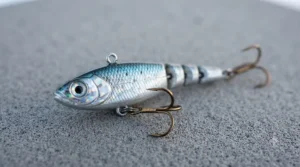
Where the Ratso finesses fish, the Mud Bug muscles through conditions. Its compact, insect-like Fathead body is dense tungsten rather than lead, which matters more than it sounds like it should once you’re drilling holes in January slush.
The tungsten construction gives this jig a genuine insect-like body with bulging eyes, ideal when bluegill, perch, and crappie are keyed on copepods and nymphs under the ice, and its 60-degree angled needlepoint hook is built for a wide gap and easy hooksets. On paper, that hook geometry means fewer missed strikes on light bites, which panfish are notorious for. In practice, this jig’s biggest edge is sink speed: a 1/16 oz tungsten body is noticeably smaller than a lead jig of equivalent weight, letting it drop through slushy holes and reach suspended crappie before they lose interest.
Aggregated review sentiment across major tackle retailers is overwhelmingly positive, with repeat buyers specifically praising the glow finish and calling it a reliable go-to for bull gills and slab crappie alike; a handful of reviewers note the tungsten line has occasionally been backordered during peak season, reflecting demand rather than quality issues.
Pros:
- ✅ Tungsten body sinks faster than lead at the same size
- ✅ Glow paint and bulging eyes add visibility in low light
- ✅ Wide-gap hook improves hookup ratio on soft bites
Cons:
- ❌ Popular colors sell out during peak hardwater season
- ❌ Smaller sizes are fiddly to tie on with cold fingers
At around C$6–C$9 for a two-jig card (check current price, prices may vary), it’s a mid-range investment that punches above its price point for deep-water panfish.
3. Bobby Garland Baby Shad — best classic tube jig for vertical jigging
If there’s a single soft plastic most associated with modern crappie fishing, it’s the Baby Shad. Its bulbous, dense body tapering into a thin, spear-shaped tail was engineered specifically around the vertical jigging motion ice anglers use every single drop.
This is a tube-style soft plastic body, sold separately from a jighead, so budget an extra 1/16 oz round or darter head into the total cost. Here’s what to weigh: the plump profile displaces more water than slimmer tails, generating a stronger vibration signature that shows up better in stained water, while the spear-shaped tail creates loads of enticing, dancing action from a cast-and-retrieve all the way through dead-sticking on light line. That versatility is precisely why it crosses over so well from open-water crappie fishing into hardwater season.
Reviewers consistently rank it among their top producers, with several noting it out-fishes competitors specifically on the vertical drop rather than the swim, which lines up well with how most ice anglers actually present it. The catch, as with any jig sold in bulk, is color overload — with 60-plus color options, first-time buyers often overbuy before learning what their water clarity actually calls for.
Pros:
- ✅ Spear tail creates strong action on the vertical drop
- ✅ Durable body holds up through multiple hooksets
- ✅ Huge color range matches nearly any water clarity
Cons:
- ❌ Jighead sold separately, adding to total cost
- ❌ Overwhelming color selection for first-time buyers
Expect to pay around C$7–C$10 for an 18-pack of bodies (check current price, prices may vary), making it one of the better cost-per-fish options once you’ve dialled in a head weight.
4. VMC Tungsten Fly Jig — best hair jig for pressured, finicky crappie
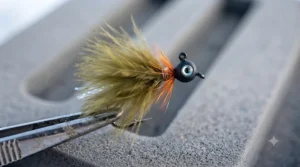
Hair jigs occupy a strange middle ground in most tackle boxes — beloved by old-school panfish diehards, ignored by everyone chasing the latest tungsten trend. The VMC Tungsten Fly Jig is the rare product that updates the old idea without losing what made it work.
The compact, high-density tungsten head sinks faster than lead while the feather tail creates subtle, natural movement that plain plastic simply can’t replicate at rest. What most buyers overlook about hair jigs generally is that their slow, wafting fall — not their sink speed — is the actual selling point; researchers studying crappie winter diets found their intake consisted of up to 95 percent Daphnia zooplankton, meaning a jig that hangs and pulses like a drifting insect can out-fish flashier tungsten on heavily pressured water.
Based on the spec comparison with plastic-tailed tungsten jigs, the trade-off is presentation speed: hair jigs fish best with light line and patient, minimal rod movement, which is a different skill than aggressive jigging. Field-tested reviewers report strong results specifically when panfish go quiet after a cold front, exactly the scenario where louder presentations shut down.
Pros:
- ✅ Feather tail mimics zooplankton drift better than plastic
- ✅ Tungsten head keeps a compact profile at depth
- ✅ Multiple glow colors extend up to 15 minutes of charge
Cons:
- ❌ Requires ultralight tackle and a patient jigging cadence
- ❌ Feather fibres mat down after repeated fish slime
A multi-jig kit runs around C$8–C$12 (check current price, prices may vary), reasonable given how specialized the finesse presentation is.
5. Clam Dave Genz Drop-Kick Tungsten Jig — best jig built for tipping with live bait
Designed by hardwater pioneer Dave Genz, the Drop-Kick was engineered around a single idea: give panfish a cadence they can’t ignore, then back it up with a hook built to hold real bait through repeated bites.
Its 90-degree XL hook features a larger tie-eye, stronger wire, and increased hook gap compared to most competing jigs, which in practice means it holds a waxworm or minnow head securely through several drops instead of the bait sliding down the shank after one strike. Here’s what the spec sheet won’t tell you outright: the tungsten body itself is roughly 30% heavier than an equivalent lead jig, so anglers fishing 20-plus feet of water get down faster without upsizing to a bulkier profile that spooks fish.
Aggregated reviewer sentiment is largely enthusiastic about the “kick” action and sonar visibility from its flat top surface, though a meaningful minority of buyers report quality-control complaints about eyelets painted shut and paint chipping off the tungsten underneath during hook removal — worth factoring in given the higher price point tungsten commands.
Pros:
- ✅ XL hook gap holds live bait through multiple strikes
- ✅ Heavier tungsten body reaches deep fish quickly
- ✅ Flat top design shows up clearly on flasher units
Cons:
- ❌ Some batches report painted-shut eyelets on arrival
- ❌ Paint chips faster than lead jigs during hook removal
Priced around C$6–C$9 for a small pack (check current price, prices may vary), it’s best suited to anglers who tip nearly every drop rather than fish plastics exclusively.
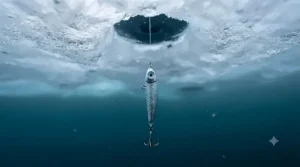
6. Northland Rigged Tungsten Bloodworm — best pre-rigged tipped jig for convenience
For anglers who’d rather spend their limited daylight fishing than retying jigs with numb fingers, Northland’s rigged tungsten line solves a real problem: it arrives already paired with a soft-plastic tail matched to the jig’s action.
Built on the same Mud Bug-style tungsten head that fishes fast while providing maximum wag to the soft-plastic tail, the Bloodworm variant specifically targets fish keyed on larval midges in mud-bottom areas. Each card ships with three pre-rigged jigs and two extra tails, which is a thoughtful touch — the plastic wears out well before the tungsten head does, and replacing just the tail extends the jig’s usable life considerably. On paper this means better cost-per-use than buying heads and bodies separately, provided you actually use the spare tails instead of losing them in a tackle box.
Based on angler commentary from Northland’s own pro staff, glow white and chartreuse combinations are the go-to choice specifically when crappie move into a mixed bluegill-and-panfish spread, reinforcing how color-specific presentation gets once multiple species compete for the same holes.
Pros:
- ✅ Arrives pre-rigged, saving setup time in the cold
- ✅ Two spare tails extend the jig’s usable lifespan
- ✅ Chartreuse and glow colors cover most water clarity
Cons:
- ❌ Limited to the shapes offered on each specific card
- ❌ Tungsten head cost is baked in even if tails wear fast
Expect around C$8–C$11 per five-piece card (check current price, prices may vary) — solid value once you count the included spare tails.
7. Goture 50-Piece Ice Fishing Jig Kit — best budget variety kit for building a box from scratch
Every new ice angler faces the same problem before their first hardwater season: they don’t yet know which profile, weight, or color their local lake wants. The Goture kit exists to solve exactly that uncertainty without a four-figure tackle investment.
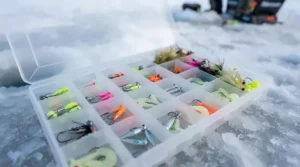
The set includes ten different jig shapes across three weight classes and two hook sizes, built on black nickel carbon steel hooks and housed in compact, organized compartment boxes. Here’s what to weigh honestly: this is not a specialist’s jig, and it won’t outfish a properly matched Ratso or Drop-Kick once you know your water. What it does deliver is breadth — the ability to test tube shapes, teardrop profiles, and glow finishes across a single ice season and figure out, cheaply, what your specific lake actually responds to before committing to premium jigs.
Since verified individual customer reviews for bulk import kits like this are harder to confirm at the SKU level than for established name brands, it’s worth being direct: treat this as a legitimate low-cost starting point and diagnostic tool rather than a long-term primary jig box, and expect to graduate a handful of favourite shapes into name-brand tungsten versions once you’ve identified what works.
Pros:
- ✅ Ten shapes and colors for rapid on-ice experimentation
- ✅ Compact, organized box keeps everything sorted
- ✅ Glow-in-the-dark finishes work in low-light conditions
Cons:
- ❌ Lead construction sinks slower than tungsten options
- ❌ Individual jig quality varies more than name brands
At around C$15–C$22 for the full 50-piece set (check current price, prices may vary), it remains one of the most economical ways to stock a beginner’s box.
Tube Jigs for Crappie Ice Fishing: The Horizontal Minnow Profile
Tube jigs crappie ice fishing setups rely on stay popular for one simple reason: crappie are minnow eaters year-round, and a tube’s tapered, hollow-bodied profile reads as forage even when it’s sitting nearly motionless. The Bobby Garland Baby Shad and the horizontally-riding Custom Jigs & Spins Ratso both lean into this shape, just from different angles — one built around a plump body-to-tail transition, the other around an ultra-slim finesse taper.
What most buyers overlook is that tube profile matters more in clear water than murky water. In gin-clear lakes, crappie inspect a bait closely before committing, and a realistic tube silhouette earns more follow-through strikes than a bulkier tungsten shape. In stained water, however, a tube jig’s subtler vibration can actually underperform a bloodworm or fly-style jig that pushes more water. Reviewers across multiple tackle retailers consistently note that tube jigs shine specifically on the initial drop and the pause, less so during aggressive jigging, which tracks with how real baitfish behave when injured.
Hair Jigs for Crappie Ice: The Finesse Presentation That Out-Fishes Tungsten
Hair jigs crappie ice anglers reach for tend to be the ones who’ve already burned through a season of flashy tungsten and started noticing diminishing returns on pressured water. The appeal is almost entirely about fall rate. Hair jigs fish lightly and drop slowly, which is the opposite of what most panfish see these days given the popularity of denser tungsten jigs — and on lakes fished hard every weekend, that slow, wafting fall alone can be the difference between a bite and a refusal. It’s part of why Ontario keeps drawing hardwater anglers back season after season; as Destination Ontario notes, the province’s mix of pressured and remote crappie water rewards anglers willing to slow their presentation down.
The VMC Tungsten Fly Jig blends both worlds by pairing a dense tungsten head with a feather tail, so anglers get faster sink speed without losing the pulsing, lifelike drift. Based on field-tested angler reports, comparable tungsten fly-style jigs ride at roughly a 30-degree hook angle compared to a VMC’s 90-degree eye, a small geometric difference that changes how the jig hangs and how aggressively it needs to be worked. Reviewers consistently note hair jigs require a genuine mindset shift — resist the urge to jig-jig-jig, since real zooplankton don’t move that way, and let the material do the work instead.
1/16 oz Crappie Jigs: Matching Weight to Depth and Wind
1/16 oz crappie jigs sit at an almost universally useful middle weight for hardwater panfish, and it’s worth understanding why that specific fraction shows up across nearly every brand in this guide. Too light, and a jig drifts sideways in current or wind-pushed holes, taking forever to reach fish suspended 15 to 25 feet down. Too heavy, and the fall rate outpaces a crappie’s ability — or willingness — to chase it down, especially in near-freezing water where their metabolism has slowed considerably.
The Northland Tungsten Mud Bug and the pre-rigged Northland Rigged Tungsten Bloodworm both anchor around this weight class specifically because it balances sink speed against subtlety for suspended fish. On paper this means a 1/16 oz tungsten jig physically occupies less volume than a 1/16 oz lead jig, since tungsten is roughly 1.7 times denser — a genuinely useful distinction when finicky crappie are keying on smaller profiles. Anglers fishing shallower water under 15 feet, or targeting spooky fish in gin-clear conditions, often size down to 1/32 oz instead, while deep basin fishing in 30-plus feet frequently calls for 1/8 oz to maintain bottom contact and direct feel.
Chartreuse Crappie Jigs: The Science of Color Selection
Chartreuse crappie jigs dominate tackle shop pegboards for a reason grounded in actual fish biology rather than marketing: chartreuse sits at a wavelength that penetrates stained and moderately deep water better than most other colors, remaining visible to crappie long after true reds and blacks have faded to grey in their vision. That’s precisely why it shows up as a go-to option across nearly every jig in this roundup, from the Custom Jigs & Spins Ratso‘s Glow Brite/Chartreuse combo to the chartreuse options on the Northland Rigged Tungsten Bloodworm.
Here’s what the spec sheet won’t tell you: color selection interacts heavily with light conditions and water clarity, not personal preference. On bright, sunny days in clear lakes, natural or translucent colors frequently outproduce chartreuse because crappie can already see the bait clearly and don’t need extra contrast. Under overcast skies, stained water, or the low-light window at dusk when crappie feed most aggressively, chartreuse and glow finishes pull well ahead. Reviewers consistently pair chartreuse heads with glow bodies specifically for that dawn-and-dusk window, switching to more natural tones once full daylight hits the hole.
Practical Usage Guide: Rigging, Tipping & Jigging Cadence for Crappie Jigs
Getting a jig on your line correctly matters as much as the jig itself. Start by matching line to jig weight — 2- to 4-pound fluorocarbon or monofilament for anything under 1/16 oz, since heavier line adds drag that kills the subtle action smaller jigs depend on. Tie directly to the jig eye with a simple clinch knot rather than a snap, which adds unnecessary weight and reduces the jig’s natural hang angle.
Tipped crappie jigs — meaning jigs baited with a waxworm, spike, or minnow head rather than fished bare — remain the highest-percentage approach for beginners and pressured-lake veterans alike. The Clam Dave Genz Drop-Kick and Northland Tungsten Mud Bug are both purpose-built with hook geometry designed to hold bait securely through repeated strikes, which matters because a bait that slides down the shank after one bite stops presenting a natural profile. A common first-30-days mistake is over-tipping: piling on a whole minnow or several waxworms unbalances the jig’s fall and kills the exact action that triggers strikes. One small waxworm, hooked once through the collar, is usually enough.
For jigging cadence, start with short, sharp lifts of two to four inches followed by a full pause — count to three before moving again. If that produces no interest after ten minutes, switch to nearly imperceptible rod-tip trembling, which often triggers neutral or negative fish that ignore aggressive movement entirely. Maintenance-wise, rinse jigs in fresh water after each trip to prevent slime buildup from dulling hook points, and replace soft-plastic tails the moment they tear rather than fishing a damaged profile.
Real-World Scenarios: Matching Crappie Jigs to Your Ice Fishing Situation
The weekend beginner on a budget: Someone fishing three or four times a season on a local conservation-area lake doesn’t need six brands in their box. A Goture 50-Piece Jig Kit paired with a small tub of waxworms covers most situations while the angler learns what their lake prefers, without a C$150 tackle investment before they’ve caught their first slab.
The pressured-lake regular: An angler fishing the same well-known crappie lake every weekend, where fish have seen thousands of presentations by January, needs finesse. Rotating between the Custom Jigs & Spins Ratso and VMC Tungsten Fly Jig, fished on light line with minimal movement, targets exactly the fatigue-driven wariness that develops on heavily pressured water.
The deep-basin winter angler: Someone chasing suspended crappie in 25 to 40 feet of water on a big lake needs speed to the strike zone before fish move or lose interest. The Northland Tungsten Mud Bug and Clam Dave Genz Drop-Kick, both dense tungsten builds, reach depth fast and hold bottom contact well enough to stay in the strike window during a short evening bite.
Buyer’s Decision Framework for Crappie Ice Fishing Jigs
If you’re fishing clear water under heavy pressure, choose a hair jig or slim finesse plastic, because subtlety out-fishes speed once fish have seen dozens of presentations that season. If you’re fishing stained or deep water, choose tungsten with a bright or glow finish, because sink speed and visibility matter more than natural profile when fish can’t inspect the bait closely anyway. If you’re new to ice fishing entirely, choose a variety kit first, because you don’t yet know which category your specific water rewards, and guessing wrong on a single premium jig wastes more money than a diagnostic starter set. If you’re fishing with kids or want maximum simplicity, choose a jig built for tipping with live bait — the scent and movement do more of the work, forgiving imperfect jigging technique.
How to Choose the Best Jigs for Crappie Through Ice
Finding the best jigs for crappie through ice comes down to matching a handful of variables rather than chasing a single “best” product, since the right jig changes with conditions:
- Match weight to depth and current. Deeper water or wind-affected holes need heavier tungsten; shallow, calm water rewards lighter finesse jigs.
- Read water clarity before picking color. Stained water calls for chartreuse or glow; gin-clear lakes usually reward natural or translucent tones.
- Choose profile based on forage. Where minnows dominate the diet, tube and shad-body jigs excel; where insects and zooplankton dominate, hair jigs and insect-shaped tungsten win.
- Consider your patience level honestly. Hair jigs and finesse plastics demand a slow, minimal-movement style; if that’s not your temperament, tungsten cadence jigs like the Drop-Kick suit a more active jigging approach better.
- Factor in sonar visibility. Jigs with a flat top or bright head, like the Mud Bug and Drop-Kick, are easier to track on a flasher, which speeds up the learning curve considerably.
- Budget for a rotation, not one jig. Even experienced anglers carry four or five profiles and swap based on what the fish show them within the first twenty minutes on a new hole.
- Buy quality hooks over flashy paint. A dull or poorly tempered hook loses more fish than a slightly less exciting color ever will.
Common Mistakes When Buying Crappie Ice Fishing Jigs
The most expensive mistake new anglers make is buying one jig style in bulk instead of a smaller quantity across several profiles — crappie preference shifts by lake, by day, and sometimes by hour, so variety consistently outperforms depth in any single category. A second common error is ignoring hook quality in favour of paint job, when reviewers across nearly every product in this guide consistently flag hook sharpness and gap as the actual differentiator between “good” and “great” jigs. Third, many anglers oversize their jig weight for the conditions, assuming heavier always means more fish, when an oversized jig frequently falls too fast for cold-slowed crappie to commit to. Finally, skipping line weight matching — tying a 1/32 oz finesse jig to 6-pound line — kills the subtle action these small profiles depend on entirely, regardless of how good the jig itself is.
Long-Term Cost & Jig Box Maintenance
A well-stocked crappie jig box, covering tube, hair, and tungsten categories across four or five weights, typically represents a one-time investment in the C$60–C$100 range that lasts multiple seasons with proper care. Tungsten jigs justify their premium over lead specifically through durability — the metal itself doesn’t deform on hooksets the way soft lead can — meaning the head often outlasts several replacement soft-plastic tails over its lifespan. Total cost of ownership favours buying replacement tails and hooks separately rather than repurchasing whole jigs each time a tail tears, which is exactly why kits like the Northland Rigged Tungsten Bloodworm that include spare tails offer stronger long-term value than their sticker price initially suggests. Rinsing jigs after each outing, drying them before storage, and periodically touching up dulled hook points with a small hook file extends usable life significantly and is a habit that costs nothing beyond a few extra minutes on the drive home.
Safety on the Ice: What Every Crappie Angler Needs to Know
No jig matters if the ice underneath you isn’t sound. In Ontario, there’s no dedicated ice fishing season — anglers simply follow the open or closed season for the species they’re targeting — and most waters allow fishing with two lines within 60 metres of the angler at all times. As general guidance, roughly 10 centimetres of clear, solid ice will support a person on foot, though thickness alone isn’t the whole story, since ice quality varies even within the same body of water and natural springs, current, and snow cover can all weaken it unpredictably.
Before heading out, always check current local ice reports, drill test holes as you move to new areas, and never fish alone on unfamiliar water. An ice chisel or spud bar remains one of the most important items to bring, letting anglers check the ice a couple of steps ahead before committing their full weight, and a flotation suit or life jacket adds a real safety margin that a warm jacket simply doesn’t. For up-to-date provincial regulations on hut registration, line limits, and licensing before your next trip, the Government of Ontario’s ice fishing rules page is worth a bookmark.
Frequently Asked Questions
❓ What is the best jig size for crappie ice fishing?
❓ Do I need tungsten jigs for crappie, or is lead fine?
❓ What's the best bait to tip a crappie jig with?
❓ How do I know what color jig to use for crappie?
❓ Can I use the same jigs for crappie and other panfish through the ice?
Conclusion
Building a crappie jig box that actually performs comes down to accepting that no single lure wins every day. Clear, pressured water rewards the finesse of a Custom Jigs & Spins Ratso or VMC Tungsten Fly Jig; deep, stained basins call for the sink speed of a Northland Tungsten Mud Bug or Clam Dave Genz Drop-Kick; and anglers still learning their local water get more value from a Goture 50-Piece Jig Kit than from committing early to a single premium option. The through-line across every product here isn’t brand — it’s matching hook quality, weight, and profile honestly to the conditions in front of you, rather than to whatever performed well on someone else’s lake.
Start with two or three profiles in a couple of weight classes, pay attention to what produces on your first few trips, and build outward from there. Ontario’s reputation for exceptional black crappie ice fishing exists precisely because so many anglers have put in that trial-and-error work already, and staying current on seasonal ice safety guidance before every trip means you’re simply picking up where decades of hardwater experimentation left off — safely.
✨ Don’t Miss These Exclusive Deals!
🔍 Take your crappie ice fishing jigs collection to the next level with these carefully selected products. Click on any highlighted item to check current pricing and availability on amazon.ca. These jigs will help you land the slab crappie every ice angler dreams about!
Recommended for You
- 7 Best Panfish Jigs for Ice Fishing in 2026: Full Buyer Guide
- Tungsten vs Lead Jigs Ice Fishing: 7 Picks Compared (2026)
- Tungsten Jigs for Ice Fishing: 7 Top Picks for 2026
Disclaimer: This article contains affiliate links. As an Amazon Associate, I earn from qualifying purchases. If you purchase products through these links, we may earn a small commission at no additional cost to you.
✨ Found this helpful? Share it with your friends! 💬🤗
