
In This Article
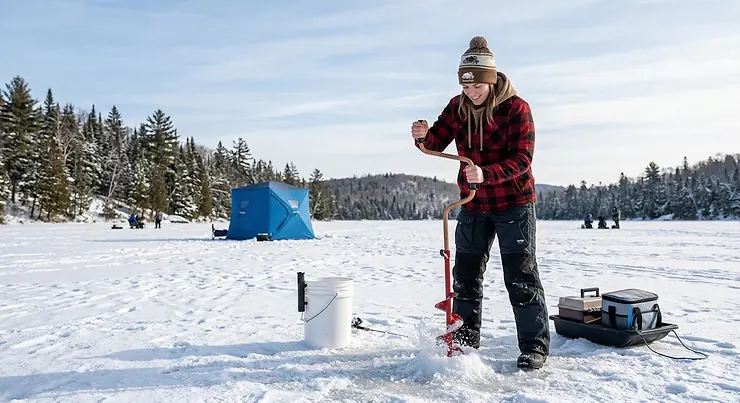
So you’re ready to join the ranks of Canadian ice anglers? Smart choice! But here’s the thing—before you can pull that first perch through the ice, you need to make a hole. And not just any hole, but clean, efficient holes that won’t leave you gasping for air or questioning your life choices. That’s where choosing the right ice auger for beginners becomes absolutely crucial.
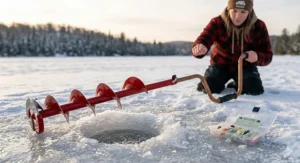
I’ll be honest with you: the first time I tried drilling holes manually with a borrowed hand auger, I thought I’d die on the ice. Twenty-eight centimetres of rock-hard February ice in northern Ontario taught me a valuable lesson—the right tool makes all the difference between a memorable fishing day and a miserable workout session.
Whether you’re eyeing those trophy lake trout in Saskatchewan, chasing walleye on Lake Winnipeg, or simply wanting to enjoy a peaceful perch outing on your local pond, this guide cuts through the marketing hype. We’ve researched actual products available on Amazon.ca, compared real Canadian prices, and gathered feedback from anglers coast to coast. By the time you finish reading, you’ll know exactly which starter ice fishing package fits your budget, physical abilities, and ambitious ice-fishing dreams.
Let’s drill into it (pun absolutely intended).
Quick Comparison Table
| Product | Type | Diameter | Weight | Price (CAD) | Best For |
|---|---|---|---|---|---|
| StrikeMaster Mora MD-6 | Hand | 6″ | 2.7 kg (6 lbs) | $75-$90 | Budget-conscious beginners |
| VEVOR 8″ Nylon Auger Bit | Drill Attachment | 8″ | 2.9 kg (6.4 lbs) | $80-$120 | DIY drill conversion |
| Eskimo E40 8″ Composite | Electric | 8″ | 6.1 kg (13.5 lbs) | $700-$850 | Easiest ice auger to use |
| ION Alpha 8″ | Electric | 8″ | 8.2 kg (18 lbs) | $750-$900 | Premium performance |
| Canadian Tire Drill Adapter Kit | Conversion | Universal | 0.5 kg (1 lb) | $25-$40 | Budget conversion |
| VEVOR 20V Electric Auger | Electric | 8″ | 5.4 kg (12 lbs) | $280-$350 | Mid-range electric |
| StrikeMaster Mora MD-8 | Hand | 8″ | 3.6 kg (8 lbs) | $90-$110 | Larger hand auger |
💬 **Just one click – help others make better buying decisions too!**😊
Top 7 Ice Auger for Beginners: Expert Analysis
1. StrikeMaster Mora MD-6 Hand Auger – The Classic Beginner Choice
If there’s one ice auger for beginners that’s earned legendary status across Canadian ice, it’s the StrikeMaster Mora MD-6. That iconic powder blue colour is as recognizable on frozen lakes as a Tim Hortons cup in a hockey arena.
Key Specifications:
- Blade diameter: 15 cm (6 inches)
- Adjustable handle: 122-145 cm (48-57 inches)
- High-alloy carbon steel blades
- Weight: 2.7 kg (6 lbs)
The beauty of this beginner ice fishing gear lies in its simplicity. You get two-piece handle construction that breaks down for easy transport, soft rubber grips that stay comfortable even through mitts, and powder-coated paint that reduces ice buildup. No batteries to charge, no gas to mix, no complicated maintenance—just pure mechanical efficiency.
Canadian Buyer Feedback: Ontario anglers consistently praise its lightweight design and sharp blade retention. One reviewer from Manitoba noted drilling 20+ holes through 46 cm ice without noticeable dulling. Quebec anglers appreciate that replacement blades are readily available at most outdoor retailers.
✅ Pros:
- Incredibly affordable entry point ($75-$90 CAD)
- No ongoing fuel or battery costs
- Builds upper body strength (okay, that might be debatable)
❌ Cons:
- Labour-intensive on thick ice
- 6-inch diameter limits larger fish species
Availability: Readily available on Amazon.ca with free shipping to most Canadian addresses. Average delivery time: 2-3 business days.
2. VEVOR 8″ Nylon Ice Auger Bit – Budget DIY Powerhouse
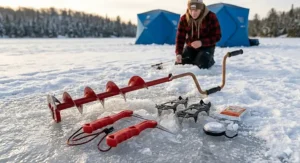
Here’s where things get clever for the budget ice fishing drill setup crowd. The VEVOR 8″ Nylon Auger Bit transforms any cordless drill you already own into a capable ice-drilling machine. It’s like discovering you’ve had a superpower all along—you just needed the right cape.
Key Specifications:
- Rotating diameter: 20 cm (8 inches)
- Effective length: 99 cm (39 inches)
- Nylon flighting with aluminum shaft
- Includes 30 cm extension rod, drill adapter, top plate
The nylon construction might sound concerning, but it’s remarkably durable and lighter than steel alternatives. The sharp steel blades slice through ice efficiently, and the included blade guard protects your investment during transport. One particularly nice touch? The top plate that prevents ice chips from flying into your face—your optometrist will thank VEVOR.
Canadian User Experience: British Columbia ice anglers report excellent performance with Milwaukee 18V drills. Alberta fishers note the lightweight design reduces arm fatigue significantly compared to traditional hand augers. One Saskatchewan reviewer drilled 18 holes through 51 cm of ice on a single drill battery charge.
✅ Pros:
- Exceptional value at $80-$120 CAD
- Works with drills most homeowners already own
- Extension rod adds versatility
❌ Cons:
- Requires 18V+ drill (20V recommended)
- Not quite as fast as dedicated electric augers
Canadian Availability: Ships from Canadian warehouses via Amazon.ca. Many reviewers report 3-5 day delivery across Canada.
3. Eskimo E40 8″ Composite Electric Auger – The Easiest Ice Auger to Use
Want to know what the easiest ice auger to use looks like? You’re looking at it. The Eskimo E40 8″ Composite represents everything modern ice fishing should be—lightweight, powerful, and so simple your ten-year-old could operate it (though maybe keep them supervised).
Key Specifications:
- 40V lithium-ion battery system
- Drilling capacity: Up to 40 metres of ice per charge
- Variable speed trigger with reverse function
- LED drilling light for low-light conditions
- Weight: Just 6.1 kg (13.5 lbs)
This is the auger that changed my mind about electric models. The variable speed trigger lets you ease into cuts, which prevents those jarring moments when you break through unexpectedly. The reverse function flushes slush back down the hole—no more ice scooping between fish. And that LED light? Absolutely brilliant for early morning or late afternoon sessions when Canadian winter daylight is scarce.
Real Canadian Feedback: Ontario guides report cutting 50+ holes per day without recharging. Manitoba anglers praise the Turbo blade system’s performance in compressed, wet ice. One reviewer from Québec noted it cuts “like butter through silk” even in late-season conditions.
✅ Pros:
- Lightest 40V auger in its class
- Exceptional battery life in Canadian cold
- Three-year warranty includes battery
❌ Cons:
- Premium pricing ($700-$850 CAD)
- Composite flight more vulnerable to rocks/gravel
Canadian Availability: Available through Cabela’s Canada and Amazon.ca. Shipped from Canadian distribution centres. Check Cabela’s Canada for current stock levels.
4. ION Alpha 8″ Electric Auger – Premium Performance Leader
If the Eskimo E40 represents smart engineering, the ION Alpha 8″ represents engineering gone absolutely wild in the best possible way. This is what happens when a company obsesses over every detail for a decade.
Key Specifications:
- Gen 3, 40V battery platform
- Cuts up to 61 metres of ice per 4Ah battery charge
- Turbo multi-edge blade system
- Cutting speed: 5.6 cm per second
- Weight: 8.2 kg (18 lbs) with steel flight
ION pioneered high-performance electric augers back in 2012, and the Alpha series represents their third-generation refinement. The multi-edge Turbo blade design creates smooth, efficient holes in both fresh ice and when re-drilling old frozen-over holes. Cross-compatibility with Gen 1 and Gen 3 batteries means you’re buying into a system, not just a tool.
Canadian Market Insights: While slightly heavier than the E40, tournament anglers across the Prairies prefer it for marathon hole-drilling sessions. The aggressive cutting angle handles Manitoba’s notorious hard, dense ice. Yukon guides report reliable cold-weather performance down to -30°C when batteries are kept warm.
✅ Pros:
- Industry-leading cutting efficiency
- Three-year warranty on entire unit
- Planetary gear transmission for optimal torque
❌ Cons:
- Higher price point ($750-$900 CAD)
- Currently limited Canadian availability
Availability: Available through select Canadian retailers and Amazon.com (ships to Canada). Check ION Ice Fishing for Canadian dealer locations.
5. Canadian Tire Drill Adapter Kit – The Budget Conversion Champion
Sometimes the best gear is the gear you don’t have to buy from scratch. Canadian Tire’s Electric Ice Fishing Drill Adapter represents the absolute minimum investment for the first time ice angler testing the waters (or ice, technically).
Key Specifications:
- Universal 1.3 cm (1/2 inch) chuck compatibility
- Stainless steel construction
- Works with existing hand augers
- Requires 18V+ cordless drill
This simple adapter converts your trusty hand auger into a drill-powered setup for under $40 CAD. You’ll need a capable drill (18-20V minimum, preferably brushless), but most Canadian homeowners already have one gathering dust in the garage. Pair this with a basic hand auger, and you’ve got a learning curve ice equipment that won’t break the bank.
Real-World Canadian Performance: New Brunswick anglers report solid performance when paired with DeWalt 20V Max drills. Ontario users note it works beautifully for early-season ice (under 30 cm) but struggles with late-winter thickness. Manitoba fishers recommend keeping a spare drill battery in your jacket to maintain charge in extreme cold.
✅ Pros:
- Incredibly affordable ($25-$40 CAD)
- Available at virtually every Canadian Tire location
- Simple installation
❌ Cons:
- Performance depends entirely on drill quality
- Not ideal for thick ice (45+ cm)
Canadian Availability: In stock at most Canadian Tire stores coast to coast. Also available online with free ship-to-store option. Visit canadiantire.ca for local inventory.
6. VEVOR 20V Electric Ice Auger – The Mid-Range Sweet Spot
Not everyone needs top-tier performance, and not everyone wants to manually crank holes all day. The VEVOR 20V Electric Ice Auger hits that sweet spot between budget and capability that makes it perfect for the starter ice fishing package crowd.
Key Specifications:
- Dual 20V battery system (4000mAh each)
- 20 cm (8 inch) diameter
- Drilling capacity: Up to 25 metres per charge
- Turbo high-speed cutting system
- Weight: 5.4 kg (12 lbs)
What makes this auger interesting is its 2-in-1 design—it includes both ice and earth auger bits. Off-season, use it for fence post holes or garden planting. During winter, you’re drilling ice holes. The ergonomic dual handles provide excellent stability, though you’ll want to brace yourself when breaking through—the torque is substantial.
Canadian Buyer Perspectives: Alberta reviewers note solid performance through 51 cm of ice with battery to spare. One Ontario angler mentioned the steep blade angle requires a firm grip but cuts exceptionally fast. A Nova Scotia fisher appreciated the included safety features and cold-weather battery performance.
✅ Pros:
- Excellent value at $280-$350 CAD
- Multi-season versatility
- Two batteries included
❌ Cons:
- Heavier than composite alternatives
- Some users report jarring at breakthrough
- Steeper learning curve on handling
Availability: Ships from VEVOR’s Canadian warehouse via Amazon.ca. Typical delivery: 5-7 business days across Canada.
7. StrikeMaster Mora MD-8 Hand Auger – The Larger Manual Option
Sometimes bigger is indeed better, especially when you’re targeting lake trout, pike, or other species that appreciate a roomier exit strategy. The StrikeMaster Mora MD-8 offers that 20 cm (8 inch) diameter while maintaining the reliability hand augers are known for.
Key Specifications:
- Blade diameter: 20 cm (8 inches)
- Adjustable handle: 122-145 cm (48-57 inches)
- High-alloy carbon steel blades
- Weight: 3.6 kg (8 lbs)
This is essentially the MD-6’s bigger sibling, sharing the same powder blue aesthetic and bulletproof construction. The larger diameter does mean more resistance when drilling, but the flip side is landing bigger fish becomes significantly easier. You’re also future-proofing your kit—as your skills grow, so can the size of fish you target.
Canadian Field Reports: Saskatchewan walleye anglers love the 8-inch holes for tip-ups. British Columbia ice fishers report the larger diameter makes deploying fish finders much easier. Ontario tournament anglers note the extra weight helps maintain downward pressure when drilling—less effort paradoxically in thick ice.
✅ Pros:
- Perfect for larger fish species
- Proven reliability across Canada
- Compatible with drill adapters
❌ Cons:
- More physically demanding than 6-inch models
- Slightly higher price ($90-$110 CAD)
Canadian Availability: Widely available on Amazon.ca and at outdoor retailers nationwide. Free shipping on orders over $35.
Understanding Ice Auger Types: What Beginners Need to Know
Hand Augers: The Traditional Approach ⚙️
Hand augers represent ice fishing’s purest form—human power converted directly into ice penetration through mechanical advantage. They’re reliable, require zero maintenance beyond blade sharpening, and never run out of “battery” unless you run out of energy first.
Pros: Affordable, silent operation, excellent for fitness, no operational costs Cons: Labour-intensive, challenging in thick ice, slower than powered alternatives
Best for: Budget-conscious beginners, occasional anglers, those fishing thin ice conditions (under 30 cm)
Drill-Powered Systems: The DIY Middle Ground 🔧
These setups combine hand auger affordability with power assistance from cordless drills you likely already own. The learning curve ice equipment sweet spot for many Canadians starting out.
Pros: Leverages existing tools, significantly easier than manual, affordable Cons: Performance depends on drill quality, battery life concerns in extreme cold
Best for: Beginners with existing quality cordless drills, budget-focused anglers, those testing the ice fishing waters
Electric Augers: Modern Convenience ⚡
Battery-powered augers represent the current gold standard for combining portability, power, and ease of use. They’re quiet, emission-free, and increasingly affordable.
Pros: Fast drilling, minimal effort, cold-weather reliable, environmentally friendly Cons: Higher upfront cost, batteries need winter care, heavier than hand augers
Best for: Serious beginners committing to the sport, those with physical limitations, anglers drilling many holes
How to Choose Ice Auger for Beginners in Canada: 7 Essential Factors
1. Assess Your Budget Realistically 💰
Entry-level hand augers start around $75 CAD. Drill conversion kits range $100-$150. Quality electric models begin at $280 and climb to $900+. Remember—factor in accessories like blade covers, carrying cases, and potential drill purchases.
2. Consider Your Physical Capabilities 💪
Be honest about your fitness level. Hand augers through thick Canadian ice demand significant upper body strength and endurance. If you have shoulder, back, or joint concerns, electric models aren’t luxury—they’re accessibility.
3. Match Blade Size to Your Target Species 🐟
6-inch diameter handles panfish, perch, and smaller walleye perfectly. 8-inch openings accommodate lake trout, northern pike, and larger game fish. Start smaller if unsure—you can always upgrade.
4. Calculate Your Typical Ice Thickness 📏
Southern Ontario? Expect 30-45 cm. Northern Manitoba or Saskatchewan? You might see 90+ cm. Thicker ice demands more powerful systems or serious stamina for hand drilling.
5. Factor in Transportation and Storage 🚗
Two-piece hand augers fit in most car trunks. Bulky electric models need more space. Consider your vehicle and storage shed dimensions before committing to larger equipment.
6. Evaluate Long-Term Costs 💵
Hand augers: Minimal (occasional blade replacement) Drill conversions: Battery replacements every 2-3 years Electric augers: Battery/charger maintenance, potential motor service
7. Research Canadian Availability and Support 🍁
Prioritize brands with Canadian distribution, readily available replacement parts, and reasonable warranty support. Nothing worse than waiting weeks for parts shipped from overseas during prime ice season.
✨ Don’t Miss These Exclusive Deals!
🔍 Take your ice fishing setup to the next level with these carefully selected products available in Canada.Click on any highlighted item to check current pricing and availability on Amazon.ca. These tools will help you create authentic fishing memories your family will love!
Essential Accessories for Your First Season
Blade Guards and Covers 🛡️
Never, and I mean never, transport an auger without blade protection. One slip loading into your truck, and you’re looking at lacerated hands or damaged blades. Quality covers cost $15-$30 CAD—cheap insurance.
Carrying Systems 🎒
Hand augers aren’t heavy, but they’re awkward. Purpose-built carrying straps or sheaths ($20-$50) transform clumsy wrestling matches into smooth, one-handed transport. Look for padded options that distribute weight across your shoulder.
Replacement Blades 🔪
Even quality blades dull, especially if you hit gravel or frozen slush pockets. Having backup blades ($25-$50 per set) keeps you fishing instead of heading home frustrated. Store them properly—moisture causes rust faster than you’d think in Canadian winters.
Ice Scoops and Skimmers 🥄
You’ll create slush drilling holes—fact of ice fishing life. A quality ice scoop ($15-$30) removes that slush efficiently so you’re not fishing in ice soup. The collapsible models pack easier but sacrifice some durability.
Auger Extensions 📐
Late-season ice in northern Canada can exceed standard auger lengths. Extension rods ($30-$60) add 30-38 cm, ensuring you can drill through even the thickest ice safely. Essential for Prairie and northern fishing.
Ice Safety Essentials for Canadian Anglers 🇨🇦
Before we go further, let’s talk about something more important than any equipment—staying alive on frozen water. According to Ontario’s official ice fishing guidelines, anglers must exercise extreme caution and follow established safety protocols.
Minimum Safe Ice Thickness Guidelines 📊
- 10 cm (4 inches): Walking, ice fishing
- 13 cm (5 inches): Snowmobile or ATV
- 20-30 cm (8-12 inches): Small vehicles
- 30-38 cm (12-15 inches): Medium trucks
Critical Canadian Context: These measurements assume clear, solid ice. White or “snow ice” requires double thickness. Moving water areas demand even greater caution.
Test Ice Thickness as You Go 🔍
Your auger isn’t just for fishing holes—use it to check ice depth every 10-15 metres as you move across frozen water. Near-shore ice is typically thicker and safer than mid-lake areas, especially early season.
Required Safety Equipment ⚠️
Canadian provinces mandate different requirements, but universally recommended:
- Ice picks or awls (for self-rescue if you break through)
- Rope throw bag (50+ feet)
- Waterproof matches and fire starter
- Extra dry clothes in waterproof bag
- Whistle (sound carries farther than yelling)
Important: According to Fisheries and Oceans Canada recreational fishing guidelines, anglers are responsible for their own safety. Provincial regulations vary—check your local requirements.
Maintenance and Care: Making Your Investment Last
Post-Session Cleaning Protocol 🧼
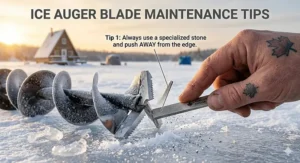
After every outing, wipe down blades with a dry cloth to remove ice residue and moisture. Spray with silicone lubricant or WD-40 to prevent rust. Don’t skip this—Canadian winters alternate between wet and dry, creating perfect corrosion conditions.
Blade Sharpening Techniques 🔧
Hand-sharpen blades using a flat file, maintaining the original bevel angle. Work both the inside and outside cutting edges. For best results, professional sharpening services ($15-$25) restore factory-edge quality. Most Canadian outdoor retailers offer this service.
Battery Care for Electric Models 🔋
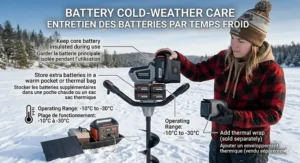
Store lithium batteries between 40-60% charge in room temperature environments. Never leave them in vehicles during extreme cold—battery life plummets and charging becomes problematic. Before heading out, warm batteries in your jacket for 10-15 minutes.
Long-Term Storage Best Practices 📦
Clean thoroughly, oil blades generously, and store in a dry location. Loosen any tension on springs or mechanisms. Hand augers should be fully extended to prevent spring compression over months. Cover blades even in storage—curious kids or pets are disaster magnets.
Provincial Ice Fishing Regulations You Should Know 📜
Canada’s ice fishing rules vary significantly by province. Here’s what beginners need to know:
Ontario Regulations 🦌
- Two lines maximum while ice fishing (in most zones)
- Must stay within 60 metres of your lines with clear view
- Ice hut registration required in certain zones
- Specific removal dates for ice shelters (varies by zone)
Full details available through Ontario’s Recreational Fishing Regulations.
Other Provincial Considerations 🏔️
- Quebec: Single-line restrictions in some waters
- Manitoba: Specific licensing requirements for out-of-province anglers
- Saskatchewan: Night fishing restrictions vary by water body
- British Columbia: Different regulations for saltwater vs. freshwater ice fishing
Pro Tip: Download your province’s regulations app or PDF before heading out. Cell service is spotty on remote Canadian lakes.
Beginner Ice Fishing Techniques: Beyond Just Drilling
Hole Placement Strategy 🎯
Don’t just drill random holes—work systematically. Start near structure (drop-offs, weed edges, points) and pattern outward. Space holes 3-5 metres apart initially, then tighten based on where you mark fish.
Dealing with Thick Ice Challenges 💪
When facing 60+ cm of ice:
- Drill slowly, clearing ice chips every 15-20 cm
- Rest periodically—exhaustion leads to poor drilling form
- Consider drilling partial holes one day, completing them next session
- For hand augers, body weight provides downward pressure, not arm strength
Multi-Hole Efficiency Tips ⏱️
Tournament anglers often drill all their holes early morning when they’re fresh, then focus on fishing. For beginners, drill 3-4 exploratory holes initially. Once you locate active fish, drill more nearby rather than running yourself ragged upfront.
Seasonal Ice Condition Adjustments 🌡️
Early season (December-January): Ice drills easily, chips clear cleanly Mid-winter (January-February): Compressed ice requires more effort but cuts predictably
Late season (March-April): Wet, slushy conditions clog augers—clean frequently
Electric vs Gas vs Hand Augers: The Complete Comparison ⚖️
Gas-Powered Augers: Why They’re Less Popular for Beginners 🛢️
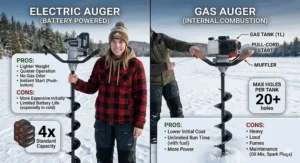
While gas augers still dominate in certain professional circles, they’ve fallen out of favour with beginners for good reasons. Yes, they deliver tremendous power through thick ice. Yes, they’ll run all day with jerry cans of fuel. But they’re also heavy (typically 11-14 kg), require two-stroke fuel mixing, demand regular maintenance, and produce exhaust—not ideal inside ice shelters.
For Canadian beginners, gas augers represent unnecessary complexity. Modern electric options match or exceed gas performance without the hassle. Unless you’re drilling commercially or routinely face 120+ cm of ice, skip the gas route entirely.
Electric Augers: The Modern Standard ⚡
Battery technology transformed ice fishing dramatically over the past decade. Lithium-ion systems now provide:
- Sufficient power for any realistic ice thickness
- All-day operation on single charges
- Quiet operation (spooks fewer fish)
- Zero emissions (safe for enclosed spaces)
- Minimal maintenance requirements
The only real downside? Initial cost. Quality electric augers start around $700 CAD compared to $300-$400 for gas alternatives. However, factor in fuel, oil, maintenance, and aggravation costs—electric often wins financially over 3-5 years.
Hand Augers: Don’t Count Them Out Yet 💪
Before dismissing manual augers as archaic, consider their legitimate advantages:
Reliability: Zero moving parts beyond basic mechanics mean nothing breaks down mid-lake
Exercise: Drilling holes provides legitimate upper-body workout (bonus in sedentary winters)
Silence: Completely quiet operation doesn’t disturb nearby anglers or spook fish
Cost: Exceptional value with minimal ongoing expenses
Portability: Lightweight and compact for hiking long distances
Manitoba fishing guide Sarah Thompson told me she still uses hand augers for early-morning scouting missions: “I can hike farther with less weight, and the quiet drilling lets me check multiple holes without disturbing the entire lake.”
Understanding Blade Types and Maintenance 🔪
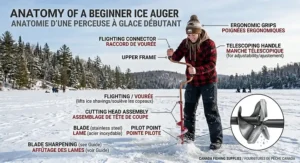
Straight-Cut vs Curved Blades: What’s the Difference?
Straight-cut blades (like those on StrikeMaster Mora) create cleaner, more predictable cuts through compressed ice. They’re easier to sharpen and generally last longer. The trade-off? Slightly slower drilling speed and more prone to jamming in wet, slushy ice conditions.
Curved blades (like Eskimo’s Turbo system) aggressively attack ice at angles, producing faster cuts and better performance in varied conditions. They handle slush and re-drilling old holes better. The downside? More complex sharpening requirements and typically higher replacement costs.
For beginners, straight-cut blades on quality hand augers represent the best learning platform. You’ll understand ice cutting mechanics before graduating to more aggressive systems.
When to Replace vs Sharpen Blades 🔧
Sharpen when:
- Edges feel dull to touch but no visible damage
- Drilling takes 20-30% longer than normal
- Holes show rough edges but cut complete
- You’ve used the auger 20-30 times since last sharpening
Replace when:
- Visible chips, cracks, or bends in blade edges
- One blade significantly more worn than partner
- Sharpening twice doesn’t restore performance
- Blade mounting holes show elongation
Canadian anglers typically get 2-3 seasons from quality blades with proper care and periodic sharpening. Hitting gravel or frozen slush pockets accelerates wear dramatically.
Common Beginner Mistakes to Avoid 🚫
Buying Too Cheap, Too Soon 💸
That $40 hand auger from a discount retailer? It’ll last two trips before blades round off or handles bend. Invest in quality once rather than replacing cheap gear repeatedly. Your knuckles will thank you.
Ignoring Ice Chips During Drilling 🌨️
Letting chips accumulate in the flight creates resistance and dulls blades faster. Every 15 cm, reverse direction briefly to clear chips. Electric augers with reverse function make this effortless.
Drilling Straight Through Without Caution ⚡
That final break-through moment releases tension suddenly—many beginners lose control or fall. As you feel resistance decrease near breakthrough, slow your drilling speed and brace yourself.
Neglecting Cold-Weather Battery Management 🥶
Lithium batteries lose significant capacity below -10°C. Keep spare batteries inside your jacket against body heat. Swap them into the auger warm, then rotate back inside. This strategy doubles effective runtime.
Forgetting Provincial Fishing Regulations 📋
Different waters have different seasons, limits, and restrictions. That beautiful lake you’re drilling might be catch-and-release only, or closed entirely to ice fishing. Check before, not after.
Over-Drilling and Exhausting Yourself Early 😓
Enthusiasm kills many beginner outings. You drill 30 holes in the first hour, exhaust yourself, and lack energy to actually fish effectively. Start with 5-7 strategic holes. Add more only after assessing conditions and locating active fish.
Building Your Complete Starter Ice Fishing Package 📦
The Minimalist Setup ($200-$300 CAD) 🎣
- StrikeMaster Mora MD-6 hand auger ($80)
- Basic ice fishing rod/reel combo ($60)
- 5-gallon bucket ($10)
- Ice scoop ($15)
- Tip-ups (optional, $25 each)
- Tackle basics ($50-$100)
This gets you on the ice and catching fish. Manual drilling provides excellent workout, and you’re testing whether ice fishing suits you without major financial commitment.
The Practical Setup ($500-$700 CAD) 💼
- VEVOR 8″ Nylon Auger Bit + quality 20V drill ($200)
- Two ice fishing combos ($120)
- Portable shelter (optional, $150-$200)
- Flasher fish finder ($150-$250)
- Quality tackle and accessories ($100)
This setup covers most scenarios and grows with your skills. The drill-powered auger provides power assistance without electric auger costs.
The Premium Beginner Setup ($1200-$1500 CAD) 🌟
- Eskimo E40 or ION Alpha electric auger ($800)
- Flip-over shelter with integrated seating ($300-$400)
- Quality sonar system ($250-$300)
- Multiple rod setups ($200)
- Comprehensive tackle selection ($150)
For those certain they’ll become serious ice anglers, this package eliminates compromise. You’ll have equipment that performs reliably for years.
Frequently Asked Questions (FAQ) ❓
❓ What size ice auger is best for beginners in Canada?
❓ Can you use a regular cordless drill for ice fishing?
❓ How thick does ice need to be for ice fishing in Canada?
❓ What is the easiest ice auger to use for seniors or beginners?
❓ How much does a good starter ice auger cost in Canada?
Conclusion: Choosing Your Path to Ice Fishing Success 🎯
Let’s bring this full circle. Whether you’re standing in a Canadian Tire aisle completely overwhelmed or scrolling through Amazon.ca at 2 AM researching your first purchase, remember this: the “perfect” ice auger for beginners doesn’t exist. What exists is the perfect auger for you.
If budget constraints dominate your decision, the StrikeMaster Mora MD-6 delivers decades-proven reliability at entry-level pricing. You’ll build character (and biceps) drilling manually while learning whether ice fishing captures your heart long-term.
For those owning quality cordless drills, the VEVOR 8″ Nylon Auger Bit transforms existing tools into capable ice-boring machines. This budget ice fishing drill setup leverages what you already have while providing legitimate drilling power.
When you’re ready to eliminate physical barriers and drilling becomes something you barely think about, the Eskimo E40 represents the easiest ice auger to use that Canadian money can buy. It’s investment-level pricing, but it’s also “drill dozens of holes without breaking a sweat” capability.
Whichever path you choose, remember that the best ice auger is simply the one that gets you out on frozen water pursuing fish. Canadian ice fishing represents one of our nation’s greatest winter traditions—a perfect blend of outdoor adventure, social connection, and the eternal optimism that this hole will produce the trophy catch.
Now stop researching and start drilling. Those fish won’t catch themselves.
Tight lines and safe ice! 🇨🇦🎣
Recommended for You
- 7 Best Ice Auger Extension Kits Canada 2026 | Deep Ice Drilling
- 7 Best Ice Auger Blade Replacement Options Canada 2026
- 7 Best 6 Inch Ice Augers Canada 2026
Disclaimer: This article contains affiliate links to Amazon.ca. If you purchase products through these links, we may earn a small commission at no additional cost to you.
✨ Found this helpful? Share it with your friends! 💬🤗
