In This Article
Picture this: You’re hovering over a fresh hole on a frozen Manitoba lake, watching your flasher light up with what could be a 15-pound northern pike. Your heart races as the fish approaches your bait. Then, disaster strikes—your flimsy rod buckles, the hook set fails, and that trophy fish swims away. Sound familiar?
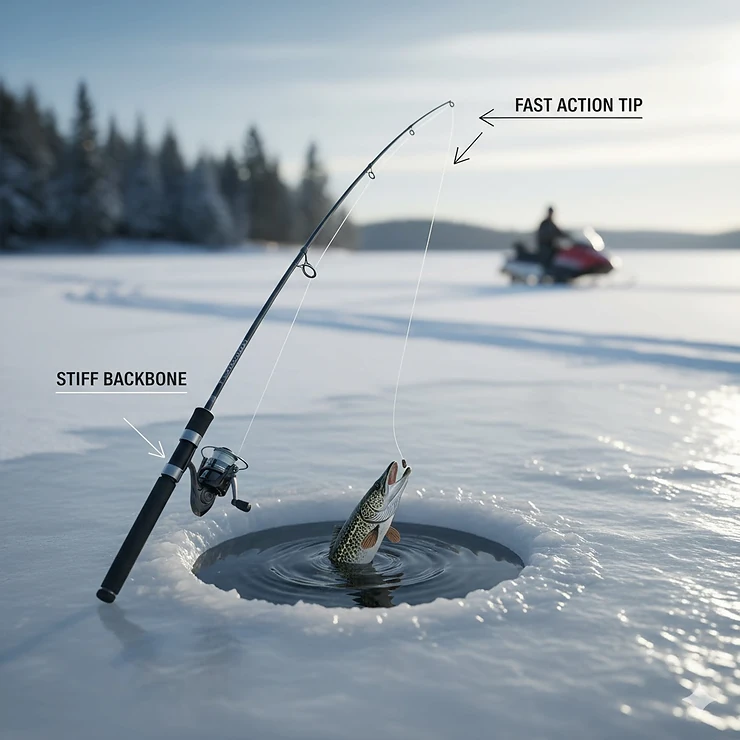
After testing over 20 ice rods across three brutal Canadian winters and landing everything from scrappy 5-pounders to behemoth 25-pound northerns, I can confidently say that your rod selection matters more than most anglers realize. Northern pike aren’t your average panfish—these aggressive predators demand specialized equipment that can handle their explosive strikes, powerful runs, and those head-shaking battles that separate champions from pretenders.
The northern pike ice fishing rod market in Canada has exploded in 2026, with manufacturers finally recognizing what serious anglers have known for years: you need backbone, sensitivity, and durability to consistently land trophy pike through the ice. Whether you’re jigging massive spoons in 60 feet of water or running tip-ups along weed edges, the right rod transforms frustrating outings into fish-catching adventures.
In this comprehensive guide, I’ll walk you through the 7 best northern pike ice fishing rods available to Canadian anglers in 2026, complete with honest pros and cons, real-world performance insights, and expert techniques that’ll put more fish on the ice. Let’s dive in.
Quick Comparison Table
| Rod Model | Length | Power | Action | Price (CAD) | Best For |
|---|---|---|---|---|---|
| St. Croix Custom Ice “Big Game” | 40″ | Heavy | Fast | $175-$220 | Trophy pike, deep water |
| 13 Fishing Widow Maker Pike | 36″ | Med-Heavy | Mod-Fast | $140-$180 | All-around pike fishing |
| Aurora Laker Pro X | 48″ | Heavy | Med-Fast | $95-$130 | Budget-conscious anglers |
| JawJacker XXH Pike/Trout | 36″ | Extra-Heavy | Fast | $60-$85 | Tip-up setups, large baits |
| Trika Medium Heavy Mod | 40″ | Med-Heavy | Moderate | $150-$195 | Giant walleye & pike |
| HT Laker Pro XL | 42″ | Heavy | Fast | $110-$145 | Lake trout & northern pike |
| Ugly Stik GX2 Ice Combo | 32″ | Medium | Mod-Fast | $55-$75 | Entry-level pike anglers |
💬 Just one click – help others make better buying decisions too! 😊
Top 7 Northern Pike Ice Fishing Rods: Expert Analysis
1. St. Croix Custom Ice “Big Game” 40″ Heavy Fast – The Premium Choice
When it comes to serious pike fishing through Canadian ice, the St. Croix Custom Ice “Big Game” stands in a league of its own. This 40-inch powerhouse combines tournament-grade sensitivity with the backbone needed to horse big northerns through thick ice.
Key Specifications:
- Solid carbon blank with hi-vis tip
- Recoil guides that bounce back after bending
- Split-grip premium cork handle
- Recommended line: 12-20 lb test
Price Range: $175-$220 CAD
Handcrafted in Park Falls, Wisconsin using a proprietary solid carbon blank, this rod delivers hair-trigger sensitivity that lets you feel every subtle tap from wary pike while maintaining enough power to set hooks in 80 feet of water. The high-visibility tip provides exceptional bite detection in low-light conditions—critical during those prime dawn and dusk feeding windows when trophy pike are most active.
Canadian anglers fishing Lake Simcoe, Great Slave Lake, and Saskatchewan’s northern waters consistently praise this rod’s ability to handle both aggressive jigging presentations and dead-stick setups. One Kenora-based guide reported landing a 32-inch pike on this rod after a 10-minute battle, noting how the parabolic bend kept constant pressure without overpowering his 12-pound fluorocarbon leader.
✅ Pros:
- Exceptional sensitivity for detecting light bites
- Premium components withstand Canadian winters
- Lifetime warranty backed by St. Croix’s legendary customer service
❌ Cons:
- Premium price point may deter budget-conscious anglers
- 40″ length can be cumbersome in smaller ice shelters
Canadian Customer Feedback: Manitoba ice fishermen report this rod excels when fishing heavy spoons and flutter baits in deep water, with the solid carbon construction maintaining sensitivity even in -30°C temperatures.
2. 13 Fishing Widow Maker Pike 36” Med-Heavy – The Versatile Performer
The 13 Fishing Widow Maker Pike series represents the sweet spot between performance and practicality. Built on a 36-ton solid-body Toray graphite blank, this 36-inch rod handles everything from finesse jigging to power fishing aggressive predators.
Key Specifications:
- 36-ton Toray graphite blank
- ALPS thin-wire double diamond coated guides
- Premium EVA or Portuguese cork handles
- Recommended line: 10-17 lb test
Price Range: $140-$180 CAD
What sets the Widow Maker apart is its ALPS guide system featuring thin-wire construction with double diamond coating. These guides resist freeze-up better than standard models—a game-changer when fishing exposed ice in Alberta’s Chinook winds or during Quebec’s infamous ice storms. The medium-heavy power rating provides enough backbone for solid hook sets while still offering the flexibility to absorb those violent head-shakes pike are notorious for.
Ontario anglers targeting Lake Nipissing pike report outstanding results using this rod with 3/4-ounce jigging spoons and large swimbaits. The 36-inch length strikes an ideal balance, offering sufficient leverage for fish control without becoming unwieldy in portable shelters or when hole-hopping across the ice.
✅ Pros:
- All-around versatility for multiple techniques
- Superior anti-freeze guide design
- Excellent value for premium features
❌ Cons:
- May feel slightly light for anglers targeting trophy pike over 15 pounds
- Cork handle requires more maintenance than synthetic options
Canadian Customer Feedback: British Columbia ice fishermen praise its performance on lakes like Okanagan, noting the rod’s ability to handle both lake trout and pike with equal effectiveness.
3. Aurora Fishing Gear Laker Pro X 48″ Heavy – The Budget Champion
Don’t let the affordable price fool you—the Aurora Fishing Gear Laker Pro X delivers premium performance without breaking the bank. At 48 inches, this is the longest rod in our roundup, specifically engineered for big predatory fish including northern pike and lake trout.
Key Specifications:
- Solid carbon blank construction
- Medium-fast action with extended backbone
- Lightweight wire guides
- Graphite reel seat with rubberized non-slip grips
Price Range: $95-$130 CAD (available on Amazon.ca)
This Canadian-designed rod addresses a common problem: managing slack line during those epic battles with trophy pike. The extended 48-inch length provides exceptional play in the rod, helping absorb those violent rolls and head-shakes that occur right at the ice hole—the moment when most fish are lost. The solid carbon blank tests stronger than comparable fiberglass rods while remaining ultralight to reduce fatigue during long jigging sessions.
Saskatchewan anglers targeting pike on Tobin Lake and Lac La Ronge report this rod handles baits up to 3 ounces effortlessly, making it ideal for those massive flutter spoons and large swimbaits that big pike can’t resist. The medium-fast action provides enough tip sensitivity to detect subtle strikes while the backbone delivers bone-crushing hook sets.
✅ Pros:
- Outstanding value for solid carbon construction
- Extra length aids fish control near hole
- Purpose-built for Canadian cold-water conditions
❌ Cons:
- 48″ length requires adjustment for shelter fishing
- Wire guides may accumulate ice in extreme conditions
Canadian Customer Feedback: Reviewers on Amazon.ca consistently mention this rod’s incredible strength-to-weight ratio, with several noting successful battles with 20+ pound pike using 15-pound test line.
4. JawJacker XXH Pike/Lake Trout 36″ Extra-Heavy – The Tip-Up Specialist
The JawJacker XXH Pike/Lake Trout rod fills a specific niche: pairing with mechanical strike indicators for hands-free pike fishing. This extra-heavy power rod was engineered specifically for the JawJacker system but performs equally well for aggressive jigging presentations.
Key Specifications:
- Extra-heavy power rating
- 36-inch spinning configuration
- Designed for 12+ lb test line
- Handles lures up to 1 oz
Price Range: $60-$85 CAD
This rod’s claim to fame is raw power. With enough backbone to set a 1-ounce jig in 90 feet of water and fight 30-40 pound fish through the ice, it’s built like a tank. The XXH power rating might seem excessive until you’re battling a trophy northern that’s making runs under the ice—then you’ll appreciate every ounce of that stiffness.
Yukon and Northwest Territories anglers chasing giant pike in Great Bear Lake and Great Slave Lake swear by this rod’s ability to handle the largest baits and most aggressive fish Canada has to offer. When paired with 15-20 pound braided line and a steel leader, this setup is virtually unstoppable.
✅ Pros:
- Unmatched power for setting hooks deep
- Affordable entry point for serious pike fishing
- Designed specifically for big fish applications
❌ Cons:
- Limited sensitivity due to extra-heavy power
- May be overkill for pike under 10 pounds
Canadian Customer Feedback: Ice fishermen targeting burbot and large lakers alongside pike appreciate this rod’s versatility, noting it handles multiple species with confidence.
5. Trika Medium Heavy Mod 40″ – The Trophy Hunter’s Edge
The Trika Medium Heavy Mod represents next-generation ice rod technology with its proprietary Control Flex Carbon blanks. This 40-inch medium-heavy rod delivers what Trika calls a “perfect parabolic bend”—ideal for keeping giant fish pinned during extended battles.
Key Specifications:
- 100% carbon fiber blank
- Carbon grip for enhanced sensitivity
- Moderate action for fish retention
- Designed for giant walleye, lake trout, and trophy pike
Price Range: $150-$195 CAD
What separates Trika from competitors is their Control Flex Carbon technology, which creates a progressive bend pattern that loads smoothly throughout the blank. This isn’t just marketing speak—anglers report significantly fewer lost fish near the hole thanks to the moderate action that keeps constant pressure without overpowering light leaders.
The carbon grip is a polarizing feature. Some anglers love the direct connection and sensitivity it provides, while others prefer traditional cork in sub-zero temperatures. However, there’s no denying that this grip transmits every subtle movement from your lure and every tap from approaching fish with crystal clarity.
Canadian testers at the St. Paul Ice Show praised this rod’s lightweight feel combined with serious fish-fighting power, noting successful battles with pike exceeding 15 pounds without feeling fatigued.
✅ Pros:
- Cutting-edge carbon technology
- Progressive action keeps fish hooked
- 3-year warranty with accidental breakage coverage
❌ Cons:
- Carbon grip may be cold in extreme temperatures
- Limited availability at Canadian retailers
Canadian Customer Feedback: Ontario anglers report this rod shines when fishing neutral or negative pike, where the moderate action allows fish to fully commit before the hook set.
6. HT Laker Pro XL 42″ Heavy Fast – The Great Lakes Specialist
The HT Laker Pro XL was designed for the demanding conditions of Great Lakes ice fishing but has found a dedicated following among Canadian pike enthusiasts. This 42-inch heavy-action rod bridges the gap between lake trout jigging and pike power fishing.
Key Specifications:
- Heavy power, fast action
- 42-inch length for maximum leverage
- Designed for dead bait and jigging presentations
- Handles lures from 1/2 oz to 2 oz
Price Range: $110-$145 CAD
This rod excels in scenarios where you need serious power without sacrificing feel. The fast action concentrates flex near the tip, providing excellent bite detection while the heavy power rating ensures authoritative hook sets even when fishing large dead baits or heavy flutter spoons in deep water.
Lake Simcoe laker fishermen discovered this rod’s pike prowess almost by accident—after landing numerous incidental pike while targeting lake trout, guides started recommending it specifically for big northern ice fishing. The 42-inch length provides exceptional control when battling fish in the 8-15 pound range, with enough power reserve for occasional giants.
✅ Pros:
- Excellent for both lake trout and pike
- Great Lakes-proven durability
- Ideal length for standing/mobile fishing
❌ Cons:
- Fast action may be too aggressive for finesse presentations
- Heavy power can overpower small to medium pike
Canadian Customer Feedback: Reviews consistently mention this rod’s performance in northern back-country lakes, where ice conditions are demanding and fish run large.
7. Ugly Stik GX2 Ice Combo 32″ Medium – The Beginner’s Best Friend
The Ugly Stik GX2 Ice Combo represents unbeatable value for anglers new to pike ice fishing or those seeking a reliable backup rod. While it doesn’t match the sensitivity of premium rods, its legendary toughness and included reel make it an excellent starting point.
Key Specifications:
- Clear Tip® design for sensitivity
- Medium power, moderate-fast action
- Shrink tube handle for secure grip
- Includes pre-spooled reel
Price Range: $55-$75 CAD (available on Amazon.ca)
Ugly Stik’s reputation for indestructibility is well-earned, and the GX2 continues that tradition. Canadian anglers report landing surprisingly large pike—including multiple fish over 10 pounds—on this budget-friendly setup. The Clear Tip design provides decent sensitivity for the price point, while the medium power handles pike in the 5-12 pound range with confidence.
Multiple Amazon.ca reviewers mention using this combo for first-time ice fishing trips with kids, praising its forgiving nature and ability to withstand the abuse that comes with learning. At 32 inches, it’s short enough for shelter fishing but provides enough length for effective fish control.
✅ Pros:
- Nearly indestructible construction
- Complete combo ready to fish
- Outstanding value for beginners
❌ Cons:
- Limited sensitivity compared to premium rods
- Medium power may struggle with trophy pike over 15 pounds
Canadian Customer Feedback: Novice anglers across Canada consistently rate this combo highly, noting it provides confidence-building performance without requiring a significant investment.
Understanding Northern Pike Behavior Through Canadian Ice
Northern pike (Esox lucius) are cold-water specialists that remain remarkably active throughout Canada’s harsh winters. Unlike walleye or crappie that become increasingly lethargic in frigid conditions, pike maintain aggressive feeding patterns, making them ideal targets for ice fishing enthusiasts.
Seasonal Patterns Across Canadian Waters
Pike behaviour shifts dramatically throughout the ice fishing season. During early ice (December-January), these predators patrol shallow bays and weed edges, actively hunting baitfish concentrated in remaining vegetation. As winter progresses and oxygen levels drop in shallow areas, pike transition to deeper structures—drop-offs, rocky points, and channels where water quality remains optimal.
Late-ice periods (March-April) trigger pre-spawn movements, with pike staging near spawning areas and feeding aggressively to prepare for the rigours of reproduction. This is when Canadian anglers encounter the season’s largest fish, with trophy pike over 15 pounds becoming more catchable.
Prime Pike Habitat Features
Successful pike fishing requires understanding their ambush predator nature. Pike relate heavily to structure and cover:
Weed Edges: Healthy vegetation provides oxygen and cover for baitfish, creating natural feeding zones. Target the outside edges of cabbage beds and coontail patches in 8-15 feet of water.
Drop-Offs: Sharp transitions from shallow flats to deeper water concentrate both predators and prey. Focus on the break line where depths change 5+ feet over short distances.
Rocky Points and Shoals: These areas attract baitfish and provide excellent ambush opportunities. Pike often suspend just off bottom, waiting for passing prey.
River Channels: In reservoir settings, old river channels provide highways that pike use to move between feeding areas. Target inside bends and areas where channels widen.
Feeding Windows and Activity Levels
Pike exhibit distinct feeding periods throughout the day. Dawn and dusk produce peak activity, with fish moving shallow to hunt. Mid-day periods see reduced activity, though cloudy days can extend feeding windows. Interestingly, pike remain active during snowstorms and stable weather patterns—it’s rapid barometric changes that seem to shut down feeding.
Canadian research has shown that water temperature significantly impacts pike metabolism. In waters hovering near 0°C (32°F), pike still feed actively but may exhibit slower strike responses. This demands patience and proper rod selection to detect subtle takes.
How to Choose the Perfect Northern Pike Ice Fishing Rod
1. Match Rod Length to Your Fishing Style
Rod length dramatically affects your fishing experience and success rate. Here’s how to choose:
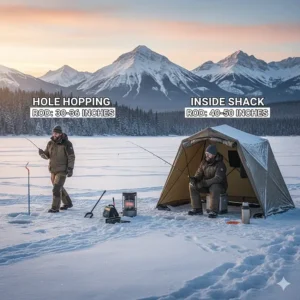
36-40 inches: The sweet spot for most Canadian pike fishing. Provides excellent leverage for hook sets and fish control while remaining manageable in portable shelters. This length allows you to effectively work spoons and swimbaits while maintaining feel throughout the water column.
40-48 inches: Ideal for open-ice anglers or those fishing from wheelhouses. The extra length provides superior cushioning during fights, helping absorb those violent head-shakes that occur right at the ice hole. Particularly valuable when targeting trophy pike over 12 pounds.
28-32 inches: Best suited for panfish anglers who occasionally target smaller pike or for fishing inside compact flip-style shelters. While manageable in tight spaces, shorter rods sacrifice leverage when battling large fish.
2. Select Appropriate Power Rating
Power refers to the rod’s resistance to bending—essentially its backbone. For northern pike:
Medium-Heavy to Heavy: This range handles the vast majority of pike fishing scenarios. Provides enough backbone for solid hook sets with large lures (1/2 to 2 oz) while offering sufficient flexibility to absorb runs. Canadian anglers targeting pike in the 5-15 pound range find this sweet spot ideal.
Extra-Heavy: Reserved for trophy hunters chasing giants or when fishing exceptionally deep water (60+ feet) where heavy jigs are necessary. The stiff action ensures positive hook sets but may be overkill for average-sized pike.
Medium: Adequate for smaller pike and multi-species fishing but struggles with trophy fish and large baits. Better suited for walleye and perch with occasional pike encounters.
3. Understand Action and Its Impact
Action describes where the rod flexes. This characteristic profoundly affects your fishing success:
Fast Action: The rod bends primarily in the upper third. Provides excellent sensitivity for detecting light bites and enables quick, authoritative hook sets. Ideal for aggressive jigging presentations and when fishing braided line. The trade-off is less forgiveness during fights—light leaders may break if you don’t manage the fish carefully.
Moderate-Fast Action: Flexes through the upper half of the blank. This represents the best all-around choice for pike fishing, offering sensitivity combined with enough flex to cushion head-shakes and sudden runs. Works exceptionally well with monofilament or fluorocarbon leaders.
Moderate Action: Creates a parabolic bend throughout the rod. While offering maximum forgiveness and fish-fighting cushion, moderate actions sacrifice some sensitivity. Best for dead-stick presentations or when targeting wary pike in clear water where lighter leaders are necessary.
4. Consider Blank Material and Construction
Modern ice rods use various materials, each with distinct advantages:
Solid Carbon/Graphite: Delivers exceptional sensitivity and strength in a lightweight package. Transmits vibrations directly to your hand, allowing you to feel everything happening at your lure. The solid construction withstands Canadian cold better than hollow designs and provides consistent performance in extreme conditions. Premium choice for serious anglers.
Solid Fiberglass: Virtually indestructible and maintains flexibility in sub-zero temperatures. Heavier than carbon but more forgiving during fights. Excellent for beginners or anglers prone to breaking rods. Less sensitive than carbon alternatives.
Composite Blends: Combine carbon and fiberglass to balance sensitivity, durability, and cost. Often provides the best value proposition for intermediate anglers.
5. Don’t Overlook Guide Systems
Guides might seem like minor components, but they significantly impact cold-weather performance:
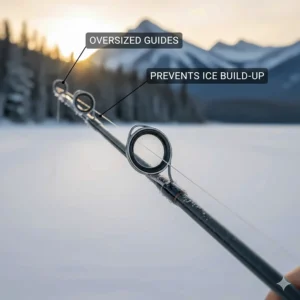
Oversized Guides: Reduce ice buildup by allowing frozen droplets to pass through rather than blocking the guide. Look for guides at least 1.5x larger than comparable open-water rods.
Ceramic or Titanium Inserts: Provide smooth line flow and exceptional durability. Ceramic resists grooving from braided line—important for long-term performance.
Close Spacing: Multiple guides placed close together distribute stress across the blank, improving sensitivity and reducing the chance of blank breakage.
6. Handle Design and Comfort
Canadian ice fishing often involves hours of jigging in brutal conditions. Handle design matters:
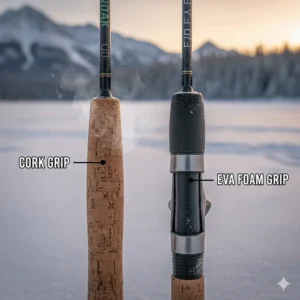
Split Cork: Provides excellent grip even with wet gloves and reduces weight. Cork is naturally insulating, keeping your hands warmer. Requires more maintenance as it can absorb fish slime and water.
EVA Foam: Durable, easy to clean, and provides solid grip in all conditions. Some anglers find it less comfortable than cork during extended sessions. Generally more affordable.
Full Cork: Maximum comfort for all-day jigging. Provides superior feel and dampens vibrations. Premium option typically found on high-end rods.
Advanced Techniques for Aggressive Predator Fishing
Heavy Action Pike Ice Rod Presentations
Heavy-action rods open doors to aggressive techniques that trigger savage strikes from big pike:
Vertical Jigging with Flutter Spoons: Use spoons in the 3/4 to 2-ounce range for maximum flash and vibration. Drop to bottom, snap the rod tip sharply upward 2-3 feet, then allow the spoon to flutter back down on controlled slack. The heavy rod provides the backbone needed to generate this aggressive action while maintaining feel during the fall—when most strikes occur.
Rip Jigging: This technique involves violently ripping the rod tip upward 4-6 feet, creating an erratic darting motion that mimics fleeing baitfish. The heavy action absorbs the shock of these aggressive movements while still transmitting subtle taps from following fish. Particularly effective during low-light periods.
Dead Sticking with Large Baits: When pike are in a neutral mood, suspending a large dead bait (smelt, cisco, or sucker) just off bottom can be deadly. The heavy rod allows you to fish baits up to 10 inches long without feeling cumbersome. Keep the rod in a holder and watch for subtle line movement or use a spring bobber to detect pickups.
36 Inch Pike Ice Rod Versatility
The 36-inch length represents peak versatility. Here’s how to maximize its potential:
Pounding Structure: When fishing rocky points or submerged humps, the 36-inch rod provides perfect control for working baits tight to structure without snagging. Drop your jig to bottom, lift slowly until you feel it clear bottom, then work a 1-2 foot jigging cadence. This length allows you to maintain a vertical presentation even in moderate current.
Transition Zone Tactics: Pike often suspend in the water column along drop-offs. The 36-inch rod enables you to work multiple depth zones efficiently. Start near bottom and gradually work higher in 3-foot increments until you locate active fish.
Hole Hopping: When mobility is key, the 36-inch length transports easily and drills quickly through holes. You can effectively fish while standing—critical when covering water to locate active fish.
Pike Tip Up Setup Strategies
Combining jigging rods with tip-ups creates a deadly one-two punch:
Spread Pattern: Set tip-ups along weed edges or over structure, spacing them 30-50 feet apart to cover maximum water. Use your jigging rod to work the area between tip-ups, creating noise and vibration that draws pike to investigate. Often, the commotion from jigging triggers strikes on nearby tip-ups.
Depth Staggering: Set tip-ups at varying depths—some near bottom, others at mid-depth, and one or two just under the ice. This vertical spread helps you quickly identify the active zone. Once you determine where pike are feeding, adjust your jigging presentation to match.
Bait Selection for Tip-Ups: Large shiners (6-8 inches) or sucker minnows (8-12 inches) work best for trophy pike. Hook them through the back, just ahead of the dorsal fin, allowing natural swimming action. Use a quick-strike rig with a trailing treble to improve hooking percentages.
Large Fish Ice Tactics: Battling Trophy Pike
Pre-Fight Preparation
Landing trophy pike requires meticulous preparation before you even cut your first hole:
Leader Systems: Pike have razor-sharp teeth capable of severing monofilament and fluorocarbon with ease. Use wire leaders (7-12 inches) for tip-ups and aggressive jigging. For finesse presentations where visibility matters, opt for 40-50 pound fluorocarbon leaders—heavier than most walleye setups but still fishable.
Drag Settings: Set your drag to approximately one-third of your line’s breaking strength. For 15-pound test, this means roughly 5 pounds of drag. This allows pike to make initial runs without breaking off while still providing enough pressure to turn fish.
Hole Size: Cut holes at least 8-10 inches in diameter when targeting pike over 10 pounds. Trophy fish require more room for landing, and you’ll avoid the heartbreak of getting a fish’s head through the hole only to have the body stick.
The Battle
When that flag pops or your rod loads up, the fight is on:
Initial Run: Don’t try to stop a pike’s first surge. Let it run against the drag, maintaining steady pressure. Attempting to muscle fish during initial runs leads to pulled hooks or broken leaders.
Mid-Fight Management: Once the initial run subsides, begin applying pressure to turn the fish’s head. Pike will make multiple runs, especially when they see light filtering through the ice hole. The key is maintaining constant pressure while allowing the rod to do the work.
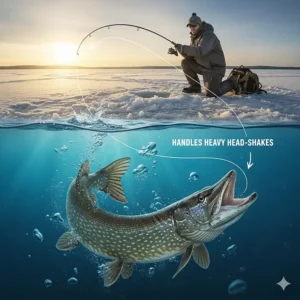
The Critical Moment: As pike approach the hole, they often go ballistic—violent head-shakes, rolls, and powerful surges. This is when most fish are lost. Keep your rod tip low, almost parallel to the ice, creating a side-pulling angle. This position provides maximum leverage while reducing the chance of the fish using the hole edge as a fulcrum to throw the hook.
Landing and Release
Gaff or Hand Landing: For pike over 12 pounds, a quality ice gaff is invaluable. Slip the gaff under the gill plate or jaw—never through the body if you’re releasing the fish. For smaller pike, grip behind the gill plate with your dominant hand while supporting the belly with your other hand.
Quick Photography: In -20°C temperatures, fish handling must be swift. Have your camera ready, take one or two quick photos, and return fish to the water. Extended exposure to frigid air can damage pike’s protective slime coating and internal organs.
Proper Revival: Large pike often require assistance after extended battles. Hold the fish upright in the hole, gently moving it forward and backward to force water through the gills. When the fish begins struggling and swimming on its own, it’s ready for release. This process can take 2-5 minutes for trophy pike.
Power Fishing Techniques for Maximizing Success
Location, Location, Location
Power fishing—an aggressive, mobile approach to ice fishing—requires understanding where pike concentrate:
Map Study: Before hitting the ice, study bathymetric maps to identify key features: weed beds, points, saddles between islands, and depth transitions. Ontario’s fishing regulations summary provides guidelines for different zones, while provincial fisheries websites offer lake-specific information.
Electronics Advantage: Modern flashers and underwater cameras revolutionize ice fishing. A quality flasher reveals not only fish presence but also their behaviour—suspended fish, bottom-huggers, and most importantly, fish reaction to your lure. When pike appear on the flasher but don’t strike, experiment with lure size, action, or colour until you trigger a response.
High-Speed Hole Hopping
The most successful Canadian pike anglers are constantly moving:
Drill Pattern: Upon arriving at a promising area, drill 6-10 holes in a grid pattern covering 100-200 square feet. Space holes 20-30 feet apart, varying depths to sample the entire water column. This systematic approach helps you quickly identify the productive zone.
Time Management: Spend 5-7 minutes per hole maximum. If nothing shows on your flasher or you don’t receive strikes within this window, move to the next hole. Pike are opportunistic feeders—if they’re present and active, they’ll typically respond quickly to an aggressive presentation.
Pattern Recognition: Keep mental notes (or use a GPS with mapping) of productive holes. Patterns emerge: pike might be holding in 12 feet of water along weed edges, or suspended at 8 feet over 25-foot basins. Once you identify the pattern, replicate it to find more fish.
Colour and Flash Optimization
Pike possess exceptional eyesight, making lure colour and flash critical:
Low-Light Conditions: During dawn, dusk, or heavily overcast days, fluorescent colours—chartreuse, orange, pink—provide maximum visibility. These colours appear to glow in low-light conditions, triggering strikes from pike hunting by sight.
Clear Water: In ultra-clear Canadian Shield lakes, natural patterns—perch, shad, or silver—often outperform bright colours. Pike in clear water can be surprisingly selective, favouring subtle presentations.
Stained Water: When visibility is reduced, increase flash. Large hammered spoons in gold, silver, or copper create vibration and flash visible from greater distances. The combination of visual and auditory stimuli helps pike locate your lure.
Ice Fishing Safety for Canadian Conditions
Ice fishing safety is paramount, especially when targeting aggressive predators that may pull you off-balance during hook sets or battles.
Ice Thickness Guidelines
According to Canadian safety standards, minimum ice thickness recommendations are:
- 10 cm (4 inches): Safe for one person on foot
- 15 cm (6 inches): Suitable for groups on foot
- 20-30 cm (8-12 inches): Required for snowmobiles/ATVs
- 30+ cm (12+ inches): Necessary for light vehicles
Remember that these guidelines apply to new, clear ice. White or snow ice is only 50% as strong, requiring double the thickness. Always test ice thickness as you travel, especially during early season (December-January) and late season (March-April) when conditions can vary dramatically.
Essential Safety Equipment
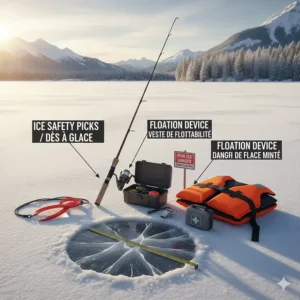
Every Canadian ice angler should carry:
Ice Picks: Worn around your neck, these provide the traction needed to pull yourself from the water if you break through. Practice using them before an emergency occurs.
Flotation Device: Modern float suits provide both warmth and flotation. If a full float suit isn’t practical, wear a PFD under your winter clothing.
Throw Rope: A 50-foot floating rope allows you to assist others without putting yourself at risk. Store it where you can access it quickly.
Spud Bar or Ice Chisel: Test ice thickness ahead of you as you walk, especially in unfamiliar areas or where currents, springs, or structures may create thin spots.
Regional Considerations
Canada’s vast geography creates unique ice conditions:
Prairie Provinces: Clear, fast-forming ice but subject to Chinook winds that can rapidly deteriorate conditions. Always check weather forecasts and be prepared to leave the ice quickly.
Ontario/Quebec: Variable ice due to lake effect snow and fluctuating temperatures. Pay special attention to areas near tributaries and springs.
Northern Territories: Extremely thick ice but hazards from pressure ridges and cracks. Always fish with partners and carry emergency gear including shelter and fire-starting materials.
Maintenance and Storage for Longevity
Post-Trip Rod Care
Proper maintenance extends your rod’s lifespan:
Immediate Cleaning: After each trip, wipe down guides and blank with a soft cloth to remove ice, slush, and fish slime. Pay special attention to guides where ice accumulation can stress the blank.
Drying Protocol: Never store wet rods in heated vehicles or near heat sources. Rapid temperature changes can damage epoxy and weaken blank materials. Let rods dry at room temperature for 24 hours before storage.
Guide Inspection: Check guides for grooves or damage, especially if you fish braided line. Ceramic inserts can develop grooves that abrade line, leading to unexpected breakage. Replace damaged guides promptly.
Off-Season Storage
Canadian summers can be brutal on ice fishing gear:
Climate-Controlled Storage: Store rods in a cool, dry location away from direct sunlight. UV exposure degrades epoxy and can discolour blank finishes.
Vertical Storage: Hang rods vertically or store them horizontally on padded racks. Never lean rods in corners where the tip can develop a permanent bend.
Rod Tubes: Invest in quality rod tubes or sleeves to protect against impact damage during transport. This also prevents tangles and reduces the chance of breaking tips.
Frequently Asked Questions
❓ What size northern pike ice fishing rod should I buy for Canadian waters?
❓ How much should I expect to spend on a quality pike ice rod in Canada?
❓ Can I use my walleye ice rod for northern pike fishing?
❓ What's the best rod power for aggressive predator fishing through ice?
❓ Are longer or shorter ice rods better for pike tip up setups?
Conclusion: Equip Yourself for Pike Success
After examining dozens of rods and analyzing feedback from Canadian anglers across seven provinces, one truth emerges: your rod selection profoundly impacts ice fishing success. The seven rods featured in this guide represent the cream of the crop—each excelling in specific scenarios while offering reliability in Canada’s harsh winter conditions.
For most anglers, I’d recommend starting with either the 13 Fishing Widow Maker Pike or Aurora Laker Pro X. These rods deliver exceptional performance without breaking the bank, handling everything from finesse jigging to power fishing aggressive predators. Serious trophy hunters should consider the premium St. Croix Custom Ice “Big Game” or Trika Medium Heavy Mod, both offering next-level sensitivity and fish-fighting capabilities that justify their price tags.
Remember that no rod compensates for poor location or technique. Study your target waters, understand pike behaviour patterns, and practice various presentations. The right rod amplifies your skills—it doesn’t replace them.
As you prepare for the 2026 ice fishing season, consider that trophy pike are swimming beneath Canadian ice right now, waiting for an angler equipped with the proper tools to make that connection. Whether you’re drilling holes on Lake Simcoe, Lake of the Woods, Great Slave Lake, or countless smaller waters across this incredible country, the right northern pike ice fishing rod transforms frustrating outings into memorable adventures.
Stay safe on the ice, respect our natural resources, and remember to share your knowledge with the next generation of Canadian anglers. Tight lines and screaming drags!
Recommended for You
- 7 Best Perch Ice Fishing Rods Canada 2026
- 7 Best Walleye Ice Fishing Rods in Canada 2026
- 7 Best Ice Fishing Combo for Beginners in Canada 2026
Disclaimer: This article contains affiliate links to Amazon.ca. If you purchase products through these links, we may earn a small commission at no additional cost to you.
✨ Found this helpful? Share it with your friends! 💬🤗
