
In This Article
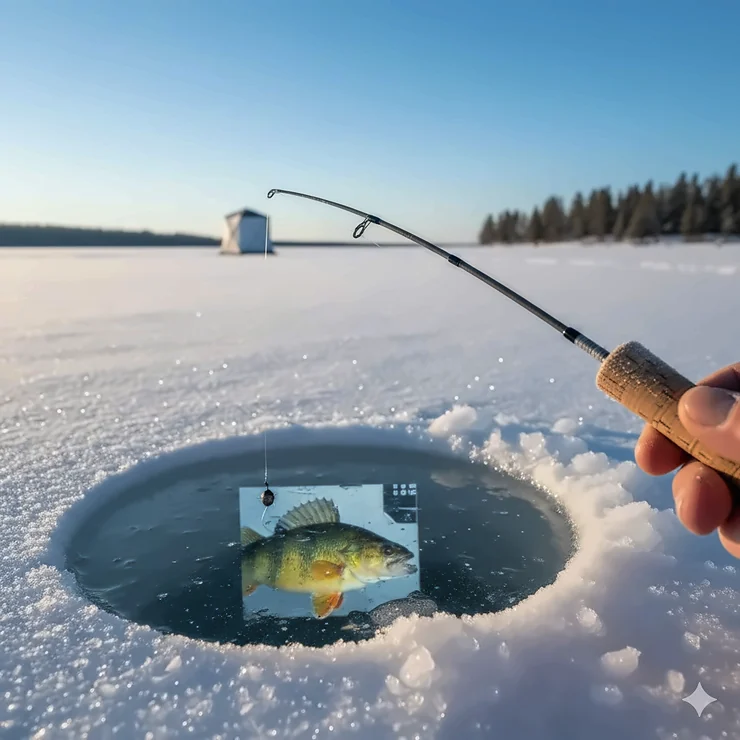
There’s something magical about drilling through thick Canadian ice, dropping your line, and feeling that telltale tap-tap-tap of a jumbo perch testing your presentation. After spending countless winter mornings on Lake Simcoe and exploring the frozen expanses of Lake Nipissing, I’ve learned that the right perch ice fishing rod makes all the difference between a mediocre outing and a bucket-filling adventure.
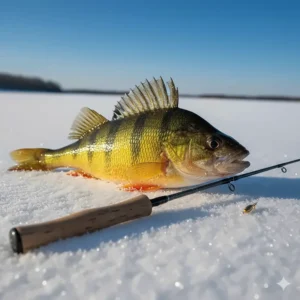
Yellow perch (Perca flavescens) are one of Canada’s most abundant and beloved winter gamefish, thriving in freshwater lakes, rivers, and ponds across the Great Lakes region and beyond. These distinctive gold-and-green-striped fish aren’t just fun to catch—they’re absolutely delicious, making them a favourite target for ice anglers from Ontario to Alberta. Whether you’re targeting the famous jumbo perch of Lake Erie, exploring the productive waters of Lake of the Woods, or introducing your kids to ice fishing on a local pond, having a specialized rod designed for these finesse-oriented fish transforms your entire experience.
The challenge? Perch can be incredibly finicky, especially when ice conditions are clear and light penetrates deep into the water column. You need a rod sensitive enough to detect the subtle inhale of a 10-inch perch on a tiny tungsten jig, yet with sufficient backbone to drive hooks into the bony mouths of larger specimens and handle the occasional walleye that crashes your perch party.
In this comprehensive guide, we’ll explore the seven best perch ice fishing rod options available to Canadian anglers in 2026, complete with real pricing in CAD, expert analysis, and proven techniques that’ll help you consistently put more fish on the ice.
Quick Comparison Table
| Rod Model | Length | Power | Action | Price (CAD) | Best For |
|---|---|---|---|---|---|
| St. Croix Custom Ice Perch Seeker | 28″ | Light | Fast | $180-220 | Multi-species versatility |
| CLAM Katana Combo | 26″ | Medium-Light | Fast | $85-110 | Budget-friendly complete setup |
| Frabill Ice Hunter 24″ | 24″ | Ultra-Light | Fast | $65-85 | Shelter fishing, beginners |
| Aventik Frostfire Series | 28″ | Medium-Light | Fast | $95-125 | Value with extra tip included |
| St. Croix Mojo Ice | 28″ | Ultra-Light | Extra-Fast | $145-175 | Premium finesse applications |
| 13 Fishing Tickle Stick | 30″ | Light | Fast | $115-140 | Open ice, longer reach |
| Fenwick Elite Tech Ice | 24″ | Ultra-Light | Extra-Fast | $120-155 | Sensitivity for tentative biters |
💬 Just one click – help others make better buying decisions too! 😊
✨ Don’t Miss These Exclusive Deals!
🔍 Take your ice fishing to the next level with these carefully selected products available in Canada. Click on any highlighted item to check current pricing and availability on Amazon.ca. These tools will help you create authentic winter fishing memories your family will love!
Top 7 Perch Ice Fishing Rods: Expert Analysis
1. St. Croix Custom Ice Perch Seeker – Best Overall Multi-Species Rod
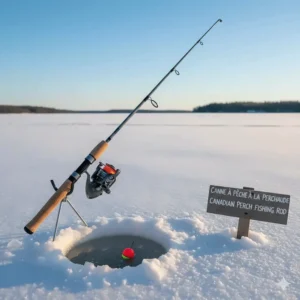
Let me be honest—I’ve fished with dozens of ice rods over the years, but the St. Croix Custom Ice Perch Seeker consistently earns a spot in my ice shelter every single season. This rod bridges the gap between dedicated panfish setups and light walleye sticks, making it the ultimate weapon when you’re not entirely sure what’s going to bite.
Key Specifications:
- Solid carbon fiber blank construction
- Precision-tapered design for optimal sensitivity
- Cork split-grip handle
- Available in multiple lengths (24″, 28″, 32″)
The 28-inch model strikes the perfect balance for Canadian ice conditions. It’s long enough for comfortable fishing outside or in larger shelters, yet maneuverable enough that you won’t be constantly tapping the ceiling of a portable hub. The solid carbon blank transmits every subtle tap, while the progressive taper provides surprising backbone when you hook into an unexpectedly large fish.
During a recent trip to Rice Lake in Ontario, I watched the Perch Seeker flex deep into the mid-section while fighting a 14-inch jumbo—the kind of fish that makes you forget how cold your toes are. The rod kept constant pressure without the tip buckling, and the fish came through the hole without any drama.
Canadian Availability: Widely available through Canadian retailers including Angling Sports, Natural Sports, and select tackle shops across Ontario, Alberta, and British Columbia. Prices typically range $180-220 CAD depending on length and model.
Pros:
✅ Exceptional versatility handles 1/64 oz tungsten up to 1/8 oz spoons
✅ Perfectly balanced sensitivity and power
✅ Premium components last multiple seasons
Cons:
❌ Premium pricing may deter budget-conscious anglers
❌ Solid carbon construction less forgiving than composite blanks
Customer Feedback: Canadian anglers consistently praise this rod’s ability to detect light bites while maintaining enough backbone for larger fish. Several Lake Simcoe regulars report catching both perch and walleye on the same setup without changing rods.
2. CLAM Katana Ice Combo – Best Budget-Friendly Complete Setup
If you’re new to ice fishing or looking to outfit multiple family members without breaking the bank, the CLAM Katana deserves serious consideration. This isn’t just another cheap combo that’ll frustrate you after two trips—it’s a genuinely capable setup that punches well above its price point.
Key Specifications:
- Solid graphite blank
- 26-inch length ideal for portable shelters
- Includes pre-spooled reel with 6+1 ball bearings
- Tsuka-inspired tacky grip handle
I was genuinely surprised the first time I fished this combo. The tackle-soft handle provides exceptional grip even with wet gloves, and the graphite blank offers legitimate sensitivity for detecting perch bites. During field testing on a small lake near Sudbury, Ontario, I easily detected the subtle lifts and drops characteristic of perch inspecting baits.
The included reel features CLAM’s proprietary SF Drag System, which performs far better than you’d expect from a combo in this price range. I’ve fought fish up to 2 pounds without any slipping or hesitation, and the retrieve remains smooth even in temperatures well below -15°C.
Canadian Availability: Available through major Canadian retailers including Cabela’s, Bass Pro Shops, and online through Amazon.ca. Typical pricing ranges $85-110 CAD.
Pros:
✅ Complete ready-to-fish setup at an attractive price point
✅ Tacky grip performs excellently in wet/cold conditions
✅ Sufficient sensitivity for panfish and perch applications
Cons:
❌ Less refined sensitivity than premium standalone rods
❌ Graphite blank slightly heavier than high-end carbon
Customer Feedback: First-time ice anglers across Canada report excellent experiences with this combo, with many upgrading only after several seasons of heavy use.
3. Frabill Ice Hunter 24″ – Best for Shelter Fishing
When you’re fishing inside a portable shelter, rod length becomes critically important. The last thing you want is constantly smacking your rod tip against the ceiling during hook sets. The Frabill Ice Hunter 24″ was specifically designed for tight quarters while maintaining the sensitivity perch anglers demand.
Key Specifications:
- 24-inch ultra-light power rating
- Solid graphite blank construction
- Stainless steel ice guides prevent freeze-up
- Comes as rod-and-reel combination
The shorter length makes this rod incredibly maneuverable in confined spaces, while the ultra-light power rating perfectly matches the tiny tungsten jigs that catch finicky perch. The stainless steel guides are a thoughtful touch—I’ve fished this rod in brutal conditions on Lake of the Woods where cheaper guides would’ve iced up constantly.
The included reel features three plus one ball bearings and an infinite anti-reverse system. While it’s not as refined as a high-end standalone reel, it performs admirably for the price point and arrives ready to fish straight out of the package.
Canadian Availability: Available through Amazon.ca and select Canadian tackle shops. Pricing typically ranges $65-85 CAD for the complete combo.
Pros:
✅ Perfect length for portable shelter fishing
✅ Stainless guides prevent frustrating freeze-up issues
✅ Ultra-light power ideal for small presentations
Cons:
❌ Shorter length limits versatility for open-ice fishing
❌ Basic reel adequate but not exceptional
Customer Feedback: Canadian anglers fishing inside shelters consistently rate this combo highly for its maneuverability, though some experienced anglers prefer upgrading the reel while keeping the rod.
4. Aventik Frostfire Series – Best Value with Premium Features
The Aventik Frostfire Series represents exceptional value in the ice fishing rod market. What impresses me most isn’t just the attractive price point—it’s the thoughtful features that typically appear only on rods costing significantly more.
Key Specifications:
- Hybrid graphite/fiberglass construction
- Available in 26″, 28″, and 30″ lengths
- Includes extra tip section (huge value add)
- Cork handle with ergonomic design
That extra tip section deserves special mention. Ice fishing is hard on equipment, and rod tips inevitably get damaged—whether from careless storage, accidental door slams, or that moment when you set the hook too aggressively. Having a spare tip transforms a potentially season-ending mishap into a minor inconvenience.
The hybrid blank construction creates an interesting performance profile. The fiberglass component adds durability and a slightly more parabolic action, which helps keep fish pinned when using ultralight line. Meanwhile, the graphite elements provide sufficient sensitivity to detect subtle bites.
Canadian Availability: Available online through Amazon.ca and the Aventik website, which ships to Canada. Pricing ranges $95-125 CAD depending on length.
Pros:
✅ Extra tip section included provides exceptional value
✅ Hybrid construction balances sensitivity and durability
✅ Multiple length options suit different fishing styles
Cons:
❌ Slightly less sensitive than pure carbon fiber blanks
❌ Limited availability in physical Canadian retail stores
Customer Feedback: Canadian purchasers appreciate the value proposition, with many noting the extra tip section has already saved them from buying a replacement rod.
5. St. Croix Mojo Ice – Premium Choice for Finesse Presentations
When perch get finicky—and trust me, on pressured Canadian lakes like Simcoe or Erie, they absolutely do—the St. Croix Mojo Ice in ultra-light power becomes your secret weapon. This rod was engineered specifically for those frustrating days when fish are inspecting but not committing.
Key Specifications:
- Ultra-light power, extra-fast action
- Solid carbon fiber blank
- Open blank design at grip top for maximum sensitivity
- Available in 24″, 28″, and 32″ lengths
The open blank design deserves explanation. Rather than cork or EVA extending all the way to where the blank begins tapering, there’s an exposed section where your index finger naturally rests. When you pistol-grip the rod (as most experienced ice anglers do), your finger makes direct contact with the blank, dramatically increasing sensitivity. You’ll feel bites you’d miss with any other setup.
I specifically remember a brutally tough day on Lake Erie’s western basin. Perch were suspending 3 feet off bottom, barely mouthing tiny 2mm tungsten jigs. The Mojo Ice’s extra-fast action and incredible sensitivity allowed me to detect these subtle takes while other anglers struggled. That day, the rod paid for itself several times over.
Canadian Availability: Available through premium Canadian tackle retailers including Angling Sports and Natural Sports. Pricing ranges $145-175 CAD.
Pros:
✅ Exceptional sensitivity for detecting subtle bites
✅ Open blank design provides direct blank contact
✅ Extra-fast action perfect for quick hook sets
Cons:
❌ Ultra-light power limiting for larger spoons or aggressive fish
❌ Premium pricing positions it as a specialized tool
Customer Feedback: Experienced Canadian ice anglers view this rod as a finesse specialist, perfect for days when nothing else works but perhaps not ideal as your only rod.
6. 13 Fishing Tickle Stick – Best for Open Ice Fishing
Sometimes you need a bit more reach—whether you’re fishing outside in open conditions, need to manage line in windy situations, or want better leverage when fighting fish up through several feet of ice. The 13 Fishing Tickle Stick at 30 inches delivers that extended length without sacrificing the sensitivity perch demand.
Key Specifications:
- 30-inch length provides extended reach
- Light power rating
- Fast action carbon fiber blank
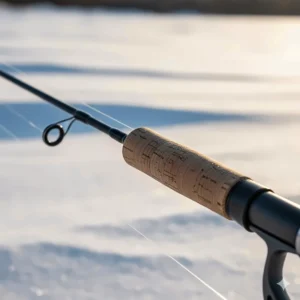
- Comfortable split-grip EVA handle
The additional length compared to standard 24-28 inch rods offers several practical advantages. When fishing outside on a windy day (and let’s be honest, Canadian ice fishing often means wind), the extra length helps manage your line and maintain control. It also provides better leverage when fighting larger fish up through 18-24 inches of mid-winter ice.
The fast action tip remains sensitive enough to detect perch bites while the light power rating handles everything from 1/32 oz jigs up to 1/8 oz spoons. I’ve successfully fished this rod for both perch and walleye on the same outing, simply adjusting my presentation and lure weight.
Canadian Availability: Available through select Canadian retailers and online. Pricing typically ranges $115-140 CAD.
Pros:
✅ Extended 30″ length excellent for open ice conditions
Versatile light power handles range of presentations
✅ Improved leverage for fighting larger fish
Cons:
❌ Longer length less ideal for portable shelter fishing
❌ Slightly heavier than shorter models
Customer Feedback: Canadian anglers who primarily fish outside in larger shelters or open ice consistently praise the extended length, though shelter fishers find it awkward in confined spaces.
7. Fenwick Elite Tech Ice – Best Sensitivity for Tentative Biters
On those bluebird days when sunlight penetrates clear ice and spooky perch become incredibly tentative, you need every advantage you can get. The Fenwick Elite Tech Ice was engineered specifically for these challenging conditions where bite detection separates successful anglers from frustrated ones.
Key Specifications:
- Ultra-light power, extra-fast action
- Solid carbon construction
- Micro fly guides prevent line freeze-up
- Split cork handle
- Available in 21″ and 24″ lengths
The solid carbon blank provides phenomenal sensitivity—you’ll feel fish inspecting your presentation from 3 feet away. During a challenging outing on a crystal-clear Manitoba lake, I watched perch on my flasher approach, circle, and barely mouth my jig. The Elite Tech transmitted every subtle touch, allowing me to execute perfectly timed hook sets on fish that barely committed.
The micro fly guides are another thoughtful feature. Smaller guides mean less surface area for ice buildup, keeping your line running smoothly even when temperatures plummet. I’ve fished this rod in -25°C conditions without experiencing the frustrating icing issues that plague larger guide systems.
Canadian Availability: Available through premium Canadian tackle retailers. Pricing ranges $120-155 CAD depending on length.
Pros:
✅ Outstanding sensitivity for detecting subtle bites
✅ Micro guides minimize ice buildup in extreme cold
✅ Solid carbon construction maximizes feel
Cons:
❌ Ultra-light power limiting for larger presentations
❌ Relatively short lengths better suited for shelter use
Customer Feedback: Canadian anglers targeting pressured waters or fishing in extremely clear conditions rate this rod exceptionally highly, though some note it’s perhaps too specialized for beginners.
Understanding Perch Ice Fishing Rods: What Makes Them Special?
Why Specialized Rods Matter
You might wonder whether you truly need a dedicated perch ice fishing rod, or if a generic ultralight will suffice. After years of experimentation, I can confidently say that specialized rods make a measurable difference in your catch rates, particularly on Canadian waters where perch populations face significant angling pressure.
Perch ice fishing rods are specifically engineered for vertical jigging presentations in cold conditions. Unlike open-water rods, they feature several unique characteristics. First, they’re significantly shorter—typically 24-36 inches compared to 6-7 feet for standard ultralight rods. This compact length allows comfortable fishing in confined ice shelters while providing adequate leverage for hook sets and fish fighting.
Second, the guide systems are designed specifically for ice conditions. According to research on cold-weather fishing, specialized ice guides minimize freeze-up issues that plague standard rod guides when temperatures drop below -15°C. This seemingly minor detail prevents the frustrating scenario where your line freezes in the guides mid-fight.
Third, the action and power ratings are calibrated for the specific presentations perch anglers use. Most effective perch tactics involve tiny tungsten jigs (1/64 – 1/16 oz) or small spoons (1/32 – 1/8 oz), requiring rods with ultra-sensitive tips that can detect subtle bites while maintaining sufficient backbone for hook sets.
Key Features Comparison: Rod Components That Matter
| Feature | Ultra-Light | Light | Medium-Light | Best For |
|---|---|---|---|---|
| Power Rating | 1/64 – 1/32 oz lures | 1/32 – 1/16 oz lures | 1/16 – 1/8 oz lures | UL: Finicky perch; L: Versatile; ML: Jumbos |
| Action | Extra-fast | Fast | Moderate-fast | Faster = more sensitivity |
| Blank Material | Solid carbon | Carbon/composite | Fiberglass/composite | Carbon = sensitivity; Glass = durability |
| Ideal Line | 2-4 lb test | 3-6 lb test | 4-8 lb test | Match to rod power |
| Typical Length | 24-28″ | 26-30″ | 28-32″ | Shorter = shelters; Longer = outside |
| Price Range (CAD) | $120-220 | $85-175 | $65-140 | Premium features cost more |
How to Choose the Perfect Perch Ice Fishing Rod for Canadian Conditions
Consider Your Primary Fishing Environment
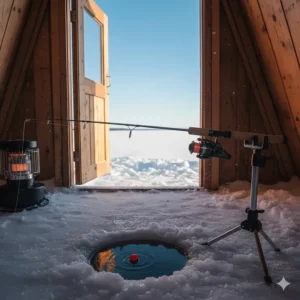
Where you fish dramatically influences your ideal rod choice. If you primarily fish inside portable shelters (as many Canadian anglers do during our harsh winters), shorter 24-26 inch rods prevent the constant frustration of hitting the ceiling during hook sets. I learned this lesson the hard way during my first season, constantly banging my 32-inch walleye rod against my shelter’s interior.
Conversely, if you’re the type who braves the elements and fishes outside, or if you use a larger permanent shelter, longer 28-32 inch rods provide better line management and improved leverage when fighting fish through thick mid-winter ice. On Lake of the Woods, where ice can exceed 30 inches by late February, that extra rod length makes a noticeable difference when bringing fish topside.
Match Power Rating to Your Target Size
Yellow perch in Canadian waters vary considerably in average size depending on the waterbody. Lake Simcoe and Lake Erie are renowned for jumbo perch averaging 10-12 inches, with fish exceeding 13 inches fairly common. For these robust specimens, light or even medium-light power rods provide sufficient backbone for solid hook sets and confident fish fighting.
Conversely, if you’re fishing smaller lakes with 7-9 inch average perch, ultra-light power rods maximize sensitivity and sporting fun. There’s genuine enjoyment in feeling every head shake and run on appropriately matched tackle, rather than overwhelming small fish with excessive power.
Don’t Overlook Build Quality
Canadian ice fishing subjects equipment to extreme conditions. Temperatures regularly drop to -20°C or colder, ice rattles around in guides, and equipment gets banged around during transport across frozen lakes. Investing in quality construction pays dividends over multiple seasons.
Pay particular attention to guide quality. Cheap ceramic guides crack in extreme cold, while quality stainless or titanium guides maintain performance even in brutal conditions. Similarly, cork handles dramatically outperform cheap foam in wet, cold conditions—they provide better grip and won’t freeze your fingers like metal reel seats on budget rods.
Think About Versatility
While this guide focuses on perch-specific rods, consider whether you want a specialized tool or a more versatile option. Many quality light-power ice rods excel not just for perch, but also for crappies, bluegills, smaller walleyes, and even whitefish. If you’re new to ice fishing or have a limited budget, choosing a versatile rod that handles multiple species provides better value.
The St. Croix Custom Ice Perch Seeker, for example, handles perch beautifully but also works wonderfully for walleyes when using 1/8 oz spoons or jigging raps. This versatility means you can pursue multiple species without constantly switching rods.
Essential Perch Ice Fishing Techniques for Canadian Waters
Understanding Panfish Behavior Patterns Under Ice
Successful perch ice fishing begins with understanding how these fish behave in winter conditions. Unlike some species that become lethargic in cold water, perch remain relatively active throughout the ice fishing season, though their behavior patterns shift as winter progresses.
During early ice (typically December in southern Canada), perch often remain in shallow water—5 to 15 feet—where they’ve spent late fall. They’re still actively feeding in preparation for the long winter ahead, making them relatively aggressive and willing to chase larger presentations.
As winter deepens and ice thickens, perch gradually transition to deeper water, often moving to depths of 15-30 feet or more. Research on perch behavior indicates they concentrate near transition zones—areas where shallow flats drop into deeper basins, or along weedlines where structure provides both cover and food sources.
Late ice (March into early April) sees perch become extremely active again as pre-spawn feeding kicks in. They move back toward shallower areas near spawning habitat, often staging near weed edges in 8-15 feet of water. This period can provide spectacular fishing with aggressive fish willing to hit larger presentations.
Mastering Jumbo Perch Techniques
Targeting jumbo perch—those magical fish exceeding 12 inches—requires slightly different tactics than catching standard eating-size specimens. Jumbos tend to separate from schools of smaller fish and often hold deeper or in less obvious locations.
One highly effective jumbo perch technique involves using slightly larger presentations than you’d use for average-size fish. Where you might use a 2mm tungsten jig for 8-inch perch, switching to a 1/8 oz spoon or 4mm tungsten jig specifically targets larger specimens. This size-selective approach often results in fewer overall bites but a significantly higher percentage of trophy-class fish.
Location becomes critical when hunting jumbos. Rather than fishing the obvious shallow flats where schools of smaller perch congregate, expert Canadian ice anglers target transitional areas where deep water meets structure. Points that extend from shore into the lake’s main basin, underwater humps that rise from deep water, and sharp-breaking weed edges all concentrate larger perch.
Finesse Ice Fishing Presentation Methods
When perch become finicky—which happens frequently on pressured Canadian lakes—finesse presentations separate successful anglers from frustrated ones. The key lies in minimal movement rather than aggressive jigging.
Start by lowering your presentation to within 12-18 inches of the bottom. Using your ultra light perch ice rod, impart subtle vibrations—barely perceptible movements that make your jig quiver rather than hop. Watch your line carefully; often you’ll see it tighten slightly or go slack before you feel the bite.
As you detect fish approaching on your electronics, slowly lift your jig upward while maintaining that subtle quivering motion. Many times, perch will chase an ascending presentation, and when you suddenly stop and hold your jig motionless, they can’t resist striking. This technique—called “rise and pause”—consistently triggers bites from tentative fish.
Line selection plays a huge role in finesse presentations. I strongly recommend pairing your perch ice fishing combo with 2-4 lb braided mainline (which has zero stretch for maximum sensitivity) connected to 2-3 lb fluorocarbon leader. This combination provides incredible bite detection while remaining virtually invisible to wary fish.
Light Tackle Fishing Strategies for Maximum Success
Selecting the Right Lure Size and Weight
One of the most common mistakes I see from beginning perch anglers involves using presentations that are too large. While it’s tempting to think “bigger lure equals bigger fish,” perch have relatively small mouths and often prefer tiny offerings.
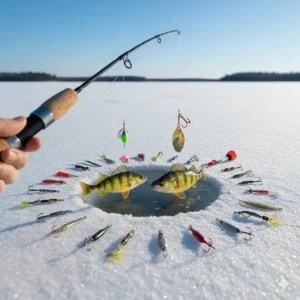
During most conditions, tungsten jigs in the 2-4mm size range prove most effective. Tungsten’s high density allows these tiny jigs to achieve depths quickly despite their small profile, triggering bites from finicky fish while still reaching productive depths in current or deep water.
Spoons deserve a place in every perch angler’s arsenal, particularly when targeting more aggressive fish or searching water quickly. Small spoons in the 1/16 – 1/8 oz range work beautifully for Canadian perch. The Northland Forage Minnow in the #2 or #3 size has been producing fish for me across multiple provinces.
Don’t overlook the value of bait-tipping. While modern soft plastics work well, there’s no denying that tipping your jig with a single wax worm, spike, or small minnow head dramatically increases effectiveness, especially during tough bites. The natural scent and taste encourages perch to hold onto your presentation longer, giving you extra time for hook sets.
Reading Your Electronics Effectively
Modern ice fishing electronics—whether flashers or underwater cameras—provide enormous advantages when targeting perch. Learning to interpret what you’re seeing transforms random fishing into strategic hunting.
On a flasher, perch typically appear as small marks hovering near bottom or suspended at specific depths. When you see these marks, note the exact depth and adjust your presentation to hang 6-12 inches above them. Often this triggers an immediate strike as curious fish rise to investigate.
Pay attention to how fish react to your jigging cadence. If marks approach but don’t commit, try changing your jigging rhythm—sometimes speeding up, sometimes slowing down or even dead-sticking. Perch often signal their preferences clearly through their behavior on your electronics.
Underwater cameras provide even more information, allowing you to observe fish approaching, their exact behavior around your presentation, and why they’re refusing to bite. I’ve learned more about finesse ice fishing from watching perch behavior on camera than from any other single method.
Proven Perch Fishing Locations Across Canada
Ontario’s Premier Perch Waters
Ontario offers world-class perch fishing, with several waters consistently producing exceptional catches. Lake Simcoe near Barrie ranks among North America’s top perch destinations, with jumbo specimens regularly exceeding 12 inches. The lake’s relatively accessible location makes it popular with anglers from the Greater Toronto Area, though pressure can be intense on weekends.
Lake Nipissing near North Bay provides another exceptional option. The lake’s massive size (over 870 square kilometers) ensures you can find less pressured fish, while the perch population includes a healthy percentage of larger specimens. Local regulations allow generous limits—25 perch per day, 50 in possession—recognizing the species’ abundance and reproductive capacity.
Rice Lake, Lake Scugog, and the Bay of Quinte on Lake Ontario all offer quality perch fishing closer to southern population centres. These waters see significant ice fishing pressure but still produce well for anglers willing to arrive early or fish weekdays.
Western Canada’s Hidden Gems
While Ontario dominates perch fishing discussions, western provinces offer quality opportunities for anglers willing to explore. Lake Winnipeg and Lake Manitoba both host substantial perch populations, with the advantage of far less angling pressure than Ontario’s famous waters.
Alberta’s Peace River drainage contains introduced perch populations that have flourished in recent decades. Lakes like Swan Lake and specific reservoirs in the region provide surprising quality, with less competition for ice space and often willing fish.
Saskatchewan’s numerous prairie lakes scattered across the southern portion of the province hold perch, though anglers should verify specific regulations as some waters have restrictions aimed at controlling perch populations to protect other species.
Canadian Ice Fishing Regulations and Best Practices
Provincial Licensing Requirements
Ice fishing in Canada requires proper licensing regardless of which province you’re fishing. Ontario residents need an Outdoors Card and a fishing license, available online through the province’s website or from license issuers across the province. Non-residents of Ontario require a different license classification with higher fees.
Most provinces allow anglers to use two lines while ice fishing, a significant advantage when targeting schooling species like perch. However, regulations specify you must remain within 60 meters of your lines and maintain clear, unobstructed views of all set lines. This prevents the dangerous practice of leaving lines unattended where they might snag other anglers or wildlife.
Species-Specific Regulations
Perch regulations vary significantly across Canadian provinces. In Ontario, most zones allow anglers to harvest 25 perch per day with a possession limit of 50. This relatively liberal limit reflects the species’ abundance and fast growth rates, while also recognizing perch as an important forage species requiring population control in some waters.
However, some specific waterbodies have modified limits. Always check the Ontario Fishing Regulations Summary or your province’s equivalent before fishing to ensure compliance. The regulations change periodically based on fisheries management objectives, and ignorance isn’t accepted as an excuse.
Size restrictions generally don’t apply to perch in most Canadian jurisdictions, though ethical anglers often practice selective harvest—keeping smaller eating-size fish (8-11 inches) while releasing larger breeding females. These big females produce significantly more eggs than smaller fish, making their conservation important for maintaining robust populations.
Ice Safety Requirements
Canadian ice fishing requires serious attention to safety given our extreme winter conditions. Minimum safe ice thickness guidelines suggest 10 cm (4 inches) of clear, solid ice for walking, 20 cm (8 inches) for snowmobiles or ATVs, and 30 cm (12 inches) for light vehicles. However, ice thickness varies dramatically across any waterbody—always test as you travel.
Ontario regulations require ice fishing huts to be registered online in certain zones, with mandatory removal dates to prevent environmental damage from huts sinking during spring thaw. These dates vary by zone but typically fall in mid-to-late March.
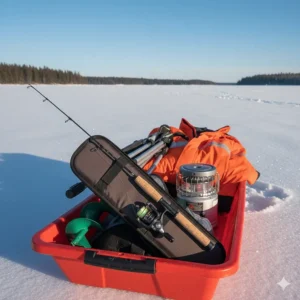
Safety equipment should include ice picks or cleats worn around your neck, a throw rope, extra clothing in a waterproof bag, and communication devices. Many Canadian anglers now carry PLBs (Personal Locator Beacons) or satellite communicators when venturing onto large, remote lakes.
Maintaining Your Perch Ice Fishing Rod Investment
Proper Storage Between Trips
Quality ice fishing rods represent a significant investment, and proper care ensures they’ll perform for many seasons. After each trip, thoroughly dry your rod before storage. Ice and snow melt can leave moisture that promotes corrosion on guides and reel seats, particularly in the transitional periods when you’re moving between extreme outdoor cold and warm indoor environments.
Store rods vertically or in proper rod racks that support the entire length. Never store them horizontally across rafters or shelving where the blank might develop a permanent curve or “set” over time. This is particularly important for solid carbon blanks, which have less memory than tubular construction.
Rod tubes or cases provide excellent protection during transport and storage, preventing the accidental damage that commonly occurs when rods are casually tossed in vehicles or garage corners. A broken rod tip ruins fishing trips, and replacement tips—while available for some models—represent unnecessary expenses.
Seasonal Maintenance Tips
At the end of each ice fishing season, perform thorough maintenance to keep your equipment in top condition. Clean guides carefully with a soft cloth, removing any residue or buildup. Check each guide for cracks or chips in ceramic inserts—these seemingly minor issues will damage fishing line and should be repaired or replaced before next season.
Inspect the rod blank for any cracks, particularly near the ferrules if you’re fishing a two-piece model. Small cracks can propagate over time, eventually causing catastrophic failure at the worst possible moment. Early detection allows for repairs or warranty claims before issues worsen.
Cork handles benefit from occasional cleaning with mild soap and water, followed by treatment with cork sealant if the cork appears dried out. This maintains the handle’s grip properties and prevents degradation from oils, fish slime, and environmental exposure.
Frequently Asked Questions
❓ What length perch ice fishing rod works best for Canadian conditions?
❓ How much should I budget for a quality perch ice fishing rod in Canada?
❓ Can I use the same rod for perch and walleye ice fishing?
❓ What power rating is best for jumbo perch over 12 inches?
❓ Do I really need a specialized ice fishing rod or can I use an ultralight spinning rod?
Conclusion: Selecting Your Perfect Perch Ice Fishing Rod
After exploring the seven best perch ice fishing rod options available to Canadian anglers in 2026, the choice ultimately depends on your specific fishing style, budget, and target waters. For the angler seeking maximum versatility without breaking the bank, the CLAM Katana or Aventik Frostfire deliver exceptional performance for their price points, providing complete ready-to-fish setups that handle everything from panfish to walleye.
If you’re serious about consistently catching perch on Canadian waters and want premium performance, the St. Croix Custom Ice Perch Seeker stands out as the top overall choice. Its remarkable balance of sensitivity and power makes it equally effective whether you’re targeting 8-inch eating-size perch or trophy jumbos pushing 14 inches. The solid carbon construction provides phenomenal bite detection while maintaining sufficient backbone for confident hook sets and fish fighting.
For anglers fishing pressured waters or targeting finicky fish in clear-ice conditions, the St. Croix Mojo Ice or Fenwick Elite Tech offer specialized capabilities that shine when nothing else works. These ultra-sensitive tools transform tough bites into productive outings through their exceptional ability to detect and convert subtle takes.
Remember that the most expensive rod isn’t always the best choice for your specific situation. Consider where you fish most frequently, what size perch you typically encounter, and whether you need a specialized tool or a more versatile option. The right perch ice fishing rod amplifies your skills and transforms frustrating days into memorable catches, but only when properly matched to your fishing style and target waters.
Canadian ice fishing offers some of the world’s finest perch angling opportunities. Whether you’re introducing youngsters to the sport on a local pond, targeting trophy jumbos on Lake Simcoe, or exploring remote Manitoba waters, having the right equipment makes all the difference. Choose wisely, fish safely, and enjoy the incredible experiences our frozen northern waters provide.
Tight lines, and may your bucket always be full!
Recommended for You
- 7 Best Walleye Ice Fishing Rods in Canada 2026
- 7 Best Ice Fishing Combo for Beginners in Canada 2026
- 7 Best Cheap Ice Fishing Rods Canada 2026
Disclaimer: This article contains affiliate links to Amazon.ca. If you purchase products through these links, we may earn a small commission at no additional cost to you.
✨ Found this helpful? Share it with your fishing buddies! 💬🤗
