
In This Article
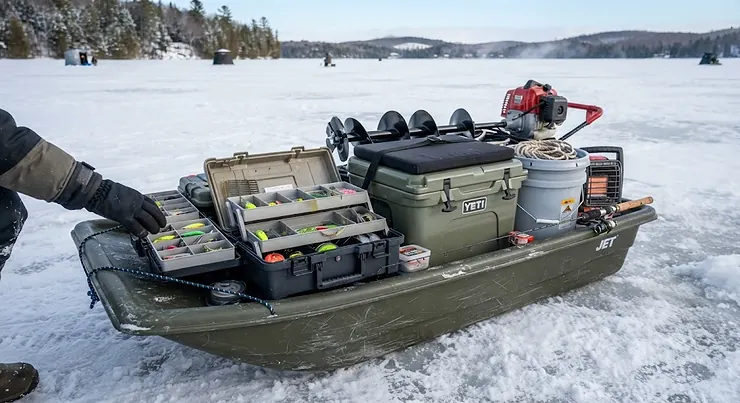
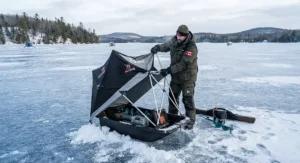
There’s a particular kind of quiet that settles over a frozen lake at 6 a.m., broken only by the scrape of a sled runner and the hiss of a propane burner catching flame. That’s the world flip over sled ice fishing belongs to — the gear that turns “let’s chase the bite” from a logistical headache into a five-minute job. So what is it, exactly? A flip over sled ice fishing shelter is a hinged fabric shanty permanently mounted to a plastic sled base; you tow the whole rig to your hole, flip the frame upright, and you’re fishing before your coffee goes cold.
This guide skips the marketing fluff and gets into the real stuff: seven genuine products with actual model numbers, honest spec breakdowns, and aggregated review sentiment pulled from real owners — not invented quotes. We’ll cover a sled shelter combo for solo run-and-gunners, family-sized rigs for weekend trips to the Kawarthas or Lac Saint-Jean, and everything in between. Before you commit a few hundred dollars, it helps to understand what separates a shelter that earns its keep from one that becomes a garage ornament by February. Ice safety always comes first, too — Parks Canada’s ice safety guidance is worth a read regardless of which shelter you end up choosing. Let’s dig in.
Quick Comparison Table
| Category | Product | Best For |
|---|---|---|
| Best Overall | Clam Kenai Pro Thermal | Solo anglers who want warmth without the weight |
| Best Budget Pick | Eskimo Eskape 2000 | First-timers testing the waters (or ice) |
| Best for Two Anglers | Jason Mitchell XT Thermal | Weekend buddies who want to stand and stretch |
| Toughest Build | Clam X100 Thermal XT | Anglers who run-and-gun in brutal cold |
| Lightest Hand-Pull | Ice Runner Ice House Explorer | Walk-in access lakes with no sled deck vehicle |
Looking at this snapshot, the pattern is pretty clear: price and weight move in opposite directions from warmth and interior space, and there’s no single “best” flip over sled ice fishing shelter — only the one that matches your ice, your crew size, and how far you’re willing to drag gear. Solo, budget-conscious anglers gravitate toward the lighter end of this table, while families and weekend groups trade some portability for standing room and thicker insulation. We’ll unpack the full seven-product lineup, with real specs and honest verdicts, right after this.
💬 Just one click — help others make better buying decisions too!😊
Top 7 Flip Over Sled Ice Fishing Shelters: Expert Analysis
1. Clam Kenai Pro Thermal — best all-rounder value for solo anglers
The Clam Kenai Pro Thermal has been one of Clam’s best-selling shelters for years, and once you look at the spec sheet, it’s easy to see why. The 900-denier thermal fabric with Full Thermal Trap technology does the heavy lifting here — it’s the difference between your propane heater actually warming the tub versus just fighting a losing battle against wind that leaks through cheaper 300-denier fabric.
Set up size runs 91″ long by 37″ wide with a 64″ center height, and the whole unit weighs around 45-48 lbs, light enough for one person to drag across slush without throwing out a back. The 7/8″ RPSX pole system means no extending poles to fumble with in mittens — you flip, lock, and fish. This is a shelter built for the mobile angler who punches a dozen holes in a morning chasing perch or early walleye, not someone planting a flag for eight hours.
Reviewers consistently note the thermal skin genuinely cuts condensation compared to older Clam Kenai models, and the adjustable folding seat gets praised for letting taller anglers dial in their reach to electronics without contorting. The trade-off is real too — some owners mention the 11-square-foot fishable area feels tight once you add a heater, flasher, and tackle bag.
Pros:
- ✅ Lightweight flip-and-go pole system, no extending sections
- ✅ Thermal fabric noticeably reduces condensation buildup
- ✅ Corner console and hammock storage keep gear off the ice
Cons:
- ❌ 11 sq ft interior feels cramped with a heater and electronics
- ❌ Single front door only, no side-access option
At the time of research, expect this shelter in the C$500-C$600 range. For a solo mobile angler, that’s solid value — you’re paying for warmth and low weight, not square footage.
2. Clam X100 Thermal XT — toughest build for hardcore ice runners
Where the Kenai Pro leans lightweight, the Clam X100 Thermal XT leans indestructible. This is the shelter Clam built for anglers who treat “run and gun” as a verb, not a marketing phrase. The full 900-denier thermal skin is paired with 1¼” one-piece poles — thicker than the Kenai Pro’s — and a co-extruded gray plastic tub that resists cracking when you’re dragging it over rocky ice edges or hauling it behind a snowmobile at speed.
What most buyers overlook about this model is the interior color choice: the gray tub interior isn’t just cosmetic. It makes dropped jigs, forceps, and dark tackle noticeably easier to spot than in Clam’s older black-tub designs, which matters more than it sounds like at 6 a.m. with a headlamp. The Pro Thermal package bundles a travel cover and light stick, both of which extend the shelter’s usable life by protecting fabric from road salt and UV during truck-bed transport.
Aggregated reviewer sentiment on Clam’s X-series consistently praises the toughness of the tub under abuse, though a handful of owners note the heavier-gauge poles add noticeable weight compared to the Kenai Pro line — a fair trade if durability tops your list.
Pros:
- ✅ Heavy-duty 1¼” poles built for rough ice conditions
- ✅ Gray interior tub makes small gear easier to spot
- ✅ Pro Thermal package includes travel cover and light stick
Cons:
- ❌ Noticeably heavier than the standard Kenai Pro
- ❌ Premium build pushes it toward the top of the price range
Expect the Clam X100 Thermal XT in the C$800-C$950 range at the time of research. If your lake access involves rough ice, deep snow, or long tows, this is the model that shrugs it off.
3. Jason Mitchell XT Thermal — best deluxe two-person comfort flip
Co-designed with professional angler Jason Mitchell, this Clam-built shelter is aimed squarely at anglers who want two-person comfort without sacrificing mobility. What most portable flip-overs skip — and this one nails — is proper seating. The deluxe removable seats adjust both front-to-back and left-to-right, a detail one Outdoor Life field tester specifically called out as rare in the flip-over category.
Under the hood (or rather, under the tub), the sled itself is deeper and wider than most, which translates directly into easier towing through slush or foot-deep snow behind a machine — you’re not scraping bottom every fifty feet. Inside, the shelter earns its “packed with accessories” reputation: a built-in bait bucket, overhead mesh storage, under-seat hammock storage, rod holders, a battery bracket, and dimmable lighting. Center height sits near 6.5 feet, tall enough for most anglers to stand and stretch fully, which matters on a five-hour sit.
Reviewers who’ve fished it in sub-zero windchill report the thermal shell holds heat well enough that a single mid-sized propane heater keeps two anglers comfortable, though the extra hardware and deeper tub do add pack weight versus a bare-bones single flip.
Pros:
- ✅ Adjustable dual seating rare in the flip-over category
- ✅ Nearly 6.5 ft center height allows full standing room
- ✅ Deep, wide sled tows easily through slush and deep snow
Cons:
- ❌ Heavier overall package due to extra accessories and hardware
- ❌ Premium accessory load means a higher entry price
Expect this shelter in the C$950-C$1,150 range at the time of research — a fair ask for two anglers who genuinely want to fish in comfort rather than just survive the cold.
4. Eskimo Eskape 2000 — best budget pick for weekend anglers
Not everyone needs a mansion on skis, and the Eskimo Eskape 2000 is built for exactly that reality. This is a flip-style sled shelter rated for 1-2 anglers, with an insulated shell and a versatile bench seat that can flip or fold depending on how many people you’re hosting. Eskimo has built ice fishing gear since 1960, and the Eskape line reflects that long track record of keeping things simple and functional rather than over-engineered.
Here’s what the spec sheet won’t tell you outright: the gray interior finish, borrowed from Eskimo’s hub-style shelters, helps with visibility inside the tub in low light — a small but genuinely useful carryover feature. Because this is an entry-level flip-over, don’t expect the thermal-grade fabric thickness of the Clam X100; this shelter is better suited to anglers fishing moderate cold (down to roughly -15°C to -20°C with a heater) rather than the deep-freeze extremes some Prairie or Northern Ontario anglers regularly face.
Aggregated reviews on Eskimo’s flip-style shelters tend to praise the simplicity of setup and the reasonable price point for newcomers to the sport, while budget-conscious buyers occasionally note the fabric isn’t as heavily insulated as Eskimo’s pricier Outbreak or FatFish hub lines.
Pros:
- ✅ Genuinely affordable entry point into flip-over shelters
- ✅ Versatile bench seat adapts for one or two anglers
- ✅ Backed by Eskimo’s decades-long ice fishing reputation
Cons:
- ❌ Insulation is lighter than premium thermal-fabric competitors
- ❌ Less headroom than dedicated two-person deluxe models
At the time of research, expect the Eskimo Eskape 2000 in the C$400-C$500 range — arguably the easiest on-ramp into flip over sled ice fishing without gambling on an unbranded off-market shelter.
5. Otter XT Cabin — best quick-switch door flexibility
Otter built its reputation on the sled itself long before the shelter fabric became the headline feature, and that engineering pedigree shows in the Otter XT Cabin. The standout here is the patented QuickSwitch frame, which lets you convert the shelter between front/rear entry and side-access configurations in seconds — genuinely useful when your fishing partner needs to duck in without stepping over rods, an auger, or a heater.
The 600-denier Thermal-Tec shell uses a triple-layer insulated system: an outer shell that blocks wind and light, paired with a quilted inner shell that traps warmth and meaningfully cuts condensation compared to single-layer fabrics. Otter’s EZ Lock assembly eliminates framing screws entirely, which — based on the spec comparison against screw-based competitors — should reduce the odds of stripped hardware after a season or two of setup and teardown in frozen mittens. The roto-molded sled base includes molded-in hitch pockets, a detail snowmobile and ATV users will appreciate immediately.
Owners of Otter’s X-Over lineup consistently highlight the fast frame assembly (Otter claims roughly 75% faster than older screw-based designs) and the padded bench seating as standout comfort features, though a few note the aluminum tubing, while lightweight, requires a bit more care when packing down in extreme cold to avoid stress cracks.
Pros:
- ✅ QuickSwitch frame converts entry configuration in seconds
- ✅ Triple-layer Thermal-Tec fabric cuts condensation noticeably
- ✅ Screw-free EZ Lock assembly speeds up setup and teardown
Cons:
- ❌ Aluminum poles need gentler handling in extreme cold
- ❌ Mid-to-premium pricing puts it above entry-level flips
Expect the Otter XT Cabin in the C$650-C$800 range at the time of research, positioning it as a genuine mid-range sled shelter combo for anglers who value flexible access over raw size.
6. Clam Nanook XT — best headroom for standing between bites
The Nanook line has quietly been a go-to inside Clam’s lineup for years, and the Clam Nanook XT earns its spot here by solving a problem most flip-overs ignore: headroom. Extra vertical clearance and thermal upgrades let two anglers actually stand and stretch their backs mid-sit, rather than hunching for hours over a hole. Independent gear reviewers have flagged it as one of the better values in the flip-over category, particularly given what you get for the price relative to premium competitors.
What the spec sheet doesn’t fully capture is how much that extra standing room changes the experience on a long day — anglers managing back or knee issues in particular report it as a meaningful upgrade over lower-profile shelters. The thermal fabric upgrades bring the Nanook XT closer to X-series performance in terms of heat retention, without quite matching the ruggedized tub of the X100.
Based on aggregated owner sentiment, the Nanook XT is frequently recommended as a “sweet spot” purchase — enough comfort and warmth for serious weekend use, without stepping fully into premium flip-over pricing.
Pros:
- ✅ Extra headroom lets two anglers stand and stretch comfortably
- ✅ Thermal upgrades approach X-series-level heat retention
- ✅ Frequently cited as one of the best values in its class
Cons:
- ❌ Tub isn’t quite as ruggedized as the X100 Thermal XT
- ❌ Larger footprint makes it heavier to hand-pull solo
At the time of research, expect this model in the C$850-C$1,000 range — right in the sweet spot between budget flips and full premium builds.
7. Ice Runner Ice House Explorer — lightest two-person hand-pull option
If weight is your primary concern, the Ice Runner Ice House Explorer deserves serious consideration. At roughly 49 lbs, it’s genuinely light enough to hand-pull across foot-deep snow and slush without a machine — a field tester reported dragging it, fully loaded with an auger, tackle, and a heater, across a Northern lake in -30°C windchill without issue. That’s a meaningful real-world data point, not a marketing claim.
The rear-entry door is the other standout feature here: instead of tripping over electronics, set lines, or a portable heater every time you enter or exit (a common annoyance with front-door flip-overs), you step in from behind, keeping your gear layout undisturbed. Despite being marketed as a two-person shelter, testers over 6 feet tall have fished it comfortably side-by-side, suggesting Clam and Eskimo’s capacity ratings for two-person shelters at similar weight tend to run a little tighter by comparison.
Because it skips some of the heavier bracing found in premium builds, the Explorer trades a bit of structural ruggedness for its lighter carry weight — a reasonable trade for anglers who fish walk-in lakes or don’t own a snowmobile or ATV.
Pros:
- ✅ Genuinely light enough for solo hand-pulling in deep snow
- ✅ Rear-entry door avoids tripping over gear on entry
- ✅ Comfortably fits two larger-framed anglers side-by-side
Cons:
- ❌ Less heavy-duty bracing than premium flip-over builds
- ❌ Smaller brand means a narrower dealer network in Canada
Expect the Ice Runner Ice House Explorer in the C$550-C$700 range at the time of research — an easy recommendation for anyone without a sled deck vehicle to lean on.
Full Top 7 Comparison
| # | Product | Approx. Weight | Capacity | Price Range (CAD) | Best For |
|---|---|---|---|---|---|
| 1 | Clam Kenai Pro Thermal | ~45-48 lbs | 1 person | C$500-C$600 | Solo mobile anglers |
| 2 | Clam X100 Thermal XT | Heavier build | 1 person | C$800-C$950 | Rough ice, hardcore use |
| 3 | Jason Mitchell XT Thermal | Mid-heavy | 2 person | C$950-C$1,150 | Two anglers, standing room |
| 4 | Eskimo Eskape 2000 | Light-mid | 1-2 person | C$400-C$500 | First-time buyers |
| 5 | Otter XT Cabin | Mid | 2-3 person | C$650-C$800 | Flexible door access |
| 6 | Clam Nanook XT | Mid-heavy | 2 person | C$850-C$1,000 | Standing headroom |
| 7 | Ice Runner Ice House Explorer | ~49 lbs | 2 person | C$550-C$700 | Hand-pull, no machine |
Stack these seven side by side and a clear budget-to-premium ladder appears: the Eskimo Eskape 2000 anchors the entry point, the Clam Kenai Pro Thermal and Ice Runner Ice House Explorer cover the lightweight middle, and the Jason Mitchell XT Thermal and Clam Nanook XT top out the comfort-focused end. If rough ice and abuse are a bigger concern than comfort, the Clam X100 Thermal XT earns its higher price tag through sheer durability, while the Otter XT Cabin splits the difference with flexible door access that none of the Clam models offer.
✨ Don’t Miss These Exclusive Deals!
🔍 Take your ice season to the next level with these carefully selected shelters. Click on any highlighted product to check current pricing and availability. The right setup here means more time fishing and less time fighting the cold.
Practical Usage Guide: Setup, First Trips & Maintaining Your Portable Shelter Sled
Buying the shelter is the easy part — getting the most out of a portable shelter sled over its lifespan takes a bit of technique. On your first outing, practice the flip-and-lock sequence at home in your garage or driveway before you’re doing it with cold hands on windswept ice. Most flip-over failures in the first 30 days come from forcing a frozen pole joint instead of warming it slightly with bare hands first.
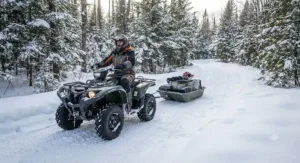
For flip over transport, hitch pockets or tow ropes matter more than most buyers realize; a sled that fishtails behind a snowmobile at speed stresses the hinge points over time. Keep your load balanced front-to-back, and avoid overloading the tub with loose gear that shifts during a bumpy tow — a rattling auger against the shelter frame is a surprisingly common cause of premature wear.
Maintenance is straightforward but easy to skip: dry the fabric fully before folding it down for storage, since trapped moisture freezes into the seams and weakens stitching over a season. A light coat of silicone spray on pole joints every few outings keeps them sliding smoothly instead of binding in sub-zero temperatures. Store the shelter somewhere it won’t get crushed under other gear in the off-season — a warped tub is one of the most common (and most avoidable) failures reported by longtime owners.
Real-World Scenarios: Matching Anglers to the Right Flip Over Sled
Picture a university student in Waterloo with a used snowmobile and a Saturday free every other week. Budget is tight, storage space is tighter, and the lake access point is a five-minute drag from the parking area. The Eskimo Eskape 2000 or Clam Kenai Pro Thermal fit that profile perfectly — light, affordable, and forgiving of infrequent use.
Now picture a retired couple near Georgian Bay who fish together three times a week and value comfort over speed. Standing room, dual adjustable seating, and a thicker thermal shell matter far more to them than shaving a few pounds off the tow weight — which points squarely at the Jason Mitchell XT Thermal or Clam Nanook XT.
Finally, consider a hardcore walleye chaser in northern Saskatchewan who fishes -30°C mornings and covers serious ice distance by snowmobile each week. Durability under abuse and dependable warmth beat every other consideration, making the Clam X100 Thermal XT the logical pick despite its higher price tag.
Problem → Solution: Fixing the Most Common Flip Over Headaches
Frozen pole joints are the most frequently reported first-season frustration. The fix: warm the joint briefly with bare hands or a hand warmer before flipping, rather than forcing it, which can crack fittings on any of these seven shelters.
Condensation dripping onto gear inside the shelter shows up often in colder, poorly ventilated setups. Cracking a window or vent slightly, even in extreme cold, lets moist air escape before it collects on the ceiling fabric — a trick that helps thermal models like the Otter XT Cabin and Clam Nanook XT perform even better than their spec sheets suggest.
A sled that tows crooked behind a machine usually points to uneven weight distribution rather than a defective product; redistributing gear toward the center, directly over the sled’s runners, generally resolves it. And for anglers whose shelter feels cramped once electronics and a heater go in, sizing up one capacity tier — say, moving from the Eskimo Eskape 2000 to the Ice Runner Ice House Explorer — solves the problem before it becomes an annual complaint.
How to Choose the Best Flip Sled Canada Anglers Actually Recommend
- Match capacity to your real crew size. Manufacturer “2-person” ratings are often optimistic; if you regularly fish with a buddy, look one tier up in rated capacity.
- Weigh your transport method honestly. No sled deck vehicle means weight matters more than warmth — favour the Ice Runner Ice House Explorer or Clam Kenai Pro Thermal.
- Prioritize insulation for your typical temperatures. Anglers regularly fishing below -20°C should lean toward full thermal-fabric models like the Clam X100 Thermal XT.
- Check door configuration against your fishing style. Side-access doors, like on the Otter XT Cabin, reduce tripping hazards when a partner enters mid-sit.
- Budget for accessories, not just the shelter. A heater, ice anchors, and a travel cover often add C$150-C$300 to your total setup cost.
- Read aggregated owner feedback, not just spec sheets. Real reported issues — condensation, pole durability, seam quality — tell you more than a features list ever will.
- Buy one capacity tier above your minimum need. Extra room for gear, movement, and an unexpected guest angler almost always pays off.
The Fish’n Canada community has put together detailed guidance on assessing ice conditions that pairs well with this buying framework — your shelter choice means little if the ice underneath it isn’t sound.
Sled Shelter Combo vs Standalone Shelter-and-Sled Setups
Here’s where a lot of new anglers get tripped up: is an integrated sled shelter actually better than buying a pop-up shelter and a separate utility sled? On paper, the separate route looks cheaper upfront, since a basic sled runs C$60-C$120 and a pop-up hub shelter starts around C$300. But add them together and you’re often within striking distance of a mid-range flip over sled ice fishing shelter anyway — while losing the integrated hinge system that makes setup a 15-second job instead of a five-minute wrestling match with poles in the wind.
| Setup Type | Setup Speed | Weather Protection While Towing | Typical Cost |
|---|---|---|---|
| Sled Shelter Combo (flip-over) | 15-60 seconds | Gear stays enclosed in tub | C$400-C$1,150 |
| Standalone Pop-Up + Separate Sled | 2-5 minutes | Gear often exposed on open sled | C$360-C$800 combined |
What most buyers overlook is that a sled shelter combo protects your gear during the actual tow to your spot, since everything rides inside the tub rather than exposed on an open sled deck. Standalone setups can still make sense for anglers who already own a utility sled and just need occasional shelter, but for anyone starting from scratch, the integrated route wins on convenience per dollar spent.
The All In One Ice Sled Advantage: Why Integrated Sled Shelter Wins
The core case for an all in one ice sled setup comes down to friction — or rather, the removal of it. Every extra step between arriving at your spot and having a line in the water is a step where fingers get cold and motivation drops. Flip-over shelters compress that entire process into one motion.
There’s a durability angle too: because the shelter is permanently mounted to its own sled, there’s no mismatched hardware between a shelter’s stakes and a separate sled’s tie-down points — everything is engineered to work together from the factory. Reviewers across the Clam, Otter, and Eskimo lineups consistently point to this integration as the single biggest reason they’d buy another flip-over rather than switch back to a pop-up-plus-sled combo.
Common Mistakes When Buying a Flip Over Sled Ice Fishing Setup
The single most common mistake is buying based on advertised capacity alone. A “3-person” shelter, as most experienced anglers and gear reviewers will tell you, fits two adults comfortably with gear — treat manufacturer numbers as an upper ceiling, not a target.
Second, many first-time buyers skip weighing transport method before purchase, ending up with a heavy premium shelter they can’t comfortably hand-pull. Third, buyers frequently underestimate accessory costs — a heater, anchors, and a travel cover aren’t optional extras for serious use; they’re part of the real total cost. Finally, skipping aggregated review research in favour of price alone often means missing known issues, like thinner insulation on certain budget models, that a few extra minutes of research would have flagged.
What to Expect: Real-World Performance in Canadian Winters
Specs on a page rarely capture what a shelter actually feels like at -25°C with a 20 km/h wind. In practice, thermal-fabric flip-overs like the Clam X100 Thermal XT and Otter XT Cabin hold heat well enough that a single mid-sized propane heater keeps the interior comfortable even as outside temperatures plunge. Non-thermal or lighter-insulated models like the Eskimo Eskape 2000 work fine down to moderate cold but need a slightly larger heater or shorter sits in extreme conditions.
| Shelter Type | Warmth in Extreme Cold | Setup Time | Weight |
|---|---|---|---|
| Flip-Over Sled Shelter | Good to excellent (thermal models) | 15-60 seconds | 45-70+ lbs |
| Pop-Up Hub Shelter | Fair to good | 60-120 seconds | 20-45 lbs |
| Permanent Ice Shanty | Excellent | Hours (one-time build) | Not portable |
Ice fishing has become a genuine cultural fixture across Canada, from Manitoba’s Lake Winnipeg to Quebec’s ice villages — CBC’s coverage of Manitoba’s growing ice fishing community captures just how central portable shelters have become to that experience. The takeaway from the table above is straightforward: flip-overs strike the best balance of speed and warmth for anglers who move between spots, while permanent shanties still win for anglers who plant one spot for the whole season.
Long-Term Cost & Maintenance of Your Integrated Sled Shelter
A quality flip-over shelter, properly maintained, should last 5-10 seasons — meaning the true cost-per-use on a C$700 shelter used 20 times a winter works out to well under C$10 per outing after just two seasons. Compare that to repeatedly patching a bargain-bin pop-up shelter that fails within two winters, and the math tilts firmly toward investing in a reputable brand from the start.
Ongoing costs are modest: replacement poles run C$20-C$60 if damaged, fabric repair kits cost under C$30, and annual silicone spray for pole joints is a few dollars. The biggest long-term expense is usually the heater and fuel, not the shelter itself — something worth factoring into your total winter fishing budget from day one.
Safety, Ice Thickness & Regulations for Canadian Ice Anglers
No shelter, however well-built, protects you from ice that isn’t safe to be on. Provincial guidance varies, but as a general Canadian benchmark, Saskatchewan’s Water Security Agency recommends at least 10 cm of clear ice for walking and considerably more for towing a loaded flip-over sled behind a snowmobile or ATV. Always check ice thickness in multiple spots, not just where you first step on, since thickness can vary dramatically across the same lake.
Provincial regulations on shelter identification, removal deadlines (many provinces require shelters off the ice by a set date in spring), and licensing vary, so check your province’s natural resources ministry before your season starts. Carrying ice picks, a rope, and a whistle costs almost nothing and has saved lives — pair that habit with a properly chosen flip over sled ice fishing shelter and you’re set up for a genuinely safe, enjoyable season.
Frequently Asked Questions
❓ How much does a flip over sled ice fishing shelter cost in Canada?
❓ Can one person set up a flip-over shelter alone?
❓ Are flip-over shelters warm enough for extreme cold?
❓ What's the difference between a flip-over and a pop-up hub shelter?
❓ How long does a flip over sled ice fishing shelter last?
Conclusion
Flip over sled ice fishing gear has come a long way from plywood shanties dragged behind a truck. Today’s seven-product lineup — from the budget-friendly Eskimo Eskape 2000 to the rugged Clam X100 Thermal XT and the deluxe Jason Mitchell XT Thermal — gives Canadian anglers real, honest options at every price point and every crew size. The right choice comes down to matching your typical temperatures, your transport method, and your fishing frequency against the specs we’ve broken down here, not chasing whichever shelter has the flashiest marketing photos.
Whatever you land on, remember that gear is only half the equation — sound ice judgment and a bit of preparation matter just as much as the shelter you’re sitting in. Check conditions, tell someone your plans, and let the lake set the pace for the rest of the season.
✨ Ready to gear up?
Compare current prices on today’s top picks and get one step closer to your next morning on the ice.
Recommended for You
- Jet Sled for Ice Fishing: 7 Toughest Picks for 2026
- Smitty Sled vs Jet Sled: 7 Best Ice Fishing Sleds (2026)
- Smitty Sled for Ice Fishing: 7 Top Builds for 2026 (C$50-C$400)
Disclaimer: This article contains affiliate links. As an Amazon Associate, I earn from qualifying purchases. If you purchase products through these links, we may earn a small commission at no additional cost to you.
✨ Found this helpful? Share it with your friends! 💬🤗
