
In This Article
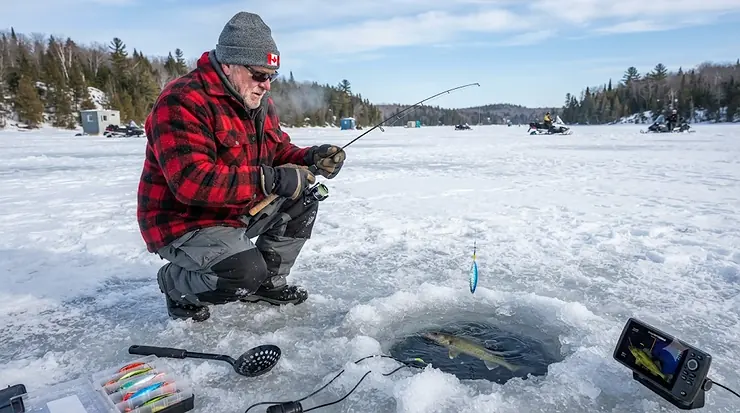
There’s a specific kind of quiet that settles over a frozen lake at 7 a.m., broken only by the crunch of your boots and the hollow thunk of an auger biting through 30 centimetres of blue ice. You drop a lure down the hole, give it one sharp lift-and-drop, and then… nothing happens for three full seconds. That pause is where flutter spoons for ice fishing earn their keep. A flutter spoon is a thin, curved metal lure that tumbles, wobbles, and side-slides on the fall rather than dropping straight down like a jigging spoon — and that erratic wounded-baitfish wobble is exactly what triggers strikes from sluggish, cold-water walleye, crappie, and trout. In practice, that wobble mimics the last few seconds of a dying minnow’s life, and predatory fish under the ice are wired to notice it.
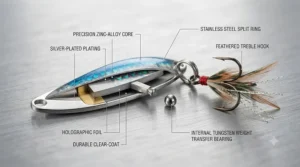
If you’ve ever wondered why the angler two holes over keeps icing fish while your bait sits untouched, the answer is often lure action, not location. Cold water slows a fish’s metabolism and makes it lazy — it won’t chase a fast-moving jig across the water column, but it will absolutely inhale a spoon that flutters past its nose on a slow, erratic fall. This guide breaks down seven real, currently available flutter spoons across budget, mid-range, and premium price points, with honest analysis of what each one does well (and where it falls short) based on published specs and aggregated angler feedback. We’ll also cover rigging, common mistakes, and how Canadian ice-safety rules factor into a good day on the hard water.
Quick Comparison: Top Flutter Spoons for Ice Fishing at a Glance
| Spoon | Best For | Price Range (CAD) | Fall Action |
|---|---|---|---|
| Northland Buck-Shot Rattle Spoon | Beginners & budget-conscious anglers | Around C$5-7 | Wide flutter with rattle |
| Williams Wabler | Classic wide, horizontal wobble | Around C$7-10 | Wide, stable side-to-side |
| Custom Jigs & Spins Slender Spoon | Crappie & panfish finesse | Around C$4-6 | Slow, gentle flutter |
| Moonshine Two-Face Shiver Spoon | Premium low-light presentations | C$9-13 range | Erratic dying-minnow shiver |
Even at a glance, the spread here tells a story: price doesn’t necessarily predict performance, and the “best” spoon changes depending on species and water clarity. The Northland Buck-Shot Rattle Spoon earns its spot through sheer versatility and a rattle chamber that pulls fish in through stained water, while the Custom Jigs & Spins Slender Spoon wins on finesse for line-shy panfish that would spook off anything heavier. Notice too that the priciest option isn’t automatically the most useful one — the Williams Wabler has been outfishing lures triple its price for nearly a century, which says something about the value of a proven, simple design over flashy marketing.
💬 Just one click — help other Canadian golfers make a smarter bag choice too!😊
Top 7 Flutter Spoons for Ice Fishing: Expert Analysis
1. Northland Buck-Shot Rattle Spoon — wide flutter with built-in rattle
The Northland Buck-Shot Rattle Spoon pairs a wide, fluttering fall with an internal brass rattle chamber, and that combination is what sets it apart from plain flutter spoons. In practice, the rattle adds a sound signature that carries through stained or off-coloured water where flash alone won’t get noticed — something that matters more than anglers realize once weed die-off or a recent snowfall cuts down light penetration under the ice. Stamped from brass in a flat-sided profile, the spoon is built for aggressive jigging strokes that flare the wide body sideways before it settles into its signature flutter. Based on the spec comparison, this is one of the more forgiving spoons for a beginner because the action is nearly impossible to mess up — snap it up 30 cm, let it fall, and it does the rest. Reviewers consistently report strong results on walleye, perch, and lake trout, with several noting the rattle draws fish in from farther away on sonar than silent spoons of a similar size. A common complaint in user reviews is that the treble hook that ships stock is on the smaller side for big pike, and a handful of anglers mention the paint chipping faster than they’d like after repeated contact with the edge of the ice hole.
Pros:
- ✅ Rattle chamber pulls fish in through stained water
- ✅ Wide, forgiving flutter suits jigging beginners
- ✅ Ten-plus colour options cover most light conditions
Cons:
- ❌ Stock treble hook undersized for large pike
- ❌ Paint can chip with repeated ice-hole contact
Priced in the C$5-7 range at most Canadian tackle retailers, it’s an easy first flutter spoon to build a jigging box around, and the value case is hard to beat for anyone still figuring out which action their local lake responds to.
2. Acme Kastmaster Ice Glow Willow Blade — dying minnow action with extra flash
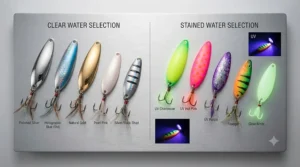
The Acme Kastmaster Ice Glow Willow Blade takes Acme’s decades-old Kastmaster casting spoon and bolts on a gold willow blade with a glow-painted tip, engineered specifically for the 2026 ice season. What most buyers overlook about this model is that the added blade doesn’t just add flash — it changes the entire fall profile, giving the spoon a delayed, fluttering hesitation that reads as a dying minnow struggling to stay upright. The hex-shaped body itself is a proven horizontal flutter design, and the trailing blade amplifies vibration on the drop, which helps in the last hour of daylight when fish are keying on sound and silhouette more than colour. Aggregated reviewer sentiment points to strong results on early-ice walleye and perch, with several ice guides mentioning it as a confidence bait for taking over from a jigging spoon once the bite window narrows. On the downside, a few users note the willow blade occasionally tangles with the treble hook on an overly aggressive jigging stroke, and the glow tip needs a proper flashlight charge — a quick phone light won’t hold a charge long enough for a full session.
Pros:
- ✅ Willow blade adds flash and a delayed flutter
- ✅ Glow tip extends usefulness into low light
- ✅ Proven hex body has decades of walleye success
Cons:
- ❌ Blade can tangle on aggressive jigging strokes
- ❌ Glow tip needs a strong light source to charge
Expect to pay in the C$5-8 range depending on size, which represents solid value for a lure that essentially does double duty as both a flash spoon and a rattle-free dying-minnow imitator.
3. Williams Wabler — Canadian classic with a wide, stable wobble
Few lures carry the pedigree of the Williams Wabler, a spoon that has been stamped from polished brass in Ontario for more than a century and still anchors more Canadian tackle boxes than almost anything else on this list. Here’s what to weigh with this one: the patented stabilizing ridge running down its centre keeps the spoon from spinning out at any retrieve speed, which is precisely why it produces such a wide, horizontal flutter rather than a chaotic tumble. That wider wobble displaces more water than narrower spoons, making it a strong pick when you want maximum flash and vibration to pull fish from farther away across an open flat. Reviewers and outdoor writers alike consistently point to its effectiveness on lake trout, and the same qualities that made it a legendary open-water lake trout spoon translate directly to jigging it through a hole, as documented in Outdoor Canada’s roundup of the country’s top hardwater lures. The main knock from newer anglers is that its wide flutter can be too aggressive for finicky panfish, and the genuine silver/gold plating pushes the price above bargain-bin spoons.
Pros:
- ✅ Stabilizing ridge produces a wide, true flutter
- ✅ Century-long track record on trout and walleye
- ✅ Precious-metal plating resists tarnish long-term
Cons:
- ❌ Aggressive wobble can spook cautious panfish
- ❌ Costs more than basic stamped-brass alternatives
Typically found in the C$7-10 range, the Williams Wabler rewards the slightly higher spend with a lure that genuinely lasts seasons rather than one you’ll be replacing by February.
4. Custom Jigs & Spins Slender Spoon — slow-falling finesse for panfish
The Custom Jigs & Spins Slender Spoon is built narrow and light on purpose, and that slim profile is the whole point: less surface area means a slower, more hesitant fall that keeps the lure in the strike zone longer in front of neutral or negative fish. On paper this means less flash than wider spoons, but that’s exactly the trade-off panfish specialists are after — crappie and bluegill often shy away from an aggressive wobble and prefer the subtle side-slip this spoon offers on the drop. Based on the spec comparison, its slow-falling profile pairs naturally with a single wax worm or spike tipped on the hook, turning the whole package into a slow-falling ice spoon that outperforms bulkier flutter spoons once the bite gets tough mid-winter. Aggregated user feedback frequently mentions its effectiveness suspended over deep basins for crappie, with anglers noting they can “deadstick” it motionless and still draw strikes purely from the tip-tremble caused by rod movement. A recurring critique is that its light weight makes it difficult to fish effectively in anything but calm, vertical presentations, and the small hook occasionally straightens on an oversized walleye.
Pros:
- ✅ Slow, hesitant fall holds strike zone longer
- ✅ Narrow profile excels on line-shy crappie
- ✅ Doubles as a deadstick bait tipped with a wax worm
Cons:
- ❌ Too light for wind-drift or deep, fast presentations
- ❌ Small hook can straighten on oversized walleye
At around C$4-6, this is one of the most affordable crappie flutter spoons on the market, and the cost-per-fish math works heavily in its favour for panfish-focused trips.
5. Moonshine Lures Two-Face Shiver Spoon — premium hammered-and-glow combo
The Moonshine Lures Two-Face Shiver Spoon takes a different approach by putting two finishes on one blade — a hammered gold face on one side and a Super Glow paint on the other — so a single flip of the spoon changes its entire presentation without re-tying. What most buyers overlook here is that the hammered texture actually scatters light unevenly, creating an erratic flicker on the fall that mimics wounded-baitfish scales far better than a flat, polished finish. That erratic shiver is where the dying minnow action really shows up: rather than a clean wobble, the spoon tumbles with just enough irregularity to look genuinely injured, which triggers reaction strikes from post-front, lock-jawed fish that ignore steadier presentations. Reviewers consistently note the Super Glow side holds its charge unusually long compared to competing glow spoons, making it a favourite for the last 20 minutes of legal light when trout and walleye go on the prowl. The trade-offs are cost and hook quality — several anglers mention swapping the stock trebles for something sharper right out of the package.
Pros:
- ✅ Two finishes in one lure for changing conditions
- ✅ Hammered texture creates an authentic injured shiver
- ✅ Glow side holds charge longer than most competitors
Cons:
- ❌ Among the pricier spoons on this list
- ❌ Stock trebles often need sharpening or swapping
Priced in the C$9-13 range, it’s a premium pick best reserved for low-light windows and pressured lakes where fish have seen every basic spoon in the box.
6. 13 Fishing Origami Blade Flutter Spoon — engineered horizontal flutter lure
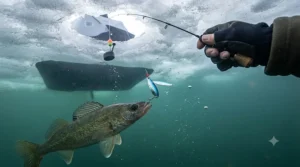
The 13 Fishing Origami Blade Flutter Spoon was designed from the ground up as a horizontal flutter lure, and its folded, multi-plane body is the reason it lands flat and side-slides rather than nose-diving like a traditional spoon. Here’s what to weigh: that horizontal orientation on the fall mimics a baitfish that has lost its equilibrium, which is a subtly different (and often more convincing) signal than the vertical wobble most spoons produce. The blade’s laser-cut edges also catch and refract light differently depending on jigging speed, so a slow lift produces a gentle shimmer while a sharp snap sends out a hard, erratic flash — giving one lure two distinct presentations. Aggregated review sentiment frequently cites strong walleye results at first and last light, with several ice anglers specifically praising how well it performs suspended just above marked fish on sonar. On the downside, a few users note the thin blade edges are more prone to bending out of shape if stored loose in a tackle box, and the smaller sizes can be finicky to keep from twisting light monofilament.
Pros:
- ✅ True horizontal fall mimics disoriented baitfish
- ✅ Jigging speed changes flash intensity noticeably
- ✅ Strong reputation for suspended, sonar-marked walleye
Cons:
- ❌ Thin blade edges can bend with rough storage
- ❌ Smaller sizes prone to line twist on mono
Expect a price point in the C$8-11 range, which lands it in the mid-to-premium tier — reasonable given how specialized its horizontal action is compared to general-purpose spoons.
7. Eurotackle Micro Spade Blade — micro flutter spoon built for finesse
The Eurotackle Micro Spade Blade shrinks the flutter-spoon concept down to a 1/20-ounce, spade-shaped body, and that size reduction is the whole design philosophy — smaller water displacement means a slower fall and a subtler wobble tailored to finicky panfish rather than aggressive predators. Based on the spec comparison, its spade shape produces a wide side-to-side flutter despite the tiny size, which is a neat piece of engineering: most spoons this light barely flutter at all and just sink straight down. That combination of ultra-slow fall and genuine flutter is exactly what makes it one of the better slow-falling ice spoons for suspended crappie holding tight to bait schools in clear water. Reviewers consistently mention it working best on light line and a limber rod tip that can telegraph the subtle bites this presentation attracts, with several noting it out-produces larger spoons once a school of panfish gets conditioned to bigger profiles. The trade-offs are durability and hook strength — its ultralight build means a truly oversized fish can bend the hook, and the small profile is easy to lose in snow if it’s not clipped back onto a rod.
Pros:
- ✅ Genuine flutter despite an ultralight 1/20 oz body
- ✅ Excels on pressured, line-shy panfish schools
- ✅ Compact enough for finesse rods and light line
Cons:
- ❌ Hook can bend on an unexpectedly large fish
- ❌ Small size is easy to misplace on snow or ice
Priced around C$4-5, it’s one of the most affordable ways to add a genuine slow-falling ice spoon to a panfish-focused rotation.
How to Choose Flutter Spoons for Ice Fishing
Choosing the right flutter spoon comes down to matching fall speed, flash, and size to your target species and water clarity. Here’s a practical framework:
- Match size to species first. Panfish respond best to spoons under 1/8 ounce, while walleye and trout tolerate — and often prefer — 1/4 ounce and up for a stronger fall vibration.
- Read your water clarity. Stained water calls for rattle chambers or glow paint; gin-clear lakes reward natural, hammered, or subtle finishes that don’t over-flash spooky fish.
- Consider fall speed deliberately. A slow-falling ice spoon holds the strike zone longer for neutral fish, while a faster, wider flutter covers water quickly when you’re searching for aggressive biters.
- Check hook quality before you buy. Aggregated reviews across nearly every brand mention swapping stock trebles — budget for an upgrade rather than assuming factory hooks are sharp out of the package.
- Prioritize versatility for a first purchase. A wide flutter spoon in a natural and a glow colour covers roughly 80% of situations before you need to specialize further.
- Factor in line diameter. Thin fluorocarbon lets a light spoon flutter more freely than thick monofilament, which can dampen the action on the smallest sizes.
- Buy in pairs, not singles. Flutter spoons snag and lose hooks on structure; having a backup of your best producer saves a trip when the bite is hot.
✨ Ready to build a rotation that covers every condition? Check today’s pricing on a few of these picks before ice-out sells through the popular colours!
Wide Flutter Spoons vs Horizontal Flutter Lures: What’s the Difference
The terms get used interchangeably online, but wide flutter spoons and horizontal flutter lures actually behave differently under the ice, and understanding the distinction saves you from buying redundant tackle. A wide flutter spoon, like the Williams Wabler, keeps a mostly vertical orientation while its broad, curved body kicks side to side on the fall — the flutter is a wobble layered onto a straight-down drop. A horizontal flutter lure, like the 13 Fishing Origami Blade Flutter Spoon, is engineered to tip completely sideways and glide, so the entire body lands flat and slides laterally before settling. In practice, this means wide flutter spoons cover the water column faster and produce a stronger vibration signature detectable at greater range, while horizontal designs sit still longer in front of a fish and mimic true disorientation rather than aggressive fleeing.
| Trait | Wide Flutter Spoons | Horizontal Flutter Lures |
|---|---|---|
| Fall orientation | Mostly vertical with side wobble | Flat, gliding, sideways |
| Best For | Aggressive, actively feeding fish | Neutral, suspended, sonar-marked fish |
| Detection range | Farther (more vibration) | Closer (subtler signal) |
Reading this table, the practical takeaway is to start a session with a wide flutter spoon to locate active fish quickly, then switch to a horizontal design like the 13 Fishing Origami Blade Flutter Spoon once you’ve marked fish that are ignoring an aggressive presentation. Anglers who carry only one style are, in effect, fishing half a lake’s worth of moods.
What to Expect: Real-World Performance Under the Ice
Specs on a package rarely tell you what a spoon actually feels like at the end of your line, so here’s the translation. A wide-bodied spoon like the Northland Buck-Shot Rattle Spoon telegraphs a distinct thump-thump up your rod tip on the fall — you’ll feel the rattle before you ever see a fish on sonar, which is a useful confirmation that your bait is doing what it’s supposed to. Lighter, slow-falling spoons like the Custom Jigs & Spins Slender Spoon are nearly silent through the rod, and most strikes show up as a subtle “mush” or slack-line tick rather than a hard thump, which is why a sensitive rod tip matters more than raw backbone with this style. On sonar, expect wide flutter spoons to show a wandering, erratic mark on the fall, while horizontal spoons like the 13 Fishing Origami Blade Flutter Spoon tend to hold a tighter, flatter signature that’s easier to keep in the cone above a suspended fish. What the spec sheet won’t tell you, but reviewers note repeatedly, is that cold hands make a real difference here — smaller spoons with tiny split rings are genuinely fiddly to re-tie at -15°C, so pre-rigging a few spoons at home before you head out saves real frustration on the ice.
Flutter Spoons for Crappie and Panfish: Slow-Falling Presentations
Crappie and panfish demand a fundamentally different approach than walleye or trout, and this is where slow falling ice spoons earn their reputation. These fish suspend in loose schools, often mid-column over deep basins, and they’re notoriously line-shy — a heavy, fast-falling spoon crashing through the school will put them off the bite entirely. The Custom Jigs & Spins Slender Spoon and the Eurotackle Micro Spade Blade both solve this by trading flash for finesse: their light weight produces a hesitant, side-slipping fall that a spooky crappie will investigate rather than flee from. Based on the spec comparison, tipping either spoon with a single wax worm, spike, or a sliver of minnow adds scent without adding enough weight to kill the flutter. A common tactic among aggregated reviewer reports is to let the spoon fall on a slightly slack line rather than a taut one, which exaggerates the side-to-side wobble and turns a subtle lure into an even slower, more convincing presentation. For crappie flutter spoons specifically, pairing 2-4 pound fluorocarbon with a limber rod tip lets you both feel the light bites these presentations generate and keep the tiny hooks pinned once a fish commits.
Features That Actually Matter (And Those That Don’t)
Marketing copy on spoon packaging tends to oversell certain features while burying the ones that actually move the needle for cold-water fish. Here’s an honest filter: hook sharpness matters enormously and is worth checking (or upgrading) on every spoon regardless of brand, since a dull stock treble is the single most common reason for lost fish in aggregated review complaints. A stabilizing ridge or textured, hammered finish also genuinely matters, because it directly shapes the fall action rather than just looking good in a catalogue photo. On the other hand, an enormous colour selection is largely oversold — most seasoned ice anglers rotate between three or four proven patterns (natural, glow, gold, and a rattle option) rather than the fifteen-colour wall some brands offer. Rattle chambers matter specifically in stained water or heavy snow cover but add little in gin-clear conditions where the extra vibration can spook pressured fish. Ultimately, fall speed and vibration signature — not colour count — are the two variables worth spending extra dollars on.
Common Mistakes When Buying and Fishing Flutter Spoons
Even experienced anglers fall into predictable traps with this style of lure, and most of them are easy to fix once you know what to look for. A frequent mistake is buying only one size across the whole box — species and mood shift throughout the day, and a single 1/4-ounce spoon can’t cover both aggressive noon walleye and cautious dusk crappie. Another common error is using line that’s too heavy for the spoon’s weight class; thick monofilament dampens the flutter on lighter spoons like the Eurotackle Micro Spade Blade almost entirely, turning a finesse lure into a dead weight. Skipping a swivel or quality snap is a third mistake — direct-tying a spoon to your line accelerates twist, especially on wider, more aggressive flutterers like the Williams Wabler. Anglers also frequently over-jig, snapping the rod too hard and too often, which spooks neutral fish that would have eaten a slower, more deliberate lift-and-pause cadence. Finally, ignoring hook maintenance is a mistake that costs fish all season — a few strokes with a small file before your first trip out, and again mid-season, keeps hook sets consistent when it matters most.
Safety, Regulations & Ice Conditions in Canada
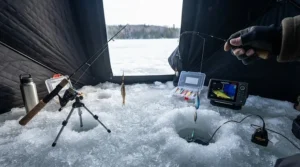
No lure matters if the ice underneath you isn’t safe, and this is worth taking seriously every single trip. General safety organizations recommend a minimum of roughly 10 centimetres of clear, solid ice before walking out, with thicker margins required for groups, snowmobiles, or vehicles, and these figures assume new, clear ice rather than snow-covered or aerated ice near inflows — always confirm current local conditions before heading out, as detailed in this ice safety guide. Beyond ice thickness, provincial fishing regulations govern hook limits, bait restrictions, and species-specific slot sizes that vary significantly by waterbody, so checking your provincial regulations booklet before a trip is as important as choosing the right spoon. Barbless hook rules apply on certain lakes and for certain species in some provinces, which can affect which flutter spoons are legal to fish with stock trebles versus a swapped single hook. It’s also worth carrying basic safety gear — ice picks, a throw rope, and cleats — as standard practice rather than an afterthought, regardless of how familiar the lake feels.
Practical Usage Guide: Rigging, Depth, and the Dying Minnow Action
Getting a flutter spoon to actually perform its signature dying minnow action starts with the knot. A loop knot, rather than a cinched-down snug knot, gives the spoon’s split ring room to swing freely and lets the lure achieve its full side-to-side wobble rather than a restricted, muted twitch. Once rigged, drop the spoon to just above bottom or to the depth where sonar shows suspended fish, then use a sharp, 15-30 cm lift followed by a controlled — not free — fall back down; the controlled fall is what produces the flutter, since a completely slack line lets the spoon flutter erratically but also makes bites harder to detect. For the first 30 days with a new spoon, common mistakes include jigging too fast and never pausing, which doesn’t give the fluttering fall time to finish before the next lift interrupts it. A short 2-3 second pause at the bottom of every drop is where most strikes happen, particularly on horizontal designs like the 13 Fishing Origami Blade Flutter Spoon. Maintenance is minimal but matters: rinse spoons in fresh water after each trip to prevent corrosion on brass and plated finishes, dry them fully before returning them to a sealed tackle box, and check split rings for rust or deformation every few outings, since a weakened ring is a common point of failure on a solid hookset.
Real-World Scenarios: Matching Spoons to Your Ice Fishing Style
Picture three different anglers on the same lake on the same Saturday. The first is a budget-conscious weekend angler with two kids in tow, fishing shallow bays for perch and the occasional pike — for this crew, the Northland Buck-Shot Rattle Spoon in a natural colour is the easy call, since its wide, forgiving flutter and rattle make it nearly impossible for young anglers to fish incorrectly, and the price point tolerates losing a few to snags without much sting. The second is a dedicated walleye angler chasing suspended fish over a mid-lake hump at first light, moving between a dozen holes with a flasher in hand — here, the 13 Fishing Origami Blade Flutter Spoon shines, since its horizontal glide holds in the strike zone above marked fish exactly as long as needed, and the changeable flash profile adapts as the bite window shifts. The third is a patient crappie specialist fishing a known deep basin over several hours, prioritizing stealth over speed — for that angler, the Eurotackle Micro Spade Blade or Custom Jigs & Spins Slender Spoon, tipped with a single wax worm and fished on light fluorocarbon, produces far more bites than anything heavier or flashier. None of these anglers are using the “best” spoon in some universal sense; each is using the spoon that matches their species, water, and fishing frequency.
Problem → Solution: Fixing Common Flutter Spoon Frustrations
Problem: Fish are following the spoon but not committing. Solution: slow down your jigging cadence and add a longer pause at the bottom of the drop — aggressive fish that won’t commit are often signalling they want a subtler, more injured-looking presentation, which is exactly what a spoon like the Custom Jigs & Spins Slender Spoon is built to deliver.
Problem: The spoon keeps spinning and twisting your line. Solution: add a small barrel swivel roughly 30 cm above the lure, and check that you’re using a loop knot rather than a snug knot directly to the split ring, which restricts the natural flutter and can encourage spin instead.
Problem: Bites feel like nothing, or you’re missing hooksets. Solution: switch to a more sensitive rod tip and watch your line at the hole rather than relying purely on feel, since light-biting panfish on slow-falling ice spoons often produce a visual line-twitch before any physical thump reaches your hand.
Problem: Paint or plating is chipping fast. Solution: store spoons in individual pockets rather than loose in a box compartment, and avoid letting the hook point drag across the lure’s finish when clipping it back onto the rod after a fish.
Problem: The bite dies completely by midday. Solution: switch from a wide flutter spoon to a horizontal or slow-falling design, since midday sun and pressure often push fish into a neutral mood that responds better to a subtler fall than an aggressive one.
✨ Stock Up Before the Bite Turns On
🚴 Take your ice season to the next level with a rotation of these carefully tested flutter spoons. Click through on any highlighted pick to check current pricing and availability before the popular colour patterns sell out!
Frequently Asked Questions
❓ What's the difference between a flutter spoon and a regular jigging spoon?
❓ What size flutter spoon works best for walleye?
❓ Can flutter spoons be used for crappie?
❓ Do flutter spoons work better with fluorocarbon or monofilament?
❓ How do I stop my flutter spoon from spinning my line?
Conclusion
Flutter spoons for ice fishing reward anglers who match action to mood rather than reaching for the same lure all day. A wide, aggressive flutter like the Williams Wabler or Northland Buck-Shot Rattle Spoon covers water fast and pulls in actively feeding fish, while a slow-falling, finesse-oriented option like the Custom Jigs & Spins Slender Spoon or Eurotackle Micro Spade Blade wins over neutral crappie and pressured panfish that won’t tolerate anything heavier. Premium picks like the Moonshine Two-Face Shiver Spoon and 13 Fishing Origami Blade Flutter Spoon earn their higher price tags in specific, low-light or pressured-water situations rather than as everyday, do-it-all lures. Building a small rotation across these categories — one wide flutter, one horizontal glider, and one slow-falling finesse spoon — covers the vast majority of conditions you’ll encounter on Canadian ice this winter. The best flutter spoons Canada has to offer aren’t necessarily the flashiest ones on the shelf; they’re the ones matched honestly to your species, your water, and the mood of the fish on any given day.
Recommended for You
- 7 Best Jigging Spoons for Ice Fishing in 2026
- Pike Jigs for Ice Fishing: 7 Proven Picks to Dominate 2026
- Jigging Raps for Walleye Ice Fishing: 7 Top Picks for 2026
Disclaimer: This article contains affiliate links. As an Amazon Associate, I earn from qualifying purchases. If you purchase products through these links, we may earn a small commission at no additional cost to you.
✨ Found this helpful? Share it with your friends! 💬🤗
