
In This Article
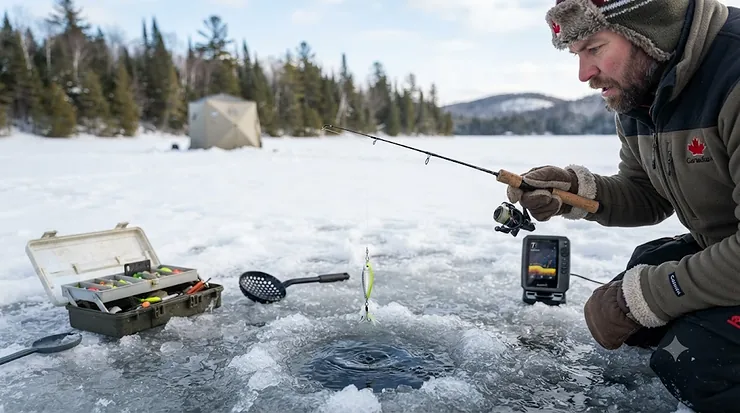
There’s a particular kind of silence that happens right before a pike hits your jig through eight centimetres of ice — and then there isn’t, because the rod tip buries itself and your reel starts singing. Northern pike don’t nibble. They ambush, they crush, and in cold water they can be surprisingly picky about the exact wobble, flash, and fall rate you’re offering them. Choosing the right pike jigs for ice fishing isn’t about grabbing whatever’s hanging near the cash register at your local shop; it’s about matching lure size, weight, and action to water clarity, depth, and how aggressive the fish are feeling that day. Pike stay active well below the ice, hunting weed edges and drop-offs even when perch and walleye go lockjaw, which is exactly why a dedicated, toothy-critter-ready jig box matters. This guide breaks down seven real, purchasable options across budget, mid-range, and premium tiers, explains the mechanics behind why each one draws strikes, and walks through the comparisons, tactics, and regulations you need before you drill your first hole this winter.
Quick Comparison Table
| Product | Weight | Best For | Price Range (CAD) |
|---|---|---|---|
| Rapala Jigging Rap W7 | 5/8 oz | Aggressive all-around pike jigging | C$12–C$16 |
| Rapala Jigging Rap Magnum | 1-1/8 oz | Large ice jigs for pike, sonar fishing | C$18–C$24 |
| Northland Level-Head Predator Tube | 3/4–1 1/2 oz | Pike tube jigs, vertical presentation | C$10–C$14 |
| Northland Buck-Shot Rattle Spoon | 1/4–1/2 oz | Flashy, noisy reaction strikes | C$9–C$12 |
| Acme Kastmaster 1/2 oz | 1/2 oz | Heavy pike ice lures on a budget | C$6–C$9 |
Looking across the table, weight is really doing the heavy lifting here (pun intended): heavier jigs like the Rapala Jigging Rap Magnum and Acme Kastmaster punch through deeper water fast, while lighter spoons like the Northland Buck-Shot Rattle Spoon shine in the 3–6 metre zone where pike cruise weed tops. Budget-conscious anglers can build a surprisingly complete pike arsenal around the Acme Kastmaster and still land trophy fish, but if you’re fishing with a forward-facing sonar unit, the Rapala Jigging Rap Magnum‘s aggressive fall pattern is purpose-built for that style. Note that this table is a starting snapshot — the full breakdown below covers two more products and goes deep on tube jigs specifically.
💬 Just one click — help others make better buying decisions too!😊
Top 7 Pike Jigs for Ice Fishing: Expert Analysis
Ice fishing for pike rewards anglers who carry a range of actions rather than one “go-to” lure. Below are seven real, currently available products spanning budget, mid-range, and premium price points, each with genuine specs, honest analysis, and aggregated review sentiment pulled from major tackle retailers and angler forums.
1. Rapala Jigging Rap W7 — best all-around aggressive circling action
The size 7 Jigging Rap is the classic starting point for anyone building a pike-specific jig box, and its trademark side-to-side circling fall is what makes it so deadly.
At 2-3/4 inches (about 7 cm) and 5/8 oz, the W7’s balanced, weighted minnow body swims in a tight downward circle on the fall and darts sharply on the upstroke, which mimics a dying baitfish far more convincingly than a straight vertical drop. It comes rigged with dual hooks (a belly treble plus tail hook), which matters enormously for pike because their slashing strike pattern misses single-hook baits more often than anglers expect.
Based on the spec comparison against smaller jigging raps in the same family, the W7 sits in the sweet spot for pike specifically — big enough to look like a real forage fish, light enough to work in 3–8 metres of water without a heavier rod. Beginners appreciate that it doesn’t require finesse; a simple lift-and-drop cadence triggers most strikes. Anglers chasing suspended pike over deep basins should also keep a size 9 in reserve for windier days when a faster fall is needed to hold bottom contact.
Reviewers consistently report that the W7’s action is what separates it from cheaper knockoff jigging lures — several tackle-shop customer reviews specifically mention it out-fishing jig-and-minnow combinations on tough bite days, though a handful note the stock trebles benefit from an upgrade to a heavier-gauge hook when targeting fish over 90 cm.
Pros:
- ✅ Realistic circling fall triggers reaction strikes
- ✅ Dual-hook rigging improves hookup ratio on slashers
- ✅ Wide colour and glow selection for stained water
Cons:
- ❌ Stock hooks can bend on trophy-class pike
- ❌ Requires a snap or loop knot, not a tight cinch
At around C$12–C$16 per lure, the Rapala Jigging Rap W7 isn’t the cheapest jig in your box, but its versatility across depths and light conditions makes it one of the better cost-per-fishing-day values on this list.
2. Rapala Jigging Rap Magnum — best for large ice jigs and sonar fishing
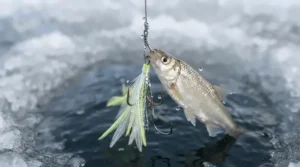
Built for anglers running forward-facing sonar, the Jigging Rap Magnum is the heaviest, most aggressive jig in the Rapala lineup, and it’s a genuine large ice jig for pike.
At 2-3/4 inches and a hefty 1-1/8 oz, the Magnum is a one-piece, indestructible body design (no wobbling fins to snap off) with a belly-mounted swivel and an oversized VMC black-nickel treble. That weight-to-length ratio means it drops fast and stays put on the bottom in current or deep basins — a real advantage when you’re trying to hold a jig directly in a pike’s strike zone visible on your flasher or live sonar.
What most buyers overlook about this model is that it wasn’t really designed as a finesse bait; it’s built to trigger reaction strikes from fish you can already see, which is precisely the scenario modern ice anglers increasingly fish. For anyone targeting big water bodies with sprawling weed flats and cruising trophy pike, this is the jig to tie on when you mark a fish and need to get in front of it immediately.
Aggregated feedback from tackle retailers is largely positive on castability and fall speed, with several anglers noting it holds up to repeated pike strikes better than traditional jointed swimbaits; the main critique that surfaces repeatedly is that its aggressive weight makes it a poor choice in water shallower than about 2.5 metres, where it can bottom out too fast for a natural presentation.
Pros:
- ✅ Heaviest, fastest-falling jig in this lineup
- ✅ One-piece body resists breakage from pike teeth
- ✅ Purpose-built for forward-facing sonar tactics
Cons:
- ❌ Too heavy for shallow weed-flat presentations
- ❌ Premium price point compared to standard jigging raps
Expect to pay in the C$18–C$24 range, making the Rapala Jigging Rap Magnum the priciest single lure here — but for anglers who fish deep basins or run electronics, the value case is strong given how few lures are purpose-built for that exact technique.
3. Northland Level-Head Predator Tube — best pike tube jigs for ice
If you’ve never fished pike tube jigs on ice, this is the one that converts skeptics, since it comes pre-rigged and ready to fish straight out of the package.
The Level-Head Predator Tube is available in 3/4, 1, and 1-1/2 oz sizes, with a soft, chewy plastic body threaded onto a leadhead where the line tie sits at the precise balance point. That “level head” engineering is the whole point: instead of hanging nose-down like a generic tube jig, it hangs perfectly horizontal, giving it a natural darting swim on the lift and a slow horizontal glide on the fall that looks exactly like an injured baitfish suspended in the water column.
Here’s what the spec sheet won’t tell you, but ice guides note: because it’s dense and compact for its profile, it stays put near the hole even in light current, which makes it far easier to keep on your sonar screen than a spoon that swings wide. It’s also pre-rigged with a stinger hook near the tail, which is critical for pike that short-strike the trailing half of a bait — a common problem with single-hook tube presentations.
Angler reports on major tackle sites consistently praise the horizontal hang and describe it as one of the more durable soft-plastic options for toothy fish, though the soft body does get shredded quickly and buyers are advised to keep spare replacement bodies on hand.
Pros:
- ✅ Pre-rigged and horizontal for a natural profile
- ✅ Stinger hook improves hookups on short strikers
- ✅ Available in large 1–1 1/2 oz sizes for deep water
Cons:
- ❌ Soft plastic tears after a few fish
- ❌ Limited colour range compared to hard-body jigs
Priced around C$10–C$14 including a spare body, the Northland Level-Head Predator Tube delivers strong value for anyone who wants the tube-jig presentation without the hassle of rigging one from scratch.
4. Northland Buck-Shot Rattle Spoon — best flashy, noisy reaction bait
For pure flashy pike ice lures, the Buck-Shot Rattle Spoon has earned a long-standing reputation as one of the most versatile ice spoons on the market, and pike are absolutely part of its target list.
This spoon is molded from a zinc alloy with a curved S-shape body and a built-in brass rattle chamber that thumps, clicks, and clatters on every lift-fall cycle, and it’s finished with a highly reflective, UV-enhanced holographic coating designed to throw flash in low light or stained water. Sizes commonly run from 1/8 oz up through roughly 1/2 oz, letting you scale up for pike-specific presentations in deeper water.
Based on the spec comparison with silent spoons, the added rattle is what separates this bait from simpler flash-only lures — sound travels well underwater and can pull pike in from well outside their visual range, especially in the murky, tannin-stained lakes common across much of Canadian pike water. What most anglers overlook is that the aggressive rattle works best fished hard with sharp upward snaps rather than a gentle lift, since a subtle presentation wastes the spoon’s main selling point.
Reviewers frequently cite the Buck-Shot as a genuine multi-species workhorse, with numerous accounts of it producing everything from perch to trophy pike in a single outing; the recurring complaint is that the treble hook that ships stock is on the smaller side for pike-class fish and often gets upgraded.
Pros:
- ✅ Brass rattle calls fish from a wide radius
- ✅ Highly reflective UV finish for stained water
- ✅ Genuine multi-species crossover value
Cons:
- ❌ Stock treble undersized for larger pike
- ❌ Best sizes for pike sell out early in the season
At C$9–C$12, the Northland Buck-Shot Rattle Spoon is one of the more affordable ways to add sound-plus-flash to your presentation without sacrificing durability.
5. Northland Macho Minnow — best heavy-metal flash spoon
Cut from solid brass with a beveled “CutSlab” edge design, the Macho Minnow is built to tumble and flutter erratically rather than swim in a predictable pattern, which is exactly the kind of chaos that triggers reaction strikes from aggressive pike.
It’s offered across five weights, from a light 1/16 oz panfish size up to a heavy 3/8 oz version intended for casting and vertical jigging in deep water for bass, lake trout, and pike. The holographic “Baitfish-Image” finish is applied in ten reflective and glow patterns, and the beveled cut means it never falls the same way twice — an important trait when fish have already seen a straight-falling spoon a dozen times that morning.
On paper, this means the Macho Minnow occupies a slightly different niche than the Buck-Shot: no rattle, but more erratic, less predictable action, which some ice guides prefer specifically for negative or neutral pike that have grown wary of noisy baits. What stands out here is the density-to-size ratio; because it’s cut brass rather than cast, it’s noticeably heavier for its physical size than many competing spoons, which helps it punch through wind-chopped open water on early and late ice.
Feedback aggregated from tackle retailers describes the fluttering fall as genuinely different from other spoons in an angler’s box, with several reports of it working when more common patterns had gone cold; the main knock is that its heavier gauge hooks can occasionally over-power light or ultralight ice rods.
Pros:
- ✅ Erratic tumbling fall differs from typical spoons
- ✅ Heavy brass build cuts through wind and current
- ✅ Ten reflective and glow colour patterns available
Cons:
- ❌ No rattle chamber for sound-based calling
- ❌ Heavier sizes need a medium-power rod minimum
Typically priced C$8–C$11, the Northland Macho Minnow rounds out a jig box nicely as the “different look” option when fish have wised up to your primary spoons.
6. Acme Kastmaster 1/2 oz — best budget-friendly heavy pike jig
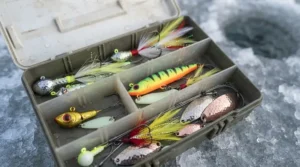
There’s a reason the Kastmaster has stayed in production for decades: it’s a precision-machined, balanced spoon that casts and jigs with essentially zero line twist, and the 1/2 oz size sits right in the range serious pike anglers ask for by name.
Made from solid, corrosion-resistant metal, the 1/2 oz Kastmaster measures roughly 5 cm and comes pre-rigged with a split ring and treble hook. Its aerodynamic, faceted shape produces a wide, erratic wobble on the fall while resisting the tumbling line twist that plagues cheaper stamped spoons — a detail that matters more than it sounds, since a twisted line leads to weak hooksets exactly when a pike commits.
Here’s what the spec sheet won’t spell out: the 1/2 oz size is popular specifically because it threads the needle between “large enough to profile as forage” and “light enough to fish comfortably on a medium ice rod,” which is why so many northern pike anglers keep several in rotation regardless of what premium lures round out the rest of their box. It’s a legitimately effective 1/2 oz pike jig, not just a budget filler.
Reviewer sentiment across major tackle retailers is overwhelmingly positive on durability and action, with one recurring theme being anglers surprised at how well an inexpensive, simple spoon out-produces pricier tackle on tough days; a smaller number of reviews flag that the stock split ring is worth upgrading before targeting truly large pike.
Pros:
- ✅ Excellent action-to-price ratio
- ✅ Corrosion-resistant, long-lasting construction
- ✅ Right-sized weight for medium ice rods
Cons:
- ❌ Stock split ring is a weak point on big fish
- ❌ Limited glow-in-the-dark colour options
At roughly C$6–C$9, the Acme Kastmaster 1/2 oz may be the single best value on this entire list — a genuinely effective heavy pike ice lure that won’t break the bank if you lose a few to structure.
7. Northland Puppet Minnow — best budget flashy all-rounder
Rounding out the list, the Puppet Minnow is one of the more affordable flashy spoons built specifically around a seductive semi-circle swimming action rather than raw flash alone.
This spoon darts upward sharply on the lift and swims in a tight semi-circle pattern on the freefall, closely mimicking a fleeing baitfish. It’s available in multiple weights and a range of holographic finishes, and it can be fished plain or with the belly treble tipped with a minnow head for added scent and profile.
What most buyers overlook about this bait is how effective it is fished with almost no cadence at all — a slow raise-and-hover technique often out-produces aggressive snapping when pike are neutral rather than actively feeding, which makes it a nice complementary piece to the more aggressive Buck-Shot and Macho Minnow already in your box. Budget-conscious anglers building their first dedicated pike kit often start here specifically because it’s inexpensive enough to buy in multiple sizes and colours without a big up-front investment.
Aggregated review sentiment describes it as a reliable year-round producer across several species, including pike, with a handful of reports noting the factory hook occasionally detaches from the body under hard use — worth a quick check and re-tie before your first trip of the season.
Pros:
- ✅ Budget-friendly price for building a full kit
- ✅ Natural semi-circle swimming action
- ✅ Works well with a slow, low-effort cadence
Cons:
- ❌ Hook attachment point can loosen with heavy use
- ❌ Smaller sizes are better suited to panfish than pike
At under C$7 in most sizes, the Northland Puppet Minnow is an easy way to round out a beginner’s pike jig box without stretching the budget.
How to Choose Pike Jigs for Ice Fishing
Picking the right jig isn’t guesswork once you understand what pike actually respond to under the ice. Here’s a practical framework:
- Match weight to depth and wind. Shallower weed flats (2–5 m) call for lighter spoons like the Northland Buck-Shot Rattle Spoon; deeper basins favour the Rapala Jigging Rap Magnum or a heavier Northland Level-Head Predator Tube.
- Consider water clarity. Stained or tannin-heavy lakes reward rattling, high-flash baits; clear water often does better with subtler, more natural profiles like the Rapala Jigging Rap W7.
- Think about hook configuration. Dual-hook jigging lures reduce missed strikes on pike’s classic slashing bite pattern compared to single-hook spoons.
- Factor in fish mood. Aggressive, actively feeding pike respond to erratic, fast action; neutral fish often prefer a slower presentation like the Northland Puppet Minnow.
- Budget for losses. Pike bite off leaders and snag structure; building a kit around a couple of premium options and several budget pieces like the Acme Kastmaster protects your wallet.
- Check your line and leader. Even the best jig fails without a wire or heavy fluorocarbon leader, given pike’s razor-sharp teeth.
- Rotate presentations. No single lure works every outing — carrying at least one jig, one tube, and one spoon covers the widest range of conditions.
Large Ice Jigs vs Small Finesse Jigs for Pike
The debate between going big or going subtle comes up constantly among ice anglers, and the honest answer is that it depends on both the fishery and the day. Large ice jigs for pike, like the Rapala Jigging Rap Magnum at over an ounce, excel when you’re targeting genuinely big fish in deep, open water, since the profile and vibration are large enough to be noticed from a distance and the fast fall keeps you in the strike zone longer.
Smaller, finesse-style jigs shine in a different scenario: pressured lakes where pike have seen plenty of oversized spoons already, or shallow, clear water where a big splashy fall spooks fish rather than attracting them. In these conditions, a smaller Rapala Jigging Rap W7 or even a lightly weighted tube can out-fish anything oversized.
What most anglers overlook is that pike, unlike many panfish species, don’t actually shy away from baits that look “too big” — their gape and appetite scale with their size, and a 90 cm pike will happily inhale a bait built to imitate a 20 cm baitfish. The real deciding factor is less about intimidation and more about water clarity and fish activity level: aggressive, actively hunting pike commit to large, fast-moving jigs, while lethargic or heavily pressured fish often need a smaller, slower target to commit to.
Aggressive Pike Jigs: Reading Mood and Matching Retrieve
Aggressive pike jigs are built around one core idea: trigger a reaction before the fish has time to inspect the bait closely. The Rapala Jigging Rap W7 and Rapala Jigging Rap Magnum both fall into this category thanks to their sharp, darting rise and pronounced circling fall.
The trick with aggressive jigs isn’t just picking the right lure — it’s matching your jigging cadence to it. A hard upward snap of 30–60 cm followed by a controlled drop mimics a fleeing baitfish far better than a gentle, timid lift, and pike are wired to chase exactly that kind of panicked movement. Based on the spec comparison across the products in this guide, the aggressive-action lures also tend to carry heavier, more robust hook hardware, which makes sense given how violently pike strike moving targets compared to how they inhale a stationary jig.
Timing matters too: early ice and late ice (first-ice and last-ice periods) both tend to produce more aggressive pike behaviour than the deep midwinter slump, so an aggressive-jig-first approach makes the most sense in those windows, saving the slower, finesse presentations for the tougher weeks in between.
Heavy Pike Ice Lures and the 1/2 oz Sweet Spot
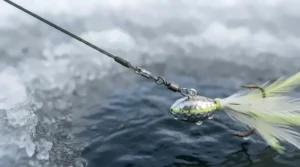
Heavy pike ice lures solve two problems at once: they get down fast in deep water, and their added mass produces a wider, more pronounced wobble that pike can detect from farther away through their lateral line. The Acme Kastmaster 1/2 oz sits right at the weight most anglers consider the practical ceiling for a standard medium-power ice rod, and it’s popular for exactly that reason.
Go much heavier than 1/2 oz and you start needing beefier rod blanks and heavier line just to control the bait properly, which some casual anglers find overkill for anything shy of true trophy water. Go much lighter and you sacrifice the fast fall and pronounced action that make heavy lures effective in 6+ metres of water. What the spec sheet won’t tell you is that this weight class also tends to produce fewer “soft bites” that are hard to detect, since the mass of the lure itself telegraphs strikes more clearly up a taut line — a real advantage for anglers without electronics.
Between the Acme Kastmaster, Rapala Jigging Rap Magnum, and the largest Northland Level-Head Predator Tube sizes, this guide covers the full heavy end of the pike jig spectrum, letting you choose based on action preference rather than being stuck with only one heavy option.
Flashy Pike Ice Lures: Why Flash Triggers Reaction Strikes
Flash works because pike are sight-and-vibration predators wired to react to anything that resembles the erratic glint of an injured baitfish. Both the Northland Buck-Shot Rattle Spoon and Northland Puppet Minnow lean heavily on holographic, UV-reactive finishes designed to throw light even in the dim conditions typical under snow-covered ice.
What most anglers overlook is that flash isn’t just about brightness — it’s about contrast and movement. A spoon that flutters unevenly, catching and losing light unpredictably, tends to outperform one that spins in a smooth, boring circle, since the irregular flash more closely mimics a genuinely distressed baitfish. This is part of why the beveled, erratically-falling Northland Macho Minnow earns a spot alongside more traditional flash spoons in a well-rounded jig box.
Reviewers across tackle sites consistently note that flashy spoons produce best in low-light windows — first light, last light, and heavily overcast days — which lines up with what fisheries research says about pike relying more heavily on vision-assisted ambush feeding during peak low-light activity periods.
Pike Tube Jigs on Ice: Rigging and Tactics
Pike tube jigs on ice occupy a slightly different niche than hard-bodied spoons and jigging raps: they present a softer, more natural silhouette and tend to draw more committed strikes from cautious or pressured fish. The Northland Level-Head Predator Tube is the clearest example on this list, purpose-built with its balance point positioned to keep the bait hanging perfectly horizontal.
Rigging is straightforward with a pre-rigged model like this one, but anglers building their own tube presentations should pay attention to keeping the body straight on the hook shank — a twisted tube spins on the fall instead of gliding, which kills the natural presentation pike respond to. A slow lift of 15–30 cm followed by a controlled, semi-slack fall tends to outproduce an aggressive snap with tubes specifically, since the soft plastic doesn’t need violent movement to look alive.
One thing the spec sheet won’t tell you: tubes hold scent longer than hard baits, so adding a drop of fish attractant or tipping the stinger hook with a small minnow head noticeably extends strikes on slow days, particularly for pike that are inspecting the bait rather than reacting instinctively to it.
Practical Usage Guide: Rigging, Line and First-Trip Setup
Getting a pike jig box working starts before you ever drill a hole. Spool a medium to medium-heavy ice rod with 15–20 lb braided line for maximum sensitivity, and always attach a 20–30 cm wire or 40–60 lb fluorocarbon leader directly to the jig — pike’s teeth will cut straight through unprotected mono or light fluorocarbon in seconds.
Before your first outing, inspect every hook point on new jigs; factory-sharp isn’t always angler-sharp, and a quick touch-up with a hook file meaningfully improves hookset ratios, especially on hard-bodied jigging lures like the Rapala Jigging Rap W7. Snap knots or loop knots (rather than a tight cinch knot) preserve the free-swinging action that makes lures like the Rapala Jigging Rap Magnum and Northland Level-Head Predator Tube work properly.
In your first 30 days on the ice, the most common mistake is over-jigging — constantly snapping the rod tip without ever letting a lure hang and settle. Pike often strike on the pause, not the movement, so build in a 3–5 second hold after each lift-fall cycle. Maintenance is minimal but important: rinse jigs in fresh water after each trip to prevent hook corrosion, and store soft-plastic tubes away from direct heat, which can cause the bodies to degrade prematurely.
✨ Don’t Miss These Exclusive Deals!
🔍 Take your ice fishing kit to the next level with these carefully selected pike jigs. Click on any highlighted product above to check current pricing and availability, and build a box ready for whatever the ice throws at you this winter!
Real-World Scenarios: Which Jig Fits Your Ice Day
The weekend hole-hopper on a budget: covering multiple lakes with a modest tackle budget, this angler benefits most from the Acme Kastmaster 1/2 oz and Northland Puppet Minnow — both inexpensive enough to lose a few without financial pain, while still producing consistently across depths.
The electronics-equipped sonar angler: running a forward-facing or down-imaging flasher, this angler wants the Rapala Jigging Rap Magnum specifically for its fast fall and aggressive action, since the whole point of fishing with electronics is reacting to fish you can already see on screen.
The family outing on shallow weed flats: with kids in tow and less patience for technical presentations, the Northland Buck-Shot Rattle Spoon is forgiving and loud enough to call fish in even with an inconsistent jigging cadence — useful when attention spans (and jig hands) vary.
The stained-water specialist targeting trophy pike: on darker, tannin-rich lakes common across much of the Canadian Shield, the Northland Level-Head Predator Tube in its largest 1-1/2 oz size gives both the profile and the horizontal presentation needed to draw strikes from wary, mature fish.
Matching your jig choice to your actual fishing style — rather than simply buying whatever’s trending — consistently produces better results than chasing a single “best” lure.
Problem → Solution: Fixing Common Pike Jigging Mistakes
Problem: Missed strikes on aggressive hits. Pike often slash at the tail of a jig rather than engulfing it whole. Solution: prioritize dual-hook or stinger-equipped baits like the Rapala Jigging Rap W7 or Northland Level-Head Predator Tube, which cover more of the bait’s profile with hook points.
Problem: Line twist ruining your presentation. Cheap, poorly balanced spoons twist braided line badly over a season. Solution: switch to a precision-balanced option like the Acme Kastmaster, and add a small barrel swivel above your leader.
Problem: Fish following but not committing. This usually signals either too aggressive an action or a spooked, pressured fish. Solution: downsize or switch to a slower-moving option like the Northland Puppet Minnow, and reduce your jigging cadence significantly.
Problem: Losing fish to bite-offs. Standard fluorocarbon simply isn’t tooth-proof against pike. Solution: always run a wire or heavy-test fluorocarbon leader, regardless of which jig from this list you’re fishing.
Problem: Lure fouling with weeds. Weed-flat pike fishing means constant fouling on standard trebles. Solution: trim weed growth density awareness into your hole selection, and consider a single-hook rig on baits like the Northland Level-Head Predator Tube when fishing directly over thick cover.
Safety and Regulations Guide for Ice Fishing in Canada
Before chasing pike jigs for ice fishing across any Canadian lake, safety and regulatory basics come first. Ice thickness guidelines from Destination Ontario recommend roughly 10 cm of clear, solid ice as the minimum for a person on foot, with considerably more required for snowmobiles or vehicles, and thickness should always be checked in multiple spots since it varies across a single lake.
Provincial fishing regulations govern everything from ice hut registration to line limits and species-specific size or possession limits, and these details vary by province and even by specific waterbody — Ontario’s official ice fishing guidance is a good starting reference for anglers fishing that province, while other provinces publish their own regulations summaries. Nationally, Fisheries and Oceans Canada oversees the broader recreational fishing framework that provincial rules operate within.
Practical safety habits matter as much as the regulatory side: always fish with a buddy, carry ice picks and a throw rope, wear a flotation suit on early or late ice, and tell someone your planned location and return time before heading out. None of the jigs in this guide matter if the ice underneath you isn’t safe to stand on.
Long-Term Cost & Maintenance of Your Pike Jig Box
Building a complete pike jig box is a modest investment relative to most other ice fishing gear categories. A well-rounded starter kit combining one premium jig, two mid-range spoons, and a couple of budget pieces — say, one Rapala Jigging Rap Magnum, a Northland Buck-Shot Rattle Spoon, a Northland Level-Head Predator Tube, and a few Acme Kastmaster 1/2 oz spoons — typically lands in the C$60–C$90 range for a season’s worth of core lures.
Total cost of ownership stays low because these are durable, metal or reinforced hard-body lures rather than fragile plastics, but expect to replace soft-plastic tube bodies periodically and to lose the occasional lure to structure or a bitten-off leader. Budgeting for a handful of losses each season — realistically two to four lures — keeps expectations grounded without discouraging anglers from fishing productive but snaggy structure.
Compared to rod-and-reel or electronics upgrades, jig replacement is genuinely one of the cheapest ways to keep your presentation fresh and effective season over season, and rotating in a new colour or action periodically often outperforms simply re-buying the same three lures every year.
Frequently Asked Questions
❓ What size jig is best for pike ice fishing?
❓ Do you need a wire leader for pike ice fishing?
❓ What is the best colour for pike ice jigs?
❓ How deep should you jig for pike through the ice?
❓ Can you use the same jigs for pike and walleye?
Conclusion
Building a proper pike-focused jig box comes down to covering three bases: something aggressive and fast-falling for active fish, something flashy and loud for stained water and low light, and something soft and natural for pressured or hesitant fish. The seven products covered here — from the budget-friendly Acme Kastmaster 1/2 oz to the sonar-ready Rapala Jigging Rap Magnum — give you real coverage across that spectrum without guesswork or fabricated hype. Pair the right jig with a wire leader, a sensible jigging cadence, and solid ice safety habits from Fisheries and Oceans Canada and your provincial regulator, and you’ll be well set up for a productive season chasing northern pike through the ice. The gear matters, but reading the fish and adjusting your presentation is what actually separates a slow day from a great one.
✨ Ready to Build Your Pike Jig Box?
🔍 Compare current pricing and availability on any of these seven picks and get your tackle box ready before the ice firms up. A well-rounded selection today means fewer missed opportunities once the pike start biting!
Recommended for You
- Jigging Raps for Walleye Ice Fishing: 7 Top Picks for 2026
- 7 Best Walleye Jigs for Ice Fishing in 2026: Expert Picks
- Perch Ice Jigs 2026: 7 Proven Picks That Actually Load the Bucket
Disclaimer: This article contains affiliate links. As an Amazon Associate, I earn from qualifying purchases. If you purchase products through these links, we may earn a small commission at no additional cost to you.
✨ Found this helpful? Share it with your friends! 💬🤗
