In This Article
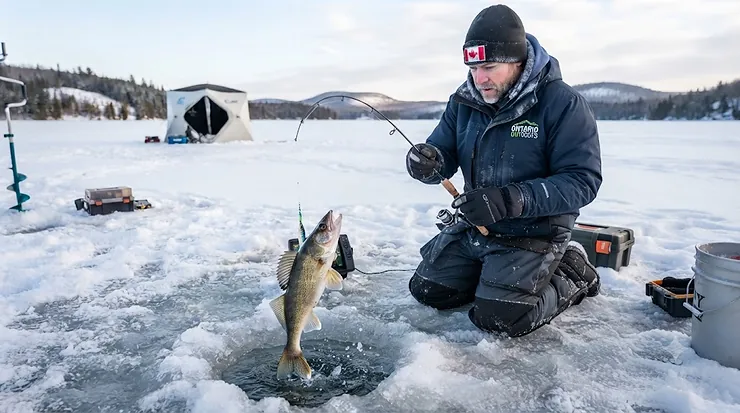
Jigging raps for walleye ice fishing are balanced, weighted minnow-profile lures that dart, glide, and circle back to the hole on a lift-fall retrieve, mimicking a dying baitfish closely enough to trigger reaction strikes from otherwise sluggish, cold-water walleye. If you have ever stood over a hole watching your flasher, willing a mark to move two feet closer, you already know the particular kind of patience this sport demands — especially chasing a fish whose large, light-sensitive eyes make it a genuinely different puzzle to solve than daytime species. A jigging rap does some of that convincing for you. Instead of holding a bait perfectly still and hoping, you are actively hunting — snapping the rod, letting the lure fall on slack line, and reading the subtle tick that tells you a walleye just inhaled it mid-fall. This guide breaks down seven real, purchasable jigging raps and close cousins, sized and coloured for the way Canadian hardwater anglers actually fish — from the shield lakes of Ontario to the deep basins of Lake Winnipeg. We will get into sizing (W2 through W9), which colours actually matter versus which are marketing noise, and how horizontal glide baits stack up against vibrating spoons and swimming-action jigs when the bite gets tough. Everything here is grounded in real specs, aggregated review sentiment, and the kind of comparative reasoning Amazon listings never bother to give you — because a spec sheet alone will not tell you which lure belongs in your box on a grey Tuesday in January.
Quick Comparison Table: Top Jigging Raps for Walleye at a Glance
| Lure | Type | Typical Sizes | Price Range (CAD) | Best For |
|---|---|---|---|---|
| Rapala Jigging Rap | Horizontal glide bait | W2–W9 | Under C$10 | All-purpose walleye standard |
| Rapala Jigging Rap Magnum | Horizontal glide bait (XL) | 9 cm–12 cm | C$12–C$16 | Trophy walleye and lake trout |
| Rapala Jigging Shadow Rap | Horizontal glide bait, premium | 5 cm–9 cm | C$10–C$14 | Pressured fisheries, subtle finish |
| Northland Puppet Minnow | Horizontal glide jig, budget | 1/8–3/8 oz | Under C$8 | Budget-conscious beginners |
| Clam Tikka Mino | Zinc horizontal glide jig | 1/8–1/4 oz | C$6–C$10 | Durability, no-tune design |
| PK Lures Flutter Fish | Vertical flutter spoon | 1/8–3/8 oz | C$7–C$11 | Vibrating alternative for finicky fish |
| Custom Jigs & Spins Slender Spoon | Vibrating spoon | 1/16–1/4 oz | Under C$8 | Finesse presentations, panfish crossover |
Looking at the table, the pattern that jumps out is price versus versatility: the original Rapala Jigging Rap remains the cheapest entry point while covering the widest size range, which is exactly why it anchors most Canadian ice anglers’ jig boxes. The two spoon-style options — the PK Lures Flutter Fish and Custom Jigs & Spins Slender Spoon — round out the box for days when a tighter, more vibration-heavy action out-produces the wider glide of a true jigging rap. Budget shoppers should note that the Northland Puppet Minnow and Clam Tikka Mino sit in a similar price bracket to the original Rapala but bring genuinely different swim mechanics worth having as backups.
💬 Just one click — help others make better buying decisions too!😊
Top 7 Jigging Raps for Walleye Ice Fishing: Expert Analysis
Coverage below spans budget, mid-range, and premium options, plus size and colour variants, so you can build a box that handles clear shield lake water one weekend and stained river current the next.
1. Rapala Jigging Rap — the size-W5 walleye standard
The Rapala Jigging Rap in its W5 (2-inch) size is the lure most Canadian ice guides mean when they say “jigging rap” without qualifying it further, and for good reason. At roughly 5/16 oz, the W5 sits in the sweet spot for open-water depths of 15 to 35 feet, deep enough to reach suspended walleye without falling so fast it blows past the strike zone. The balanced, zinc-weighted minnow body and single reversed hooks are engineered so the bait darts up and to the side on a snap, then spirals back in a tight circle on the fall — a motion regular jigs simply cannot replicate. Based on the size chart Rapala publishes for the series, the W5 slots squarely between the panfish-oriented W2/W3 and the predator-scale W7/W9, which is exactly why it works as a first purchase: according to Rapala’s own guide to fishing the Jigging Rap series, the lineup spans over 40 colours, including UV, glow, and high-definition live shad and live walleye patterns, so a single size can be adapted to almost any water clarity. Reviewers consistently describe it as a confidence bait that produces even when nothing else in the box is getting bit, though several also note the factory hooks benefit from an upgrade to a slightly larger treble for better hookup ratios on short strikes.
Pros:
- ✅ Wide colour selection covers clear to stained water
- ✅ Balanced glide-and-circle action unmatched by plain jigs
- ✅ Proven track record across multiple walleye-heavy provinces
Cons:
- ❌ Factory trebles are on the small side for big fish
- ❌ Cheaper 3-packs sometimes mix inconsistent hook sharpness
Priced under C$10 per lure at the time of research, the W5 delivers strong value simply because one size and a rotation of three or four colours covers most early- and mid-winter scenarios.
2. Rapala Jigging Rap Magnum — best for trophy walleye and lake trout crossover
Scaling up to the Rapala Jigging Rap Magnum, this is the size anglers reach for once they start marking bigger arcs on the flasher or when lake trout share the same basin as walleye. Running in the 9 cm to 12 cm range and noticeably heavier than the standard W7, the Magnum sinks fast enough to punch through 25 to 50 feet of water column without the angler losing feel for the bottom. What that weight buys in practice is fewer wasted seconds per drop — on a day with a tight bite window at dusk, cutting five seconds off every fall adds up to dozens more effective presentations by the time the light fades. The trade-off, as with most magnum-sized glide baits, is that smaller or neutral-mood walleye can be intimidated by the bulk, so this is a size-specific tool rather than an everyday choice. Aggregated review sentiment from tackle retailers consistently flags the Magnum as a big-fish bait, with anglers reporting it draws fewer overall bites than smaller sizes but a notably higher average fish size when it connects.
Pros:
- ✅ Fast fall rate reaches deep suspended fish quickly
- ✅ Larger profile selectively targets bigger, more aggressive fish
- ✅ Doubles as a lake trout and pike bait in mixed-species water
Cons:
- ❌ Overkill for neutral or finicky midday walleye
- ❌ Premium pricing compared to standard-size jigging raps
In the C$12 to C$16 range, the Magnum is not the lure you tie on first, but for anglers specifically hunting size over numbers, the value case is straightforward.
3. Rapala Jigging Shadow Rap — best for pressured, clear-water fisheries
The Rapala Jigging Shadow Rap takes the same balanced glide mechanics as the original but wraps them in a slimmer, more subdued profile with a distinctive Tiger Eye treble attractor bead. On paper this means a lure built specifically for fisheries that see heavy pressure — the kind of shield lake or Great Lakes bay where walleye have seen every hammered-nickel spoon and glow-bead jig in the province by mid-January. The narrower silhouette reduces flash and profile compared to a standard Jigging Rap, which in practice translates to a more natural presentation when fish are actively avoiding anything that looks aggressive or artificial. Industry guidance on the series notes that the WH5 and WH7 sizes specifically feature that swaying Tiger Eye bead as a small secondary attractor, giving cautious fish a target that will not spook them the way a full-size glow finish might. What most buyers overlook about this model is that its subtler action rewards a slower lift-fall cadence rather than the aggressive snap suited to the standard Jigging Rap — fish it too hard and you lose the finesse advantage that makes it worth owning in the first place.
Pros:
- ✅ Slimmer profile excels on pressured, clear-water lakes
- ✅ Tiger Eye bead adds a subtle secondary attractor
- ✅ Same reliable single-reversed-hook design as the original
Cons:
- ❌ Less effective in stained or low-visibility water
- ❌ Requires a more deliberate cadence to fish correctly
At roughly C$10 to C$14, it costs a little more than the base model, but for anglers fishing the same pressured water week after week, the finesse upgrade often pays for itself in extra bites.
4. Northland Puppet Minnow — best budget horizontal glider
For anglers building their first serious jigging box without spending a fortune, the Northland Puppet Minnow is a compact, center-weighted horizontal glide jig designed to dart aggressively on the lift and spiral back beneath the hole, the same basic mechanic that made the original Jigging Rap famous. According to walleye-lure buyer’s guides, its design allows it to dart outward on the snap and glide back on the fall, triggering reaction strikes from fish unwilling to chase a slower presentation. Because it typically runs in the 1/8 to 3/8 oz range and comes dressed with a soft-plastic tail option, it functions as a lighter, slightly slower-falling alternative to a lead-bodied jigging rap — genuinely useful on days when fish want a bait that hangs in the strike zone a beat longer rather than punching straight through it. Reviewers and guide write-ups position it as a go-to for cold water and pressured fisheries specifically, which lines up with its compact, less flashy build compared to the larger Rapala offerings.
Pros:
- ✅ Lower price point than premium horizontal gliders
- ✅ Compact size excels in cold, pressured water
- ✅ Soft-plastic tail option adds extra flutter and flash
Cons:
- ❌ Smaller hook gap than some larger competitors
- ❌ Narrower colour range than the Rapala lineup
Typically under C$8, this is the lure to stock three or four of before you have committed to a single brand — cheap enough to experiment with, effective enough that you likely will not need to look further for a budget option.
5. Clam Tikka Mino — best for durability and no-tune reliability
Built entirely from zinc rather than the more common lead-and-plastic-fin construction, the Clam Tikka Mino solves a problem that has annoyed hardwater anglers for years: the plastic tail fin on traditional glide jigs that cracks, chips, or snaps off after a season of bouncing around a tackle box. Because the fin is molded directly into the zinc body, there is no separate piece to tune or replace, and the all-metal construction changes the way the bait swims — testers note it produces a slightly different, often tighter glide compared to lead-bodied competitors, which can be the difference-maker on a day when fish are keying on a specific fall rate. In the 1/8 to 1/4 oz range, it is sized more for panfish-to-walleye crossover water than trophy hunting, making it a strong secondary bait for days when perch and smaller walleye are mixed in the same schools. Buyers researching the category consistently flag no-tuning-required designs as a meaningful upgrade over older glide baits that needed bending or adjustment out of the package.
Pros:
- ✅ All-zinc build eliminates the fin-breakage problem entirely
- ✅ No tuning required straight out of the package
- ✅ Distinct tighter glide useful when fish key on fall rate
Cons:
- ❌ Smaller size range than the full Rapala lineup
- ❌ Zinc construction can be less forgiving on hook sets
At roughly C$6 to C$10, the Tikka Mino earns its spot on durability alone — for anglers who fish 20-plus days a season, not replacing broken fins is worth real money over a winter.
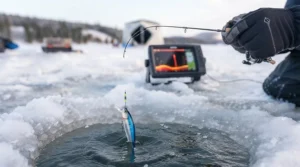
6. PK Lures Flutter Fish — best vibrating alternative when the glide bite dies
Not every jigging rap in your box needs a horizontal glide action, and the PK Lures Flutter Fish is the honest answer to days when a tighter, vibration-heavy fall out-fishes the wide circle of a true jigging rap. Longtime ice-fishing writers repeatedly list it among their most-used spoons precisely because it produces consistently across seasons rather than being a one-hot-bite wonder. As a flutter-style spoon in the 1/8 to 3/8 oz range, it falls with a side-to-side kick rather than a full circle, covering less horizontal distance but staying more directly under the hole — a real advantage in a crowded ice village or a shack with a tight hole spread where a wide-gliding jigging rap risks tangling with a neighbouring line. Based on the spec comparison with true glide baits, the Flutter Fish trades horizontal coverage for vertical precision, which is exactly the trade-off you want when sonar shows fish sitting tight to structure rather than roaming.
Pros:
- ✅ Tighter vibration pattern shines in crowded fishing spots
- ✅ Long track record among veteran ice-fishing writers
- ✅ Complements rather than duplicates a jigging rap’s action
Cons:
- ❌ Less horizontal coverage than a true glide bait
- ❌ Can be over-fished with too aggressive a snap
In the C$7 to C$11 range, it is a smart complementary purchase rather than a replacement — the goal is having both actions available and reading which one the fish want that day.
7. Custom Jigs & Spins Slender Spoon — best finesse vibrating jig for line-shy fish
Rounding out the box, the Custom Jigs & Spins Slender Spoon has been named among the most enduring lures in hardwater history by longtime In-Fisherman editors, and its staying power comes down to a slim, subtle profile that produces a tight vibration rather than a wide, attention-grabbing wobble. In the 1/16 to 1/4 oz range, it is light enough to fish effectively for suspended perch and smaller walleye, giving it genuine crossover value beyond a single-species box. What the spec sheet won’t tell you, but decades of field use suggest, is that its narrow body profile makes it a strong choice specifically when fish have been pressured hard enough to refuse anything with real bulk or flash — the anti-Magnum, in a sense, for the exact opposite fishing conditions. Forum discussions among Canadian hardwater anglers regularly cite it as a staple alongside true jigging raps rather than a substitute for them, reinforcing that most serious walleye anglers carry both styles rather than picking one exclusively.
Pros:
- ✅ Slim profile excels when fish are pressured or line-shy
- ✅ Light enough for effective panfish-to-walleye crossover use
- ✅ Decades-long reputation among serious hardwater anglers
Cons:
- ❌ Limited effectiveness on aggressive, actively feeding fish
- ❌ Small hook size limits use on larger predator species
At under C$8 in most sizes, it is an inexpensive way to round out a box that already leans heavily on wider-gliding jigging raps.
Practical Usage Guide: Setting Up and Fishing a Jigging Rap Through the Ice
Getting a jigging rap to perform the way it is designed starts with the knot, not the retrieve. Rapala’s own guidance recommends a loop knot rather than a snug knot cinched directly to the eyelet, because a loop lets the bait pivot freely and swim in its intended circle instead of being choked into a lopsided, ineffective wobble. From there, the basic cadence is lift-fall-pause: a moderate lift sends the lure swimming up and to the side, an aggressive snap makes that same motion sharper and more erratic, and then you drop the rod tip to let the bait fall on slack line so it can spiral back toward the hole rather than sinking straight down on a tight line. New users’ most common first-month mistake is fishing on too tight a line during the fall — a tensioned line kills the swimming action entirely and turns an expensive glide bait into an expensive plain jig. A second common error is over-snapping in clear water, spooking fish that would have committed to a gentler presentation. For maintenance, rinse hooks and split rings after each trip to prevent rust, especially with lures fished through slush, and check trebles for dulling every few outings since a dull hook is the single most common cause of a missed hookset on a fish that clearly struck.
Real-World Scenario: Matching the Right Jigging Rap to Your Ice Fishing Trip
Picture three different anglers heading out on the same January weekend. The first is a first-year ice angler on a budget, fishing a local conservation-authority lake with a rod, an auger, and not much else — for this trip, a handful of Northland Puppet Minnow and standard Rapala Jigging Rap W3s in two or three basic colours covers nearly every scenario without a big upfront investment. The second is a weekend warrior chasing numbers on a pressured Great Lakes bay that gets hammered by hundreds of huts every winter — here, the Rapala Jigging Shadow Rap‘s subtler profile and the Custom Jigs & Spins Slender Spoon‘s finesse vibration matter more than raw size, because the fish have simply seen too much flash already. The third is a deep-water specialist targeting a mixed walleye-and-lake-trout basin on a Canadian Shield reservoir, dropping lines through 40-plus feet of water — this is exactly the scenario the Rapala Jigging Rap Magnum was built for, with enough weight to reach the strike zone fast and enough profile to draw attention from bigger predators cruising the depths. None of these three anglers need every lure in this guide; they need the two or three that match their specific water, pressure level, and target size.
Rapala Jigging Rap Review: What Reviewers Really Say
Because the standard Rapala Jigging Rap has been on the market since before most of today’s anglers started fishing, it has an unusually deep pool of aggregated review data to draw from across major tackle retailers. A recurring theme across verified purchaser feedback is that the lure produces “unbeatable results” when bottom-bounced yo-yo style off structure, not just when fished purely vertical under a hole — several long-time users specifically credit the W7 size in perch and bluegill colour patterns for late-season success when fished aggressively over deep structure. A common complaint in user reviews centres on the factory hook at the nose of the lure, which several anglers report as the primary source of snags and recommend clipping or replacing before the first trip. Reviewers also consistently note that glow finishes outperform natural patterns specifically in stained water or during low-light dawn-and-dusk windows, while natural shad and perch patterns take over once the sun is higher and water is clearer. If you cannot verify a specific retailer’s star rating at the moment you are shopping, that is normal — ratings fluctuate with each shipment batch — but the pattern of feedback across multiple independent sellers has stayed remarkably consistent for years, which itself is a meaningful signal of a mature, well-tested product.
Best Jigging Rap Colors for Walleye: A Complete Guide
Colour selection is one of the few genuinely evidence-backed decisions in ice fishing, because water clarity and light penetration change measurably through the winter. As a starting framework:
- Glow and UV patterns for stained or low-light water. Reviewers and guides alike flag glow finishes as the go-to choice at dawn, dusk, or under thick snow cover on the ice, where visibility drops sharply.
- Natural shad, perch, and shiner patterns for clear water and bright midday conditions. Rapala’s own high-definition Live Shad and Live Walleye finishes exist specifically for this scenario, mimicking real forage closely enough to fool fish that can see well.
- Bright attractor colours like Fruit Punch or Firetiger for stained or off-colour water. These are not trying to imitate anything real — they are built to be seen and to trigger a reaction strike from a fish that spots movement before it identifies prey.
- Chrome and foil finishes for maximum flash in sunny, clear conditions. The added glare draws fish from farther away on bright bluebird days.
- Muted, natural tones for heavily pressured lakes. As covered above with the Shadow Rap, sometimes less flash is the better choice once fish have been conditioned by weeks of pressure.
The practical takeaway is to carry at least one lure from each of these categories rather than betting everything on a single favourite colour, since conditions can shift meaningfully between a Saturday morning trip and a Sunday afternoon one on the same lake.
Walleye Jigging Rap Size Guide: W2 to W9 Explained
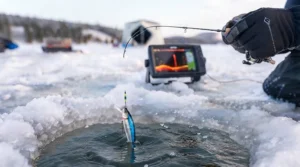
Jigging rap sizing runs on Rapala’s own W-number scale, and matching size to depth and target species is arguably more important than colour choice for consistent results.
| Size | Length | Approx. Weight | Best Depth Range | Primary Target |
|---|---|---|---|---|
| W2 | 1-1/4″ | 1/8 oz | 5–20 ft | Crappie, perch |
| W3 | 1-1/2″ | 3/16 oz | 10–25 ft | Perch, small walleye |
| W5 | 2″ | 5/16 oz | 15–35 ft | Standard walleye |
| W7 | 2-3/4″ | 5/8 oz | 20–45 ft | Larger walleye, pike |
| W9 | 3-1/2″ | 7/8 oz | 30–60+ ft | Lake trout, trophy walleye |
The comparison above makes the trade-off obvious: smaller sizes fish shallower water more naturally and appeal to a broader range of species, while the larger W7 and W9 sizes sacrifice some of that versatility for the fast fall rate and predator-scale profile needed in deep basins. For most Canadian walleye anglers fishing 15 to 35 feet of water, the W5 remains the single most useful size to own multiples of, with W3 and W7 rounding out a box for shallower and deeper scenarios respectively.
✨ Ready to build your box? Check current pricing and grab the sizes that match your home water!
Horizontal Jigging Lure vs Vertical Spoon: What’s the Difference
A horizontal jigging lure like the standard Rapala Jigging Rap or Northland Puppet Minnow is designed to swim outward and away from the hole on the lift, covering a wide circular path before settling back near center on the fall — this horizontal movement is precisely what separates a true jigging rap from a plain vertical jig, which simply rises and drops on roughly the same axis. A vertical spoon, by contrast, tends to flutter and kick with less horizontal travel, staying closer to directly beneath the rod tip throughout the retrieve. In practice, this means horizontal gliders cover more water per drop, useful for actively searching a hole for fish that are not yet visible on sonar, while vertical spoons excel once you have already marked fish and want to keep a bait precisely in their face without drifting off to the side. The trade-off is real: that wider horizontal glide also increases the odds of tangling lines in a crowded shack with multiple holes drilled close together, which is exactly why anglers fishing solo on open ice tend to favour horizontal gliders while group setups often lean more on vertical spoons. Neither approach is objectively superior — the right call depends on hole spacing, whether fish are actively roaming or holding tight to structure, and how the sonar picture looks on a given day.
Swimming Action Jigs vs Vibrating Walleye Lures: How to Choose
Swimming action jigs — the broader category that jigging raps belong to — rely on a distinctive fin or body shape to generate lateral movement and a gliding fall, while vibrating walleye lures like the PK Lures Flutter Fish and Custom Jigs & Spins Slender Spoon generate their appeal through rapid side-to-side shimmy and, in some spoon designs, internal rattle chambers that add sound to the presentation. Here’s what to weigh: swimming action tends to win on calm, clear days when fish are actively feeding and willing to chase a visual, erratic presentation, while vibration and rattle-based lures often out-produce in stained water, low light, or when fish are sluggish and need to be called in by sound and feel more than sight. A practical decision framework many guides use is to start each outing with a swimming action jig to search actively for biters, then switch to a vibrating spoon if marks appear on the flasher but refuse to commit — the tighter, slower presentation can be the trigger that a wide-gliding lure fails to provide on a cautious fish. Carrying both categories, rather than committing fully to one philosophy, is consistently the approach recommended by experienced Canadian ice guides across multiple regions.
How to Choose Jigging Raps for Walleye Ice Fishing
- Match size to depth first, colour second. A W5 in the wrong colour still out-fishes a perfectly-matched colour in the wrong size for the depth you are fishing.
- Assess water clarity before you drill your first hole. Stained water calls for glow or bright attractor colours; clear water rewards natural, subtle finishes.
- Factor in fishing pressure. Heavily fished lakes reward subtler options like the Shadow Rap or Slender Spoon over louder, flashier presentations.
- Decide between horizontal glide and vertical vibration based on hole spacing. Solo anglers on open ice can lean into wider-gliding baits; crowded shacks favour tighter vertical action.
- Budget for hook upgrades. Several reviewers across multiple retailers flag factory trebles as the weak point of even premium jigging raps — plan to upgrade rather than treating this as a defect unique to one brand.
- Buy in twos or threes per colour. Snags and lost fish happen; losing your only glow-perch W5 mid-bite is a frustrating way to end a hot stretch.
- Prioritize versatility for your first purchase. A standard W5 Rapala Jigging Rap in two or three colours covers more scenarios than a single premium or specialty lure.
Common Mistakes When Buying and Fishing Jigging Raps
The single most common buying mistake is purchasing only one size, typically a W5, and expecting it to perform equally well in five feet of water and forty. Depth-appropriate sizing matters as much as colour selection, and anglers who own only one size inevitably fish it in conditions it was never designed for. On the fishing side, the most frequent error is tying a jigging rap on with a standard cinch knot rather than a loop knot, which restricts the bait’s pivot and kills much of its signature circular glide before the first drop even hits bottom. A second common mistake is fishing too aggressively in ultra-clear water, where an erratic, wide-snapping cadence can spook rather than trigger cautious fish — dialing the motion down on bright, calm days often out-produces an aggressive retrieve. Finally, many anglers neglect hook maintenance entirely, fishing the same dulling trebles for an entire season; a quick hook-file pass every few trips meaningfully improves hookup ratios on subtle strikes that are otherwise easy to miss.
What to Expect: Real-World Performance Under the Ice
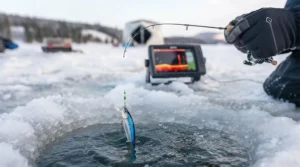
Translating specs into an on-ice experience, a properly rigged W5 jigging rap on a loop knot should produce a visible, tight circular swim pattern on your electronics with each lift, followed by a distinct pause as it settles back near the hole. Strikes on the fall often register as a subtle “tick” or a mark on the flasher suddenly merging with your lure’s signal rather than a dramatic rod-bending take, so watching the sonar closely during the fall phase matters as much as feeling the bite through the rod. Reviewers consistently note that jigging raps produce more short strikes than a live-bait jig, largely because fish are attacking a moving target mid-fall rather than inhaling a stationary offering — this is precisely why several long-time users recommend upgrading the factory hooks, since a sharper, slightly larger treble converts more of those aggressive but imprecise strikes into solid hookups. On a good day in 20 to 30 feet of water, an angler working a jigging rap methodically through a five-hole spread can expect noticeably more active engagement than sitting over a single dead-sticked minnow, though the trade-off is real physical effort — this is an active technique, not a set-and-wait one, and the repeated snap-and-fall motion over several hours will genuinely tire an unaccustomed wrist.
Long-Term Cost & Maintenance
Jigging raps sit in an unusual spot in the tackle-cost equation: individually inexpensive at under C$10 to C$16 depending on size and model, but prone to loss on snaggy bottom structure, which makes total cost of ownership more about replacement frequency than sticker price. A realistic seasonal budget for a moderately active ice angler fishing 15 to 20 days looks like six to ten lures across two or three sizes and four or five colours, plus a small stock of replacement trebles and split rings for hook upgrades. Compared to live bait, which requires ongoing purchases of minnows every single trip, jigging raps offer a genuinely better long-term value proposition — a single lure that survives a season of fishing can outperform dozens of dollars in minnows purchased trip after trip. Maintenance costs are modest: rinsing hooks after slushy trips, occasionally replacing rusted split rings, and periodically sharpening or swapping trebles are the main recurring expenses, none of which run more than a few dollars at a time. The all-zinc construction of options like the Clam Tikka Mino specifically reduces one recurring cost — plastic fin breakage — that affects lead-bodied competitors over a multi-season lifespan.
Safety and Regulations Guide for Canadian Ice Anglers
Before any tackle discussion matters, ice safety has to come first. As the Canadian Coast Guard’s ice safety guidance points out, it is genuinely difficult to judge ice strength or thickness by appearance alone, and conditions can shift from one day to the next with the weather, so checking thickness regularly rather than trusting last week’s conditions is essential every time you head out. On the regulatory side, rules vary meaningfully by province and even by zone within a province — in Ontario, for example, anglers can generally use two lines while ice fishing as long as they stay within a set distance of each line and follow the local Fisheries Management Zone regulations, including size and possession limits specific to walleye. Ice hut registration requirements, seasonal closures, and possession limits differ by zone and by province, so checking your specific jurisdiction’s current regulations before each season is a non-negotiable step rather than a suggestion — regulations are updated periodically, and what was legal last winter may have changed. Beyond formal rules, practical safety habits matter just as much: fishing with a partner, carrying ice picks, and avoiding areas near moving water or recently refrozen ice reduce risk meaningfully regardless of what the regulations require.
Frequently Asked Questions
❓ What size jigging rap is best for walleye?
❓ What is the best jigging rap color for stained water?
❓ How do you tie a jigging rap so it swims correctly?
❓ Are jigging raps better than live bait for walleye?
❓ Can jigging raps be used for species other than walleye?
Conclusion
Building a box of jigging raps for walleye ice fishing does not require owning every colour and size Rapala has ever produced — it requires understanding the handful of variables that actually change outcomes on the ice: depth-appropriate sizing, water-clarity-appropriate colour, and having both a horizontal glider and a vibrating spoon on hand for the days when fish clearly prefer one action over the other. The standard Rapala Jigging Rap in a W5 remains the single most defensible first purchase for most Canadian walleye anglers, with the Rapala Jigging Rap Magnum and Rapala Jigging Shadow Rap filling in the trophy and pressured-water scenarios respectively. Budget-conscious anglers lose little by starting with the Northland Puppet Minnow or Clam Tikka Mino, both of which bring genuinely different mechanics rather than being simple knockoffs. And rounding out the box with a spoon-style option like the PK Lures Flutter Fish or Custom Jigs & Spins Slender Spoon covers the days when a tighter vibration out-fishes a wide glide. Whatever combination you land on, check current pricing before you buy, since ranges shift with availability and season, and remember that no lure replaces sound ice safety judgment — the biggest walleye in the lake is not worth a bad decision about ice you have not actually tested.
✨ Don’t Miss These Exclusive Deals!
🔍 Take your walleye jigging rap collection to the next level with these carefully researched picks. Click on any highlighted product to check current pricing and availability, and stock your box before the next cold front rolls in! 🎣❄️
Recommended for You
- 7 Best Walleye Jigs for Ice Fishing in 2026: Expert Picks
- Perch Ice Jigs 2026: 7 Proven Picks That Actually Load the Bucket
- 7 Best Crappie Ice Fishing Jigs for 2026
Disclaimer: This article contains affiliate links. As an Amazon Associate, I earn from qualifying purchases. If you purchase products through these links, we may earn a small commission at no additional cost to you.
✨ Found this helpful? Share it with your friends! 💬🤗
