
In This Article
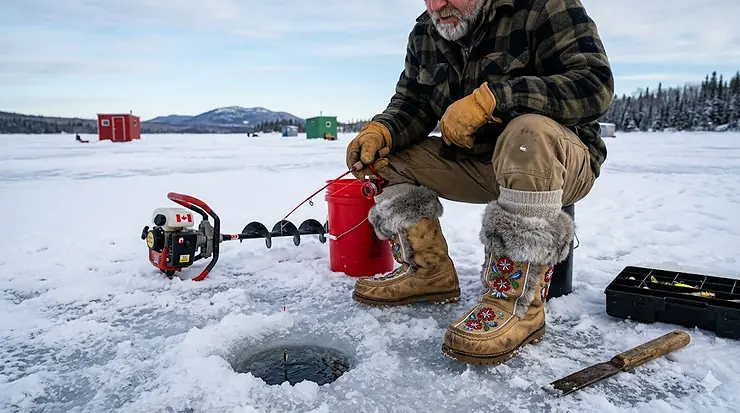
When you’re sitting on a frozen lake in -30°C temperatures waiting for that trophy pike to bite, your footwear isn’t just gear—it’s survival equipment. Mukluks for ice fishing represent thousands of years of Arctic wisdom refined by Canada’s Indigenous peoples, specifically designed to keep feet warm, dry, and functional in conditions that would turn conventional boots into frozen blocks.

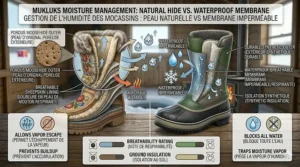
The term “mukluk” comes from the Yupik word maklak, meaning bearded seal—the animal whose hide formed the foundation of these remarkable boots. Traditional mukluks evolved across Arctic and sub-Arctic Canada, worn by Inuit, Yupik, and other Indigenous communities who understood something modern boot manufacturers are still learning: in extreme cold, breathability matters as much as insulation. When your feet sweat inside waterproof boots during a long ice fishing session, that moisture becomes your worst enemy, wicking away heat and setting the stage for frostbite. Traditional mukluks solved this with soft hide construction that allowed vapour to escape whilst maintaining warmth through thick fur liners and clever design.
Modern mukluks for ice fishing blend this ancient breathability principle with contemporary materials—8mm neoprene instead of sealskin, synthetic insulation alongside traditional wool felt, and aggressive rubber soles replacing soft caribou leather. What Canadian ice anglers get is footwear that performs in conditions ranging from early-season slush at -5°C to mid-winter deep freeze at -50°C, whether you’re auger-drilling fifty holes across Lake Simcoe or hunkered in a shelter on Great Slave Lake for eight hours straight. Unlike conventional winter boots that force you to choose between waterproof protection or breathable warmth, quality mukluks deliver both—keeping your feet dry from external moisture whilst managing the inevitable internal condensation that builds during extended stationary periods on frozen water.
For Canadian anglers specifically, mukluks address our unique challenge: we face longer, colder winters than most ice fishing markets, with temperatures that regularly push equipment beyond its rated limits. A boot rated to -40°F might sound impressive until you’re standing on Lake Winnipeg at -45°C with 40 km/h winds creating a wind chill of -60°C. That’s where mukluk design philosophy—prioritising circulation, layering, and moisture management over simple insulation thickness—makes the critical difference between comfortable fishing and early retreat.
Quick Comparison: Top Mukluks for Ice Fishing Available in Canada
| Boot Model | Temperature Rating | Price Range (CAD) | Best For | Key Feature |
|---|---|---|---|---|
| Kamik Icebreaker | -40°C | $140-$180 | Budget-conscious anglers | 8mm Zylex liner, made in Canada |
| Muck Boot Arctic Pro | -50°C | $280-$350 | All-day ice fishing | 8mm neoprene with fleece lining |
| Baffin Impact | -60°C | $450-$550 | Extreme cold expeditions | Multi-layer B-Tek system |
| Kamik Greenbay 4 | -40°C | $160-$200 | Active ice anglers | Lightweight RubberHe shell |
| Steger Yukon | -40°C+ | $400-$500 | Traditional enthusiasts | Handmade, moose hide & felt |
| Baffin Titan | -76°C | $300-$400 | Northern Canadian conditions | Polar-proven on expeditions |
| Muck Arctic Ice Vibram | -30°C | $250-$320 | Versatile year-round use | Vibram Arctic Grip outsole |
Looking at this comparison, the sweet spot for most Canadian ice anglers sits between $200-$350 CAD, where boots like the Muck Arctic Pro and Kamik Icebreaker deliver genuine -40°C protection without the expedition-level price tag of the Baffin Impact. If you’re fishing Ontario’s more moderate lakes where temperatures rarely drop below -25°C, the Muck Arctic Ice Vibram’s superior traction justifies its mid-range cost. However, Prairie anglers facing -45°C windswept lakes and northern Canadians ice fishing above the 60th parallel should budget for the Baffin Titan or Impact—their multi-layer systems aren’t marketing hype, they’re engineered response to environments that routinely exceed standard boot ratings.
💬 Just one click — help others make better buying decisions too! 😊
Top 7 Mukluks for Ice Fishing: Expert Analysis for Canadian Conditions
1. Kamik Icebreaker — Best Value for Canadian-Made Quality
The Kamik Icebreaker represents over 125 years of Montreal-based engineering specifically adapted to Canadian winter realities. What sets this boot apart isn’t just its -40°C rating—it’s how Kamik achieved that performance using an 8mm Zylex removable liner made from 97% recycled materials whilst keeping the price under $180 CAD, making it accessible to anglers who can’t justify $400 mukluks but still need legitimate cold protection.
The design philosophy here addresses a common Canadian ice fishing scenario: you drive an hour to your spot in a heated truck, fish for six hours in -30°C temperatures, then drive home. The removable Zylex liner lets you pull it out between sessions to air-dry completely, preventing the moisture accumulation that kills insulation performance over multi-day fishing trips. The deep-tread RubberHe outsole grips slick ice better than cheaper boots with minimal treads, crucial when you’re hauling gear across wind-polished lake surfaces at dawn.
From a practical standpoint, Canadian anglers appreciate that Kamik still manufactures in Canada, meaning warranty service doesn’t require international shipping, and replacement liners are readily available through Canadian retailers. The fuel, acid, and fat-resistant shell matters more than you’d think—ice fishing inevitably involves spilled minnow water, gas from augers, and the general abuse of dragging sleds loaded with gear. After two seasons, cheap boots show deterioration in these areas; the Icebreaker maintains its integrity.
Canadian buyers consistently praise these for all-day comfort during stationary ice fishing—unlike taller Arctic-rated boots that can feel restrictive when sitting, the Icebreaker’s 13-inch height and flexible construction allows natural movement whilst maintaining full coverage. One Alberta angler noted keeping warm through an eight-hour session at -35°C on Pigeon Lake wearing only medium-weight wool socks, emphasising the liner’s genuine performance rather than marketing claims.
Pros:
✅ Genuine -40°C protection at budget-friendly price
✅ Removable liner enables thorough drying between sessions
✅ Made in Canada with accessible warranty service
Cons:
❌ Sizing runs slightly large—order half size down
❌ Less ankle support than taller expedition boots
Price range: Around $140-$180 CAD delivers exceptional value for anglers prioritising proven Canadian engineering over brand prestige. Check current pricing on Amazon.ca.
2. Muck Boot Arctic Pro — Gold Standard for All-Day Ice Fishing
When you talk to serious Canadian ice anglers—guides on Lake of the Woods, tournament fishers on Lake Simcoe, hardcore enthusiasts drilling a hundred holes per session—the Muck Boot Arctic Pro comes up repeatedly. This isn’t coincidence; it’s recognition that Muck solved the ice fishing footwear equation better than most competitors by combining an 8mm neoprene bootie with fleece lining and 2mm thermal foam underfoot, creating genuine -50°C protection that remains comfortable during the extended static periods ice fishing demands.
The neoprene construction delivers something leather and synthetic boots can’t match: flexibility at extreme temperatures. At -40°C, many boots become stiff boards that restrict circulation and create pressure points. The Arctic Pro’s CR Flex-Foam maintains suppleness, conforming to your foot’s contours to prevent the blistering and chafing that develops during eight-hour fishing marathons. That topline binding—seemingly a small detail—makes a massive difference when kneeling to tend tip-ups in deep snow, keeping powder from infiltrating down the shaft where it melts against body heat then re-freezes during the walk back to your vehicle.
What Canadian reviewers specifically highlight is performance in mixed conditions—the reality of ice fishing isn’t always pristine -30°C and dry snow. Early season often brings slush, overflow, and that miserable zone around -10°C where precipitation shifts between rain and snow. The Arctic Pro’s waterproof rubber base extends higher than most mukluks, handling mid-calf slush encounters that would soak through traditional fabric-top designs. A Saskatchewan angler described walking through six inches of overflow water on Last Mountain Lake at -15°C, continuing to fish for three more hours with completely dry feet—that’s the practical advantage of the hybrid design.
The 17-inch height matters for Canadian conditions. Southern Ontario anglers might find it excessive, but Prairie provinces and northern regions regularly see snow depths that overflow shorter boots. The Bob-Tracker outsole provides reliable traction on glare ice—not Vibram Arctic Grip level, but substantially better than smooth-sole mukluks. These run true to size, though Muck recommends wearing them with single-layer medium-weight socks rather than doubling up, which restricts circulation.
Pros:
✅ Proven -50°C rating with consistent real-world performance
✅ Neoprene flexibility prevents circulation restriction at extreme cold
✅ Extended waterproof base handles slush and overflow conditions
Cons:
❌ 17-inch height can feel bulky for casual anglers
❌ No half sizes available—sizing between can be challenging
Price range: In the $280-$350 CAD range, these represent serious investment that pays dividends across multiple seasons. Worth every dollar for dedicated ice anglers. Check current pricing on Amazon.ca.
3. Baffin Impact — Expedition-Grade Protection for Extreme Canadian Cold
The Baffin Impact exists in a different category than standard winter boots—it’s footwear designed for scientific researchers at polar stations, mountaineers establishing base camps, and yes, Canadian ice anglers who fish northern lakes where “warm” means -35°C. Polar-proven at both poles with a -60°C rating, the Impact employs Baffin’s proprietary B-Tek Dry waterproof system alongside their most comprehensive inner boot construction, featuring multiple insulation layers that trap air in precisely engineered zones.
For Canadian contexts, this boot addresses environments beyond typical recreational ice fishing. Think Lake Athabasca in February, Great Slave Lake’s exposed ice, or any scenario where you’re genuinely operating at the edge of equipment capability. The layered B-Tek system doesn’t just pile on insulation thickness—it manages moisture through phase-change materials that absorb and release heat strategically, maintaining consistent foot temperature during transitions between active drilling and static fishing. The tall nylon upper features a locking snow collar and reflective piping for visibility during dawn/dusk sessions when winter daylight shrinks to six-hour windows.
What justifies the $450-$550 CAD price point is reliability in conditions where failure isn’t merely uncomfortable—it’s dangerous. Northern Canadian anglers often fish locations hours from shelter, where a boot failure means genuine risk. Baffin’s construction quality, backed by Canadian manufacturing heritage (Baffin is based in Ontario), provides confidence that these boots will perform exactly as rated every single time. One Nunavut angler described fishing Frobisher Bay at -48°C with sustained winds, noting his feet remained warm enough that he could feel his toes throughout a six-hour session—that’s the difference between expedition-grade and consumer-grade equipment.
The removable liner system allows for mid-day refreshment if you’re running extended sessions—pull the liner, let your feet breathe for ten minutes inside your heated shelter, then continue fishing with refreshed insulation. The aggressive tread pattern handles wind-scoured ice and hard-pack snow equally well. These do require a break-in period unlike neoprene boots, but once formed to your foot, they become remarkably comfortable for their extreme-cold category.
Pros:
✅ Genuine -60°C rating tested in actual polar conditions
✅ B-Tek multi-layer system manages moisture during long sessions
✅ Ontario-based manufacturing with excellent warranty support
Cons:
❌ Premium price point limits accessibility for casual anglers
❌ Overkill for southern Canadian ice fishing conditions
Price range: Around $450-$550 CAD positions these as serious investment for serious conditions. If you fish where temperatures routinely hit -40°C and below, they’re worth every penny. Check current pricing on Amazon.ca.
4. Kamik Greenbay 4 — Lightweight Option for Active Ice Anglers
Not every ice fishing session involves sitting motionless for hours—sometimes you’re covering territory, checking multiple tip-up spreads, drilling exploratory holes across vast lake expanses. The Kamik Greenbay 4 addresses this active-angler profile with a lightweight RubberHe shell that doesn’t sacrifice -40°C protection whilst reducing the leg fatigue that accumulates when hiking through deep snow in heavy expedition boots.
The waterproof 600-denier nylon upper with adjustable snow collar strikes a clever balance: substantial enough to block wind and snow penetration, light enough to avoid the ponderous weight of full rubber boots. That adjustable midfoot hook-and-loop strap—easy to overlook in product descriptions—becomes crucial when you’re snowshoeing across pressure ridges or navigating uneven ice surfaces. It cinches the boot securely to your foot, preventing the internal sliding that causes blisters during extended walking whilst maintaining enough flex for comfort during stationary fishing.
Canadian anglers transitioning from lake to lake throughout the day particularly appreciate the 8mm Thermal Guard liner made from 100% recycled content. It’s substantial enough for genuine cold protection but breathes better than neoprene when you’re generating heat through physical activity. One Manitoba angler described using these for lake-trout fishing on Lake Winnipeg, where he routinely covers 8-10 kilometres daily checking lines spread across productive structure—the Greenbay 4’s weight advantage makes that feasible without arriving at each hole exhausted.
The high-traction outsole matters more than casual anglers might expect. Early and late season ice fishing often involves navigating sketchy snow-covered ice where you can’t see underlying conditions. Reliable grip gives you confidence to move efficiently without the tentative, energy-draining shuffle that develops when you don’t trust your footing. At temperatures from -10°C to -40°C, the synthetic insulation maintains consistent performance without the moisture sensitivity of natural materials.
Pros:
✅ Lightweight design reduces fatigue during active ice fishing
✅ Excellent breathability for anglers covering large areas
✅ Adjustable midfoot strap prevents internal sliding
Cons:
❌ Less suited for extended stationary fishing in extreme cold
❌ Narrower toe box may not accommodate heavy socks comfortably
Price range: In the $160-$200 CAD bracket, these offer compelling value for run-and-gun ice fishing approaches. Check current pricing on Amazon.ca.
5. Steger Yukon — Handmade Traditional Mukluks for Purists
For anglers who want authentic mukluk construction rather than modern interpretations, the Steger Yukon represents the genuine article—handcrafted in Ely, Minnesota using traditional techniques with moose hide, Cordura nylon, and 9mm polypropylene-lined wool felt liners. These are mukluks as Indigenous Arctic peoples refined them, adapted with contemporary materials but maintaining the fundamental design philosophy that made them legendary.
The Cordura upper provides weather resistance whilst remaining breathable, crucial for the moisture management that defines mukluk advantage. The 9mm liner system—one of Steger’s thickest offerings—creates genuine -40°C protection not through space-age materials but through proven layering: wool felt’s natural insulating properties combined with polypropylene moisture-wicking creates a microclimate around your foot that manages both external cold and internal perspiration. The soft moose hide maintains flexibility at extreme temperatures whilst conforming to your foot shape over time, developing a personalised fit that mass-produced boots can’t match.
Canadian anglers drawn to traditional gear appreciate these for their authenticity and repairability. Unlike sealed neoprene boots that become garbage when the bootie separates, Steger mukluks can be resoled, relined, and maintained across decades. That matters if you’re building a lifetime relationship with your ice fishing equipment rather than viewing it as disposable. The quietness factor—seemingly irrelevant for ice fishing—actually matters when you’re fishing spooky shallow-water species through clear ice where every vibration transmits through the frozen surface.
What you sacrifice compared to modern designs is waterproofing. These handle dry snow beautifully but struggle with slush and overflow. Smart Canadian anglers pair them with NEOS overshoes for mixed conditions, pulling the overshoes on when encountering wet areas then removing them for dry fishing. The lacing system allows precise fit adjustment but takes longer to don and doff than pull-on designs—plan for an extra minute getting ready each morning.
Pros:
✅ Authentic traditional construction with genuine breathability
✅ Repairable and maintainable for decades of use
✅ Develops personalised fit over time through break-in
Cons:
❌ Not waterproof—requires overshoes for wet conditions
❌ Slower to put on/take off than modern pull-on designs
Price range: Around $400-$500 CAD reflects genuine handcraft quality and materials. These are heirloom equipment for committed enthusiasts. Available through specialty retailers; limited Amazon.ca availability.
6. Baffin Titan — Tested to -76°C for Northern Canadian Extremes
When Baffin rates the Titan to -76°C, they’re not engaging in marketing hyperbole—they’re describing actual testing in environments that make southern Canadian winters look temperate. This boot was proven on Baffin Island expeditions and Arctic worksites where equipment failure isn’t an inconvenience, it’s a medical emergency. For Canadian ice anglers fishing Territories and northern provinces where -45°C represents typical February conditions, the Titan delivers the genuine extreme-cold protection that lesser boots only claim.
The B-Tek inner boot system in the Titan employs Baffin’s full technology suite: vapour barrier layer, multiple insulation zones, moisture-wicking liners, and aluminium reflective layers that bounce radiant heat back toward your foot. This creates a boot that maintains consistent foot temperature across enormous environmental range—from walking across lake ice in -50°C winds to sitting in a heated shelter at +5°C without causing overheating. That temperature regulation separates true cold-weather boots from simple insulation bombs that work at one temperature but fail across the range ice anglers actually experience.
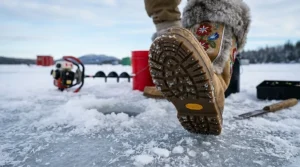
The waterproof construction using B-Tek Dry technology provides maximum wet protection whilst maintaining enough breathability for extended wear. The tall shaft protects against deep snow infiltration common in northern regions, and the aggressive tread pattern handles everything from glare ice to wind-blown hard pack. At nearly 2 kilograms per boot, these aren’t lightweight, but that mass comes from genuine substance—materials and construction built for reliability in conditions where shortcuts lead to frostbite.
Canadian anglers in Yukon, Northwest Territories, and Nunavut consider these essential equipment rather than optional upgrade. A Yellowknife ice angler described fishing Great Slave Lake throughout February at temperatures from -35°C to -52°C, noting the Titan maintained foot comfort across that entire range—warm enough at -52°C to feel toes throughout eight-hour sessions, breathable enough at -35°C to avoid sweat accumulation. That’s the engineering that justifies expedition-grade pricing.
Pros:
✅ Proven -76°C rating for genuine extreme-cold reliability
✅ Superior temperature regulation across wide environmental range
✅ Built to expedition standards with Northern Canada manufacturing
Cons:
❌ Heavy weight can cause fatigue during extended walking
❌ Excessive for southern Canadian ice fishing conditions
Price range: In the $300-$400 CAD range, these represent serious value considering the engineering involved. Essential for northern Canadian conditions. Check current pricing on Amazon.ca.
7. Muck Arctic Ice Vibram — Best Traction for Variable Canadian Ice Conditions
The Muck Arctic Ice Vibram addresses a specific challenge Canadian ice anglers face but rarely discuss: our ice conditions vary dramatically. Early season brings smooth, slick surfaces. Mid-winter sees snow cover and hard pack. Late season develops surface melt, overflow, and treacherous footing. The Vibram Arctic Grip All Terrain outsole solves this with compound technology specifically engineered for wet ice—the single most dangerous surface for slip-and-fall injuries that end ice fishing seasons and worse.
The 5mm neoprene inner boot with fleece lining provides genuine -30°C protection, suitable for most southern and central Canadian ice fishing conditions outside extreme cold snaps. What distinguishes this boot isn’t raw cold-weather rating but rather the versatility of that Vibram outsole across surfaces. The Arctic Grip compound—developed through extensive testing—grips wet ice with confidence that standard rubber simply can’t match, whilst the All Terrain tread pattern transitions seamlessly to hard pack snow, slush, and bare ice. This becomes crucial when conditions change throughout the day, requiring you to maintain safe footing regardless of surface.
Canadian anglers fishing rivers and flowages particularly appreciate these boots. River ice presents unique challenges: current creates variable thickness, overflow zones, and the constant risk of breakthrough requiring quick, confident movement. The superior traction provides insurance for these higher-risk environments. The stretch-fit topline binding hugs your calf to block cold air whilst remaining flexible enough for extended wear comfort—a detail that matters during all-day sessions.
At -30°C rating, these won’t handle deep Prairie winter conditions or northern extremes, but for Ontario, Quebec, and Maritimes ice fishing where temperatures typically range from -5°C to -25°C, they’re ideally matched. The slightly lower insulation reduces weight and bulk compared to Arctic Pro whilst maintaining comfort across the temperature range most Canadian anglers actually fish. One New Brunswick angler praised them for Miramichi River ice fishing, where variable surfaces and moderate cold make traction more valuable than maximum insulation.
Pros:
✅ Vibram Arctic Grip delivers unmatched wet ice traction
✅ Versatile across variable Canadian ice conditions
✅ Lighter and less bulky than heavy expedition boots
Cons:
❌ -30°C rating insufficient for extreme Prairie/northern cold
❌ Shorter than Arctic Pro—less protection in deep snow
Price range: Around $250-$320 CAD positions these as premium boots justified by specialized traction technology. Ideal for southern/central Canadian conditions. Check current pricing on Amazon.ca.
How to Break In Your Mukluks Before Ice Fishing Season
The worst time to discover your new mukluks need breaking-in is during opening weekend on a frozen lake two hours from your vehicle. Smart Canadian anglers start the process weeks before first ice, understanding that proper break-in transforms stiff new boots into comfortable equipment whilst revealing any fit issues that can still be addressed through exchanges.
Week 1: Indoor Conditioning
Start by wearing your mukluks indoors for 30-minute sessions whilst doing normal household activities. This initial period allows the materials to begin conforming to your foot shape without the stress of full-day wear. With traditional leather mukluks like Steger designs, you’ll notice immediate softening; modern neoprene boots like the Muck Arctic Pro require less break-in but still benefit from initial wear periods that let you verify sizing and identify any pressure points.
Week 2: Short Outdoor Sessions
Transition to wearing your mukluks during short outdoor tasks—shovelling the driveway, walking the dog, quick trips to the garage. This introduces cold temperatures and physical movement whilst keeping sessions short enough to avoid blistering if fit issues emerge. Pay attention to areas that rub or feel tight; minor discomfort during 15-minute sessions often escalates to serious problems during eight-hour ice fishing marathons.
Week 3: Extended Trial Sessions
Schedule a two-to-three-hour outing specifically to test your mukluks under conditions approximating actual ice fishing. Stand relatively motionless for extended periods—simulate hole-watching whilst actually just standing in your backyard or local park. This reveals whether the insulation genuinely maintains warmth during static periods and whether the fit allows proper circulation without constriction.
Canadian-Specific Considerations
Our dramatic temperature swings mean mukluks must perform across wide ranges. Test your boots at various temperatures from mild (-5°C) to cold (-25°C) if possible, verifying they handle both extremes without causing overheating or cold feet. If you’re fishing remote locations, conduct final break-in sessions wearing the exact sock combination you’ll use ice fishing—many Canadian anglers run medium-weight merino wool liners with heavier outer socks, and this layering affects fit significantly.
The removable liner systems in boots like the Kamik Icebreaker and Baffin Impact offer unique break-in advantage: you can wear the shell around the house whilst the liners air out separately, accelerating the conditioning process. Just remember that breaking-in isn’t merely about comfort—it’s also about identifying deal-breaker fit issues whilst you can still exchange boots rather than discovering them during a fishing trip that cost you vacation days and travel expenses.
Understanding Temperature Ratings: What -40°C Actually Means on Canadian Lakes
Boot manufacturers stamp temperature ratings prominently on their products, but these numbers deserve skeptical Canadian interpretation. A -40°C rating doesn’t guarantee warm feet at -40°C—it indicates the temperature at which the boot maintains minimal acceptable performance under test conditions that rarely match real ice fishing scenarios.
The Laboratory vs. Reality Gap
Testing protocols typically involve a stationary subject in controlled wind conditions, often wearing specific sock combinations under “moderate activity” definitions that don’t account for sitting motionless on frozen lakes for six hours. Canadian ice fishing reality introduces variables that stress boots beyond laboratory conditions: wind chill that can drive effective temperature 20 degrees lower, prolonged contact with ice or snow-covered surfaces that conduct heat from boot soles, and the simple fact that your feet generate less warmth when you’re sitting than walking.
The Wind Chill Factor Canada Knows Too Well
Environment Canada’s wind chill calculations reveal how dramatically wind affects cold exposure. At -30°C with 40 km/h winds—common on Prairie lakes and northern expanses—the wind chill reaches -51°C, meaning your -40°C-rated boots are actually operating 11 degrees past their stated limit. This isn’t theoretical: Canadian ice anglers regularly fish in these conditions, and boot performance degrades noticeably. The solution isn’t necessarily buying boots rated to -60°C, but understanding that -40°C-rated boots should only be trusted to genuine -30°C fishing.
Activity Level Drastically Changes Requirements
The same mukluks that keep your feet warm during active hole-drilling at -35°C might leave them frozen during static fishing at -25°C. Your body generates 5-10 times more heat during moderate activity than sitting motionless, fundamentally changing how boots perform. Smart Canadian anglers size their boot selection to their actual fishing style: tip-up anglers checking lines every twenty minutes can run lighter boots than deadstick fishers sitting for hours; mobile anglers covering large areas benefit from breathable designs that prevent sweat accumulation rather than maximum insulation.
Sole Conductivity: The Forgotten Variable
Boot manufacturers rarely discuss thermal conductivity through soles, yet this represents critical heat loss when you’re standing or sitting directly on ice. The difference between 2mm foam underlays (Muck Arctic Pro) versus basic rubber soles explains why identical temperature-rated boots perform differently during ice fishing. Canadian anglers often supplement boots with closed-cell foam pads to stand/sit on, adding an insulation layer between their feet and the ice.
Canadian-Smart Temperature Interpretation
Subtract 10-15°C from manufacturer ratings to establish realistic performance expectations for ice fishing. A -40°C boot genuinely protects to around -25°C to -30°C during static fishing in wind. If you regularly fish at -35°C, you need boots rated to -50°C or -60°C. This conservative approach accounts for wind chill, prolonged static periods, and the inevitable degradation as boots age and insulation compresses. It’s better to be slightly too warm than discover at kilometre eight on a frozen lake that your feet are dangerously cold.
Traditional vs. Modern Mukluks: Which Design Suits Canadian Ice Fishing?
Canadian ice anglers face a genuine choice between traditional mukluk construction perfected over millennia and modern interpretations using synthetic materials. Neither approach universally surpasses the other—success depends on matching design philosophy to your actual fishing conditions and priorities.
Traditional Mukluks: Breathing Room for Extended Sessions
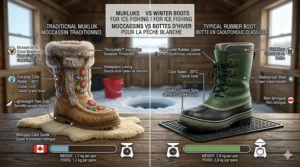
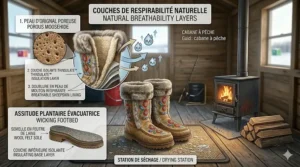
Traditional designs like Steger mukluks or authentic Indigenous-crafted boots prioritise breathability through soft hide construction with natural insulation layers. This addresses a fundamental ice fishing challenge: you generate moderate heat drilling holes and setting up, then sit relatively motionless for hours as that initial sweat becomes your enemy. Traditional mukluks manage this through materials that actively transport moisture away from your foot, maintaining a dry microclimate even during long static periods. The flexibility allows natural foot movement and circulation, whilst the lack of rigid structure means you can wear them all day without developing pressure points.
Canadian anglers fishing shelters with heaters particularly benefit from this breathability. Modern waterproof boots trap moisture inside when you transition from -30°C exterior to +5°C shelter interior, creating damp conditions that chill your feet once you return outside. Traditional mukluks handle these transitions gracefully. However, they fail in wet conditions—slush, overflow, spring ice fishing all expose their fundamental weakness. They’re also slower to put on and require maintenance traditional boots simply don’t.
Modern Mukluks: Waterproof Reliability for Variable Conditions
Boots like the Muck Arctic Pro and Baffin Impact employ neoprene and rubber construction that guarantees waterproof protection regardless of conditions. For Canadian ice fishing spanning November through March, this versatility matters. Early season brings marginal ice with surface water; late season sees thaw cycles creating treacherous overflow zones; mid-season can surprise you with pressure cracks that leak. Modern designs handle all of this without requiring overshoes or special precautions.
The trade-off is breathability—sealed waterproof boots trap moisture your feet generate, and neoprene doesn’t transport vapour like hide. Manufacturers address this through removable liners that can be air-dried between sessions and moisture-wicking materials, but it’s management rather than solution. Canadian anglers fishing multiple consecutive days often bring spare liners to swap in fresh ones each morning, maintaining performance across extended trips. The durability advantage is substantial: modern mukluks withstand abuse that destroys traditional designs, requiring minimal maintenance beyond occasional cleaning.
Matching Design to Canadian Fishing Realities
If you fish primarily dry, cold conditions on established ice away from shorelines and pressure zones—think mid-winter Prairie lake fishing or northern Canadian hard-water seasons—traditional mukluks offer comfort and breathability advantages that justify their limitations. If you fish variable conditions, travel through slush zones reaching ice, or fish rivers and flowages where overflow risk exists, modern waterproof designs provide insurance traditional mukluks can’t match. Many experienced Canadian anglers own both: traditional mukluks for pristine mid-winter conditions, modern boots for early/late season and sketchy ice environments.
Essential Ice Fishing Safety: Protecting Your Feet on Canadian Lakes
Cold-weather footwear represents survival equipment, not comfort accessory, when ice fishing Canadian lakes. Environment Canada reports that hypothermia and frostbite cause over 100 deaths annually in Canada, many involving outdoor recreation where proper equipment could have prevented tragedy. Understanding how to protect your feet specifically addresses one of the most vulnerable areas for cold injury.
Recognising Frostbite Before Permanent Damage
Frostbite progresses through stages, and catching it early prevents the tissue damage that leads to amputation. Initial warning signs include numbness, white or grayish-yellow skin colour, and unusual firmness or waxy feeling. Canadian ice anglers must check their feet regularly during fishing sessions, especially when temperatures drop below -30°C or wind chill reaches extreme levels. The challenge is that frostbite often feels initially warm—a dangerous sensation that indicates blood vessels dilating in late-stage response to cold stress.
If you notice these symptoms, move to shelter immediately and begin passive warming—don’t rub or massage affected areas, as this damages frozen tissue. Remove wet footwear and socks, wrap feet in dry blankets, and allow gradual rewarming. Severe frostbite—characterised by blistering, black tissue, or loss of sensation—requires immediate medical attention. Call 911 or your local emergency number without delay. For remote Canadian fishing locations, this means having emergency communication devices and extraction plans before venturing onto ice.
Hypothermia Prevention Through Proper Footwear
Hypothermia begins when your core temperature drops even slightly, and cold feet accelerate the process by forcing your body to divert blood from extremities to protect vital organs. Stage 1 hypothermia shows as shivering, goosebumps, and numbness in hands and feet. Stage 2 brings confusion, slurred speech, and uncoordinated movement. Stage 3—life-threatening—stops shivering and can cause unconsciousness. Proper mukluks prevent hypothermia by maintaining foot warmth that allows normal circulation, keeping your body from entering emergency conservation mode.
Canadian-Specific Risk Factors
Several conditions common to Canadian ice fishing elevate cold-injury risk beyond typical outdoor scenarios. Wind chill on open Prairie lakes can drive effective temperatures 20-30 degrees below ambient air temperature—your -40°C-rated boots face -60°C conditions. Prolonged static periods during tip-up fishing mean your feet aren’t generating heat through movement. Metal ice shelters conduct cold directly to your boots’ sole, creating heat-loss pathways manufacturers don’t account for in testing. Wet conditions from slush or overflow accelerate heat loss dramatically—wet feet lose heat 25 times faster than dry feet.
Emergency Preparedness for Remote Canadian Locations
Many Canadian ice fishing destinations sit hours from medical facilities, making self-rescue capability essential. Always fish with partners who can assist if cold injury develops. Carry emergency supplies including spare dry socks, chemical foot warmers, emergency blankets, and communication devices (satellite phones or GPS messengers for true remote locations). Know evacuation routes and nearest shelter before venturing onto ice. File trip plans with someone reliable who will notice if you don’t return on schedule.
Environment Canada provides detailed cold weather safety information at getprepared.gc.ca including regional alerts, protective measures, and treatment protocols specific to Canadian conditions. Reviewing these resources before ice fishing season begins could save your life or your fishing partner’s life during emergencies.
Sock Layering Strategy for Maximum Warmth in Canadian Cold
Even the best mukluks for ice fishing fail if you get sock selection wrong—poor sock choices restrict circulation, trap moisture, or create pressure points that negate boot performance. Canadian ice anglers who understand proper sock layering dramatically extend their comfortable fishing time.
The Two-Layer System Most Canadian Anglers Prefer
Start with a thin merino wool or synthetic liner sock that sits directly against your skin. This base layer’s job isn’t insulation—it’s moisture management, wicking perspiration away from your foot toward the outer sock where it can dissipate. Merino wool excels here because it maintains wicking properties even when damp, whilst synthetic options like polypropylene dry faster. Avoid cotton liner socks completely; cotton absorbs moisture and holds it against your skin, creating ideal conditions for frostbite.
The outer sock provides insulation through thicker knit construction and air-trapping fibres. Medium to heavyweight wool socks work well, but verify they fit inside your mukluks without compression—tight socks restrict blood flow, which guarantees cold feet regardless of insulation quality. Some Canadian anglers prefer wool-synthetic blends that combine wool’s warmth and moisture management with synthetic durability and faster drying.
The Compression Trap That Freezes Canadian Feet
More socks doesn’t equal warmer feet—it often produces the opposite. When you cram extra sock layers into boots, you compress insulation whilst restricting circulation. Blood flow delivers warmth; anything that impedes circulation allows cold to win. If your boots feel tight with one sock layer, they’re too small or you need different socks, not additional layers. The space inside your mukluks should accommodate your foot and sock system whilst allowing air circulation around your toes—that air space provides insulation whilst the circulation maintains warmth.
Temperature-Specific Sock Selection
Adjust your sock system to conditions rather than wearing maximum insulation always. At -10°C to -20°C, a single medium-weight wool sock often suffices, allowing maximum circulation whilst providing adequate insulation. As temperatures drop toward -30°C, add that thin liner sock to manage moisture without compromising circulation. Beyond -40°C, consider vapour barrier liner (VBL) socks—thin waterproof socks worn over a light liner that trap moisture away from outer insulation, preventing it from degrading performance. This seems counterintuitive but works brilliantly in extreme cold where moisture management becomes critical.
Sock Maintenance Between Ice Fishing Sessions
Never wear yesterday’s socks today without thorough drying—residual moisture from previous wear starts you at a disadvantage. Merino wool can be worn 2-3 times before washing if aired properly between uses, but truly dry means bone-dry, not merely not-dripping. Many Canadian anglers pack twice as many socks as fishing days, rotating fresh pairs daily whilst previous days’ socks dry in their accommodation. For multi-day remote fishing trips, consider bringing a portable boot dryer that operates on 12V from your vehicle; dry socks and dry boot liners multiply your cold-weather capability dramatically.
Caring for Your Mukluks: Extending Lifespan in Canadian Conditions
Quality mukluks for ice fishing represent $200-$500 CAD investment, making proper care essential for maximising return on that expense. Canadian conditions—road salt, vehicle exhaust, fish slime, and dramatic temperature swings—attack boots aggressively, but systematic maintenance extends their functional life across multiple seasons.
Post-Session Cleaning Prevents Degradation
After each ice fishing session, remove loose snow and ice whilst still frozen—it brushes off easily and won’t melt inside your vehicle creating internal moisture. Once home, allow boots to warm to room temperature gradually before cleaning; sudden temperature changes stress materials and adhesives. Wipe rubber and neoprene sections with damp cloth to remove salt, fish residue, and general grime. Salt particularly corrodes stitching and degrades rubber compounds, accelerating the cracking and separation that ends boot life prematurely.
For fabric uppers on traditional mukluks or hybrid designs, use mild soap solution and soft brush to clean without saturating material. Rinse thoroughly but minimally—you want to remove soap residue without introducing excess moisture. For leather sections, use products specifically designed for outdoor leather rather than shoe polish; outdoor-specific treatments maintain breathability whilst providing weather protection.
Drying Properly Prevents Mold and Insulation Failure
Never dry mukluks near direct heat sources—placing them beside wood stoves, space heaters, or heat vents damages materials and degrades insulation. Instead, remove liners (for boots with removable systems) and stuff boots loosely with newspaper to absorb moisture whilst maintaining shape. Change newspaper after 2-3 hours when it becomes damp. Position boots in warm, dry room with good air circulation, ideally elevated off floor on boot rack or similar.
Liners benefit from thorough air-drying between each session. Hang them in warm, dry location rather than stuffing them back into boots immediately. For multi-day fishing trips, bring spare liners and swap fresh ones each morning whilst previous days’ liners dry. This rotation system maintains peak insulation performance throughout extended outings. Canadian anglers fishing remote locations where drying conditions are limited sometimes use chemical moisture absorbers (silica gel packets) inside stored liners to manage dampness.
Storage During Off-Season
When ice fishing season ends, clean boots thoroughly following procedures above and ensure complete drying before storage. Store in cool, dry location away from direct sunlight—UV radiation degrades rubber and fabric over months of exposure. Stuff boots loosely with newspaper or boot shapers to maintain shape. For traditional leather mukluks, apply appropriate treatment product before storage to prevent leather drying and cracking. Check stored boots every few months, replacing moisture-absorbing materials as needed and addressing any mold growth immediately with dilute vinegar solution.
Avoid storing boots in unheated garages or sheds where temperature extremes and humidity fluctuations stress materials. A basement storage room or climate-controlled area maintains stable conditions that preserve boot integrity. Canadian temperature swings from +30°C summer heat to -40°C winter cold create expansion-contraction cycles that particularly stress adhesives and seams in stored equipment.
Repair vs. Replace Decisions
Minor issues—loose stitching, small tears, worn insoles—justify repair for quality mukluks. Bring boots to cobbler experienced with outdoor footwear rather than attempting DIY fixes that often worsen problems. Major structural failures—separated sole, torn neoprene, blown-out seams across large sections—typically signal that boots have reached end-of-life, especially considering repair costs often approach replacement cost for mid-range boots. However, premium mukluks like Baffin Impact or Steger models justify substantial repair investment given their initial cost and quality construction.
Top Mistakes Canadian Ice Anglers Make With Mukluks
Even experienced Canadian ice fishers often make boot-related errors that compromise comfort, safety, and equipment lifespan. Recognising these common mistakes helps you avoid repeating them.
Mistake #1: Buying Boots One Season Too Small
Mukluks should fit with room for thick socks and air circulation—snug boots restrict blood flow, guaranteeing cold feet regardless of insulation quality. Canadian anglers accustomed to regular footwear sizing often order mukluks in their standard size, discovering too late that they need to size up when accounting for winter sock systems. If you’re between sizes, always choose larger; you can adjust fit with sock thickness, but too-small boots can’t be fixed. The exception is neoprene boots, which conform somewhat to foot shape, allowing truer-to-size selection.
Mistake #2: Ignoring Moisture Management Completely
You drill ten holes, hike across the lake checking tip-ups, and sit for six hours—your feet sweat through all this activity, that sweat becomes moisture inside your boots, and that moisture destroys insulation whilst accelerating heat loss. Yet many anglers never remove boots between sessions, never air-dry liners, and never rotate sock systems to manage this moisture accumulation. After two days of fishing, their “warm” boots feel cold because the insulation is damp and compressed. Bringing spare liners and rotating them daily solves this entirely.
Mistake #3: Over-Insulating Relative to Activity Level
More insulation seems better, but boots rated to -60°C worn during moderate activity at -20°C cause overheating and sweat accumulation that chills you later when you become stationary. Match boot insulation to your actual fishing style and temperature range. Active anglers moving continuously need less insulation and more breathability; stationary anglers require maximum insulation but must manage the moisture that creates. Canadian conditions vary so dramatically that owning two boot types—active and static—makes sense for serious anglers.
Mistake #4: Trusting Temperature Ratings Without Wind Chill Adjustment
Manufacturers test boots under controlled conditions that don’t account for prairie winds, pressure ridge exposure, or extended static periods. That -40°C-rated boot genuinely protects to around -30°C during real ice fishing, possibly lower with wind chill. Canadian anglers who learn this through frozen feet rather than advance research endure miserable sessions. Always subtract 10-15°C from manufacturer ratings when selecting boots for your typical conditions.
Mistake #5: Neglecting Waterproofing Until It’s Too Late
Traditional mukluks and leather-containing designs require regular waterproofing treatment to maintain weather resistance, yet anglers often skip this maintenance until boots start failing. By then, moisture has compromised seams and degraded materials internally. Apply appropriate waterproofing products at season start, mid-season, and before storage. This fifteen-minute task twice annually extends boot life dramatically whilst maintaining performance.
Mistake #6: Storing Boots Wet After Final Spring Session
Season-ending cleanup often gets rushed—you’re tired, spring chores beckon, and those wet boots get tossed in the garage “to deal with later.” Six months later, you discover mold, degraded insulation, and damaged materials. Always clean and thoroughly dry boots before off-season storage, investing the thirty minutes required to preserve your $300+ investment.
Mistake #7: Assuming Feet Will “Toughen Up” to Inadequate Boots
Some Canadian anglers convince themselves that discomfort during early-season sessions means they’re not yet acclimatised to cold, when reality is their boots are inadequate for conditions. This ends with frostbite, shortened fishing seasons, and expensive medical bills. If your feet are cold after proper sock layering and movement, your boots are insufficient for those conditions. Acclimatisation doesn’t overcome genuinely inadequate equipment.
❓ Frequently Asked Questions: Mukluks for Ice Fishing in Canada
❓ Can mukluks really keep feet warm during all-day ice fishing sessions in Canadian winters?
❓ Are traditional or modern mukluks better for Canadian ice fishing conditions?
❓ What sock system works best with mukluks in extreme Canadian cold below -40°C?
❓ How do I know if my mukluks are too tight and restricting circulation?
❓ Are Canadian-made mukluks worth the premium price versus imported alternatives?
Conclusion: Finding Your Perfect Mukluks for Canadian Ice Fishing Success
Selecting mukluks for ice fishing ultimately comes down to honest assessment of your actual fishing conditions, budget, and priorities rather than chasing maximum specifications you don’t need. A Manitoba angler fishing Lake Winnipeg in February faces radically different requirements than an Ontario angler targeting panfish on protected inland lakes—and their optimal mukluks differ accordingly.
For most Canadian ice anglers fishing southern and central regions, the Muck Boot Arctic Pro or Kamik Icebreaker provide the sweet spot of genuine cold protection, Canadian-appropriate design, and accessible pricing that doesn’t require mortgaging equipment budget. These boots handle temperatures from -10°C to -35°C reliably, cover the majority of typical ice fishing scenarios, and maintain performance across multiple seasons with proper care.
Northern Canadian anglers, those fishing exposed Prairie expanses, or anyone regularly encountering temperatures below -40°C should budget for expedition-grade protection. The Baffin Impact or Titan aren’t luxury items in these contexts—they’re essential safety equipment that prevents the frostbite and hypothermia risks that genuine extreme cold presents. Their premium pricing reflects engineering that performs reliably when failure means medical emergency rather than merely shortened fishing day.
Traditional mukluk enthusiasts drawn to authentic Indigenous design and breathability benefits find genuine value in Steger Yukon or similar handcrafted options, accepting their limitations around wet conditions and understanding the maintenance they require. These represent cultural connection alongside practical function, appealing to anglers who view ice fishing as heritage practice rather than purely recreational activity.
The critical insight Canadian ice anglers must embrace: your mukluks represent survival equipment first, comfort equipment second. This isn’t dramatic exaggeration—Environment Canada reports dozens of cold-related deaths annually in outdoor recreation, many involving inadequate footwear during extended cold exposure. Invest in quality mukluks matched to your actual conditions, maintain them properly throughout the season, and understand their limitations relative to temperature ratings and your fishing style.
✨ Don’t Miss These Exclusive Deals!
🔍 Take your ice fishing adventures to the next level with these carefully selected products. Click on any highlighted item to check current pricing and availability on Amazon.ca. These mukluks will help you create authentic cold-weather fishing memories your family will treasure!
Recommended for You: Explore More Canadian Ice Fishing Content
- Mukluks vs Pac Boots Ice Fishing: 7 Best Boots Canada 2026
- Best Pac Boots for Ice Fishing Canada 2026 | 7 Top Picks
- 7 Best Ice Fishing Boots Rated to -100F Canada 2026
Disclaimer: This article contains affiliate links. As an Amazon Associate, I earn from qualifying purchases. If you purchase products through these links, we may earn a small commission at no additional cost to you.
✨ Found this helpful? Share it with your friends! 💬🤗
