
In This Article
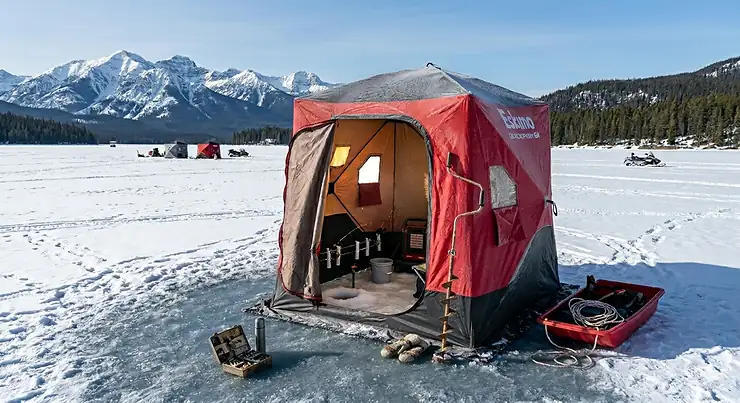
Picture this: You’re 200 metres out on a frozen Ontario lake, wind howling at -15°C, and you’ve just drilled your fifth hole of the morning. Without proper shelter, you’d be packing up in an hour. With the right portable ice shanty, though, you’re settling in for a full day of comfort—maybe even overnight.
The modern portable ice shanty market has exploded in Canada over the past five years. What used to require three grown adults to haul onto the ice now pops up in under two minutes and weighs less than your tackle box. From basic pop-up shelters starting around $150 CAD to premium wheel ice shanty systems pushing $1,200 CAD, Canadian anglers have never had more options for staying warm and mobile on the hard water.
I’ve spent the better part of 15 winters testing these transportable ice house options across Canada, from Lake Simcoe to Great Slave Lake. The difference between a miserable day cutting your trip short and a memorable eight-hour session often comes down to one decision: choosing the right mobile ice fishing hut. Whether you’re a weekend warrior looking for your first towable ice shack or a serious angler considering a trailer ice shelter upgrade, this guide breaks down exactly what works in Canadian conditions—and what doesn’t.
Quick Comparison Table
| Product | Type | Capacity | Setup Time | Price Range (CAD) | Rating |
|---|---|---|---|---|---|
| Eskimo QuickFish 3i | Pop-Up Hub | 3 Person | 60 seconds | $400-$500 | 4.7/5 ⭐ |
| Clam Nanook XT Thermal | Flip-Over Sled | 2 Person | 2 minutes | $700-$850 | 4.8/5 ⭐ |
| Eskimo FatFish 949i | Pop-Up Hub | 3-4 Person | 90 seconds | $550-$700 | 4.6/5 ⭐ |
| Clam X-600 Thermal | Hub-Style | 6-8 Person | 7-10 minutes | $550-$650 | 4.9/5 ⭐ |
| THUNDERBAY Ice Cube 2-4 | Pop-Up Hub | 2-4 Person | 60 seconds | $280-$380 | 4.4/5 ⭐ |
| Outsunny 2-Person | Pop-Up Tent | 2 Person | 30 seconds | $150-$220 | 4.2/5 ⭐ |
| Nordic Legend Aurora | Pop-Up Hub | 4-6 Person | 90 seconds | $450-$600 | 4.5/5 ⭐ |
💬 Just one click – help others make better buying decisions too!😊
Top 7 Portable Ice Shanties: Expert Analysis
1. Eskimo QuickFish 3i – Best Overall for Canadian Conditions
The Eskimo QuickFish 3i has earned its reputation as Canada’s go-to portable ice shanty for good reason. This pop-up hub-style shelter delivers 34 square feet of fishable area—enough room for three anglers and all their gear without feeling cramped. The insulated IQ3 fabric keeps interior temps 20-25°F warmer than outside, which matters when you’re fishing Lake Winnipeg in January.
Key Specifications:
- Insulated 300D IceTight fabric
- 60-second setup/takedown
- 68″ x 68″ base, 67″ centre height
- Weight: 31 lbs
Price in Canada: $400-$500 CAD on Amazon.ca
Canadian buyers consistently praise the no-trip door design—you won’t stumble entering with your auger and bucket. The oversized windows provide excellent visibility for watching tip-ups, and the self-tapping ice anchors bite into hard water without pre-drilling. One Alberta angler noted: “Used it in 40 km/h winds on Pigeon Lake and it didn’t budge. The insulation kept it warm enough with just a Buddy heater on low.”
✅ Pros:
- Genuine 60-second setup (confirmed by users)
- Excellent wind resistance in prairie conditions
- Available across Canada with reasonable shipping
❌ Cons:
- Carrying bag could be more durable
- No built-in sled base
2. Clam Nanook XT Thermal – Premium Flip-Over Choice
For anglers who value mobility and setup speed above all else, the Clam Nanook XT Thermal represents the pinnacle of flip-over design. This movable ice fishing hut literally unfolds from its sled base in under two minutes, even in -30°C temperatures. The thermal skin technology creates a microclimate inside that’s comfortable enough for all-day sits without burning through propane.
Key Specifications:
- Flip-over sled design
- 60″ x 84″ fishing area
- Thermal Trap insulation
- RSPX reinforced pole system
Price in Canada: $700-$850 CAD
Saskatchewan ice fishers particularly appreciate how this towable ice shack handles rough ice. The reinforced runners glide over pressure ridges that would stop a standard sled cold. One Great Lakes angler shared: “Five years, over a hundred trips, and not one structural issue. This thing survives conditions that blow away pop-ups.” The XT model adds 7″ of extra headroom compared to standard Nanooks—crucial for anyone over 5’10”.
✅ Pros:
- Best-in-class mobility for solo anglers
- Exceptional durability (5+ year lifespan common)
- Side doors improve entry/exit
❌ Cons:
- Premium price point
- Tub runners sold separately (required for warranty)
3. Eskimo FatFish 949i – Best Value for Families
The Eskimo FatFish 949i solves a problem many Canadian families face: getting kids excited about ice fishing when it’s -20°C outside. This wheel ice shanty design (well, technically hub-style) offers 61 square feet of floor space—enough for two adults and two kids, or three adults fishing comfortably. The wide-bottom design creates stability that standard hubs can’t match.
Key Specifications:
- 99″ x 99″ base dimensions
- 61 sq ft fishable area
- IQ insulated fabric
- All-metal hub system
Price in Canada: $550-$700 CAD on Amazon.ca
British Columbia anglers report using this on windswept mountain lakes with zero issues. The wider footprint means less rocking in wind, and the metal hubs distribute stress better than plastic alternatives. A Manitoba buyer noted: “Fits our whole family plus a portable heater and cooking gear. We’ve done overnight trips on Lake of the Woods—kids slept warm in sleeping bags while we fished through the night.”
✅ Pros:
- Generous space for families
- Wide base = superior stability
- Quick setup despite larger size
❌ Cons:
- Heavier than 2-3 person models (plan for snowmobile/ATV transport)
- Takes two people for easiest setup
4. Clam X-600 Thermal – Premium Group Shelter
When your crew includes 6-8 serious anglers and you’re planning multi-day trips, the Clam X-600 Thermal becomes essential equipment rather than a luxury. This trailer ice shelter provides 96″ x 120″ of floor space with 86″ peak height—basically a small room on the ice. I witnessed this shelter withstand northern Ontario winds that literally blew other shanties down the lake while X-600 users kept fishing in comfort.
Key Specifications:
- 6-sided hub design
- 112 sq ft interior space
- Thermal quilted insulation
- Reinforced pole geometry
Price in Canada: $550-$650 CAD
The thermal skin genuinely makes a difference. Condensation beads and drips instead of freezing directly to the fabric—a huge quality-of-life improvement during long sessions. Setup requires two people and takes 7-10 minutes, but once erected, you’ve got a fortress. Quebec ice fishers use these for spearfishing northern pike, where the extra space allows proper maneuvering. Note: You’ll need a snowmobile or ATV for transport; hand-pulling this transportable ice house any distance isn’t realistic.
✅ Pros:
- Unmatched wind resistance
- Spacious enough for overnight camping
- Superior condensation management
❌ Cons:
- Two-person setup required
- Requires motorized transport
5. THUNDERBAY Ice Cube 2-4 – Best Budget Option
Not everyone needs premium features, and that’s where the THUNDERBAY Ice Cube 2-4 shines. This budget-friendly mobile ice fishing hut delivers surprising quality for $280-$380 CAD. You get 24-34 square feet of fishable area (depending on configuration), hub-style pop-up design, and basic insulation. Perfect for occasional weekend warriors or anglers dipping their toes into shelter fishing.
Key Specifications:
- 2-4 person capacity
- 300D Oxford fabric
- Hub-style design
- 60-90 second setup
Price in Canada: $280-$380 CAD on Amazon.ca
Canadian reviews consistently mention the value proposition. A Nova Scotia buyer shared: “For under $300, I wasn’t expecting much. But it’s held up through two seasons of weekly use. No, it’s not a Clam or Eskimo, but it keeps wind out and warmth in.” The fabric is thinner than premium models, meaning you’ll run your heater more, but for casual use, that’s an acceptable trade-off. Shipping across Canada is generally fast, arriving within 5-7 business days.
✅ Pros:
- Exceptional price-to-performance ratio
- Available on Amazon.ca with Prime shipping
- Adequate for 2-3 season lifespan
❌ Cons:
- Thinner fabric = more heat loss
- Anchors less robust than premium models
6. Outsunny 2-Person – Ultra-Portable Entry Point
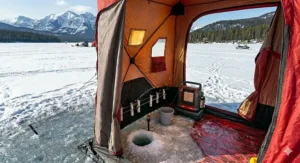
The Outsunny 2-Person pop-up represents the absolute entry point for portable ice shanties—and there’s nothing wrong with that. At $150-$220 CAD, this gets beginners onto the ice without breaking the bank. The 30-second setup is genuinely quick, and the compact folded dimensions (52″ x 9.75″ x 7″) fit easily in any vehicle.
Key Specifications:
- 70.75″ x 70.75″ x 70.75″ setup
- Two-layer window system
- 300D Oxford fabric
- Rated to -30°C protection
Price in Canada: $150-$220 CAD
Ontario ice fishers use these as backup shelters or for quick afternoon sessions. The two-layer windows are clever—you can keep the Oxford layer for total darkness (good for spearing) or just the PVC layer for light while blocking wind. A Quebec buyer mentioned: “Perfect for my 8-year-old daughter and me. We fish 2-3 hours at a time. Any longer and we’d want something warmer, but for our use, it’s ideal.” Understand this is a seasonal shelter, not a decade investment. Plan for 1-3 years of regular use.
✅ Pros:
- Lowest price point for quality shelter
- Genuine 30-second setup
- Two-layer window versatility
❌ Cons:
- Minimal insulation
- Best suited for short sessions
7. Nordic Legend Aurora – Best for Serious Anglers
The Nordic Legend Aurora series brings Scandinavian engineering to Canadian ice. These pop-up portable shanties feature design elements borrowed from Nordic ice fishing culture, where extended sub-zero sessions are standard practice. The Double model (4-6 person) offers excellent space and thermal performance in the $450-$600 CAD range.
Key Specifications:
- 4-6 person capacity
- Reinforced hub design
- Insulated fabric layers
- Large mesh storage pockets
Price in Canada: $450-$600 CAD on Amazon.ca
Canadian buyers report this towable ice shack performs exceptionally well in prairie provinces where wind is constant. The hub system uses a unique locking mechanism that prevents pole slippage—a problem that plagues cheaper shelters in extreme cold when metal contracts. An Alberta angler noted: “Used it at -35°C with windchill hitting -45°C. Interior stayed comfortable with a Mr. Heater Buddy on medium. The fabric didn’t crack or stiffen like my old shelter.”
✅ Pros:
- Exceptional cold-weather performance
- Innovative hub locking system
- Good mid-range value
❌ Cons:
- Less common = harder to find replacement parts
- Setup slightly slower than QuickFish
How to Choose Portable Ice Shanties in Canada
Selecting the right mobile ice fishing hut involves balancing multiple factors specific to Canadian conditions. Here’s how to make a smart decision:
1. Determine Your Primary Use Case
Are you a solo angler hitting the ice for 2-3 hour sessions, or do you run weekend family outings? A flip-over sled works brilliantly for mobile solo fishing, while families need hub-style shelters with actual living space. Consider how many people you’ll typically fish with—cramming four adults into a “4-person” shelter gets miserable fast.
2. Assess Your Transportation Method
This matters more in Canada than anywhere else. If you’re hand-pulling 500 metres across Lake Simcoe, weight becomes critical—look at models under 35 lbs. Planning to tow behind a snowmobile or ATV? Larger trailer ice shelter options become viable. Match your shelter to your realistic transport capability.
3. Evaluate Insulation Needs by Province
British Columbia coastal ice fishers can get by with lighter insulation than Saskatchewan anglers facing -40°C windchills. Thermal or insulated models add cost and weight but transform the experience in deep winter. If you fish November through March across the prairies or northern Ontario, insulation isn’t optional—it’s essential.
4. Consider Setup Speed and Complexity
Pop-up hub shelters win for speed (30-90 seconds), while flip-overs take 2-3 minutes once practiced. Large hub models may require 5-10 minutes and two people. Honest question: Will you actually set up a complex shelter for a 90-minute evening session, or will you skip it and freeze?
5. Budget for Your Actual Usage Pattern
If you fish 5-10 times per season, a $200-$400 CAD shelter makes sense. Weekly anglers logging 30+ days on ice? Invest in the $600-$850 range—the per-day cost amortizes quickly. Don’t forget accessories: heaters ($100-$150 CAD), ice anchors ($30-$50 CAD), and lights ($20-$40 CAD) add up fast.
6. Check Canadian Availability and Shipping
Some premium models ship from the US with duties and extended timelines. Prioritize products confirmed available on Amazon.ca or Canadian retailers. Read recent Canadian reviews—they’ll mention shipping experiences, duty charges, and whether dimensions/specs match reality.
7. Verify Provincial Regulations
In Ontario, fabric shelters over 7 m² require free registration with the province. Other provinces have varying rules. Ensure your chosen transportable ice house complies with local requirements, especially regarding removal dates before spring thaw.
Understanding Different Types of Portable Ice Shanties
Canadian ice anglers have three main shelter categories to choose from, each with distinct advantages:
Hub-Style Pop-Up Shelters
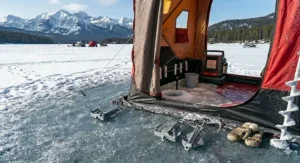
These are what most people picture when they think “modern ice shanty.” Hub-style designs use a collapsible pole framework with a fabric skin. Pull the fabric over the frame, snap the hubs into place, and you’re fishing in under two minutes. The best models like the Clam X-600 can house 6-8 anglers comfortably.
Best for: Groups, stationary fishing, all-day/overnight trips
Canadian advantage: Excellent in heavy snow—large footprint distributes weight
Consider if: You fish with 3+ people or value space over mobility
Flip-Over Sled Shelters
The ultimate in mobility. Your shelter flips down over a built-in sled base that also serves as seating and storage. Drill your holes, flip the top over, and you’re enclosed. The Clam Nanook XT Thermal exemplifies this category. These mobile ice fishing hut designs let you move spots easily—critical for chasing suspended walleye or following schools.
Best for: Solo anglers, mobile fishing, tournament situations
Canadian advantage: Pull by hand across rough ice without damage
Consider if: You move spots frequently or fish alone often
Permanent-Style Wheeled Shanties
Though less common in the portable category, some Canadian anglers use lightweight wheeled fish houses as towable ice shack options. These typically feature aluminum frames with removable canvas tops. Companies like TR Aluminum Designs in Saskatchewan specialize in these. They bridge the gap between true portable shelters and permanent structures.
Best for: Season-long fishing in one location, drive-on ice lakes
Canadian advantage: Provincial regulations often allow extended periods before removal
Consider if: You have consistent ice access and vehicle transport
Essential Features for Canadian Ice Fishing Shelters
Not all features are created equal when facing Canadian winter. Here’s what actually matters:
Thermal Insulation and Wind Resistance
The difference between 150D fabric and 600D thermal-insulated material is the difference between shivering and comfort. Insulated shelters maintain 15-25°F warmer internal temps with minimal heating. In -30°C prairie winds, that’s not luxury—it’s survival. Look for quilted or multi-layer thermal designs if you fish deep winter.
Ventilation Systems
Here’s the paradox: You want insulation, but you also need airflow. Running a propane heater in a sealed shelter creates dangerous carbon monoxide buildup and condensation that freezes on the ceiling. Quality transportable ice house designs include adjustable roof vents and window systems. The Nordic Legend Aurora’s two-layer windows let you balance light, warmth, and fresh air perfectly.
Door Design and Entry Systems
Canadian ice fishers carry armloads of gear—augers, buckets, rods, heaters. No-trip door designs (like Eskimo’s raised threshold) prevent stumbling with your hands full. Some shelters use D-shaped doors for easier access. Side doors on larger shelters (Clam X-600) let multiple anglers enter/exit without disturbing everyone inside.
Ice Anchoring Systems
Prairie windstorms and Great Lakes gusts will send unsecured shelters sailing. Self-tapping ice anchors (standard on Eskimo models) screw into ice without pre-drilling. Basic models use rope and stake systems—they work, but require more effort. Budget $30-$50 CAD for quality ice anchors if your shelter doesn’t include robust ones.
Window Placement and Visibility
Windows serve multiple purposes: watching tip-up flags, monitoring weather changes, and relieving claustrophobia during long sessions. Mesh windows (vs. PVC) resist frosting better in extreme cold. Check that window placement lets you see your holes and surrounding ice without leaving the shelter.
Storage Solutions and Organization
After 6-8 hours on ice, gear chaos is real. Built-in pockets, gear loops, and storage bags keep essentials accessible. Some premium wheel ice shanty models include molded storage compartments in the base. At minimum, look for mesh pockets to store lures, snacks, and electronics.
Top Benefits vs Traditional Alternatives
| Feature | Portable Ice Shanty | Flip-Over Sled | No Shelter | Permanent Shack |
|---|---|---|---|---|
| Setup Time | 30 seconds – 10 minutes | 2-3 minutes | N/A | 30+ minutes |
| Mobility | High | Excellent | Maximum | None |
| Wind Protection | Excellent | Very Good | None | Maximum |
| Thermal Efficiency | Very Good | Good | None | Excellent |
| Group Capacity | 1-8 people | 1-2 people | Unlimited | 2-12 people |
| Transport Cost | Low | Very Low | None | High |
| Seasonal Storage | Compact | Compact | N/A | Requires Building |
| Price Range (CAD) | $150-$850 | $400-$900 | $0 | $2,000-$15,000+ |
Portable ice shanties strike the optimal balance for most Canadian anglers. Permanent shacks require trailers, removal logistics, and storage space. Going without shelter works for tough anglers in mild conditions but limits fishing time when temperatures drop. Flip-overs excel for solo mobility but can’t accommodate families. Hub-style portables offer versatility—pack them for mobility or set up for multi-day comfort.
Essential Accessories for Your Mobile Ice Fishing Hut
A shelter alone doesn’t complete your setup. These accessories transform a basic transportable ice house into a comfortable fishing headquarters:
Portable Heaters (Mr. Heater Buddy Series)
The Mr. Heater Buddy remains the gold standard for ice fishing. The 9,000 BTU model ($100-$130 CAD) heats a 4-person shelter comfortably. The 18,000 BTU Big Buddy ($150-$180 CAD) handles larger spaces. CRITICAL: Always crack a window for ventilation. Carbon monoxide is odourless and deadly—proper airflow isn’t optional.
LED Lighting Systems
Battery-powered LED strips ($20-$40 CAD) or magnetic puck lights transform dark shanties into functional workspaces. Red-light headlamps preserve night vision while checking tip-ups. In Canadian winter, daylight ends by 5 PM—plan for 4-5 hours of dark fishing if you’re serious.
Insulated Floor Mats
Ice conducts cold directly through shelter floors. Foam or insulated mats ($30-$60 CAD) provide cushioning and thermal barriers. They protect your shelter floor from auger blades and crampon scratches while keeping boots warmer. The Clam Floor Mat system fits most shelters perfectly.
Ice Anchors and Tie-Downs
Budget $30-$50 CAD for quality ice anchors if your shelter didn’t include robust ones. The Eskimo Deluxe Tie Down Kit ($35 CAD) prevents disaster in wind. Ice conditions vary across Canada—early season on Lake of the Woods sees 18+ inches of blue ice where anchors bite perfectly; late season requires longer anchors for softer, thicker ice.
Safety Considerations for Ice Fishing in Canada
Ice fishing is incredible. It’s also unforgiving. Respect these safety fundamentals:
Ice Thickness Guidelines
Ontario Ministry of Natural Resources guidelines recommend:
- 10 cm (4 inches): Walking
- 20 cm (8 inches): Snowmobile/ATV
- 30 cm (12 inches): Light vehicle
- 40+ cm (16+ inches): Truck
Clear blue ice is strongest. White opaque ice contains air pockets (weaker). Grey ice indicates water presence—stay off. Near shorelines, inlets, outlets, and pressure cracks, ice thins dangerously. Check thickness every 15-20 metres when moving across unfamiliar lakes.
Equipment and Preparation
Never fish alone. Always inform someone of your plans—specific lake, location, expected return time. Wear ice picks ($15-$25 CAD) on a neck strap. If you go through, they’re your only self-rescue tool. Flotation suits ($200-$400 CAD) function as full-body life jackets—many Canadian guides won’t work without them.
Keep a spud bar or ice chisel ($30-$50 CAD) to test ice ahead of you. Smartphones and GPS fail in extreme cold; carry backup navigation and communication. A change of dry clothes in your vehicle isn’t paranoid—it’s smart.
Provincial Regulations and Compliance
Each province enforces specific ice fishing regulations. Ontario requires ice hut registration for shelters over 7 m². Quebec has specific zoning restrictions. Alberta prohibits ice fishing through flowing waters in certain zones. Review your provincial fishing regulations before hitting the ice—fines for violations are substantial.
Ice hut removal dates vary by province and zone. In Ontario, removal dates range from late February to late March depending on Fisheries Management Zone. Missing removal dates results in fines and potential equipment loss when ice breaks up.
Price Range & Value Analysis
| Budget Tier | Price Range (CAD) | Best Options | Who Should Buy |
|---|---|---|---|
| Entry-Level | $150-$300 | Outsunny 2-Person, THUNDERBAY Ice Cube | First-time buyers, casual anglers fishing 5-10 days/season |
| Mid-Range | $400-$600 | Eskimo QuickFish, Nordic Legend Aurora, Clam X-600 | Regular anglers (15-30 days/season) wanting quality and durability |
| Premium | $700-$900 | Clam Nanook XT, Eskimo FatFish 949i | Serious anglers (30+ days/season), guides, tournament fishers |
| Specialty | $1,000+ | Custom wheeled shanties, large hubs | Multi-day trips, groups of 6+, commercial operations |
The sweet spot for most Canadian anglers sits in the $400-$600 CAD range. You get genuine thermal insulation, quality materials that last 5+ seasons, and features that work in real-world conditions. Entry-level shelters work for beginners testing whether they’ll commit to ice fishing. Premium models pay for themselves if you log serious ice time.
Don’t forget the total cost of ownership. A $200 shelter that fails after one season costs more than a $600 model lasting six seasons. Factor in propane for heaters ($15-$25/session), ice fishing licenses ($50-$100/year in most provinces), and transportation costs when calculating your budget.
Common Mistakes to Avoid When Buying Portable Shanties
After interviewing dozens of Canadian ice anglers and testing shelters myself, these mistakes appear repeatedly:
Buying Based on Person Capacity Alone
Manufacturers rate shelters optimistically. A “4-person” shelter comfortably fits three adults with gear, two adults with kids, or four adults who really like each other. Add bulky winter clothing, heaters, buckets, and equipment—suddenly that 4-person rating feels tight. Size up if you’re on the fence.
Ignoring Weight vs. Mobility
That premium 8-person hub looks amazing online. In reality, it weighs 75 lbs and requires snowmobile transport. If you hand-pull across ice, stick to sub-40 lb models. Match shelter weight to your actual transport method, not your aspirational one.
Skimping on Insulation for Mild Early Season
November ice fishing in southern Ontario feels comfortable. February on Great Slave Lake is a different universe. If you’ll fish mid-winter anywhere, invest in insulation now. Retrofitting warmth into a basic shelter costs more than buying thermal from the start.
Overlooking Provincial Compatibility
Some shelters popular in Minnesota don’t ship readily to Canada. Others arrive with US plugs, require adapters, or lack French labeling required in Quebec. Prioritize products confirmed available on Amazon.ca or through Canadian retailers to avoid headaches.
Neglecting Ventilation Requirements
Running heaters in poorly ventilated shelters causes carbon monoxide poisoning annually. Some entry-level shelters lack adequate venting for safe heater use. If you plan to heat your shelter (and you should), verify it includes roof vents or window ventilation systems.
❓ Frequently Asked Questions
❓ How much should I spend on a portable ice shanty in Canada?
❓ Do I need to register my portable ice shanty in Canada?
❓ What's the best portable ice shanty for extreme Canadian cold?
❓ Can I use a portable ice shanty overnight in Canada?
❓ How do towable ice shacks compare to pop-up shelters?
Conclusion: Finding Your Perfect Mobile Ice Fishing Hut
The portable ice shanty market has revolutionized Canadian ice fishing. What used to mean suffering through wind and cold or committing to permanent structures now offers comfortable, mobile solutions for every budget and fishing style. Whether you’re a solo angler chasing schools across Lake Winnipeg or a family creating memories on a local pond, the right shelter transforms your experience.
For most Canadian anglers, I recommend starting in the $400-$600 CAD range with models like the Eskimo QuickFish 3i or Nordic Legend Aurora. These deliver genuine quality that survives prairie winds, prairie cold, and the rigors of regular transport. Families and groups should seriously consider the Clam X-600—the space and stability justify the investment. Solo anglers who prioritize mobility can’t go wrong with the Clam Nanook XT Thermal.
Budget-conscious buyers will find the THUNDERBAY Ice Cube offers surprising value, while the Outsunny 2-Person gets newcomers started without major commitment. Remember: the best portable ice shanty is the one you’ll actually set up and use. A premium shelter that stays in your garage because it’s too heavy or complicated helps nobody. Match your choice to your realistic usage pattern, and you’ll enjoy comfortable fishing for years.
The Canadian ice fishing season is short—maximize every moment by staying warm, dry, and focused on what matters: that next tug on the line. Your perfect mobile ice fishing hut is waiting. Make your choice, get it set up, and I’ll see you out on the hard water.
Recommended for You
- Insulated vs Non-Insulated Ice Shelter: 7 Best Options Canada 2026
- 7 Best Insulated Ice Fishing Shelters Canada 2026 | Stay Warm
- Best 8 Person Hub Ice House Canada 2026: Top Shelters Reviewed
Disclaimer: This article contains affiliate links to Amazon.ca. If you purchase products through these links, we may earn a small commission at no additional cost to you.
✨ Found this helpful? Share it with your friends! 💬🤗
