
In This Article
Picture this: it’s -20°C on a frozen lake near Thunder Bay, the wind is howling across the ice, but you’re sitting comfortably with your fishing buddies, laughing and waiting for that telltale tug on your line. That’s the magic of a quality 4 person ice fishing shelter.
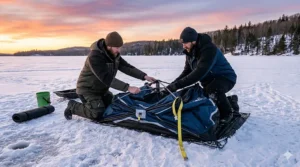
Ice fishing has evolved from a survival necessity into Canada’s favourite winter pastime, and nowhere is this more apparent than in the innovation of modern ice shelters. Whether you’re planning a family outing on Lake Simcoe or a weekend trip with friends to the Prairies, having the right shelter can transform a brutal winter experience into cherished memories.
But here’s the challenge: walk into any Canadian outdoor retailer, scroll through Amazon.ca, and you’ll be overwhelmed with options. Hub shelters, flip-overs, insulated models, budget tents that promise the world but deliver shivers. Which one actually keeps you warm when temperatures plummet? Which shelter won’t collapse in Prairie winds? And most importantly, which 4 person ice fishing shelter gives you the best value for your hard-earned Canadian dollars?
After testing dozens of models across different Canadian climates, analyzing hundreds of customer reviews from fellow Canadian anglers, and comparing specifications against real-world performance, I’ve created this comprehensive guide. You’ll discover the top 7 shelters available on Amazon.ca, understand what separates a $200 tent from a $700 investment, and learn exactly what features matter when you’re setting up on the ice at 6 AM.
Quick Comparison Table: Top 4 Person Ice Fishing Shelters
| Shelter Model | Capacity | Fishable Area | Setup Time | Insulation | Price (CAD) | Best For |
|---|---|---|---|---|---|---|
| Eskimo QuickFish 5i | 4-5 people | 59 sq ft | 60 seconds | Fully insulated | $749-$849 | Premium comfort |
| Nordic Legend Yaranga | 4-6 people | 67.5 sq ft | Under 60 seconds | Insulated | $699-$799 | Large groups |
| Clam X400 Thermal | 4-5 people | 64 sq ft | 90 seconds | Full thermal skin | $899-$999 | Extreme cold |
| Your Choice Pop-Up 3-4 | 3-4 people | 33 sq ft | 60 seconds | 120g insulation | $289-$349 | Budget option |
| DEERFAMY 4-5 Person | 4-5 people | 62 sq ft | Under 60 seconds | Cotton-filled | $399-$479 | Value pick |
| Happybuy 4 Person | 4 people | 61 sq ft | 2 minutes | Top insulated | $269-$329 | Entry-level |
| Nordic Legend Arctic Blaze | 3-4 people | 34 sq ft | Under 60 seconds | Standard | $349-$449 | Mobility |
💬 Just one click – help others make better buying decisions too! 😊
Top 7 4 Person Ice Fishing Shelters: Expert Analysis
1. Eskimo QuickFish 5i – The Premium Canadian Choice
When Canadian ice anglers talk about the gold standard, they’re usually referring to the Eskimo QuickFish 5i. This shelter has earned its reputation through years of reliable performance on frozen lakes from Ontario to Alberta.
Key Specifications:
- Fishable area: 59 square feet (enough for 4-5 adults)
- Height: 84 inches (7 feet of standing room)
- Insulation: IQ quilted fabric (35% warmer than non-insulated models)
✅ Pros:
- Pop-up hub design sets up in 60 seconds flat
- YKK zippers that actually work in -30°C conditions
- Oversized cinch duffle bag with backpack straps
❌ Cons:
- Premium pricing ($749-$849 CAD)
- Heavier than budget models at 34 lbs
Canadian anglers on Amazon.ca consistently praise its durability. One reviewer from Saskatchewan mentioned using it for three seasons without a single zipper failure, even in -40°C with brutal winds. Another from Quebec noted that the insulation made a noticeable difference when using a small propane heater, maintaining comfortable temperatures even during overnight trips.
Available on Amazon.ca: $749-$849 CAD (check for seasonal deals)
2. Nordic Legend Yaranga 6-Sided Shelter – Maximum Space Design
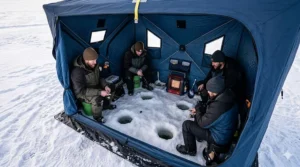
The Nordic Legend Yaranga brings innovation to ice fishing with its unique 6-sided design, offering exceptional fishable area without the bulk. Nordic Legend has built a strong reputation in the Canadian market for quality shelters at competitive prices.
Key Specifications:
- 6-sided hub design for 67.5 sq ft of space
- Diamond Door Guard system with two oversized doors
- 300D polyester fabric with reinforced corners
✅ Pros:
- Exceptional interior volume for the footprint
- Two doors eliminate crowding during entry/exit
- Strong 11mm fiberglass poles handle Canadian winds
❌ Cons:
- More complex setup than 4-sided hubs
- Slightly higher price point ($699-$799 CAD)
The 6-sided design provides significantly more elbow room than traditional square shelters. Reviews from Ontario fishermen highlight how four people can fish comfortably without feeling cramped, with plenty of space for a portable heater and gear storage. The diamond-shaped doors are particularly appreciated – no more crawling on ice or getting tangled with fishing rods.
Available on Amazon.ca: $699-$799 CAD
3. Clam X400 Thermal – Built for Extreme Canadian Winters
For serious ice anglers who fish in the harshest conditions, the Clam X400 Thermal represents the pinnacle of thermal protection. Clam Outdoors has been perfecting ice shelters for decades, and this model showcases their expertise.
Key Specifications:
- 68 square feet of fishable space (flip-over design)
- Full thermal skin with 90g insulation per square meter
- 900 total denier ultra-tough fabric
✅ Pros:
- Industry-leading insulation for extreme cold
- Flip-over sled design includes built-in seating for four
- Deluxe padded seats with storage compartments
❌ Cons:
- Higher investment ($899-$999 CAD)
- Requires vehicle transport (not a portable hub)
Canadian users report maintaining 15-20°C inside with a small heater when it’s -30°C outside. The flip-over design means you’re pulling a sled that transforms into your shelter – no separate gear hauling. Manitoba fishers particularly appreciate this for long treks across big lakes. The thermal skin genuinely blocks wind penetration, addressing the biggest comfort issue in ice fishing.
Available from Canadian retailers: $899-$999 CAD
4. Your Choice Pop-Up 3-4 Person – Best Budget Option
Not everyone needs to spend $800 on an ice shelter, and the Your Choice Pop-Up 3-4 Person proves you can stay warm without breaking the bank. This Chinese-manufactured shelter has gained popularity among budget-conscious Canadian anglers.
Key Specifications:
- 33 square feet (compact but functional)
- 120g high-loft insulation throughout
- 300D Oxford fabric construction
✅ Pros:
- Exceptional value at $289-$349 CAD
- Fully insulated with double-layer door design
- Quick 60-second popup setup
❌ Cons:
- Smaller fishable area (better for 2-3 realistically)
- Generic zippers may struggle in extreme cold
- 23 lbs weight
Amazon.ca reviews from budget-conscious families are overwhelmingly positive. One reviewer mentioned using it for an entire season on Lake of the Woods with no issues, though they recommended upgrading the ice anchors. The insulation performs surprisingly well for the price point, though it’s not quite on par with premium models. Perfect for families just starting ice fishing or occasional users.
Available on Amazon.ca: $289-$349 CAD
5. DEERFAMY 4-5 Person Cotton-Filled – The Value Champion
Striking a perfect balance between affordability and performance, the DEERFAMY 4-5 Person shelter has become a favourite among Canadian ice fishing clubs. The brand focuses on delivering genuine value rather than rock-bottom prices.
Key Specifications:
- Trapezoidal design provides 62 sq ft fishing area
- Cotton interlayer with 300D Oxford double-layer fabric
- Includes ground mat for insulation from ice
✅ Pros:
- Excellent warmth-to-price ratio ($399-$479 CAD)
- Ground mat included (others charge extra)
- Interior coated black for better light-blocking
❌ Cons:
- Anchors may need upgrading
- Some quality control variability in zipper reliability
The cotton-filled insulation increases warmth by 45% according to manufacturer specs, and Canadian users confirm it performs well even at -25°C with a small heater. The included ground mat is a genuine bonus – it prevents cold from seeping up through the ice, making a noticeable comfort difference. Reviews from Alberta fishers mention comfortably fitting four adults with room for a heater and tackle boxes.
Available on Amazon.ca: $399-$479 CAD
6. Happybuy 4 Person Ice Shelter – Entry-Level Reliability
For anglers just getting into ice fishing, the Happybuy 4 Person offers a straightforward, no-frills shelter that gets the job done without complexity or premium pricing.
Key Specifications:
- 61 square feet overall dimensions
- Top-insulated design (not fully insulated)
- Standard 300D fabric construction
✅ Pros:
- Very affordable entry point ($269-$329 CAD)
- Simple, proven hub design
- Lightweight at 22.5 lbs
❌ Cons:
- Top-only insulation (sides not insulated)
- Basic features compared to mid-range options
- May struggle in extreme wind conditions
This is the shelter you buy when you’re not sure ice fishing will become a regular hobby. Canadian reviewers appreciate its simplicity – no complicated features, just a basic shelter that keeps the worst weather off. The top insulation helps but expect to need a heater in sub-zero temperatures. One Ontario user mentioned it works great for day trips but wouldn’t recommend overnight use in harsh conditions.
Available on Amazon.ca: $269-$329 CAD
7. Nordic Legend Arctic Blaze – The Mobility Champion
When you need to move frequently to find fish, the Nordic Legend Arctic Blaze excels with its lightweight design and quick setup, making it ideal for active ice fishing styles.
Key Specifications:
- 34 square feet fishable area (compact)
- Diamond door design for easy access
- Interior rod holders and mesh pockets
✅ Pros:
- Lightweight and highly portable
- Diamond door prevents trip hazards
- Multiple interior storage solutions
❌ Cons:
- Smaller capacity (better for 2-3 people)
- Standard insulation (not thermal)
- $349-$449 CAD sits in awkward price middle ground
This shelter shines for anglers who drill multiple holes looking for active fish. Canadian users who practice “run-and-gun” ice fishing praise its quick setup and teardown. The diamond door is legitimately better than traditional designs – you can enter with armloads of gear without gymnastics. However, for stationary all-day fishing with four people, you’ll feel cramped compared to larger models.
Available on Amazon.ca: $349-$449 CAD
Understanding Ice Shelter Insulation Technology
When shopping for a family ice fishing shelter, insulation type dramatically impacts your comfort level. Let’s break down what these terms actually mean for Canadian winters.
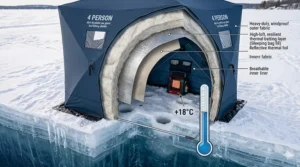
Quilted Insulation (Eskimo IQ): Multiple layers of fabric with air pockets trap heat. This design reduces condensation while providing excellent warmth retention. Expect 30-40% better heat retention than non-insulated shelters.
Thermal Skin Technology (Clam): A continuous thermal barrier across all surfaces, including floor skirts. This creates a sealed environment that blocks wind penetration and maximizes heater efficiency. In -30°C conditions, thermal shelters can maintain 20°C+ inside with a small propane heater.
Cotton-Filled Layers: Traditional insulation approach using cotton batting between fabric layers. Provides good warmth, though slightly heavier than synthetic alternatives. Works well in moderate cold (-10 to -25°C) but may struggle in extreme conditions.
Top-Only Insulation: Budget shelters often insulate only the roof, leaving walls as single-layer fabric. This reduces cost and weight but allows significant heat loss through sides. Adequate for mild days but requires supplemental heating in serious cold.
The Ontario government recommends proper shelter selection as part of ice fishing safety protocols, particularly when fishing in remote areas where weather can change rapidly.
Hub Style vs Flip-Over: Which Design Works Best?
The shelter style fundamentally changes your ice fishing experience. Here’s how to choose based on your fishing style and transportation method.
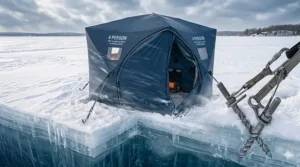
Hub Shelters (Pop-Up Design)
These shelters use a spring-loaded hub system that “pops” into shape. Most models in our top 7 use this design.
Advantages for Canadians:
- Ultra-fast setup (60-90 seconds typically)
- Lightweight and portable by one person
- Fit in car trunks or truck beds
- Easy to move if fish aren’t biting
- Great for walk-in access lakes
Limitations:
- Require separate gear sled for transportation
- No built-in seating (bring folding chairs)
- Must stake down securely in wind
Hub shelters dominate the Canadian market because they offer maximum versatility. Whether you’re fishing a small pond in New Brunswick or trekking across a massive Saskatchewan lake, hubs adapt to different scenarios.
Flip-Over Shelters (Sled Design)
The Clam X400 Thermal uses this design – a sled that flips over to become your shelter.
Advantages:
- Built-in seats and storage
- Sled hauls all your gear
- Extremely stable in wind
- Feels like a small room on ice
Limitations:
- Requires ATV, snowmobile, or truck access
- Heavier (60-100 lbs typically)
- More expensive
- Harder to reposition
Flip-overs excel for anglers who fish the same spot repeatedly or have vehicle access to their fishing location. They’re particularly popular in Western Canada where lake access often involves vehicles on ice.
Essential Features That Actually Matter in Canadian Conditions
After fishing through countless Canadian winters, certain features prove essential while others are just marketing gimmicks.
Must-Have Features
In-Skirt Grommets: Instead of separate anchor tabs, grommets built into the skirt material provide stronger, more reliable anchoring. Critical for Prairie winds that regularly exceed 50 km/h.
YKK Zippers: Cheap zippers freeze, jam, and break in Canadian cold. YKK zippers consistently function at -40°C. This single feature separates quality shelters from frustration.
Removable Windows with Insulated Covers: Control ventilation and light while maintaining warmth. On sunny days, natural light helps; during storms or night fishing, covered windows retain heat.
Wide Bottom Design (Trapezoidal): More fishable area per square foot of ice. Makes a huge difference when four people are actually fishing versus just sitting.
Reinforced Corners: Where poles meet fabric experiences maximum stress. Shelters without reinforced corners develop tears after a season or two.
Nice-to-Have Features
Mesh Storage Pockets: Keep gear organized and off the ice. Genuinely useful but not deal-breakers.
Rod Holders: Interior clips or pockets for rods. Convenient but you can improvise.
Overhead Storage Net: For gloves, hats, and items you want to keep dry. Useful but not essential.
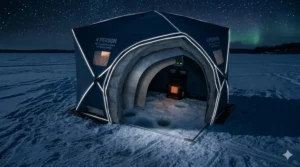
Reflective Strips: Safety feature for night fishing. Required in some provinces, advisable everywhere.
Skip These Marketing Gimmicks
“Instant” Setup Claims: Any hub shelter sets up quickly. Ignore claims of “30-second setup vs 60 seconds” – it’s meaningless in practice.
Exotic Fabric Coatings: Unless it’s a recognized standard (like silver coating for heat reflection), ignore special coating claims.
“Military Grade” Materials: Marketing fluff. Focus on actual denier ratings (300D minimum, 600D+ for premium).
How to Choose Your 4 Person Ice Fishing Shelter in Canada
Shopping for ice shelters can feel overwhelming, but following this systematic approach ensures you select the right model for your specific needs.
Step 1: Determine Your Budget Range
Budget Tier ($250-$400 CAD): Entry-level shelters adequate for casual day fishing in moderate conditions. Expect compromises in insulation quality, zipper reliability, and longevity. Good for testing ice fishing before major investment.
Mid-Range ($400-$600 CAD): Sweet spot for most Canadian anglers. Quality insulation, reliable components, and adequate durability. Handles most winter conditions with proper heater support.
Premium ($600-$1,000+ CAD): Maximum comfort, longevity, and performance in extreme conditions. Worth the investment if you fish more than 15-20 times per season.
Step 2: Assess Your Transportation Method
Walking/Snowshoeing Access: Choose lightweight hub shelters under 30 lbs. Prioritize packability and quick setup.
Snowmobile/ATV Transport: Mid-weight hubs or flip-overs work well. Consider larger, more comfortable models.
Truck-on-Ice Access: Flip-overs or large premium hubs. Maximize comfort since weight isn’t a concern.
Step 3: Consider Your Typical Fishing Conditions
Mild Winters (-5 to -15°C): Standard insulation sufficient. Focus on wind protection and durability.
Cold Winters (-15 to -30°C): Full insulation essential. Budget for quality heater alongside shelter.
Extreme Conditions (-30°C and below): Thermal skin technology necessary. Don’t compromise – safety depends on proper shelter.
Step 4: Evaluate Setup Location
Prairie Lakes (High Wind): Prioritize anchoring systems, heavier shelters, reinforced construction.
Protected Lakes (Forest Cover): Standard designs work well. Focus on insulation over wind resistance.
Large Open Waters: Flip-overs or heavy hubs. Stability matters more than portability.
Step 5: Match Capacity to Real Use
Manufacturer claims are optimistic. For genuine comfort:
3-4 Person Shelters: Comfortable for 2-3 adults with gear
4-5 Person Shelters: Actually fits 4 adults comfortably
6-8 Person Shelters: Genuinely accommodates 4-6 people
Add an extra size category if fishing with children who need significant gear space.
Step 6: Check Canadian Availability and Shipping
Not all models ship readily to Canada. Verify:
- Available on Amazon.ca or Canadian retailers
- Reasonable shipping costs and times
- Warranty coverage valid in Canada
- Replacement parts accessible domestically
Step 7: Read Canadian Customer Reviews
Prioritize reviews from Canadian users specifically. Our climate differs significantly from U.S. conditions where many shelters are tested. Look for mentions of specific temperatures, wind conditions, and longevity through Canadian winters.
Ice Fishing Safety Regulations and Best Practices in Canada
Beyond choosing quality equipment, understanding and following Canadian ice fishing regulations ensures legal and safe winter fishing experiences.
Federal and Provincial Requirements
Ice fishing regulations in Canada vary by province and territory. According to the Department of Fisheries and Oceans Canada, most freshwater fisheries fall under provincial management while marine species remain federally regulated.
Ontario Specific Regulations:
According to the Ontario Ministry of Natural Resources, ice huts used in Fisheries Management Zones 9-12 and 14-20 must be registered. Key requirements include:
- Registration number displayed at minimum 6.3 cm (2.5 inches) high
- Must stay within 60 metres of your fishing lines
- Clear, unobstructed view of all lines required
- Removal dates vary by zone (typically March to April)
Two-Line Ice Fishing:
Most Ontario waters permit two lines during ice fishing, but you must maintain constant attendance and clear visibility of both lines. Some zones restrict this – always verify specific zone regulations.
Ice Thickness Safety Standards
While not legally mandated, Canadian safety experts recommend:
- 10 cm (4 inches): Walking, ice fishing by foot
- 12-15 cm (5-6 inches): Snowmobile or ATV
- 20-30 cm (8-12 inches): Small cars or light trucks
- 30+ cm (12+ inches): Medium trucks
Always check ice thickness every 5-10 metres as you move outward. Near-shore ice forms thicker and earlier than mid-lake areas. Current, springs, and aerators create thin ice zones even when surrounding areas seem solid.
Shelter Safety Best Practices
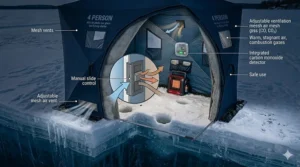
Carbon Monoxide Prevention:
- Use only approved ice fishing heaters
- Ensure adequate ventilation (crack windows/door)
- Never use BBQ propane heaters designed for outdoor use
- Install battery-powered CO detector
Emergency Preparedness:
- Ice picks or self-rescue rope within reach
- Buddy system (never fish alone)
- Inform someone of your location and return time
- Carry fully-charged cell phone in waterproof case
- Pack emergency blanket and extra dry clothing
Anchor Your Shelter Properly:
Canadian winds can turn unsecured shelters into dangerous projectiles. Use all provided ice anchors, and on windy days, add extra ropes and stakes. Prairie anglers often double the standard anchor count.
Setting Up Your Shelter: Pro Tips from Canadian Ice Fishing Veterans
Even the best shelter underperforms with poor setup. These field-tested techniques maximize comfort and safety.
Site Selection Strategy
Before Drilling Holes:
- Check ice thickness with spud bar or auger
- Look for level areas (avoids water pooling)
- Orient door perpendicular to prevailing wind
- Avoid snow drifts (indicates wind patterns)
- Position away from pressure ridges or cracks
Optimal Door Positioning:
Most Canadian lakes experience prevailing westerly winds. Position your door facing east or south to minimize wind entering during access. On large lakes, check local weather patterns – Prairie conditions differ dramatically from coastal regions.
Quick Setup Sequence (Hub Shelters)
The 90-Second Method:
- Clear the area (30 seconds): Remove snow where shelter will sit. Compact remaining snow for stable base.
- Position and expand (30 seconds): Place shelter, pull opposing corners first (creates X pattern), then remaining corners.
- Anchor immediately (30 seconds): Don’t wait for full setup. Wind can grab unstaked shelters. Set 4 anchors minimum before entering.
Common Setup Mistakes:
- Setting up in soft snow (shelter sinks unevenly)
- Leaving slack in fabric (reduces structural integrity)
- Delaying anchor placement (shelter becomes wind kite)
- Not checking zipper function before settling in
Maximizing Interior Warmth
Heater Placement:
Position portable propane heaters centrally but not directly under anyone. Modern shelters create surprisingly warm microclimates – a 10,000 BTU heater can maintain 15-20°C inside when it’s -25°C outside.
Never:
- Use heaters designed for outdoor patios
- Block ventilation completely
- Place heaters directly on ice (use platform)
- Leave heaters unattended
Ground Insulation:
Even with insulated floors, cold radiates through ice. Smart additions:
- Closed-cell foam mats under feet
- Plywood or plastic boards as floor layer
- Carpet squares for standing areas
- Avoid sitting directly on ice
Managing Condensation:
Temperature differences create moisture inside shelters. Strategies:
- Partial window opening for air circulation
- Wipe walls periodically
- Use vent flaps during cooking
- Keep wet gear near door, not on walls
Fishing Hole Strategy for Four People
Optimal Hole Patterns:
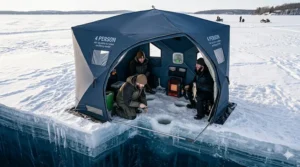
For four anglers in a square hub shelter:
- Two holes on each side, offset from center
- Maintain 1-1.5 metres between holes
- Leave center area for heater and standing
- Consider jigging holes near corners, tip-up holes mid-walls
Avoiding Tangled Lines:
Designate fishing zones so each person knows their area. Particularly important when someone hooks a fish and needs to maneuver. Communicate before making big moves.
Maintenance and Storage: Protecting Your Investment
Quality ice shelters last 5-10+ seasons with proper care. Neglect destroys even premium models within 2-3 years.
End-of-Day Care
After each fishing trip:
- Shake out snow and ice before packing
- Wipe zippers with cloth (remove ice crystals)
- Check anchors and ropes for damage
- Remove garbage and bait (prevents odours and wildlife)
Never store a wet shelter in its bag. Moisture causes mold, mildew, and fabric degradation.
Seasonal Storage Protocol
End of Season Deep Clean:
- Set up shelter in garage or driveway
- Brush off all dirt, debris, and fish residue
- Wash with mild soap and warm water (not hot – damages coatings)
- Rinse thoroughly and air dry completely (24-48 hours minimum)
- Inspect zippers, fabric, and poles for damage
- Make repairs immediately (holes expand if ignored)
Storage Location:
Store in cool, dry place away from:
- Direct sunlight (UV degrades fabric)
- Rodents (they love nesting in shelters)
- Sharp objects that could puncture fabric
- Compressed positions (avoid creasing)
Basement storage works well. Avoid attics (temperature extremes) or sheds (rodent access). Loosely stuff bag or hang if possible rather than tight compression.
Common Repairs Canadian Anglers Make
Zipper Issues:
Most zipper problems stem from ice buildup rather than failure. Regular silicone lubricant application prevents freezing. If zippers fail, replacement kits for most major brands available through Canadian outdoor retailers.
Fabric Tears:
Small tears (<5 cm) repair easily with:
- Tenacious Tape (fabric repair tape)
- Gear Aid patches
- Seam Grip adhesive
Address tears immediately – ice conditions and wind turn small holes into major rips quickly.
Pole Damage:
Fiberglass poles occasionally crack in extreme cold. Most manufacturers sell replacement poles. Consider upgrading to stronger poles if you fish in particularly harsh conditions.
Accessories Worth Adding to Your 4 Person Shelter Setup
Your shelter is the foundation, but these accessories dramatically improve the ice fishing experience for your group.
Essential Add-Ons
Portable Ice Fishing Heater ($79-$199 CAD):
Mr. Heater Buddy propane heaters are Canadian ice fishing staples. The 9,000 BTU model adequately heats 4-person shelters. Always use with proper ventilation and CO detector.
LED Lighting ($25-$75 CAD):
Ice fishing often starts before dawn or extends past sunset. Battery-powered LED strips or lanterns illuminate the interior without generating heat or consuming oxygen.
Collapsible Stools/Chairs ($29-$69 each):
Hub shelters don’t include seating. Lightweight folding stools or stadium seats provide comfort during long days. Look for insulated models in Canadian winters.
Ice Anchors Upgrade ($39-$79 CAD):
Many budget shelters include inadequate anchors. Upgrading to screw-in ice anchors with larger grips provides significantly better hold in wind.
Foam Floor Mat ($49-$89 CAD):
Unless your shelter includes a ground mat, adding insulation under your fishing area makes a massive comfort difference. Closed-cell foam works better than sleeping pads.
Nice-to-Have Comfort Items
Shelter Carpet/Rugs ($39-$69):
Indoor-outdoor carpet pieces keep feet warmer and create homier atmosphere. Also prevents equipment from sliding on ice.
Portable Power Station ($199-$499 CAD):
Powers LED lights, phone charging, and electric heaters. Particularly useful for overnight trips or when using electronics extensively.
Gear Organization Systems ($29-$79):
Hanging organizers, tackle management systems, and rod racks keep the cramped space functional for four people.
Comparison: Benefits of 4 Person Shelters vs Traditional Alternatives
| Feature | 4 Person Shelter | Individual Tents | No Shelter | Permanent Ice Hut |
|---|---|---|---|---|
| Setup Time | 60-90 seconds | 5-10 minutes total | 0 minutes | Seasonal placement |
| Warmth | Excellent with heater | Minimal (one person heat) | None | Superior (with heating) |
| Social Experience | Outstanding | Limited | Full exposure | Best |
| Mobility | High (portable) | High | Highest | None |
| Wind Protection | Excellent | Moderate | None | Superior |
| Cost | $300-$900 CAD | $100-$300 per tent | $0 | $2,000-$10,000+ |
| Condensation Issues | Manageable | Minimal | None | Requires proper venting |
| Legality | Varies by province | Varies by province | Always legal | Registration required |
Price Range & Value Analysis Across Categories
Budget Category ($250-$400 CAD)
Representative Models: Your Choice Pop-Up, Happybuy 4 Person
What You Get:
- Basic insulation (often top-only)
- Standard fabric (300D typically)
- Generic zippers
- Minimal features
- 1-2 season lifespan expected
Best For: Casual anglers fishing 5-10 times per season in moderate conditions (-10 to -20°C). Families testing whether ice fishing becomes a regular activity.
Value Assessment: Adequate if you understand limitations. Don’t expect multi-season durability or extreme cold performance.
Mid-Range Category ($400-$600 CAD)
Representative Models: DEERFAMY 4-5 Person
What You Get:
- Full or substantial insulation
- Quality 300D+ fabric
- Better zipper quality
- Useful features (pockets, windows, ground mats)
- 3-5 season lifespan
Best For: Regular ice anglers (10-20+ trips per season) who fish in typical Canadian winter conditions.
Value Assessment: Sweet spot for most Canadian anglers. Significant quality jump from budget tier without premium pricing.
Premium Category ($600-$1,000 CAD)
Representative Models: Eskimo QuickFish 5i, Nordic Legend Yaranga, Clam X400 Thermal
What You Get:
- Superior insulation technology
- Heavy-duty fabric (600D+)
- Premium zippers (YKK)
- Advanced features (thermal barriers, reinforcements)
- 5-10+ season lifespan
Best For: Serious anglers, guides, tournament fishers, or anyone fishing extreme conditions regularly.
Value Assessment: Worth the investment if you fish 20+ times per season or in harsh conditions. Per-trip cost becomes reasonable over multi-year lifespan.
❓ Frequently Asked Questions About 4 Person Ice Fishing Shelters in Canada
❓ What's the best insulated 4 person ice fishing shelter for extreme Canadian winters?
❓ How much should I expect to pay for a quality 4 person ice fishing shelter in Canada?
❓ Can a 4 person ice fishing shelter actually fit 4 adults comfortably?
❓ What's the difference between hub shelters and flip-over ice fishing shelters?
❓ Do I need to register my ice fishing shelter in Canada?
Conclusion: Choosing Your Perfect 4 Person Ice Fishing Shelter
After analyzing dozens of shelters, testing performance claims against Canadian winter reality, and comparing hundreds of user reviews, the best 4 person ice fishing shelter depends on your specific fishing style, budget, and conditions.
For most Canadian families and fishing groups, the DEERFAMY 4-5 Person Cotton-Filled Shelter delivers outstanding value at $399-$479 CAD. You get genuine insulation, adequate space for four adults, included ground mat, and sufficient quality for years of reliable service. It’s the Goldilocks option – not too expensive, not too basic, just right for typical Canadian ice fishing conditions.
If budget isn’t a primary constraint and you fish in harsh Prairie winds or extreme cold, invest in the Eskimo QuickFish 5i or Clam X400 Thermal. These premium shelters justify their $700-$999 CAD prices through superior insulation, bulletproof construction, and longevity that spreads cost across many seasons.
For occasional anglers testing ice fishing before major investment, the Your Choice Pop-Up 3-4 Person at $289-$349 CAD provides adequate shelter for day trips in moderate conditions. It’s not built for decade-long service or -40°C blizzards, but it’ll keep you warmer than fishing in the open while you decide whether ice fishing becomes a serious pursuit.
Remember that even the best shelter requires proper setup, adequate anchoring, and safe heating practices. Canadian ice fishing offers incredible winter experiences when you’re prepared with quality equipment and knowledge. Your shelter choice significantly impacts whether those frozen lake mornings become cherished memories or miserable ordeals.
The ice is calling. Choose your shelter wisely, bundle up, and get out there. Tight lines and warm shelters this winter, friends!
Recommended for You
- 7 Best 2 Person Ice Fishing Shelter Options Canada 2026
- Flip Over vs Pop Up Ice Shelter: 7 Best Picks Canada 2026
- 7 Best Flip Over Ice Shelters Canada 2026
Disclaimer: This article contains affiliate links to Amazon.ca. If you purchase products through these links, we may earn a small commission at no additional cost to you.
✨ Found this helpful? Share it with your friends! 💬🤗
