
In This Article
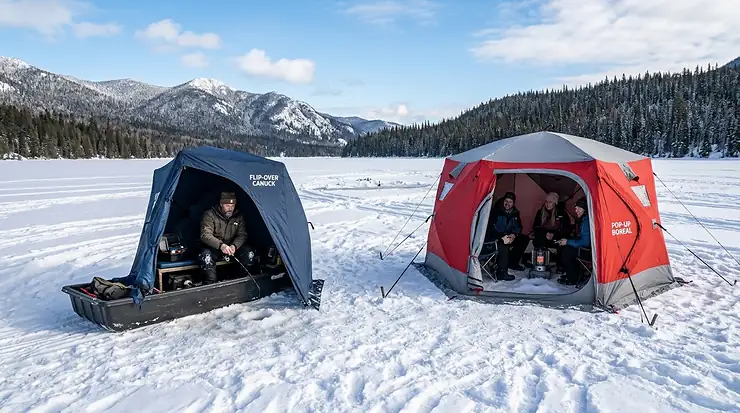
Standing on a frozen lake at 6 AM with wind cutting through your jacket makes you appreciate one thing: a quality shelter. The debate between flip over vs pop up ice shelter has divided Canadian anglers for years, and honestly, there’s no universal winner. Your perfect choice depends on how you fish, where you fish, and whether you’re dragging gear across Lake Simcoe or setting up on a backcountry pond in Alberta.
I’ve spent enough winters testing both styles to tell you this—flip overs excel at mobility while pop ups dominate when you need serious space. The real question isn’t which shelter type is best in some abstract sense; it’s which one matches your fishing style. A tournament angler drilling 30 holes across two kilometres needs something completely different than a family group camping on the ice for a weekend. Throughout this guide, we’ll break down the flip over vs pop up ice shelter comparison with real Canadian products, actual pricing in CAD, and practical advice you can use this season.
Canadian ice fishing represents a $440 million industry with roughly 2.3 million participants annually, according to comprehensive ice fishing data. Whether you’re chasing walleye in Ontario’s Bay of Quinte or targeting lake trout in the Northwest Territories, your shelter choice dramatically impacts your success and comfort on the ice.
Quick Comparison Table
| Feature | Flip Over Shelters | Pop Up Shelters |
|---|---|---|
| Setup Time | 30-60 seconds | 2-5 minutes |
| Mobility | Excellent (pulls like sled) | Moderate (separate sled needed) |
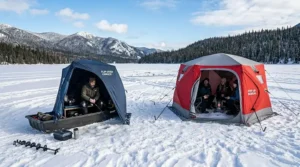
| Interior Space | Limited (24-68 sq ft) | Spacious (40-120 sq ft) |
| Seating | Built-in bench seats | Requires separate chairs |
| Price Range (CAD) | $379-$1,649 | $149-$849 |
| Best For | Run-and-gun fishing | Base camp fishing |
| Weight | 45-120 lbs | 15-65 lbs |
| Wind Resistance | Superior (low profile) | Good (requires proper anchoring) |
💬 Just one click – help others make better buying decisions too! 😊
✨ Don’t Miss These Exclusive Deals!
🔍 Take your ice fishing to the next level with these carefully selected products available in Canada. Click on any highlighted item to check current pricing and availability on Amazon.ca. These tools will help you create authentic winter fishing memories your family will love!
Top 7 Ice Shelters: Expert Analysis for Canadian Anglers
1. Eskimo Outbreak 450XD Insulated Pop Up Shelter
If you’re searching for a pop up ice shelter that balances space and portability, the Eskimo Outbreak 450XD delivers exactly that compromise. This 4-5 person shelter provides 75 square feet of fishable area—enough for a small group without feeling like you’re managing a circus tent on windy days.
The StormShield insulated fabric uses three-layer bonded construction with 80 grams of insulation, which genuinely makes a difference when you’re fishing in -25°C conditions. Canadian anglers particularly appreciate the no-trip door design that zips completely to ice level—no more catching your boot on door frames while carrying gear. The optimized hub placement condenses pack-down length to just 58 inches, fitting perfectly into standard truck beds and tow sleds.
Price Range: $749-$799 CAD
Key Specs: 75 sq ft fishable area, 4-5 person capacity, insulated
Customer Feedback: Canadian buyers consistently praise the heat retention and sturdy construction in prairie winds, though some mention the carry bag zipper could be more robust.
✅ Pros:
- Excellent insulation for Canadian winters
- No-trip door system
- Compact pack-down fits standard vehicles
❌ Cons:
- Carry bag durability concerns
- Requires separate seating
2. Otter XT Pro X-Over Shelter Series
This flip over ice shelter represents serious engineering for anglers who refuse to compromise. The X-Over design combines flip shelter mobility with expanded hub-style space—you literally get the best of both worlds. Otter’s thermal skin technology creates a legitimate barrier against wind and cold that budget shelters simply can’t match.
What sets the Otter XT Pro apart is the adjustable seating system that moves front-to-back and left-to-right, accommodating different body sizes and fishing positions. The sled base is constructed from heavy-duty materials that handle being dragged across rough ice and pressure ridges that would destroy cheaper models. Canadian customers fishing Lake of the Woods and Great Slave Lake report this shelter surviving conditions that sent other anglers packing.
Price Range: $799-$979 CAD
Key Specs: 2 person, thermal insulated, crossover design
Customer Feedback: Ontario and Manitoba anglers highlight exceptional durability and wind resistance, though the weight (around 100 lbs) requires a snowmobile for long hauls.
✅ Pros:
- Crossover design maximizes space
- Adjustable seating system
- Commercial-grade construction
❌ Cons:
- Heavy (difficult to move by hand)
- Premium pricing
3. VEVOR Portable Pop Up Ice Shelter 6-8 Person
Budget-conscious anglers shouldn’t automatically assume cheap means inadequate. The VEVOR 6-8 Person pop up shelter offers 70 square feet of fishable area at a fraction of premium brand pricing, making it accessible for families or occasional anglers testing the ice fishing waters.
Constructed from 300D Oxford fabric with three-layer PU coating, this shelter provides decent wind and water resistance for the price point. The pop-up hub design sets up quickly, and the included 12 ice anchors plus 6 wind ropes ensure stability even in Saskatchewan’s notorious wind. While it’s not insulated, pairing it with a portable heater creates a comfortable fishing environment for weekend warriors.
Price Range: $219-$289 CAD
Key Specs: 70 sq ft, 6-8 person, non-insulated
Customer Feedback: Canadian buyers appreciate the value proposition, though some report seam leakage during heavy snow and recommend seam sealing before first use.
✅ Pros:
- Extremely affordable
- Large capacity for groups
- Quick pop-up setup
❌ Cons:
- Non-insulated (requires external heat)
- Seam durability concerns
4. Clam X400 Thermal XT Flip Over Shelter
For families or groups who want flip shelter mobility without sacrificing space, the Clam X400 Thermal XT is genuinely the largest flip-over on the market. With 68 square feet of fishable space, this 4-person shelter feels more like a base camp than a portable unit—until you realize it actually flips down and pulls behind a snowmobile or ATV.
The full thermal skin with Clam’s proprietary insulation locks in heat remarkably well, reducing propane consumption and eliminating the constant drip of condensation that plagues single-layer shelters. The rugged tub construction uses thicker materials than standard models, essential for Canadian conditions where ice isn’t always smooth. Two light sticks, battery bracket, and deluxe padded seats come included—features you’d typically purchase separately.
Price Range: $849-$999 CAD (varies by retailer)
Key Specs: 68 sq ft, 4 person, thermal insulated, flip-over
Customer Feedback: Alberta and Quebec anglers love the space and warmth, though the 120 lb weight makes it strictly a machine-tow setup.
✅ Pros:
- Largest flip-over available
- Complete thermal insulation
- Included accessories
❌ Cons:
- Very heavy (120 lbs)
- Requires 6.5′ truck bed
5. Eskimo FatFish 949iG Pop Up Hub Shelter
The FatFish series revolutionized pop up ice shelter design by introducing wide-bottom geometry that dramatically increases fishable area without expanding the packed footprint. This 3-4 person shelter provides 61 square feet of actual usable space—the flared bottom means you’re not constantly bumping into shelter walls like traditional straight-sided designs.
The IQ (Insulated Quilted) fabric bundles two layers of IceTight material with insulation between them, creating legitimate thermal protection. All-metal ball-and-socket hubs with oversized fiberglass poles pop open in seconds and create a rock-solid frame that handles wind without the nervous flapping and flexing of cheaper shelters. Canadian anglers particularly value how everything folds into an oversized cinch duffle bag with backpack straps for hands-free transport.
Price Range: $549-$649 CAD
Key Specs: 61 sq ft, 3-4 person, insulated, wide-bottom design
Customer Feedback: British Columbia and Northwest Territories users praise the innovative space design, though some mention difficulty getting it back into the carry bag after use.
✅ Pros:
- Wide-bottom maximizes space
- Quality insulation
- All-metal hub system
❌ Cons:
- Challenging to repack
- Requires separate sled
6. Clam Kenai XT Thermal Flip Shelter Series
The entry-level flip over market has serious competition, but the Clam Kenai XT Thermal consistently earns recommendations for anglers buying their first serious ice shelter. Available in 1-angler and 2-angler configurations, these shelters deliver thermal protection and flip-over convenience without the premium pricing of X-series models.
The thermal skin isn’t as thick as flagship models, but it’s adequate for most Canadian winter conditions when paired with a portable heater. The sled base uses Clam’s reliable RSPX pole system that flips up and locks into position smoothly—even with gloves on during those frigid early-morning setups. At under 60 lbs for the single-person model, it’s genuinely hand-towable for short distances, though most anglers still use sleds for efficiency.
Price Range: $379-$499 CAD
Key Specs: 1-2 person options, thermal insulated, flip-over
Customer Feedback: Ontario and Saskatchewan beginners appreciate the approachable price and reliable performance, noting it’s a shelter you won’t quickly outgrow.
✅ Pros:
- Excellent entry-level pricing
- Legitimate thermal protection
- Hand-towable weight
❌ Cons:
- Limited space for gear
- Basic features compared to premium models
7. Otter XTR X-Over Shelter Series
The Otter XTR occupies the sweet spot between the budget XT and premium XT Pro lines—offering crossover design benefits without the flagship price tag. This 2-person shelter uses hub technology to expand interior space beyond traditional flip-over dimensions while maintaining the mobility advantages of a sled-based system.
The thermal skin provides solid insulation for extended fishing sessions, and the oversized windows with coverings let you control light and visibility based on conditions. Canadian regulations in many provinces require visibility markings on unattended shelters; these large windows make it easy to monitor tip-ups and set lines without stepping outside. The quick-flip setup takes practice but becomes second nature after a few uses.
Price Range: $949-$1,199 CAD
Key Specs: 2 person, crossover design, thermal insulated
Customer Feedback: Manitoba and Yukon anglers highlight the balance of features and price, though some wish for the fully adjustable seating of the XT Pro.
✅ Pros:
- Crossover space advantage
- Mid-tier pricing
- Quality thermal protection
❌ Cons:
- Seating less refined than XT Pro
- Still relatively heavy
Understanding Flip Over vs Pop Up Ice Shelter Fundamentals
The choice between flip over vs pop up ice shelter fundamentally comes down to fishing style, not shelter superiority. Both designs have evolved significantly over the past decade, incorporating advanced materials and thoughtful features that address real problems Canadian anglers face on the ice.
Flip Shelter Advantages: Built for Movement
Flip-over shelters excel in scenarios requiring frequent relocation. The integrated sled base means you’re always ready to move—no need to pack down a hub shelter, load it onto a separate sled, and drag two pieces of equipment across the lake. Tournament walleye anglers and crappie hunters who might fish 15 different spots in a day almost universally choose flip-overs for this reason.
The built-in seating represents another significant advantage. While pop-up shelters require separate chairs that consume interior space and add weight to your gear list, flip-overs include bench seats as part of the sled structure. These seats often include storage compartments underneath for tackle, keeping frequently-used gear accessible without cluttering your fishing space.
Wind resistance deserves serious consideration in Canadian conditions where 40 km/h gusts aren’t unusual. The lower profile of flip-over shelters presents less surface area to wind, making them inherently more stable. I’ve fished through prairie wind storms that had pop-up shelters struggling with anchors while flip-overs remained rock solid.
Pop Up Shelter Benefits: Space and Versatility
When you establish a base camp for multi-day ice fishing, pop up ice shelters become the obvious choice. The additional interior volume accommodates more anglers comfortably, allows standing room for hooksets with longer rods, and provides space for cots during overnight trips. Some of the larger hub shelters like the Eskimo Outbreak 850XDP offer 120 square feet—enough space for a small group plus gear without feeling cramped.
The lighter weight of pop-up shelters matters tremendously for anglers hiking to backcountry lakes or fishing in areas where snowmobile use is restricted. A quality pop-up shelter might weigh 30-40 lbs compared to 80-100 lbs for an equivalent flip-over, making hand transport genuinely feasible. This weight advantage extends to vehicle storage as well—pop-ups pack down smaller and fit more easily in car trunks and SUV cargo areas.
Pop-up shelters also offer better height clearance. Most models provide 6-7 feet of standing height at center peak, allowing full standing posture while fishing. This might seem minor until you’ve spent eight hours hunched over in a low-profile flip shelter with back pain accumulating throughout the day.
Portability Comparison Ice Tents: The Real-World Test
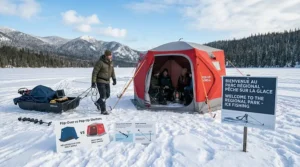
Theoretical portability and practical portability diverge significantly when you’re actually on the ice. A flip-over’s integrated sled design means you can hook it to a snowmobile, ATV, or even pull it by hand for short distances without any additional equipment. The shelter and transportation system are one unit.
Pop-up shelters require a separate sled for transport, which doubles your equipment footprint. However, this separation provides flexibility—you can leave the sled outside while using the shelter interior, providing more fishing space. For walk-in access, pop-ups clearly win on portability since you can carry a 35 lb shelter in a backpack while a flip-over requires dragging even for short distances.
According to ice fishing safety guidelines, Canadian anglers should always prioritize mobility equipment that doesn’t compromise safety. Both shelter types work well, but your transportation method and typical fishing locations should guide your decision.
Mobility vs Space Ice Shelter: Finding Your Balance
Every shelter purchase involves trade-offs between mobility and interior space. Understanding how these factors align with your fishing patterns prevents buyer’s remorse and ensures you’re actually using the shelter instead of leaving it in storage.
Run-and-Gun Fishing Scenarios
If your typical ice fishing day involves drilling dozens of holes across a large area while searching for active fish, mobility trumps space every time. Flip-over shelters streamline this approach by eliminating setup and takedown time between moves. You can flip the shelter down, drag it 200 metres to your next spot, flip it back up, and be fishing again in under two minutes.
This efficiency compounds over the course of a day. Moving 10 times with a flip-over might cost you 20 minutes total; the same relocations with a pop-up shelter could consume an hour or more when you factor in breakdown, packing, transport, and re-setup. That hour represents significant fishing time during short winter days.
Tournament anglers and guides who fish professionally almost exclusively use flip-overs for precisely this reason. The ability to stay ahead of moving fish or quickly relocate when conditions change can mean the difference between success and watching others catch fish you can see on your electronics.
Base Camp Fishing Approaches
Establishing a single location for extended periods shifts the priority toward interior comfort and space. A pop up ice shelter for 6-8 people accommodates families, groups of friends, or anglers planning overnight trips where the shelter functions as temporary housing.
The additional room allows multiple rod setups per angler, comfortable movement while landing fish, and space for heaters, cooking equipment, and other base camp amenities. Some serious ice camping enthusiasts even fit cots, allowing comfortable sleep during multi-day excursions on massive lakes like Lake Winnipeg or Great Slave Lake.
Storage space becomes crucial for these extended sessions. Pop-up shelters typically include multiple interior pockets, gear lofts, and hanging systems that keep equipment organized and accessible. This matters tremendously when you’re managing tackle for multiple species, different depth ranges, and changing conditions over several days.
The Crossover Solution
Manufacturers recognized the mobility-space dilemma and created crossover designs that genuinely deliver on both fronts. Models like the Otter X-Over series and Eskimo EVO combine flip-over bases with expandable hub-style tops, providing sled mobility with pop-up interior space.
These crossover shelters typically weigh more than pure flip-overs and cost more than comparable pop-ups, but for anglers who regularly fish both run-and-gun and base camp styles, the versatility justifies the investment. You’re essentially buying two shelter types in one unit.
Setup Speed Shelter Types: Time on the Ice Matters
Canadian winter days offer limited daylight, making efficient setup and takedown genuinely important. A shelter that costs you 20 minutes of fumbling with frozen poles during prime morning bite times affects your actual fishing success.
Flip-Over Setup: Seconds to Fishing
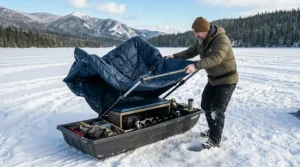
The mechanical simplicity of flip-over shelters translates to remarkably fast deployment. Park your snowmobile, unhook the tow rope, flip the shelter up into position, and you’re ready to drill holes. The entire process takes 30-60 seconds once you’re familiar with your specific model.
This speed advantage extends to takedown as well. When you’re cold, tired, or dealing with deteriorating weather, the ability to flip down and go in under a minute represents genuine comfort. There’s no wrestling with hub poles, no folding fabric into precise configurations, no stuffing everything into a carry bag.
The integrated design also eliminates the common frustration of missing components. Your shelter, sled, and seating are always together as one unit—you can’t forget poles, stakes, or tie-downs at home because they’re permanently attached or stored in dedicated compartments.
Pop-Up Setup: Practice Makes Perfect
Quality pop-up shelters using modern hub designs set up relatively quickly—typically 2-5 minutes once you understand the system. The process involves pulling the collapsed shelter from its bag, extending the hub frame until poles lock into position, securing the fabric to the frame, and anchoring everything to the ice.
The learning curve is steeper than flip-overs. Your first few setups might take 10-15 minutes while you figure out which poles extend in which sequence and how the locking mechanisms work. However, experienced users develop muscle memory and can have even large 8-person shelters operational in under five minutes.
Takedown presents the real challenge with pop-up shelters. Getting everything folded correctly and stuffed back into the carry bag often frustrates anglers, particularly when dealing with frozen, stiff fabric in -30°C conditions. Many Canadian users report simply leaving larger pop-ups set up for the entire season rather than dealing with repeated breakdown.
Storage Space Flip vs Pop: Seasonal Considerations
Off-season storage requirements differ significantly between shelter types. Flip-overs require substantial space due to the integrated sled base—typically 5-7 feet long and 3-4 feet wide even when collapsed. Garages, sheds, or dedicated storage areas work well, but apartment dwellers or those with limited space may struggle.
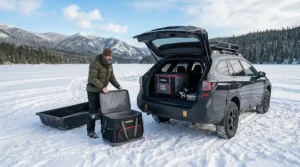
Pop-up shelters pack down to bags measuring roughly 4-6 feet long and 12-18 inches in diameter, making them much more storage-friendly for urban anglers. These bags fit in closets, under beds, or in vehicle trunks throughout the off-season. The compact storage represents a genuine advantage for anglers with space constraints.
However, some flip-over manufacturers now offer modular systems where you can remove the shelter portion from the sled base, addressing storage concerns while maintaining flip-over functionality on the ice. These hybrid approaches provide flexibility for different storage situations.
Essential Features Beyond Basic Shelter Types
While the flip over vs pop up ice shelter debate dominates discussions, several other features dramatically impact your actual fishing experience and long-term shelter satisfaction.
Insulation Technology and Heat Retention
Single-layer shelters provide wind protection but minimal thermal insulation. Heat from portable propane heaters escapes rapidly, requiring constant fuel consumption to maintain comfortable temperatures. Condensation forms heavily on single-layer fabric as warm interior air meets cold exterior surfaces, creating annoying drips that land on gear and clothing.
Multi-layer insulated shelters like thermal or quilted fabric systems trap air between fabric layers, genuinely reducing heat loss. Quality insulated shelters can maintain comfortable temperatures with smaller heaters using less fuel, important when you’re fishing remote locations where propane resupply isn’t possible.
Canadian manufacturers and retailers understand our climate demands better than US-focused brands. When evaluating insulation claims, look for specific temperature ratings and insulation weight specifications (measured in grams per square metre) rather than vague marketing terms like “cold weather protection.”
Window Configuration and Ventilation
Windows serve multiple purposes beyond letting in light. When ice fishing with tip-ups or set lines outside your shelter, windows provide visibility to monitor flags without constantly stepping into the cold. Large removable windows also improve ventilation, crucial when running propane heaters to prevent dangerous carbon monoxide buildup.
According to Ontario ice fishing regulations, all ice shelters using combustion heaters must maintain adequate ventilation to prevent asphyxiation hazards. This isn’t just government bureaucracy—carbon monoxide poisoning kills ice anglers every year, and proper window ventilation significantly reduces this risk.
Privacy concerns matter for some anglers, particularly during busy weekends on popular lakes when shelters cluster together. Shelters with both clear windows and blackout covers let you adjust privacy levels and light penetration based on conditions and personal preference.
Door Design and Access
Traditional shelter doors with bottom sills create tripping hazards, especially when moving quickly with armloads of gear or landing large fish. Modern “no-trip” or “zero-threshold” doors that zip completely to ice level eliminate this frustration, though they typically appear only on premium models.
Door placement affects interior layout. Single-door shelters force specific orientation, while dual-door designs provide flexibility for different fishing setups and allow easier movement for multiple anglers. Larger group shelters often include separate entry/exit doors to minimize cold air intrusion when people move in and out.
Zipper quality directly correlates with door reliability and longevity. YKK zippers represent the gold standard in outdoor gear, resisting freezing and providing smooth operation even at -40°C. Cheaper zippers often fail within a season or two, rendering an otherwise functional shelter unusable.
Canadian Ice Shelter Regulations and Safety Requirements
Provincial regulations governing ice shelters vary across Canada, but several common themes exist that all anglers should understand before purchasing or using any shelter type.
Shelter Marking and Identification
Most provinces require unattended ice shelters to display owner identification clearly on the exterior. According to Manitoba fishery regulations, this includes the owner’s full name or customer identification number in block letters at least 5 centimetres high.
Ontario requires ice hut registration in Fisheries Management Zones 9-12 and 14-20, with registration numbers displayed at least 6.3 centimetres high. Registration is free, and previously issued numbers remain valid indefinitely. These requirements exist primarily for safety and environmental tracking, not revenue generation.
Alberta mandates similar identification for shelters left unattended longer than 24 hours, with text at least 2.5 centimetres tall in contrasting colours. The regulations aim to facilitate contact if ice conditions deteriorate rapidly or if abandoned shelters require recovery.
Mandatory Removal Dates
Provincial governments establish shelter removal deadlines to prevent environmental damage and safety hazards as ice conditions deteriorate each spring. These dates vary by region based on typical thaw patterns and regional climate differences.
Ontario requires shelter removal on dates ranging from mid-March to late April depending on location. Southern waters generally require earlier removal than northern regions where ice persists longer into spring. According to recent Alberta fishing regulations, hard-sided shelters must be removed by March 15 in some zones and March 31 in others.
Temporary pop-up shelters that can be set up and removed the same day remain permissible even after permanent shelter removal deadlines pass in most provinces. This distinction matters for anglers wanting to continue fishing late-season ice when conditions remain safe but permanent shelter removal is mandated.
Failure to remove shelters by mandated dates results in fines and potential environmental charges if the shelter falls through melting ice. Recovery costs for sunken shelters can reach thousands of dollars when divers and heavy equipment are required.
Safety Equipment and Best Practices
Beyond regulatory requirements, safety considerations should influence your flip over vs pop up ice shelter choice. Mobility matters tremendously during emergency situations—a lighter, easily-moved pop-up might save your life if ice conditions deteriorate rapidly and you need to evacuate quickly.
Ice safety guidelines recommend carrying essential safety equipment regardless of shelter type: ice picks worn on your neck, throw ropes, ice cleats, flotation suits or PFDs, and spud bars for testing ice thickness. Shelters with bright colours improve visibility for rescue operations compared to camouflage or dark designs.
Carbon monoxide detectors are non-negotiable when using any combustion heating source inside shelters. Battery-powered detectors cost under $40 CAD and provide early warning before dangerous gas concentrations build up. Combined with proper ventilation, these devices prevent the majority of shelter-related fatalities.
Price Analysis: What You Actually Get for Your Money
Understanding price tiers helps match your budget to realistic expectations without overspending on features you don’t need or buying inadequate equipment that fails quickly.
Budget Range ($200-$400 CAD)
Entry-level pop-up shelters and basic flip-overs occupy this price range. Expect single-layer fabric without insulation, basic hub systems, minimal accessories, and construction that handles a few seasons of moderate use. Brands like VEVOR, THUNDERBAY, and bottom-tier Clam models compete here.
These shelters work fine for occasional anglers fishing a few weekends per season in relatively mild conditions. They’re also excellent choices for testing ice fishing before committing to premium equipment—if you discover you love the sport, upgrade later; if not, you haven’t lost significant money.
Durability concerns are legitimate in this price range. Zippers may fail, pole sections can crack in extreme cold, and fabric tears are more common. Budget an additional $50-100 for replacement parts or repairs over a typical 3-5 season lifespan.
Mid-Range ($400-$800 CAD)
This sweet spot provides the best value for regular ice anglers. Quality insulated fabric, reliable hub or flip mechanisms, included accessories, and construction designed for serious use appear at this level. Brands like Clam, mid-tier Otter, and standard Eskimo models dominate.
The jump from budget to mid-range represents significant quality improvement. Thermal insulation makes a genuine difference in comfort and heating costs. Better zippers resist freezing and operate smoothly. Pole systems use quality materials that handle abuse without breaking.
Most dedicated ice anglers who fish weekly throughout winter find this range optimal. You’re getting equipment that performs reliably in harsh Canadian conditions without paying premium prices for features mainly benefiting professional guides or tournament anglers.
Premium Range ($800-$1,700 CAD)
Top-tier models offer maximum durability, advanced insulation systems, refined features, and construction intended for commercial use or extreme enthusiasts. Otter X-Over series, Clam X-Series, and premium Eskimo models represent this category.
Features distinguishing premium shelters include adjustable seating systems, multiple heat source ports, reinforced fabric at high-wear points, lifetime warranties on frames, and attention to detail like interior gear pockets and electrical wiring channels. If you fish 40+ days per season or guide professionally, these features justify the cost.
For casual anglers, premium models represent overkill. The performance difference between a $500 shelter and a $1,500 shelter matters tremendously to guides fishing daily but means little to someone using it twice per month. Buy the shelter that matches your actual usage, not your aspirational fishing frequency.
Matching Shelter Type to Specific Fishing Scenarios
Different Canadian fishing situations demand different shelter approaches. Aligning your purchase with your actual fishing patterns prevents expensive mistakes.
Solo Angling and Minimalism
Single anglers prioritizing mobility often choose compact 1-person flip-overs or small pop-up shelters. Models like the Clam Scout XT Thermal or Otter XT 650 provide adequate shelter for one person while remaining hand-towable for reasonable distances.
The reduced weight and size make backcountry fishing genuinely possible. Hiking two kilometres to a remote lake with a 50 lb shelter on a sled is manageable; attempting the same with a 100 lb flip-over or massive pop-up becomes unrealistic quickly.
Storage simplicity also appeals to minimalist anglers. A compact shelter fits in apartments, condos, or shared garage spaces without consuming excessive room. This matters tremendously in urban areas where storage costs money or simply isn’t available.
Family and Group Fishing
When fishing with children, elderly relatives, or groups of friends, space and comfort outweigh mobility concerns. Large pop-up shelters accommodating 6-8 people let everyone fish together while staying warm and social. This shared experience often matters more than maximum fishing efficiency.
The additional room accommodates varying skill levels—beginners need space to move around and learn without feeling cramped, while experienced anglers can still fish effectively alongside them. Separate seating areas let some people take breaks, warm up, or prepare food without disrupting active fishing.
Large shelters also improve safety for groups. If someone gets cold, they can warm up inside while others continue fishing. If weather deteriorates rapidly, everyone can shelter together rather than splitting up or cramming into undersized accommodations.
Tournament and Competitive Fishing
Tournament anglers consistently choose mobility over space because competition rules often require frequent movement to locate and stay with actively feeding fish. Every minute spent on setup or takedown represents lost fishing time when you’re competing for prizes or professional standings.
Flip-over shelters dominate tournament use for this reason. The ability to move between spots in under two minutes while maintaining shelter capability throughout the day provides competitive advantages. Some tournament specialists fish from flip-overs without ever fully deploying them, using them primarily as wind blocks and gear sleds.
Lightweight equipment matters tremendously when you’re drilling 50+ holes per day and moving repeatedly. Tournament rigs often include ultra-compact flip-overs paired with minimal gear—efficiency and speed trump comfort when money is on the line.
Maintenance and Longevity: Protecting Your Investment
Quality shelters represent significant investments that can last a decade or more with proper care, or fail within seasons if neglected.
Seasonal Preparation and Storage
Before each season, inspect your shelter completely. Check all pole sections for cracks, test zippers throughout their full range, examine fabric for tears or UV damage, and verify that all included accessories remain present and functional. Address small problems immediately before they become major failures mid-season.
Proper storage during off-season prevents most damage. Store shelters in dry locations away from direct sunlight—UV exposure degrades fabric rapidly even when not in use. Ensure shelters are completely dry before storage to prevent mold and mildew growth that ruins fabric and creates health hazards.
For flip-over shelters, remove any debris from the sled base and inspect hyfax runners for wear. These plastic runners protect the sled bottom during transport; replacing worn runners costs $30-50 but prevents damage to the sled itself which could cost hundreds to repair.
Field Repairs and Emergency Fixes
Carry basic repair supplies whenever you’re on the ice: duct tape, spare zipper pulls, pole repair sleeves, and fabric patch material. Small tears in fabric repaired immediately with quality tape prevent enlargement; left unaddressed, they grow with each use until the shelter becomes unusable.
Pole sections that crack or split mid-season can often be repaired temporarily with aluminium splints and hose clamps available at any hardware store. This emergency repair lets you finish your fishing day and get the shelter home safely, though permanent replacement remains necessary.
Many manufacturers sell replacement parts directly or through dealers. When a zipper fails completely or pole sections break beyond repair, replacing individual components costs far less than buying a new shelter. Research parts availability before purchasing—shelters from major brands have readily available replacement parts while obscure imports may leave you unable to repair damage.
Fabric Care and Waterproofing
Ice shelter fabric endures harsh conditions: UV exposure, temperature extremes, abrasion against ice and snow, and repeated folding. Quality fabrics like 300D or 600D Oxford resist these challenges better than cheaper materials, but all benefit from proper care.
Wash shelters annually with mild soap and water to remove salt, dirt, and other contaminants that accelerate fabric degradation. Rinse thoroughly and air dry completely before storage. Never machine wash or dry shelters—the agitation and heat damage waterproof coatings and can distort fabric dimensions.
Waterproof coatings deteriorate over time. When you notice water soaking through fabric rather than beading on the surface, reapply waterproofing treatment designed for tent or outdoor gear fabric. Products like Nikwax or similar treatments restore water repellency and extend fabric life significantly.
❓ FAQ Section
❓ What is the main difference between flip over and pop up ice shelters?
❓ How much should I budget for a quality ice shelter in Canada?
❓ Do I need an insulated shelter for ice fishing in Canada?
❓ Are there size restrictions for ice shelters in Canadian provinces?
❓ Can I use a flip over shelter without a snowmobile?
Conclusion: Making Your Final Decision
The flip over vs pop up ice shelter debate doesn’t have a universal winner because Canadian ice fishing encompasses too many different scenarios and personal preferences. Your perfect shelter balances mobility needs against space requirements, fits your budget realistically, and matches your actual fishing frequency rather than optimistic plans.
For anglers who frequently relocate while searching for active fish—tournament competitors, guides, or run-and-gun enthusiasts—flip-over shelters provide unmatched efficiency. The integrated sled design, rapid deployment, and superior wind resistance justify the higher weight and premium pricing. Models like the Otter XT Pro X-Over or Clam X400 Thermal XT represent excellent choices for serious mobile fishing.
Conversely, anglers establishing base camps, fishing with families or groups, or prioritizing interior comfort should strongly consider pop-up shelters. The increased space, lighter weight, and easier transport for walk-in access outweigh the mobility limitations when you’re not moving frequently. Quality options like the Eskimo Outbreak 450XD or VEVOR 6-8 Person shelter deliver reliable performance without excessive cost.
Canadian conditions demand shelters built for genuine winter weather, not marginal three-season compromises. Prioritize insulation, quality zippers, and robust frame construction over cosmetic features or brand cachet. Research actual Canadian user reviews rather than relying on US-focused content—ice fishing in Minnesota differs from ice fishing in Saskatchewan or Northwest Territories.
Ultimately, the best shelter is the one you’ll actually use consistently throughout the season. An expensive premium model that’s too heavy to move or too complex to set up will sit in your garage while a simpler, more appropriate option gets you fishing. Match your purchase to your realistic fishing patterns, and you’ll enjoy winters on the ice for years to come.
Recommended for You
- 7 Best Flip Over Ice Shelters Canada 2026
- 7 Best Hub Style Ice Fishing Shelters Canada 2026
- Hub Style Ice Shelter vs Flip Over: 7 Best Picks Canada 2026
Disclaimer: This article contains affiliate links to Amazon.ca. If you purchase products through these links, we may earn a small commission at no additional cost to you.
✨ Found this helpful? Share it with your friends! 💬🤗
