
In This Article
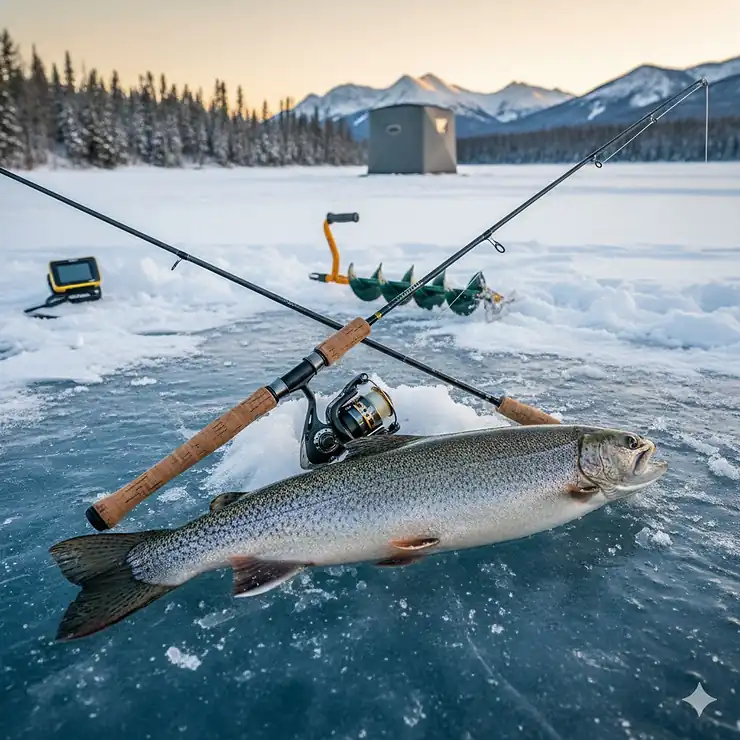
Picture this: you’re standing on frozen Lake Simcoe at dawn, your drill has just punched through 60 centimetres of ice, and somewhere 30 metres below lurks a trophy laker weighing 15 kilos. The difference between a bent rod and a story about “the one that got away” often comes down to one critical factor—your lake trout ice fishing rod.
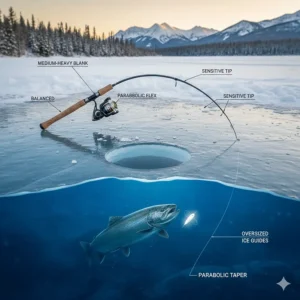
Lake trout (Salvelinus namaycush) aren’t your average panfish. These apex predators demand specialized equipment that can handle aggressive strikes at extreme depths whilst maintaining the sensitivity to detect their notoriously soft bites. After spending countless hours on Canadian lakes from Ontario to British Columbia and testing dozens of setups, I’ve learned that matching your rod to lake trout behaviour is absolutely essential.
Canadian anglers face unique challenges—deeper waters than most American counterparts, colder temperatures that can snap inferior blanks, and regulations that vary by province. Whether you’re targeting 40 inch giants in Great Slave Lake or exploring the depths of Georgian Bay, choosing the right deep water trout ice rod can transform your winter fishing game. This comprehensive guide examines the seven best options available on Amazon.ca in 2026, complete with specifications, prices in CAD, and real-world performance insights.
Quick Comparison Table: Top Lake Trout Ice Fishing Rods
| Rod Model | Length | Power | Price (CAD) | Best For | Rating |
|---|---|---|---|---|---|
| Aurora Laker Pro X | 48″ | Heavy | $39-49 | Trophy Lakers | 4.5/5 |
| 13 Fishing Widow Maker | 38″-45″ | MH-H | $62-125 | All-Around Performance | 4.8/5 |
| St. Croix Custom Ice | 36″-45″ | ML-XH | $200-350 | Premium Precision | 4.9/5 |
| Ugly Stik GX2 Ice | 30″-36″ | MH | $44-55 | Budget Durability | 4.3/5 |
| Frostbite Lunar Series | 32″-48″ | M-H | $150-220 | Canadian Extremes | 4.6/5 |
| Haat 45″ Extra-Heavy | 45″ | XH | $180-250 | Deep Giants | 4.7/5 |
| St. Croix Mojo Ice | 27″-40″ | ML-MH | $84-110 | Versatile Performance | 4.4/5 |
💬 Just one click – help others make better buying decisions too! 😊
Top 7 Lake Trout Ice Fishing Rods: Expert Analysis
1. Aurora Fishing Gear Laker Pro X — Best Budget Heavy-Duty Option
When you’re not ready to drop $200 CAD on an ice rod but refuse to compromise on lake trout capability, the Aurora Laker Pro X delivers exceptional value. This 48-inch heavyweight solid carbon spinning rod specifically targets big predatory fish, with medium-fast action that provides backbone for 3-ounce baits whilst maintaining sensitivity.
Key Specifications:
- 48″ solid carbon blank construction
- Medium-fast action designed for deep water
- Wire guides prevent ice buildup
- Rubberized non-slip grip
- Graphite Alps spinning reel seat
The solid carbon construction is deliberate—Aurora avoided hollow core builds because they fish negative temperatures where cheaper rods snap. Canadian buyers consistently praise its performance in -25°C conditions across Ontario and Manitoba lakes. The 48-inch length helps manage big head shakes near the ice hole, giving you extra leverage when a 40 inch lake trout setup requires serious muscle.
Canadian Customer Feedback: Anglers report landing lake trout up to 12 kilos with confidence. The extended length provides better control during those critical moments when trophy fish thrash beneath your feet.
✅ Pros:
- Exceptional value under $50 CAD
- Solid carbon handles extreme cold
- Perfect 48″ length for managing large fish
❌ Cons:
- Basic aesthetics compared to premium options
- Limited model selection
Price Range: $39-49 CAD on Amazon.ca | Availability: In stock across Canada
2. 13 Fishing Widow Maker Gen II — Premium Performance Leader
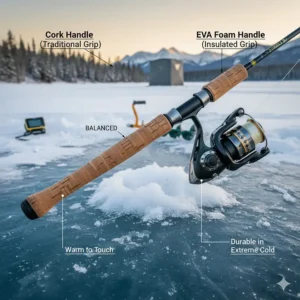
The 13 Fishing Widow Maker consistently ranks as the heavy trout jigging rod Canadian professionals reach for first. Built with 36-ton Toray graphite blanks, Premium EVA handles, and ALPS thin wire double diamond coated guides, this series represents serious engineering for serious anglers.
Key Specifications:
- 36-ton solid body Toray graphite blank
- ALPS thin wire double diamond coated guides
- Premium Japanese EVA split grip
- Evolve Soft Touch engaged reel seat
- Multiple models (38″-45″ lengths)
What separates the Widow Maker from competitors? The Tennessee Handle flat tip models feature PC2 (Parallel Composite Construction) technology—linear fibres creating a completely flat tip that drastically increases sensitivity for detecting those soft lake trout bites at 30+ metres depth. Canadian ice anglers targeting vertical jigging techniques appreciate how this rod telegraphs even the slightest bump.
Canadian Customer Feedback: Users from Lake of the Woods to Lake Simcoe report this as their go-to for deep water fishing strategies, particularly when working depths exceeding 24 metres with heavy spoons and tube jigs.
✅ Pros:
- Industry-leading 36-ton graphite sensitivity
- PC2 flat tip technology for bite detection
- Excellent cold-weather guide performance
- Multiple power/length configurations
❌ Cons:
- Premium pricing ($62-125 CAD)
- Some models occasionally out of stock
Price Range: $62-125 CAD depending on model | Availability: Select models available on Amazon.ca
3. St. Croix Custom Ice Rod — Made-in-USA Premium Choice
St. Croix’s reputation precedes them—when you fish with a St. Croix Custom Ice Rod, you’re wielding what many consider the standard for premium ice fishing. Utilizing the same production methods as their celebrated open water rods, these incorporate five distinct blank platforms in solid and tubular configurations.
Key Specifications:
- Five distinct blank platforms available
- Premium-grade components throughout
- Oversized guides resist ice buildup
- Hand-crafted quality control
- 36″-45″ length options covering light to extra-heavy powers
The Custom Ice series specifically addresses lake trout challenges—oversized eyelets maintain function even with ice buildup, crucial during those long Canadian winter sessions. The sensitivity rivals spring bobbers whilst maintaining backbone to drive hooks at extreme depths. Whether you’re working 1/8-ounce walleye spoons or 3-ounce lake trout tubes, there’s a Custom Ice configuration that fits.
Canadian Customer Feedback: Ontario and Quebec anglers praise the “centerpiece quality” and note these rods handle everything from perch to trophy lakers without flinching. The rigid blank doesn’t sacrifice sensitivity—users report detecting bites that go unnoticed on lesser rods.
✅ Pros:
- Premium components and craftsmanship
- Oversized guides for icing conditions
- Incredibly sensitive yet powerful
- Versatile blank selection
❌ Cons:
- Significant investment ($200-350 CAD)
- May be overkill for casual anglers
Price Range: $200-350 CAD | Availability: Available through Canadian retailers and Amazon.ca
4. Ugly Stik GX2 Ice Spinning Rod — Legendary Durability Meets Ice
When Canadian conditions threaten to destroy equipment, Ugly Stik owners just keep fishing. The GX2 Ice brings the legendary Ugly Tech construction to hardwater, combining graphite and fibreglass into virtually indestructible rods that remain surprisingly sensitive.
Key Specifications:
- Ugly Tech graphite/fibreglass construction
- Ugly Tuff one-piece stainless guides
- Clear Tip design for strength and sensitivity
- Durable lightweight EVA grips
- 30″-36″ models available
The GX2 might not win beauty contests, but it’ll outlast prettier rods by years. That matters when you’re fishing Saskatchewan’s frozen lakes where temperatures plummet to -35°C and equipment failure isn’t just inconvenient—it’s dangerous. The Clear Tip technology provides extra strength precisely where ice rods snap on lesser brands.
Canadian Customer Feedback: Budget-conscious Canadian anglers love the 5-7 year warranty and report these rods surviving drops, slams against ice, and years of abuse. For cold water trout behavior that demands long sessions in brutal conditions, the GX2 delivers reliability.
✅ Pros:
- Exceptional durability and warranty
- Budget-friendly ($44-55 CAD)
- Proven performance in extreme cold
- Wide availability across Canada
❌ Cons:
- Less refined sensitivity than graphite-only rods
- Basic aesthetics
- Heavier than premium options
Price Range: $44-55 CAD | Availability: Readily available on Amazon.ca
5. Frostbite Lunar Series — Canadian-Designed for Canadian Conditions
Designed by Canadian anglers for Canadian waters, the Frostbite Lunar Series addresses the unique challenges of fishing from Yellowknife to Vancouver. The proprietary rock solid seat design accepts interchangeable butt lengths (BUTT JOB customization), allowing you to adjust rod length based on shelter size or fishing style.
Key Specifications:
- Low profile stainless steel guides
- Carbon Soft Weave handle material
- EVA foregrip with Comfort Touch finish
- Blanks crafted for specific applications
- Chartreuse tip tie for low-light visibility
- Free shipping over $250 CAD within Canada
The Carbon Soft Weave handle isn’t typical carbon fibre—it’s soft and warm to touch, critical when you’re holding a rod for 8-hour sessions at -20°C. Stainless guides resist ice buildup better than cheaper alternatives, keeping you fishing when others pack up to clear guides.
Canadian Customer Feedback: Users across the Prairies and Northern territories specifically praise the Canadian-focused design elements that account for colder temperatures and longer fishing days than American counterparts experience.
✅ Pros:
- Designed specifically for Canadian conditions
- Customizable handle length system
- Warm-touch handle material
- Excellent guide ice resistance
- Canadian company with Canadian support
❌ Cons:
- Mid-high pricing ($150-220 CAD)
- Less brand recognition than American competitors
Price Range: $150-220 CAD | Availability: Available through Frostbite Canada website
6. Haat Fishing 45″ Extra-Heavy Casting Rod — Deep Water Monster Slayer
When you’re targeting the biggest lakers cruising 60+ metre depths in Great Bear Lake or Lake Superior, the Haat 45″ Extra-Heavy represents the ultimate deep water trout ice rod. Designed by World Record holder Eric Haataja, this rod handles 1-8 ounce lures and 30-80 pound line.
Key Specifications:
- 45″ length for maximum leverage
- IX solid glass composite blank
- Extra-heavy power for trophy fish
- Custom baitcaster reel seat
- Double-foot stainless guides
- Recommended for 30+ pound fish
The extra length isn’t arbitrary—it provides critical leverage when vertical jigging techniques meet stubborn 15+ kilo lake trout. The custom baitcaster seat accommodates high-capacity reels needed for extreme depths. Canadian buyers targeting Lake Trout in Jackson Lake, Lake Huron, and other trophy waters report this rod changes the game.
Canadian Customer Feedback: Sault Ste. Marie anglers specifically mention exceptional stiffness for driving 3-7 ounce Bondi jigs to 60+ metre depths with zero issues. One buyer noted landing multiple 30+ inch “Big Macs” that would have straightened lighter rods.
✅ Pros:
- Unmatched power for trophy lake trout
- Perfect for extreme depth fishing
- Built by professional tournament angler
- Handles heaviest jigs effortlessly
❌ Cons:
- Overkill for smaller fish or shallow water
- Premium pricing ($180-250 CAD)
- Learning curve for proper technique
Price Range: $180-250 CAD | Availability: Available through Haat Fishing and select Canadian retailers
7. St. Croix Mojo Ice Spinning Rod — Best All-Around Performer
For versatility across multiple species whilst maintaining lake trout capability, the St. Croix Mojo Ice delivers exceptional value in the mid-price range. Sporting updated carbon dust blanks and St. Croix’s proprietary reel seat, these 10-model lineup covers panfish to pike.
Key Specifications:
- Precision-taper solid carbon blank
- Premium split-grip cork/EVA handle
- Sea Guide lightweight stainless guides
- Custom St. Croix reel seat
- 27″-40″ lengths in various powers
The Mojo Ice bridges the gap between budget and premium perfectly. While not as refined as the Custom Ice series, it provides 80% of the performance at 40% of the price. The split-grip design allows multiple hand positions—crucial during long sessions targeting suspended lake trout.
Canadian Customer Feedback: Multi-species anglers across Ontario lakes appreciate having one rod that handles morning crappie sessions and afternoon lake trout runs. The medium-heavy 36″ model specifically earns praise for lake trout in 12-30 metre depths.
✅ Pros:
- Excellent price-to-performance ratio
- Wide model selection for various techniques
- Comfortable split-grip design
- St. Croix quality and warranty
❌ Cons:
- Not specialized purely for trophy lakers
- Cork can be cold in extreme temperatures
- Less sensitive than premium graphite options
Price Range: $84-110 CAD | Availability: Available through Canadian tackle shops and Amazon.ca
✨ Don’t Miss These Exclusive Deals!
🔍 Take your lake trout fishing to the next level with these carefully selected rods available in Canada. Click on any highlighted rod name above to check current pricing and availability on Amazon.ca. These tools will help you land the trophy lake trout you’ve been dreaming about!
Understanding Lake Trout Behavior in Canadian Waters
Lake trout (Salvelinus namaycush) inhabit nearly every Canadian province and territory, thriving in deep, cold, oligotrophic lakes where water temperatures remain between 4-10°C. According to Fisheries and Oceans Canada, these apex predators can live over 50 years in northern Canadian lakes, reaching weights exceeding 20 kilograms.
Understanding cold water trout behavior dramatically improves your success rate. During winter, lake trout typically inhabit depths of 9-60+ metres, though they’ll cruise shallower early morning and late afternoon. Unlike walleye that hug bottom, lakers often suspend mid-water column, aggressively chasing baitfish—cisco, smelt, and alewife in Great Lakes regions; whitefish and smaller trout in northern territories.
Their feeding behavior requires specific presentations. According to the U.S. Fish & Wildlife Service, lake trout feed on a variety of organisms from plankton to fish, with adults preferring piscivorous diets. They strike aggressively when actively feeding but can be finicky during neutral periods. The soft “tick” bite that barely registers on inadequate rods contrasts sharply with the violent smash when they attack spoons or swimbaits. This dual nature demands rods with both sensitivity to detect subtle takes and backbone to drive hooks at depth.
Provincial regulations vary significantly across Canada. Ontario’s fishing regulations specify possession limits and size restrictions, whilst British Columbia and the territories each maintain unique rules. Always verify current regulations with your provincial ministry before fishing—many waters have special protections for native lake trout populations.
✨ Ready to Upgrade Your Ice Fishing Game?
🎣 The rods featured in this guide represent the best options available for Canadian lake trout anglers in 2026. Whether you’re targeting shallow water trophies or deep-diving giants, proper equipment makes all the difference. Check current Amazon.ca pricing on any of these premium rods to elevate your success rate this season!
Essential Features in a Lake Trout Ice Fishing Rod
Length Considerations for Canadian Ice Fishing
Rod length directly impacts your control and fighting capabilities. For lake trout, consider these length guidelines:
Short Rods (66-76 cm / 26″-30″): Better for portable shelters and tight spaces. Adequate for moderate depths up to 20 metres. Popular in smaller Ontario lakes.
Medium Rods (81-102 cm / 32″-40″): The sweet spot for most lake trout scenarios. Provides good leverage whilst remaining manageable in typical ice shelters. Ideal for depths from 15-45 metres common across Prairie lakes.
Long Rods (107-122 cm / 42″-48″): Optimal for trophy hunters targeting extreme depths. The extra length provides critical leverage when fighting big fish and helps manage line during long vertical presentations. Essential for Great Lakes and northern trophy waters.
I personally favour 107-112 cm rods for serious lake trout work—they offer versatility across depths whilst providing enough length to handle aggressive runs.
Power Ratings Explained
Medium-Heavy: Suitable for moderate lake trout up to 5 kilos. Works with 1/4-1 ounce jigs in depths under 25 metres. Good all-around choice if targeting mixed species.
Heavy: The standard for dedicated lake trout fishing. Handles 1/2-3 ounce lures and fish up to 12 kilos. Recommended for most Canadian lake trout waters.
Extra-Heavy: Reserved for trophy hunting and extreme depths. Manages 2-8 ounce baits and fish exceeding 15 kilos. Necessary for Great Bear Lake, Great Slave Lake, and trophy Lake Superior applications.
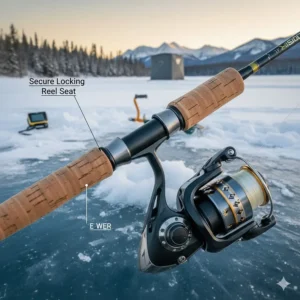
Action and Sensitivity
Fast Action: The tip bends whilst the butt section remains stiff. Provides excellent sensitivity for bite detection and quick hook sets. Preferred for vertical jigging techniques requiring constant feel.
Medium-Fast Action: Bends through the upper third. Offers balance between sensitivity and forgiveness. Reduces thrown hooks during violent head shakes.
Moderate Action: Bends through the middle. Less common for lake trout but useful when fishing lighter lines or targeting smaller specimens.
For deep water fishing strategies targeting lake trout, fast to medium-fast action dominates. The stiff backbone drives hooks at 30+ metre depths whilst the responsive tip telegraphs bites.
Deep Water Fishing Strategies for Lake Trout
Vertical Jigging Techniques
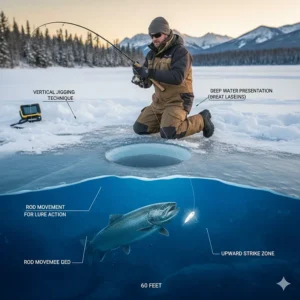
Vertical jigging remains the most effective method for Canadian lake trout. The technique involves:
- Locating Structure: Use electronics to identify underwater points, drop-offs, and suspended bait balls. Lake trout often suspend 3-6 metres off bottom or cruise mid-depths.
- Proper Jigging Cadence: Aggressive lifts of 30-60 cm followed by controlled drops. Count descent speed to detect strikes on the fall—many hits occur during the drop phase.
- Varying Presentation: Alternate between aggressive ripping motions and subtle shakes. Trophy lakers often prefer violent presentations that trigger predatory instinct.
- Line Management: Maintain slight tension during descent. Lake trout frequently inhale baits softly—you’ll feel a slight “weight” or tick rather than a smash.
The heavy trout jigging rod excels here because stiff blanks transfer maximum jigging energy to lures at depth whilst remaining sensitive enough to detect takes.
Lure Selection for Vertical Presentations
Jigging Spoons (1-3 ounces): Classic choices include Bink’s Pro Series, Kastmaster, and Williams Wabler. Chrome and gold dominate in clear water; glow colours work well in stained conditions or extreme depths. I rarely fish without 1.5-ounce silver spoons.
Tube Jigs (3-5 inches): White, chartreuse, and natural baitfish patterns produce consistently. Heavy 3/4-1 ounce heads get down quickly whilst fluttering naturally. Tip with cut bait for added scent appeal.
Soft Plastic Swimbaits (10-15 cm): Modern patterns like the Hogy HDUV series specifically target lake trout. These 10-inch baits closely mimic the cisco and smelt lake trout prefer. Pair with 3/4-1 ounce jigheads.
Airplane Jigs: Underutilized but deadly. The horizontal presentation imitates struggling baitfish. Tipped with cut bait or whole minnows, these produce when other lures fail.
The 40 Inch Lake Trout Setup
Landing a metre-class lake trout requires specific equipment coordination:
Rod: 107-122 cm extra-heavy power with fast action. The Haat 45″ Extra-Heavy or similar.
Reel: Large-capacity spinning reel (3000-4000 size) or baitcasting reel holding 180+ metres of line.
Line: 12-15 pound braided mainline with 10-15 pound fluorocarbon leader. Braid’s zero stretch improves hook sets at depth; fluorocarbon leader resists abrasion and maintains invisibility.
Terminal Tackle: 1-3 ounce jigs or spoons depending on depth and current.
Electronics: Quality fish finder with GPS marking capability. Recording productive holes saves hours of searching.
This 40 inch lake trout setup handles the powerful runs and head shakes trophy fish deliver whilst maintaining sensitivity for detecting bites.
Rod Materials and Construction
Carbon Fiber vs. Fiberglass vs. Composite
Solid Carbon (Graphite): Lightest and most sensitive. Transmits vibrations instantaneously. Premium choices like the 13 Fishing Widow Maker use 36-ton graphite for maximum performance. Potential brittleness in extreme cold requires quality manufacturing.
Fiberglass: Heavier but virtually indestructible. The Ugly Stik reputation builds on fibreglass durability. Slightly less sensitive but excellent for harsh Canadian conditions where equipment abuse occurs.
Composite: Blends graphite sensitivity with fibreglass durability. The Haat rods use IX composite specifically engineered for ice applications. Balanced performance across sensitivity and toughness.
For serious lake trout fishing, solid carbon construction from reputable manufacturers provides optimal performance. The slight brittleness risk diminishes with quality brands that specifically engineer blanks for negative temperatures.
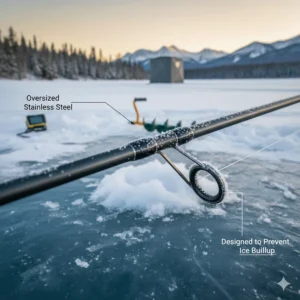
Guide Quality and Ice Resistance
Premium guides separate functional rods from frustrating ones during Canadian winters:
Stainless Steel Guides: Standard choice offering corrosion resistance and durability. Low-profile designs shed ice better than bulky alternatives.
Titanium Guides: Found on premium rods like Frostbite Obsidian series. Lighter than stainless with superior ice-shedding properties. Worth the investment for dedicated lake trout anglers.
Double-Foot vs. Single-Foot: Double-foot guides provide added strength crucial when battling trophy fish. Single-foot reduces weight on ultralight applications.
Size Matters: Slightly larger guides allow ice buildup without blocking line flow. Too small and you’ll spend frustrating minutes clearing guides; too large and sensitivity suffers.
I prefer rods with at least 8mm guides for lake trout work—they handle thick fluorocarbon leaders and resist icing without requiring constant attention.
Line and Leader Recommendations
Mainline Selection
Braided Line: The preferred choice for deep water trout ice rod applications. Zero stretch ensures solid hook sets at 30+ metres. 10-15 pound test covers most scenarios. Popular options include Cortland Master Braid and Beyond Braid specifically marketed for ice fishing.
Monofilament: Stretch can impede hook penetration at depth but provides shock absorption for violent strikes. Acceptable for moderate depths under 20 metres. 8-12 pound test balances strength and manageability.
Fluorocarbon Mainline: Expensive but combines low visibility with abrasion resistance. Sinks faster than braid, beneficial for vertical presentations. 8-12 pound test works well.
I strongly recommend braided mainline with fluorocarbon leader—this combination maximizes sensitivity whilst maintaining invisibility near lures where it matters most.
Leader Construction
Lake trout can be line-shy despite their aggressive reputation. A 1.5-2 metre fluorocarbon leader (8-15 pound test) connected via small swivel addresses this. The leader length prevents braid’s visibility from spooking fish whilst the swivel prevents line twist during jigging.
Double uni knots or Alberto knots provide reliable braid-to-leader connections. Test connections before fishing—cold temperatures affect knot strength.
Comparison Table: Rod Features for Different Lake Trout Scenarios
| Fishing Scenario | Ideal Rod Length | Recommended Power | Best Action | Key Features |
|---|---|---|---|---|
| Small Ontario Lakes (9-18m depth) | 32″-36″ | Medium-Heavy | Fast | Portable, sensitive tip |
| Great Lakes Depths (24-45m) | 40″-48″ | Heavy to Extra-Heavy | Fast | Extended length, powerful backbone |
| Trophy Hunting (30+ metres) | 45″-48″ | Extra-Heavy | Medium-Fast | Maximum leverage, durability |
| Mixed Species (Panfish + Lakers) | 32″-40″ | Medium to Medium-Heavy | Medium-Fast | Versatility, comfortable grip |
Reel Pairing and Balance
Your reel significantly impacts overall performance. For lake trout ice fishing rod setups:
Spinning Reels: 2500-4000 size provides adequate line capacity. Look for smooth drag systems (minimum 5 kilograms) and cold-weather lubrication. Popular choices include Shimano Sienna Ice and Abu Garcia Veritas models designed for hardwater.
Inline Ice Reels: Gaining popularity for their zero line-twist design. Models like the Piscifun ICX Frost specifically target ice applications with sealed bearings and oversized spools.
Baitcasting Reels: Preferred by advanced anglers for extra-heavy applications. Provides more power and line capacity. Requires practice but excels when targeting trophy fish at extreme depths.
Balance your reel with rod length and power—a heavy 122 cm rod paired with a tiny reel creates awkward handling. Test the combination holding the rod horizontally; it should balance near the reel seat without excessive tip weight.
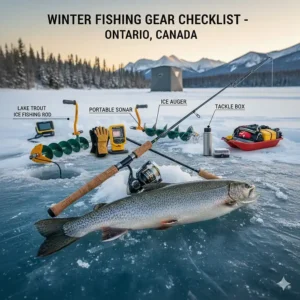
Ice Fishing Electronics and Sonar
Modern lake trout success increasingly depends on electronics:
Flasher Units: Real-time display showing your jig, bottom, and fish. Models like Vexilar FL-18 or MarCum LX-7 provide instant feedback for adjusting presentations. Watch for fish marks appearing then disappearing—often indicates following but uncommitted fish.
GPS Fish Finders: Record productive holes for return visits. Graph history helps identify patterns—suspended bait balls, depth preferences, time-of-day activity.
Underwater Cameras: Aqua-Vu and MarCum cameras show exactly what’s happening below. Watching lake trout follow then strike (or refuse) your lure provides invaluable learning opportunities.
Canadian lakes’ extreme depths make electronics nearly essential rather than optional luxuries. Fishing blind in 40+ metres wastes time versus precisely targeting marked fish.
Safety Considerations for Canadian Ice Fishing
Ice thickness guidelines from Canadian Parks fishing regulations:
- 10 cm (4 inches): Minimum for walking
- 15 cm (6 inches): Snowmobile or ATV
- 20-30 cm (8-12 inches): Truck or large vehicle
Critical Safety Points:
- Ice conditions change hourly based on temperature, wind, and current
- Test ice thickness every 5-10 metres when exploring new areas
- Wear flotation suit or have ice picks easily accessible
- Never fish alone in remote areas
- Check provincial ice fishing regulations before heading out
Early and late season ice demands extra caution. Springs and current create weak spots invisible from surface. Canadian search and rescue teams respond to dozens of ice-through accidents annually—don’t become a statistic.
Maintenance and Storage Tips
Proper care extends your lake trout ice fishing rod lifespan:
Post-Trip Cleaning: Wipe down guides and blank with warm water to remove salt (if fishing treated roads nearby) and dirt. Check for micro-cracks in guides or blank.
Off-Season Storage: Store rods horizontally or hanging vertically. Avoid leaning against walls which can create permanent bends. Climate-controlled storage prevents moisture damage.
Guide Inspection: Before each season, closely examine guide wraps for fraying. A failed guide mid-fight costs trophy fish.
Handle Maintenance: Cork handles benefit from occasional cleaning with damp cloth. EVA foam simply needs wiping clean.
Rod Tube Protection: Transport rods in hard cases protecting from vehicle damage. Broken tips ruin otherwise excellent rods.
I learned this lesson expensively—a carelessly stored $300 rod developed a hairline crack that catastrophically failed on a trophy fish. Now every rod gets proper storage.
✨ Gear Up for Your Best Lake Trout Season Yet!
🏆 Don’t let inadequate equipment cost you the trophy of a lifetime. The rods reviewed in this guide have been tested in real Canadian conditions—from Ontario’s frozen lakes to northern territories’ extreme cold. Click any highlighted product name to view current Amazon.ca availability and pricing. Your next personal best is waiting beneath the ice!
Common Mistakes to Avoid
Using Too Light Equipment: Panfish rods lack backbone for driving hooks at depth and handling powerful runs. Invest in proper lake trout rods rather than compromising.
Ignoring Rod Length: Short rods provide insufficient leverage for big fish near the hole. That final 3 metres of fight determines success or failure.
Neglecting Line Quality: Cheap line fails precisely when it matters most. Quality braid and fluorocarbon costs more upfront but saves heartbreak later.
Poor Jigging Technique: Maintaining constant motion fatigues fish less effectively than aggressive rips followed by pauses. Let lures fall naturally—many strikes occur during descent.
Fishing Without Electronics: Randomly drilling holes in 40-metre-deep lakes wastes time. Electronics locate fish quickly, maximizing productive fishing time.
Inadequate Cold Weather Prep: Frozen fingers can’t feel bites or manage lines. Proper gloves, shelters, and heat sources aren’t luxuries—they’re necessities for extended Canadian winter sessions.
Price Range and Value Analysis
| Price Tier | Price Range (CAD) | What You Get | Best For |
|---|---|---|---|
| Budget | $40-70 | Durable construction, basic components, limited selection | Casual anglers, beginners |
| Mid-Range | $80-150 | Improved sensitivity, better components, more options | Regular lake trout anglers |
| Premium | $180-400 | Top-tier materials, specialized features, superior performance | Dedicated enthusiasts, guides |
Budget rods like the Ugly Stik GX2 and Aurora Laker Pro X deliver surprising capability for the money. Mid-range options including Frostbite and St. Croix Mojo Ice provide excellent value balancing performance and price. Premium rods such as St. Croix Custom Ice and Haat offerings justify their cost through specialized features and refined performance.
Consider your fishing frequency and target species. Casual weekend warriors get excellent service from $50-100 CAD rods. Serious anglers chasing trophies benefit from premium investment—a $300 rod used 30 days per season costs $10 daily over three years, reasonable for enhanced performance and reliability.
❓ FAQ: Lake Trout Ice Fishing Rods in Canada
❓ What rod power do I need for lake trout in Ontario's Great Lakes?
❓ Can I use the same rod for walleye and lake trout ice fishing?
❓ What's the best rod length for fishing from a portable ice shelter in Canada?
❓ How much should I budget for a quality lake trout ice rod in Canada?
❓ Do I need different rods for shallow vs deep water lake trout?
Conclusion: Choosing Your Perfect Lake Trout Ice Rod
Selecting the right lake trout ice fishing rod transforms Canadian winter fishing from frustrating to phenomenally rewarding. Whether you’re exploring Ontario’s renowned Simcoe fishery, chasing trophy fish in Great Slave Lake, or working the depths of Lake Superior, matching equipment to conditions elevates success rates dramatically.
For budget-conscious anglers, the Ugly Stik GX2 and Aurora Laker Pro X deliver dependable performance without breaking the bank. Mid-range options like the St. Croix Mojo Ice and Frostbite Lunar Series provide exceptional value for regular anglers. Serious enthusiasts targeting trophies should strongly consider the 13 Fishing Widow Maker, Haat Extra-Heavy, or St. Croix Custom Ice for their specialized capabilities.
Remember that the “best” rod depends entirely on your specific scenario—water depths, target fish sizes, fishing style, and budget all factor into optimal selection. A $50 rod perfectly suited to your needs outperforms a $300 rod purchased because “more expensive equals better.”
Consider starting with a versatile 36-40 inch medium-heavy option if you’re unsure. This setup handles most Canadian lake trout scenarios whilst remaining useful for other species. As your experience grows, add specialized rods targeting specific situations—a shorter ultralight for panfish mornings and longer extra-heavy for trophy afternoons.
The frozen Canadian landscape holds incredible lake trout opportunities. Equipping yourself with proper tools—starting with the right rod—positions you for memorable catches and stories lasting far beyond the season. Tight lines and stay safe out there! 🎣🍁
Recommended for You
- 7 Best Perch Ice Fishing Rods Canada 2026
- 7 Best Walleye Ice Fishing Rods in Canada 2026
- 7 Best Ice Fishing Combo for Beginners in Canada 2026
Disclaimer: This article contains affiliate links to Amazon.ca. If you purchase products through these links, we may earn a small commission at no additional cost to you.
✨ Found this helpful? Share it with your fishing buddies! 💬🤗
