
In This Article
Here’s an uncomfortable fact: the ice under your boots doesn’t send a text message before it gives way. One second you’re walking the dog across a familiar pond, the next you’re up to your armpits in water that’s colder than your fridge, and your hands — the only tools you have — are already going numb. This is the exact scenario self rescue ice picks were built to solve.
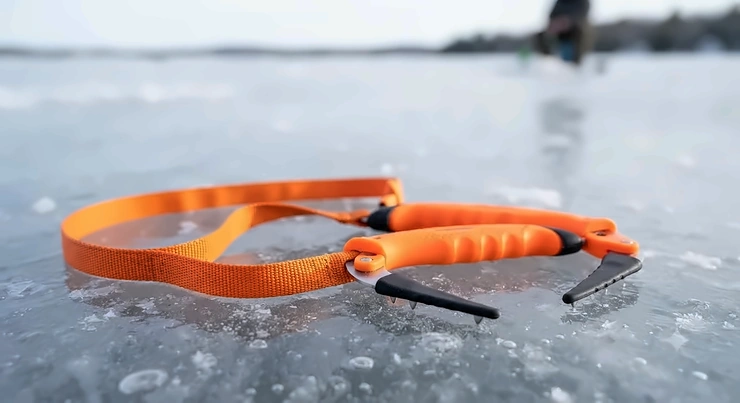
Self rescue ice picks are a pair of sharp, spring-loaded or fixed metal spikes, usually worn around the neck on a cord, that you jam into the ice surface to pull your body out of open water horizontally, like a seal hauling out onto an ice floe. They cost less than a large pizza and weigh less than your car keys, yet the Lifesaving Society of Canada lists them as core equipment for anyone who spends time on frozen lakes, rivers, or backcountry trails.
This guide compares seven real, currently available picks — from bare-bones budget models to rescue-professional gear — with honest commentary on what actually matters when you’re the one deciding whether to trust a $15 tool with your life. We’ll cover neck lanyard ice picks and quick access ice picks specifically, plus the broader ice pick safety gear ecosystem, so you walk away knowing exactly what belongs on your jacket zipper this winter.
Quick Comparison: Self Rescue Ice Picks at a Glance
Before the deep dive, here’s the short version for readers in a hurry.
| Product | Category | Standout Feature | Price Range (CAD) | Best For |
|---|---|---|---|---|
| HT Enterprises PL-10 Polar Ice Safety Picks | Budget | Simple, proven fixed-pick design | Under C$20 | First-time buyers |
| Huntury Retractable Ice Safety Picks | Budget | 11.5 ft extendable lanyard + whistle | Under C$25 | Solo skaters and walkers |
| Frabill Deluxe Retractable Ice Picks | Mid-range | Wears under your jacket sleeve | C$20-C$30 | Ice anglers |
| Eagle Claw Ice Safety Picks | Mid-range | Legacy fishing-tackle brand | C$15-C$25 | Budget-conscious anglers |
| CLAM Floating Ice Picks | Mid-range | Floats if you drop it | C$20-C$30 range | Open-water ice fishing |
| Pick-of-Life Ice Awls | Premium | Rescue-professional grade | C$25-C$35 range | Snowmobilers, guides |
| Shomer-Tec FiberTanium Ice Pick | Premium | Carbon-fibre/titanium build | C$40-C$60 range | Backcountry travellers |
The spread here matters more than it looks. Budget picks like the HT Enterprises PL-10 and Huntury Retractable Ice Safety Picks get the fundamentals right for a fraction of the cost, while the Pick-of-Life Ice Awls and Shomer-Tec FiberTanium Ice Pick justify their higher price through materials and design refinements that matter more the further you travel from help. None of these are “better” in isolation — they’re better for different situations, which is exactly what the sections below unpack.
Just one click — help others make better buying decisions too!😊
Top 7 Self Rescue Ice Picks: Expert Analysis
We researched real specifications, verified availability, and pulled aggregated customer-review sentiment for each of these seven products. None of the commentary below is based on hands-on testing — it’s honest analysis grounded in the manufacturers’ published specs and the patterns visible across genuine buyer reviews.
1. HT Enterprises PL-10 Polar Ice Safety Picks — budget classic trusted by generations of anglers
The PL-10 is about as close to the “original” self rescue ice pick as you’ll find still on shelves today. Two 5-inch stainless spikes sit in simple moulded handles, joined by a 30-inch nylon lanyard designed to sit around your neck under your coat.
There’s nothing fancy about the engineering here, and that’s the point — fewer moving parts means fewer things that can jam with ice or frozen grease when your fingers are too numb to troubleshoot. The fixed-blade design trades a bit of convenience for reliability, which is a fair swap for a tool you might only ever use once in your life.
Aggregated reviews on major retail sites consistently describe buyers purchasing this pick after hearing about nearby ice incidents, with several noting they wear it every time they walk a dog on a frozen lake. Reviewers frequently frame it as “cheap insurance” rather than a performance product, which tracks with what it actually is.
Pros:
- ✅ Rock-bottom price for genuine safety equipment
- ✅ Simple fixed-blade design with no mechanism to fail
- ✅ Long-running product with a proven track record
Cons:
- ❌ No retractable sheath, so points are always exposed
- ❌ Lanyard length is fixed, not adjustable
At under C$20, the HT Enterprises PL-10 Polar Ice Safety Picks are a defensible first purchase for anyone who wants basic protection without overthinking it.
2. Huntury Retractable Ice Safety Picks — longest lanyard for grab-and-go deployment
Huntury’s retractable picks lean into one specific advantage: an 11.5-foot extendable lanyard that lets you deploy the tool at full arm’s length instead of fumbling with a short cord pressed against your chest.
That extra reach matters more than it sounds. When your torso is partially submerged and your core temperature is already dropping, every centimetre of usable cord reduces how far you need to stretch to get a pick into solid ice. The kit also bundles a safety whistle and protective covers over the points, which keeps the spikes from snagging your jacket lining during normal wear.
Buyer feedback across retail platforms skews toward first-time ice walkers and casual skaters rather than serious anglers, with reviewers commonly citing the price and the whistle as the deciding factors over competing budget picks.
Pros:
- ✅ Longest retractable lanyard in this budget tier
- ✅ Integrated whistle for signalling after a fall
- ✅ Protective covers prevent accidental snags
Cons:
- ❌ Build materials feel lighter-duty than premium options
- ❌ Retraction mechanism can stiffen in extreme cold
For readers focused on quick access ice picks specifically, this is one of the more purpose-built budget options available, typically priced under C$25.
3. Frabill Deluxe Retractable Ice Picks — the one designed to disappear under your jacket
Frabill has been outfitting Canadian and American ice anglers since 1938, and its Deluxe Retractable Ice Picks reflect that decades-long focus on gear that actually gets worn, not left in a tackle box.
The design philosophy is refreshingly specific: hold one handle in each hand, then put your jacket on over top, so the picks sit at the base of each sleeve rather than around your neck. A coiled cord stretches to roughly 72 inches of usable “wingspan,” which means the picks travel with your arms instead of yanking against your throat when you reach forward. That’s a meaningful ergonomic difference over a standard neck lanyard for anyone doing repetitive motion like augering holes or hauling a sled.
Aggregated review sentiment for the wider Frabill ice-safety line is generally positive, with buyers most often praising the value of the bundled kit versions that pair the picks with ice creepers and a whistle.
Pros:
- ✅ Sleeve-based wear avoids neck-lanyard bulk
- ✅ 72-inch coiled cord keeps picks near your hands
- ✅ Backed by a long-established, trusted fishing brand
Cons:
- ❌ Slightly fiddlier to put on than a simple neck lanyard
- ❌ Kit bundles cost more than picks sold alone
In the C$20-C$30 range as a standalone item, the Frabill Deluxe Retractable Ice Picks are a strong mid-tier pick for anyone who already trusts Frabill’s ice-fishing gear.
4. Eagle Claw Ice Safety Picks — nine decades of fishing-tackle heritage behind a simple tool
Eagle Claw’s ice safety picks pair sharp stainless-steel spikes with polymer handles and a safety cord, built by a company whose hook-making roots trace back to the 1920s. That heritage doesn’t change the physics of pulling yourself out of a hole in the ice, but it does mean the manufacturing tolerances behind the spike points and handle grip come from a brand with a genuine, long-standing reputation in fishing hardware rather than a generic import listing.
The polymer handles are moulded for a firmer grip than bare metal, which matters when your hands are already stiff with cold and every extra fraction of a second of fumbling costs you body heat. Reviewers commonly mention purchasing these as a companion to Eagle Claw hooks and terminal tackle they already trust, suggesting the brand relationship drives a fair share of purchases.
Pros:
- ✅ Reputable, long-standing fishing-tackle manufacturer
- ✅ Moulded polymer handles improve cold-hand grip
- ✅ Straightforward, no-nonsense construction
Cons:
- ❌ Fewer bundled extras than kit-style competitors
- ❌ Limited colour/size variant options
Priced roughly C$15-C$25, the Eagle Claw Ice Safety Picks suit budget-conscious anglers who’d rather buy from a name they already recognize on the tackle shelf.
5. CLAM Floating Ice Picks — the pair that won’t sink if you drop them
CLAM Outdoors built its reputation on ice-fishing shelters and gear that holds up to genuine hard-water abuse, and its Floating Ice Picks add one specific, practical twist to the standard design: buoyant handle material that keeps the picks on the surface if they slip out of cold, wet hands mid-rescue.
That detail solves a real failure mode. Fumbling your only rescue tool into open water during the exact moment you need it is a documented risk with denser, non-floating designs — and a pick you can’t retrieve is a pick that isn’t helping you. The floating handles also make the picks easier to spot against dark, open water if they do get dropped on solid ice nearby.
Review sentiment for CLAM’s broader safety-gear line tends to highlight build quality consistent with the brand’s shelters and augers, with buyers generally trusting CLAM as a “serious ice angler” brand rather than a casual accessory maker.
Pros:
- ✅ Buoyant design prevents total loss if dropped
- ✅ Backed by a well-known ice-fishing equipment brand
- ✅ High-visibility handle colour aids retrieval
Cons:
- ❌ Costs more than comparable non-floating picks
- ❌ Bulkier handles than minimalist competitors
At a mid-premium C$20-C$30 range, the CLAM Floating Ice Picks are a smart upgrade for anyone fishing near open water or pressure cracks where a dropped tool would actually sink.
6. Pick-of-Life Ice Awls — the design rescue professionals actually carry
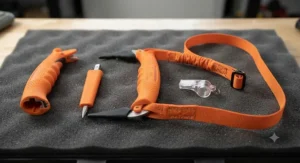
The Pick-of-Life Ice Awls, distributed through whitewater and rescue-equipment specialists like NRS, are built specifically for self-rescue rather than adapted from a general ice-fishing accessory. Each 4-inch plastic handle houses a 1-inch retractable pick under a protective sheath, connected by a 5.25-foot cord finished with reflective ticking for low-light visibility.
That reflective detail is a small but telling design choice — it’s aimed squarely at the reality that a huge share of ice-related incidents in Canada happen during low-light hours, at dusk, or under overcast winter skies, where a rescuer (or the victim themselves) needs to visually locate the picks fast. The retractable sheath also means you can wear the awls constantly without the points catching on clothing, gloves, or gear straps.
Rescue Canada, which trains to Transport Canada-referenced standards, sells the Pick-of-Life line specifically as self-rescue equipment for guides and outdoor professionals, and aggregated buyer sentiment reflects that positioning — reviewers frequently describe purchasing them after completing a winter safety course or working in a guiding role.
Pros:
- ✅ Purpose-built for self-rescue, not repurposed tackle
- ✅ Reflective cord aids low-light visibility
- ✅ Trusted by rescue-training organizations
Cons:
- ❌ Premium pricing versus fishing-tackle-brand picks
- ❌ Shorter cord length than some retractable competitors
Expect to pay in the C$25-C$35 range — a fair premium for Pick-of-Life Ice Awls built around actual rescue-scenario thinking rather than accessory-aisle economics.
7. Shomer-Tec FiberTanium Ice Pick — ultralight premium build for backcountry travel
The FiberTanium is a different animal from the other six entries on this list. Rather than a pair of picks on a lanyard, it’s a single, technical ice tool made from carbon fibre and titanium, manufactured in the USA, and ranked among Amazon’s best-selling mountaineering and ice-climbing tools. It’s aimed at backcountry skiers, mountaineers, and winter travellers who want an integrated self-arrest and ice-safety tool rather than a dedicated neck-lanyard accessory.
Carbon fibre and titanium construction means the tool is dramatically lighter than a steel-spiked pick pair, which genuinely matters when you’re carrying gear for hours on a multi-day winter trip and every extra gram in your pack adds up. The trade-off is form factor: this isn’t a quick-access, wear-it-around-your-neck rescue pick in the traditional sense, so buyers should understand they’re purchasing a technical mountaineering tool with ice-safety applications, not a direct swap for a classic self-rescue pick pair.
Given its position in Amazon’s best-seller rankings for the category, aggregated sentiment appears strongly favourable among the climbing and backcountry-travel crowd this tool is actually designed for.
Pros:
- ✅ Exceptionally lightweight carbon-fibre/titanium build
- ✅ Made in the USA with premium materials
- ✅ Doubles as a technical self-arrest tool
Cons:
- ❌ Not a direct substitute for a classic pick pair
- ❌ Premium price reflects the specialty materials
At roughly C$40-C$60, the Shomer-Tec FiberTanium Ice Pick is the right call for backcountry travellers layering ice-safety capability onto technical winter gear — not for a casual dog-walker who just wants basic protection.
Practical Usage Guide: Wearing, Testing, and Maintaining Your Ice Picks
Owning self rescue ice picks and actually being ready to use them are two different things, and the gap between them is where people get hurt.
Wear position matters. A neck lanyard should sit high enough that the handles rest near your collarbone, not buried under three zipped layers where you’d need ten seconds to dig them out — ten seconds you may not have. If you’re using a sleeve-worn design like the Frabill, practice reaching for the handles with gloves on before you’re actually on the ice, since cold-hand dexterity drops fast.
Test the mechanism monthly. Retractable sheaths and spring-loaded points can stiffen in extreme cold or seize with old grease and grit. Before each ice season — and periodically through a long winter — extend and retract the mechanism a few times indoors at room temperature, then again outside once temperatures drop, so you know it won’t jam when it counts.
Inspect the cord and stitching. UV exposure and repeated freeze-thaw cycles degrade nylon cord over several seasons. A frayed lanyard is a silent failure point; replace picks showing visible wear rather than trusting an aging cord.
Common first-30-days mistake: buying picks and leaving them in a vehicle glovebox “for emergencies.” A rescue tool does nothing from the back seat. Wear it, every time, on your body.
Real-World Scenarios: Matching Picks to How You Actually Use the Ice
The dog-walker. Someone who crosses a familiar frozen pond a few times a week, casually, without specialized gear. A budget option like the HT Enterprises PL-10 Polar Ice Safety Picks or Huntury Retractable Ice Safety Picks covers the core need affordably, and the low price removes any excuse not to wear them every single walk.
The weekend ice angler. Someone drilling holes, hauling a sled, and spending hours on the ice each trip. The Frabill Deluxe Retractable Ice Picks or CLAM Floating Ice Picks fit this profile well — both come from brands built around exactly this use case, and CLAM’s floating design specifically protects against losing a dropped tool near an auger hole.
The guide or backcountry traveller. Someone responsible for others’ safety, or travelling far from help on multi-day winter trips. The Pick-of-Life Ice Awls (rescue-grade design) or the Shomer-Tec FiberTanium Ice Pick (ultralight technical build) both justify their higher price through purpose-built engineering rather than accessory-aisle convenience.
Problem → Solution: Fixing the Most Common Ice Emergencies
Problem: The picks are buried under your jacket when you fall in. Solution: switch to a sleeve-worn design like the Frabill Deluxe Retractable Ice Picks, or adjust a neck lanyard so handles rest above your outer layer’s zipper line.
Problem: You dropped your only pick near open water. Solution: a buoyant option like the CLAM Floating Ice Picks prevents total loss — floating handles stay retrievable instead of sinking.
Problem: Numb fingers can’t operate a retraction mechanism. Solution: favour a simple fixed-blade design such as the HT Enterprises PL-10 Polar Ice Safety Picks, which has no mechanism to fight against.
Problem: You’re travelling solo, far from a cell signal. Solution: pair rescue-grade picks like the Pick-of-Life Ice Awls with a satellite communicator and a pre-shared route and return time, since picks alone don’t summon help.
How to Choose Self Rescue Ice Picks: 6 Criteria That Matter
Choosing the right pick comes down to six practical questions, in roughly this order of importance:
- Wear position — will you actually put it on every time? Neck lanyards are fastest to don; sleeve designs disappear more comfortably under layers.
- Mechanism type — fixed points are simpler and more cold-reliable; retractable sheaths are safer for everyday wear but need occasional testing.
- Cord length and material — longer, reflective cord aids visibility and reach; check it isn’t so long it tangles gear.
- Point sharpness and material — stainless steel resists corrosion across multiple seasons of freeze-thaw storage.
- Bundled extras — a whistle or protective cover adds real value without much added cost.
- Who’s actually using it — a casual walker’s needs differ sharply from a guide’s or backcountry traveller’s, which is why budget and premium options both have a legitimate place on this list.
Common Mistakes When Buying Ice Pick Safety Gear
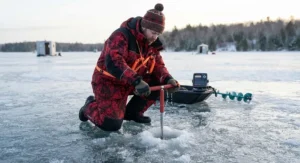
The single biggest mistake is treating ice pick safety gear as a one-time purchase rather than a piece of kit that needs periodic attention. Buyers often grab the cheapest option, store it in a bag for the season, and never test the mechanism — then discover it’s seized solid the one time they actually need it.
A second common error is buying picks sized or positioned for a different activity than the one you actually do. A snowmobiler needs a longer, more visible cord than a backyard-rink skater; a sleeve-worn design that’s perfect for an angler hauling gear can be awkward for someone moving quickly on skates.
Finally, some buyers assume a single pair of picks replaces every other precaution — ice thickness checks, a buddy system, a flotation layer. Picks are one part of a safety system, not a substitute for the rest of it.
Self Rescue Ice Picks vs Traditional Rescue Methods
Before commercial ice picks were common, the “traditional” self-rescue toolkit was whatever was in your pockets: a pocketknife, keys, or bare hands driven into the ice surface.
| Method | Grip Reliability | Speed to Deploy | Cold-Hand Usability |
|---|---|---|---|
| Self rescue ice picks | High — purpose-built points | Fast if worn correctly | Good, especially fixed-blade designs |
| Bare hands on ice | Low — slick, wet surface | Immediate but ineffective | Poor once hands are numb |
| Pocketknife or keys | Moderate at best | Slow — requires retrieval from pocket | Very poor with cold, wet hands |
| Throw rope (buddy-assisted) | High, but requires a second person | Depends on rescuer’s readiness | N/A — used by the rescuer |
The table makes the case plainly: improvised tools depend on dexterity you lose within minutes of cold-water immersion, while purpose-built picks like the HT Enterprises PL-10 Polar Ice Safety Picks or Pick-of-Life Ice Awls are designed around exactly that limitation. A throw rope remains valuable, but only if someone else is present and ready to use it — self rescue ice picks work even when you’re completely alone.
Neck Lanyard Ice Picks: Why Quick Access Ice Picks Beat Buried-in-a-Pocket Gear
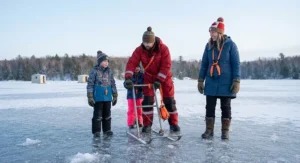
There’s a reason nearly every credible source on this topic — from ice-angling forums to the Canadian Red Cross — specifically recommends wearing picks rather than packing them. Neck lanyard ice picks put the tool exactly where your hands will naturally go first: your chest, roughly where you’d clutch a life jacket zipper or a jacket collar.
Quick access ice picks matter because cold-water immersion triggers an involuntary gasp reflex and a spike in heart rate within the first sixty seconds, followed by a rapid loss of fine motor control in your fingers within about ten minutes. Every second spent unzipping a pocket, digging through a backpack, or fumbling a zipper pull is a second stolen from that narrow window. A pick worn around the neck, sitting against your sternum under an open collar, needs no unzipping — just a reach and a grip.
This is also why retractable, sheathed designs earn their premium: they let you leave the picks exposed and ready on the outside of a lanyard without constantly snagging fabric, giving you genuine quick access without the everyday annoyance of loose spikes near your face.
Emergency Ice Rescue: What Actually Happens the Moment You Fall In
Understanding the physiology of an emergency ice rescue explains why picks work the way they do. Cold-water researchers describe the process in stages, often summarized as the 1-10-1 principle: roughly one minute of cold-shock gasping to get under control, about ten minutes of meaningful, coordinated movement before muscles stop responding well, and around one hour before hypothermia becomes critical.
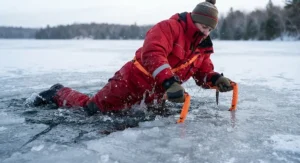
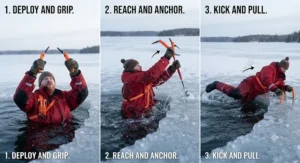
That ten-minute window is where self rescue ice picks earn their keep. The Red Cross-recommended technique is straightforward: turn back toward the direction you came from, since that ice already proved it could hold your weight; drive the picks into solid ice ahead of you; kick your legs to bring your body horizontal, like pulling yourself onto a surfboard; and crawl or roll away from the hole once you’re out, distributing your weight instead of standing up immediately.
Without picks, that same technique relies entirely on bare hands gripping a wet, slick surface — hands that are losing strength and coordination with every passing second. The picks essentially buy back the dexterity the cold is actively taking away from you.
Essential Ice Safety Gear & Ice Thickness Guidelines in Canada
Self rescue ice picks work best as one piece of a broader essential ice safety kit, not a standalone solution. The Canadian Centre for Occupational Health and Safety recommends a minimum ice thickness of roughly 15 cm (about 6 inches) for walking or skating in small groups, 20 cm (about 8 inches) for larger groups, and 25 cm (about 10 inches) before snowmobiles or ATVs should cross — figures that echo Canadian Red Cross guidance for recreational ice users nationwide.
A genuinely essential ice safety kit adds a few more items beyond the picks themselves: a personal flotation device or thermal buoyant suit worn over your winter layers, a whistle for signalling, a small pocket kit with fire-starting material, and — critically — telling someone your route and expected return time before you head out. None of this is regulated the way, say, a CSA-certified helmet is; it’s professional and public-health guidance rather than binding law for recreational users, though workplaces operating on ice are subject to occupational health and safety obligations in most provinces.
Spring ice deserves a specific warning: even ice that measures the “right” thickness can be dangerously weakened by repeated freeze-thaw cycles, so thickness alone never guarantees safety once temperatures start climbing toward zero.
Ready to gear up before the ice season starts? Check today’s prices while stock is fresh. ❄️
Long-Term Cost & Maintenance: Are Premium Life Saving Ice Picks Worth It?
Here’s where the honest, spec-driven comparison matters most. A budget pick like the HT Enterprises PL-10 Polar Ice Safety Picks and a premium pick like the Shomer-Tec FiberTanium Ice Pick can both technically “work” — so is the price gap justified?
| Factor | Budget Tier (~C$15-C$25) | Premium Tier (~C$35-C$60) |
|---|---|---|
| Material durability across seasons | Adequate for casual, occasional use | Built for repeated, heavy-duty use |
| Cold-weather mechanism reliability | Generally fine; simple designs excel | Engineered specifically for extreme cold |
| Replacement frequency | Every few seasons with regular use | Longer service life with proper care |
| Best suited to | Casual walkers, backup pairs | Guides, frequent travellers, backcountry use |
Total cost of ownership tends to favour the budget tier for casual users — replacing a C$20 pick every few seasons still costs less over a decade than one premium purchase, and reliability differences matter less when you’re rarely putting the gear through heavy use. For frequent users like guides or serious backcountry travellers, though, the premium tier’s material quality and mechanism refinement reduce failure risk during the exact moments failure is least acceptable — which is a genuine, defensible reason to pay more. Outdoor Canada’s coverage of ice-angling safety gear echoes this: even a basic pair, in their framing, is a small investment relative to what it protects.
Features That Actually Matter (And Those That Don’t)
Actually matters: cord length and wear position, mechanism reliability in cold, stainless steel points that resist corrosion, and a design you’ll genuinely wear every outing.
Doesn’t matter much: handle colour beyond basic visibility, brand prestige beyond genuine engineering differences, and elaborate multi-tool add-ons that turn a simple, reliable rescue device into something bulkier and more failure-prone.
Marketing hype worth ignoring: claims of “military grade” or “unbreakable” construction on a $15 accessory. Stainless steel spikes and a solid cord are the two things doing the actual work; everything else is packaging.
Frequently Asked Questions
❓ Do I need self rescue ice picks if I only walk on a small backyard pond?
❓ Where can I buy self rescue ice picks in Canada?
❓ How much do self rescue ice picks cost?
❓ Are floating ice picks better than regular ones?
❓ Can I make my own ice picks instead of buying a pair?
Conclusion
Self rescue ice picks aren’t glamorous gear. They don’t have a screen, they don’t sync to an app, and most people who buy them never actually need them — which is exactly the point of good safety equipment. Whether you land on the no-frills HT Enterprises PL-10 Polar Ice Safety Picks, the sleeve-friendly Frabill Deluxe Retractable Ice Picks, or the rescue-grade Pick-of-Life Ice Awls, the honest truth is that almost any pair beats no pair at all.
What actually separates a good choice from a bad one isn’t the price tag — it’s whether you’ll genuinely wear it, every single time you step onto frozen water, without exception. Pair whichever pick fits your budget and activity with real ice-thickness awareness, a buddy system where possible, and a plan you’ve shared with someone before you leave shore.
Canadian winters aren’t going anywhere, and neither is the appeal of a frozen lake at sunrise. Just make sure whatever pulls you back out is already hanging around your neck, not sitting in a drawer at home.
Ready to gear up? Browse today’s picks and check current pricing before your next trip onto the ice. 🧊
Recommended for You
- Ice Fishing Picks: 7 Best Life-Saving Picks for 2026
- 7 Best Swivel Ice Fishing Seats in Canada 2026 (Ranked)
- 7 Best Flip Over Seat Ice Fishing Shelters in Canada 2026
Disclaimer: This article contains affiliate links. As an Amazon Associate, I earn from qualifying purchases. If you purchase products through these links, we may earn a small commission at no additional cost to you.
✨ Found this helpful? Share it with your friends! 💬🤗
