
In This Article
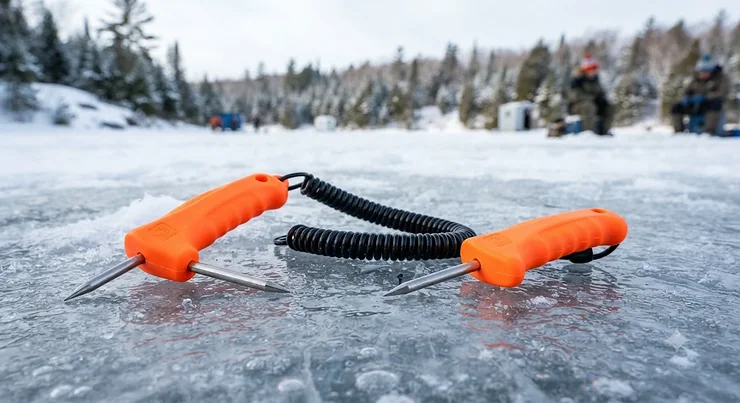
Here’s an uncomfortable truth: most anglers who fall through the ice aren’t newbies wandering onto slush with no clue what they’re doing. They’re regulars. People who’ve fished the same lake for a decade and got a little too comfortable with “it was fine last week.” Ice fishing picks — also called ice claws in some safety literature — are small, spike-tipped handheld tools — usually worn around the neck on a cord — that let you dig into the ice and haul yourself out if the surface gives way beneath you. They’re cheap, they weigh almost nothing, and they solve a problem your bare, freezing hands physically cannot: gripping a slick, wet edge with zero traction.
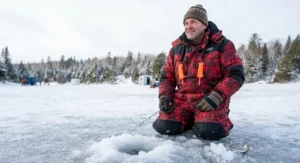
This guide breaks down seven real ice fishing picks sold to Canadian anglers, from bargain-bin classics to tungsten-tipped premium sets, and digs into what actually separates a pick that works from one that jams up at -15°C when you need it most. We’ll cover retractable designs, fixed-handle versions, the floating models that matter if you’re near open water, and the sharp-tip debate that gets more attention on fishing forums than almost anything else in the tackle box. None of this is theoretical — these are simple tools made of two sharp metal picks set into handles, usually connected by a cord you wear around your neck, with retractable guard sleeves built into the nicer commercial versions. Let’s get into which ones are worth clipping to your jacket this season.
Quick Comparison Table: Top Ice Fishing Picks at a Glance
| Pick | Style | Standout Trait | Price Range (CAD) | Best For |
|---|---|---|---|---|
| Frabill Deluxe Retractable Ice Picks | Retractable | Trusted heritage brand, worn-not-carried design | C$20-C$30 | Best all-around retractable |
| HT Enterprises Polar Ice Safety Picks | Fixed | Budget-friendly, widely stocked in Canada | Under C$15 | Best budget buy |
| Sjlerst Tungsten Carbide Ice Picks | Fixed | Carbide tips for stubborn, refrozen ice | C$15-C$25 | Best for sharp penetration |
| Floating Retractable Ice Awls | Retractable | Floats if dropped near open water | Under C$15 | Best floating design |
Even a quick scan tells you these aren’t interchangeable tools wearing different labels. The Frabill Deluxe Retractable Ice Picks and the HT Enterprises Polar Ice Safety Picks sit at opposite ends of the price spectrum but share the same core job — self-rescue traction — while the Sjlerst Tungsten Carbide Ice Picks trade a bit of simplicity for tips that bite into hard, glassy ice more reliably. If you fish near river mouths or pressure cracks where open water lingers, the floating option below isn’t a gimmick; it’s the difference between finding your gear again and watching it sink.
Just one click — help other anglers make safer buying decisions too! 😊
Top 7 Ice Fishing Picks: Expert Analysis
1. Frabill Deluxe Retractable Ice Picks — best all-round retractable design
Frabill has been outfitting ice anglers since 1938, and it shows in the little details on this pick — namely a retractable sheath system built to be worn under a jacket sleeve rather than buried in a tackle box where it’s useless. The stretch cord runs to a roughly 1.8-metre (about 72-inch) wingspan, which sounds excessive until you’re wearing bulky winter layers and need both handles to actually reach your hands without you contorting. The spikes themselves are stainless steel set into moulded plastic handles, retracting into a plastic sheath when not deployed so you’re not accidentally stabbing yourself while pulling on a coat. Based on the spec comparison with cheaper fixed-tip models, the sheath mechanism is the real value here — it’s the part that fails first on off-brand copies, and Frabill’s version has held up across multiple seasons according to long-term owner feedback aggregated on retailer sites. Reviewers consistently note the picks deploy smoothly even after being left in a cold vehicle overnight, though a handful mention the sheath can stiffen in extreme cold until worked loose a few times each season — a known quirk with retractable designs generally, not unique to this one. This is the pick for anglers who want a “wear it and forget it” setup rather than something to remember to grab from a bag.
Pros:
- ✅ Long stretch cord reaches comfortably over bulky winter clothing
- ✅ Retractable sheath keeps tips safely covered between uses
- ✅ Established brand with widely available replacement parts
Cons:
- ❌ Sheath mechanism can stiffen in deep-cold conditions
- ❌ Costs more than basic fixed-handle alternatives
Priced in the C$20-C$30 range at the time of research, it’s a reasonable premium over bargain picks for a mechanism designed specifically to be worn, not carried — check current price before buying, as availability shifts by retailer.
2. HT Enterprises Polar Ice Safety Picks — best budget buy widely sold in Canada
HT Enterprises’ Polar picks are the fixed-handle, no-frills option that shows up on forum threads as the one longtime anglers grew up using — and it’s sold through major Canadian retailers including Canadian Tire, which matters for anyone who wants to grab a pair without waiting on shipping. The handles are moulded plastic sized for a gloved grip, with steel points that stay exposed rather than retracting, meaning there’s no mechanism to jam or stiffen in the cold. What most buyers overlook about a fixed-tip design like this is that simplicity is itself a safety feature: fewer moving parts means fewer ways for the tool to fail exactly when your hands are numb and shaking. The tradeoff is that you need a plastic tip cover or careful storage so the points don’t puncture your jacket lining or bag over a season of use. Aggregated reviewer sentiment on this product line skews positive for reliability and negative for the exposed-tip storage annoyance, which tracks with what you’d expect from the design itself rather than a manufacturing flaw.
Pros:
- ✅ No retracting mechanism to freeze up or jam
- ✅ Sold in physical Canadian Tire stores for quick local pickup
- ✅ Among the least expensive genuine safety picks available
Cons:
- ❌ Exposed tips need a cover for safe storage
- ❌ Cord and handles feel noticeably basic compared to premium sets
At under C$15 in most listings, this is about as cheap as legitimate ice safety gear gets, and for a tool you hope to never actually need, that low barrier to entry matters — cheap insurance is still insurance.
3. Eagle Claw Ice Safety Picks (Red, Medium) — sharpest stock stainless spikes in this lineup
Eagle Claw built its reputation on fish hooks going back to the 1920s, and that hook-sharpening pedigree carries over into how these ice picks are ground — the stainless steel spikes arrive noticeably sharper out of the package than several competitors here, which matters more than it sounds. A dull spike glances off hard, wind-packed ice; a properly sharpened one bites on the first strike, and on frozen water, you may only get one or two strikes before your hands stop cooperating. The polymer handles are colour-coded in bright red for visibility against snow and ice, paired with a safety cord long enough to wear comfortably outside a jacket. Here’s what the spec sheet won’t tell you, but user reports suggest: the sharper tip is genuinely better for self-rescue on hard blue ice, but it also means these picks demand a bit more care in storage than blunter alternatives, since they’ll go through a soft tackle bag pocket without much resistance. For anglers who fish hard-frozen, wind-scoured lakes rather than softer, snow-covered ice, that sharper edge is a real functional advantage, not just marketing language.
Pros:
- ✅ Sharper factory grind than most fixed-tip competitors
- ✅ High-visibility red handles stand out against white ice
- ✅ Backed by a long-established fishing tackle brand
Cons:
- ❌ Sharper tips require more careful storage
- ❌ Fixed design offers no retractable safety cover
Expect a price in the mid-C$10 to C$20 range depending on retailer, positioning it as a slight step up from the most basic fixed picks without approaching premium territory.
4. Huntury Retractable Ice Safety Picks (2 Pack) — best for an extra-long reach
The standout spec here is a genuinely long retractable lanyard — Huntury advertises roughly 3.5 metres (about 11.5 feet) of stretchable cord, nearly double what some competing retractable sets offer. In practice, that extra length means the picks tuck comfortably around your neck under a parka, snowmobile suit, or float coat without pulling tight when you reach for a rod or auger. The tips retract into protective covers and pop out under pressure when jabbed into the ice, and the set ships with a safety whistle clipped to the same cord, so one piece of gear covers two emergency functions. Based on the spec comparison against shorter-corded alternatives, this is arguably the smartest design decision on this list for anyone who layers up heavily for extended sits in a shanty or shelter, since a short cord on a bulky suit effectively defeats the purpose — you can’t reach the handles fast enough. Real-world reviewer sentiment highlights the cord length specifically as the differentiator buyers mention most, alongside general satisfaction with build quality for the price point.
Pros:
- ✅ Roughly 3.5-metre lanyard fits over bulky winter suits
- ✅ Included safety whistle doubles up emergency gear
- ✅ Protective covers keep spikes retracted until needed
Cons:
- ❌ Longer cord can tangle if not stored deliberately
- ❌ Plastic covers add a step versus fully exposed tips
Priced roughly in the C$15-C$25 range, it sits comfortably in the mid-tier and earns that position through one specific, well-executed feature rather than a long list of extras.
5. WarmHut 4-Piece Retractable Ice Safety Picks (Red) — best multi-pack for groups and families
WarmHut’s set includes two full retractable pairs — four spikes total — which changes the math for anyone fishing with a partner, a teenager, or a group that rotates who’s actually out on the ice. Buying picks individually per person adds up fast; this set solves outfitting two anglers in a single purchase. The spring cord connecting each pair is described by the manufacturer as reaching roughly the same stretch range as competing retractable designs, with bright red and yellow colouring intended for quick visual spotting on snow. Reviewers consistently mention the value proposition of getting two complete sets for close to the price of one premium single set elsewhere, though a smaller number note the plastic components feel lighter-duty than metal-reinforced competitors — a fair trade for the price, provided you don’t expect commercial-grade toughness. What most buyers overlook is that outfitting a fishing buddy with proper gear is itself a safety strategy: rescue equipment only helps if the person actually has it clipped on, not left in the truck.
Pros:
- ✅ Two full retractable pairs in one purchase
- ✅ Bright dual-colour design aids visibility on snow
- ✅ Noticeably lower cost per pick than single premium sets
Cons:
- ❌ Components feel lighter-duty than reinforced competitors
- ❌ Smaller review pool than more established brands
At roughly C$15-C$25 for the full four-pick set, the per-person cost lands well below buying two premium single sets separately — a genuinely practical option for father-and-kid or buddy trips.
6. Sjlerst Tungsten Carbide Ice Fishing Safety Picks — sharpest, hardest tips for stubborn ice
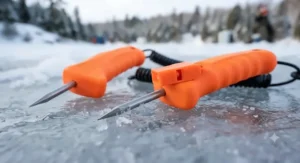
This is the pick built for the specific scenario where standard stainless spikes skate off the surface instead of digging in: late-season refrozen ice that’s gone through a thaw-freeze cycle and hardened into something closer to glass than the snow-covered ice most picks are tested on. The roughly 18 cm (7.1-inch) orange-handled picks use tungsten carbide tips, a material significantly harder than standard stainless steel and commonly used on ice-fishing auger blades for exactly this reason — it holds an edge on abrasive, dense ice far longer. Based on the spec comparison with the other fixed-tip options here, the carbide tip is a genuine material upgrade, not a marketing label, and it shows most clearly in cold snaps after a mid-winter melt when “normal” ice turns unusually hard and slick. Aggregated reviewer sentiment frames these as a specialist choice: anglers who’ve dealt with a bad refreeze specifically seek out carbide tips afterward, while casual users on typical snow-covered ice may not notice much difference versus standard stainless.
Pros:
- ✅ Tungsten carbide tips outlast stainless steel on hard ice
- ✅ Bright orange handles are easy to spot if dropped
- ✅ Compact, lightweight enough for a jacket pocket
Cons:
- ❌ Overkill for anglers who only fish soft, snow-covered ice
- ❌ Fixed design lacks a retractable protective sheath
In the C$15-C$25 range, the carbide upgrade adds a modest premium over basic stainless picks — worthwhile specifically for anglers who fish variable or late-season ice conditions.
7. Floating Retractable Ice Awls — best floating design near open water
Every pick on this list assumes you’ll keep it clipped to your neck or jacket — but gear gets dropped, cords get cut in a panic, and sometimes a pick ends up loose on the ice near a hole or a thin patch. This model addresses that specific failure point with a lightweight plastic shell engineered to float rather than sink if it goes into open water, finished in bright yellow for visibility against dark water and white ice alike. The retractable design mirrors other picks on this list — stainless tips housed in a plastic sheath, deployed under pressure — but the floating shell is the genuine differentiator, and it’s a small design choice that solves a real, if less-discussed, problem. Honest analysis here has to acknowledge a limit: a floating pick that’s drifted away from you in open water is arguably not much use in the two or three seconds you actually have for self-rescue, so this feature matters most as a “find it afterward” benefit rather than a mid-emergency one. Still, for anglers who fish near river mouths, inlets, or pressure ridges where open water is a recurring feature rather than a rare surprise, not losing a $15 tool into the lake every time it slips is a legitimate, practical upside.
Pros:
- ✅ Floating shell prevents total loss if dropped in open water
- ✅ High-visibility yellow colouring stands out on ice and water
- ✅ Retractable tips match the safety design of pricier models
Cons:
- ❌ Floating benefit is minimal during the actual self-rescue moment
- ❌ Smaller, lesser-known brand with a limited review history
Typically listed under C$15, it’s an inexpensive way to add a specific failure-mode safeguard without paying a premium-brand markup.
Practical Usage Guide: Wearing, Deploying, and Maintaining Your Picks
Buying ice fishing picks is the easy part; using them correctly is where most of the actual safety value gets won or lost. First, wear them — around your neck, outside your outer layer, not zipped into a pocket where cold hands can’t find them fast. Second, test the deployment mechanism before your first trip of the season: retractable sheaths that sat in a garage all summer can stiffen, and discovering that mid-emergency defeats the entire purpose of owning them. Third, if you fall through, resist the instinct to claw straight up at the edge closest to you — that ice already failed once. Instead, kick your legs to get horizontal, drive one pick into solid ice slightly further out, then the other, and pull yourself forward in a crawling motion rather than trying to haul your full weight vertically. Once you’re out, do not stand up immediately; roll or crawl away from the hole toward thicker ice or shore before getting to your feet. For maintenance, rinse salt and grit off the tips after coastal or brackish-water trips, dry the cord fully before storage to prevent mildew, and every few weeks during the season, pull the retractable sheath fully open and closed a few times to keep the mechanism from seizing in the cold — a tip echoed repeatedly across long-time users’ forum advice.
Real-World Scenarios: Which Pick Fits Your Ice Fishing Style
Consider three anglers. The first is a solo weekend regular who fishes the same familiar lake most winters and wants dependable, no-fuss gear — for them, the HT Enterprises Polar Ice Safety Picks or Eagle Claw Ice Safety Picks cover the basics without overthinking it, since fixed designs mean nothing to jam when they’re alone with no one to help troubleshoot gear. Outdoor Canada’s rundown of essential ice-angler safety equipment makes the same point: simple, dependable picks you’ll actually wear beat elaborate gear that stays in the truck. The second is a parent taking two kids out for their first hard-water season — here, the WarmHut 4-Piece Retractable Ice Safety Picks make practical sense, outfitting the whole group from one purchase while keeping cost manageable for gear that hopefully never gets used. The third is a serious angler who fishes deep into shoulder season when ice quality is unpredictable and sometimes badly refrozen — for that specific risk profile, the Sjlerst Tungsten Carbide Ice Fishing Safety Picks paired with the extra-long lanyard on the Huntury Retractable Ice Safety Picks make a smarter combination than either alone, since hard ice and bulky late-season layering are exactly the conditions each product was built to handle.
Problem → Solution: Fixing the Most Common Ice Pick Mistakes
Problem: Picks buried in a tackle box, unreachable in an emergency. Solution — wear them on a cord around your neck, outside your jacket, every single trip, no exceptions.
Problem: Retractable sheath frozen stiff. Solution — work the mechanism open and closed a few times before heading out, and store the picks somewhere above freezing between trips when possible.
Problem: Sharing one pair between two anglers. Solution — a multi-pack like the WarmHut 4-Piece Retractable Ice Safety Picks ensures no one is left without gear.
Problem: Dull tips that skate off hard, refrozen ice. Solution — a carbide-tipped option like the Sjlerst Tungsten Carbide Ice Fishing Safety Picks holds an edge on unusually hard surfaces far longer than standard stainless.
Problem: A pick lost into open water near a hole. Solution — a floating design like the Floating Retractable Ice Awls at least keeps your gear recoverable instead of gone for good.
How to Choose Ice Fishing Picks: 7 Criteria That Matter
- Retractable vs. fixed tips — retractable sheaths add safety when storing the picks against your body but introduce a mechanism that can stiffen in extreme cold.
- Cord length — a longer stretch cord matters more than it seems once you’re wearing bulky winter layers over a snowmobile suit.
- Tip material — standard stainless handles most conditions, while tungsten carbide earns its keep on hard, refrozen late-season ice.
- Visibility — bright handle colours help you locate a dropped pick quickly against snow or dark water.
- Whistle inclusion — a built-in safety whistle on the same cord means one less separate item to remember.
- Floating capability — a genuine plus near open water or river mouths, less relevant on interior lakes.
- Pack size — solo anglers need one set; families and fishing groups should budget for a multi-pack per person on the ice.
Retractable vs. Fixed-Handle Ice Picks: Which Wins on the Ice?
This debate shows up constantly in ice fishing forums, and honestly, there’s no single correct answer — it depends on what you’re optimizing for. Retractable picks, like the Frabill Deluxe Retractable Ice Picks and Huntury Retractable Ice Safety Picks, win on wearability: the tips stay safely covered while clipped around your neck all day, which means you’re actually more likely to wear them continuously rather than stash them somewhere “safer.” Fixed-handle designs, like the HT Enterprises Polar Ice Safety Picks and Eagle Claw Ice Safety Picks, win on reliability in extreme cold, since there’s no sheath mechanism to seize up right when you need the tips exposed instantly. What most buyers overlook is that the “best” choice is really about your storage habits — if you’re diligent about maintaining a retractable mechanism, its comfort advantage wins; if you’d rather never think about it again, fixed-tip simplicity is the safer bet for long-term reliability.
What Real Ice Safety Picks Reviews Actually Tell You
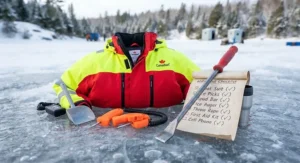
Scrolling through aggregated ice safety picks review sections on major retail sites reveals a pattern that’s worth flagging honestly: five-star reviews cluster around ease of use and peace of mind, while the handful of critical reviews almost always concern one of two things — a retractable mechanism that stiffened in deep cold, or handles that felt “cheap” on the lowest-price fixed models. Reviewers consistently note that even budget picks generally perform fine in a real emergency, since the core mechanism (sharp point plus solid handle) is simple enough that there’s not much to fail. The more useful signal in genuine reviews isn’t star rating — it’s whether the reviewer mentions actually testing the mechanism before relying on it, which the honest ones do, and the complacent ones skip. Reading reviews with that lens, rather than just the star average, tells you far more about which product suits your storage and use habits than a blanket 4.5-star rating ever will.
Floating Ice Picks vs. Standard Models: Does It Matter If You Fall In?
The honest answer is: it depends heavily on where you fish. On interior lakes with a single drilled hole surrounded by solid ice, a floating shell like the one on the Floating Retractable Ice Awls adds little practical benefit during a fall-through emergency, since you’re grabbing for solid ice, not floating gear. Near river mouths, current-affected sections, or spring-fed inlets where open water lingers even in deep winter, the calculation changes — dropped gear near open water is genuinely gone forever without a floating design, and losing your only safety pick mid-season because it sank is a real, if underdiscussed, failure mode. On paper this means floating design is a situational upgrade, not a universal one: worth prioritizing specifically if your local ice conditions include recurring open-water sections, and low-priority if you fish consistently solid interior lakes.
Sharp Tips and Tungsten Carbide: What Makes Ice Safety Picks Actually Penetrate Ice?
Marketing copy loves the word “sharp,” but the physics underneath it is straightforward: a pointed tip concentrates force into a smaller contact area, and harder materials hold that point longer under repeated impact against abrasive, crystalline ice. Standard stainless steel spikes, as found on the Eagle Claw Ice Safety Picks, arrive sharp enough for the vast majority of snow-covered, moderately hard ice most anglers encounter through a normal season. Tungsten carbide, used on the Sjlerst Tungsten Carbide Ice Fishing Safety Picks, is a substantially harder material — the same reasoning behind carbide-tipped auger blades — and it resists dulling on the unusually hard, glassy ice that shows up after a mid-season thaw-and-refreeze cycle. Here’s what the spec sheet won’t tell you, but repeated forum discussion suggests: a genuinely sharp pick still needs a firm, deliberate strike to bite properly; even the sharpest tip glances off ice if it’s swung weakly or at the wrong angle, so tip quality matters, but technique matters just as much.
Emergency Ice Picks for Different Types of Anglers
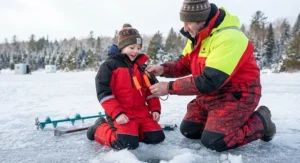
Not every angler needs the same emergency ice picks setup. Beginners heading onto frozen lakes for the first time are generally best served by simple, fixed-handle emergency ice picks like the HT Enterprises Polar Ice Safety Picks — fewer moving parts means less to learn and less to fail while you’re still building good ice-safety habits. Seasoned anglers who fish solo often lean toward retractable emergency ice picks with an included whistle, like the Huntury Retractable Ice Safety Picks, since solo fishing removes the safety net of a partner who could otherwise call for help or assist directly. Families and groups benefit most from multi-packs such as the WarmHut 4-Piece Retractable Ice Safety Picks, ensuring every person on the ice — not just the most safety-conscious adult — actually has emergency gear clipped on. Anglers who fish variable, late-season, or coastal-influenced ice should weight their choice toward the Sjlerst Tungsten Carbide Ice Fishing Safety Picks or the Floating Retractable Ice Awls, since their specific conditions match those products’ specialized strengths more closely than a generic all-purpose pick.
Long-Term Cost, Maintenance & Storage
Ice fishing picks are one of the few pieces of gear in this sport where long-term cost genuinely favours buying decent quality the first time. A basic fixed pick under C$15 and a premium retractable set closer to C$30 will likely both last multiple seasons if stored properly — the real cost driver isn’t the purchase price, it’s replacement frequency from neglect. Rinsing tips after use, drying cords fully before storing them in a damp tackle bag, and periodically exercising a retractable mechanism all extend usable life well beyond a single season. Total cost of ownership, then, comes down to habits more than the sticker price: a C$12 fixed pick maintained properly will likely outlast a C$25 retractable set left in a wet bag all summer. Given how rarely these tools get used in an actual emergency, that low ongoing cost — a few minutes of care per season — is arguably the best return-on-investment item in an ice angler’s entire kit.
Ice Safety Regulations and Ice Thickness Guidelines Across Canada
Canada doesn’t regulate ice fishing picks themselves as safety equipment the way life jackets are regulated for boating, but government and safety organizations are consistent and specific about ice thickness and general precaution. Changing weather can cover waters and leave you disoriented on a surface with no landmarks, so it’s best to avoid travelling over ice in early and late winter when conditions are more likely to be dangerous, and to avoid slushy, thawed, or recently refrozen ice, according to the Canadian Coast Guard’s ice safety guidance. Provincial guidance adds concrete numbers to that caution: Saskatchewan’s Water Security Agency, for instance, recommends at least 10 cm (four inches) of ice to walk on, and 20 cm (eight inches) before taking a snowmobile or ATV onto the surface, figures broadly consistent with guidance from other provinces and the Canadian Red Cross. None of this replaces carrying self-rescue gear — thickness guidelines describe averages, and ice quality varies within metres on the same lake — but it does mean picks should be treated as a backup to good judgment, not a substitute for it. Anyone new to the sport should also review Transport Canada’s guidance on working and travelling on ice-covered water, which, while aimed partly at workplaces, lays out the same core hazards recreational anglers face.
Frequently Asked Questions
❓ How do ice fishing picks actually work?
❓ Are retractable ice picks better than fixed ones?
❓ Do floating ice picks matter for lake fishing?
❓ What makes some ice safety picks sharper than others?
❓ How much do good emergency ice picks cost in Canada?
Conclusion
Ice fishing picks aren’t glamorous gear — nobody posts a proud photo of their safety picks next to a trophy walleye — but they’re one of the few items on this list of winter tackle that can genuinely determine how an emergency plays out. Whether you land on the budget-friendly HT Enterprises Polar Ice Safety Picks, the wear-and-forget convenience of the Frabill Deluxe Retractable Ice Picks, or a specialty option like the Sjlerst Tungsten Carbide Ice Fishing Safety Picks for stubborn late-season ice, the underlying goal is the same: give your future, freezing, panicking self a fighting chance at self-rescue. Match the pick to your actual conditions — solo versus group, interior lake versus open-water-adjacent, early-season versus deep midwinter — rather than just grabbing whatever’s cheapest at the till. Pair the gear with the habits that actually keep anglers safe: checking ice thickness, never fishing completely alone if you can help it, and wearing the picks rather than stashing them. None of these seven options is a bad choice; they’re built for slightly different anglers and slightly different ice.
✨ Don’t Miss These Exclusive Deals! 🎣
Gear up before first ice locks in this season. Click on any highlighted pick above to check current pricing and availability on amazon.ca, and head into winter with real self-rescue gear clipped to your jacket, not buried in a bag at home.
Recommended for You
- 7 Best Swivel Ice Fishing Seats in Canada 2026 (Ranked)
- 7 Best Flip Over Seat Ice Fishing Shelters in Canada 2026
- 7 Best Insulated Ice Fishing Buckets in Canada 2026
Disclaimer: This article contains affiliate links. As an Amazon Associate, I earn from qualifying purchases. If you purchase products through these links, we may earn a small commission at no additional cost to you.
Found this helpful? Share it with a fishing buddy before their next trip out! 🎣❄️
