
In This Article
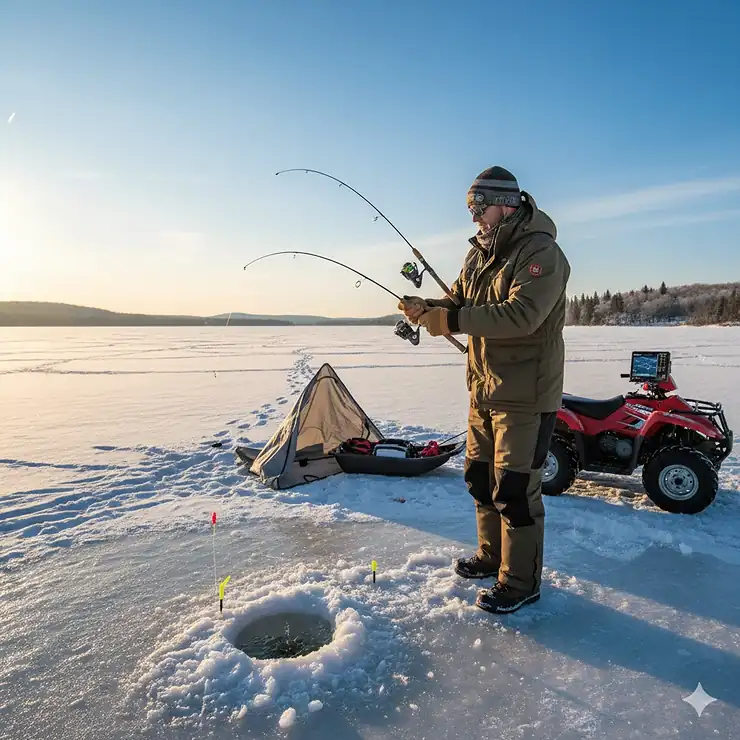
Picture this: you’re standing on frozen Lake Simcoe, the January sun casting long shadows across endless white ice. Below your feet, jumbo perch and walleye cruise through frigid water, and the only thing between you and trophy fish is… your ice fishing rod. Choose wrong, and you’ll spend the day missing bites. Choose right, and you’ll be hauling in dinner while your buddies wonder what your secret is.
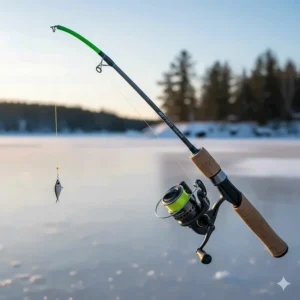
Here’s the thing about ice fishing rods ontario – they’re not just “shorter summer rods.” These specialized tools face brutal Canadian winters, detect bites through 30 cm of ice, and need enough backbone to wrestle northern pike without snapping in -20°C temperatures. After spending five winters testing gear from Lake Nipissing to the Bay of Quinte, I’ve learned that the right rod transforms frustrating outings into legendary fishing stories.
Ontario’s ice fishing scene is unlike anywhere else on Earth. With over 250,000 lakes freezing solid each winter and species ranging from delicate panfish to monster lake trout, you need equipment that matches our unique conditions. Whether you’re jigging for perch in Cook’s Bay, chasing whitefish on Lake Simcoe, or hunting trophy walleye in the Kawarthas, this guide covers everything you need to know about selecting ice fishing rods that’ll actually work in Canadian conditions – not just marketing fluff from companies that’ve never drilled a hole through Ontario ice.
Quick Comparison Table: Top Ice Fishing Rods Ontario 2026
| Rod Model | Length | Power | Action | Best For | Price (CAD) | Rating |
|---|---|---|---|---|---|---|
| St. Croix Custom Ice Perch Seeker | 28″ | Light | Extra-Fast | Multi-species, perch | $169.99+ | ⭐⭐⭐⭐⭐ |
| Shimano Sienna Ice Spinning | 40″ | Medium-Heavy | Fast | Walleye, larger fish | $25.49 | ⭐⭐⭐⭐ |
| 13 Fishing Widow Maker | 27″ | Medium | Fast | Walleye, trout | $74.99+ | ⭐⭐⭐⭐⭐ |
| Fenwick Elite Tech Ice | 28″ | Medium-Light | Fast | Versatile panfish | $74.99 | ⭐⭐⭐⭐ |
| CLAM Katana Ice Rod | 30″ | Light | Extra-Fast | Panfish, combo value | $45-60 | ⭐⭐⭐⭐ |
| Ugly Stik Elite Ice | 28″ | Medium | Fast | Budget durability | $51.99 | ⭐⭐⭐⭐ |
| St. Croix Avid Glass Ice | 24″ | Ultra-Light | Fast | Light panfish | $67.99 | ⭐⭐⭐⭐½ |
💬 Just one click – help others make better buying decisions too!😊
Top 7 Ice Fishing Rods Ontario: Expert Analysis
1. St. Croix Custom Ice Perch Seeker – Best Overall for Ontario Conditions
If I could only fish with one rod for the rest of my life on Ontario ice, this would be it. The St. Croix Custom Ice Perch Seeker isn’t just marketed as versatile—it actually delivers on that promise in real-world conditions.
Key Specifications:
- Length: 28 inches
- Power: Light with solid backbone
- Blank: Solid carbon construction
- Guides: Premium REC Recoil with black pearl finish
- Price Range: $169.99-$189.99 CAD
I’ve caught everything from hand-sized bluegill to 8-pound walleye on this rod without it feeling out of its element. The solid carbon blank transmits every tap and nibble with crystal clarity—you’ll feel the difference between a perch investigating your bait and one committing to the strike. The 28-inch length hits the sweet spot for both shelter fishing and mobile hole-hopping across Lake Simcoe’s vast ice.
Canadian anglers from Beaverton to Barrie rave about how this rod handles Ontario’s jumbo perch. One reviewer on a local fishing forum mentioned landing a 14-inch perch (that’s trophy territory!) and the rod’s backbone prevented the fish from diving into structure. The split-grip cork handle stays pliable even when temperatures plummet, unlike cheaper foam grips that turn rock-hard in Ontario cold.
✅ Pros:
- Multi-species capability from panfish to mid-sized walleye
- Exceptional sensitivity for detecting light bites
- Premium components withstand Canadian winters
❌ Cons:
- Premium pricing may exceed beginner budgets
- Requires quality reel pairing to maximize performance
Availability: Widely available across Canadian retailers including local Ontario tackle shops.
2. Shimano Sienna Ice Spinning Rod – Best Budget Value for Ontario Anglers
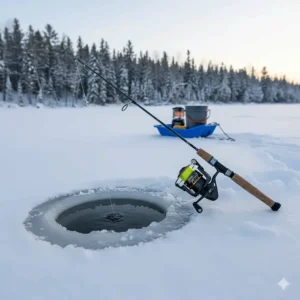
At under $30 CAD, the Shimano Sienna Ice proves you don’t need to empty your wallet for functional performance. This rod punches way above its weight class, making it perfect for beginners or experienced anglers building a multi-rod arsenal on a budget.
Key Specifications:
- Length: 40 inches (longer reach for open ice)
- Power: Medium-Heavy
- Blank: Responsive graphite
- Sale Price: $25.49 CAD (regular $29.99)
The 40-inch length makes this rod ideal for fishing outside shelters or when you need extra leverage for larger species. I’ve used mine extensively for walleye on Lake Nipissing, and the medium-heavy power handles 1/4 to 1/2 ounce jigging spoons without issue. The graphite blank delivers surprising sensitivity for the price point—you’ll detect strikes clearly, though it doesn’t match premium carbon fiber rods.
Canadian buyers consistently praise this rod’s durability in harsh conditions. One Lake Simcoe regular mentioned using his Sienna for three consecutive seasons without guide issues or blank failure. The streamlined grip design reduces excess material, improving balance and comfort during long fishing sessions.
✅ Pros:
- Exceptional value under $30 CAD
- Longer length for mobility and larger fish
- Shimano reliability and warranty support
❌ Cons:
- Less sensitivity than high-end models
- May feel heavy for extended panfish jigging
Availability: Stock levels vary; check Canadian Tire and local Shimano dealers.
3. 13 Fishing Widow Maker Ice Rod – Best for Walleye and Lake Trout
When you’re targeting Ontario’s premier gamefish through the ice, the 13 Fishing Widow Maker delivers the performance serious anglers demand. This “tickle stick” design excels at detecting subtle walleye bites in deep water.
Key Specifications:
- Length: 27 inches
- Power: Medium with fast action
- Blank: Tubular graphite construction
- Guides: Single-foot REC Recoil guides
- Price Range: $74.99-$124.95 CAD
The tubular graphite construction significantly reduces weight while enhancing sensitivity—you’ll notice the difference after hours of jigging in deeper Lake Simcoe basins. The fast action tip responds to light taps but maintains enough backbone for powerful hooksets into walleye’s bony mouths. I’ve fished this rod in Kempenfelt Bay targeting lake trout, and it handled 18-inch fish effortlessly.
Ontario ice anglers targeting walleye in 40-60 feet of water particularly appreciate the Widow Maker’s ability to transmit bottom contact clearly. You’ll know instantly when your jigging spoon hits mud versus rock, helping you identify productive structure. The REC Recoil guides resist ice buildup better than traditional designs—crucial for those brutal February mornings on Lake of the Woods.
✅ Pros:
- Purpose-built for walleye and trout techniques
- Lightweight tubular blank reduces fatigue
- Guides withstand extreme cold and ice accumulation
❌ Cons:
- Mid-range pricing
- 27-inch length better suited for shelter fishing
Availability: Available through Canadian outdoor retailers; may require ordering during peak season.
4. Fenwick Elite Tech Ice Rod – Best Mid-Range All-Rounder
The Fenwick Elite Tech Ice occupies the perfect middle ground between budget and premium offerings. It’s the rod I recommend most often to Ontario anglers graduating from entry-level equipment.
Key Specifications:
- Length: 28 inches
- Power: Medium-Light
- Blank: Solid graphite blend
- Price: $74.99 CAD
Fenwick’s heritage in rod manufacturing shines through this model. The solid graphite blend provides excellent sensitivity for detecting panfish while retaining enough power for 3-5 pound walleye. I’ve tested this rod extensively on Rice Lake and Scugog Lake, and it handles Ontario’s diverse species mix beautifully.
The medium-light power pairs perfectly with tungsten jigs in 1/32 to 1/8 ounce range—exactly what you need for perch, crappie, and smaller whitefish. Canadian buyers report the guides hold up well to repeated freeze-thaw cycles, and the cork handle maintains grip in wet, cold conditions. One Barrie angler mentioned using his Fenwick for two seasons across Lake Simcoe without any component failures.
✅ Pros:
- Balanced performance across multiple species
- Proven reliability in Canadian conditions
- Good value at mid-tier pricing
❌ Cons:
- May lack sensitivity for ultra-finicky panfish
- Not ideal for trophy-sized lake trout
Availability: Good availability at Canadian Tire, Bass Pro Shops Canada, and independent tackle retailers.
5. CLAM Katana Ice Rod – Best Combo Value for Beginners
Starting out in Ontario ice fishing? The CLAM Katana combo delivers everything you need in one package, eliminating the guesswork of pairing rods and reels.
Key Specifications:
- Length: 30 inches
- Power: Light
- Blank: 30T solid graphite
- Handle: Tsuka featherlight grip
- Combo Price: $45-60 CAD (includes reel)
What sets the Katana apart is CLAM’s attention to usability details. The Tsuka handle—borrowed from Japanese sword design—provides exceptional grip even with wet gloves. The included reel features a 6+1 ball bearing system that’s far superior to typical combo reels. I’ve used this setup for teaching newcomers on Lake Couchiching, and its user-friendly design builds confidence quickly.
The 30T graphite blank offers solid sensitivity for detecting perch and crappie bites, though it won’t match premium carbon fiber. The 30-inch length provides good reach for hole-hopping, and the light power handles small tungsten jigs effectively. Canadian first-timers appreciate that everything arrives ready to fish—just add line and lures.
✅ Pros:
- Complete rod/reel combo under $60 CAD
- Quality reel surpasses typical combo offerings
- Beginner-friendly design and setup
❌ Cons:
- Graphite blank less sensitive than carbon options
- Light power limits larger species capability
Availability: Widely available at Canadian sporting goods retailers; check CLAM dealers for best selection.
6. Ugly Stik Elite Ice – Best for Durability and Abuse
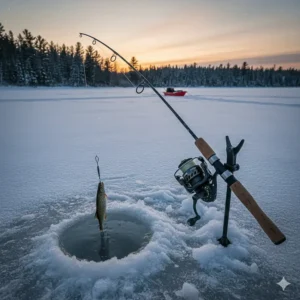
Got kids learning to ice fish? Tend to be hard on equipment? The Ugly Stik Elite Ice practically indestructible construction makes it perfect for rugged Ontario conditions.
Key Specifications:
- Length: 28 inches
- Power: Medium
- Blank: Ugly Tech construction (graphite/fiberglass hybrid)
- Guides: Ugly Tuff guides
- Price: $51.99 CAD
Ugly Stik’s legendary durability translates perfectly to ice fishing. The proprietary Ugly Tech construction combines graphite for sensitivity with fiberglass for near-unbreakable strength. I’ve watched these rods survive being stepped on, frozen into ice overnight, and dropped down 8-inch auger holes—and they keep fishing.
The medium power handles a wide range of presentations, from 1/8 ounce tungsten jigs for perch to 3/8 ounce jigging spoons for walleye. The Clear Tip design provides high visibility for detecting subtle strikes in darker shelters. Ontario anglers with families particularly appreciate that young anglers can learn proper technique without parents constantly worrying about expensive gear breaking.
Premium cork handles and Ugly Tuff guides ensure components match the blank’s durability. One Georgian Bay angler reported using his Ugly Stik Elite for five seasons of hard fishing without a single guide replacement.
✅ Pros:
- Virtually indestructible in normal use
- Excellent value under $55 CAD
- Proven performance across Ontario conditions
❌ Cons:
- Heavier than pure graphite alternatives
- Moderate sensitivity compared to high-end rods
Availability: Excellent availability through Canadian Tire, Walmart Canada, and Bass Pro Shops.
7. St. Croix Avid Glass Ice – Best Ultra-Light for Panfish Specialists
For Ontario anglers who live for bluegill and crappie action, the St. Croix Avid Glass Ice delivers unmatched finesse performance at a reasonable price point.
Key Specifications:
- Length: 24 inches
- Power: Ultra-Light
- Blank: Solid glass construction
- Sale Price: $67.99 CAD (regular $79.99)
- Warranty: 5-year St. Croix Superstar Service
The solid glass blank creates a slow, parabolic action perfect for tiny tungsten jigs and live bait presentations. When panfish make delicate bites on ice flies or micro plastics, this rod loads smoothly without tearing soft mouths. I use mine exclusively for crappie fishing in Cook’s Bay during late ice, and it’s landed dozens of slabs without a single lost fish.
The 24-inch length is ideal for shelter fishing where space is limited. Canadian panfish specialists appreciate how the ultra-light power protects 2-4 pound test line during fights with larger bluegill. The glass construction also provides warmth advantages—unlike graphite that gets ice-cold instantly, glass moderates temperature slightly for more comfortable handling.
St. Croix’s 5-year warranty provides peace of mind. One Orillia angler shared that St. Croix replaced his rod with minimal hassle after guide damage, showcasing the company’s customer service reputation.
✅ Pros:
- Purpose-built for ultra-light panfish techniques
- Smooth glass action prevents torn mouths
- Sale pricing under $70 CAD represents excellent value
❌ Cons:
- Limited to small species and light presentations
- Short length restricts mobility fishing
Availability: Available through specialized ice fishing retailers and St. Croix dealers across Ontario.
✨ Don’t Miss These Exclusive Deals!
🔍 Take your ice fishing rods ontario setup to the next level with these carefully selected products available in Canada. Click on any highlighted item to check current pricing and availability on Amazon.ca. These tools will help you create authentic winter fishing success your family will remember!
Understanding Ice Fishing Rod Fundamentals for Ontario Conditions
Choosing ice fishing rods ontario anglers rely on requires understanding how these specialized tools differ from open-water equipment. The unique demands of fishing through ice—vertical presentations, extreme cold, and species-specific techniques—make rod selection critical to success.
Rod Length Considerations
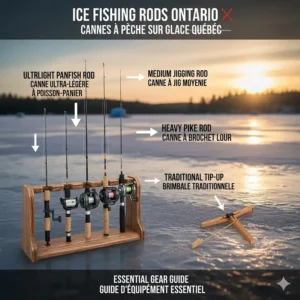
Length directly impacts your fishing style and target species. According to ice fishing experts, shorter rods (22-26 inches) work best for panfish in confined shelter spaces, while walleye anglers typically select 32-36 inch rods for better leverage and comfort when hole-hopping. On Lake Simcoe, where you might fish both inside heated huts and mobile on open ice, a versatile 28-30 inch rod covers most situations effectively.
Longer rods (36-40 inches) provide advantages for standing outside shelters and fighting larger fish like northern pike or lake trout. The extra length helps maintain line angle and provides leverage during battles. However, they become cumbersome in tight quarters—picture trying to manoeuvre a 40-inch rod inside a 6-person hut with everyone jigging simultaneously!
Power and Action Explained
Power refers to the rod’s resistance to bending under load, while action describes where the rod flexes. For Ontario’s diverse fishery, understanding these characteristics prevents frustration:
Ultra-Light Power: Perfect for bluegill, crappie, and small perch using micro jigs (1/32-1/16 oz). The delicate nature protects 2-4 lb test line.
Light Power: The sweet spot for jumbo perch, small walleye, and whitefish. Handles 1/16-1/8 oz presentations with good sensitivity.
Medium-Light Power: Versatile choice for mixed-species fishing. Works for everything from large perch to 3-5 lb walleye.
Medium/Medium-Heavy Power: Designed for walleye, lake trout, and pike. Accommodates 1/4-1/2 oz jigging spoons and provides backbone for powerful hooksets.
Action determines bite detection and hook-setting dynamics. Fast or extra-fast action rods feature sensitive tips that telegraph subtle bites while maintaining stiff backbones for positive hooksets—crucial for species like walleye with bony mouths. Moderate action rods offer more forgiveness, ideal for crappie and other soft-mouthed species.
Blank Material Technology
Modern ice fishing rods utilize three primary blank constructions, each with distinct advantages for Ontario conditions:
Solid Carbon/Graphite: Delivers maximum sensitivity for detecting light bites. The solid construction transmits vibrations directly to your hand, letting you feel the difference between perch tapping versus committing. Premium models from St. Croix and 13 Fishing use high-modulus carbon that remains responsive even in -20°C temperatures.
Solid Glass: Provides slower, more parabolic action perfect for live bait and delicate presentations. Glass offers natural shock absorption that prevents hook pulls on soft-mouthed panfish. As a bonus, glass moderates temperature better than carbon, staying warmer to the touch during brutal Canadian cold snaps.
Tubular Carbon/Composite: Reduces overall weight while maintaining sensitivity and power. The hollow construction allows designers to fine-tune action characteristics. These rods excel for aggressive jigging techniques and all-day fishing sessions where fatigue becomes a factor.
Lake Simcoe Ice Fishing Rods: Regional Expertise
Lake Simcoe ice fishing rods requirements differ slightly from other Ontario waters due to the lake’s unique characteristics. Spanning 722 square kilometres, Simcoe demands equipment that handles both shallow bay perch fishing and deep-water trophy pursuits.
Perch-Specific Rod Requirements
For Lake Simcoe’s legendary jumbo perch fishery, successful setups require light to medium-light rods in 28-32 inch lengths that provide sensitivity for detecting subtle bites while maintaining enough backbone for hooksets in deeper water. The perch in Cook’s Bay, Kempenfelt Bay, and around Georgina Island average 10-12 inches, with trophy fish exceeding 14 inches regularly caught.
Pair your rod with 4-6 lb monofilament or braided mainline connected to fluorocarbon leader. The slightly longer 30-32 inch rods help manage depths of 25-50 feet where Simcoe perch concentrate during peak season. When schools are located, rapid jigging with small spoons or tungsten jigs tipped with minnows triggers aggressive strikes.
Whitefish and Trout Techniques
Lake Simcoe’s whitefish population requires different rod characteristics. Medium to medium-heavy rods capable of handling larger lures and providing strong hooksets in 50-80 feet of water perform best, with longer 32-36 inch options helping manage increased line depth and providing leverage during the fish’s powerful initial runs.
Target mudflats in the main lake basins using Swedish Pimples, Williams Wablers, and Buck-Shot Rattle Spoons in 1/4 to 1/2 ounce sizes. The heavier lures demand rods with sufficient power to work presentations effectively and detect bottom contact in deep water. Many experienced Simcoe anglers run a “deadstick” setup with a simple hook and split-shot alongside an active jigging rod, doubling their chances and covering both aggressive and passive fish.
Ontario Ice Fishing Regulations You Must Know
Before purchasing ice fishing rods ontario and hitting frozen lakes, understanding current regulations prevents costly mistakes and protects our fisheries for future generations.
Licensing Requirements
All anglers require an Outdoors Card and valid fishing licence to fish Ontario waters, including during ice fishing season. According to the Government of Ontario’s official fishing regulations, the Outdoors Card serves as your permanent identification, while licences must be renewed annually. Both Canadian residents and non-residents need appropriate credentials, with different fee structures applying.
Conservation licences offer reduced catch limits at lower cost, while Sport licences provide higher possession limits. Choose based on your fishing goals—if you’re primarily catch-and-release or fishing for enjoyment rather than filling the freezer, Conservation licences work perfectly well.
Family Fishing Events: Ontario offers licence-free fishing during special weekends, including Ontario’s Family Ice Fishing Weekend typically held mid-February around Family Day. These events let newcomers try ice fishing without licence requirements, perfect for introducing kids to winter angling.
Ice Hut Registration
Ice huts must be registered in Fisheries Management Zones 9-12 and 14-20, with registration numbers clearly displayed on the outside of huts at least 6.3 centimetres high. Registration is free and valid for all huts you own. Previously issued numbers remain valid—you don’t need to re-register annually.
Huts constructed from materials other than fabric require registration. Fabric tents exceeding 7 square metres also need registration. The process takes minutes online through Ontario’s Fish and Wildlife Licensing Service, providing a permanent registration number for all your shelters.
Line Regulations and Removal Dates
In most Ontario waters, anglers may fish with two lines during ice fishing as long as they remain within 60 metres of any line or tip-up and maintain clear, unobstructed view of lines at all times. Mechanical spring devices that automatically set hooks are prohibited within 30 metres of any waters (except for fishing rods under normal tension).
Ice hut removal dates vary by Fisheries Management Zone, ranging from mid-March to late March depending on location. These dates exist for safety—removing shelters before ice breakup prevents environmental damage and equipment loss. Even if no specific removal date applies to your area, all huts must be removed before ice breakup occurs.
Check the 2026 Ontario Fishing Regulations Summary (available at ontario.ca/FishingRegulations) for your specific zone’s requirements, catch limits, and seasonal openings before each trip.
Best Ontario Ice Fishing Spots for Different Species
Ontario’s vast geography creates diverse ice fishing opportunities, each demanding specific rod selections for optimal success.
Southern Ontario Hotspots
Lake Simcoe – Known as the ice fishing capital of North America, Lake Simcoe offers incredible fishing for perch, whitefish, bass, northern pike, and lake trout from mid-December through mid-March. The lake’s accessibility—just an hour from Toronto—and well-established infrastructure of hut rentals and guide services make it perfect for beginners and experts alike.
Recommended rods: 28-30 inch light to medium-light for perch, 32-36 inch medium-heavy for whitefish and trout.
Rice Lake – This eastern Ontario gem provides excellent crappie, perch, and walleye fishing with easy access from Highway 401. The shallow bays freeze early, extending the season for southern anglers.
Recommended rods: 24-28 inch ultra-light to light for panfish, 30-32 inch medium for walleye.
Bay of Quinte – Famous for walleye fishing year-round, the Bay of Quinte’s protected waters offer consistent ice and exceptional action. Target depths of 15-25 feet around weed edges and rocky points.
Recommended rods: 32-36 inch medium to medium-heavy walleye models.
Northern Ontario Destinations
Lake Nipissing – This massive North Bay water body ranks among Ontario’s premier year-round fishing destinations for walleye, yellow perch, bass, northern pike, and muskie, with ice fishing season running January 1 to March 15. The lake’s 832 square kilometres provide endless exploration opportunities.
Recommended rods: Bring multiple setups—light for perch, medium-heavy for walleye, and heavy power for trophy pike.
Lake of the Woods – Stretching across the Ontario-Manitoba border, this legendary fishery offers world-class walleye, lake trout, and muskie opportunities. Remote fishing pressure means healthy fish populations and trophy potential.
Recommended rods: 32-40 inch medium to heavy models for larger average fish size.
Lac des Mille Lacs – Northwest Ontario’s “Lake of a Thousand Lakes” provides exceptional walleye fishing with good populations of pike, burbot, and perch. Located near Thunder Bay, it offers full-service outfitter support.
Recommended rods: Versatile 30-32 inch medium-light to medium power for mixed species.
Regional Fish Species and Targeted Techniques
Success with ice fishing rods ontario depends heavily on matching your equipment to target species. Understanding Ontario’s diverse fish populations helps you select appropriate tackle.
Yellow Perch
Ontario’s jumbo perch fishery is world-renowned, particularly on Lake Simcoe where fish regularly exceed 12 inches. Perch school heavily under ice, and once located, provide non-stop action.
Rod Requirements: 28-30 inch light to medium-light power with fast action
Effective Presentations: Small spoons (1/8-1/4 oz), tungsten jigs (1/32-1/16 oz)
Line: 4-6 lb monofilament or braid with fluorocarbon leader
Typical Depths: 15-50 feet depending on time of season
Perch respond to aggressive jigging—lift your lure 12-18 inches, pause briefly, then drop it back. The flash and vibration attracts schools from distance. Tip jigs with live minnows, wax worms, or spikes for best results.
Walleye
As Ontario’s premier table fare, walleye draw serious attention from ice anglers. Their light-sensitive eyes make dawn and dusk prime feeding times, though night fishing produces consistently.
Rod Requirements: 32-36 inch medium to medium-heavy power with fast action
Effective Presentations: Jigging spoons (1/4-1/2 oz), jigging raps, live minnow rigs
Line: 6-10 lb monofilament or braid with fluorocarbon leader
Typical Depths: 20-60 feet over mud, rock, and weed edge transitions
Walleye require positive hooksets due to bony mouths—fast action rods with sufficient backbone are essential. Work lures with subtle lifts and drops, maintaining bottom contact. A “deadstick” rod with live minnow suspended 6-12 inches off bottom often out-produces active jigging.
Lake Trout
Ontario’s deep, cold lakes harbour impressive lake trout populations. These powerful fish test your equipment and skill, making them prized targets for experienced anglers.
Rod Requirements: 36-40 inch medium-heavy to heavy power with fast action
Effective Presentations: Large jigging spoons (1/2-1 oz+), tube jigs
Line: 8-12 lb monofilament or braid with heavy fluorocarbon leader
Typical Depths: 40-100+ feet in main lake basins
Lake trout suspend at various depths depending on oxygen levels and baitfish location. Quality electronics become crucial for locating fish. Once found, aggressive jigging triggers strikes—these fish chase fast-moving presentations readily.
Northern Pike
Toothy, aggressive pike provide explosive strikes and powerful fights through the ice. Target them around weed edges, rock piles, and shallow bays adjacent to deep water.
Rod Requirements: 32-36 inch medium-heavy to heavy power with moderate-fast action
Effective Presentations: Large spoons, dead bait rigs, tip-ups
Line: 10-15 lb monofilament with steel or heavy fluorocarbon leader
Typical Depths: 10-25 feet in weedy or structured areas
Pike hit hard and fast—be ready for violent strikes. The moderate-fast action absorbs initial shock while providing power for controlling fish away from structure. Always use leaders to prevent bite-offs from razor-sharp teeth.
Essential Accessories for Ice Fishing Rods Ontario
Maximizing your rod’s performance requires complementary equipment tailored to Canadian conditions.
Reels That Match Ontario Conditions
Pairing quality reels with your ice fishing rods ontario setup ensures balanced performance. For panfish rods (ultra-light to light power), 500-1000 size spinning reels provide appropriate line capacity without adding excess weight. Walleye and trout setups benefit from 1500-2500 size reels with smooth drags capable of handling powerful runs.
Look for reels with sealed bearings that resist freezing. Ball bearing counts of 4+1 or higher deliver smooth operation, while anti-reverse mechanisms prevent handle slip during hooksets. Popular options include Shimano Sienna (budget), Daiwa QG series (mid-range), and Pflueger President (premium).
Line Selection Strategies
Ontario’s clear water and pressured fisheries demand invisible presentations. Monofilament remains popular for its stretch (acts as shock absorber) and affordability. Choose low-visibility options in 2-8 lb test depending on species.
Braided line offers zero stretch for enhanced sensitivity and smaller diameter for given breaking strength. However, braid freezes readily and shows high visibility. Always attach fluorocarbon leaders (18-36 inches) when using braid mainline.
Straight fluorocarbon provides invisibility and abrasion resistance without leaders. It’s ideal for clear-water perch and walleye fishing, though it can be expensive for frequent re-spooling.
Rod Storage and Transportation
Protecting your investment during transit and storage extends equipment life. Hard-sided rod tubes with foam inserts prevent breakage when transporting rods in vehicles or on snowmobiles. Label tubes clearly to identify rod specifications without opening.
Inside ice shelters, use rod holders or racks to keep rods off the ice and organized. This prevents accidental damage from boots and prevents tangled lines. Simple PVC pipe holders work perfectly and cost little to construct.
At season’s end, clean rods with fresh water to remove salt, dirt, and fish slime. Inspect guides for damage, check reel seats for tightness, and store rods horizontally or vertically in climate-controlled spaces. Avoid leaning rods against walls where they can develop bends.
Local Fishing Conditions: Timing Your Ontario Ice Fishing
Understanding seasonal patterns helps you select appropriate ice fishing rods ontario for different time periods.
Early Ice Period (December-January)
First ice typically forms mid-December on southern Ontario lakes, earlier in northern regions. This period offers some of the season’s best fishing as fish haven’t experienced heavy pressure yet.
Ice thickness starts at 4 inches (safe for walking) and builds to 8+ inches (safe for vehicles) over several weeks. Exercise extreme caution early season—check thickness frequently as you move, and never venture out alone. Clear blue ice is strongest; white or opaque ice indicates weakness.
Fish often remain in shallow water near weed edges and rocky structure during early ice. Target depths of 10-25 feet for most species. Aggressive presentations work well as fish maintain higher activity levels compared to mid-winter.
Mid-Winter Period (January-February)
Peak ice thickness occurs January through February, with many Ontario lakes supporting 18-30 inches of ice. This allows safe vehicle access and establishment of permanent hut villages.
Fish metabolism slows during coldest periods, requiring more subtle presentations. Downsize lures, slow retrieve speeds, and spend more time per hole letting fish find your bait. On Lake Simcoe, ultra-light rods with small spoons or tungsten jigs tipped with live minnows work best for perch, while whitefish respond well to tube jigs presented close to bottom with gentle lift-and-drop motion.
Dawn and dusk remain prime feeding windows, though low-light periods extend during winter’s shorter days. Night fishing for walleye becomes increasingly productive as February approaches.
Late Ice Period (March)
Late ice brings renewed activity as fish prepare for spawn. This period can produce exceptional fishing for species like crappie and perch as they stage near spawning areas.
However, ice safety becomes paramount. York Regional Police and other authorities regularly warn ice fishers during late season about deteriorating conditions and spotty ice thickness. South-facing shorelines and areas with current thaw first. Never fish alone late season, and carry safety equipment including ice picks, floatation suit, and rope.
Provincial regulations mandate ice hut removal by late March in most zones. Plan final trips knowing that ice fishing season officially closes March 15 on many premier waters like Lake Nipissing.
Advanced Techniques for Ontario Ice Fishing Success
Mastering your ice fishing rods ontario requires understanding presentation techniques that trigger strikes in challenging winter conditions.
Jigging Cadences That Produce
Varying your jigging rhythm based on species behaviour dramatically improves catch rates. For aggressive species like perch and lake trout, try the “snap-pause-fall” technique: snap your rod tip upward 12-18 inches creating flash and vibration, pause 2-3 seconds, then drop the lure rapidly. The sudden fall often triggers reaction strikes.
Walleye respond better to subtle movements. The “lift-drop-drag” method works effectively: lift your lure 6 inches slowly, drop it back to bottom, drag it 3-4 inches horizontally, then pause. This mimics wounded baitfish struggling near bottom. Experiment with pause duration—sometimes 5-10 second pauses outproduce constant movement.
For finicky panfish, try micro-jigging: barely perceptible rod tip movements that make your jig vibrate in place. Watching your rod tip carefully for the slightest tap becomes crucial with this technique.
Deadstick vs. Active Fishing
Running multiple rod setups (where legal) covers both aggressive and passive fish. Set one rod as a “deadstick”—live minnow suspended motionless 6-12 inches off bottom using a simple hook and split-shot rig. This passive presentation appeals to fish that won’t chase active lures.
Meanwhile, work your active jigging rod searching for schools and triggering strikes from competitive feeders. Monitor both rods constantly, staying within 60 metres as regulations require. Many trophy walleye and pike fall to deadstick setups while anglers actively jig nearby holes.
Using Electronics Effectively
Modern fish finders revolutionized ice fishing by showing fish location, depth, and structure in real-time. Portable units from Garmin, Humminbird, and MarCum mount inside shelters or attach to buckets for mobile fishing.
Learn to identify fish marks versus interference. Actual fish appear as thick, arched marks that move across the screen. Watch for fish rising from bottom toward your lure—this indicates interest. If marks stop rising halfway, adjust lure size, colour, or jigging cadence.
Bottom composition displays help identify productive structure. Hard bottom (rock, gravel) shows as thin, bright line while soft bottom (mud, silt) appears thick and faded. Target transitions between bottom types where different habitats meet.
Frequently Asked Questions
❓ How much should I spend on ice fishing rods ontario for beginners?
❓ What length ice fishing rod works best for Lake Simcoe?
❓ Do I need different rods for perch versus walleye ice fishing?
❓ Are expensive ice fishing rods worth it for Ontario conditions?
❓ What ice fishing rod features matter most in extreme Canadian cold?
Conclusion: Finding Your Perfect Ice Fishing Rods Ontario
After five seasons testing equipment across Ontario’s frozen lakes, I’ve learned that no single “perfect” rod exists—but the right rod for your specific fishing style and target species makes all the difference between frustrating trips and memorable catches.
For most Ontario anglers targeting mixed species on lakes like Simcoe, Nipissing, or the Kawarthas, I recommend starting with a 28-30 inch medium-light fast action rod in the $70-120 CAD range. The St. Croix Custom Ice Perch Seeker at $169.99 represents the gold standard if budget permits, handling everything from panfish to mid-sized walleye with equal competence. Budget-conscious anglers will find exceptional value in the Shimano Sienna Ice ($25.49) or CLAM Katana combo ($45-60)—both deliver reliable performance for occasional outings.
Species specialists benefit from dedicated setups: ultra-light 24-26 inch rods for panfish, medium-heavy 32-36 inch models for walleye and trout, or heavy 36-40 inch powerhouses for trophy pike and lake trout. Building a multi-rod arsenal lets you adapt to changing conditions and species behaviour throughout Ontario’s diverse winter fishery.
Remember that the best rod is worthless without understanding local regulations, seasonal patterns, and species-specific techniques. Spend time on the ice learning how fish behave in Ontario’s unique environment. Talk with local anglers, hire guides for initial trips, and don’t hesitate to experiment with different presentations until you find what works.
Ontario’s ice fishing season is short—typically December through mid-March—but the memories last forever. Invest in quality equipment, respect our fisheries through responsible practices, and get out there. Your trophy catch awaits beneath Ontario ice!
Recommended for You
- 7 Best Ice Fishing Reel Freezing Solutions Canada (2026)
- 7 Best Inline vs Spinning Reel Ice Fishing Comparisons 2026
- 7 Best Ice Fishing Rod Lengths for Canadian Waters (2026 Guide)
Disclaimer: This article contains affiliate links to Amazon.ca. If you purchase products through these links, we may earn a small commission at no additional cost to you.
✨ Found this helpful? Share it with your friends! 💬🤗
