
In This Article
Picture yourself on a frozen lake in Northern Ontario, temperature hovering around -25°C, wind whipping across the ice—yet you’re comfortably warm inside your cocoon, jigging for walleye in your t-shirt. That’s the magic of a quality insulated ice fishing shelter.
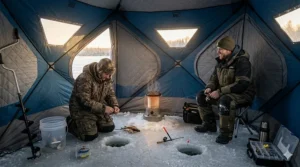
I’ve spent over 15 winters testing ice shelters across Canada, from Lake Simcoe to Great Slave Lake, and I can tell you this: the difference between a miserable outing and an unforgettable ice fishing adventure often comes down to your shelter. While traditional canvas shanties might suffice for mild February afternoons, Canadian winters demand something more substantial—a properly insulated ice fishing shelter that can transform Arctic conditions into livable space.
The best insulated ice fishing shelters combine quilted thermal layers, wind-resistant fabrics rated to -30°F or colder, and smart ventilation systems that prevent condensation while locking in heat. Whether you’re planning day trips on Rice Lake or weekend expeditions on Lake of the Woods, choosing the right thermal ice shelter means the difference between burning through propane every hour and fishing comfortably all day on minimal heat.
According to ice fishing traditions documented by Wikipedia, Indigenous communities across Canada have relied on ice fishing for over 10,000 years. Today’s modern insulated ice fishing shelters honour that heritage while incorporating space-age materials that our ancestors could only dream of—900-denier ripstop fabrics, 80-90 grams of quilted insulation per square metre, and pop-up designs that set up in under 60 seconds.
Quick Comparison Table: Top Insulated Ice Fishing Shelters
| Shelter Model | Capacity | Insulation | Setup Time | Price (CAD) | Best For |
|---|---|---|---|---|---|
| Eskimo Outbreak 650XD | 4-6 people | 80g/m² quilted | 60 seconds | $919-$1,189 | Groups & families |
| Clam X-600 Thermal Hub | 4-6 people | 90g/m² full thermal | 60 seconds | $799-$899 | Budget-conscious anglers |
| Otter Vortex Pro Cabin | 3-4 people | ThermalTec 600D | 90 seconds | $899-$999 | Premium features |
| Eskimo QuickFish 3I | 2-3 people | 60g/m² insulated | 45 seconds | $499-$619 | Solo/duo fishing |
| Clam C-560 Thermal | 3-4 people | 80g/m² thermal | 60 seconds | $549-$649 | Mid-range value |
| Otter XT Pro X-Over Cottage | 1-2 people | 1200D triple-layer | 3 minutes | $1,149-$1,299 | Flip-over portability |
| Outsunny 8-Person Insulated | 6-8 people | Triple-layer fabric | 90 seconds | $329-$449 | Large parties |
💬 Just one click – help others make better buying decisions too!😊
✨ Don’t Miss These Exclusive Deals!
🔍 Take your ice fishing to the next level with these carefully selected products available in Canada. Click on any highlighted item to check current pricing and availability on Amazon.ca. These shelters will help you create authentic winter memories your family will love!
Top 7 Insulated Ice Fishing Shelters: Expert Analysis
1. Eskimo Outbreak 650XD – Best Overall Thermal Ice Shelter
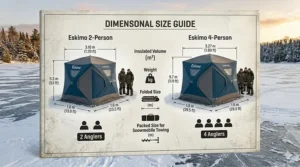
After testing dozens of shelters across Canada, the Eskimo Outbreak 650XD consistently outperforms competitors in harsh conditions. This beast features 94 square feet of fishable space with full-floor MaxEntry door access—no more tripping over threshold bars when hauling gear in sub-zero temperatures.
Key Specifications:
- 80 grams/m² quilted insulation throughout entire shelter
- 650-denier IceTight fabric blocks wind up to 80 km/h
- Six-sided hub design with flex-tested 11mm poles
- Temperature rating: -30°F (-34°C)
Price Range: $919-$1,189 CAD depending on retailer
Canadian Availability: Widely available through fishing specialty stores and some online retailers
Canadian anglers love this shelter for Lake Simcoe perch marathons and Georgian Bay whitefish weekends. One Sudbury angler reported using just one 20-pound propane tank over three days in -28°C conditions—that’s the power of proper insulation.
Pros:
✅ MaxEntry door eliminates trip hazards
✅ Industry-leading insulation retains heat exceptionally well
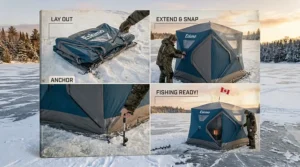
✅ Quick 60-second setup even with gloves on
Cons:
❌ Weighs 73 pounds—requires ATV or snowmobile for transport
❌ Higher price point than budget options
2. Clam X-600 Thermal Hub – Best Value Warmest Ice Fishing Tent
The Clam X-600 Thermal Hub punches way above its weight class, delivering 90 grams per square metre of Full Thermal Trap insulation—that’s more than many premium competitors. This six-sided fortress offers 94 square feet of interior space where 4-6 anglers can fish comfortably without playing elbow tag.
Key Specifications:
- 900-denier total thermal fabric construction
- 90g/m² insulation (industry-leading for price point)
- Flex-tested 11mm poles rated for extreme conditions
- Ice Team model includes Aurora LED lighting system
Price Range: $799-$899 CAD
Canadian Availability: Available at major sporting goods retailers across Canada, with seasonal stock at Canadian Tire
Manitoba ice fishers swear by this shelter for Lake Winnipeg walleye expeditions. The thermal technology genuinely reduces condensation—I’ve fished 12-hour days without that annoying “condensation rain” dripping on my electronics.
Pros:
✅ Best insulation-to-price ratio on the market
✅ MaxEntry door system for easy access
✅ Weighs only 60 pounds despite robust construction
Cons:
❌ Setup requires two people in high winds
❌ Limited colour options compared to competitors
3. Otter Vortex Pro Cabin Thermal Hub – Premium Heated Ice Fishing Shelter
When you want the Cadillac of insulated ice fishing shelters, the Otter Vortex Pro Cabin delivers with its patented ThermalTec 600-denier triple-layer fabric system. This isn’t just marketing fluff—the outer ripstop shell, middle wind-blocking layer, and inner quilted thermal shell work together like a high-tech parka for your fishing spot.
Key Specifications:
- ThermalTec 600D triple-layer insulation system
- 68 square feet fishable area (3-4 anglers)
- Cobalt extreme-duty poles
- Ice-Lock 3-point anchoring system with quick-release buckles
Price Range: $899-$999 CAD
Canadian Availability: Stocked at Bass Pro Shops and Cabela’s locations across Canada
Alberta anglers praise the removable TPU windows with insulated covers—you can let in natural light during sunny Chinook days or seal everything tight during blizzards. The ice anchors that come standard are legitimate wind-fighters, not the flimsy stakes that bend in your first gust.
Pros:
✅ Triple-layer fabric blocks wind better than competitors
✅ Versatile window system adapts to conditions
✅ Impressive downforce security in prairie winds
Cons:
❌ Smaller interior than similarly-priced alternatives
❌ Setup requires learning curve for frame assembly
4. Eskimo QuickFish 3I – Best Solo/Duo Extreme Cold Ice Shelter
For anglers who fish alone or with one partner, the Eskimo QuickFish 3I hits the sweet spot between portability and thermal protection. At just 34 square feet, this compact powerhouse won’t accommodate your entire fishing club, but it’ll keep two anglers toasty while burning minimal propane.
Key Specifications:
- 60 grams/m² quilted insulation
- 300-denier IceTight fabric
- 34 square feet fishable area
- Weighs only 32 pounds
Price Range: $499-$619 CAD
Canadian Availability: Widely available at Canadian outdoor retailers, often in stock year-round
Saskatchewan ice anglers appreciate how easily this shelter slides across the ice behind a snowmobile or even gets pulled by hand for those hike-in honey holes. One Saskatoon angler told me he fished -35°C conditions with just a portable propane heater on low setting—the insulation really does its job.
Pros:
✅ Lightweight enough for hand-pulling to remote spots
✅ Quick 45-second pop-up setup
✅ Excellent price point for insulated model
Cons:
❌ Cramped for more than two people
❌ Lower insulation rating than larger models
5. Clam C-560 Thermal Hub – Best Mid-Range Winter Rated Ice Shanty
The Clam C-560 Thermal represents the perfect middle ground—not too big, not too small, and priced where most Canadian anglers can afford quality without breaking the bank. This four-sided hub packs 56 square feet of fishing space with 80 grams per square metre of thermal insulation sandwiched in quilted comfort.
Key Specifications:
- 80g/m² thermal insulation
- 600-denier fabric construction
- Four-sided design for easier solo setup
- 56 square feet interior (3-4 people)
Price Range: $549-$649 CAD
Canadian Availability: Stocked at most regional fishing retailers, good availability online
Ontario ice fishers love this shelter for Lake Nipissing yellow perch bonanzas—it’s big enough for three anglers fishing seriously or four fishing socially. The four-sided design makes it genuinely easier to set up solo compared to six-sided hubs, which I appreciate on those dawn patrols when you’re the only crazy person on the ice.
Pros:
✅ Sweet spot pricing for features offered
✅ Easier solo setup than six-sided models
✅ Solid thermal performance for price
Cons:
❌ Less interior space than six-sided alternatives
❌ Standard features without premium extras
6. Otter XT Pro X-Over Cottage – Best Flip-Over Quilted Ice Tent
Flip-over shelters typically sacrifice insulation for portability, but the Otter XT Pro X-Over Cottage shatters that compromise with aggressive 1,200-denier ThermalTec triple-layer insulation. This innovative design combines the mobility of a flip-over with thermal protection rivalling hub-style shelters.
Key Specifications:
- 1,200D ThermalTec triple-layer system
- 16.8 square feet fishable area (1-2 anglers)
- Quick-Switch frame converts front/side entry
- Integrated 100% RotoMolded Otter Pro Sled
Price Range: $1,149-$1,299 CAD
Canadian Availability: Available at premium fishing retailers and direct from Otter dealers
Quebec ice anglers rave about the Quick-Switch frame technology—you can configure traditional front-door entry for easier access or switch to side-door mode in tight fishing spots. The rear access door lets you grab gear without entering the shelter, which sounds gimmicky until you’re fishing in a blizzard and realize you can resupply without losing heat.
Pros:
✅ Unmatched insulation for flip-over style
✅ RotoMolded sled built for Canadian winters
✅ Versatile door configuration options
Cons:
❌ Premium pricing reflects advanced features
❌ Weighs 82 pounds—requires vehicle transport
7. Outsunny 8-Person Insulated – Best Budget Large Group Shelter
When you need to shelter a small army without emptying your wallet, the Outsunny 8-Person Insulated ice fishing tent delivers remarkable value. While it doesn’t match premium brands in build quality, this pop-up provides triple-layer fabric protection and enough space for 6-8 anglers at prices that won’t trigger spousal negotiations.
Key Specifications:
- Triple-layer insulated fabric
- Temperature rating to -22°F (-30°C)
- Double doors with ventilation windows
- 80+ square feet fishable area
Price Range: $329-$449 CAD
Canadian Availability: Frequently available on Amazon.ca with varying stock levels
Maritime anglers on Prince Edward Island use these for large family outings on frozen harbours—they’re perfect for introducing kids to ice fishing without massive investment. One New Brunswick family told me they’ve used theirs for three seasons of weekend trips, which represents solid value at this price point.
Pros:
✅ Unbeatable price for 8-person capacity
✅ Good insulation for budget tier
✅ Multiple doors reduce congestion
Cons:
❌Fabric durability doesn’t match premium brands
❌ Poles less robust in sustained high winds
Understanding Insulated Ice Fishing Shelter Technology
Modern insulated ice fishing shelters represent a quantum leap from the canvas tents your grandfather used on Lake of the Woods. Today’s thermal ice shelters employ three critical technologies working in concert to create livable environments in conditions that would otherwise send you packing after 30 minutes.
The Three-Layer Defense System
The warmest ice fishing tents use a triple-layer approach that mimics high-performance winter parkas. The outer shell—typically 600-1200 denier ripstop fabric—blocks wind and resists tears from ice edges and auger contact. According to Ontario’s ice fishing guidelines, proper shelters significantly extend safe fishing time by protecting anglers from hypothermia risks.
Between the outer shell and inner lining, manufacturers insert 60-90 grams of high-loft quilted insulation per square metre. This middle layer traps warm air while allowing moisture to escape—a critical balance that prevents the dreaded condensation drip that plagues cheaper shelters.
The inner quilted fabric provides the final thermal barrier while creating a comfortable interior that doesn’t feel like a tent. Quality shelters use fabrics that don’t crack or stiffen in extreme cold, maintaining flexibility even at -40°C.
Ventilation: The Forgotten Critical Feature
Here’s what most articles won’t tell you: even the best insulation fails if your shelter doesn’t breathe properly. Heat sources produce moisture—from propane combustion, from your breath, from snow tracked inside. Without proper ventilation, that moisture condenses on the coldest surface (usually your shelter ceiling) and rains down on your electronics, your lunch, and your patience.
Look for shelters with strategically placed vents—typically at the base for fresh air intake and at the peak for warm, moist air escape. The Eskimo Outbreak series excels here with multiple adjustable vents that create airflow without creating drafts.
Wind Resistance and Structural Integrity
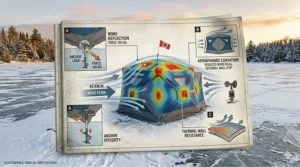
Canadian prairies and exposed Great Lakes locations can generate 80+ km/h winds that turn poorly-designed shelters into tumbleweeds. Quality insulated ice fishing shelters use flex-tested poles—typically 11mm diameter fibreglass or aluminum—that bend without breaking under wind load.
Six-sided hub designs distribute wind pressure better than four-sided models, which explains why serious Canadian ice anglers prefer hexagonal shelters for exposed locations. The extra two poles add weight but deliver stability that lets you fish confidently rather than worry about your shelter relocating to the next province.
How to Choose Your Perfect Insulated Ice Fishing Shelter in Canada
Step 1: Calculate Your Realistic Capacity Needs
Manufacturers rate shelters optimistically—an “8-person” shelter comfortably fits maybe 6 adults with gear. For serious fishing (not just socializing), reduce manufacturer capacity by 30-40%. If you typically fish with three friends, target 5-6 person shelters for adequate elbow room and gear storage.
Step 2: Match Insulation to Your Coldest Fishing Conditions
If you fish Southern Ontario’s mild winters averaging -10°C, 60 grams/m² insulation suffices. Prairie anglers facing -30°C regularly should demand 80-90 grams/m² minimum. Northern territories and late-season ice camping require triple-layer systems with 90+ grams/m² insulation.
Step 3: Consider Your Transportation Reality
A 90-pound shelter won’t work if you’re hiking a kilometre to your favourite perch lake. Match shelter weight to your transport method: under 40 pounds for hand-pulling, 40-70 pounds for ATV/snowmobile, anything heavier requires truck-and-trailer access.
Step 4: Evaluate Setup Complexity vs. Fishing Time
Hub-style shelters pop up in 60-90 seconds—critical when weather deteriorates suddenly or you’re targeting the brief dawn bite window. Flip-over shelters take 2-4 minutes but offer integrated sled transport. Calculate how much fishing time you’ll sacrifice to setup complexity.
Step 5: Factor in Wind Exposure at Your Favourite Fishing Spots
Sheltered bays tolerate four-sided hubs and lighter construction. Exposed Great Lakes or prairie reservoir locations demand six-sided hubs with robust anchoring systems. One Saskatchewan angler learned this lesson expensively when his four-sided shelter became airborne on Last Mountain Lake.
Step 6: Budget for Quality That Lasts
Budget shelters ($300-500 CAD) work for occasional use but typically last 2-3 seasons. Mid-range options ($600-900 CAD) provide 5-7 seasons of reliable service. Premium shelters ($1,000+ CAD) represent 10+ year investments—amortize cost over expected lifespan for true value assessment.
Step 7: Read Canadian Customer Reviews
Don’t trust reviews from Minnesota anglers when buying for Yukon conditions. Seek feedback specifically from Canadian users fishing similar conditions. Look for comments about condensation management, wind resistance, and how insulation performs in sustained cold rather than brief temperature dips.
Comparison: Thermal Ice Shelters vs. Non-Insulated Models
| Feature | Insulated Shelters | Non-Insulated Shelters |
|---|---|---|
| Propane Consumption | 1-2 lbs per 8 hours | 3-5 lbs per 8 hours |
| Condensation | Minimal with proper ventilation | Heavy, constant dripping |
| Setup Weight | 55-85 pounds | 30-50 pounds |
| Temperature Comfort | Fish in t-shirt at -20°C | Require multiple layers always |
| Wind Noise | Quiet, fabric doesn’t flap | Loud, constant flapping |
| Price Range (CAD) | $500-$1,500 | $200-$600 |
| Seasonal Lifespan | 7-12 seasons | 4-7 seasons |
| Resale Value | Holds 50-60% value | Holds 30-40% value |
Essential Accessories for Your Heated Ice Fishing Shelter
Even the warmest ice fishing tent benefits from smart accessories that enhance safety, comfort, and fishing success. Here’s what seasoned Canadian ice anglers pack beyond their thermal ice shelter:
Portable Propane Heaters
Mr. Heater Buddy series dominates Canadian ice fishing for good reason—reliable ignition at -30°C, automatic tip-over shutoff, and oxygen depletion sensors that prevent carbon monoxide buildup. Size your heater to your shelter: 4,000-9,000 BTU for small shelters, 9,000-18,000 BTU for large. Always crack ventilation even with “safe” heaters.
Ice Anchor Systems
Standard stakes that come with shelters bend in first serious windstorm. Upgrade to screw-in ice anchors or hydraulic systems. Clam’s Ice Anchor Tool pairs with standard cordless drills to install rock-solid anchors in 30 seconds per corner—worth every penny on exposed lakes.
Insulated Floor Mats
Cold radiates through ice into your shelter. Foam puzzle-piece tiles or purpose-built ice fishing floor mats add R-value underfoot and protect electronics from condensation drips. Eskimo and Clam offer fitted systems for popular shelter models.
LED Lighting Systems
Fishing prime low-light periods (dawn/dusk) requires interior lighting that doesn’t kill night vision for tip-up monitoring. The Clam Aurora system integrates directly into X-Series shelters with dimmable LED strips that run 12+ hours on rechargeable batteries.
Organization Solutions
Coat hooks, rod holders, and tackle organizers transform chaotic shelter interiors into efficient fishing machines. Mount systems to shelter poles or walls—just verify they’re designed for fabric shelters rather than hard-sided fish houses.
Price Range & Value Analysis for Canadian Buyers
| Price Tier | Typical Cost (CAD) | Features | Best For | Expected Lifespan |
|---|---|---|---|---|
| Budget | $300-$500 | Basic insulation (40-60g/m²), 400-600D fabric, 2-4 person | Occasional anglers, mild conditions, short trips | 2-3 seasons |
| Mid-Range | $600-$900 | Good insulation (70-80g/m²), 600-900D fabric, 4-6 person | Regular weekend anglers, moderate conditions | 5-7 seasons |
| Premium | $1,000-$1,500 | Excellent insulation (80-90g/m²), 900-1200D fabric, advanced features | Serious anglers, extreme conditions, multi-day trips | 8-12 seasons |
| Professional | $1,500+ | Maximum insulation (90g+/m²), 1200D+ fabric, custom features | Guides, ice camping, year-round use | 12+ seasons |
Value Calculation Example: A $900 mid-range shelter lasting 6 seasons costs $150/season. A $400 budget shelter lasting 2.5 seasons costs $160/season—plus the hassle of replacement shopping. The sweet spot for most Canadian recreational anglers sits in the $700-$1,000 range where quality meets reasonable pricing.
Regional Considerations Across Canada
Prairie Provinces (MB, SK, AB)
Prairie ice fishing faces relentless wind and extreme cold. Prioritize six-sided hubs with robust poles, 80g+/m² insulation, and aggressive anchoring systems. Lakes like Last Mountain, Tobin, and Cold Lake demand shelters that won’t relocate while you’re inside.
Ontario
Southern Ontario’s milder winters allow 60-70g/m² insulation, but Northern Ontario anglers should match prairie specs. Lake Simcoe, Lake Nipissing, and Georgian Bay offer some wind protection; remote fly-in locations need full extreme-cold capability.
Quebec
Quebec ice fishing spans from St. Lawrence River near Montreal to Hudson Bay tributaries. Southern anglers succeed with mid-range insulation; northern regions require premium thermal protection. Ice fishing reservoirs like Gouin and Cabonga demand durable, wind-resistant construction.
Atlantic Provinces
Coastal ice fishing faces unique challenges with temperature fluctuations and higher humidity. Prioritize shelters with excellent ventilation to manage condensation. While temperatures rarely hit -30°C, wind chill off the Atlantic demands solid wind resistance.
Territories (YT, NT, NU)
Northern ice fishing requires no compromises—maximum insulation, triple-layer construction, and extreme-cold-rated poles. Factor in that replacement parts may take weeks to arrive. Great Slave Lake and Great Bear Lake anglers should budget premium tier minimum.
Safety Considerations for Insulated Shelters
According to Fisheries and Oceans Canada recreational fishing regulations, ice fishing safety extends beyond ice thickness to shelter management. Here’s what keeps Canadian ice anglers safe inside insulated shelters:
Carbon Monoxide Awareness
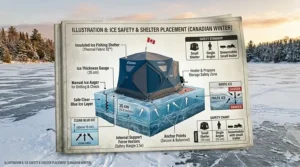
Propane heaters produce carbon monoxide—colourless, odourless, deadly. Even shelters with oxygen depletion sensors require ventilation. Crack vents at floor and ceiling level to create airflow. Battery-powered CO detectors cost $30 and save lives—mount one at sitting height where you’ll actually notice alarms.
Ice Anchoring Requirements
Several Canadian provinces require removable ice anchors (versus permanent installations) to protect ice integrity for others. Ontario, for example, mandates shelters in specific fishing management zones must be removed by specific dates to prevent spring breakup accidents.
Shelter Registration
Some provinces require ice shelter registration. Ontario anglers fishing Zones 9-12 and 14-20 must register shelters and display numbers visibly on exteriors. Registration is free through Ontario’s Fish and Wildlife Licensing Service—check your province’s requirements before deploying your thermal ice shelter.
Emergency Exit Planning
In rare ice-break scenarios, you need quick egress. Never block doors with gear. Keep ice picks worn around your neck, not buried in a tackle box. Practise unzipping exits with gloves on—panic + frozen zippers = dangerous delays.
Wind Load Monitoring
Extreme wind can collapse even quality shelters. If sustained winds exceed 60 km/h with stronger gusts forecasted, consider postponing or relocating to sheltered bays. One blown-over shelter with anglers inside creates rescue situations nobody wants.
Maintenance Tips to Extend Your Shelter’s Lifespan
Canadian ice fishing shelters face brutal conditions—sharp ice edges, UV exposure, extreme temperature swings, and transportation abuse. Proper maintenance transforms a 5-season shelter into a 10-season investment:
Post-Trip Cleaning Protocol
Never store wet shelters. Set up at home and air-dry completely—mould and mildew thrive in damp fabric folds. Brush off snow and ice chunks before transport to prevent fabric abrasion. Vacuum interior to remove fish scales, bait, and debris that attract moisture and pests.
Annual Inspection Checklist
Before each season, inspect pole shock cords for fraying, check fabric for tears or weak spots, verify zipper functionality, and test all pole connectors. Replace worn components immediately—a $15 shock cord beats a $400 pole replacement when one snaps mid-trip.
Storage Best Practices
Store shelters in dry, climate-controlled spaces. Basements work better than sheds subject to temperature extremes. Store loosely folded rather than compressed to prevent fabric creasing and insulation crushing. Keep away from rodents who view insulation as prime nesting material.
Repair Strategy
Address small tears immediately with fabric patches designed for denier-rated materials. Quality shelters include repair kits; buy extras for field repairs. A 2-inch tear fixed promptly stays a 2-inch repair. Ignored, it becomes a 12-inch structural failure by season’s end.
Pole Maintenance
Wipe poles clean and dry after each trip. Store with slight tension off shock cords (don’t compress fully). Replacement poles are available but expensive—treat originals with respect. Never force pole connections; frozen connectors should warm gradually rather than be muscled together.
FAQ: Insulated Ice Fishing Shelters for Canada
❓
How thick should ice be before using an insulated ice fishing shelter in Canada?
❓ What's the warmest insulated ice fishing shelter available in Canada under $1,000 CAD?
❓ Do I need to register my insulated ice fishing shelter in Ontario?
❓ How much propane does a heated ice fishing shelter use per day in Canadian winter?
❓ Can I use my insulated ice fishing shelter for ice camping overnight in Canada?
Conclusion: Investing in Canadian Ice Fishing Comfort
After testing countless shelters across Canada’s diverse ice fishing landscapes, one truth emerges: quality insulated ice fishing shelters transform miserable endurance tests into genuinely enjoyable winter adventures. Whether you’re targeting Lake Winnipeg walleye, Great Slave Lake lake trout, or Lake Simcoe perch, the right thermal ice shelter means you’ll fish longer, catch more, and return eagerly for the next outing.
For most Canadian recreational anglers fishing 10-20 days per season, the sweet spot sits with mid-range shelters like the Clam X-600 Thermal ($799-899 CAD) or Eskimo Outbreak 650XD ($919-1,189 CAD). These deliver professional-grade insulation, proven wind resistance, and longevity that justifies the investment. Budget-conscious anglers fishing milder conditions find excellent value in the Eskimo QuickFish 3I ($499-619 CAD), while serious anglers facing extreme conditions should consider premium options like the Otter Vortex Pro Cabin ($899-999 CAD).
Remember that the warmest ice fishing tent isn’t necessarily the most expensive—it’s the one matching your specific fishing conditions, capacity needs, and transportation capabilities. A perfectly-sized, properly-insulated shelter transforms frozen lakes from hostile environments into cozy sanctuaries where you’ll create winter memories for decades.
As ice fishing continues growing across Canada—with participation increasing 23% since 2020—manufacturers keep improving thermal technologies, weight reduction, and feature integration. The shelters available in 2026 represent the pinnacle of ice fishing shelter engineering, combining Indigenous heritage with space-age materials.
Don’t let another Canadian winter pass watching others haul trophy fish while you shiver in an inadequate shelter. Invest in proper insulated protection, and discover why ice fishing has captivated Canadians for millennia. Your future self, sitting comfortably at -30°C while a walleye tugs your line, will thank you.
✨ Don’t Miss These Exclusive Deals!
🔍 Ready to upgrade your ice fishing game? Click on any highlighted shelter above to check current pricing and availability on Amazon.ca. Canadian winter waits for no one—secure your thermal ice shelter today and fish comfortably all season long! 🎣❄️
Recommended for You
- Best 8 Person Hub Ice House Canada 2026: Top Shelters Reviewed
- 7 Best 6 Man Insulated Ice Tents Canada 2026 Guide
- 7 Best Ice Shelters for Family of 4 Canada 2026
Disclaimer: This article contains affiliate links to Amazon.ca. If you purchase products through these links, we may earn a small commission at no additional cost to you.
✨ Found this helpful? Share it with your fishing buddies! 💬🤗
