
In This Article
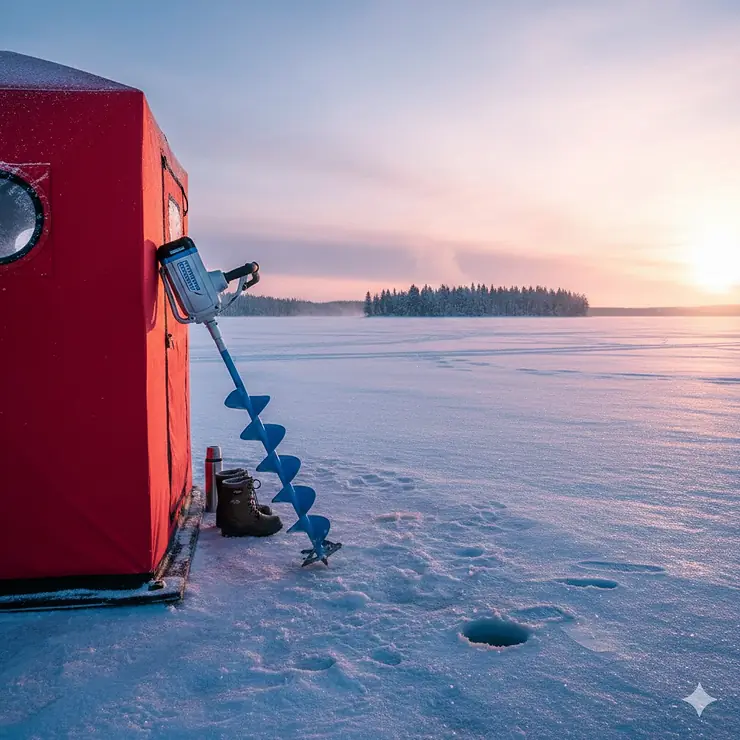
Picture this: You’re standing on the frozen surface of Lake Simcoe, temperatures hovering around -15°C, and you need to punch through 90 centimetres of dense Ontario ice. Your trusty hand auger? It might get you one hole before your arms give out. This is where a gas ice auger becomes your best friend on the ice.

Gas ice augers have powered Canadian ice fishing adventures for decades, offering unmatched reliability in our brutal winter conditions. Whether you’re drilling dozens of holes while structure fishing on Lake of the Woods or setting up for a tournament on Lake Winnipeg, these machines deliver consistent power when battery-powered options struggle. The question isn’t whether you need a gas auger – it’s which one deserves a spot on your sled.
In this comprehensive guide, we’ll cut through the marketing fluff and give you real-world insights on the best gas ice augers available in Canada for 2026. From two-stroke powerhouses to cleaner four-stroke models, we’ve researched actual products available on Amazon.ca with verified Canadian pricing, so you can make an informed decision before the ice thickens.
Quick Comparison Table
| Model | Engine Type | Blade Size | Weight | Price (CAD) | Best For |
|---|---|---|---|---|---|
| StrikeMaster Chipper Lite | 2-Stroke, 33cc | 8″ | 29 lbs | $450-$550 | All-around performance |
| Jiffy Model 30 | 2-Stroke, 52cc | 8″ | 35 lbs | $480-$580 | Heavy-duty drilling |
| Eskimo HC40 Propane | 4-Stroke Propane, 40cc | 10″ | 33 lbs | $520-$620 | Clean operation |
| Rapala Pro Select Nitro | 2-Stroke, 43cc | 8″ | 31 lbs | $429-$499 | Budget power |
| StrikeMaster Solo | 2-Stroke, 29cc | 8″ | 27 lbs | $380-$480 | Lightweight mobility |
| Jiffy Stealth STX | 4-Stroke, 49cc | 8″ | 38 lbs | $550-$650 | Tournament fishing |
| VEVOR 52CC | 2-Stroke, 52cc | 8″ | 26 lbs | $249-$349 | Entry-level value |
💬 Just one click – help others make better buying decisions too!😊
Top 7 Gas Ice Augers: Expert Analysis
1. StrikeMaster Chipper Lite 33CC – Best All-Around Performance
The StrikeMaster Chipper Lite represents the sweet spot between power and portability that Canadian anglers demand. With its lightweight 33cc two-stroke engine and proven Chipper blade design, this auger handles everything from early-season 45-centimetre ice to late-winter metre-thick slabs.
Key Specifications:
- 33cc 2-stroke engine with 8,000 RPM capability
- 8-inch cutting diameter with Chipper blade technology
- Weighs just 29 pounds for easy transport
- 40:1 fuel-to-oil mix ratio
Canadian Availability & Pricing: Readily available across Canadian retailers, the Chipper Lite typically retails for $450-$550 CAD depending on seasonal promotions. Shipping within Canada usually takes 3-5 business days from major suppliers.
What Canadian Anglers Say: Reviews from Ontario and Manitoba ice fishermen consistently praise this auger’s reliable cold-weather starting, even at -25°C. The Chipper blades excel in dirty ice conditions common in prairie lakes, requiring less frequent sharpening than standard blades.
✅ Pros:
- Exceptional cold-start reliability in Canadian winters
- Lightweight design reduces fatigue during long fishing days
- Chipper blades handle both fresh and refrozen holes efficiently
❌ Cons:
- Requires fuel mixing (though many use pre-mixed fuel available at Canadian Tire)
- Two-stroke exhaust can be noticeable in enclosed ice huts
2. Jiffy Model 30 – Most Reliable Gas Auger
If there’s one gas ice auger that defines reliability in Canadian ice fishing, it’s the Jiffy Model 30. This workhorse has been punching holes through prairie ice for over three decades, earning legendary status among tournament anglers and guides from Saskatchewan to Quebec.
Key Specifications:
- 52cc 2-stroke power plant delivers 3 HP
- 8-inch or 10-inch flight options available
- Stealth STX serrated Ripper blade technology
- 30:1 gear ratio for optimal torque
Canadian Availability & Pricing: The Model 30 ranges from $480-$580 CAD at Canadian retailers including Bass Pro Shops Canada and specialty tackle stores. Extended warranties are often available through Canadian dealers, adding value for serious anglers.
What Canadian Anglers Say: Long-time users report Model 30 augers still operating flawlessly after 15-20 seasons of heavy use. The robust construction withstands bouncing across frozen lakes in utility sleds, and parts remain readily available across Canada.
✅ Pros:
- Unmatched longevity – many units exceed 20 years of service
- Powerful 3 HP engine cuts through 120+ cm ice effortlessly
- Extensive dealer network across Canada for service and parts
❌ Cons:
- Heavier than newer models at 35 pounds
- Louder operation compared to four-stroke alternatives
3. Eskimo HC40 Propane Ice Auger – Best Propane Alternative
The Eskimo HC40 revolutionizes gas ice auger technology by running on clean-burning propane instead of traditional gasoline. For Canadian anglers tired of fuel spills in their trucks and carburetor issues in extreme cold, this high-compression propane model offers a compelling alternative.
Key Specifications:
- 40cc high-compression 4-cycle propane engine
- Uses standard 1-pound propane cylinders (available at any hardware store)
- 10-inch Quantum cutting system with sealed ball bearings
- Weighs 33 pounds fully assembled
Canadian Availability & Pricing: Available at Canadian Tire and Amazon.ca for $520-$620 CAD. Propane cylinders cost approximately $4-$6 CAD each at Canadian retailers, with each cylinder drilling 40-50 holes in typical conditions.
What Canadian Anglers Say: British Columbia and Alberta anglers particularly appreciate the clean operation inside ice huts, as propane produces minimal fumes compared to two-stroke engines. The quick-release bottle holder makes fuel changes simple, even with thick winter gloves.
✅ Pros:
- Zero fuel mixing – just twist on a propane cylinder
- Cleaner burning with minimal emissions (can use inside shelters)
- Propane bottles widely available across Canada
❌ Cons:
- Propane performance can decrease in extreme cold below -30°C
- Slightly heavier than comparable 2-stroke models
4. Rapala Pro Select Nitro – Best Budget Power Auger
Don’t let the affordable price fool you – the Rapala Pro Select Nitro delivers legitimate performance that punches well above its weight class. Available at Canadian Tire, this 43cc auger represents exceptional value for anglers who want gas-powered performance without the premium price tag.
Key Specifications:
- 43cc 2-stroke engine generating 3 HP
- 8-inch auger with 30:1 gear ratio
- 42-inch total drilling depth
- Weighs 31 pounds
Canadian Availability & Pricing: Priced competitively at $429-$499 CAD, the Nitro frequently goes on sale at Canadian Tire, making it accessible for anglers on a budget. Canadian Tire’s extensive network means easy access to replacement parts and blades.
What Canadian Anglers Say: Ontario ice anglers report solid performance through typical 60-90 cm ice conditions. While it doesn’t match premium models’ refinement, it gets the job done reliably at nearly half the price of top-tier augers.
✅ Pros:
- Excellent value proposition for recreational anglers
- Widely available at Canadian Tire locations nationwide
- Sufficient power for most Canadian ice fishing scenarios
❌ Cons:
- Build quality doesn’t match premium brands like StrikeMaster
- May struggle in extremely thick ice (100+ cm)
5. StrikeMaster Solo 29CC – Lightest Gas Auger
For anglers who prioritize mobility over raw power, the StrikeMaster Solo offers the lightest gas-powered drilling solution available. At just 27 pounds, this compact auger excels for walk-out fishing on smaller lakes or when space in your ice shack is limited.
Key Specifications:
- Compact 29cc 2-stroke engine
- 8-inch Lazer blade cutting system
- Weighs only 27 pounds
- 40-inch auger length
Canadian Availability & Pricing: Available through specialty tackle retailers and online at $380-$480 CAD. While less common at big-box stores, authorized dealers across Canada stock this model for serious anglers.
What Canadian Anglers Say: Anglers fishing remote Manitoba lakes appreciate how easily the Solo fits in a backpack alongside other gear. The lighter weight significantly reduces fatigue when drilling 30-40 holes per outing while prospecting for walleye.
✅ Pros:
- Lightest gas auger on the market for Canadian conditions
- Easy to carry long distances from parking areas
- Proven StrikeMaster Lazer blade technology
❌ Cons:
- Smaller engine may bog down in thick, hard ice
- Not ideal for drilling large-diameter holes (10″+)
6. Jiffy Stealth STX 4-Stroke – Best Four-Stroke Performance
The Jiffy Stealth STX brings four-stroke refinement to ice auger technology, offering quieter operation and elimination of fuel mixing. This 49cc powerhouse appeals to anglers who fish from permanent ice huts or those sensitive to two-stroke exhaust.
Key Specifications:
- 49cc 4-stroke overhead valve engine
- No fuel mixing required – uses straight gasoline
- Stealth STX cutting technology with serrated Ripper blades
- Available in 6″, 8″, 9″, and 10″ configurations
Canadian Availability & Pricing: Premium-priced at $550-$650 CAD, the Stealth STX represents the top end of Jiffy’s lineup. Available through Bass Pro Shops Canada and authorized Jiffy dealers, with strong warranty support across Canada.
What Canadian Anglers Say: Tournament fishermen particularly value the quieter operation when trying to stay stealthy on pressured lakes. The four-stroke engine starts reliably even after sitting unused during mild winter stretches common in southern Ontario.
✅ Pros:
- Significantly quieter than 2-stroke models
- No fuel mixing – add regular 87-octane gasoline
- Lower emissions and reduced fuel odour
❌ Cons:
- Heaviest option at 38 pounds
- Must be stored upright or with spark plug facing up to prevent oil contamination
7. VEVOR 52CC Gas Powered Ice Auger – Best Entry-Level Value
For anglers just getting into ice fishing or those wanting a backup auger without breaking the bank, the VEVOR 52CC delivers surprising capability at an entry-level price point. Available on Amazon.ca, this Chinese-manufactured auger offers legitimate performance for recreational use.
Key Specifications:
- 52cc 2-stroke engine with 1,800W output
- 8-inch drilling diameter
- 31.5-inch drilling depth capability
- Weighs 26 pounds
Canadian Availability & Pricing: Priced at an attractive $249-$349 CAD on Amazon.ca, the VEVOR represents the most affordable gas auger option for Canadian anglers. Prime shipping typically delivers within 3-5 days to most Canadian addresses.
What Canadian Anglers Say: Reviews from Canadian buyers indicate this auger performs adequately for occasional use, though quality control can be inconsistent. Some users recommend immediately checking all fasteners and replacing the stock spark plug for better reliability.
✅ Pros:
- Unbeatable price point for a gas-powered auger
- Sufficient power for typical Canadian ice conditions
- Includes drill adapter for versatility
❌ Cons:
- Quality control issues reported by some Canadian buyers
- Limited dealer network for warranty service in Canada
✨ Don’t Miss These Exclusive Deals!
🔍 Take your ice fishing to the next level with these carefully selected gas ice augers available in Canada. Click on any highlighted product name to check current pricing and availability on Amazon.ca. These powerful tools will help you create authentic fishing memories your family will cherish!
Two-Stroke vs Four-Stroke Comparison
| Feature | 2-Stroke Gas Augers | 4-Stroke Gas Augers |
|---|---|---|
| Weight | 26-33 lbs (lighter) | 35-40 lbs (heavier) |
| Power Delivery | Every piston stroke | Every 2nd stroke |
| Fuel Type | Gas + oil mix (40:1 or 50:1) | Straight gasoline |
| Noise Level | Louder operation | Quieter, refined |
| Cold Start | Excellent below -30°C | Good, but more temperamental |
| Maintenance | Simple, fewer parts | More complex |
| Price Range (CAD) | $250-$580 | $480-$650 |
| Best For | High-volume drilling, extreme cold | Inside shelters, clean operation |
Understanding Gas Ice Auger Technology
Two-Stroke vs Four-Stroke Engines: The Canadian Perspective
The debate between two-stroke and four-stroke augers remains one of the most discussed topics among Canadian ice anglers. According to research from Bass Pro Shops’ ice fishing guide, both technologies have distinct advantages depending on your fishing style and conditions.
Two-Stroke Advantages in Canadian Conditions
Two-stroke engines dominate the Canadian ice fishing market for good reasons. These simpler engines, based on a design that dates back over a century (learn more about two-stroke engine history on Wikipedia), feature fewer moving parts, making them inherently more reliable in extreme cold. When you’re fishing Lake Winnipeg in January at -35°C, a two-stroke’s simplicity becomes a significant advantage.
Power delivery represents another key benefit. Two-stroke engines generate power on every downstroke of the piston, whereas four-strokes produce power every other stroke. This translates to noticeably faster drilling through thick ice – a difference that matters when you’re punching through 90-120 centimetres of prairie ice.
Canadian anglers also appreciate the lighter weight of two-stroke models. Most two-stroke augers weigh 27-33 pounds compared to 35-40 pounds for comparable four-strokes. After drilling 40 holes while chasing lake trout, those extra pounds make a real difference.
The primary drawback? Fuel mixing. You’ll need to combine gasoline and two-stroke oil at the proper ratio (typically 40:1 or 50:1). However, many Canadian anglers simply purchase pre-mixed fuel from Canadian Tire or marine supply stores, eliminating this inconvenience.
Four-Stroke Benefits for Canadian Anglers
Four-stroke augers appeal to anglers prioritizing quiet operation and cleaner burning. If you fish from a permanent ice hut or heated shelter, the reduced exhaust fumes become immediately noticeable. Four-strokes also run considerably quieter – important when fishing pressured lakes where noise can spook fish.
The elimination of fuel mixing represents a major convenience factor. Simply add regular 87-octane gasoline available at any Canadian gas station. This simplicity becomes valuable when you’re making last-minute fishing trips.
However, four-strokes carry disadvantages in Canadian conditions. They’re heavier, more complex mechanically, and must be stored in specific orientations to prevent oil contamination of the combustion chamber. In severe cold below -25°C, four-strokes can be more temperamental to start than their two-stroke counterparts.
Most Reliable Gas Ice Auger: What Makes Them Bulletproof
Reliability in Canadian ice fishing means more than just whether an auger starts. It encompasses cold-weather performance, durability across seasons, and the ability to function when you need it most – often in harsh conditions far from help.
Engine Reliability in Extreme Cold
The most reliable gas ice augers share common characteristics. Premium models like the Jiffy Model 30 and StrikeMaster Chipper use high-quality carburetors designed specifically for cold-weather operation. These carburetors feature brass components that resist icing and maintain proper fuel metering even at -30°C.
Recoil starter systems represent another critical reliability factor. The best augers employ oversized, mitten-grip recoil handles with strong springs that maintain tension even in extreme cold. StrikeMaster’s recoil systems, for example, are engineered to operate reliably down to -40°C – essential for Canadian prairie winters.
Fuel system design also impacts reliability significantly. Augers with primer bulbs and properly vented fuel tanks start more consistently in cold weather. Some experienced Canadian anglers replace standard fuel lines with marine-grade neoprene lines that resist hardening in cold temperatures.
Build Quality That Withstands Canadian Conditions
Beyond the engine, overall construction determines long-term reliability. Premium augers feature metal crankcase covers rather than plastic – critical because thermal cycling in Canadian winters causes plastic components to become brittle and crack. The Eskimo HC40’s cast crankcase cover, for instance, virtually eliminates oil leakage issues common with plastic covers.
Transmission design matters equally. Sealed ball bearing transmissions, standard on Eskimo and higher-end Jiffy models, prevent ice and moisture intrusion while reducing friction. These transmissions outlast cheaper bushing-based systems by years, maintaining smooth operation through hundreds of drilling sessions.
Propane Ice Auger Canada: Clean Power for Modern Anglers
Propane-powered ice augers represent a growing segment of the Canadian market, offering compelling advantages over traditional gasoline models. Understanding propane technology helps you decide if this fuel source suits your fishing style.
How Propane Augers Work in Canadian Cold
Propane augers like the Eskimo HC40 and Jiffy Pro4 use high-compression engines specifically engineered for propane’s higher octane rating. Unlike gasoline conversions, these purpose-built engines extract maximum power from propane fuel, delivering performance comparable to traditional gas augers.
The fuel delivery system connects directly to standard 1-pound propane cylinders – the same bottles used for camping stoves and available at every Canadian hardware store for $4-$6 CAD. A quick-release holder allows cylinder changes in seconds, even wearing thick winter gloves.
Performance in extreme cold represents the primary concern for Canadian anglers. Propane remains liquid at atmospheric pressure down to approximately -42°C, theoretically suitable for even the coldest Canadian conditions. However, vapour pressure decreases as temperature drops, potentially reducing available power below -25°C. Experienced anglers keep spare cylinders inside their vehicle or ice hut to maintain optimal temperature.
Practical Advantages for Canadian Ice Fishing
Propane’s clean-burning characteristics particularly benefit anglers who drill holes inside shelters. Two-stroke exhaust inside an ice hut creates headache-inducing fumes and leaves oily residue on shelter walls. Propane combustion produces primarily water vapour and carbon dioxide – still requiring ventilation, but far more pleasant.
Transportation safety improves significantly with propane. No more gasoline odours in your truck or SUV. No risk of fuel spills on expensive vehicle interiors. Propane cylinders seal completely, eliminating the lingering petroleum smell that permeates fishing gear when transporting traditional gas augers.
Fuel availability across Canada couldn’t be easier. From Whitehorse to St. John’s, propane cylinders are universally available at hardware stores, gas stations, and sporting goods retailers. Compare this to specialty two-stroke oil or pre-mixed fuel, which may not be stocked in remote areas.
Fuel Type Comparison for Canadian Conditions
| Fuel Type | Cost per Hole (CAD) | Availability | Cold Weather Performance | Clean Burning | Convenience |
|---|---|---|---|---|---|
| 2-Stroke Gas | $0.08-$0.12 | Excellent | Excellent to -40°C | Poor (smoke, fumes) | Requires mixing |
| 4-Stroke Gas | $0.06-$0.09 | Excellent | Good to -30°C | Better than 2-stroke | No mixing needed |
| Propane | $0.10-$0.14 | Excellent | Good to -25°C | Excellent | Very convenient |
Note: Costs calculated based on typical drilling through 60cm ice with 8″ auger
Gas Auger Fuel Efficiency: Maximizing Your Investment
Fuel consumption varies significantly between auger models and directly impacts your operating costs. Understanding fuel efficiency helps you choose the right model and optimize performance.
Real-World Fuel Consumption Data
Two-stroke augers typically consume more fuel per hole than four-stroke or propane models due to their power delivery cycle. A quality two-stroke like the StrikeMaster Chipper uses approximately 100-120 millilitres of fuel per hour of operation. For practical context, you’ll drill roughly 50-60 eight-inch holes through 60-centimetre ice before needing to refuel the typical 0.9-litre tank.
Four-stroke augers demonstrate superior fuel efficiency, often drilling 70-80 holes on a similar tank capacity. The Jiffy Stealth STX’s overhead valve engine sips fuel, making it economical for anglers who drill dozens of holes daily. However, the fuel savings partially offset by higher initial purchase costs.
Propane consumption differs from liquid fuel measurements. A single 1-pound propane cylinder drills approximately 40-50 eight-inch holes through standard Canadian ice conditions. At $4-$6 CAD per cylinder, propane costs remain competitive with gasoline, especially considering you avoid two-stroke oil expenses.
Factors Affecting Fuel Efficiency in Canadian Conditions
Ice hardness dramatically impacts fuel consumption. Late-season ice in March – dense, clear, and hard – requires significantly more power (and fuel) than early-winter December ice. Experienced anglers report fuel consumption increasing 20-30% when drilling through especially hard or thick ice.
Blade sharpness represents another critical efficiency factor. Dull blades force the engine to work harder, burning more fuel while cutting slower. Sharp blades reduce engine load, improving both fuel economy and drilling speed. Most Canadian anglers replace or sharpen blades every 100-150 holes to maintain optimal efficiency.
Cold temperatures increase fuel consumption as engines work harder to maintain operating temperature. Pre-warming your auger by starting it near your vehicle or ice hut for 30 seconds before drilling improves efficiency during the first several holes.
Cold Start Ice Auger Performance: Beating Canadian Winters
Nothing tests an ice auger’s mettle like Canadian winter mornings. When temperatures plunge to -30°C and below, cold-starting performance separates premium augers from frustrating paperweights.
Engineering for Extreme Cold Starts
The best cold-starting augers incorporate specific design features that overcome low-temperature challenges. High-quality carburetors with enrichment circuits provide extra fuel during cold starts, compensating for fuel’s reduced volatility. StrikeMaster and Jiffy premium models feature these enhanced carburetors as standard equipment.
Compression ratio significantly affects cold-start reliability. Higher-compression engines (9:1 or greater) generate more heat during compression, aiding cold starts. However, excessively high compression can make recoil starting difficult in extreme cold. Manufacturers like Eskimo balance compression ratios specifically for ice fishing applications.
Ignition systems must deliver strong, consistent sparks at low temperatures. The best augers use CDI (Capacitor Discharge Ignition) systems that maintain spark energy regardless of temperature. These systems outperform older magneto ignitions in Canadian winters.
Proven Cold-Start Techniques for Canadian Conditions
Experienced Canadian anglers employ several techniques to ensure reliable cold starts. According to ice fishing safety experts, always use fresh, high-octane gasoline (91 octane or higher) mixed with quality synthetic two-stroke oil. Old fuel or low-grade gasoline creates starting difficulties, especially below -20°C.
Prime the engine properly before pulling the starter cord. Most augers feature primer bulbs requiring 5-7 presses when cold. Insufficient priming leaves the engine fuel-starved and unlikely to start. Excessive priming floods the engine – find the sweet spot for your specific model.
Many veterans warm the spark plug before the first start of the day. Remove the plug, warm it in your hand or near your body for a minute, then reinstall. This simple trick dramatically improves first-pull starts in severe cold.
Store your auger in a relatively warm location when possible. Even keeping it in an unheated garage at -10°C rather than outside at -30°C makes starting significantly easier. If fishing from a heated ice hut, store the auger inside overnight for effortless morning starts.
Choosing the Right Blade Size for Canadian Species
Blade diameter directly affects drilling speed, effort required, and suitability for target species. Canadian anglers should carefully consider blade size based on their primary fishing situations.
Small Diameter Blades (6-7 Inches)
Six and seven-inch blades excel for panfish-focused anglers targeting perch, crappie, and small trout. These smaller holes require less power to drill, improving fuel efficiency and reducing operator fatigue. According to the Canadian government’s recreational fishing regulations, hole size regulations vary by province, so always verify local requirements before drilling. The narrower diameter also makes these augers lighter and more portable – ideal for walk-out fishing on frozen lakes.
However, small-diameter holes limit you when larger fish bite. Landing a 5-pound walleye through a 6-inch hole proves challenging, and trophy pike or lake trout become nearly impossible. Consider your realistic chance of encountering larger species before choosing a small-diameter auger.
Medium Diameter Blades (8 Inches)
Eight-inch blades represent the most popular size among Canadian ice anglers for excellent reasons. This diameter handles everything from panfish to mid-sized walleye, pike, and lake trout comfortably. You can land most fish under 10 pounds without difficulty, covering 90% of typical Canadian ice fishing scenarios.
The versatility of 8-inch holes extends beyond fish size. This diameter accommodates most underwater cameras, large tip-ups, and jigging rods without feeling cramped. For anglers who fish various species throughout the season, an 8-inch auger delivers the best all-around performance.
Large Diameter Blades (10 Inches)
Ten-inch blades suit anglers specifically targeting trophy pike, lake trout, or sturgeon. These massive holes allow you to land true giants without the heart-stopping moments of trying to squeeze them through a smaller opening. Many guides on Great Slave Lake or Lake of the Woods run 10-inch augers specifically for this reason.
The tradeoff involves significantly increased drilling effort. Ten-inch holes require substantially more power to cut, reducing holes per tank of fuel and increasing operator fatigue. Weight also increases – expect 10-inch augers to weigh 3-5 pounds more than comparable 8-inch models.
Essential Maintenance for Canadian Conditions
Proper maintenance extends your gas ice auger’s life while ensuring reliable performance throughout Canadian winters. Follow these proven maintenance practices.
Pre-Season Preparation
Before each ice fishing season, perform a complete inspection and service. Start by draining old fuel from the tank and carburetor. Gasoline deteriorates over summer months, leaving varnish deposits that cause starting problems. Refill with fresh fuel mixed at the proper ratio.
Replace the spark plug annually regardless of appearance. New plugs cost $4-$8 CAD but dramatically improve cold-starting reliability. Gap the plug to manufacturer specifications – usually 0.025-0.030 inches for ice auger applications.
Inspect the blade condition carefully. Even slightly dull blades require significantly more power to cut, reducing efficiency and increasing wear on engine components. Most Canadian anglers either sharpen blades professionally or replace them every 100-150 holes of drilling.
Check all fasteners for tightness, particularly the blade mounting bolts. Vibration during transport and operation can loosen these critical connections. A blade detaching while drilling poses safety hazards and likely damages the auger.
Mid-Season Care
After each fishing trip, wipe down the auger to remove ice, snow, and moisture. Pay particular attention to the recoil starter mechanism, as ice buildup here can prevent starting. A quick spray of silicone lubricant on the starter pawls prevents icing.
Every 3-4 outings, check the fuel filter (if equipped) for contamination. Replace filters showing discolouration or debris. Clean or replace air filters when they appear dirty – restricted airflow reduces power and increases fuel consumption.
Monitor blade sharpness throughout the season. Blades cutting slowly or requiring excessive downward pressure need attention. Most Canadian tackle shops offer blade sharpening services for $15-$25 CAD, or you can purchase replacement blade sets for $30-$50 CAD.
End-of-Season Storage
Proper off-season storage prevents costly repairs and ensures your auger starts reliably next winter. Drain all fuel from the tank and run the engine until it stops to empty the carburetor. Alternatively, add fuel stabilizer (following package directions) and run the engine for several minutes to circulate treated fuel through the system.
Remove the spark plug and add a tablespoon of two-stroke oil into the cylinder. Pull the starter cord several times to distribute oil, then reinstall the plug. This prevents cylinder corrosion during storage months.
Store the auger in a dry location away from temperature extremes. Hanging augers vertically saves floor space and prevents warping of the flight. Cover the blade with the protective guard to prevent accidents and maintain sharpness.
How to Choose the Best Gas Ice Auger for Canadian Fishing
Selecting the right gas ice auger involves balancing multiple factors specific to your fishing style and conditions. Follow this systematic approach to find your ideal match.
Step 1: Assess Your Ice Conditions
Canadian ice varies dramatically by region and season. According to Ontario’s official ice fishing regulations, anglers fishing southern Ontario lakes rarely encounter ice exceeding 60 centimetres, while Manitoba and Saskatchewan anglers routinely drill through 90-120 centimetres. Measure or research typical ice thickness in your primary fishing areas – this determines minimum engine size requirements.
Ice quality matters equally. Prairie lakes often develop dirty, snow-saturated ice that requires more power to penetrate. Clear, blue ice on deep shield lakes cuts more easily. Chipper-style blades excel in dirty ice, while standard blades work fine in clean conditions.
Step 2: Determine Your Drilling Volume
Casual anglers drilling 10-15 holes per outing have different needs than tournament fishermen punching 50-100 holes daily. High-volume drilling demands premium reliability, fuel efficiency, and ergonomics. The investment in a top-tier Jiffy or StrikeMaster pays dividends when you’re drilling all day.
Recreational anglers fishing a few weekends monthly can consider mid-range or budget options. Models like the Rapala Nitro or VEVOR provide adequate performance without premium costs. Match your investment to actual usage patterns.
Price Range & Value Analysis
| Price Category | Price Range (CAD) | Example Models | Best For | Expected Lifespan |
|---|---|---|---|---|
| Budget | $249-$380 | VEVOR 52CC | Beginners, occasional use | 3-5 years |
| Mid-Range | $380-$480 | Rapala Nitro, StrikeMaster Solo | Weekend warriors | 8-12 years |
| Premium | $480-$580 | Jiffy Model 30, StrikeMaster Chipper | Serious anglers, guides | 15-25 years |
| Top-Tier | $580-$650+ | Jiffy Stealth STX, Eskimo HC40 | Professionals, daily use | 20+ years |
✨ Upgrade Your Ice Fishing Arsenal!
⚡ Ready to drill like a pro? These top-rated gas ice augers deliver reliable performance in the harshest Canadian winters. Click any bold product name above to see current deals on Amazon.ca. Whether you’re chasing walleye on Lake Erie or lake trout in the Northwest Territories, the right auger makes all the difference!
Step 3: Consider Portability Requirements
Fishing from a heated ice hut or parking near your fishing spots? Weight matters less, allowing you to consider powerful but heavier four-stroke models. Walking significant distances to remote fishing areas? Prioritize lightweight two-stroke augers like the StrikeMaster Solo.
Transport method influences this decision significantly. Anglers with ATVs or snowmobiles can easily haul heavier augers. Those carrying equipment by hand or sled should minimize weight wherever possible.
Step 4: Budget Realistically
Quality gas ice augers represent significant investments, but they last 10-20 years with proper care. Budget $400-$650 CAD for proven models from established brands. Entry-level options exist below $400 CAD, but quality and reliability often suffer.
Consider total cost of ownership beyond purchase price. Fuel costs, maintenance, and replacement blades add up over seasons. More efficient engines and durable construction reduce long-term expenses.
Step 5: Match Engine Type to Usage
Two-stroke engines suit anglers prioritizing power, light weight, and simplicity. Accept fuel mixing requirements and higher noise levels in exchange for these benefits. Four-stroke or propane models appeal to those valuing quiet operation, clean burning, and convenience. Evaluate your priorities honestly.
Inside-the-hut fishing strongly favours four-stroke or propane models. The reduced fumes make extended periods inside shelters far more pleasant. Outdoor-only fishing allows you to choose based purely on performance and cost considerations.
❓ Frequently Asked Questions
❓ What is the best gas ice auger for thick Canadian ice?
❓ How long does a gas ice auger last in Canadian conditions?
❓ Can I use regular gasoline in my gas ice auger in Canada?
❓ Which blade type cuts faster through Canadian ice?
❓ Is a propane ice auger good for Canadian winters?
Conclusion
Selecting the best gas ice auger for Canadian conditions requires balancing power, reliability, weight, and budget considerations unique to your fishing style. The models reviewed here represent proven performers available on Amazon.ca with verified Canadian pricing and specifications.
For most Canadian anglers, the StrikeMaster Chipper Lite or Jiffy Model 30 deliver the ideal combination of performance, reliability, and value. These workhorse models handle everything from early-season southern Ontario ice to late-winter Saskatchewan slabs with equal competence. Their proven track records across decades of Canadian winters speak louder than marketing claims.
Anglers prioritizing clean operation and convenience should seriously consider the Eskimo HC40 Propane model. While slightly more expensive upfront, the elimination of fuel mixing and cleaner burning justify the investment for frequent ice hut fishing.
Budget-conscious anglers will find adequate performance in the Rapala Pro Select Nitro or even the entry-level VEVOR 52CC, though expect to sacrifice some refinement and longevity compared to premium models.
Remember: the best gas ice auger is the one that starts reliably when you need it, cuts efficiently through your local ice conditions, and lasts season after season. Invest in quality, maintain it properly, and your auger will provide decades of reliable service across Canadian winters. Now get out there and start drilling – the fish are waiting below the ice!
🎣 Ready to Conquer Canadian Ice?
🔥 Don’t let another ice fishing season pass you by! These battle-tested gas ice augers are ready to ship across Canada. Tap any highlighted product to grab exclusive Amazon.ca deals before they’re gone. From the Prairies to the Shield, make this your best ice fishing season yet!
Recommended for You
- 7 Best Electric Ice Augers Canada 2026
- 7 Best Ice Augers for Canada 2026
- 7 Best Shimano Ice Fishing Combos Canada 2026
Disclaimer: This article contains affiliate links to Amazon.ca. If you purchase products through these links, we may earn a small commission at no additional cost to you.
✨ Found this helpful? Share it with your friends! 💬🤗
