
In This Article
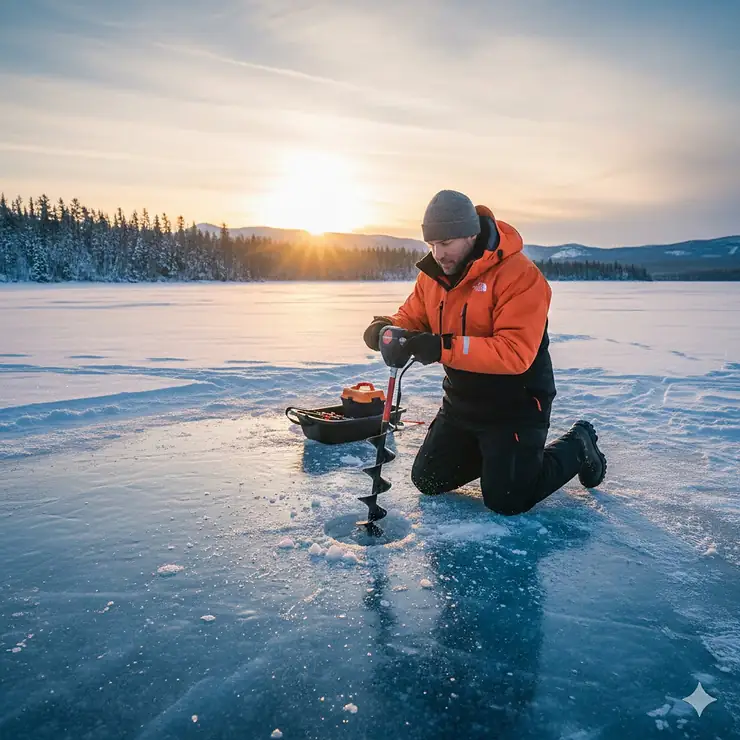
Picture this: you’re out on a frozen Ontario lake at sunrise, the air crisp at -15°C, and you’ve just spotted a promising weed bed. You need to drill a dozen holes quickly to find where the crappies are staging. A 6 inch ice auger is your secret weapon here—light enough to carry across thick snow, yet perfectly sized for bluegill, perch, and crappie.
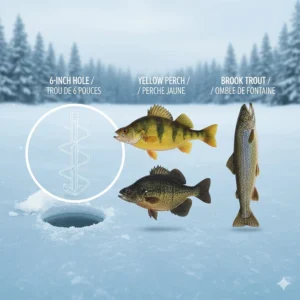
According to Wikipedia, ice fishing has been practiced in Canada for over 10,000 years, with the Ojibwe people of northern Ontario among the first to rely on it as a food source. Today, Canadian ice anglers continue this tradition, and choosing the right auger diameter makes all the difference. While Ontario’s fishing regulations allow for flexible hole sizes, a 6 inch diameter strikes the perfect balance for panfish enthusiasts.
Why specifically 6 inches? For targeting bluegill, crappie, and perch—the bread and butter of Canadian ice fishing—this diameter offers four key advantages. First, it’s significantly lighter and easier to drill than 8-inch or 10-inch models, letting you punch through 24 inches of February ice without exhausting yourself. Second, smaller holes mean fish are less likely to escape by turning around underwater. Third, you’ll drill faster and cover more water, which is crucial when panfish are scattered. Finally, most sonar transducers and underwater cameras fit perfectly in a 6 inch hole, giving you the electronics advantage without the extra weight.
Quick Comparison Table: Best 6 Inch Ice Augers Canada 2026
| Product | Type | Weight | Price (CAD) | Best For | Rating |
|---|---|---|---|---|---|
| Eskimo HD06 Hand Auger | Manual | 2.7 kg | $125-$140 | Budget-conscious anglers | 4.4/5 |
| StrikeMaster Mora 6″ | Manual | 2.7 kg | $90-$110 | Traditional hand drilling | 4.3/5 |
| 6″ Drill Adapter Kit | Drill-powered | 1.8 kg | $80-$105 | DIY enthusiasts | 4.2/5 |
| Swede-Bore 6″ Manual | Manual | 3.2 kg | $115-$130 | Durability seekers | 4.5/5 |
| ION 6″ Auger Bit | Electric (bit only) | 1.5 kg | $150-$180 | ION system owners | 4.6/5 |
| DEERFAMY 6″ Nylon | Drill-powered | 2.0 kg | $70-$90 | Lightweight mobility | 4.1/5 |
| Professional Steel 6″ | Drill-powered | 2.2 kg | $95-$120 | Frequent panfishers | 4.4/5 |
💬 Just one click – help others make better buying decisions too! 😊
Top 7 Ice Augers (6 Inch): Expert Analysis
1. Eskimo HD06 Hand Auger – Best Overall Value
The Eskimo HD06 delivers exceptional performance for Canadian ice conditions without breaking the bank. This hand auger features dual flat blades designed specifically for longevity and clean cuts through both clear blue ice and the challenging layered ice common in prairie provinces.
Key Specifications:
- Adjustable length: 49-58 inches (124-147 cm)
- Weight: 6.5 pounds (2.7 kg)
- Dual flat blade system
- Cross-bolt takedown design
Price: $125-$140 CAD on Amazon.ca
Canadian buyers consistently praise its performance in thick ice. One Manitoba angler reported drilling 30+ holes through 28 inches of mid-February ice on a single outing. The telescoping handle adjusts comfortably for anglers between 5’4″ and 6’2″, and the pommel grip reduces hand fatigue during extended panfishing sessions.
✅ Pros:
- Lightweight design minimizes fatigue
- Cross-bolt system prevents over-tightening
- Blade protector included
❌ Cons:
- Blades may dull faster on dirty ice
- Manual effort required in thick ice
Perfect for weekend warriors who value reliability and portability.
2. StrikeMaster Mora 6″ Hand Auger – Classic Canadian Favourite
The StrikeMaster Mora has earned legendary status across Canadian ice fishing communities. Its powder blue colour is instantly recognizable on frozen lakes from British Columbia to Newfoundland. The ergonomically designed handle system features soft rubber grips that remain comfortable even in -25°C temperatures.
Key Specifications:
- High alloy carbon steel blades
- Adjustable handle: 48-57 inches (122-145 cm)
- Weight: 6 pounds (2.7 kg)
- Powder-coated paint reduces ice buildup
Price: $90-$110 CAD on Amazon.ca
The Mora excels in early-season ice when you’re drilling through clear, hard ice over shallow weed beds. Canadian buyers appreciate the value proposition—this auger punches well above its price point. One Quebec reviewer noted drilling 45 holes through 18 inches without blade sharpening. The two-piece design breaks down for transport, fitting easily in a compact car trunk alongside your other gear.
✅ Pros:
- Exceptional value for money
- Sharp blades out of the box
- Compact storage
❌ Cons:
- Requires periodic blade maintenance
- Limited warranty compared to premium brands
Best choice for anglers entering ice fishing or seeking a reliable backup auger.
3. 6 Inch Ice Auger Drill Adapter Kit – Modern Convenience
Drill-powered augers have revolutionized Canadian ice fishing, and this 6 Inch Electric Drill Adapter Kit represents outstanding value for anglers who already own a quality cordless drill. The kit includes positioning device, drill adapter, and durable nylon flighting designed to handle Canadian ice thickness.
Key Specifications:
- Rotation diameter: 6 inches (15.24 cm)
- Length: approximately 17.7 inches (45 cm)
- Nylon construction with steel blades
- Compatible with standard 3/4″ hex drills
Price: $80-$105 CAD on Amazon.ca
This kit shines for panfish anglers who need to drill numerous holes quickly. Pair it with an 18V or 20V brushless drill, and you’ll cut through 20 inches of ice in under 30 seconds. Ontario anglers report drilling 40+ holes on a single battery charge in late-season conditions. The nylon construction won’t damage boat floors or truck beds, and it floats if dropped through the ice.
✅ Pros:
- Fraction of dedicated electric auger cost
- Works with existing drill investment
- Floats for added security
❌ Cons:
- Currently unavailable (check for restocks)
- Drill not included
- Battery performance drops in extreme cold
Ideal for DIY-minded anglers maximizing existing tool collections.
4. Swede-Bore 6″ Manual Ice Auger – Canadian Tire Staple
The Swede-Bore 6 inch Manual Auger, available at Canadian Tire locations nationwide, combines rugged Swedish engineering with Canada-friendly pricing. This hand auger features precision-ground blades and a robust handle design that withstands the punishment of frequent use.
Key Specifications:
- Swedish stainless steel blades
- One-piece handle construction
- Weight: 7 pounds (3.2 kg)
- Protective blade cover included
Price: $115-$130 CAD at Canadian Tire
Canadian Tire’s network means you can purchase, get blade replacements, and access warranty service locally. Saskatchewan anglers particularly appreciate the one-piece handle design—no worrying about loose connections when temperatures hit -30°C. The slightly heavier weight actually helps with drilling momentum in thick mid-winter ice, though it’s more tiring over longer distances.
✅ Pros:
- Readily available across Canada
- Durable construction
- Local warranty support
❌ Cons:
- Heavier than competitors
- Not always in stock during peak season
Excellent for anglers prioritizing local availability and service.
5. ION 6 Inch Auger Bit – Premium Electric Performance
For anglers already invested in the ION electric auger ecosystem, the ION 6 Inch Auger Bit accessory transforms your existing powerhead into a specialized panfish drilling machine. This bit features ION’s signature cutting technology optimized for the smaller diameter.
Key Specifications:
- Steel blade construction
- Designed for Gen 1, Gen 2, Alpha series
- Weight: 3.3 pounds (1.5 kg, bit only)
- Laser-cut blades
Price: $150-$180 CAD (bit only, powerhead required)
The ION system delivers whisper-quiet operation appreciated in high-pressure fishing areas. Alberta tournament anglers report drilling 60+ holes on a single 40V battery through 24 inches of ice. The quick-change bit system lets you swap between 6″ and 8″ diameters mid-trip if targeting both panfish and walleyes. However, compatibility is limited to ION powerheads, making this a specialized purchase.
✅ Pros:
- Quiet electric operation
- Impressive battery efficiency
- Fast drilling speed
❌ Cons:
- Requires ION powerhead investment
- Premium pricing
- Limited compatibility
Perfect for serious anglers with existing ION systems seeking versatility.
6. DEERFAMY 6 Inch Nylon Ice Auger – Ultralight Champion
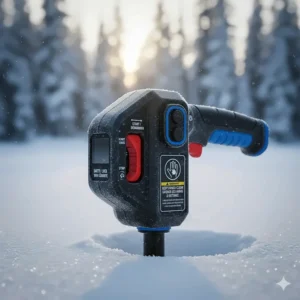
The DEERFAMY 6 Inch Nylon Auger represents the new generation of lightweight, drill-powered designs. At just 4.4 pounds (2.0 kg) complete, this might be the lightest 6 inch ice auger available to Canadian buyers on Amazon.ca.
Key Specifications:
- 28-inch overall length
- Nylon composite construction
- Two replaceable steel cutters
- Centering point for accuracy
Price: $70-$90 CAD on Amazon.ca
This auger excels for snowmobile-based anglers traveling light or those fishing walk-in lakes requiring significant hiking. The nylon construction means zero rust concerns—just rinse and store. British Columbia panfishers appreciate the float design that prevents losses. Pair it with a brushless 20V drill, and you’re equipped for a full day chasing crappies. The lower price point makes this an excellent starter option for younger anglers or those testing drill-powered augers.
✅ Pros:
- Exceptionally lightweight
- Budget-friendly
- Float design prevents sinking
❌ Cons:
- Nylon may flex in thick ice
- Smaller cutting surface than traditional augers
Best for mobile anglers prioritizing weight savings and value.
7. Professional Steel 6 Inch Drill Auger – Serious Panfisher’s Tool
The Professional Ice Auger Kit 6 Inch combines steel construction durability with modern drill adapter convenience. This 28-inch kit includes positioning device, top plate, and premium steel cutters designed for Canadian ice conditions.
Key Specifications:
- 28-inch cutting depth capability
- 6-inch diameter steel blades
- Positioner for stable starts
- Heavy-duty construction
Price: $95-$120 CAD on Amazon.ca
This auger bridges the gap between lightweight nylon models and full electric systems. The steel blades maintain sharpness longer than budget options, crucial for frequent users drilling 50+ holes per outing. Manitoba crappie guides report this model handling heavy use reliably throughout 4-month seasons. The positioner prevents walking when starting holes, especially important on glare ice. At this price point, you’re getting near-professional performance without the $500+ investment.
✅ Pros:
- Durable steel construction
- Professional-grade performance
- Includes positioning accessories
❌ Cons:
- Heavier than nylon alternatives
- Requires quality drill for best results
Ideal for dedicated panfishers who drill frequently throughout the season.
✨ Don’t Miss These Exclusive Deals!
🔍 Take your ice fishing game to the next level with these carefully selected products available in Canada. Click on any highlighted item to check current pricing and availability on Amazon.ca. These tools will help you create authentic winter fishing memories your family will love!
Understanding Ice Auger Types: Which Suits Canadian Conditions?
Hand-Powered Augers: The Traditional Choice
Hand augers remain popular across Canada for good reasons. They’re completely independent of batteries or fuel, making them reliable in -30°C prairie winters when even lithium-ion cells struggle. Models like the Eskimo HD06 and StrikeMaster Mora weigh under 3 kg, allowing anglers to hike into remote lakes without excessive burden.
The physical effort required varies dramatically with ice conditions. Clear blue ice up to 20 cm thick drills relatively easily—most fit anglers can complete a hole in 60-90 seconds. However, layered ice common after mid-winter thaws, or late-season “rotten” ice, demands significantly more effort. Canadian buyers should consider a hand auger as either a primary tool for light use (10-15 holes per outing) or as a reliable backup to electric systems.
Drill-Powered Augers: The Modern Middle Ground
Drill adapter kits revolutionized access to power drilling without the $400+ investment in dedicated electric augers. These kits transform any quality cordless drill into an ice auger, making them hugely popular with Canadian anglers. The 6 Inch Drill Adapter Kit and DEERFAMY model exemplify this category.
Performance depends entirely on your drill. An 18V brushless model handles early-season ice admirably, while 20V or higher excels throughout winter. Canadian users report that drill-powered augers work best for panfishing scenarios—drilling 20-40 holes per trip through ice under 24 inches thick. They struggle in late February when ice exceeds 30 inches, and extreme cold (-25°C and colder) significantly reduces battery capacity. Smart anglers carry spare batteries inside warm clothing, swapping them frequently to maintain performance.
Electric Auger Systems: Premium Performance
Dedicated electric augers like ION, Eskimo, and StrikeMaster’s electric lines represent the cutting edge. These purpose-built systems deliver torque and battery management optimized specifically for ice drilling. A 40V lithium-ion system typically drills 50-80 holes through 24 inches of ice per charge—more than adequate for serious panfishing.
The quiet operation offers real advantages. In heavily fished lakes across southern Ontario or Alberta, the silent approach prevents spooking suspended crappies. One downside for Canadian buyers is the higher initial investment ($500-$700+ for complete systems) and the need for manufacturer-specific replacement batteries. Weather resistance is excellent on quality models, with several anglers reporting reliable -35°C performance.
The Science Behind 6 Inch Holes for Panfish
Optimal Size for Target Species
Research by fisheries management departments across Canadian provinces consistently recommends 6-inch holes for panfish for several biological reasons. Bluegill, the most common target, average 6-8 inches in length, with trophy specimens reaching 10-11 inches. A 6 inch hole provides adequate clearance to land these fish without the excess drilling effort of larger diameters.
Crappies present similar sizing. Black crappies in Ontario’s Kawartha Lakes average 9-11 inches, with occasional 13-14 inch slabs. When played properly with light tackle, these fish slide through a 6 inch hole vertically without difficulty. The key is preventing them from turning sideways during the fight—a skill developed through experience.
Perch biology further supports the 6 inch choice. Yellow perch, abundant from Manitoba to Nova Scotia, typically measure 7-10 inches, with jumbo specimens reaching 12-14 inches. The narrower hole actually works to the angler’s advantage here—perch can’t reverse direction easily once their head enters the opening, reducing lost fish compared to larger diameter holes.
Drilling Efficiency and Energy Conservation
Physics explains why 6 inch augers excel for panfishing mobility. The area of ice removed per hole equals πr², meaning a 6 inch auger cuts 28.3 square inches while an 8 inch removes 50.3 square inches—nearly 80% more material. This translates directly to either battery life (for powered augers) or angler energy (for hand models).
Canadian ice anglers often drill 30-50 holes searching for active panfish schools. The cumulative difference is substantial. Drilling 40 holes with a 6 inch auger removes approximately 1,132 square inches of ice. The same 40 holes at 8 inches demands cutting 2,012 square inches—equivalent to 19 additional 6 inch holes worth of effort. This efficiency lets anglers cover more territory, increasing catch rates significantly.
Electronics Compatibility
Modern ice fishing electronics—flashers, underwater cameras, and GPS sonar—mostly design around 6-8 inch hole compatibility. Vexilar FL-series flashers, Garmin Panoptix LiveScope, and MarCum Technologies units all specify minimum hole sizes, with 6 inches meeting requirements for most transducers. Some larger LiveScope transducers perform better in 7-8 inch holes, but standard panfish electronics work perfectly in 6 inch openings, giving you the technological edge without unnecessary drilling.
Blade Material and Design: What Canadian Buyers Should Know
Steel vs. Stainless Steel vs. Composite
Blade composition dramatically affects performance in Canadian ice conditions. High-carbon steel blades, found on the StrikeMaster Mora and most drill adapter kits, offer excellent initial sharpness and value pricing. They cut aggressively through clear ice but dull more quickly, especially on dirty ice containing sand or sediment—common in prairie pothole lakes. Canadian buyers should budget for blade sharpening or replacement every 100-150 holes of heavy use.
Stainless steel blades resist corrosion superbly, crucial for anglers fishing brackish estuaries or storing augers in damp ice shacks. The Swede-Bore utilizes stainless construction, and while these blades don’t hold an edge quite as long as premium high-carbon options, they’re virtually maintenance-free. For occasional anglers (10-20 outings annually), stainless represents excellent long-term value.
Newer composite blade designs, like ION’s proprietary cutting systems, blend materials for optimal performance. These premium blades maintain sharpness for 200+ holes and cut through both fresh and refrozen ice efficiently. The trade-off is cost—replacement blades often run $80-$120 CAD compared to $30-$50 for standard steel.
Blade Configuration: Flat vs. Curved
The Eskimo HD06’s dual flat blade design cuts differently than curved or serrated blades. Flat blades scrape ice in a scissor-like action, producing fine shavings that clear from the hole easily. This works exceptionally well in cold, dry ice typical of January and February across the prairies and central Canada.
Curved blades, conversely, “bite” into ice with an aggressive cutting angle. They excel in wet, slushy conditions common during late-season fishing or after chinook winds in Alberta. The curve helps evacuate heavy slush from deep holes more effectively. Many premium augers feature a combination design—aggressive curves near the blade tip transitioning to flatter profiles mid-blade—balancing cutting speed with slush management.
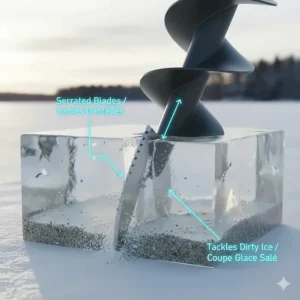
Serrated or “laser tooth” edges represent another evolution. These micro-serrations reduce the force required to initiate a cut, benefiting hand auger users. The Professional Steel 6 Inch includes this feature, making it noticeably easier to start holes on glare ice without the auger “skating” across the surface—a common frustration on wind-polished lake ice.
6 Inch Ice Auger Maintenance for Canadian Winters
Pre-Season Preparation
Before your first outing, inspect all components carefully. Check blade sharpness by lightly running your thumb perpendicular to the edge (never along the edge). Sharp blades should catch your skin’s ridges without pressure. Examine blade mounting hardware—bolts should be tight but not over-torqued, with lock nuts or thread locker preventing loosening during use.
For hand augers, verify handle connections. The Eskimo HD06’s cross-bolt system should click securely without wiggle. Apply a light coating of dry lubricant (silicone spray or graphite powder) to threads, making future disassembly easier. Never use petroleum-based oils, which can freeze at -20°C, gumming mechanisms.
Drill-powered models require drill chuck inspection. Clean out ice debris from previous seasons and confirm the auger adapter seats fully. Test your drill’s battery charge—lithium-ion cells lose capacity over summer storage. A full charge/discharge cycle helps restore performance.
Mid-Season Care in Extreme Cold
Canadian winters test equipment relentlessly. After each outing, remove ice buildup immediately while still on the lake. Use your ice scoop or a brush to clear the flighting and blade guards. Don’t let ice accumulate and refreeze—this makes next-use preparation difficult and can damage components.
Transport augers carefully. Blade guards aren’t optional—they protect both the blades and you. The Eskimo HD06 includes a guard; aftermarket options cost $15-$25 CAD for models without. Store augers vertically in your vehicle to prevent pressure damage to blades during transport.
Battery-powered augers and drills require temperature management. Lithium-ion batteries lose 20-30% capacity below -10°C and can fail completely below -20°C. Store batteries in warm vehicle cabins, not truck beds. Some anglers use insulated battery pouches with chemical heat packs for extreme cold, maintaining temperatures above 0°C throughout fishing trips.
Off-Season Storage and Blade Service
Proper summer storage extends auger lifespan dramatically. Clean thoroughly, removing all ice, fish slime, and debris. Rinse with fresh water and dry completely—moisture trapped in handle mechanisms or under blade guards causes rust. Apply a thin coat of food-grade mineral oil to blades, creating a protective barrier against humidity.
Store in a dry location—never directly on concrete garage floors, which transfer moisture through temperature cycling. Hang hand augers vertically or lay drill adapters flat on elevated shelving. Loosen blade mounting bolts slightly (1/4 turn) to prevent bolt stretch and make next season’s removal easier.
Blade sharpening is straightforward with the right tools. Many Canadian Tire and outdoor retailers offer sharpening services ($15-$30 CAD). DIY sharpening requires a fine mill file and steady hands—file away from the body at the blade’s original angle, typically 30 degrees. Professional services use specialized jigs maintaining perfect geometry. Budget anglers often replace blades instead; replacement sets cost $30-$70 CAD depending on model.
How to Choose a 6 Inch Ice Auger in Canada: 7-Step Guide
Step 1: Assess Your Fishing Frequency
Occasional anglers (fewer than 10 trips annually) should prioritize value and simplicity. The StrikeMaster Mora or DEERFAMY Nylon offer excellent performance without significant investment. These models handle typical fishing scenarios reliably and store easily during the lengthy off-season.
Frequent anglers (20+ trips annually) benefit from the convenience and speed of electric or drill-powered systems. The time saved drilling 40+ holes per trip compounds over a season. Calculate your typical holes per outing multiplied by seasonal trips—if this exceeds 500 holes, powered options pay dividends in reduced fatigue and increased fishing time.
Step 2: Consider Your Physical Capabilities
Hand augers demand upper body strength and cardiovascular fitness, especially through thick ice. Be realistic about your capabilities in -20°C temperatures wearing bulky winter gear. Younger anglers and those in excellent physical condition handle hand augers without issues. Older anglers or those with shoulder/back concerns should strongly consider powered options.
Weight matters more than specifications suggest. Carrying a 3 kg auger 500 metres across a snowy lake, along with your rod case, tackle, electronics, and sled, is genuinely tiring. Factor in terrain—flat prairie lakes differ dramatically from rocky, uneven Ontario Shield environments.
Step 3: Evaluate Budget Realistically
Set a realistic budget considering total costs, not just the auger. Hand augers represent the lowest entry point ($90-$140 CAD) with zero ongoing costs beyond blade maintenance. Drill-powered systems require a quality 18V+ cordless drill if you don’t own one ($150-$300 CAD), plus the adapter kit ($70-$120 CAD). Budget an extra battery ($80-$120 CAD) for extended outings.
Dedicated electric augers demand $500-$800 CAD initially, plus proprietary batteries ($150-$250 CAD each). However, their superior performance and durability often justify the investment for serious anglers. Calculate cost-per-hole over expected lifespan—a $600 electric auger drilling 5,000 holes before major maintenance costs $0.12 per hole, while a $100 hand auger lasting 1,000 holes costs $0.10 per hole but requires significantly more effort.
Step 4: Match Auger to Your Target Species
For exclusive panfishing—bluegill, crappie, perch—6 inches is ideal. However, if you occasionally target walleye, pike, or lake trout, consider your primary species ratio. If 80%+ of your fishing targets panfish, get the 6 inch. For mixed-species anglers (50% panfish, 50% predator fish), an 8 inch offers more versatility despite weighing more and drilling slower.
Geographic location influences this decision. Prairie anglers in Saskatchewan often target both perch and pike, suggesting 8 inches. Ontario’s Kawarthas and Muskoka anglers focusing primarily on crappie and bluegill benefit from the 6 inch’s mobility advantages.
Step 5: Account for Regional Ice Conditions
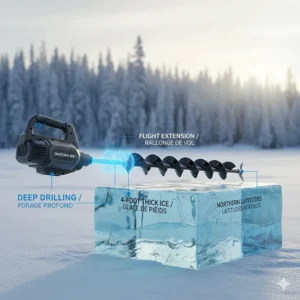
Canadian ice thickness varies regionally and seasonally. Southern Ontario typically sees 15-24 inches by mid-January. Prairie provinces often exceed 30 inches by February. Northern regions can reach 40+ inches. Most 6 inch augers handle 24 inches comfortably; thicker ice requires extension adapters ($40-$80 CAD) or simply more patient drilling.
Ice quality matters equally. Clear blue ice (strongest) drills easily. White ice (weaker, containing air bubbles) requires more effort. Layered ice from freeze-thaw cycles is most challenging. If your region experiences frequent chinooks or mid-winter thaws creating complex ice structures, prioritize power and blade quality.
Step 6: Factor in Transport and Storage
Vehicle space constraints often determine auger choice. Hand augers like the Eskimo HD06 break down to 30-36 inches, fitting behind seats in compact cars. Drill adapters store even more compactly at 18-28 inches. Full electric augers, especially those with battery compartments, can exceed 48 inches and require truck beds or larger SUVs.
Storage location affects material choices. Heated garages allow any auger type. Unheated sheds or garages make stainless steel more attractive, preventing rust in humid conditions. Apartment dwellers need compact options—drill adapters excel here.
Step 7: Research Canadian Availability and Service
Purchase from retailers with Canadian presence for simplified warranty service and returns. Amazon.ca offers convenience but verify the seller—third-party Chinese sellers sometimes provide limited support. Canadian Tire, Cabela’s, Bass Pro Shops, and Sail provide local service and immediate product inspection before purchase.
Check replacement parts availability. Blades for popular models like Eskimo and StrikeMaster are readily available at outdoor retailers across Canada. Proprietary systems like ION require ordering from limited sources, potentially delaying repairs during prime season. Read customer reviews specifically from Canadian buyers addressing shipping times and cold-weather performance.
Canadian Ice Safety Regulations and Best Practices
Federal and Provincial Regulations
Ice fishing regulations vary by province but share common safety requirements. Ontario mandates that anglers ice fishing must stay within 60 metres of any line or tip-up and maintain clear, unobstructed views at all times. Ice huts in many zones require registration, and removal dates are strictly enforced to prevent springtime accidents as ice deteriorates.
Alberta’s regulations stipulate ice fishing shelters left more than 24 hours must be labeled with 2.5 cm block letters showing your Wildlife Identification Number (WIN) or name and phone number. Shelters must be removed by March 31 in most zones. These rules exist because each year, unlabeled shelters fall through melting ice, becoming environmental hazards and navigational dangers.
Before drilling any hole, verify local fishing seasons and limits. New Brunswick’s Winter Fishing Guide provides species-specific dates and catch limits. Some species have closed seasons during spawning periods, even in winter months. Ignorance of regulations is no defense—
check provincial resources or download the local fishing app before your trip.
Ice Thickness Guidelines Specific to Canada
Canadian ice safety standards exceed those of milder regions due to our extreme conditions. The baseline rule: 10 cm (4 inches) of clear, blue ice supports a person on foot. However, this assumes ideal conditions—recent cold, no current, no pressure cracks. Prudent anglers wait for 12-15 cm before venturing out.
White or snow ice, containing air pockets, requires double the thickness for equivalent strength. If you’re drilling through 10 cm of white ice, treat it as 5 cm of blue ice strength-wise. Most experienced Canadian anglers won’t walk on white ice under 20 cm thick. For vehicles, 30 cm of blue ice is the absolute minimum for light trucks, with 40+ cm recommended for full-size trucks. Many fishing lodges prohibit vehicle traffic until late January for liability reasons.
Current poses hidden dangers. River mouths, narrows between lake sections, and areas near aerators maintain thinner ice. Underwater springs create weak spots invisible from the surface. The Saskatchewan and Manitoba governments publish ice condition reports throughout winter on provincial websites—check these before traveling to unfamiliar waters.
Essential Safety Equipment for Canadian Ice
Beyond your 6 inch ice auger, safety gear is non-negotiable. Ice picks (worn around your neck) allow self-rescue if you break through. These simple devices cost $15-$30 CAD but can save your life. Practice using them in controlled conditions—pull yourself forward onto ice by stabbing ahead and dragging your body.
A flotation suit, or at minimum a float coat, provides crucial buoyancy if immersed. These aren’t just for commercial fishermen—several Canadian outdoor retailers stock recreational models ($200-$400 CAD). They’re warm, waterproof, and eliminate the immediate panic of icy water shock.
A spud bar (ice chisel) helps assess ice thickness as you move across a lake. Test every 50 metres, especially near shore where ice thickens first and thins first during spring. Several manufacturers offer combination spud bar/walking sticks ($40-$80 CAD), serving double duty. Always fish with a partner when possible, and inform someone of your location and expected return time. Cell coverage is spotty on many Canadian lakes—satellite messengers like Garmin InReach ($400-$500 CAD) provide emergency communication anywhere.
Comparing 6 Inch vs 8 Inch vs 10 Inch Augers
| Feature | 6 Inch | 8 Inch | 10 Inch |
|---|---|---|---|
| Best For | Panfish, perch, crappie | Walleye, pike, mixed species | Lake trout, pike, trophy fish |
| Weight | 1.5-3.2 kg | 3.5-5.5 kg | 5.5-8 kg |
| Drilling Effort | Low | Moderate | High |
| Holes Per Battery | 50-80 | 30-50 | 20-35 |
| Speed Per Hole | 25-40 seconds | 35-60 seconds | 60-90 seconds |
| Electronics Fit | Most transducers | All transducers | All equipment |
| Typical Price (CAD) | $70-$180 | $120-$250 | $200-$400 |
Benefits of 6 Inch Augers vs Traditional Alternatives
Advantages Over 8 Inch Augers:
The weight savings alone justifies choosing a 6 inch for dedicated panfishing. Drilling 40 holes with a 6 inch auger through 20 inches of ice removes approximately 2,265 cubic inches of ice. The equivalent 40 holes at 8 inches require removing 4,024 cubic inches—77% more material. This translates to faster hole completion, less battery drain, and significantly reduced physical fatigue.
The narrower hole prevents escape attempts by smaller fish. Bluegill under 9 inches often swim in circles when hooked, trying to find an exit route. In an 8 inch hole, they occasionally turn perpendicular and dive back down before you can react. A 6 inch hole eliminates this frustration—once their head enters the opening, they’re committed to coming out.
For anglers drilling many holes to pattern roaming panfish schools, the time savings compound. Cutting drilling time from 45 seconds per hole to 30 seconds per hole saves 10 minutes over 40 holes—that’s potentially several more fish caught by covering more territory efficiently.
Comparison to Ice Chisels and Spud Bars:
Manual ice chisels represent the most primitive drilling method, still used by some traditionalists and as backup safety tools. While chisels never run out of battery or fuel, they’re impractically slow for recreational fishing. Chopping a 6 inch hole through 18 inches of ice with a chisel takes 8-12 minutes of exhausting work. A hand auger completes the same hole in 90 seconds; a drill-powered auger in 30 seconds.
Chisels serve better as ice-testing tools rather than hole-creation devices. Their role in modern Canadian ice fishing is checking thickness as you travel outward from shore, ensuring you don’t venture onto unsafe ice. For hole creation, even the most basic 6 inch hand auger represents a revolutionary improvement over chiseling.
Price Range & Value Analysis: Canadian Market 2026
Budget Category ($70-$110 CAD)
This tier includes the StrikeMaster Mora ($90-$110), DEERFAMY Nylon ($70-$90), and basic drill adapter kits. These augers deliver functional performance for occasional anglers or those entering ice fishing. Expect to drill 15-25 holes per outing comfortably, with slower speeds and more physical effort than premium options.
Value proposition: Excellent for anglers fishing 5-15 times annually or those uncertain about their long-term ice fishing commitment. Total investment (including a basic auger) stays under $150 CAD, minimizing financial risk while providing complete functionality.
Limitations include faster blade dulling (necessitating sharpening every 50-75 holes), lighter-duty construction potentially failing under extreme use, and generally fewer features like adjustable handles or protective blade guards. For budget-conscious Canadians, these augers prove that effective ice fishing doesn’t require premium pricing.
Mid-Range Category ($115-$180 CAD)
The Eskimo HD06 ($125-$140), Swede-Bore ($115-$130), and Professional Steel Kit ($95-$120) occupy this sweet spot. They balance cost, durability, and performance admirably. Blade quality improves significantly, maintaining sharpness for 100-150 holes. Construction tolerances tighten, reducing wobble and improving hole quality.
Value proposition: Ideal for regular anglers (15-30 outings annually) who need reliability without premium pricing. These augers often last 5+ seasons with basic maintenance, making them cost-effective long-term investments.
Enhanced features in this category include better handle ergonomics, protective blade covers, and more durable materials. The Eskimo HD06’s cross-bolt system, for example, prevents the handle over-tightening issues plaguing cheaper models. For most Canadian anglers, this category provides optimal value—performance indistinguishable from premium options for 60% of the cost.
Premium Category ($180-$400+ CAD)
Dedicated electric auger systems like ION Alpha ($500-$700 complete), high-end StrikeMaster electrics, and premium replacement bits occupy this tier. These represent tools for serious anglers drilling 40+ holes regularly or those prioritizing speed and convenience above all.
Value proposition: Time is money, and premium augers maximize fishing efficiency. Drilling 50 holes takes approximately 25 minutes with a hand auger versus 10 minutes with a premium electric—that’s 15 more minutes fishing per outing. Over a 30-outing season, that’s 7.5 additional fishing hours.
The extended battery life (60-80 holes per charge), whisper-quiet operation, and minimal maintenance justify the investment for dedicated anglers. However, casual participants won’t recoup the extra $300-$500 compared to mid-range options. The marginal utility decreases for anglers not regularly pushing equipment limits.
Frequently Asked Questions (FAQ)
❓ What size ice auger is best for panfish in Canada?
❓ How much does a good 6 inch ice auger cost in Canada?
❓ Can I use my cordless drill with a 6 inch ice auger adapter in Canadian winter?
❓ How do I sharpen 6 inch ice auger blades myself?
❓ Are hand augers or electric augers better for panfish in Ontario?
Conclusion: Your Perfect 6 Inch Ice Auger Awaits
Choosing the right 6 inch ice auger transforms Canadian panfishing from exhausting work into efficient, enjoyable fishing. Whether you’re a weekend warrior drilling ten holes on a local prairie lake or a tournament angler punching fifty holes across frozen Ontario bays, there’s a perfect auger in this guide for your needs.
For budget-conscious beginners, the StrikeMaster Mora ($90-$110 CAD) delivers reliable performance and iconic Canadian heritage. Frequent anglers seeking maximum value should strongly consider the Eskimo HD06 ($125-$140 CAD), combining lightweight design with durable construction that withstands harsh Prairie winters. Tech-forward anglers with existing quality drills gain tremendous efficiency from drill adapter kits like the DEERFAMY Nylon ($70-$90 CAD), offering electric convenience without electric pricing.
Remember that your auger is a gateway tool—it enables access to fish beneath the ice but doesn’t catch them. Invest appropriately based on your fishing frequency, physical capabilities, and budget constraints. A reliable 6 inch auger, properly maintained, serves faithfully for 5-10 seasons, drilling thousands of holes and providing countless opportunities to pursue bluegill, crappie, and perch across Canada’s frozen waterways.
This upcoming season, as you drill your first hole through December’s clear ice and watch your electronics light up with suspended crappies, you’ll appreciate the mobility and efficiency that a 6 inch ice auger provides. Tight lines and safe fishing, fellow Canadian anglers!
Recommended for You
- 10 Best 10 Inch Ice Augers Canada 2026 | Trophy Fish Guide
- 7 Best Lightweight Manual Ice Augers Canada 2026
- 7 Best Manual Ice Augers Canada 2026
Disclaimer: This article contains affiliate links to Amazon.ca. If you purchase products through these links, we may earn a small commission at no additional cost to you.
✨ Found this helpful? Share it with your friends! 💬🤗
